
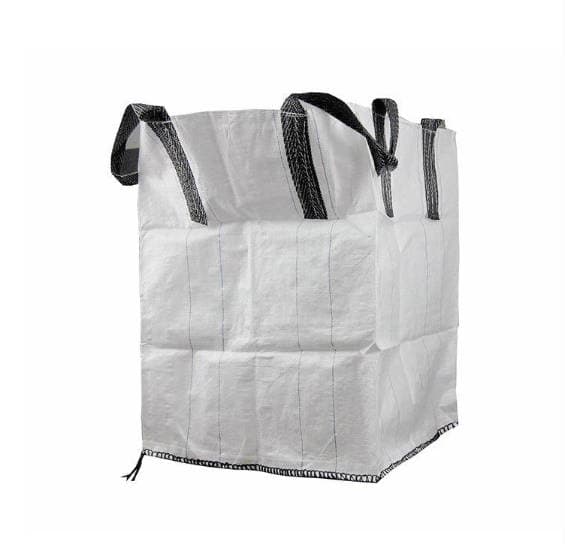
FIBC Body Construction: The Physics of Bulging and Container Utilization
In bulk logistics, an FIBC (Flexible Intermediate Bulk Container) is more than a simple carrier. Its efficiency is defined by how it manages internal pressure under the weight of 1,000kg+ of material.
When loading 20ft or 40ft ocean containers, the "Bulge Factor" of a bag is the primary driver of lost pallet space and mechanical friction against container walls. Understanding the structural mechanics of Tubular, U-Panel, and 4-Panel designs is essential for calculating actual landed costs per ton.
1. The Physics of the "Bulge"
When granular materials—such as lithium powder, nylon pellets, or chemical additives—are gravity-fed into a bag, the material acts as a slow-moving fluid. It exerts lateral force against the fabric. Because polypropylene (PP) is a flexible polymer, the fabric walls inevitably stretch.
The degree of this deformation depends on the seam architecture. Vertical seams act as the bag's "skeleton," restricting the fabric's natural tendency to expand into a cylinder.
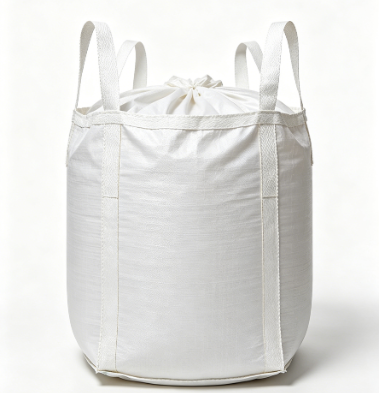
2. Tubular Construction: Seamless Circular Expansion
Tubular (Circular) bags are woven as a continuous cylinder.
- Mechanical Profile: Without vertical seams to provide rigid corners, the fabric at the center-point of each side absorbs the maximum tension.
- The Geometry Gap: A square-cut tubular bag holds its shape when empty, but under load, it pulls toward a circular profile. This creates "dead zones" at the four corners of every bag.
- In-Container Reality: In a standard 2.35m wide container, the "belly" of tubular bags will touch while leaving significant gaps between the corners. This often results in a 12-15% loss of floor utilization, requiring more containers for the same total tonnage.
3. U-Panel vs. 4-Panel: Stress Distribution
These structures use vertical seams to "break" the fabric's stretch, forcing the bag to maintain a more rectangular footprint.
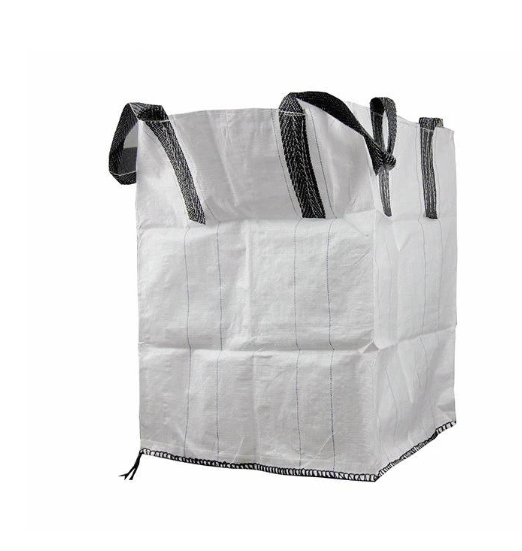
U-Panel (Three-Piece Architecture)
- Design: A single continuous fabric piece forms the base and two opposite sides, with two additional panels sewn in.
- Loading Behavior: The continuous fabric provides high lifting safety, but because only two sides have seams, the expansion is asymmetrical. The non-sewn sides will always bow more than the sewn ones. To counter this in a container, loaders often must rotate every other bag 90 degrees to interlock the bulges.
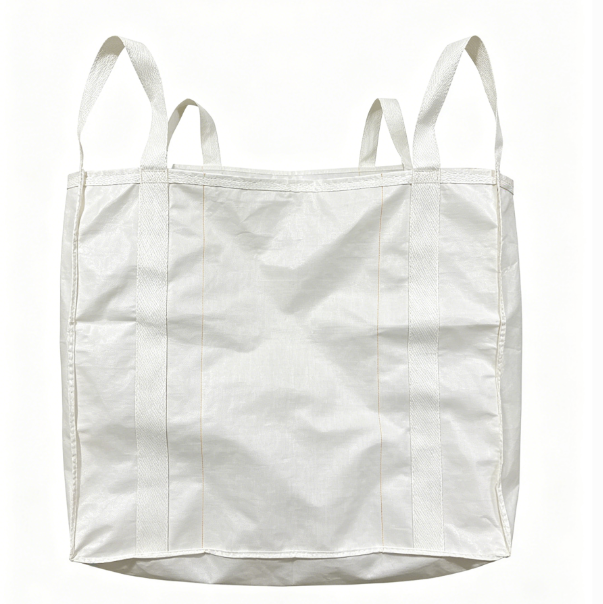
4-Panel (Four-Piece Architecture)
- Design: Four separate fabric panels are joined by four vertical seams.
- Structural Stability: The four seams act as corner pillars. By interrupting the fabric wrap at every corner, the "rounding" effect is minimized.
- Stacking Integrity: 4-Panel bags stay flatter on top. In 40ft High Cube containers, where double-stacking is necessary to reach weight limits, this structure reduces the risk of bags leaning or shifting during sea transit.
4. Measured Footprint: Nominal vs. Filled Dimensions
The table below shows the average expansion observed in standard shipping scenarios.
| Construction Type | Nominal Size (Flat) | Actual Width (Filled) | Volume Expansion |
|---|---|---|---|
| Tubular | 90 x 90 cm | ≈ 108 cm | +20% |
| U-Panel | 90 x 90 cm | ≈ 100 cm | +11% |
| 4-Panel | 90 x 90 cm | ≈ 96 cm | +6% |
5. Baffled Bags (Q-Bags): Engineering for Zero Expansion
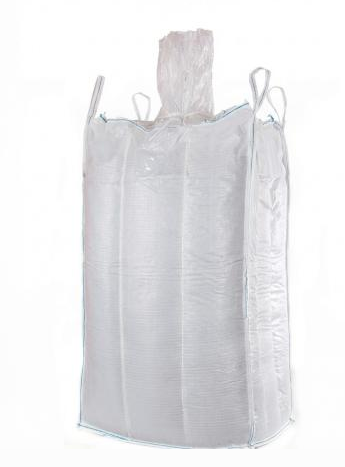
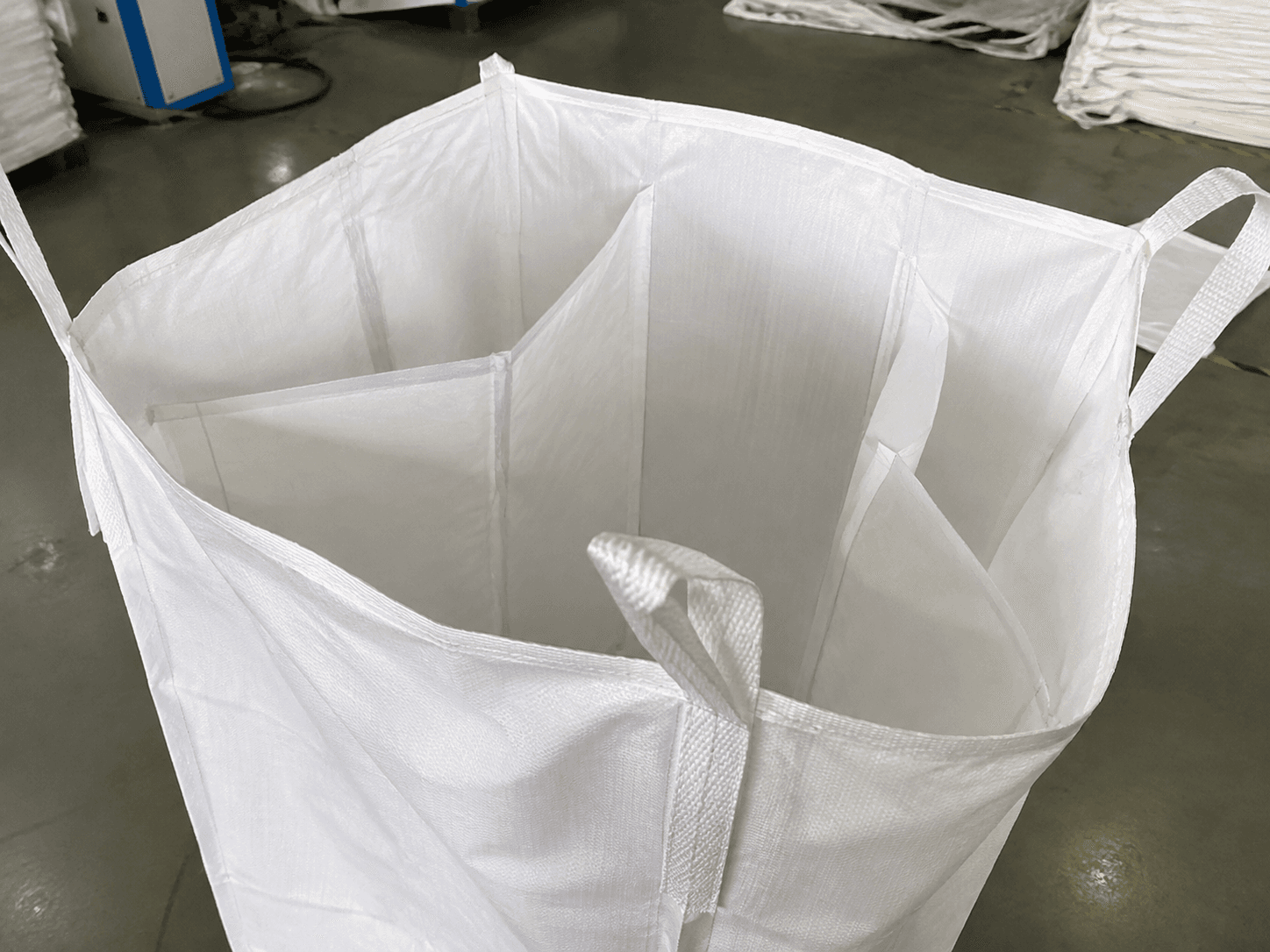
For high-value sectors like lithium battery materials, even a 6% bulge can cause jammed containers or moisture seal failure. Baffled bags (Q-Bags) use internal fabric stays sewn across the corners. These baffles do not carry the weight; they pull the corners inward to maintain a 90-degree angle. This allows for a "brick-like" loading pattern, often fitting 2-4 additional bags per 40ft container compared to standard tubular designs.
Optimizing Your Logistics Density
Logistics costs are not just determined by the price per bag, but by the quantity of material you can safely fit into a container. If you are experiencing shipping damage or inefficient container loading, a structural assessment of your packaging is recommended.
Technical Support Available:
- Load Mapping: Calculated footprint dimensions based on specific material bulk density.
- Dimensional Design: Custom U-panel or 4-panel configurations tailored to ISO container widths.
- Barrier Integration: Technical consultation on combining stabilized bag structures with aluminum foil liners for sensitive chemical powders.
For technical specifications or a structural consultation, contact our engineering department:
- Email: 15232851009@139.com
- Technical Inquiry: Contact Our Engineering Team
- Direct Line: +86 15232851009
Related News
Other news you might be interested in
Antistatic FIBCs: When Are Type D Bags Mandatory in the Construction and Powder Industries?
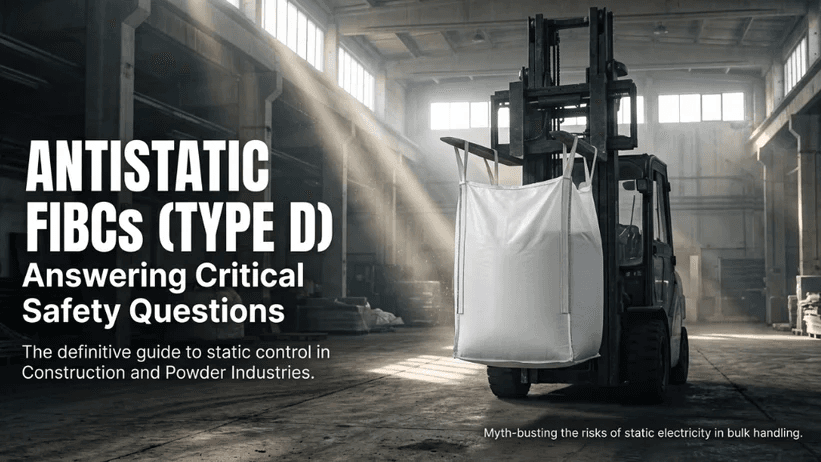
Type D bags become mandatory when fine powders, airborne dust, or charged materials create static-electricity hazards during filling, emptying, transport, or storage. These risks appear often in construction and powder industries, where dry granular materials generate static through friction.
Baffle Bags vs Standard FIBC Bags: When Stable Stacking Matters
For buyers moving powders, granules, minerals, food ingredients, or plastic resins, a bulk bag is more than a container. Its shape affects pallet use, warehouse space, container loading, handling stability, and the condition of material at discharge.The choice between baffle bags and standard FIBC bags should start with the handling process, not appearance. A standard bag may be the practical choice for straightforward transport. A baffle bulk bag becomes valuable when a buyer needs a more controlled, square profile after filling and more reliable stable stacking.
Want to know more?
Get in touch with us for more information about our services and products.