
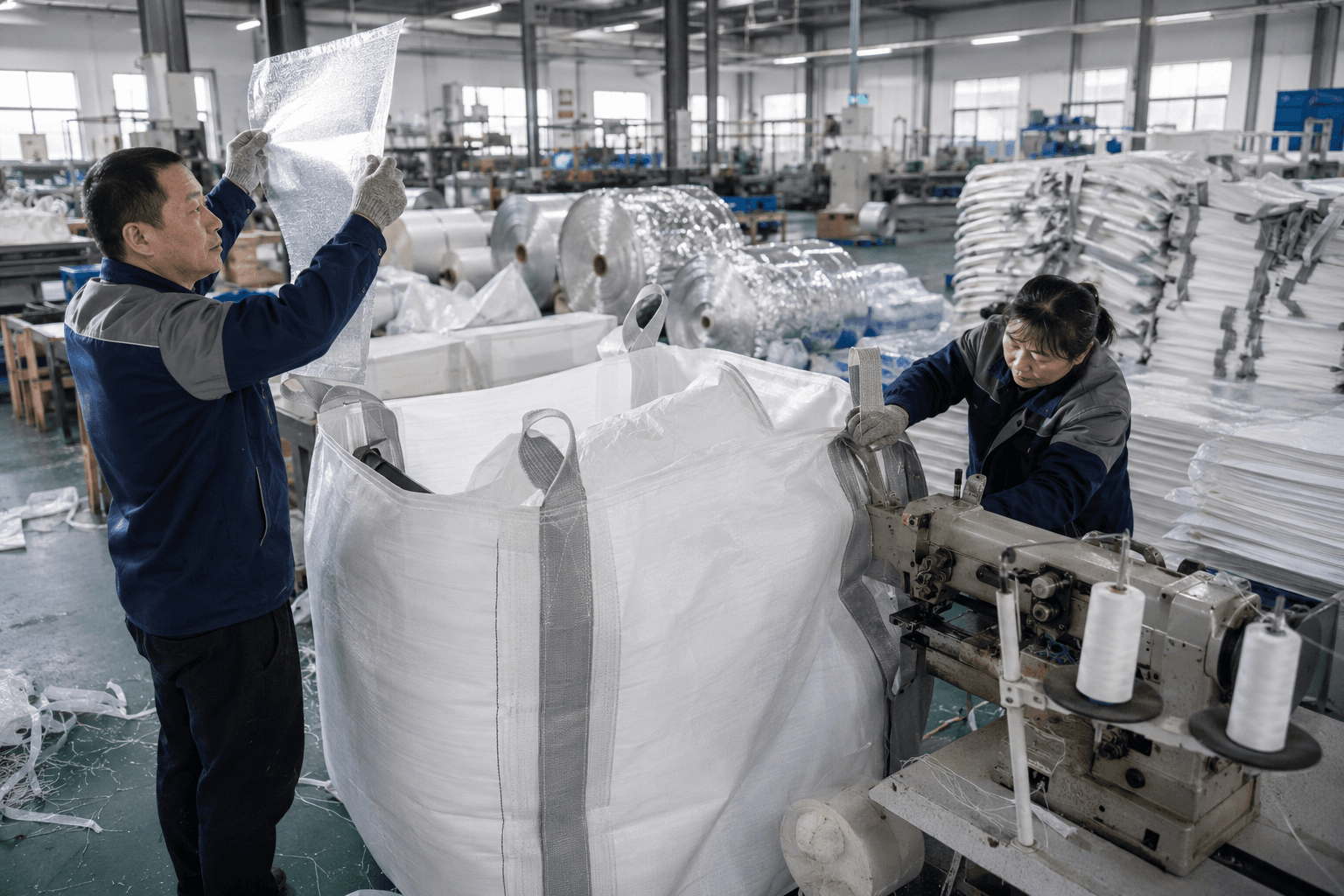
Turning Packaging Pitfalls into Profit: The Case for Custom FIBC Bags in Industrial Bulk Handling

Dayang Yang
الكاتبلدينا خبرة في تصنيع وبيع أكياس الحاويات المرنة FIBC للتصدير، وندير منشأة إنتاج خاصة بنا بقدرة إنتاجية مستقرة على نطاق واسع. نحن متخصصون في الأكياس الضخمة، وأكياس FIBC الموصلة للكهرباء، وأكياس FIBC المخصصة للمواد الغذائية، والأكياس المعتمدة من الأمم المتحدة، والحاويات المرنة المخصصة للتغليف الصناعي وحلول نقل المواد السائبة.
The Real Cost of Overlooking Your Bulk Packaging Strategy
Material degradation from moisture, oxygen, or light exposure remains one of the most underestimated risks in industrial supply chains. For sensitive goods like lithium battery cathode materials, standard packaging often fails to prevent chemical reactions that lead to product loss, costly recalls, and damaged customer relationships. Equally dangerous, static discharge risks during chemical powder handling escalate safety hazards and insurance overheads when anti-static bulk packaging isn’t part of the equation. Many operations compound these problems with inefficient bag designs that slow filling and discharge cycles, directly reducing warehouse throughput and inflating labor costs. While the poly-woven packaging market grows at 35% annually, a surprising number of importers cling to outdated, one-size-fits-all solutions—leaving measurable profit on the table.
Why One-Size-Fits-All Bulk Bags Fail Modern Supply Chains
Generic FIBC bags simply weren’t built for the nuanced demands of today’s materials. They lack critical specialization, such as breathable bulk bag construction for powders that require aeration control, or light-proof FIBC designs to protect UV-sensitive powders and granules. Often, inadequate lifting loops create handling instability and safety violations during forklift or crane operations, a problem directly addressed by inner lifting loop bulk bag configurations. Without cross-reinforced jumbo bag bottoms or properly placed discharge spouts, even a 1-2 ton bulk bag can burst under load, causing downtime that eats into margins. Moreover, industries from construction materials to feed processing need moisture barrier FIBC options to prevent clumping, mold, or chemical breakdown—protection that off-the-shelf alternatives never deliver. For example, construction material bulk bags and feed bulk bags exposed to ambient humidity gradually degrade without integrated barrier layers, a failure that often surfaces only after cargo arrives at its destination.
The Anatomy of a High-Performance FIBC: From Lifting Loops to Liners
A purpose-built Flexible Intermediate Bulk Container is engineered layer by layer to match the material it carries. Inner lifting loop bulk bag designs provide reinforced stability for safe overhead handling, while dedicated overhead bulk bag approaches suit crane-based logistics. For maximum product integrity, an aluminum foil liner bulk bag or aluminum foil laminated bag integrates directly into the FIBC, forming an effective oxygen barrier bulk bag that also serves as a superior moisture shield—ideal for hygroscopic powders and fine chemicals. When dealing with irregular bulk materials, formed inner belly bag solutions and soft pallet lifting slings dramatically improve containment and handling efficiency. Customization extends further: custom FIBC bags can incorporate filling spouts, discharge spouts, and anti-static bulk packaging features explicitly tuned for materials like plastic pellets or nylon granules. Even plastic pellet packaging performance improves when antistatic elements are combined with a heavy-duty PP container bag that retains shape under repeated handling.
Proven Results: How Customization Delivered 10X ROI for Global Importers
Real-world outcomes tell the clearest story. A Fiji-based importer eliminated $300K in annual product losses by switching to moisture barrier FIBC with aluminum lined FIBC for their mineral exports—a direct upgrade from generic bulk bags. Across continents, packaging experts have helped clients achieve 10X growth precisely by replacing off-the-shelf jumbo bags with custom FIBC bags designed for the unique stresses of their supply chain. FIBC manufacturers now compress lead times and costs while delivering tailored solutions spanning new energy materials to mineral bulk packaging and chemical powder handling. Case studies consistently show that investing in cross-reinforced jumbo bag designs fitted with oxygen barrier bulk bag liners can slash product waste by up to 50%. For high-value materials like lithium battery cathode material packaging or lithium battery powder packaging, integrating anti-oxidation packaging directly into the container fabric isn’t just insurance—it’s a competitive differentiator that protects margins and expands market reach.
Take the Next Step: Partner with an Industrial Packaging Expert
Move beyond assumptions. Evaluate your current bulk material handling packaging against the specific moisture sensitivity, electrostatic risks, and handling demands of your product. Whether you need flame retardant packaging for safety-critical environments, light-proof FIBC for reactive powders, or 1 ton FIBC bags optimized for dense minerals, the right configuration exists. For operations struggling with irregular loads, a heavy-duty PP container bag combined with a formed inner belly bag can transform line efficiency and worker safety. PP woven bulk bags are just the starting point. Explore configurations that include aluminum foil liner bulk bag technologies for ultimate moisture and oxygen protection, or anti-static bulk packaging to mitigate ignition sources in dusty environments. Every detail matters when you’re moving 1-2 ton bulk bags across the globe. Request your custom FIBC consultation now – our engineers will design a solution precisely matched to your material and supply chain realities.
Related News
Other news you might be interested in
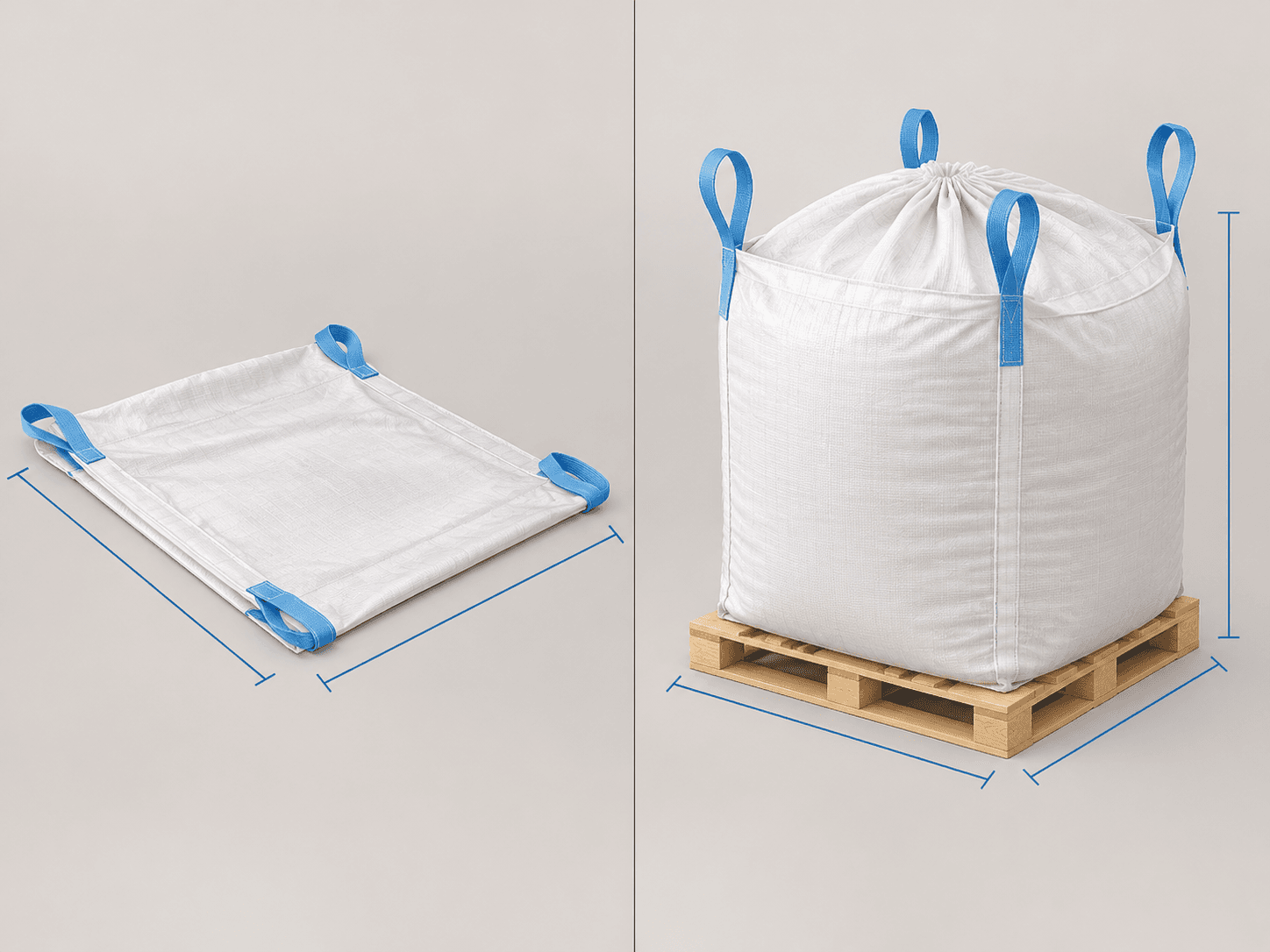
What Is a Super Sack? FIBC vs Bulk Bag vs Jumbo Bag Explained
A buyer searches for a “super sack.” The supplier replies with an FIBC quotation. The drawing is titled “jumbo bag.” The warehouse calls it a bulk bag. Four names, one object—usually.The words are not identical in status. FIBC is the technical term used by standards and industry guidance. Bulk bag, big bag, tote and jumbo bag are trade terms. Super Sack® is a registered trademark, not a generic name for every large woven bag.That distinction matters when a purchase order, a drawing or a customs document uses one term while the supplier uses another. The label helps you find the product family. It does not tell you the safe working load, the filled dimensions, the liner, the lifting arrangement or the compliance route. Those have to be specified.
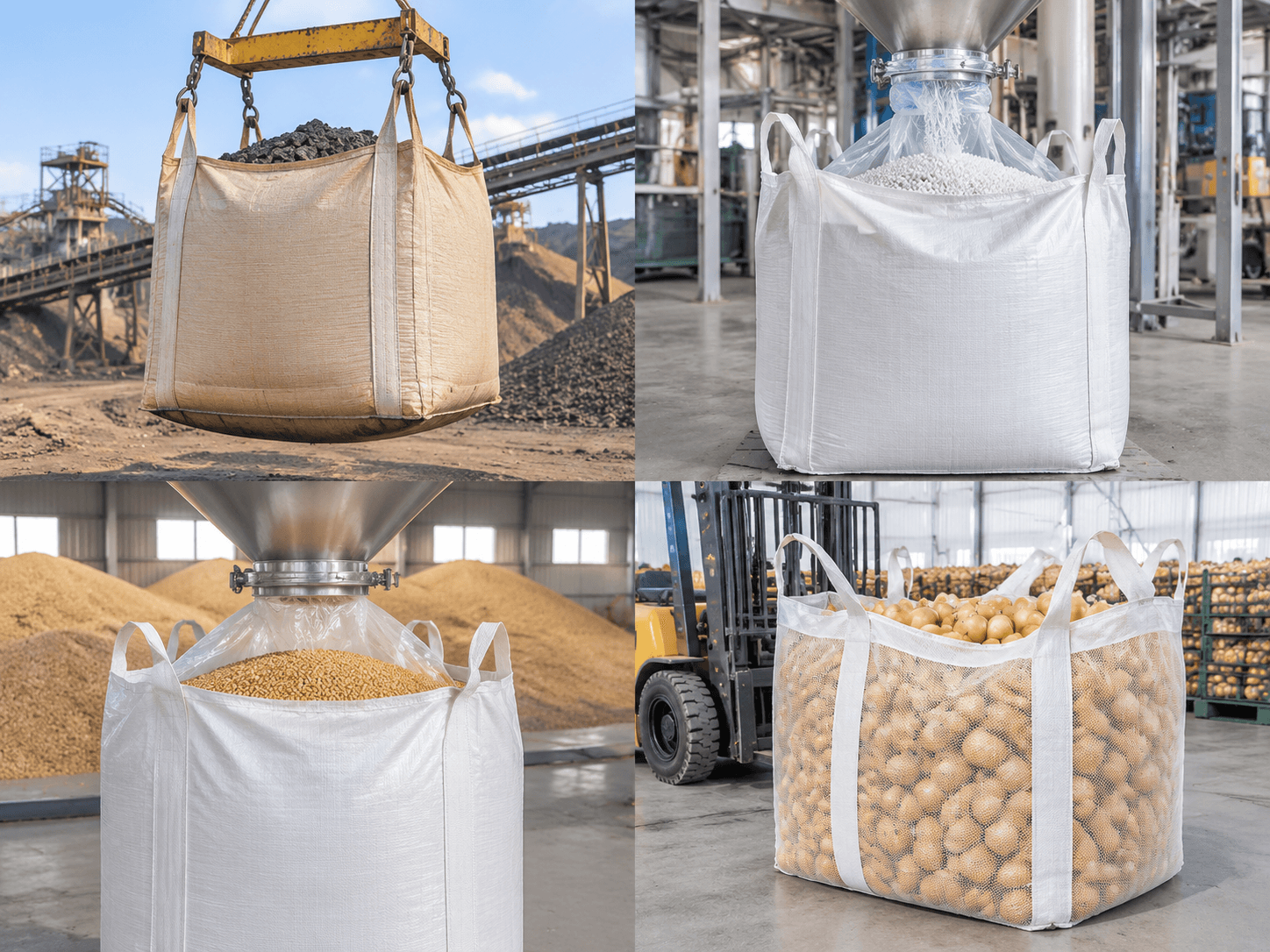
Bulk Bags by Application: Minerals, Fertilizer, Grain and Produce
A mineral concentrate, a fertilizer blend, a load of wheat and a load of onions can all be packed in a bulk bag. They should not all be specified the same way.On a quotation, each may appear as a one-tonne FIBC with a top opening and a discharge spout. In service, the loads behave differently. A dense mineral concentrate can reach its target mass at a low fill level and concentrate stress in the base and seams. A hygroscopic fertilizer can pick up moisture, cake and block the outlet. Grain can arrive dry but become unacceptable if condensation, pests or contamination are not controlled. Fresh produce can lose quality through heat, condensation and handling damage even when the bag itself remains intact.
Want to know more?
Get in touch with us for more information about our services and products.