
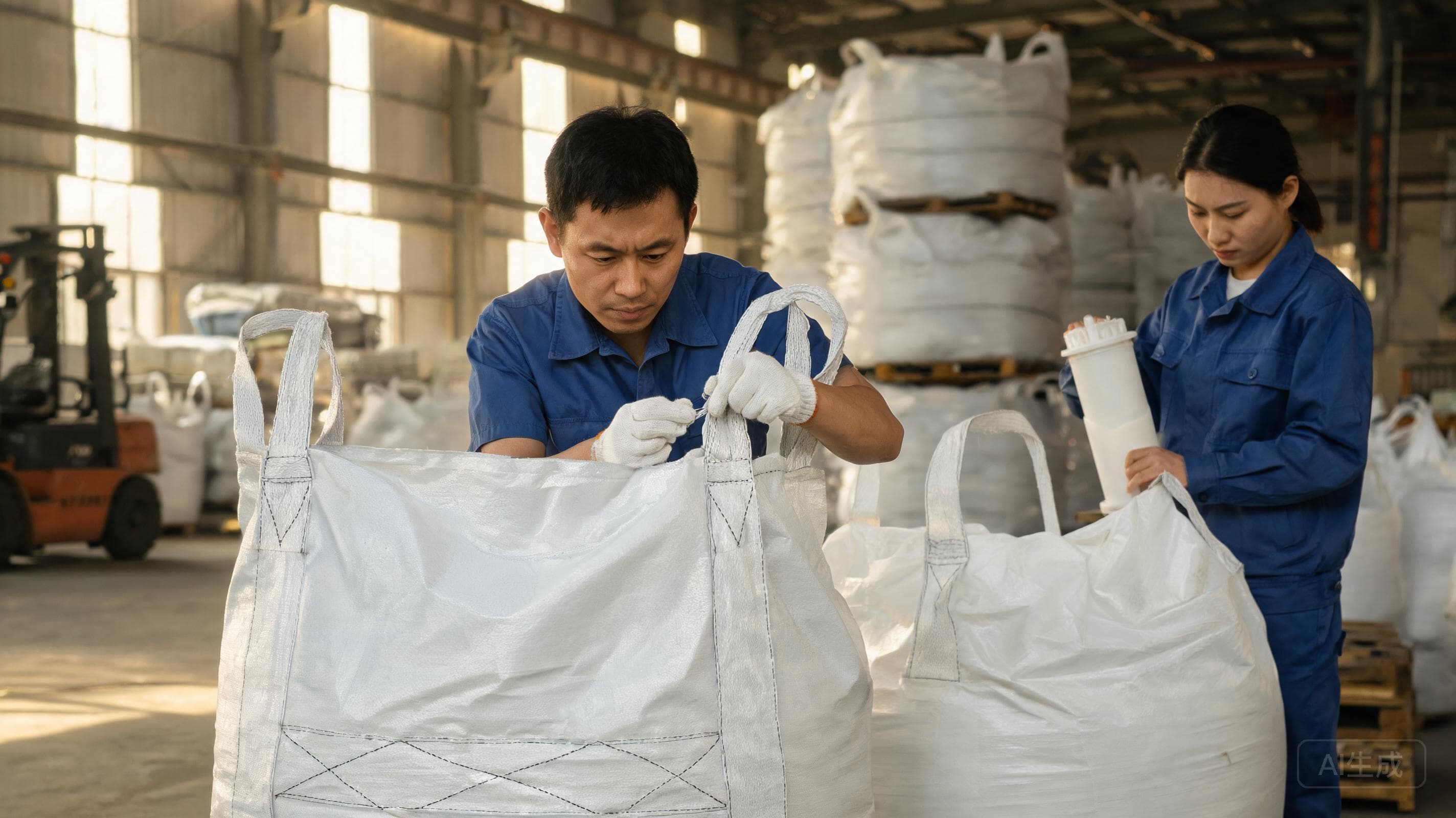
The Ultimate Guide to High-Performance FIBC Bags for Industrial Bulk Packaging

Dayang Yang
AutorCom experiência na fabricação e exportação de big bags FIBC, operamos nossa própria unidade de produção com capacidade estável em grande escala. Somos especialistas em big bags, FIBCs condutivos, FIBCs para grau alimentício, sacos certificados pela ONU e contentores flexíveis personalizados para embalagens industriais e transporte de materiais a granel.
Why Your Bulk Packaging Strategy Needs an Upgrade
The shift toward high-value powders and sensitive chemicals is exposing critical weaknesses in standard bulk bags. Moisture ingress, UV degradation, and static discharge are no longer marginal risks—they’re direct threats to product integrity. As the industrial bulk packaging sector confronts these realities, the limitations of generic Flexible Intermediate Bulk Containers become costly. Adhesive tape failures on seams and spouts remain an “invisible short board” that leads to contamination, while inefficient discharge designs slow down production. Market pressure is mounting: the FIBC sector is on track to reach $8.41 billion by 2034, fueled by mining, construction, chemicals, and the booming new energy battery segment. For procurement and operations leaders, the decision is clear—continue absorbing preventable losses, or switch to engineered moisture-proof bulk packaging that safeguards every kilogram of material. A strategic upgrade to purpose-built FIBCs turns packaging pitfalls into profit.
Tailored Solutions for Moisture-Sensitive & High-Value Materials
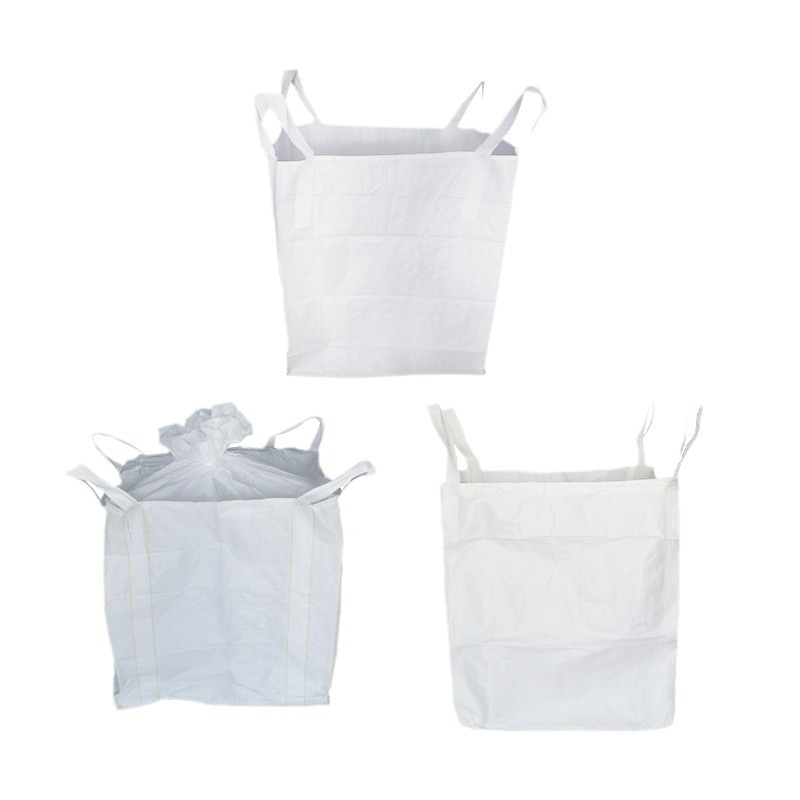
Hygroscopic powders like lithium battery cathode materials demand more than a basic polypropylene bag. Our aluminum lined FIBC integrates an aluminum foil liner and moisture barrier within a light-proof outer wall, creating a true multi-layer defense. This lithium battery powder packaging cuts off oxidation pathways and preserves electrochemical performance from filling through final discharge. For materials sensitive to UV and oxygen, a light-proof FIBC with oxygen barrier properties stabilizes active powders during weeks of storage or overseas container transit. The double-layer structure—a sealed aluminum-plastic inner bag bonded to a heavy-duty PP woven outer—delivers anti-oxidation packaging performance and reliable oxygen barrier bulk bag protection while sustaining a 2-ton load. This same design principle extends to nylon granules packaging and plastic pellet packaging, where moisture control directly prevents production rejects.
Durable Design for Heavy-Duty Industrial Applications
Not every high-volume operation handles battery-grade powders; many move abrasive minerals, construction aggregates, or chemical powders that test bag seams day after day. Our custom White PP FIBC Bags are built for this reality, with double-thread overlock sewing and a cross-reinforced bottom that deliver a rated SWL of 1.5 tons. The cross reinforced jumbo bag architecture prevents base blowouts and keeps loading docks moving. For general industrial bulk packaging tasks, black PP FIBC Jumbo Bags add moisture-proof, dust-proof, and radiation-resistant properties, making them a workhorse heavy-duty PP container bag for mineral, chemical, and feed bulk bags operations. Equipped with an inner lifting loop bulk bag configuration, these FIBCs hang stable on forklift tines or crane hooks—transforming an overhead bulk bag into a controlled, safe handling system. The result is fewer crushed bags, faster cycles, and a sharp reduction in workplace strain.
Expert Customization for Specialized Needs
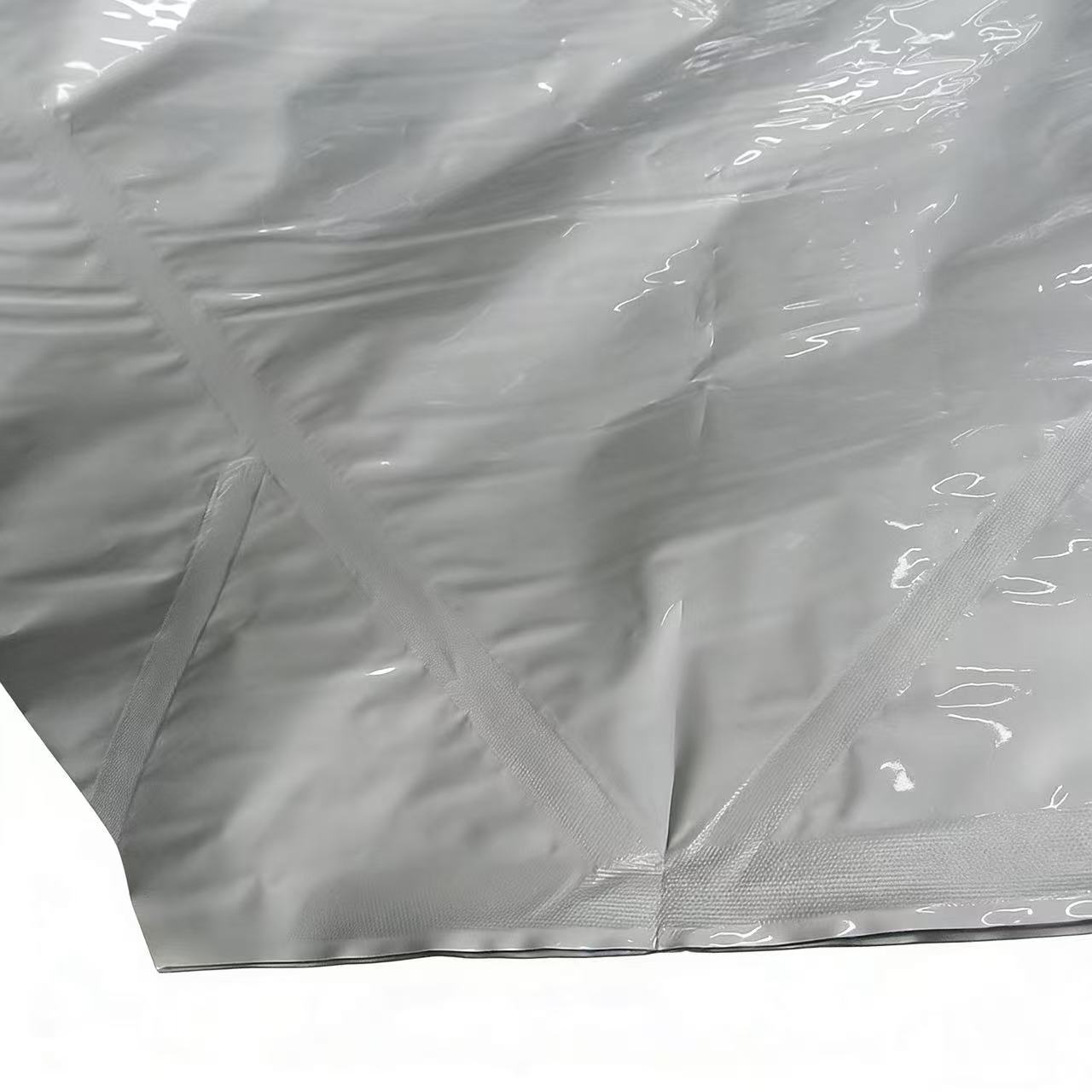
Off-the-shelf FIBCs rarely match the unique demands of high-barrier applications. That’s why we engineer every bulk bag from the ground up. 3-side seal aluminum foil bag construction isolates food-grade or pharmaceutical ingredients, while anti-static bulk packaging with Type C or Type D fabrics neutralizes static charges in explosive dust environments. For controlled discharge, options like a formed inner belly bag promote complete emptying without manual intervention. Soft pallet lifting sling designs interface directly with automated systems, and lifting loop bulk bag configurations can be reinforced for paired crane lifts. As a factory-direct FIBC manufacturer, we combine custom printing, filling spouts, and discharge spouts into one consolidated order—eliminating margin stacking and lead-time guesswork. The deep integration of woven PP strength with aluminum foil laminates creates an independent sealing solution for mineral bulk packaging, flame retardant packaging, or any stream that demands zero-compromise barrier performance. One senior procurement manager at a European chemical group recently consolidated six bag specs into a single validated bulk material handling packaging platform after working with our team.
The Bottom Line: Reduce Waste, Improve Safety, and Boost ROI
Operational data shows that migrating from standard bags to high-performance FIBCs cuts moisture-related product loss by as much as 30%. The savings compound further through reduced rework, faster filling cycles, and fewer workplace incidents. With the woven PP bag market valued at $3,125.2 million in 2024, packaging is no longer a cost center—it’s a competitive lever. Whether you’re shipping lithium carbonate for cathode production or bulk plastic pellets for injection molding, the right Flexible Intermediate Bulk Container improves inventory turns and strengthens supplier reliability. As Tomás R., Regional Sourcing Director at Global Mineral Materials Co., found, switching to engineered jumbo bags eliminated a recurring contamination issue that had stalled two key accounts. A deeper look at how custom FIBC bags solve moisture and static challenges reveals the granular engineering behind these gains. Contact our team today for a consultation and quote—let us design the perfect custom FIBC solution for your bulk material handling challenges.
Related News
Other news you might be interested in
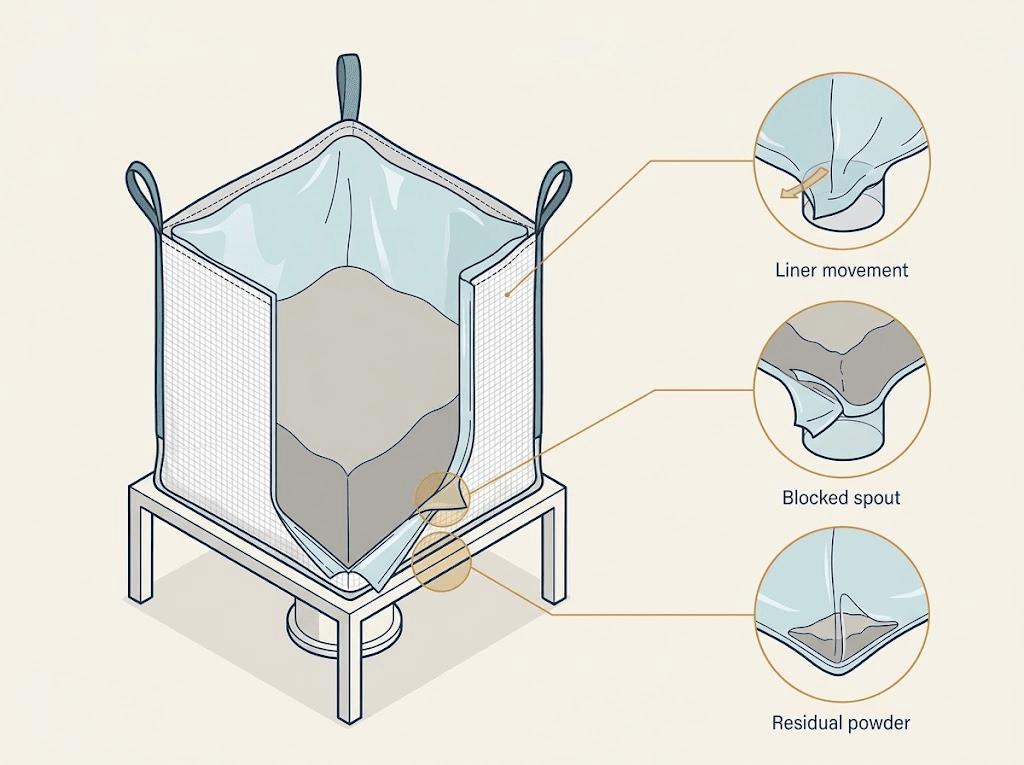
Problemas de Descarga com Liner FIBC: Um Checklist para o Comprador sobre Movimento do Liner, Bocais Bloqueados e Pó Residual
Um big bag forrado chega à linha de produção, mas o pó para de fluir antes de o saco esvaziar. O liner move-se em direção à saída, o material permanece nos cantos inferiores, ou os operadores precisam de assistência repetida para terminar a descarga. Para compradores que encomendam liners FIBC, a pergunta útil é: que informações ajudarão o fornecedor de embalagens e o fornecedor de equipamentos a identificar a causa e concordar com uma especificação melhor? Comece por rever o material, o liner, o saco exterior e o equipamento de descarga em conjunto. O ajuste do liner, as dobras, a configuração do bocal e as características de fluxo do produto podem afetar o desempenho do esvaziamento.
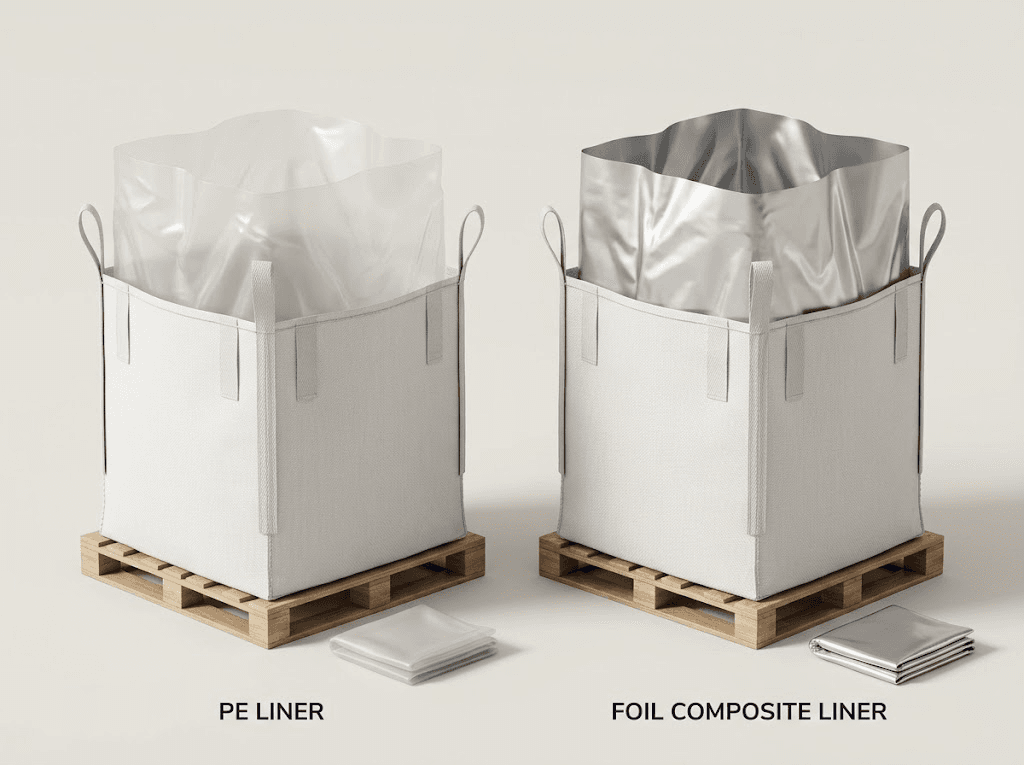
Revestimentos Internos de PE vs. Folha de Alumínio para Sacos FIBC de Pós Sensíveis à Umidade: Um Checklist para o Comprador
A escolha de um revestimento interno para um pó sensível à umidade começa com uma pergunta prática: que proteção o material precisa durante o enchimento, transporte, armazenamento e descarga? Uma solicitação de "sacos a granel à prova de umidade" dá ao fornecedor um ponto de partida, mas não define uma embalagem aceitável. Um revestimento de PE pode atender ao requisito. Um revestimento composto de folha de alumínio pode valer a pena ser avaliado quando o produto precisa de uma barreira de umidade mais forte, proteção contra oxigênio ou proteção contra luz. A decisão deve seguir a especificação real do material, o arranjo de fechamento e os resultados de testes. Este checklist ajuda os compradores a comparar as opções e preparar uma consulta para revestimentos internos de FIBC sem depender apenas de um nome de material.
Want to know more?
Get in touch with us for more information about our services and products.