
U-Panel, Four-Panel, Circular and Baffle FIBCs: Which Bag Construction Fits Your Application?

Dayang Yang
AutorCom experiência na fabricação e exportação de big bags FIBC, operamos nossa própria unidade de produção com capacidade estável em grande escala. Somos especialistas em big bags, FIBCs condutivos, FIBCs para grau alimentício, sacos certificados pela ONU e contentores flexíveis personalizados para embalagens industriais e transporte de materiais a granel.
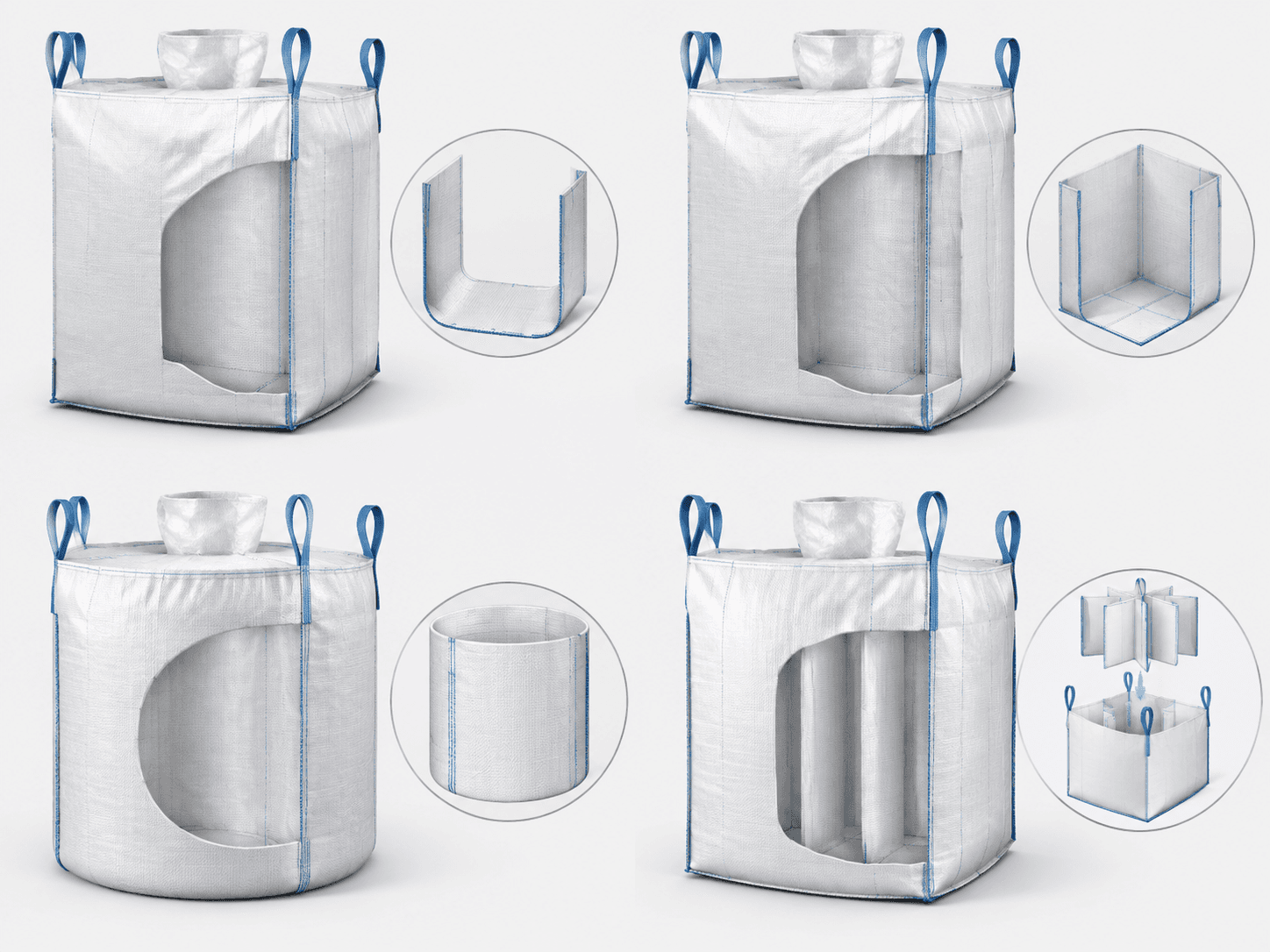
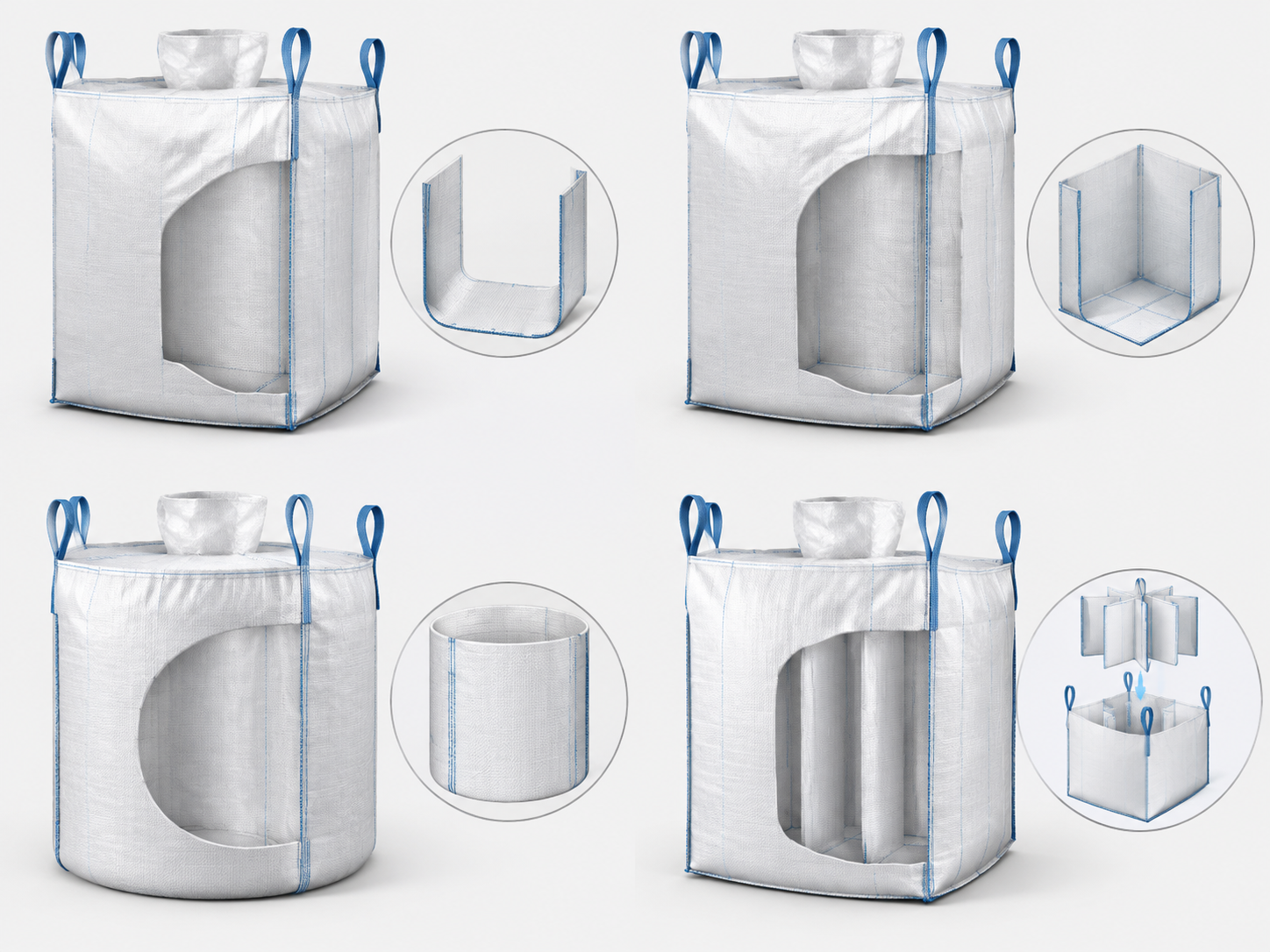
When selecting an FIBC bag, buyers often compare U-panel FIBCs, four-panel FIBCs, circular/tubular FIBCs, and baffle FIBCs (Q-bags). However, these terms do not all describe the same level of classification: the first three generally refer to the bag body’s construction, while baffles are internal shaping features that can be incorporated into a bag. The name alone does not determine a bag’s durability, load capacity, or suitability for a particular material.
First, Understand the Difference Between “Bag Construction” and “Baffle Design”
What Do FIBC, Bulk Bag and Jumbo Bag Mean?
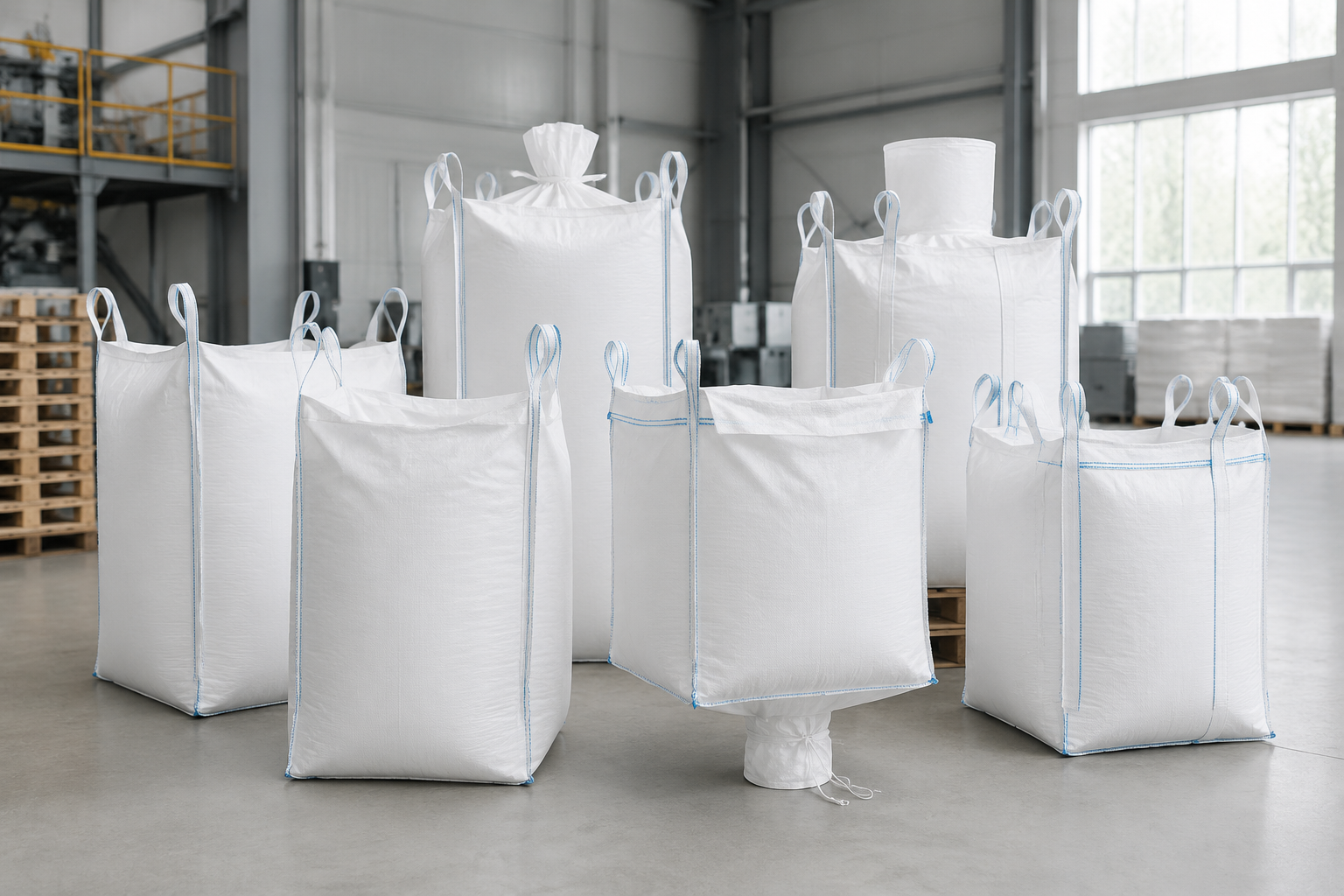
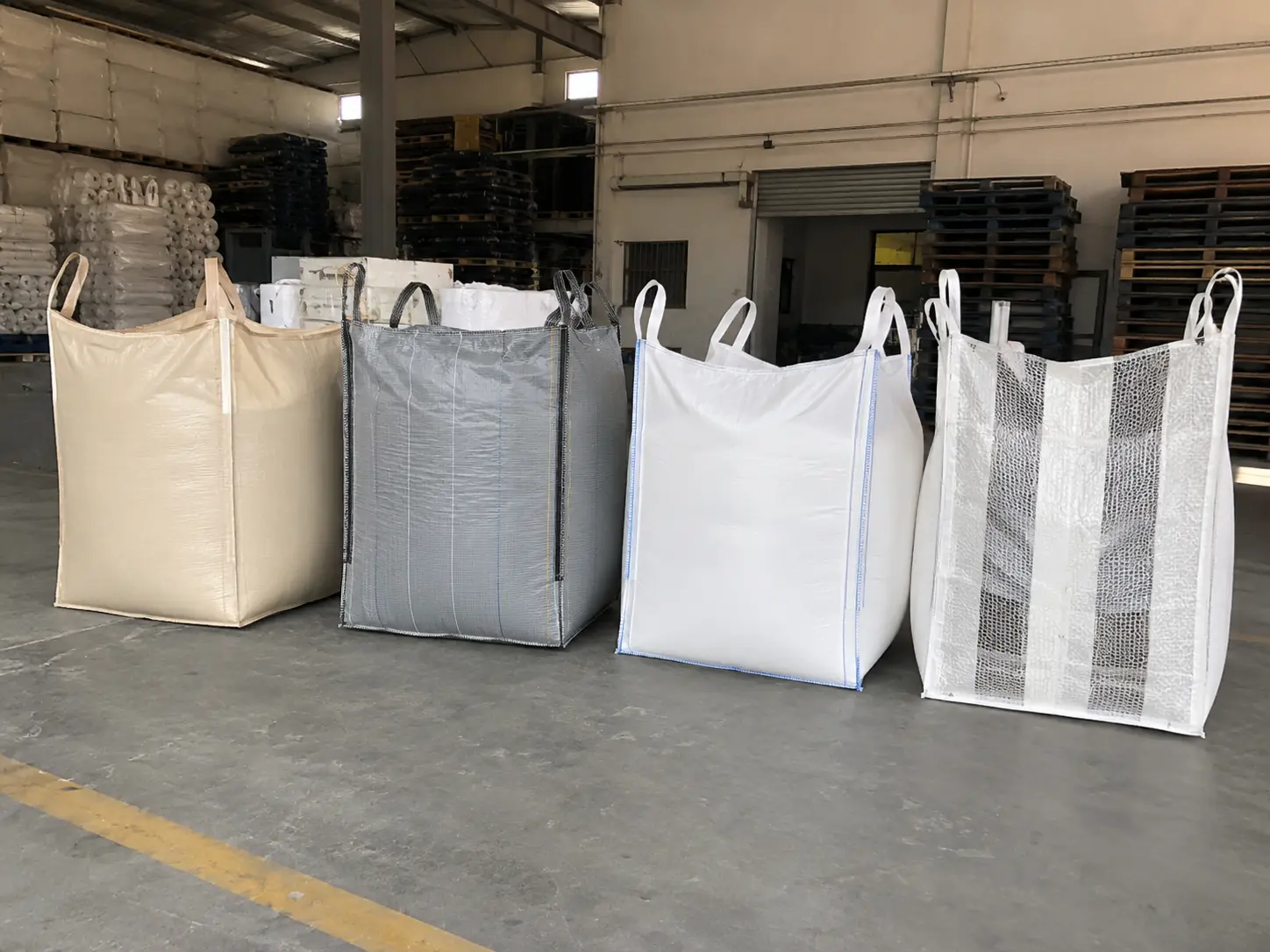
FIBC stands for Flexible Intermediate Bulk Container. Other common terms include bulk bag, big bag, jumbo bag, super sack, and ton bag. Buyers may use different terms in different markets and industries. To identify a suitable bag, check its construction, dimensions, rated load, and configuration—not just its product name.
What Is the Difference Between Bag Construction and Bag Configuration?
Bag construction describes how the bag body is made—for example, whether one fabric panel forms the sides and base, or multiple panels are sewn together. Bag configuration refers to features such as the top filling style, bottom discharge, lifting loops, liners, coatings, and baffles. A bag can combine a particular body construction with one or more of these features.
U-Panel, Four-Panel and Circular/Tubular Are Bag Construction Types
U-panel, four-panel, and circular/tubular generally describe the basic construction of the bag body. They differ in how the fabric panels are formed and where seams are located. However, actual performance also depends on the fabric, stitching, dimensions, load, and handling conditions; it cannot be determined from the construction name alone.
What Are Baffle and Q-Bags, and Why Should They Be Described Alongside the Base Bag Construction?
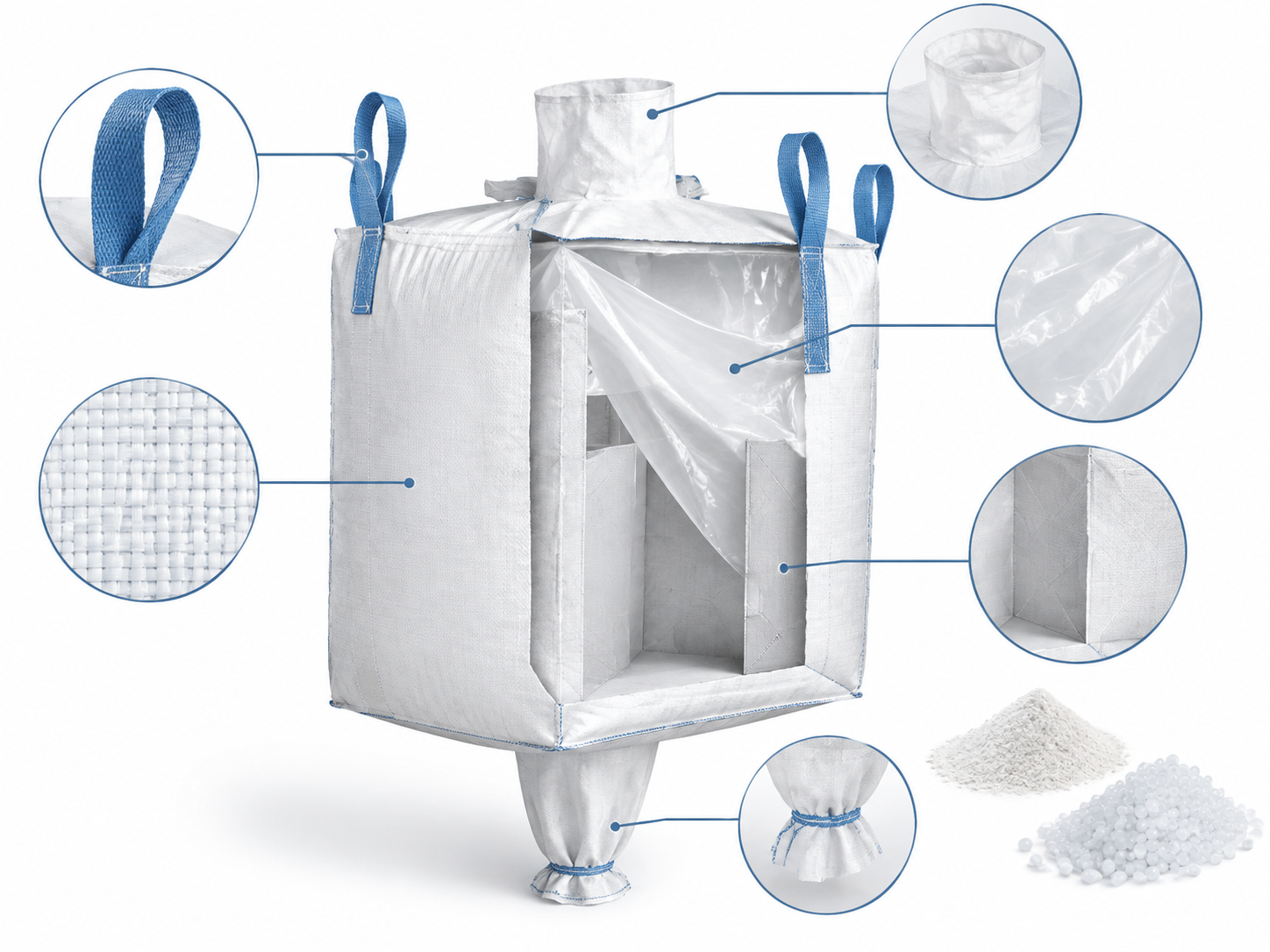
A baffle is an internal panel sewn into the corners of a bag to help it retain a more squared shape when filled. Q-bag is commonly used to describe a bag with this type of shaping feature. When describing a product, it is clearer to identify both the base bag construction and whether it has baffles, rather than treating the two as the same category.
Why Can’t Load Capacity or Safety Be Determined from the Bag Type Alone?
SWL (Safe Working Load) is the load a bag is designed to carry. It is not determined by the bag type alone. Fabric strength, construction, stitching, and the design of the complete bag all need to be considered. The bag’s markings and applicable design and test documentation should also be followed.
What Is a U-Panel FIBC?
Fabric Construction and Stitching of U-Panel Bags
In a U-panel FIBC, one main fabric panel forms two opposing sides and the base of the bag, creating a “U” shape in cross-section. Additional panels are joined to complete the bag. The main identifying feature is how the body fabric is arranged; the construction should not be determined from appearance or a product name alone.
How the Bag Shape Changes When Filled
The filled shape depends on the material volume, bulk density, fill weight, bag dimensions, and filling method. To compare a U-panel bag with another construction, assess the filled bag’s actual width, height, and footprint rather than comparing empty bags.
Suitability of U-Panel Bags for Different Materials and Configurations
U-panel bags can be designed for a range of dry bulk materials. Suitability should be assessed based on the material’s flowability, particle size, moisture content, static properties, and the filling and discharge environment. Bag construction is only one part of the design; it is not a substitute for a complete packaging assessment.
Seam, Liner and Leakage-Control Requirements to Check When Selecting a U-Panel Bag
For fine powders or materials sensitive to contamination or moisture, buyers should specify seam requirements, whether a liner or coating is needed, and whether leakage could occur during actual filling, handling, or discharge. Liners and coatings should be selected to match both the material and its subsequent handling.
What Is a Four-Panel FIBC?
Side Panels, Base and Stitching in Four-Panel Bags
A four-panel FIBC is generally made by sewing four fabric panels together to form the bag body. Unlike a U-panel bag, its key identifying feature is that the body is constructed from separate panels.
Filled Shape, Shape Retention and Pallet Footprint
The filled shape and pallet footprint depend on the bag dimensions, material properties, degree of filling, and external support. If pallet stacking or warehouse space is a concern, verify the filled dimensions against the actual requirements after the specifications have been established. Do not assume that every filled four-panel bag will have the same shape.
Considerations for Stacking, Warehousing and Transport
Stability during storage and transport depends not only on the four-panel construction, but also on even filling, bag dimensions, handling methods, stacking conditions, and pallet compatibility. Compare options against the actual material and operating process.
Seams, Fabric and Liner Configurations to Check for Four-Panel Bags
Confirm the fabric specification, stitching design, target SWL, and whether a liner or coating is required. If dust or leakage control matters, consider the integrity of the complete bag and the filling and discharge processes—not just its construction type.
What Is a Circular/Tubular FIBC?
Weaving Method and Side-Seam Characteristics of Circular Bags
A circular FIBC, also called a tubular FIBC, has a body woven as a tube and cut to the required height. FIBCA notes that this construction can reduce the vertical side seams on the bag body. This does not mean that the complete bag has no other seams or joins.
How Material and Filling Conditions Affect the Filled Shape
The filled shape of a circular bag also depends on the material, fill level, and dimensions. If there are requirements for the filled shape, stacking, or equipment clearance, assess the bag when filled rather than inferring the final shape from the fact that it is circular-woven.
Selection Considerations for Fine Powders, Granules and Moisture-Sensitive Materials
When selecting a circular bag for powders, granules, or moisture-sensitive materials, assess particle size and leakage risk, material moisture content, moisture-barrier requirements, and liner or coating options. The weaving method alone does not provide protection against moisture, contamination, or leakage.
No Side Seams Does Not Mean No Seams or Automatic Leak Protection
Circular weaving reduces the vertical side seams on the bag body, but the base, top, lifting-loop attachments, and other joins still need to be considered. Leakage performance depends on the complete design and application conditions; “no side seams” is not enough to establish that a bag is leakproof.
What Are Baffle FIBCs (Q-Bags)?
How Internal Baffles Help the Bag Retain a More Squared Shape
Baffles sewn into the internal corners can limit outward bulging and help the filled bag retain a more squared shape. The result still depends on bag dimensions, fill condition, material properties, and baffle design.
How Baffle Design Can Be Combined with U-Panel, Four-Panel and Circular Bags
Baffles are generally an internal feature combined with a base bag construction. FIBCA describes them as fabric or other material sewn into the corners of circular or four-panel bags. The specific constructions available should be confirmed against the manufacturer’s design.
Considerations for Pallet Stacking and Transport Space When Selecting Q-Bags
The squared shape of a Q-bag may help with warehouse or transport space utilization. Whether it improves loading efficiency in a particular case depends on the bag dimensions, pallet size, filled shape, and transport constraints. Compare the usable space in practice instead of relying on the product name.
Potential Filling, Discharge, Cleaning and Residue Issues with Baffle Designs
When internal features are added, assess whether the material can be filled and discharged effectively, whether the bag can be cleaned after use, and whether product residue may remain. For materials with poor flowability or a tendency to bridge, check that the baffle design is compatible with the filling and discharge arrangement.
Comparing U-Panel, Four-Panel, Circular and Baffle Bags: Key Differences
Bag Construction: Fabric Panels, Body Weave and Main Seams
The main difference is how the bag body is constructed and where its seams are located: a U-panel bag uses a main panel to form two sides and the base; a four-panel bag uses four fabric panels to form the body; a circular bag uses tubular woven fabric; and baffles are internal components added to a base bag construction.
Filled Shape: Bulging, Squareness and Changes in Footprint
Compare bags by their filled width, height, bulging, and pallet footprint. A baffle design is intended to improve squareness, but the actual result should be verified for the product and specifications in question.
Pallets, Racking and Container Space: Which Dimensions Should Be Compared?
Check the bag’s external dimensions when filled, along with pallet dimensions, rack clearance, container-door openings, and internal container space. Allow for the clearance needed during handling. Comparing only empty-bag dimensions or bag type names will not reliably show how the bag fits in storage or transport.
Fine-Powder Leakage: Which Seams and Construction Details Should Be Checked?
For fine powders, assess the fabric weave, seams, coating or liner, filling method, discharge outlet, and handling process together. A particular bag construction does not automatically provide a particular leakage-control level.
Filling and Discharge: Which Openings Must Be Matched in Addition to the Bag Construction?
Common FIBC top options include an open top, duffle top, conical top, and filling spout. Bottom options can include a flat base, spout bottom, or other discharge arrangements. These features should match the filling equipment, material flowability, and discharge process.
Are Liners, Coatings and Other Custom Features Suitable?
A liner can meet particular product or distribution requirements. A coating can help reduce moisture ingress or product sifting, but its performance depends on the material and design. Select these features based on the material, storage and transport conditions, and applicable requirements; they are not universal solutions for every application.
Cost and Manufacturing Complexity: Why the Bag Type Alone Is Not Enough
Cost can be affected by dimensions, fabric and stitching, load design, lifting loops, top and bottom construction, liners, coatings, and inspection requirements. It is therefore not accurate to say that one bag type is always cheaper or more complex. Compare options with the same specifications and configuration.
How Should Bag Construction Be Evaluated for Different Materials and Operating Conditions?
Material Density, Target Net Fill Weight and Bag Dimensions
Establish the bulk density, target net fill weight per bag, and transport constraints before confirming bag dimensions and rated load. FIBCA includes this information among the product details to gather when determining an FIBC design.
Differences Between Powders, Granules and Free-Flowing Materials
Powders, granules, and free-flowing materials can differ in particle size, flowability, dust generation, and discharge behavior. Consider the material together with the fabric, seams, liner, and filling and discharge configuration, rather than selecting a bag by industry category alone.
Particle Size, Moisture Content, Hygroscopicity and Protection Requirements
Particle size can affect sifting risk; moisture content and hygroscopicity can affect the need for moisture protection or a barrier. The need for a coating or liner should be determined from the material and storage environment.
Material Flowability, Bridging and Static Buildup
Materials can differ in flowability, their tendency to bridge, and their potential for static buildup. These properties affect filling, discharge, and safety assessments. For applications involving static risk, select a design based on the specific material and operating environment—not bag construction alone.
Filling Method, Filling Equipment and Material Temperature
Confirm the filling equipment, inlet dimensions, bag suspension method, and filling temperature to avoid a mismatch between the bag and production line. FIBCA’s design information checklist also identifies the filling and discharge environment and fill temperature as relevant considerations.
Storage Time, Handling Method, Stacking Conditions and Transport Route
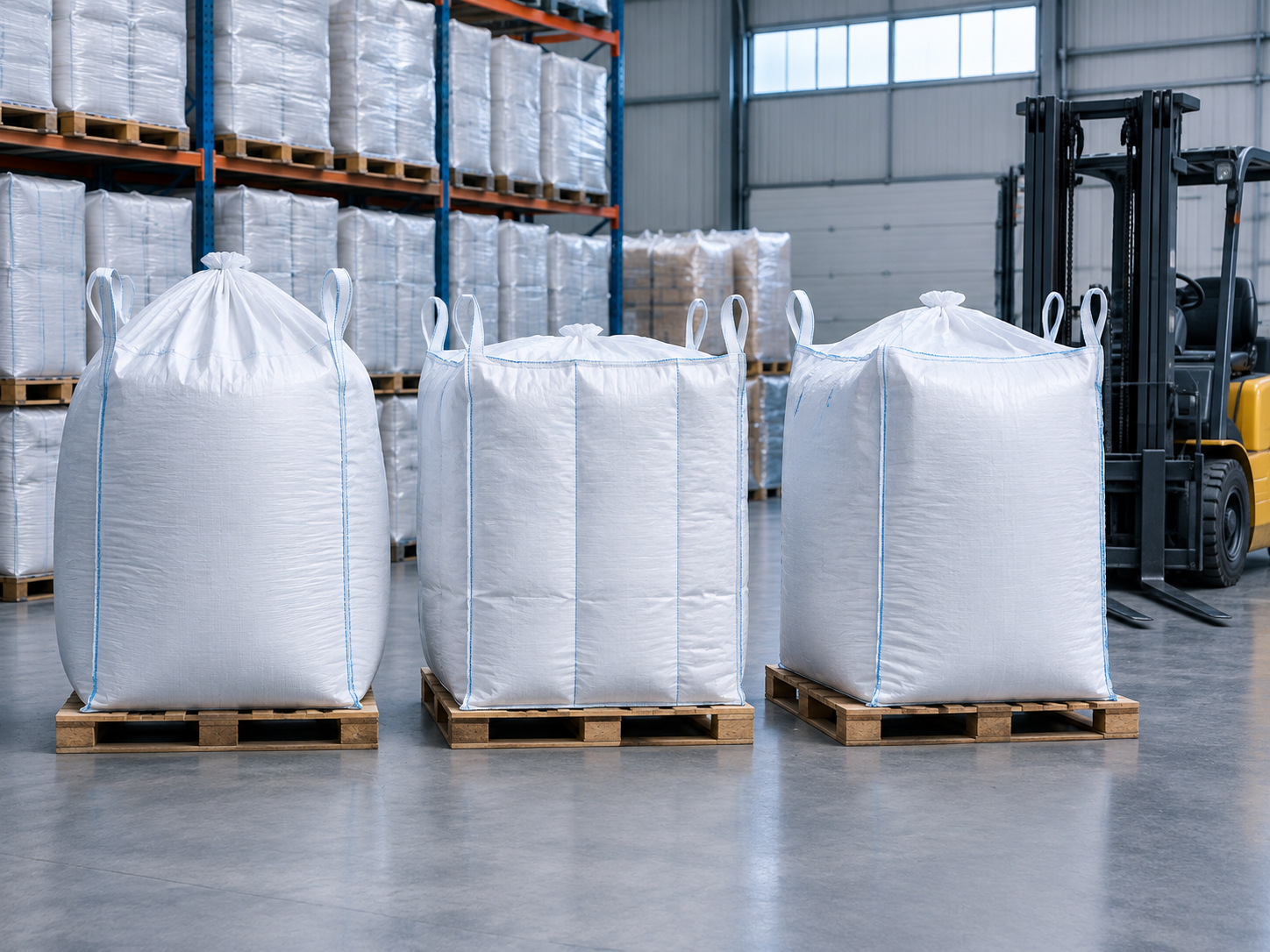
Storage time, handling equipment, stacking method, and transport route all affect the conditions in which a bag is used. Consider the filled bag’s stability, pallet, and equipment requirements as part of the complete design, and follow the bag’s markings and applicable handling instructions.
Which FIBC Specifications Should Be Confirmed Beyond the Bag Construction?

SWL and Target Net Load
The SWL (Safe Working Load) should be appropriate for the target net load and the bag’s intended use. Do not treat target net fill weight as the bag’s entire design load, or infer SWL from the bag type alone.
Fabric Strength, Stitching and Complete-Bag Verification
Verify the fabric strength, stitching, lifting-loop attachments, and design and test documentation for the complete bag. A construction name describes how the bag is made; it does not replace verification of the finished bag’s performance.
Lifting-Loop Style and Handling Equipment
Confirm the number and position of lifting loops and how forklifts, hooks, or other handling equipment will support the bag. The lifting method must match the bag design and site operating requirements.
Top Filling Style and Bottom Discharge Style
Select the top filling configuration and bottom discharge configuration to suit the production line. Confirm equipment interfaces, dust control, and material discharge requirements. Top and bottom features are separate design dimensions from the bag body construction.
Coatings, Liners and Moisture or Leakage-Control Requirements
Based on the product’s hygroscopicity, particle size, cleanliness requirements, and transport environment, confirm whether a liner, coating, or another barrier is needed. Describe the problem the feature is intended to address; do not assume that a liner or coating meets every protection requirement.
Special Requirements for Food, Dangerous Goods or Other Applications
For applications involving food, pharmaceuticals, dangerous goods, or other regulated requirements, first confirm the applicable regulations, customer specifications, and required documents. FIBCA’s design information also identifies food-safety and pharmaceutical requirements, as well as dangerous-goods properties, as details to clarify.
FIBC Bag Construction Selection Checklist
Prepare Material and Target-Load Data
Gather the material name, bulk density, particle size, moisture content, flowability, target net fill weight, and any relevant special-risk information. This provides the basis for discussing bag construction and specifications.
Confirm Filling, Discharge and Handling Equipment
Specify the filling inlet, discharge method, lifting or forklift equipment, and the bag’s operating sequence in production and warehousing. This helps ensure that the bag construction, top, bottom, and lifting loops work together.
Confirm Storage, Pallet, Stacking and Container-Dimension Constraints
Provide requirements for pallets, racking, and transport space, then check storage and transport compatibility using the bag’s filled dimensions. If space utilization is a priority, validate the design with the bag filled.
Specify Leakage, Moisture, Liner and Compliance Requirements
List leakage control, moisture protection, liners, coatings, food-safety requirements, and dangerous-goods requirements separately. Ask the supplier to explain the design basis and provide relevant documentation.
Verify the Solution Through Specification Review, Samples or Filling Tests
Before placing a bulk order, use written specification approval, sample assessment, or suitable filling validation to check whether the dimensions, shape, handling, filling and discharge, and protection features meet expectations. The scope of verification should match the material and operating environment.
Frequently Asked Questions About FIBC Construction Selection
Are Baffle Bags and Q-Bags the Same?
A baffle bag is an FIBC with internal baffles. Q-bag is commonly used for a bag that uses baffles to improve its squared shape. However, buyers should verify the specific construction and specifications rather than assuming that all products described by these terms are identical.
Can a Baffle Bag Only Have a Four-Panel Construction?
No. FIBCA’s description of basic designs notes that baffles can be used with circular or four-panel bags. The specific construction should be confirmed from the product design.
Is a Circular Bag Always More Leak-Resistant Than a Bag with Side Seams?
That cannot be assumed. A circular bag reduces vertical side seams on the bag body, but other joints remain. Leakage performance also depends on the fabric, seams, coating or liner, particle size, and handling method.
Does a More Squared Bag Mean It Can Be Stacked Higher?
Not necessarily. Squareness may help with space utilization, but permitted stacking methods and height depend on the bag design, load, stability, and site safety requirements. They cannot be inferred from the bag’s shape alone.
Does the FIBC Bag Type Determine Its SWL?
No. SWL is a design parameter for the complete bag and must be confirmed based on factors such as its construction, fabric, and stitching.
Can One Bag Construction Be Combined with Different Tops, Bottoms and Liners?
Yes. Different top filling styles, bottom discharge styles, and liners can be combined according to the product design. Each combination must still be checked against the bag construction, material, equipment interface, and operating requirements.
In summary, U-panel bags, four-panel bags, and circular bags describe different bag-body constructions, while baffle bags highlight an internal shaping feature. Select a design based on the material, load data, equipment, warehousing and transport conditions, and any special protection requirements. No single bag type is automatically the best choice for every application.
Related News
Other news you might be interested in

FIBC Bag Safety: Understanding Safe Working Load, Safety Factor, and Safe Handling
Bag safety cannot be judged by load weight alone. The bag’s design, construction, and rated load must match the material and operating conditions. Different FIBC bag types and load capacities may have different filling, lifting, and discharge requirements. ISO 21898:2024 covers the materials, construction, design, testing, marking, selection, and safe use of FIBCs for non-dangerous solid goods. On-site operations must also follow the manufacturer’s instructions and applicable regulations.

The 140th Canton Fair: New Global Sourcing Opportunities for FIBC Ton Bags and Industrial Packaging Companies
The 140th Canton Fair will be held in Guangzhou from October 15 to November 4, 2026, across three phases. The first phase will focus on advanced manufacturing, industrial manufacturing, machinery, new materials, and chemical products. For export-oriented industrial packaging companies, the 140th Canton Fair will serve not only as a product exhibition platform, but also as an important opportunity to connect with overseas buyers, suppliers, and global supply chain resources.
Want to know more?
Get in touch with us for more information about our services and products.