
Do Fertilizer Bulk Bags Need Liners? A Buyer’s Checklist for Moisture, Caking and Discharge

Dayang Yang
AuthorWith experience in FIBC bulk bag manufacturing and export sales, we operate our own production facility with stable large-scale capacity. We are specialists in bulk bags, conductive FIBCs, food-grade FIBCs, UN certified bags, and customized flexible intermediate bulk containers for industrial packaging and bulk material transportation solutions.
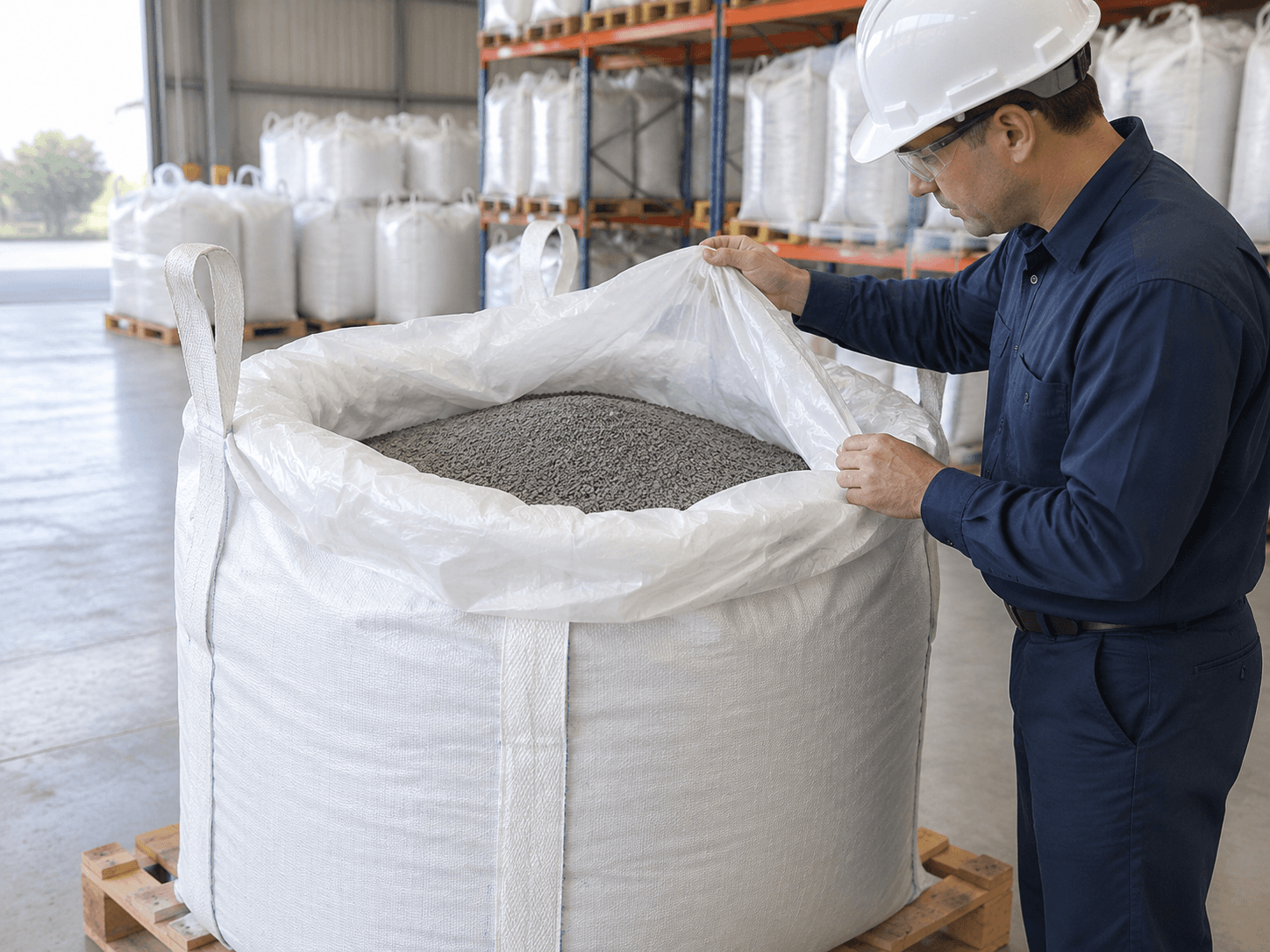
Fertilizer bulk bags are often referred to as having liners, as if liners were a standard safety feature. It should not be treated like this. The useful question is not just 'Do fertilizer bags need padding?' but 'What protection does this fertilizer require, through this route, in this bag, with this filling and discharge system?'
The answer not only affects material costs. The lining of fertilizer bags has changed the way they are filled, closed, handled, and emptied. It can reduce the entry of moisture and dust leakage, but if the complete design is not checked, it can also capture air, move during emissions, or cause closure issues.
This list is applicable to fertilizer manufacturers, mixers, contract packers, and packaging distributors, comparing fertilizer bulk bags with lined and coated or uncoated container bags. It explains when it can be proven that the lining is reasonable, what the coating can and cannot do, and what information needs to be prepared before requesting a sample.
Short answer
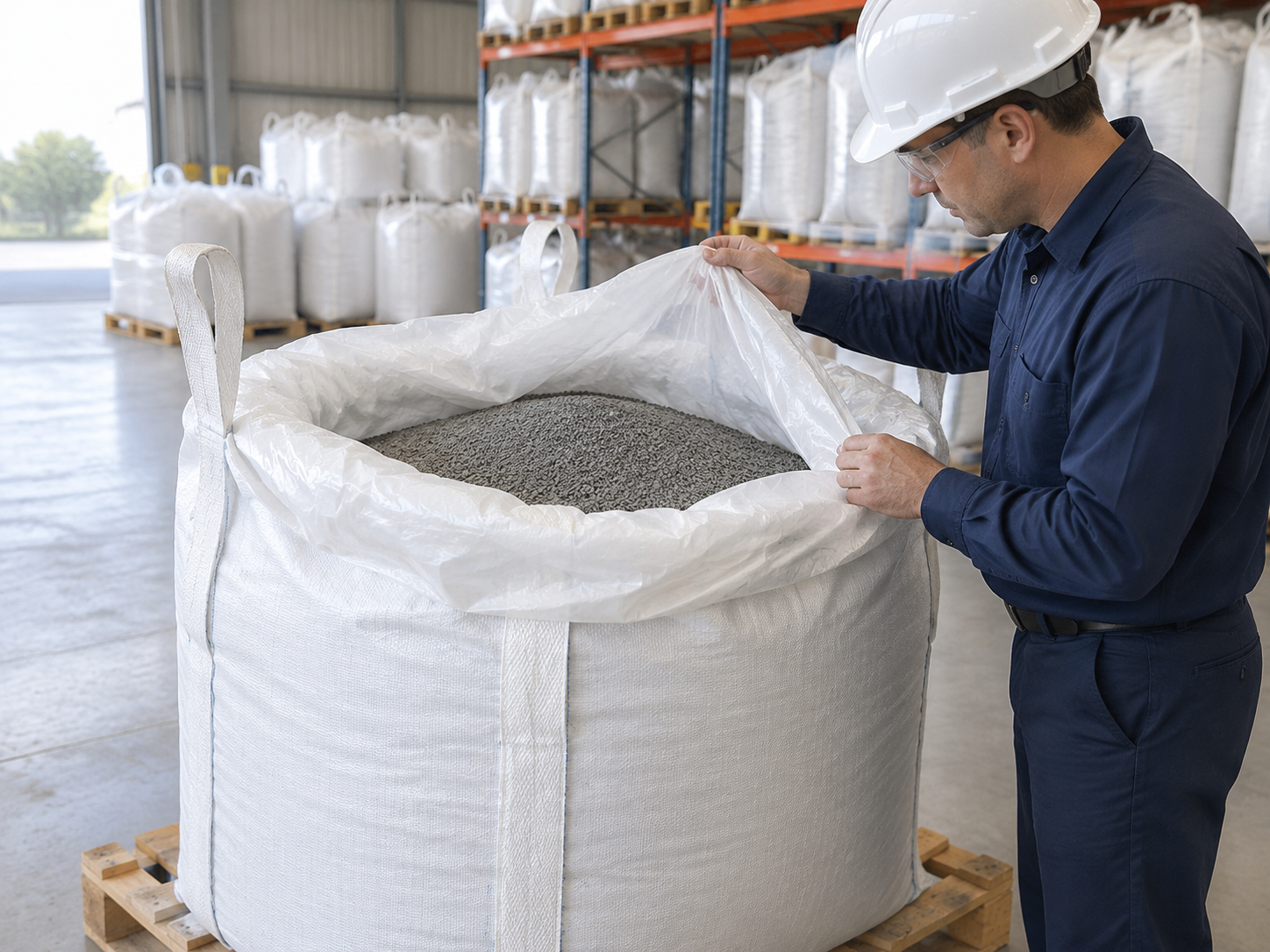
Not all FIBCs used for fertilizers require separate liners. In the following situations, the pad may be worth evaluating:
Fertilizers have hygroscopicity or a known risk of clumping under expected storage and transportation conditions.
This route involves the real risks of long-term storage, repeated temperature changes, or condensation.
Fine powder or dust must be controlled, otherwise pollution must be controlled.
The current packaging has not passed the agreed moisture or product condition test.
The buyer's specifications require that the proposed coating bag cannot prove its barrier performance.
When the product is less sensitive, storage and transportation conditions are controlled, the route is short, and existing regulations are reliably implemented, coated or uncoated bags may be sufficient. However, decisions should still refer to the actual fertilizer grade and operating conditions, rather than the term 'fertilizer'
These are the initial assumptions. The final selection should be confirmed through sample testing and agreed upon acceptance criteria.
Fertilizer is not a material
The behavior of urea, ammonium sulfate, monoammonium phosphate, potassium fertilizer, and mixed products is different. Most fertilizers have some degree of hygroscopicity and can absorb moisture from moist air. Moisture absorption can cause clumping, dust formation, and poor handling. one
At a given temperature, fertilizers have a critical relative humidity (CRH). Beyond this humidity level, it can begin to absorb moisture; Below it, it usually doesn't. The published values vary depending on the product and temperature, so a humidity target should not be applied to each fertilizer grade.
Agglomeration is not only caused by moisture. Storage time, chimney pressure, temperature cycling, fines, mixing, and processing can also have an impact. The lining of fertilizer bags can reduce a pathway for moisture to enter, but it cannot replace dry storage, good sealing, or proper handling.
That's why suppliers need actual product names and grades, not just the word 'fertilizer'. If the product is a mixture, please provide the ingredients and confirm that the packaging plan has been reviewed for the mixture.
Separate the bag, coating, lining, and lid
Buyers often compare quotes as if the coating and lining are interchangeable. They are not.
| Package element | What it does | What it does not prove |
|---|---|---|
| Woven FIBC body | Provides strength and bulk handling | Woven fabric alone is not a moisture barrier |
| Coating | Reduces airflow and product migration through the fabric | A coating is not automatically equivalent to a separate liner or a complete moisture barrier |
| Separate liner | Adds an inner film barrier and can help contain fine material | The liner alone does not guarantee a sealed or suitable package |
| Seams and closure | Determine whether the assembled package stays closed | A closed-looking opening is not proof of seal integrity |
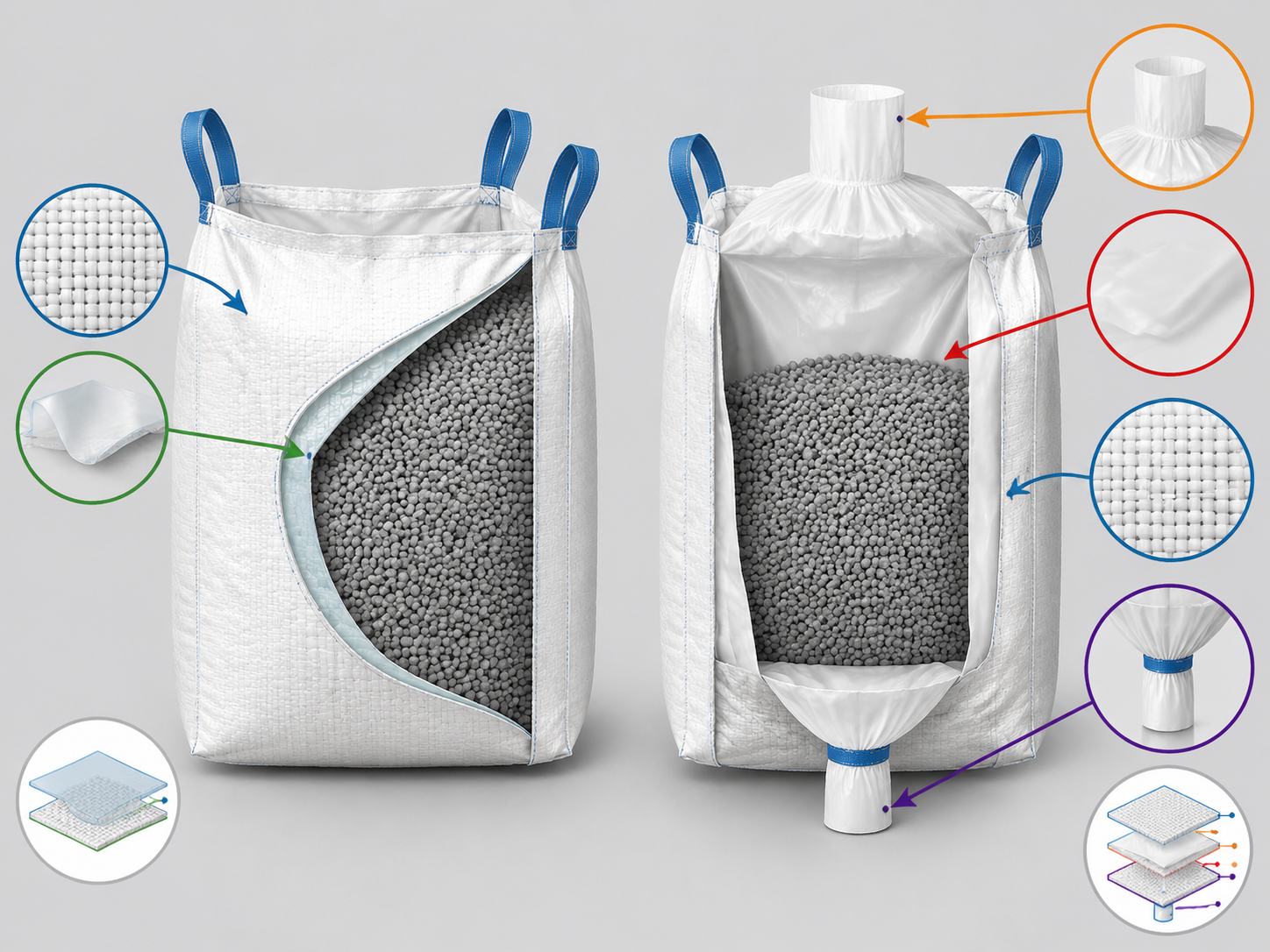
Industry guidelines also make the same distinction: coatings can help reduce dust or slight moisture exposure, but should not be automatically considered as separate liners or complete moisture barriers.
Therefore, for moisture-proof fertilizer bags, the specifications need to describe a complete system:
Outer bag structure and size
Coating (if any)
Lining material, structure, and thickness
Pad shape and accessories
Filling port, discharge port and sealing method
Product conditions required at the end of storage
Changing an element can alter the outcome. The new lining in the existing bag will not automatically undergo replacement of the same type.
What kind of padding should fertilizer buyers consider?
There is no universal 'fertilizer liner'. Starting from protecting the target, then comparing materials and geometric shapes.
PE lining
Polyethylene lining is commonly used for general moisture, dust, and product separation. Their applicability depends on the film specifications, complete bag design, and sealing. Just because the PE lining is described as' moisture-proof ', it cannot automatically meet the requirements
Aluminum foil composite liner
When product specifications require a stronger moisture-proof layer or additional oxygen or light protection, aluminum foil composite lining may be worth evaluating. They should be considered based on defined requirements, rather than just selecting from material names.
If barrier performance is important, please provide relevant water vapor transmission rate (WVTR) or oxygen transmission rate (OTR) data, as well as testing methods, units, temperature and humidity conditions, and identification of test samples. Film data does not automatically describe the performance of finished lining, seams, or closures.
Our PE and aluminum foil FIBC lining guidelines explain how to compare these material options. For the decision of this fertilizer, it is more important that the liner must be suitable for the product and the complete processing system.
Forming or laying structure
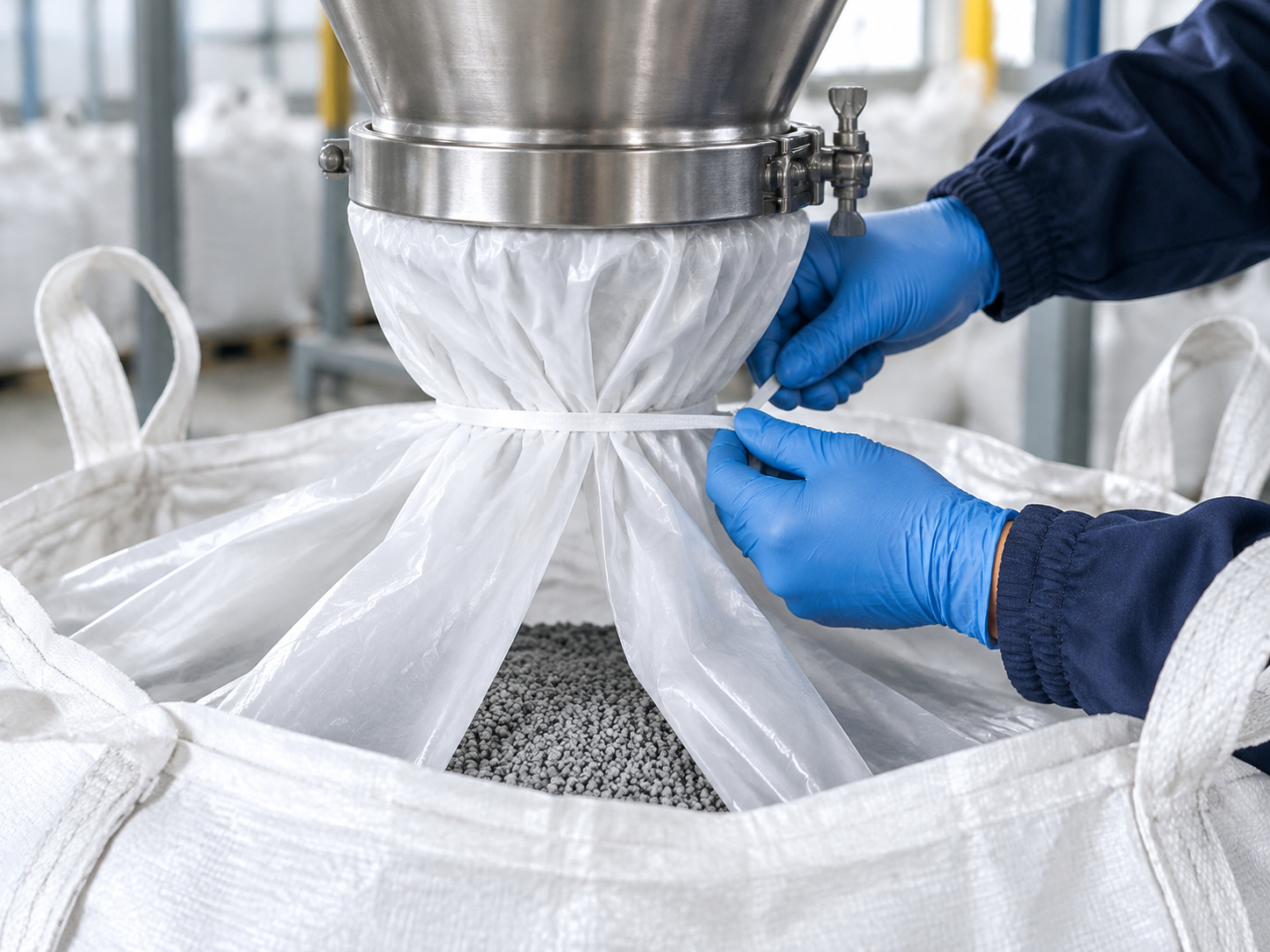
The appropriate shape of the lining matches the internal geometric shape of the bag. Flat or standard padding with simpler layout. The selection will affect filling, nozzle alignment, folding, connection, and discharge. This is a geometric decision and also a material decision.
Please ask the supplier to explain how to secure the proposed pad. The FIBCA guidelines require the pads to be properly connected or secured so that they do not come off during discharge, and to fasten the pads according to the manufacturer's closure instructions. three
Our wider range of FIBC lining types and customized ordering guidelines provide more detailed coverage of standard and shape fit structures.
Check the filling, sealing, and discharge together
When there is a ton of fertilizer in the bag, the correct padding in an empty bag may have different performances. Review the process in order.
fill
Confirm how the opening of the pad aligns with the filling port or luggage. Consider whether the air displaced during the filling process can escape, whether the lining can be fixed in place, and whether the filling equipment can be connected without stretching or tearing the film.
closure
Inquire about how the lining will close and how to check the closure status. If heat sealing is recommended, please confirm that the laminated board is suitable for the available equipment and determine the recommended sealing conditions. The specifications of bundling pads and heat sealing pads are different.
discharge
Check the outlet size, lining length, and connection method together. Loose lining may move towards the outlet or hinder flow. A pad that is too short or improperly secured can cause wrinkles and preserve the material.
If there is already an emission issue with the current packaging, please describe the location of the problem and provide photos of the bag and outlet. Don't assume that replacing the film can solve geometric or adhesion problems.
Build sample experiments around real risks
The sample should be tested for the entire packaging under conditions similar to the intended use. Before the experiment, it is best to reach an agreement with the product and quality teams on the acceptance criteria.
| Trial point | What to record |
|---|---|
| Fertilizer | Product name, grade, form, bulk density and any relevant restrictions |
| Package | Outer bag, liner, coating, dimensions, openings and closure |
| Filling | Equipment, fill weight, liner position and air displacement |
| Conditions | Temperature, humidity, storage time and handling sequence where known |
| Storage | Product condition, package condition and any observed moisture or caking |
| Discharge | Liner movement, obstruction, dust and residual material |
| Documents | Approved drawing, liner construction, sample reference and trial result |
For products that are sensitive to humidity, visual inspection alone may not be sufficient. Agree in advance on how to evaluate the product condition and who will approve the results. Experiments should distinguish substantive issues from closure, handling, or storage issues.
Retain approved specifications and sample references for future repeat orders. If there are changes in fertilizer grade, lining structure, bag design, or closure, please review whether the previous approval still applies.
Do fertilizers need UN packaging?
Fertilizer is a broad commercial category, not a transportation classification. Some fertilizer grades are regulated hazardous materials; Many people don't. The safety data sheet, UN number, packaging category, concentration, and mode of transportation determine whether UN certified packaging is required and which packaging is allowed to be used. six
Do not accept the generic term 'UN fertilizer certification' for bags. Request evidence to prove that the specific packaging design and labeling match the product classification and transportation method. Pads are also part of the packaging system and should be included in the scope of review.
If the product contains dust, static electricity, or other special hazards, please conduct a technical review of the entire FIBC system (including lining). It should not be assumed that the standard moisture-proof lining meets all other requirements.
Prepare better fertilizer bulk bags for inquiry
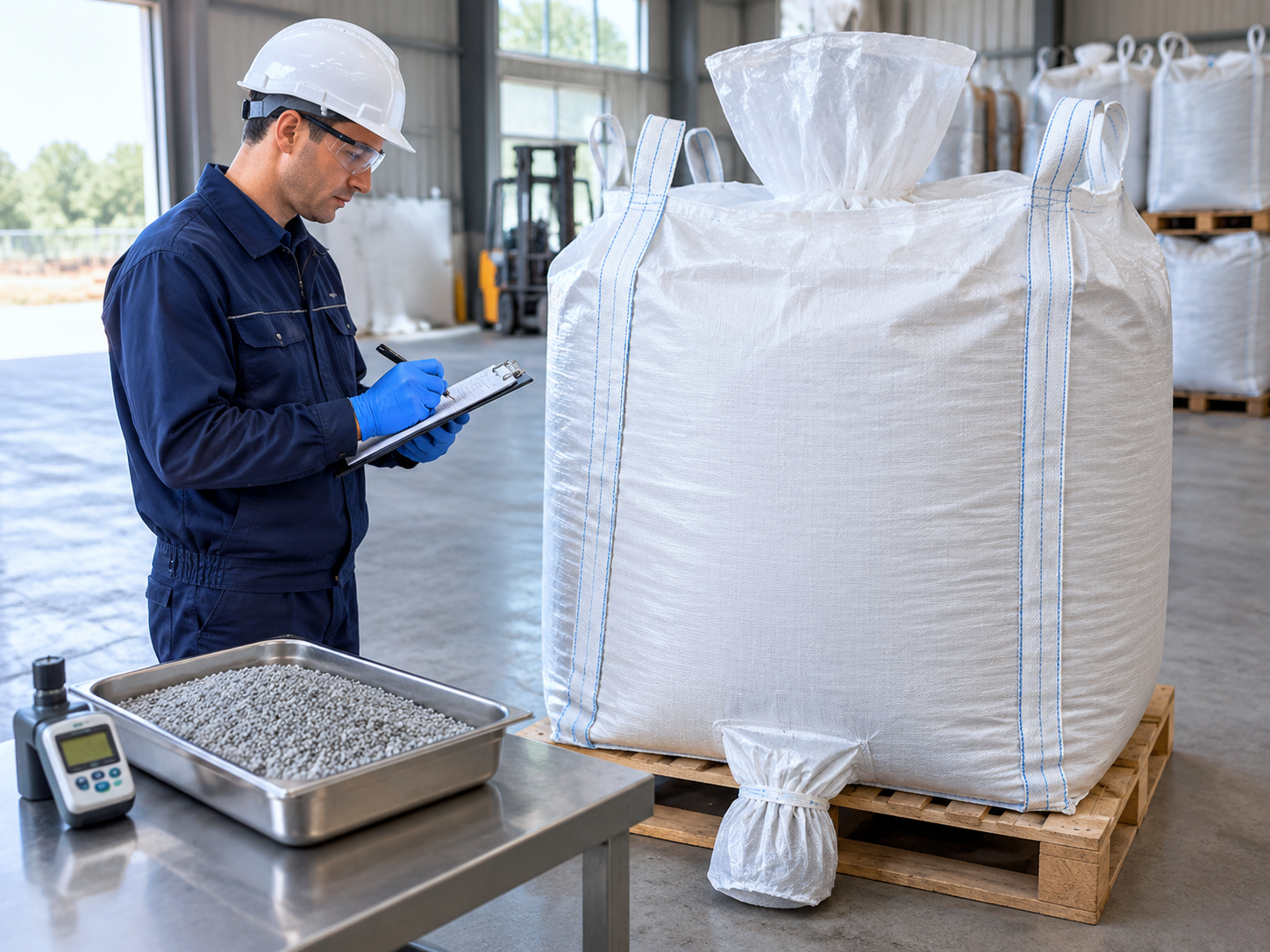
The quickest way to obtain a useful quote for customized fertilizer bulk bags is to describe the product and the risk of failure, not just the size of the bag.
including:
Fertilizer name and grade, including whether it is a mixture.
Product form, particle size, or powder characteristics (if relevant).
Safety data sheet and transportation classification (if the product is regulated).
Humidity sensitivity and current faults, including points of agglomeration, dust, or pollution during travel.
Storage and transportation conditions, including expected duration and any known humidity or temperature exposure.
Outer bag size and expected filling weight.
Filling and discharging equipment, including nozzle and outlet dimensions.
Shipping preferences (if any) and their reasons.
Sealing methods and equipment that can be used for sealing or bundling.
Sample requirements, quantity, destination, and required delivery date.
Send drawings or clear photos (if available). If the measurement value is missing, please mark it as missing instead of letting the supplier assume the size.
Questions to ask before approving a quotation
Use these questions to test whether two bulk fertilizer quotation bags are truly comparable:
What is the complete lining structure besides the nominal thickness?
What test data is available and under what conditions was it generated?
Is the result a film sample or a finished pad?
How is the pad connected and how is it closed?
How does the design perform during the filling and discharging process?
Does this proposal solve the actual product malfunction or only add padding?
Is the packaging suitable for the transportation classification of fertilizers?
What kind of sample test will be used and who approves the results?
What specifications will be repeated for future orders?
Please use quotes that rely solely on phrases such as "moisture-proof", "high barrier", or "heavy-duty" with caution. These words may describe an intention, but they cannot replace construction drawings, testing conditions, closure methods, or approved samples.
Conclusion
Some fertilizer bulk bags require lining; Others don't. The decision should follow the fertilizer grade, moisture and clumping risk, storage and transportation routes, filling and discharge processes, and any applicable hazardous material requirements.
Use coating, lining, and cover as a packaging specification. Request comparable data, test the complete design with expected products, and use approved samples as references for repeat orders.
FIBC World accepts customized bulk bags and liner inquiries based on cargo and packaging arrangements. View our aluminum foil FIBC liner series and contact FIBC World to inform you of your fertilizer grade, filling and discharge details, storage conditions, and order quantity. Before placing an order, it is required to confirm the available designs, sample arrangements, minimum order quantity, and delivery cycle.
Related News
Other news you might be interested in
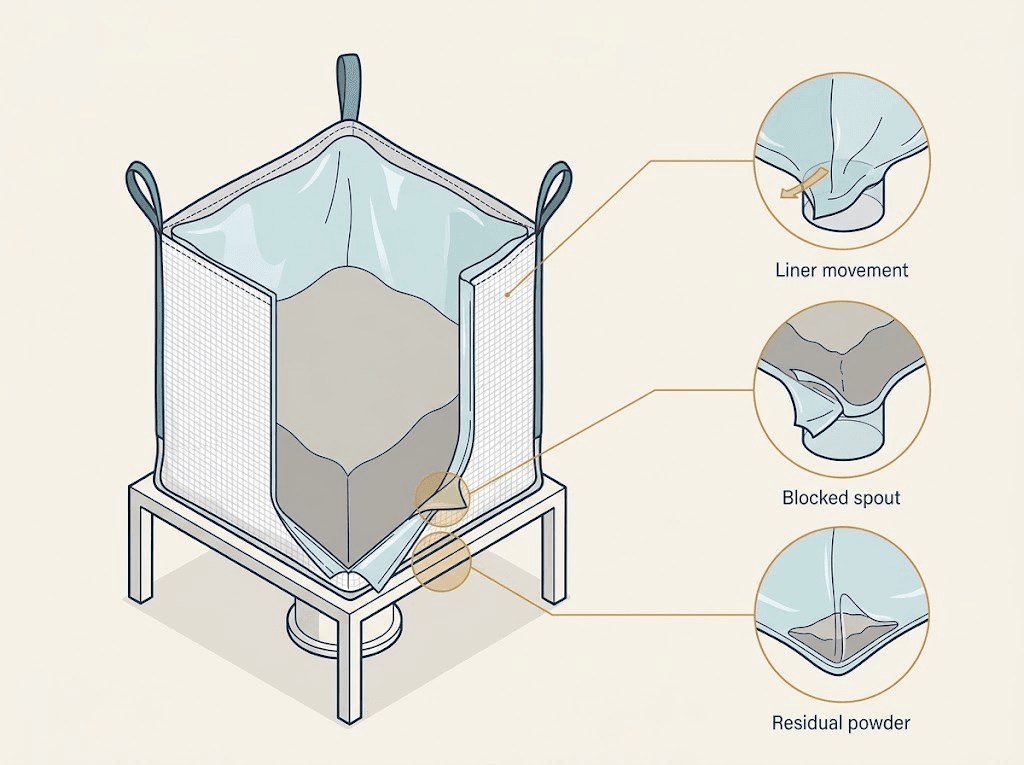
FIBC Liner Discharge Problems: A Buyer’s Checklist for Liner Movement, Blocked Spouts and Residual Powder
A lined bulk bag reaches the production line, but the powder stops flowing before the bag is empty. The liner moves towards the outlet, material remains in the bottom corners, or operators need repeated assistance to finish unloading.For buyers ordering FIBC liners, the useful question is: what information will help the packaging supplier and equipment provider identify the cause and agree on a better specification?Start by reviewing the material, liner, outer bag and discharge equipment together. Liner fit, folds, outlet configuration and product flow characteristics can all affect emptying performance.
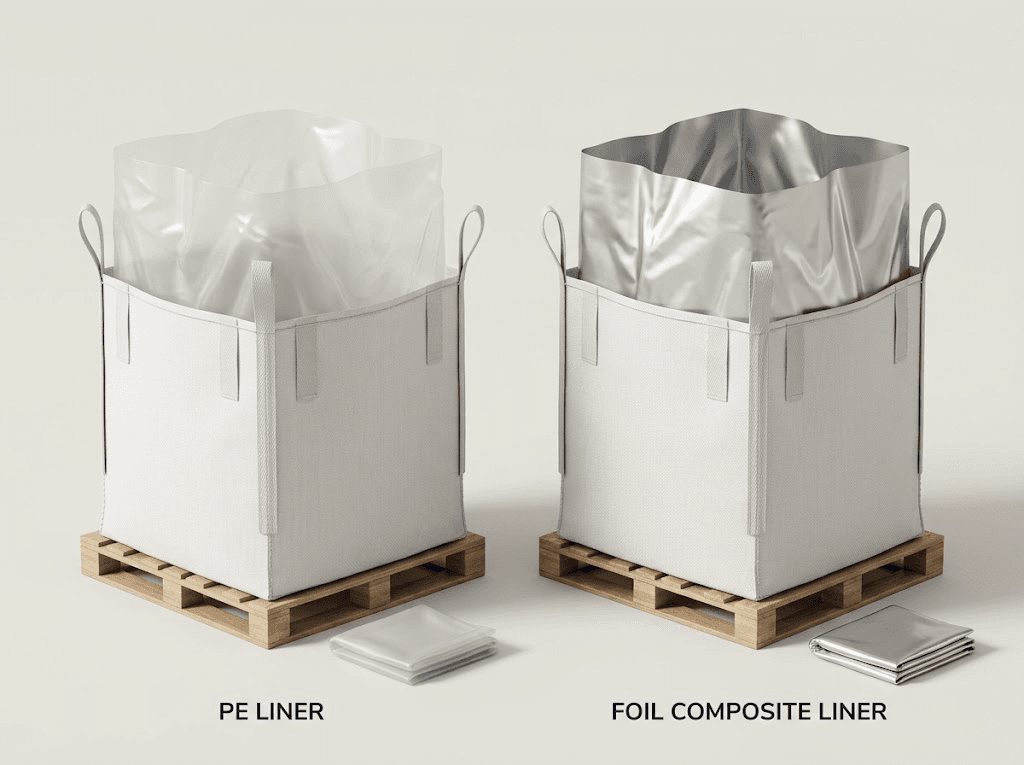
PE vs Aluminum Foil FIBC Liners for Moisture-Sensitive Powders: A Buyer’s Checklist
Choosing a liner for a moisture-sensitive powder starts with a practical question: what protection does the material need throughout filling, transport, storage and discharge?A request for “moisture proof bulk bags” gives a supplier a starting point, but it does not define an acceptable package. A PE liner may meet the requirement. An aluminum foil composite liner may be worth evaluating when the product needs a stronger moisture barrier, oxygen protection or light protection. The decision should follow the actual material specification, closure arrangement and trial results.This checklist helps buyers compare the options and prepare an enquiry for FIBC liners without relying on a material name alone.
Want to know more?
Get in touch with us for more information about our services and products.