
Type C vs. Type D FIBC Bags: Which is Safer for Combustible Chemical Powders?

Dayang Yang
AuthorWith experience in FIBC bulk bag manufacturing and export sales, we operate our own production facility with stable large-scale capacity. We are specialists in bulk bags, conductive FIBCs, food-grade FIBCs, UN certified bags, and customized flexible intermediate bulk containers for industrial packaging and bulk material transportation solutions.
Handling combustible chemical powders requires more than just a strong bag; it requires strict control over electrostatic discharge (ESD). During the filling and discharging of fine powders, friction generates static electricity. If this static accumulates and discharges as a spark in a combustible dust environment, it can trigger an explosion.
For facilities handling reactive chemicals, resins, or combustible minerals, the choice of flexible intermediate bulk containers (FIBCs) usually narrows down to two anti-static options: Type C and Type D. Both are designed to prevent incendiary sparks, but they operate on fundamentally different engineering principles.
Here is a technical breakdown to help your procurement and safety teams make the right choice.
1. Type C FIBCs: The Grounded Solution
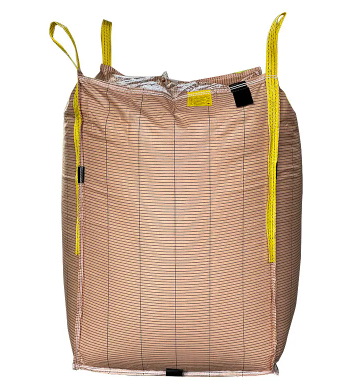
Type C bags are constructed from non-conductive polypropylene (PP) fabrics interwoven with conductive threads (usually carbon or silver) in a grid pattern.
How it works: The conductive threads are interconnected and lead to a grounding point on the bag. When the bag is securely connected to a designated earth ground during filling and discharging, the static electricity safely travels from the bulk material, through the threads, and into the ground.
The Reality in Operation:
- Advantage: Extremely effective at neutralizing static when properly grounded. They are highly reliable in the most sensitive explosive atmospheres (Zones 1, 2, 21, and 22).
- Risk (Human Error): The safety of a Type C bag relies 100% on operator compliance. If an operator forgets to attach the grounding cable, or if the grounding wire is damaged, the bag becomes an isolated conductor. This is extremely dangerous and can lead to massive, high-energy sparks.
2. Type D FIBCs: The Dissipative Solution
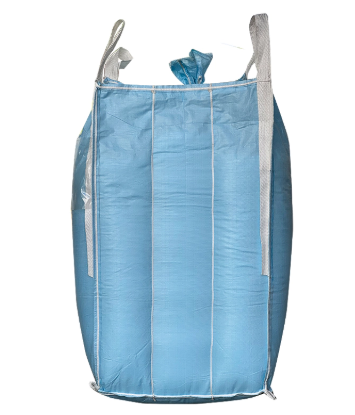
Type D bags are made from specially engineered static-dissipative fabrics (such as CROHMIQ®). They do not have interconnected conductive threads and, crucially, do not require grounding.
How it works:
Type D fabrics safely dissipate static electricity directly into the atmosphere through low-energy corona discharge. The special yarn structure controls the release of charge so that it never accumulates enough energy to create an incendiary spark.
The Reality in Operation:
- Advantage: Eliminates the risk of human error. Since they do not need to be grounded, operator mistakes or broken ground connections will not cause an explosion.
- Risk (Environmental Contamination): Type D bags lose their safe dissipative properties if their surface becomes coated with conductive materials, such as water, grease, or certain conductive powders. They must be kept clean and dry to function safely.
3. Direct Comparison Matrix
| Feature | Type C FIBC (Conductive) | Type D FIBC (Dissipative) |
|---|---|---|
| Grounding Required? | Yes (Mandatory) | No |
| Mechanism | Conducts static to the earth | Dissipates static into the air (Corona discharge) |
| Primary Safety Risk | Un-grounded bag (Operator error) | Surface contamination (Water/Grease) |
| Cost Profile | Lower unit cost | Higher unit cost (Advanced fabric) |
| Best Use Case | Facilities with strict, automated grounding protocols | Operations where manual grounding is difficult or prone to oversight |
4. How to Choose the Right Bag for Your Operation
Choosing between Type C and Type D comes down to evaluating your facility's operational maturity and the specific handling environment:
- Evaluate Your Workforce and Protocols: If your facility has rigorous safety audits, automated grounding interlocks (where machinery won't run unless ground is verified), Type C is a cost-effective and highly secure option.
- Assess the Unloading Environment: If the bags are shipped to third-party sites, construction zones, or facilities where you cannot guarantee the operator will attach a grounding clip, Type D is the safer choice. It removes human error from the equation.
- Check Environmental Conditions: If the handling area is frequently wet or the bags are exposed to grease, Type D poses a risk. Type C (properly grounded) remains effective regardless of surface moisture.
Secure Your Supply Chain with Factory-Direct Quality
At FIBC World, we manufacture both Type C and Type D bulk bags strictly adhering to IEC 61340-4-4 standards. Our production involves rigorous fabric testing, including surface resistivity and breakdown voltage checks, ensuring every batch meets global safety requirements for chemical and industrial exports.
Need a technical assessment for your specific powder?
Share your Material Safety Data Sheet (MSDS) and handling setup with our engineering team. We will provide a clear specification and a factory-direct quotation within 24 hours.
📞 WhatsApp: +86 15232851009
Related News
Other news you might be interested in
Woven Polypropylene FIBC Bulk Bags: How Material, Construction and Coating Affect Bulk Packaging Performance
In global bulk-material supply chains, FIBC bulk bags have developed from simple transport containers into important logistics tools connecting production, warehousing, loading, unloading, and end use. Their actual performance depends not only on capacity, but also on woven polypropylene, bag construction, coating, liners, safety factors, and the application environment. For the food, chemical, agricultural, mining, and construction-material industries, selecting the right FIBC bulk bags affects load-bearing performance, material loss, transport efficiency, warehouse space, and operational safety.
Chemical Grade Bulk Bags: How to Select the Right Flexible Intermediate Bulk Containers (FIBC) for Chemicals, Powders, and Hazardous Materials
Bulk materials used in the chemical industry often have characteristics such as fine particle size, high flowability, strong moisture absorption, a tendency to cake, or a high risk of electrostatic charge buildup. For chemicals, powder materials, and certain hazardous materials, packaging does more than hold the product—it directly affects material quality, workplace safety, and transportation reliability.
Want to know more?
Get in touch with us for more information about our services and products.