
Why More Buyers Are Treating FIBC Design as a Supply Chain Decision, Not Just Packaging

Dayang Yang
AuthorWith experience in FIBC bulk bag manufacturing and export sales, we operate our own production facility with stable large-scale capacity. We are specialists in bulk bags, conductive FIBCs, food-grade FIBCs, UN certified bags, and customized flexible intermediate bulk containers for industrial packaging and bulk material transportation solutions.
Summary
In global bulk material transportation, FIBC bulk bags are no longer seen only as containers for loading goods. They are becoming an important factor affecting product safety, warehouse efficiency, transportation loss, and compliance risk.
Especially in industries such as chemical powders, new energy materials, food ingredients, and mineral products, buyers are paying less attention to unit price alone and more attention to supply chain stability, risk control, and total cost. For many companies, choosing the right FIBC bulk bag is no longer just a packaging task. It is a systematic decision involving purchasing, production, warehousing, logistics, and quality management.
Beyond Packaging Cost: The Value of FIBCs Is Being Redefined
In the past, many buyers focused mainly on price, load capacity, and delivery time when selecting FIBC bulk bags. As long as the bag could hold the material, be lifted safely, and meet the shipping schedule, it was often considered acceptable.
However, as international transportation cycles become longer, warehouse environments become more complex, and downstream customers place higher demands on product stability, the real value of FIBC design is being reassessed.
A poorly matched bulk bag may not cause problems on the day of filling, but risks may appear during sea freight, stacking, transshipment, discharge, or storage at the destination.
For example, powder materials may create safety risks due to static electricity. Moisture-sensitive materials may suffer from caking, oxidation, or quality degradation if the barrier performance is insufficient. High-density materials may cause deformation, leakage, or unstable stacking if the bottom structure is not strong enough.
These issues eventually become supply chain costs, including returns, claims, downtime, cleaning, repackaging, and loss of customer trust.
As a result, more buyers now realize that FIBC bulk bags are not just the final packaging step. They are part of supply chain risk management.
Different Materials Require Different FIBC Design Logic
The key to FIBC design is not simply making the bag thicker. It is about matching the structure, material, and functions with the characteristics of the goods being packed.
For common granules, minerals, or building materials, buyers usually focus on load-bearing strength, abrasion resistance, lifting stability, and stacking performance.
For fine chemical powders, lithium battery materials, or products that easily generate dust, packaging needs to consider static control, sealing performance, cleanliness, and moisture protection.
For agricultural products, wood materials, or goods with higher moisture content, breathability may become an important factor in preventing mildew and condensation.
In other words, FIBC design is actually answering a set of supply chain questions:
- Is the material sensitive to moisture?
- Is it vulnerable to oxidation?
- Does it generate dust easily?
- Is there a static electricity risk?
- How long is the transportation distance?
- Will the goods be stored for a long time?
- Will the discharge method be bottom discharge, vacuum suction, or tipping?
Once these questions are included in the procurement process, choosing a bulk bag becomes less about buying packaging and more about designing a transportation solution.
Safety and Compliance Are Becoming New Priorities for Buyers
In chemical, new energy, and powder processing industries, safety concerns are driving upgrades in FIBC design.
During high-speed filling and discharge, friction between powder materials and the bag surface may generate static electricity. If combustible dust, gas, or vapor is present in the operating environment, electrostatic discharge may create serious safety risks.
In these situations, ordinary PP bulk bags are often not enough. Buyers need to consider professional packaging with static dissipation capability, such as Conductive Type C Anti-Static FIBC Bulk Bags.
Type C conductive FIBC bulk bags use conductive yarns to guide static electricity to a grounding system. They are suitable for certain industrial environments where dust explosion risks or static-sensitive handling requirements exist.
The value of this type of product is not just an additional function. It means packaging becomes part of the site safety management system. For buyers, choosing the right anti-static FIBC can help reduce uncertainty during loading and unloading while supporting factory safety standards, customer audits, and export supply chain compliance requirements.
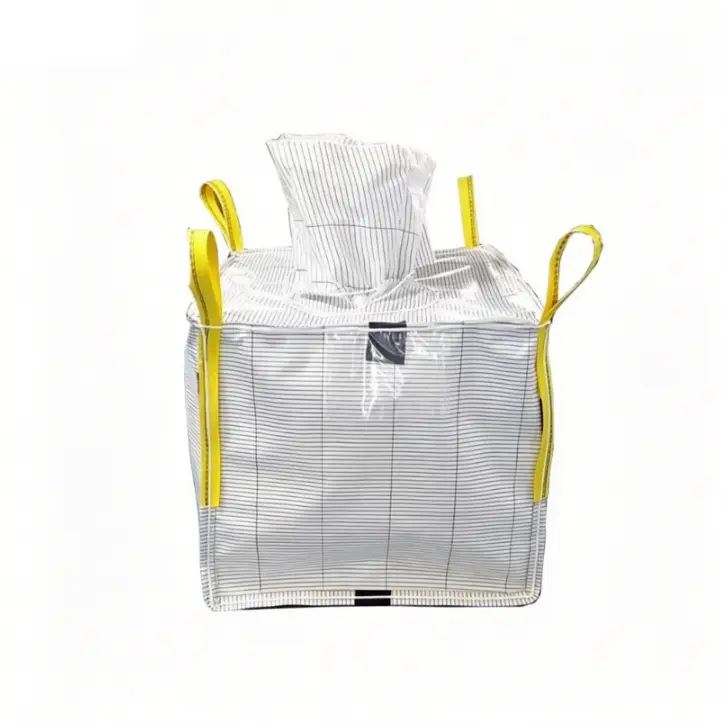
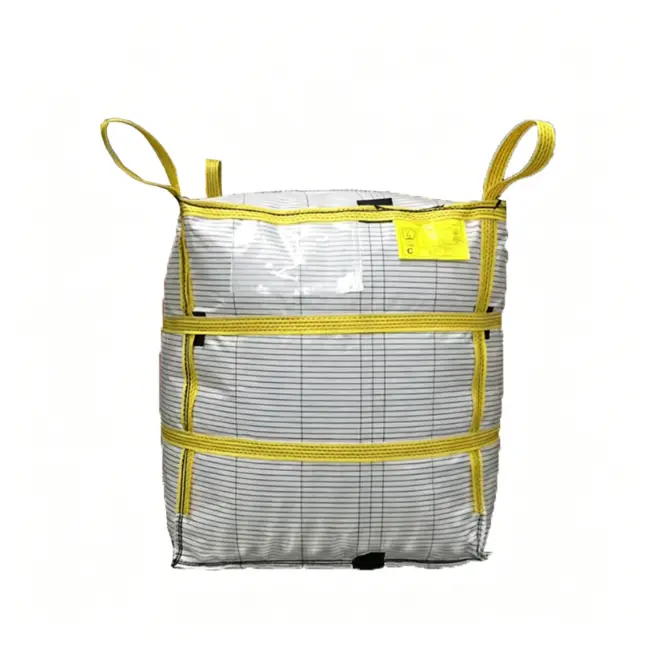
Conductive Type C Anti-Static FIBC Bulk Bags
Moisture Protection, Oxygen Barrier, and Product Stability Are Affecting Delivery Quality
In addition to safety, product stability is another major reason why buyers are including FIBC design in supply chain decisions.
For high-value materials such as new energy powders, nylon granules, flame retardants, and fine chemical powders, moisture, oxygen, and light may all affect product condition.
Ordinary FIBC bulk bags can provide basic load-bearing performance, but during long-distance sea freight, port transshipment, or storage in humid environments, insufficient barrier protection may lead to caking, discoloration, oxidation, or performance decline.
For these sensitive materials, buyers usually pay closer attention to liner structure and composite barrier materials. For example, Aluminum Lined FIBC Jumbo Bags can provide a higher level of protection against moisture, oxygen, and light. They are suitable for new materials, chemical granules, and high-end powders that are sensitive to storage and transportation conditions.
From a supply chain perspective, improved protection is not simply an increase in packaging cost. It is a way to reduce the risk of quality fluctuation across the entire shipment.
Especially when the value per ton of material is high, the loss caused by packaging failure is often much greater than the price difference between different types of bulk bags.
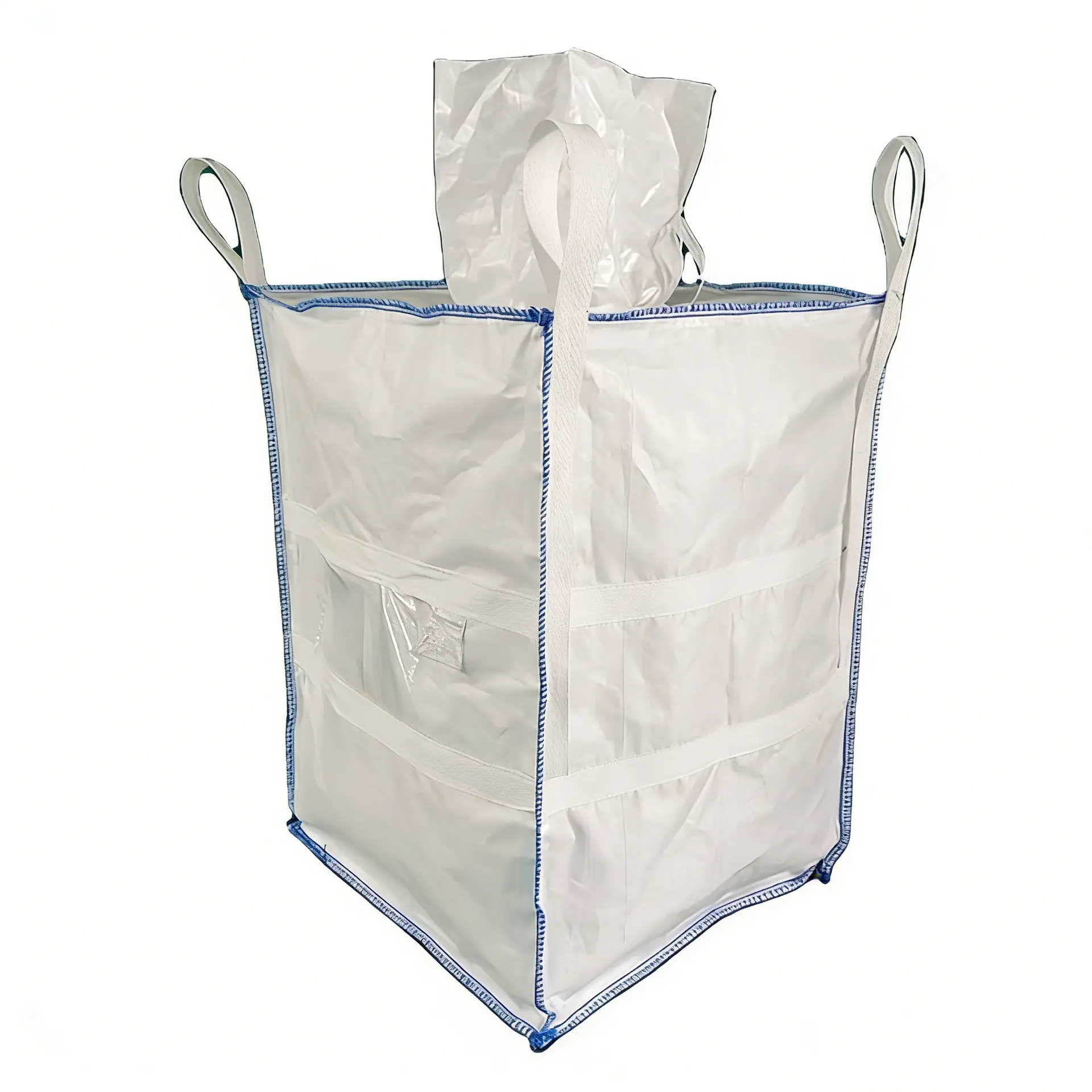
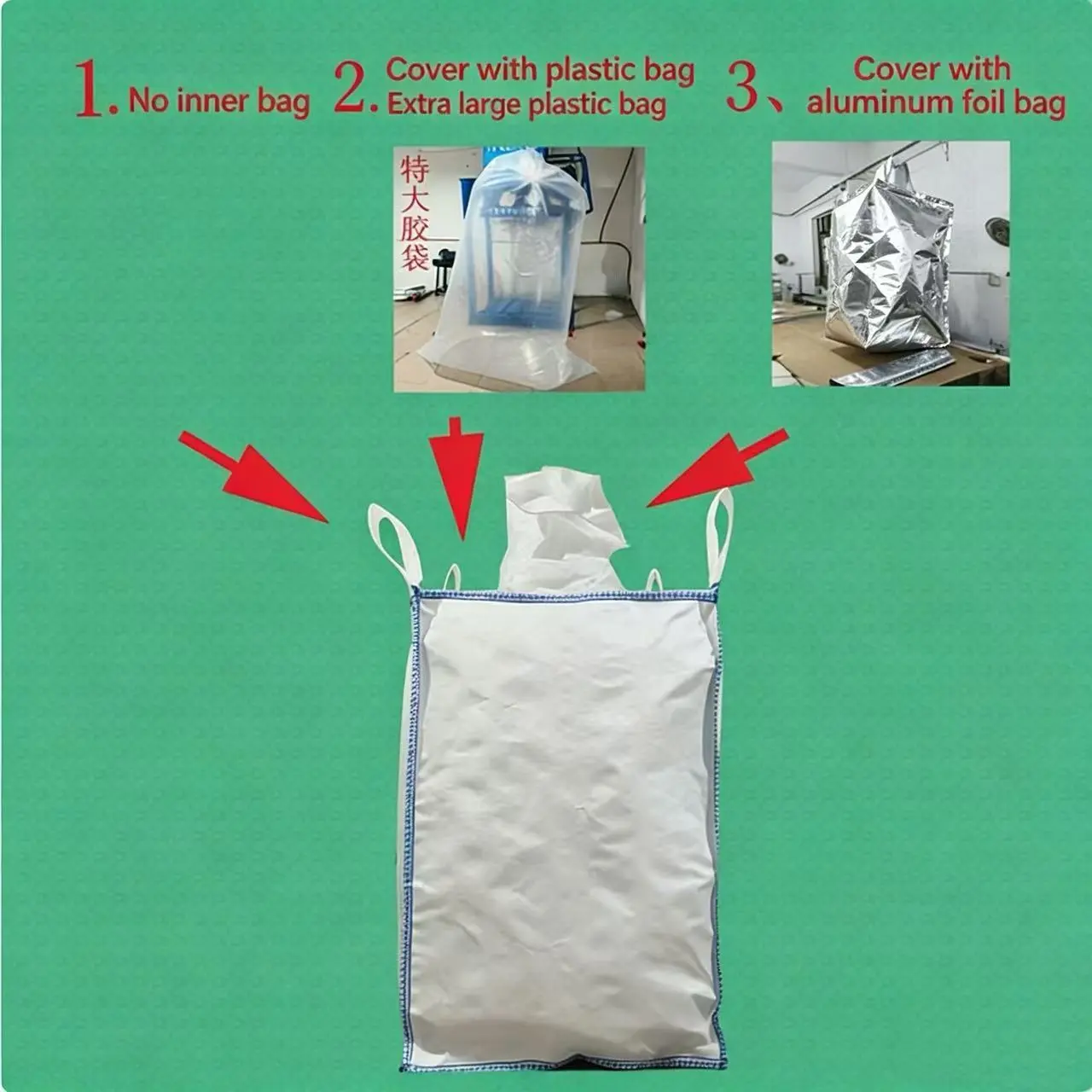
Aluminum Lined FIBC Jumbo Bags
Total Cost Thinking Is Replacing Unit Price Thinking
Buyers are paying more attention to FIBC design because procurement logic is changing from “lowest unit price” to “better total cost.”
A lower-priced bulk bag with poor design compatibility may create additional costs during use, such as lower filling efficiency, higher lifting risk, wasted warehouse space, incomplete discharge, increased breakage rate, or a poor receiving experience for customers.
In contrast, a bulk bag with the right structure, suitable functions, and stable specifications can help companies reduce abnormal handling, improve loading and unloading efficiency, and lower uncertainty in cross-border delivery.
This is why more buyers now provide detailed information during quotation, including material name, powder or granular form, weight per bag, filling method, discharge method, shipping route, storage time, and destination environment.
FIBC suppliers are no longer only quotation providers. They are increasingly expected to participate in packaging solution design.
Supply Chain Competition Is Moving Upstream to Packaging Design
In global trade, delivery capability has become part of a company’s competitiveness. Customers care not only about whether the product meets specifications, but also whether the supplier can deliver it safely, consistently, and on time.
As a key link in bulk material transportation, FIBC bulk bags are influencing that capability. They connect production lines, warehouses, containers, ports, overseas storage, and end-user factories.
If the packaging design is wrong, problems may expand across the supply chain. If the design is appropriate, the entire transportation process becomes more controllable.
In the future, buyers’ requirements for FIBC bulk bags will continue to shift from “how much can it carry” to “can it protect the product, fit the operation process, reduce risk, and support long-term supply.”
For export-oriented companies, including FIBC design in supply chain decision-making at an earlier stage can help control costs and improve customer confidence in delivery quality.
Conclusion
The role of FIBC bulk bags is changing.
They are no longer just an outer layer used to hold products. They are becoming supply chain tools that affect product safety, quality stability, logistics efficiency, and customer satisfaction.
When buyers choose FIBC bulk bags based on material characteristics, transportation conditions, safety requirements, and total cost, packaging is no longer a low-priority consumable. It becomes a key decision in supply chain management.
Related News
Other news you might be interested in
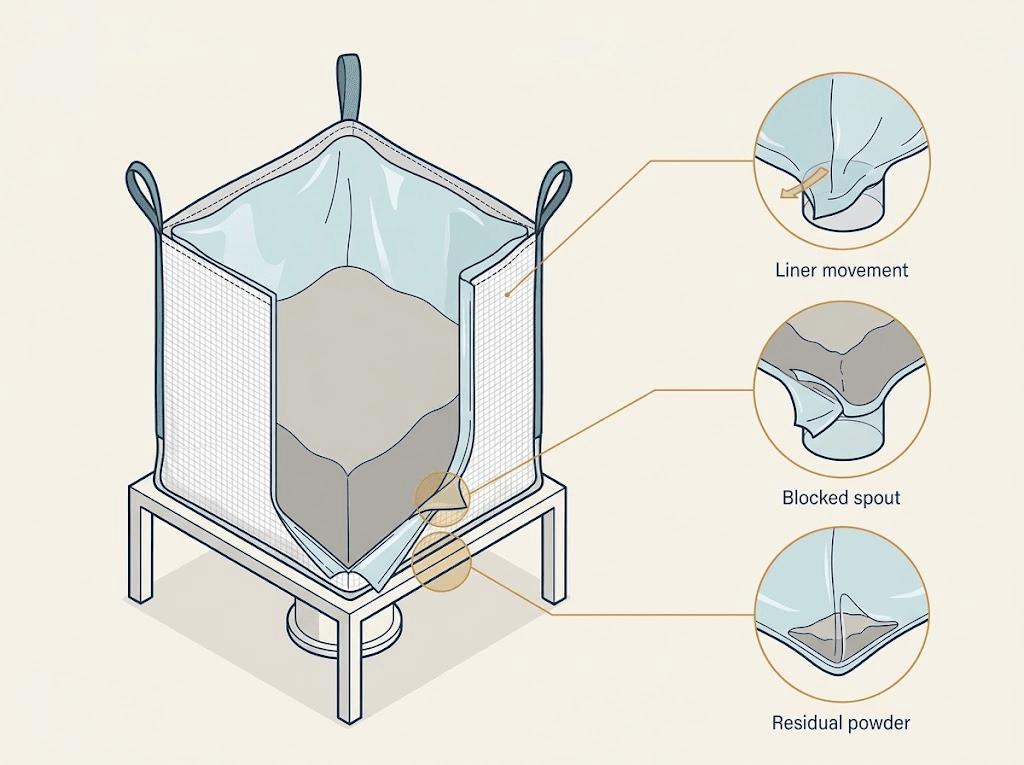
FIBC Liner Discharge Problems: A Buyer’s Checklist for Liner Movement, Blocked Spouts and Residual Powder
A lined bulk bag reaches the production line, but the powder stops flowing before the bag is empty. The liner moves towards the outlet, material remains in the bottom corners, or operators need repeated assistance to finish unloading.For buyers ordering FIBC liners, the useful question is: what information will help the packaging supplier and equipment provider identify the cause and agree on a better specification?Start by reviewing the material, liner, outer bag and discharge equipment together. Liner fit, folds, outlet configuration and product flow characteristics can all affect emptying performance.
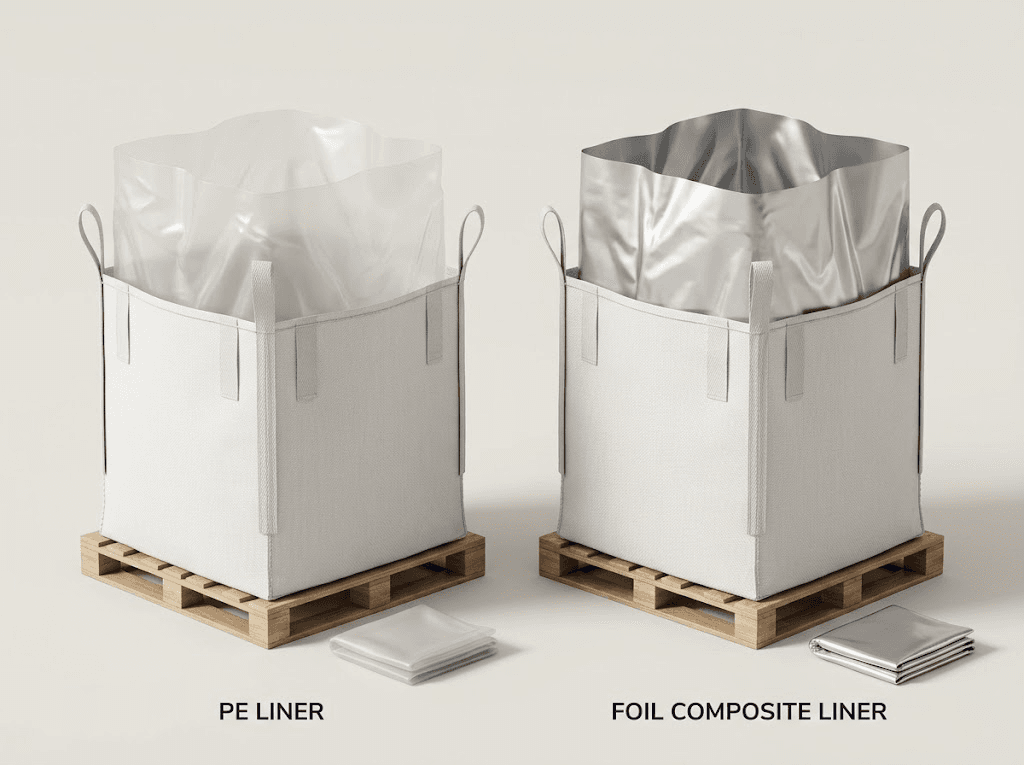
PE vs Aluminum Foil FIBC Liners for Moisture-Sensitive Powders: A Buyer’s Checklist
Choosing a liner for a moisture-sensitive powder starts with a practical question: what protection does the material need throughout filling, transport, storage and discharge?A request for “moisture proof bulk bags” gives a supplier a starting point, but it does not define an acceptable package. A PE liner may meet the requirement. An aluminum foil composite liner may be worth evaluating when the product needs a stronger moisture barrier, oxygen protection or light protection. The decision should follow the actual material specification, closure arrangement and trial results.This checklist helps buyers compare the options and prepare an enquiry for FIBC liners without relying on a material name alone.
Want to know more?
Get in touch with us for more information about our services and products.