
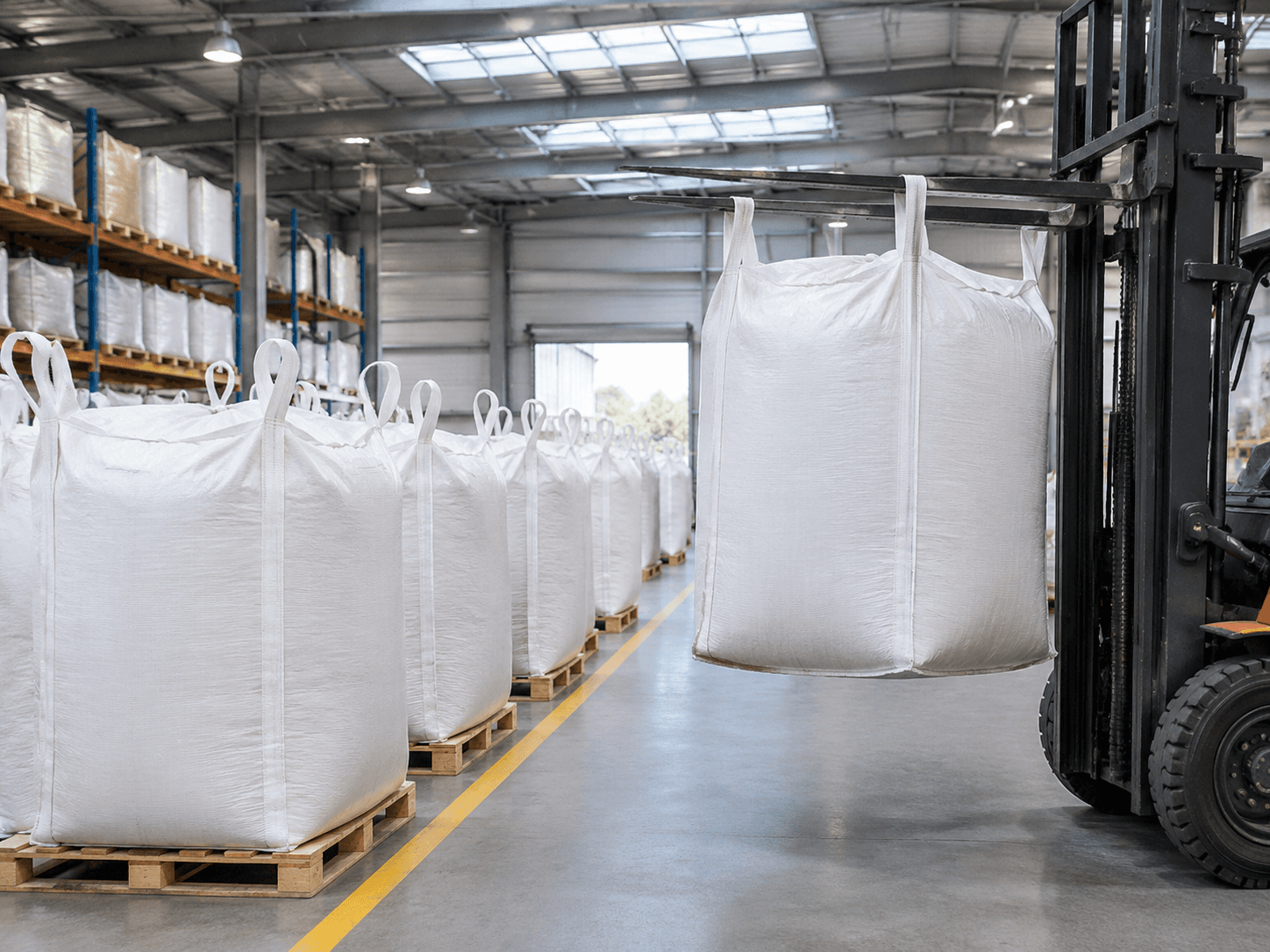
Food Grade Bulk Bags: A Buyer’s Guide to Safe FIBC Packaging for Food Ingredients

Dayang Yang
AutorCon experiencia en la fabricación y exportación de sacos a granel FIBC, operamos nuestra propia planta de producción con una capacidad estable a gran escala. Somos especialistas en sacos a granel, FIBC conductivos, FIBC de grado alimentario, sacos certificados por la ONU y contenedores flexibles personalizados para embalaje industrial y transporte de materiales a granel.
Food ingredients can face moisture, dust, leakage, odor transfer, and cross-contamination risks during warehousing, handling, and transportation. Selecting food grade bulk bags is not simply a matter of increasing packaging capacity. It is about creating a more controlled system for material protection, handling, and traceability.
For procurement teams, the value of food grade FIBC bags lies in matching the packaging solution to the material properties, filling method, storage environment, and downstream feeding process, rather than making a decision based only on unit price or carrying capacity.
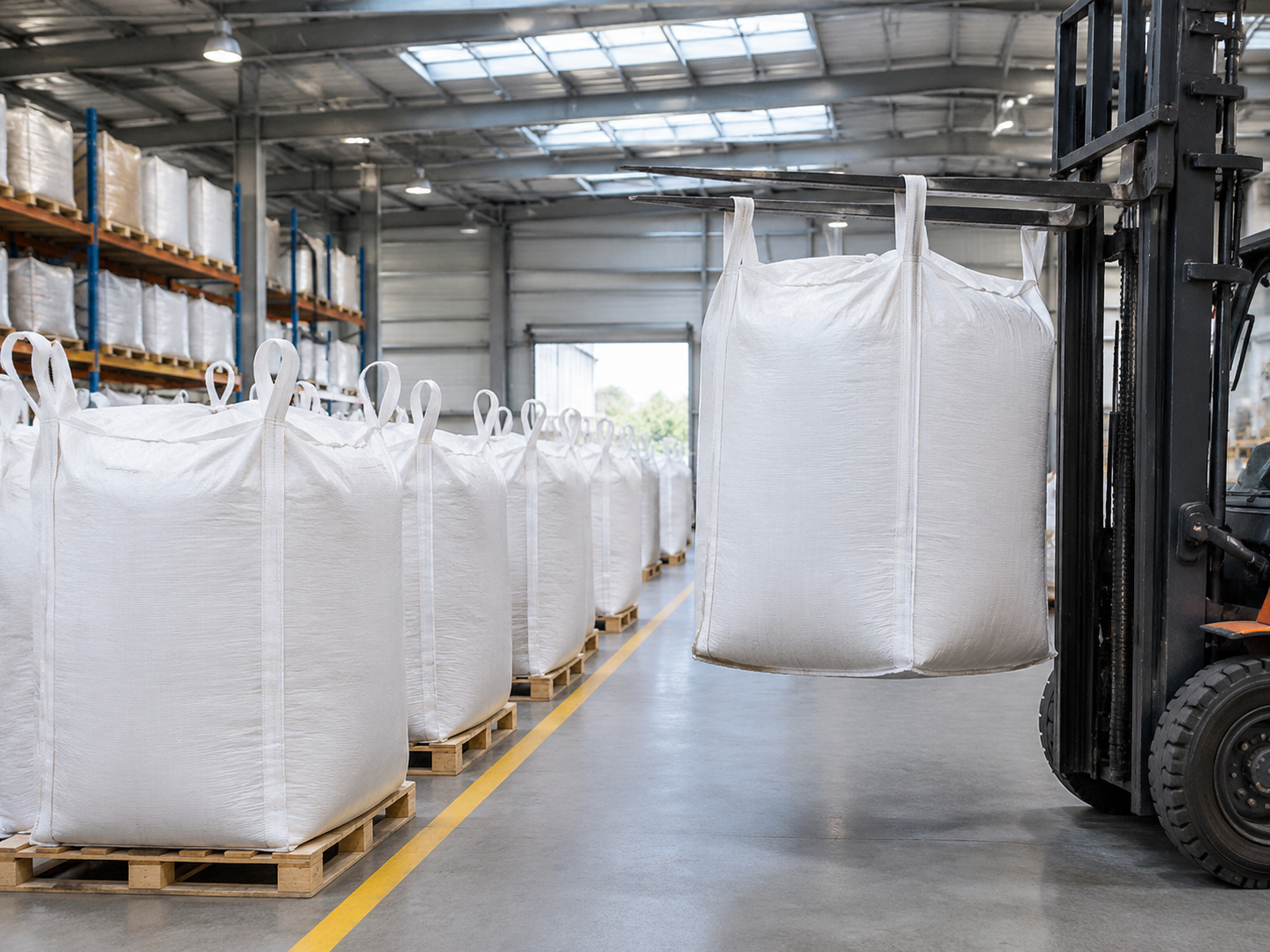
Why Do Food Ingredients Need Food Grade Bulk Bags?
Grains, sugar, starch, food additives, and powdered ingredients often require higher standards for cleanliness, moisture protection, and sealing performance. Standard bulk bags can introduce contamination risks if raw materials, manufacturing, handling, or transport conditions are not properly controlled.
For this reason, food grade FIBC bags should be considered part of the food ingredient supply chain. For materials that are hygroscopic, prone to caking, fine in particle size, or sensitive to odors, packaging construction can directly affect storage, transportation, and production efficiency.
What Are Food Grade FIBC Bags?
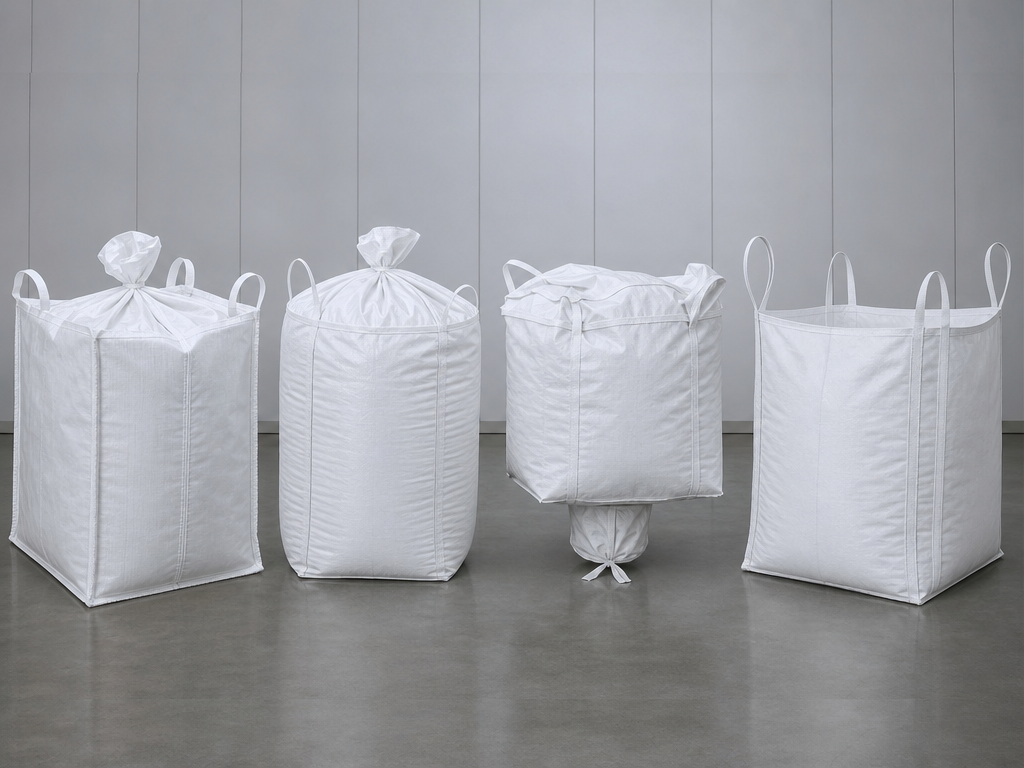
FIBC stands for Flexible Intermediate Bulk Container. These containers are also commonly described as bulk bags, jumbo bags, or super sack bags. For food applications, the key issue is not the name of the bag, but whether the complete packaging system is suitable for ingredient protection and food-contact compliance.
Procurement teams should normally confirm:
The material source and cleanliness of woven polypropylene FIBC bags
Whether FIBC liners or bulk bag liners are required
Dust-control features at filling spouts, discharge spouts, and sewn areas
Batch identification, outer packaging protection, and documentation traceability
Actual storage, handling, and transport conditions for the material
A “food grade” label should not be treated as a standalone guarantee. Buyers should determine the required compliance documents and quality-control conditions according to the destination market, ingredient characteristics, and import requirements.
How Do FIBC Liners and Coated Structures Protect Food Ingredients?
Outer woven polypropylene FIBC bags mainly provide load-bearing and handling performance. FIBC liners can improve moisture protection, leak prevention, dust control, and barrier performance. For powders, hygroscopic materials, or sensitive food ingredients, the liner solution usually requires separate evaluation.
Where additional protection is needed, buyers can review Coated FIBC Bags vs FIBC Liners to understand the functional differences between coated bags and FIBC liners.
Before selecting bulk bag liners, confirm whether the material is likely to absorb moisture, generate dust, leak, or retain odors. The loading and discharge process should also be considered, especially where sealing performance and liner integrity are critical.
Which FIBC Bag Specifications Should Buyers Confirm?
| Checkpoint | What to Confirm | Effect on Selection |
|---|---|---|
| Material form | Powder, granules, flakes, or hygroscopic material | Determines FIBC liners, bag-top design, and discharge structure |
| Load weight | Net fill weight, stacking method, and handling conditions | Affects FIBC capacity calculation |
| Size and volume | Bulk density, pallet dimensions, and storage space | Affects bulk bag dimensions |
| Filling and discharge | Open top, duffle top, filling spout, or discharge spout | Affects hygiene control and handling efficiency |
| Protection needs | Moisture resistance, dust control, leak prevention, or anti-static protection | Determines bag construction, liner, and safety type |
Common terms such as 1 tonne bulk bag, 2000 lb super sack, and 3000 lb FIBC bags describe carrying capacity only. Final selection should still include FIBC bag weight calculation based on material density, target volume, lifting method, and safety requirements.
For filling and discharge structures, see Duffle Top and Spout Bottom FIBC Guide.
How Should Food Ingredients Be Matched with Filling, Liner, and Discharge Designs?
Powdered ingredients usually require stronger dust control, sealing, and residue management. Granular materials may place greater emphasis on filling efficiency, discharge flow, and transport stability. Where controlled filling and discharge are important, duffle top spout bottom FIBC bags can be an appropriate structure to evaluate.
Before choosing a configuration, buyers should clarify whether materials are filled manually, through automated filling lines, or through bulk-bag feeding stations. They should also assess whether the material is likely to generate dust, bridge during discharge, leave residue, or require long storage periods or ocean transport.
These conditions determine the most suitable bag top, liner, and discharge design for food grade FIBC bags.
Food Packaging Should Not Simply Copy Chemical or Mining Bag Designs
Chemical grade bulk bags, FIBC bags for chemicals, FIBC bags for mining, and FIBC bags for minerals also require load-bearing and protective performance. However, their hygiene requirements, material risks, and operating environments do not necessarily match those of food ingredients.
Food ingredient packaging should prioritize material cleanliness, FIBC liners, moisture protection, dust control, sealing performance, and traceability. A higher-capacity industrial bag should not automatically be assumed suitable for food applications.
For grains, seeds, and agricultural supply-chain materials, buyers can also review FIBC Bags for Agriculture to assess how storage and transport conditions affect packaging selection.
Are Type A FIBC Bags, Type B FIBC Bags, Type C Conductive Bulk Bags, or Type D Static Dissipative FIBC Bags Required?
Type A FIBC bags, Type B FIBC bags, Type C conductive bulk bags, Type D static dissipative FIBC bags, and antistatic FIBC bags are designed for different static-risk conditions.
For food ingredients, anti-static performance should not be treated as a standard upgrade. The appropriate design depends on powder characteristics, filling conditions, the operating environment, and the outcome of a static-risk assessment. Where combustible dust or static hazards are present, qualified safety personnel should determine the appropriate bag type, grounding method, and operating procedure.
For an overview of these safety categories, see Types of FIBC Bulk Bags: A, B, C & D Explained.
How Should Buyers Assess an FIBC Bag Manufacturer or FIBC Bag Supplier?
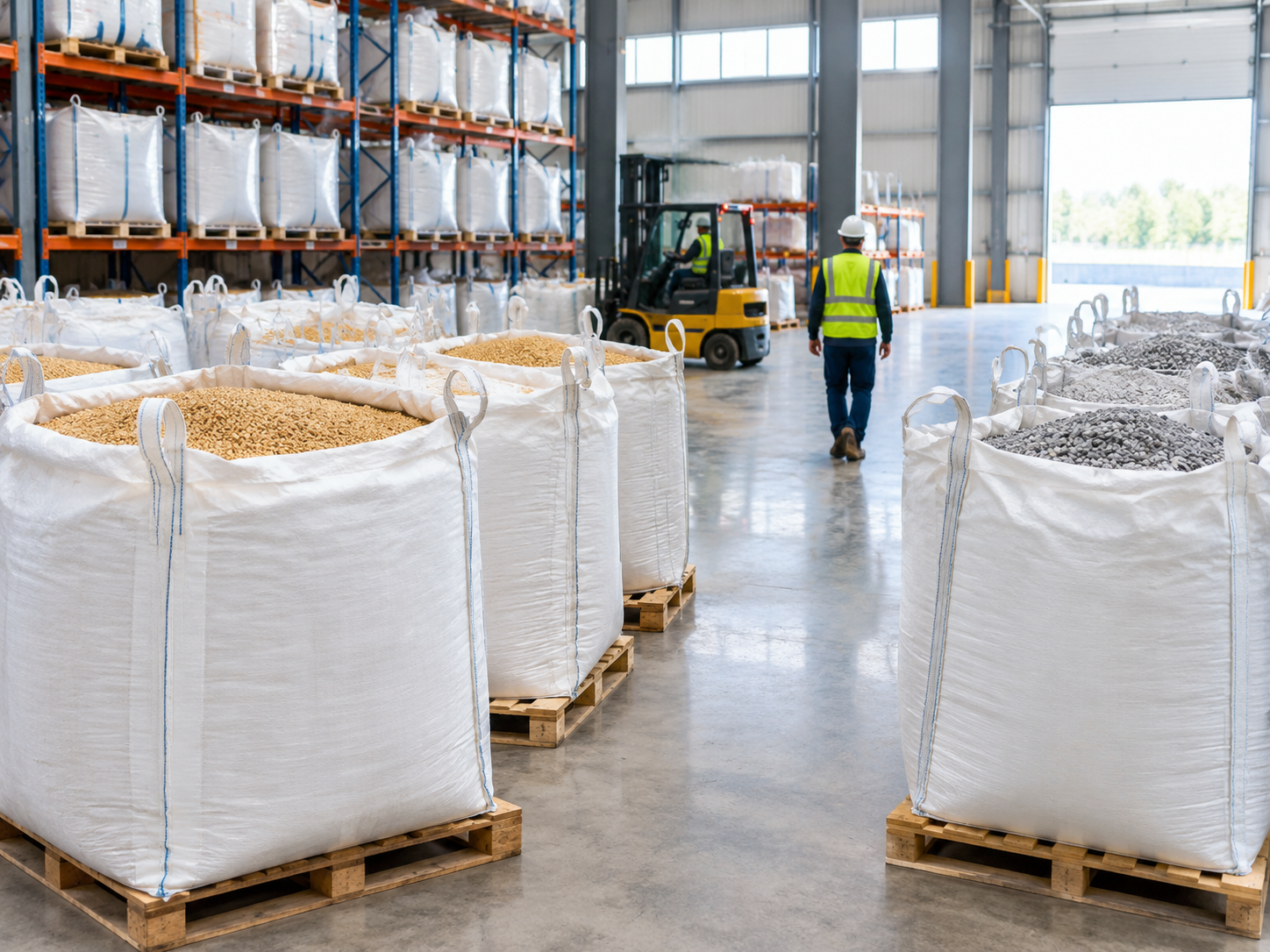
When selecting an FIBC bag manufacturer or FIBC bag supplier, buyers should evaluate more than pricing. The supplier should be able to understand the actual application conditions for food ingredients.
Key questions include:
Can the supplier provide clear FIBC bag specifications based on the material?
Can it explain the relationship between FIBC liners, bag tops, discharge spouts, and lifting-loop structures?
Can it support confirmation of dimensions, liners, construction, and labeling?
Does it maintain stable batch identification, packaging protection, and documentation processes?
Can sample development confirm bulk bag dimensions, load capacity, and handling requirements?
Buyers can use the FIBC Bulk Bag Manufacturer Purchasing Guide to review key points in custom purchasing. For custom requirements, visit the Custom page.
Common Mistakes in Food Grade Bulk Bag Purchasing
One common mistake is comparing only bag price or FIBC bag weight calculation while overlooking material density, volume, and the real filling and discharge process. Another is treating all FIBC bags as equivalent products without distinguishing between food, chemical, and mining applications.
A third issue is focusing only on the outer bag while overlooking how bulk bag liners affect moisture protection, dust control, and ingredient protection.
Buyers should also avoid selecting a bag solely according to bulk bag dimensions or 1 tonne bulk bag capacity. Dimensions, volume, load capacity, liner design, and bag-top construction should be evaluated as one complete system.
Frequently Asked Questions
Do Food Grade FIBC Bags Always Need Liners?
Not always. The need for FIBC liners depends on moisture protection, dust control, leak prevention, and barrier requirements. For powdered, hygroscopic, or highly sensitive ingredients, liner design is usually a key consideration.
Can Food Grade Bulk Bags Be Reused?
Reuse depends on the previous material, cleaning conditions, bag condition, batch management, and operating procedures. For food ingredients, visual appearance alone is not sufficient to determine whether a bag is suitable for reuse.
How Are Bulk Bag Dimensions Determined?
Buyers should consider bulk density, target net weight, filling method, pallet dimensions, storage space, and transport limits. FIBC capacity calculation should be completed before finalizing bag dimensions.
Are Type C Conductive Bulk Bags Automatically Better for Food Ingredients?
Not necessarily. Type C conductive bulk bags address specific static-risk conditions. They do not replace food-contact material controls, clean production conditions, or the protective function of FIBC liners.
Conclusion
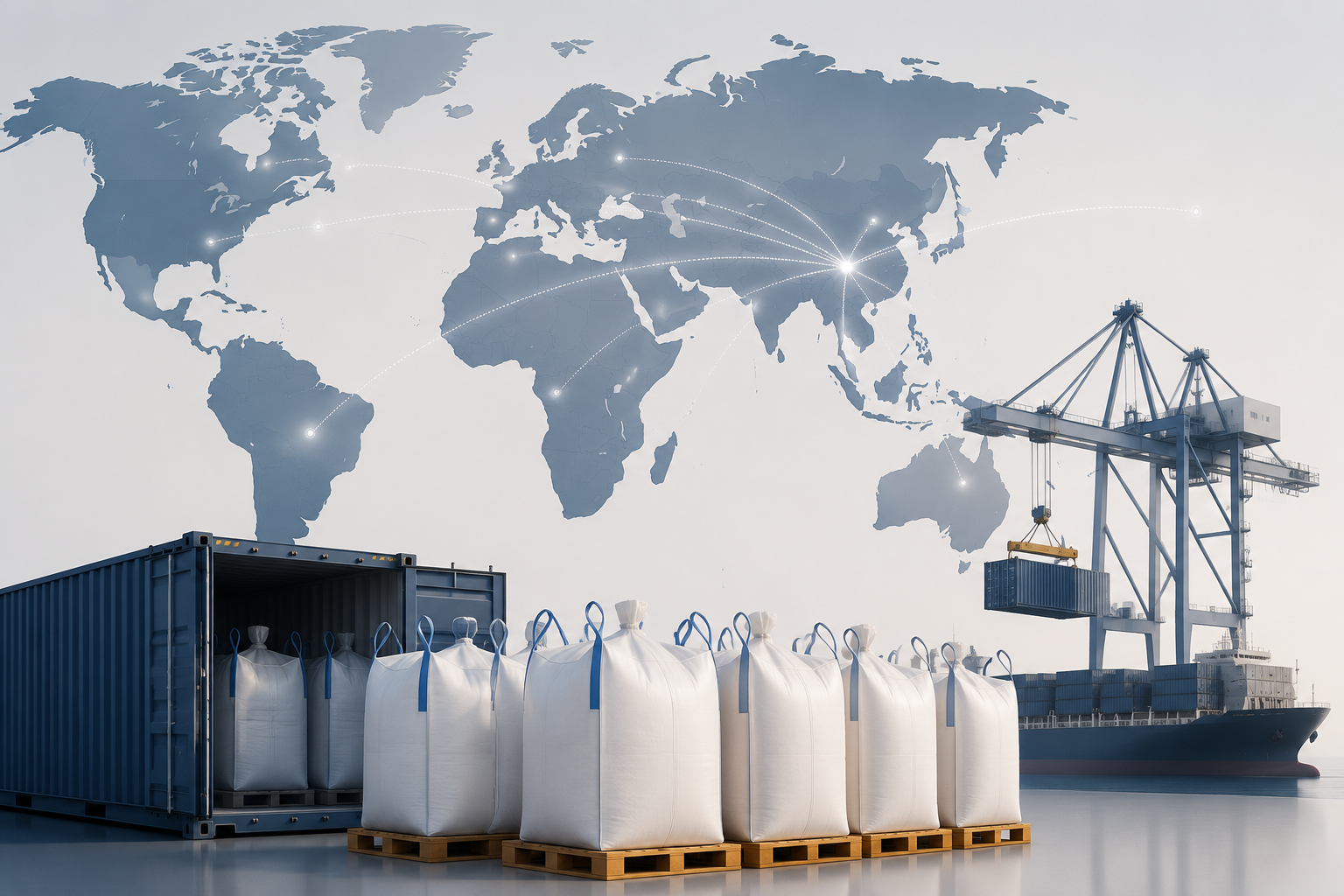
The key to selecting food grade bulk bags is ensuring that FIBC bag specifications align with material properties, handling processes, storage conditions, and quality requirements. By evaluating woven polypropylene FIBC bags, FIBC liners, bag-top construction, load capacity, volume, and supplier capability together, buyers can build a more reliable packaging solution for food ingredients.
For support with material-specific packaging requirements, handling conditions, or custom configuration discussions, visit the Contact page.
Related News
Other news you might be interested in
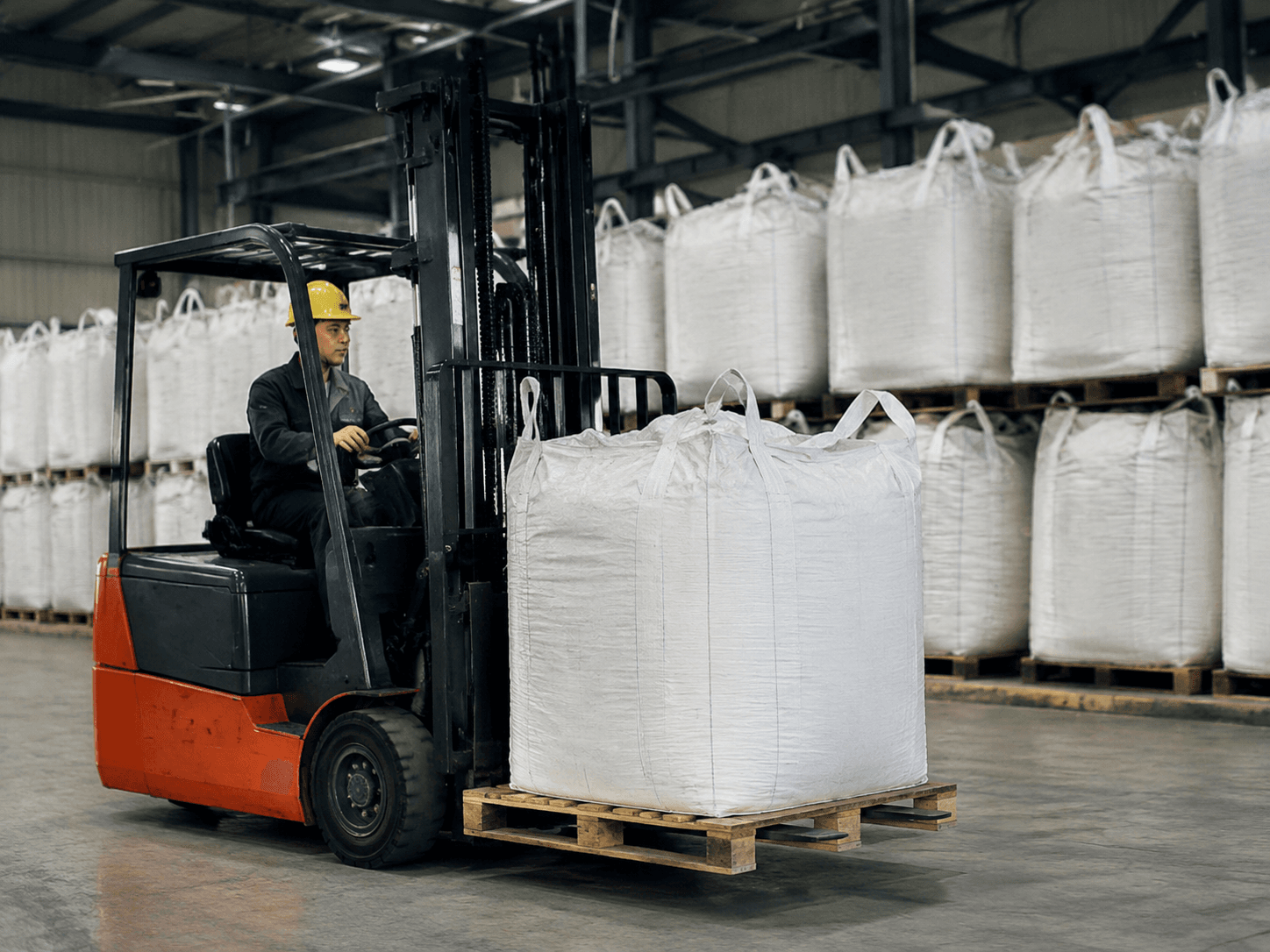
Woven Polypropylene FIBC Bulk Bags: How Material, Construction and Coating Affect Bulk Packaging Performance
In global bulk-material supply chains, FIBC bulk bags have developed from simple transport containers into important logistics tools connecting production, warehousing, loading, unloading, and end use. Their actual performance depends not only on capacity, but also on woven polypropylene, bag construction, coating, liners, safety factors, and the application environment. For the food, chemical, agricultural, mining, and construction-material industries, selecting the right FIBC bulk bags affects load-bearing performance, material loss, transport efficiency, warehouse space, and operational safety.
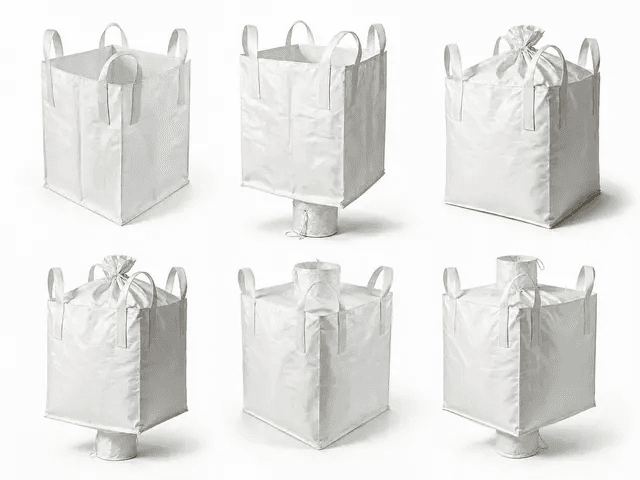
Chemical Grade Bulk Bags: How to Select the Right Flexible Intermediate Bulk Containers (FIBC) for Chemicals, Powders, and Hazardous Materials
Bulk materials used in the chemical industry often have characteristics such as fine particle size, high flowability, strong moisture absorption, a tendency to cake, or a high risk of electrostatic charge buildup. For chemicals, powder materials, and certain hazardous materials, packaging does more than hold the product—it directly affects material quality, workplace safety, and transportation reliability.
Want to know more?
Get in touch with us for more information about our services and products.