
Woven Polypropylene FIBC Bulk Bags: How Material, Construction and Coating Affect Bulk Packaging Performance

Dayang Yang
الكاتبلدينا خبرة في تصنيع وبيع أكياس الحاويات المرنة FIBC للتصدير، وندير منشأة إنتاج خاصة بنا بقدرة إنتاجية مستقرة على نطاق واسع. نحن متخصصون في الأكياس الضخمة، وأكياس FIBC الموصلة للكهرباء، وأكياس FIBC المخصصة للمواد الغذائية، والأكياس المعتمدة من الأمم المتحدة، والحاويات المرنة المخصصة للتغليف الصناعي وحلول نقل المواد السائبة.
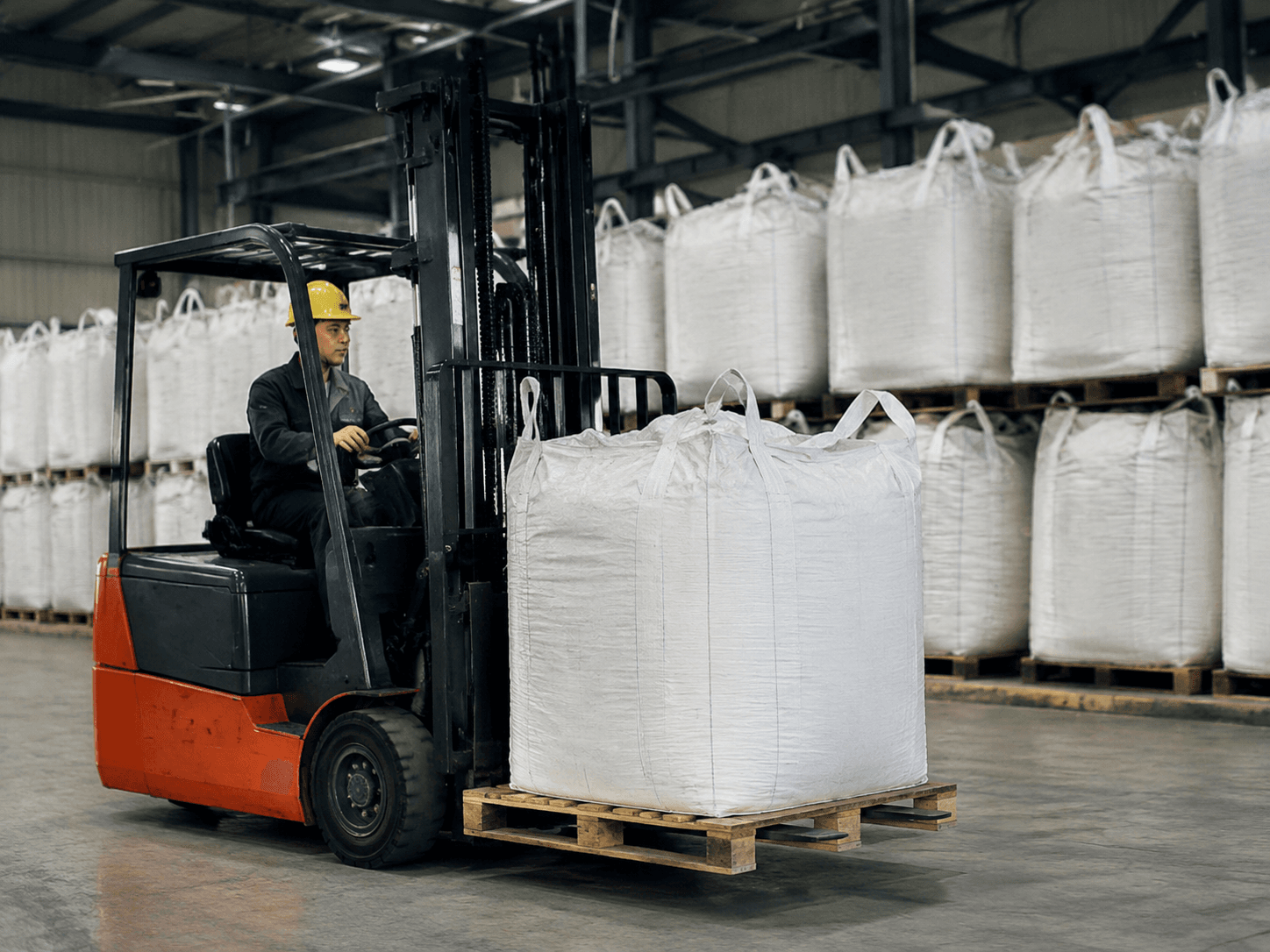
In global bulk-material supply chains, FIBC bulk bags have developed from simple transport containers into important logistics tools connecting production, warehousing, loading, unloading, and end use. Their actual performance depends not only on capacity, but also on woven polypropylene, bag construction, coating, liners, safety factors, and the application environment.
For the food, chemical, agricultural, mining, and construction-material industries, selecting the right FIBC bulk bags affects load-bearing performance, material loss, transport efficiency, warehouse space, and operational safety.
The Value of FIBC Bulk Bags in Modern Bulk Packaging
The Role of FIBC Bags in Transporting Powders, Granules, and Dry Bulk Materials
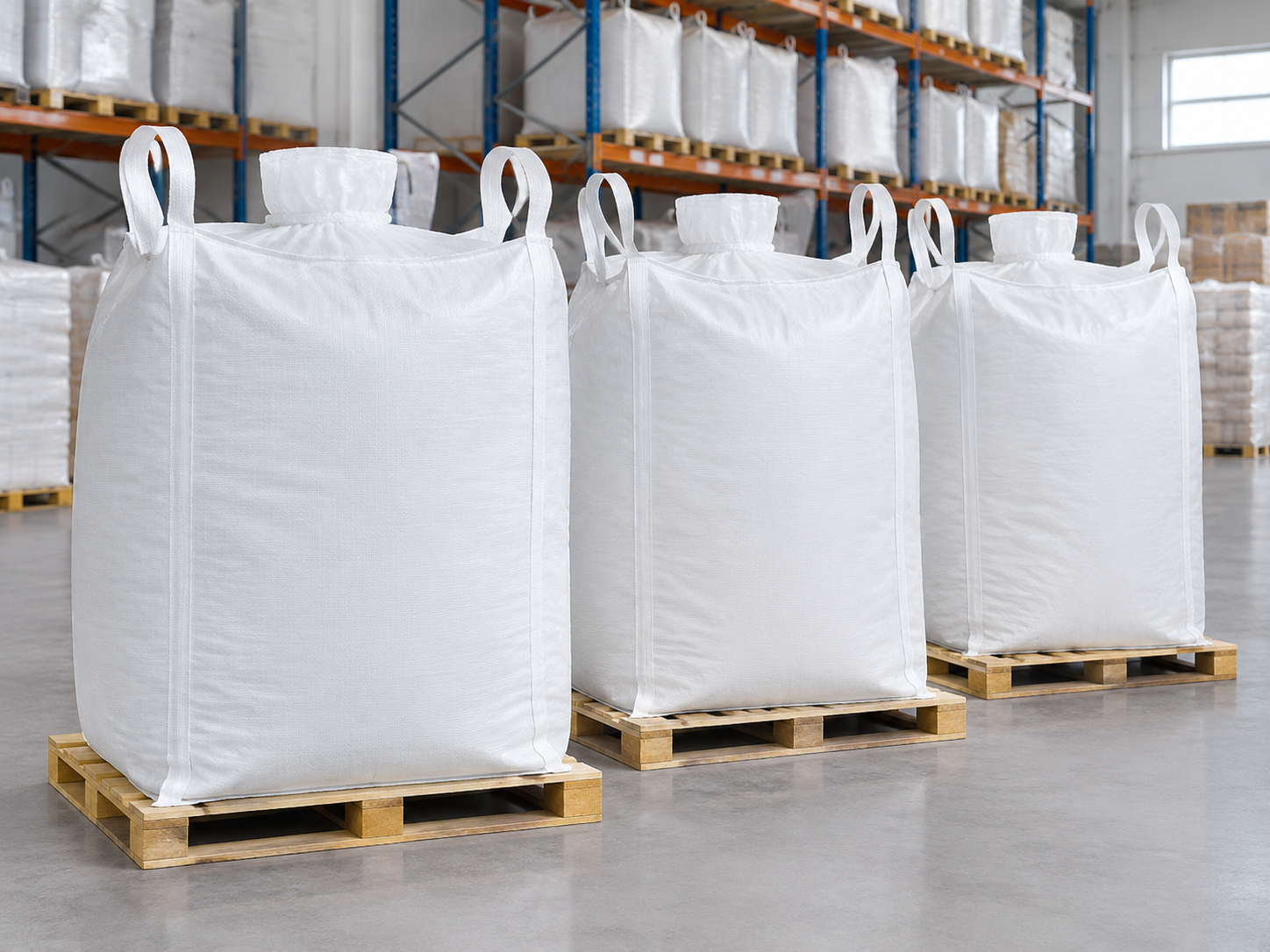
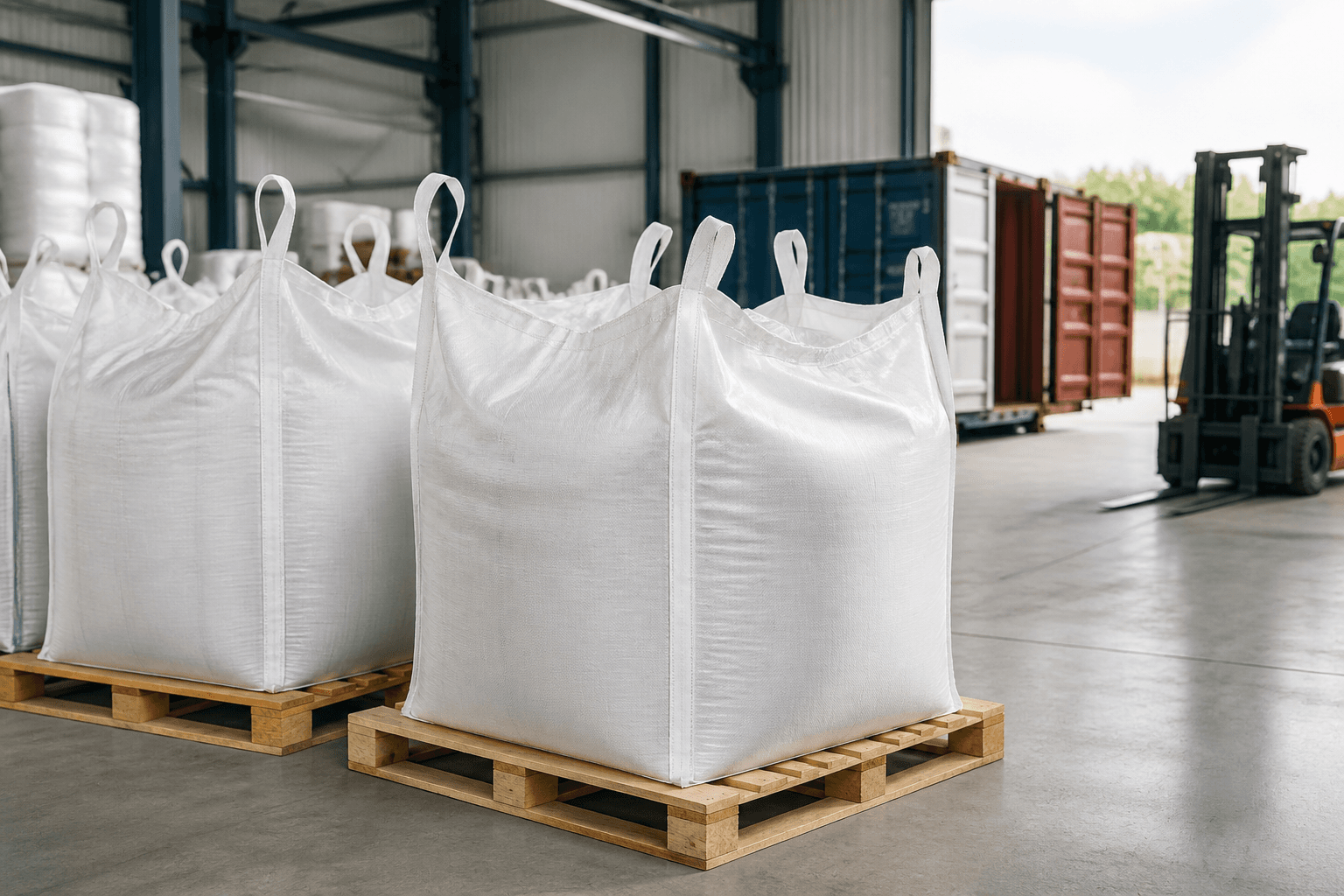
FIBC bulk bags are widely used to package and transport powders, granules, resins, minerals, fertilizers, grains, and construction materials. Compared with smaller packaging formats, a Flexible Intermediate Bulk Container can carry a larger volume of material with relatively low packaging weight, making it suitable for bulk movement between factories, warehouses, ports, and distribution facilities.
How Flexible Bulk Packaging Improves Warehousing, Transport, and Handling Efficiency
Empty bags can be folded and stored in a compact form, while filled bags can be moved with lifting loops, pallets, or forklifts. Properly designed bulk packaging reduces manual repacking, improves loading and unloading efficiency, and lowers the risk of damage, leakage, and contamination during transport.
The Shift from Standard Containers to Integrated Bulk Logistics Solutions
The industry is moving beyond the basic question of whether a bag can hold a material. Capacity, filling and discharge openings, liners, coatings, stacking stability, and safety classification must all be considered as part of the complete logistics process. As a result, FIBC bulk bags are increasingly becoming integrated bulk-packaging solutions rather than simple containers.
How Woven Polypropylene Determines the Basic Performance of FIBC Bags
The Strength, Toughness, and Chemical Resistance of Polypropylene
Woven polypropylene FIBC bags are typically manufactured from woven polypropylene tapes. Polypropylene offers good tensile strength, abrasion resistance, and resistance to many chemicals, making it suitable for most dry powders and granular materials. Its relatively low weight also helps increase the useful payload of each package.
The Influence of Tape Diameter, Fabric Density, and Material Weight
For bags with the same dimensions, tape width, tape thickness, fabric density, and material weight can all affect strength and air permeability. Higher fabric density generally improves tear and puncture resistance, but may reduce ventilation. Therefore, FIBC bag material should be assessed together with weaving technology and the actual operating environment.
How Polypropylene Affects Load Capacity, Abrasion Resistance, and Service Life
During frequent handling, long-distance transport, or the packaging of coarse materials, the bag must withstand tension, friction, impact, and concentrated loads. Insufficient material strength can cause deformation, seam failure, or lifting-loop damage. For reusable packaging, aging resistance, cleaning conditions, and the expected number of handling cycles should also be evaluated.
Differences Between Polypropylene FIBC Bags and Other Bulk-Packaging Materials
Compared with paper bags, PP FIBC bags generally provide better moisture resistance and load-bearing capability. Compared with rigid containers, they require less empty-storage space and can reduce transport costs. Compared with ordinary plastic bags, woven polypropylene offers much higher mechanical strength. This makes woven polypropylene suitable for large-volume dry bulk packaging.
How Bag Construction Affects FIBC Load Capacity and Stability
Performance Differences Between U-Panel, 4-Panel, and Circular Constructions
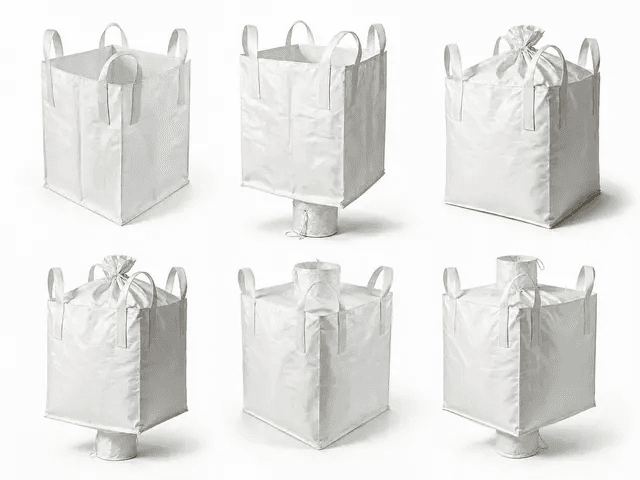
U-Panel FIBC bags are commonly made from one continuous U-shaped body with two side panels. 4-Panel FIBC bags are assembled from several separate panels sewn together, creating a more regular outer shape. Circular FIBC bags use tubular fabric and may have fewer vertical seams. These different constructions influence forming, load distribution, shape retention, and production cost.
How Baffle Construction Improves Shape Retention and Stacking Stability
Baffle bags include internal panels that help the filled bag maintain a more square profile. For applications requiring better pallet utilization, reduced warehouse gaps, or more efficient container loading, baffle FIBC bags can improve shape stability. However, the baffle design must still match the material’s flowability, filling speed, and discharge method.
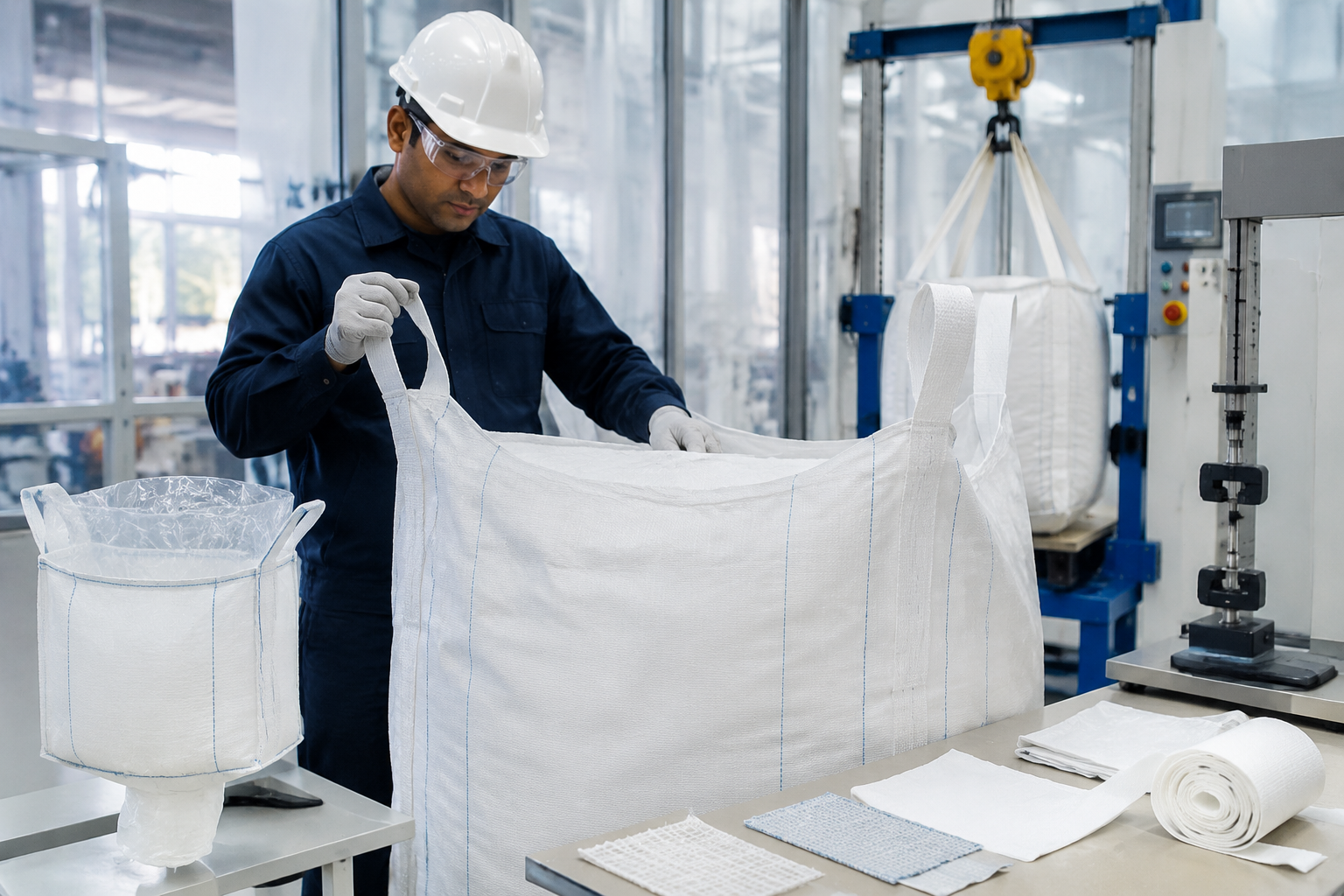
The Load Relationship Between Lifting Loops, Seams, and Bottom Construction
The main body is not the only load-bearing part of an FIBC bag. Lifting loops carry the primary lifting force, seams transfer and distribute the load, and the bottom construction affects filled-bag stability and discharge safety. When defining FIBC bag specifications, the body, loops, stitching, and bottom components should be evaluated as one integrated structure.
The Effect of Bag Construction on Container Loading and Warehouse Space
More regular bag shapes can reduce stacking gaps and improve pallet and container utilization. For companies with long-distance transport routes or high warehousing costs, construction affects not only packaging safety, but also container capacity, warehouse utilization, and total logistics cost.
How Coatings and Liners Improve Bulk-Material Protection
Application Differences Between Coated and Uncoated FIBC Bags
Coated FIBC bags include an additional coating layer on the woven fabric to improve moisture, dust, and fine-powder control. Uncoated bags generally provide better breathability and may be more suitable for materials that require ventilation. Neither option is universally better; the correct choice depends on whether the material is sensitive to moisture, leakage, or external contamination.
The Effect of Coating on Moisture, Dust, and Fine-Powder Control
A coating can reduce the movement of moisture and dust through the fabric openings. This can be valuable when packaging chemical powders, mineral powders, and certain food ingredients. However, a coating does not replace every type of barrier packaging. When a product requires stronger moisture, oxygen, or hygiene protection, it may need to be combined with FIBC liners or another internal barrier layer.
The Role of FIBC Liners in Food, Chemical, and Moisture-Sensitive Materials
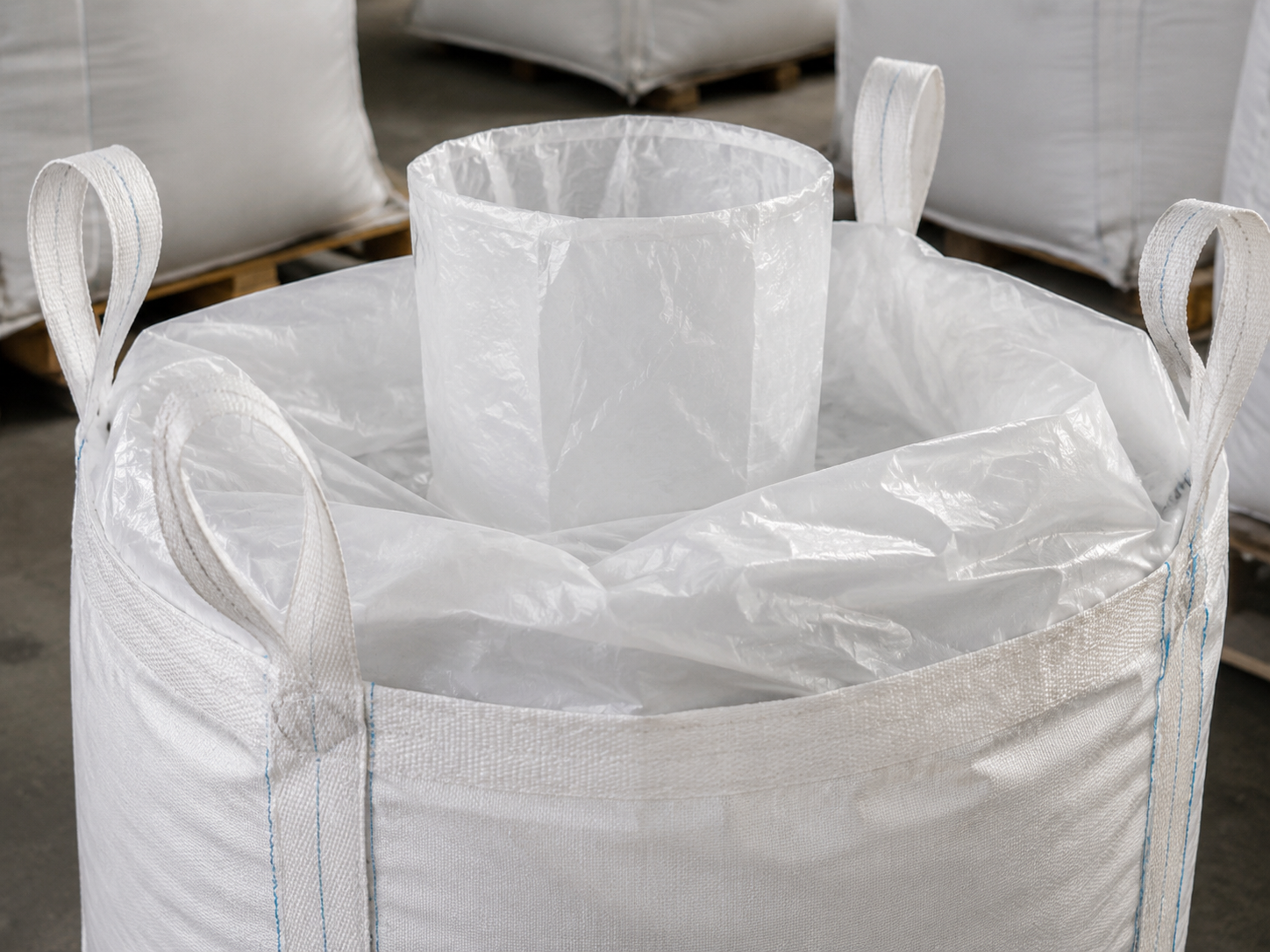
A liner creates an additional separation layer inside the bag, reducing direct contact between the product and the external environment. For food ingredients, fine powders, chemicals, and hygroscopic materials, bulk bag liners can improve sealing, hygiene control, and discharge integrity. The liner shape should also match the bag dimensions and the flow characteristics of the material.
How to Select a Coating, Liner, or Combined Protection System
The protection system should be selected according to particle size, moisture content, flowability, hygroscopicity, and contamination risk. Standard woven bags may be sufficient for ordinary granules. Fine powders or moisture-sensitive products may require a coating, while materials with stricter sealing and hygiene requirements may need a combination of coating and liner.
Different Industries Have Different FIBC Performance Requirements
Agriculture and Food: Hygiene, Moisture Protection, and Contamination Control
Agriculture and food producers commonly use agricultural FIBC bags for grains, seeds, fertilizers, feed, flour, sugar, and starch. These applications involve more than load capacity. Cleanliness, moisture control, foreign-material prevention, and storage duration are also important. Food-grade packaging requires confirmation of the material, production environment, and liner requirements according to the product.
Chemical and Plastics: Chemical Resistance, Sealing, and Powder Control
Chemical and plastics manufacturers commonly package resins, additives, pigments, powders, and granules. Chemical grade bulk bags must balance material resistance, bag sealing, dust control, and discharge stability. Materials that generate dust or static electricity also require further evaluation of antistatic construction and grounding procedures.
Mining and Construction: High Load Capacity, Abrasion Resistance, and Stable Stacking
Minerals, sand, cement, and aggregates are often dense, and their sharp particles can create significant abrasion. Therefore, mining bulk bags and construction bulk bags generally require higher load capacity, stronger abrasion resistance, and better shape stability. For long-distance transport, the bottom, seams, and lifting loops should be assessed under dynamic loading conditions.
Different Industries Require Different Capacities, Discharge Methods, and Bag Constructions
Even when the same FIBC bags are used, the priorities may differ. Food applications may emphasize hygiene and liners; chemical applications may focus on moisture and static control; mining applications may require high strength and abrasion resistance; and agricultural applications may prioritize ventilation, storage, and bulk handling. Capacity, filling openings, and discharge openings should therefore be selected according to the actual operating process.
FIBC Safety Factors and Industry Quality Requirements
The Basic Concepts of Safe Working Load and Safety Factor
Safe Working Load refers to the load that a bag can safely carry under specified operating conditions. Safety Factor represents the margin between the bag’s ultimate strength and its rated working load. Buyers should not evaluate a bag only by its nominal capacity; the rated load must be matched with the real handling and transport conditions.
Applications of 5:1 and 6:1 Safety Factors
A 5:1 safety factor is commonly used for certain single-trip or standard handling conditions. A 6:1 safety factor may be selected when reuse, handling frequency, or additional safety margin is required. The correct choice should also consider regulatory requirements, customer specifications, material weight, and whether the bag will be reused.
Differences Between Type A, Type B, Type C, and Type D FIBC Bags
Type A FIBC bags are generally used when no significant static-electricity risk is present. Type B FIBC bags are designed to reduce certain static-discharge risks. Type C conductive bulk bags normally require grounding during operation. Type D FIBC bags use conductive or dissipative materials to reduce static risk. The bag type must match the material and the operating environment.
The Importance of Antistatic FIBC Bags for Powders and Flammable Materials
Fine powders, flammable powders, and certain chemical materials may generate static during filling, friction, and discharge. Anti-static FIBC bags can reduce the risk caused by static accumulation, but the bag alone cannot replace proper operating procedures. Grounding, filling speed, discharge control, and the surrounding environment are equally important.
Testing, Certification, and Batch-Quality Documents Buyers Should Check
During procurement, buyers should review the rated load, construction type, testing methods, material description, seam strength, and batch-traceability information. For food, chemical, and hazardous materials, the applicable compliance documentation should be checked according to the target market and actual use. Decisions should not be based only on appearance or one isolated parameter.
How to Select FIBC Bulk Bags According to the Material and Logistics Process
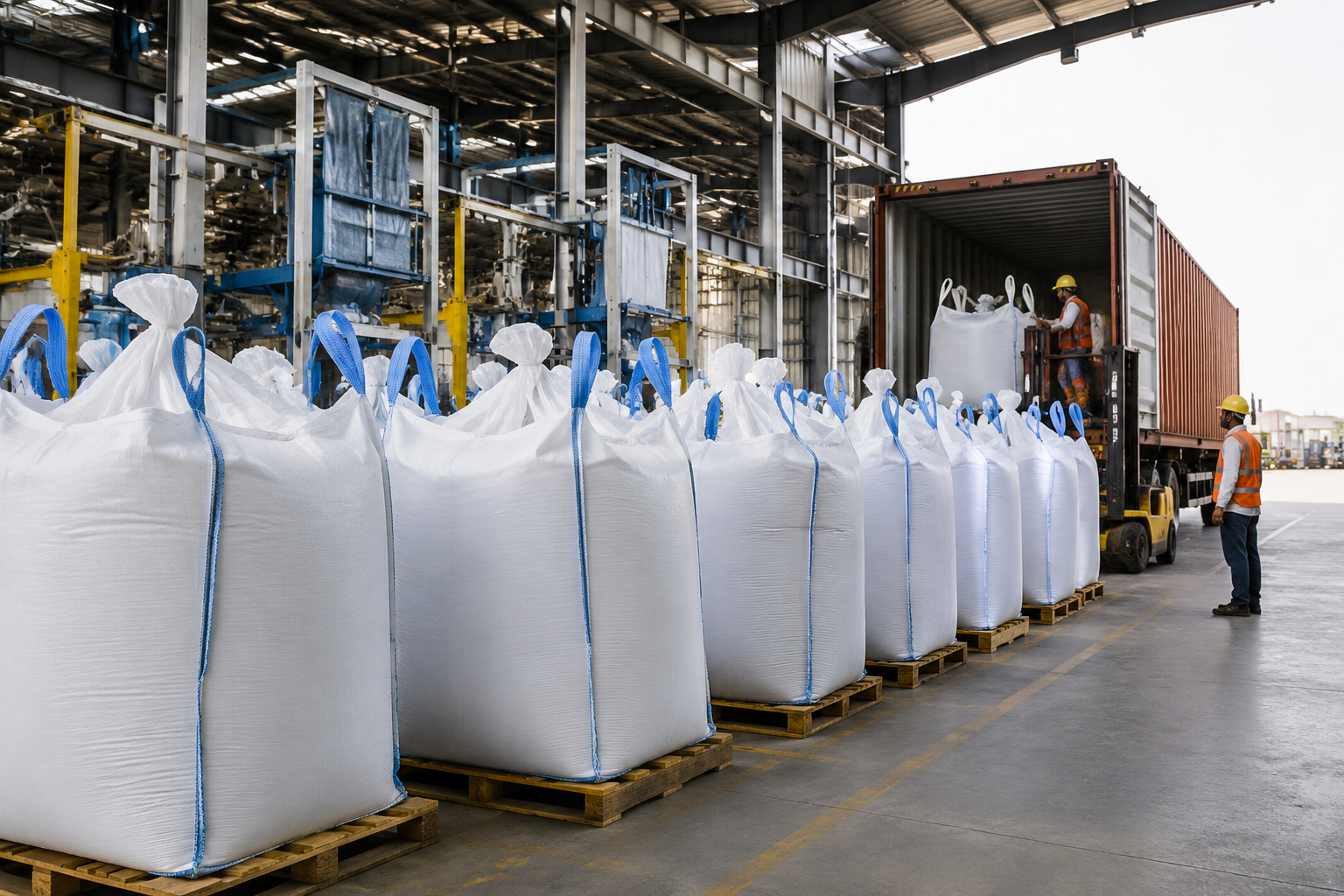
Determining Capacity According to Material Density, Particle Size, and Flowability
Capacity should not be determined only by the target tonnage. Material density and the volume after filling must also be considered. Powders, granules, and flakes may occupy different volumes at the same weight, so bulk bag dimensions, bulk density, and allowable load should be evaluated together.
Selecting the Bag Configuration According to Filling, Discharge, and Handling Methods
The filling method, discharge method, forklift operation, and lifting process all influence the bag configuration. Materials requiring rapid discharge may need a bottom discharge outlet, while powders requiring controlled release may require a more precise discharge design.
Selecting the Protection Structure According to Humidity, Temperature, and Transport Conditions
High-humidity storage, short-term outdoor storage, and long-distance ocean transport place different demands on packaging protection. Moisture-sensitive or caking materials may require coated FIBC bags, FIBC liners, and additional external protection. Agricultural materials requiring ventilation should not automatically be placed in a completely sealed structure.
Selecting the Safety Level According to Single-Trip or Reusable Requirements
For single-use packaging, load capacity, transport safety, and cost are usually the main concerns. For reusable packaging, cleaning, inspection, aging, and repeated handling must also be evaluated. Single-trip FIBC bags and multi-trip FIBC bags should not be compared only by purchase price.
Balancing Packaging Performance, Transport Efficiency, and Product Safety
The lowest-priced bag does not always provide the lowest total cost. If insufficient strength causes leakage, rework, or product loss, the actual cost may be significantly higher. A reasonable custom FIBC bags solution should consider material, construction, protection, safety, transport, and warehousing rather than comparing only the price of one bag.
The Impact of FIBC Materials and Construction on Supply-Chain Costs
The Relationship Between Packaging Weight and Transport Cost
Lightweight polypropylene bulk bags can reduce packaging weight and increase the effective payload ratio. However, excessive material reduction may affect load capacity and durability. A reasonable balance must be achieved between packaging weight, bag strength, and transport distance.
The Effect of Bag Stability on Stacking Efficiency and Warehouse Cost
Stable square-shaped bags are easier to stack on pallets and organize in warehouses. In high-frequency handling or container transport, stable stacking can reduce the risk of tipping, improve space utilization, and minimize empty gaps caused by bag deformation.
How Moisture and Leakage Protection Reduce Material Loss
Coatings, liners, and properly designed seams can reduce moisture damage, leakage, and contamination. For high-value powders, food ingredients, and chemicals, the additional cost of protective structures should be compared with potential material loss, cleaning expenses, and customer claims.
How Proper Selection Reduces the Total Life-Cycle Cost of FIBC Bags
An effective packaging solution should cover procurement, transport, warehousing, handling, use, and recovery. By matching bag properties with material characteristics and logistics processes, companies can reduce damage, lower storage demand, improve handling speed, and reduce total supply-chain cost while maintaining safety.
Conclusion: FIBC Performance Depends on the Combined Fit of Material, Construction, and Application
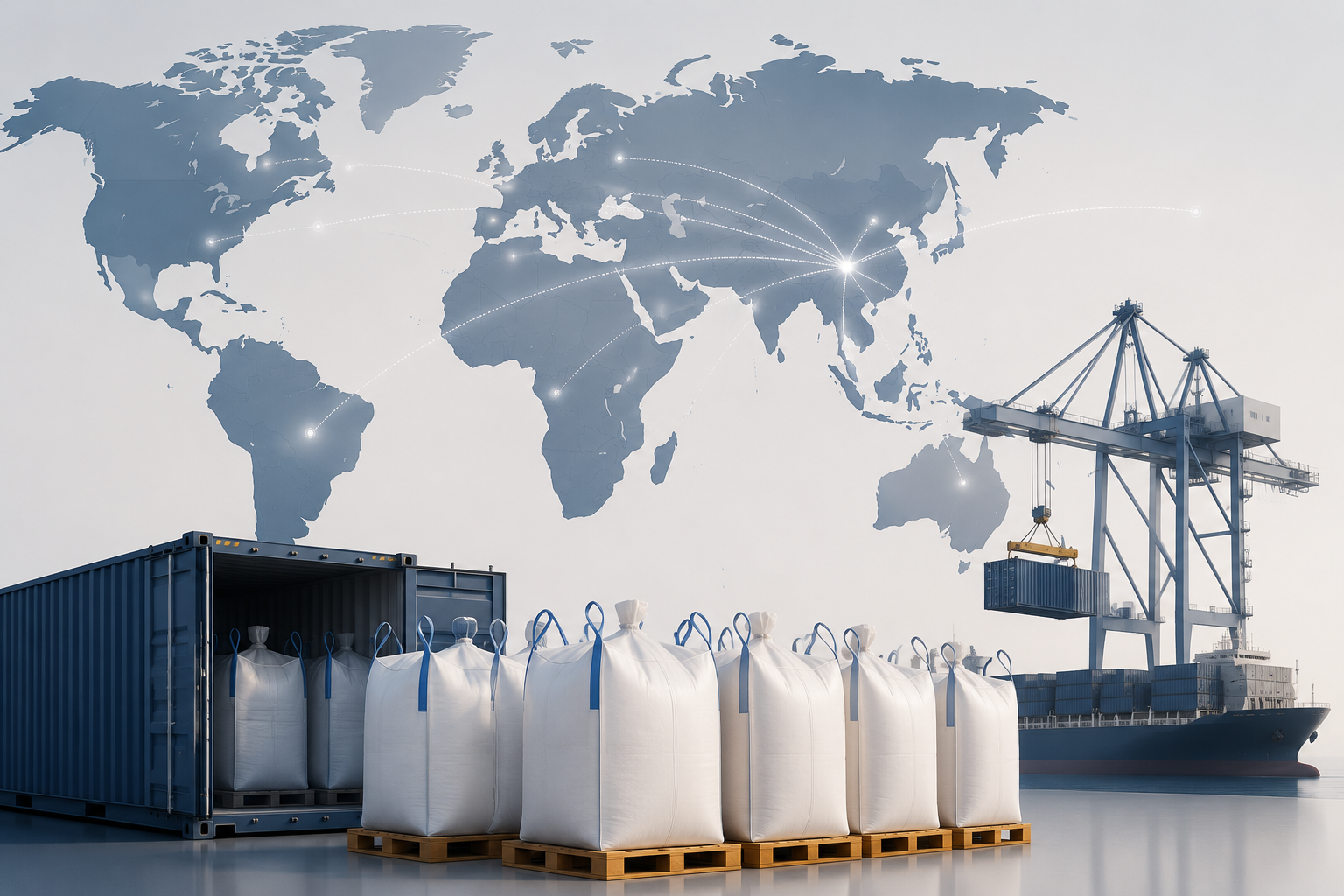
Woven Polypropylene Determines the Basic Strength of the Bag
Woven polypropylene provides the basic tensile strength, abrasion resistance, and chemical resistance of an FIBC bag. However, the material name alone does not fully define packaging quality. Fabric density, tape dimensions, and manufacturing technology must also be considered.
Bag Construction Determines Load Capacity, Stability, and Handling Efficiency
U-Panel, 4-Panel, Circular, and Baffle constructions affect load distribution, stacking, and discharge performance. Construction should be selected according to the actual logistics process rather than appearance or price alone.
Coatings and Liners Determine Moisture Protection, Sealing, and Product Protection
Coated FIBC bags and FIBC liners can improve moisture resistance, sealing, and contamination control. Whether they are required, and which combination is appropriate, depends on the material, transport environment, and industry requirements.
Industry-Based Selection Is the Key to Safe and Efficient Bulk Transport
There is no single standard answer for high-performance FIBC bulk bags. Only by combining material, construction, coating, safety level, material characteristics, and supply-chain processes can companies develop a bulk-packaging solution that balances safety, cost, and transport efficiency.
Related News
Other news you might be interested in
Chemical Grade Bulk Bags: How to Select the Right Flexible Intermediate Bulk Containers (FIBC) for Chemicals, Powders, and Hazardous Materials
Bulk materials used in the chemical industry often have characteristics such as fine particle size, high flowability, strong moisture absorption, a tendency to cake, or a high risk of electrostatic charge buildup. For chemicals, powder materials, and certain hazardous materials, packaging does more than hold the product—it directly affects material quality, workplace safety, and transportation reliability.
Custom FIBC Bulk Bags: How to Choose a Reliable FIBC Bag Manufacturer for Your Bulk Packaging Needs
Across chemicals, minerals, agriculture, food ingredients, plastics, and construction materials, the movement of powders, granules, and other dry bulk goods continues to grow. Companies are no longer asking only whether a bag can hold the material. They need packaging that works throughout filling, lifting, warehousing, ocean transport, discharge, and, where applicable, reuse. FIBC bags, or Flexible Intermediate Bulk Containers, have become an important part of modern bulk packaging because they combine high payload efficiency with flexible handling options.
Want to know more?
Get in touch with us for more information about our services and products.