
Chemical Grade Bulk Bags: How to Select the Right Flexible Intermediate Bulk Containers (FIBC) for Chemicals, Powders, and Hazardous Materials

Dayang Yang
AuthorWith experience in FIBC bulk bag manufacturing and export sales, we operate our own production facility with stable large-scale capacity. We are specialists in bulk bags, conductive FIBCs, food-grade FIBCs, UN certified bags, and customized flexible intermediate bulk containers for industrial packaging and bulk material transportation solutions.
Core Risks in Chemical Material Packaging
Dust, Static Electricity, Moisture, Leakage, and Cross-Contamination
Bulk materials used in the chemical industry often have characteristics such as fine particle size, high flowability, strong moisture absorption, a tendency to cake, or a high risk of electrostatic charge buildup. For chemicals, powder materials, and certain hazardous materials, packaging does more than hold the product—it directly affects material quality, workplace safety, and transportation reliability.
For example, fine powders can easily generate dust during filling and discharge. When dust rubs against the bag body, conveying equipment, or air, static electricity may accumulate. If the material is combustible, has low ignition energy, or presents a dust-explosion risk, a standard packaging solution may not meet the safety requirements of the operating environment. At the same time, humid conditions can cause chemical powders to absorb moisture, cake, or deteriorate, while insufficient sealing can result in leakage, contamination, and material loss.
Packaging Challenges in Filling, Storage, Transportation, and Discharge Throughout the Chemical Supply Chain
A chemical-grade bulk bag must go through a complete process—from filling, lifting, and stacking to transportation and discharge. Each stage changes the stresses and risks placed on the bag: filling requires dust control and proper filling-spout compatibility; storage requires moisture protection, stable stacking, and contamination prevention; transportation requires resistance to vibration, compression, and damage; while discharge requires control of product residue, release speed, and dust generation.
Therefore, FIBC selection should not be based only on load weight. It should begin with material risks and the actual operating process.
Understand the Material First: How Chemical Properties Determine FIBC Selection
Packaging Differences for Powders, Granules, High-Density Materials, Moisture-Sensitive Materials, and Corrosive Materials
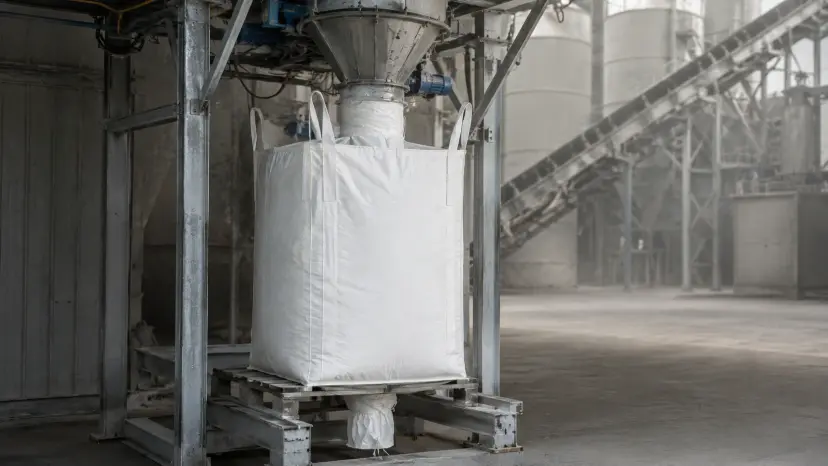
Different materials place different demands on FIBC bags for chemicals. Fine powders require greater attention to sealing, liners, and antistatic performance. Granular materials generally place more emphasis on load capacity, filling efficiency, and discharge design. High-density materials require the actual density to be considered again when calculating bulk bag load capacity, bag dimensions, and lifting-loop strength.
For materials that are moisture-sensitive, oxidation-sensitive, or vulnerable to external contamination, ordinary woven bag fabric may not provide sufficient long-term protection. They may require coated FIBC bags or FIBC liners. For chemical raw materials with corrosive, irritating, or high-cleanliness requirements, liner material, closure design, and production conditions can also affect final packaging performance.
Conditions That Require Special Attention for Hazardous and Static-Sensitive Materials
Before purchasing or selecting packaging, it is important to determine whether the material is combustible dust, whether it may generate static electricity through friction, whether moisture or leakage protection is required, and whether the material may come into contact with air, humidity, or other contaminants during filling and discharge.
In addition to the material name, buyers should understand bulk density, particle size, moisture content, filling weight, flowability, storage period, and transportation method. Only by combining these conditions with on-site equipment can buyers determine whether they need anti-static FIBC bags, chemical grade bulk bags, liners, coated bags, or specialized discharge designs.
How Does the Chemical Industry Select Type A, B, C, and D FIBC?
Application Boundaries of Different FIBC Types
Type A FIBC bags are commonly used for standard materials with no electrostatic hazard. Type B FIBC bags are suitable for certain dry powders that require control of low-energy discharge risks, but their suitability still depends on the material and operating environment.
For chemical powders with clear static-electricity risks, the selection focus often shifts to Type C FIBC bags or Type D FIBC bags. These bag types are not simply “higher-grade” options. They must be matched to the work area, grounding conditions, dust characteristics, and operating procedures.
The Selection Logic for Type C and Type D in Antistatic Chemical Applications
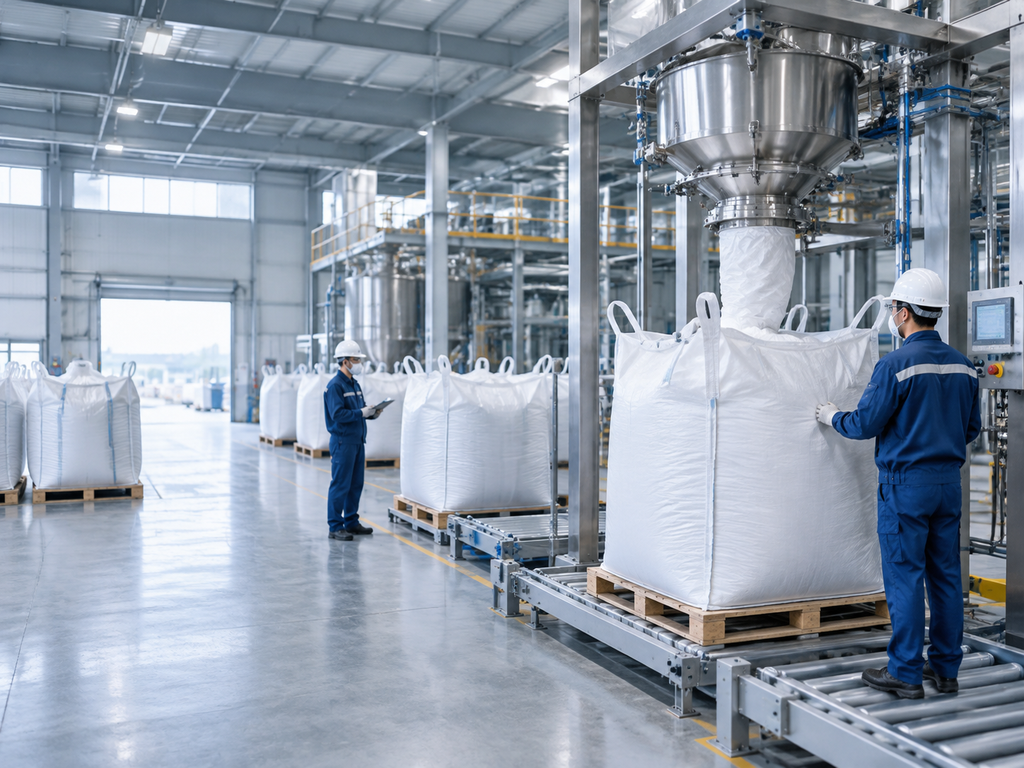
Type C conductive bulk bags require reliable grounding to dissipate static electricity and are suitable for operating environments with established grounding management. Their key value lies in reducing static buildup through conductive construction, but this depends on operators, lifting equipment, and site procedures maintaining effective grounding.
Type D static dissipative FIBC bags are suitable for situations where reliable grounding is difficult but static risks still need to be controlled. Whether selecting Type C FIBC bags or Type D FIBC bags, buyers should avoid choosing based only on a bag-type name and instead assess material properties, site conditions, and safety-management requirements.
Moisture Protection, Leakage Prevention, and Contamination Control: When Are Coated Bags or Liners Needed?
The Different Functions of Coated FIBC and FIBC Liners
Coated FIBC bags are mainly used to improve moisture resistance, dust resistance, and fine-particle containment. They are suitable for applications sensitive to external humidity or material loss. For certain granules, powders, and chemical raw materials, coated bags can reduce the risk of product leaking through woven fabric gaps.
FIBC liners add an internal layer of protection to the bag body, further improving moisture resistance, contamination prevention, sealing, and barrier performance. For fine chemical powders, moisture-sensitive materials, food-related raw materials, or chemicals with high cleanliness requirements, bulk bag liners are often an essential part of the packaging solution.
Protection Requirements for Chemical Powders, Fine Chemicals, and High-Cleanliness Materials
When a material is sensitive to moisture, air, dust, or external contamination, selecting higher-capacity FIBC bulk bags alone does not solve the problem. Buyers should confirm whether the liner fits the bag body properly, whether the closure suits the filling method, whether the discharge structure supports closed handling, and whether the bag can withstand temperature and humidity changes during storage and transportation.
For high-value chemicals, the objective of packaging is not only to contain the material, but also to ensure it reaches the end user in stable condition.
Load Capacity, Structure, and Handling Method: Key Configurations That Affect Safety and Efficiency
Load Capacity, Dimensions, Safety Factor, and Lifting-Loop Structure
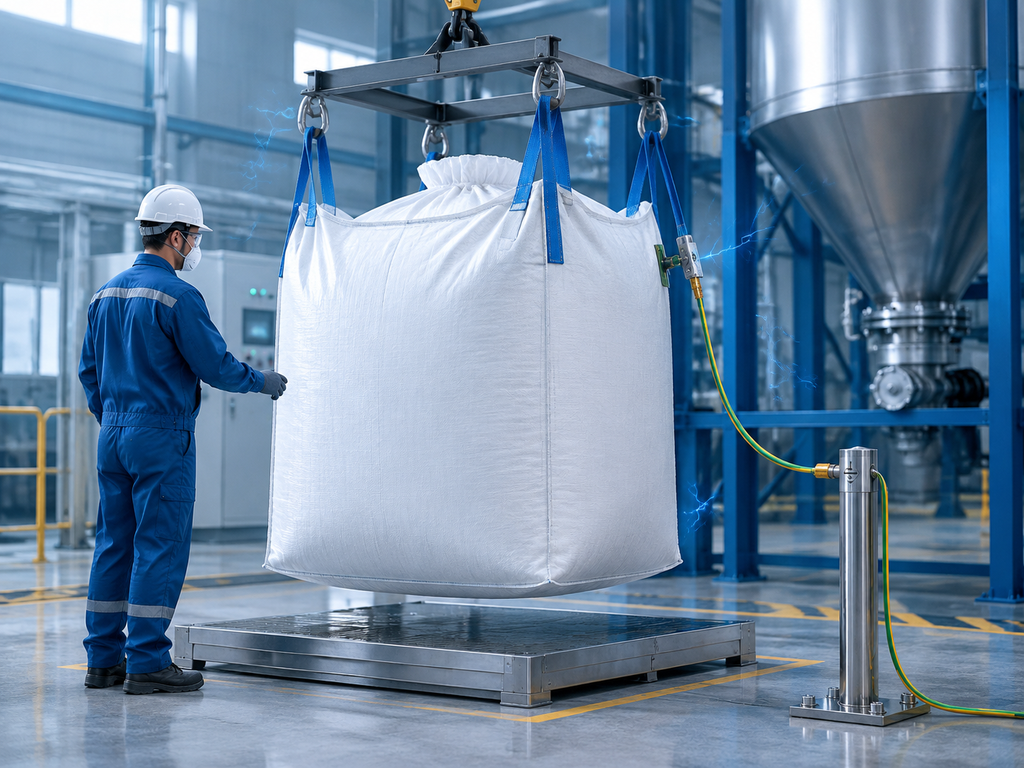
Bulk bag load capacity should be determined based on material bulk density, per-bag filling weight, transportation method, and lifting frequency. Common specifications such as a 1 tonne bulk bag, 2000 lb super sack, or 3000 lb FIBC bags cannot be applied directly to every material. At the same volume, high-density mineral powders, salts, or chemical granules may have significantly different actual weights.
In addition to load capacity, bag dimensions, lifting-loop configurations, and safety factors also affect operational safety. Forklift handling, overhead lifting, container loading, and multi-layer stacking all place different requirements on loop length, bag shape, and bottom support.
How Filling Spouts, Discharge Spouts, Baffle Bags, and Bag Construction Should Match Production Processes
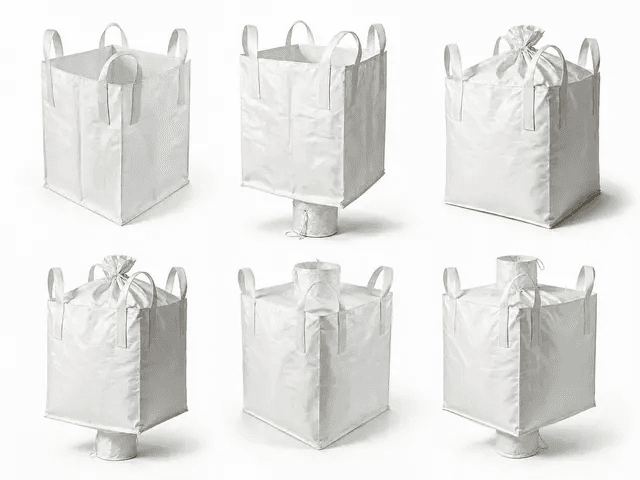
For automated filling lines, filling-spout dimensions and feeding methods must match the equipment. For powders that require controlled discharge, the bottom discharge design directly affects release speed, dust generation, and product residue. Duffle top spout bottom FIBC bags are suitable for applications that require both closed filling and controlled discharge.
When warehouse-space utilization and stable stacking are priorities, baffle bags can help the bag maintain a more regular square shape after filling, reducing wasted space caused by bulging and improving stacking stability. For specific handling environments, 2 loop FIBC bags can also improve loading and unloading efficiency.
Key FIBC Selection Considerations for Different Chemical Applications
Fertilizers, Chemical Powders, Resin Granules, Mineral Powders, and Petrochemical Raw Materials
Fertilizers and agricultural chemical raw materials typically require attention to moisture absorption, caking, and moisture protection during transportation. Fine chemical powders and pigments place greater emphasis on dust prevention, contamination control, and static management. Plastic resins and polymer granules focus more on load capacity, flowability, and discharge efficiency.
For mineral powders, inorganic salts, and high-density materials, FIBC bags for mining, FIBC bags for minerals, and industrial bulk bags typically focus on high load capacity, abrasion resistance, stable stacking, and transportation safety. Petrochemical and oilfield-related materials may involve more complex static control, contamination prevention, and heavy-duty handling requirements. Therefore, FIBC bags for oilfield applications often require customized evaluation based on actual site conditions.
How to Match Antistatic, Moisture-Barrier, Liner, and Load-Capacity Configurations to Material Properties
Chemical packaging selection should not rely only on industry category. For example, two powders used as chemical raw materials may require entirely different chemical FIBC bulk bags configurations because of differences in particle size, moisture content, bulk density, and electrostatic characteristics.
A more practical approach is to identify material risks first, then determine whether anti-static FIBC bags are required; confirm moisture-protection and cleanliness requirements, then determine whether FIBC liners or coated bags are needed; and finally confirm filling weight and handling method before selecting bag construction, dimensions, and lifting-loop design.
A Practical Checklist Before Chemical Companies Purchase FIBC
Material Parameters, Filling Weight, Operating Method, and Protection Requirements
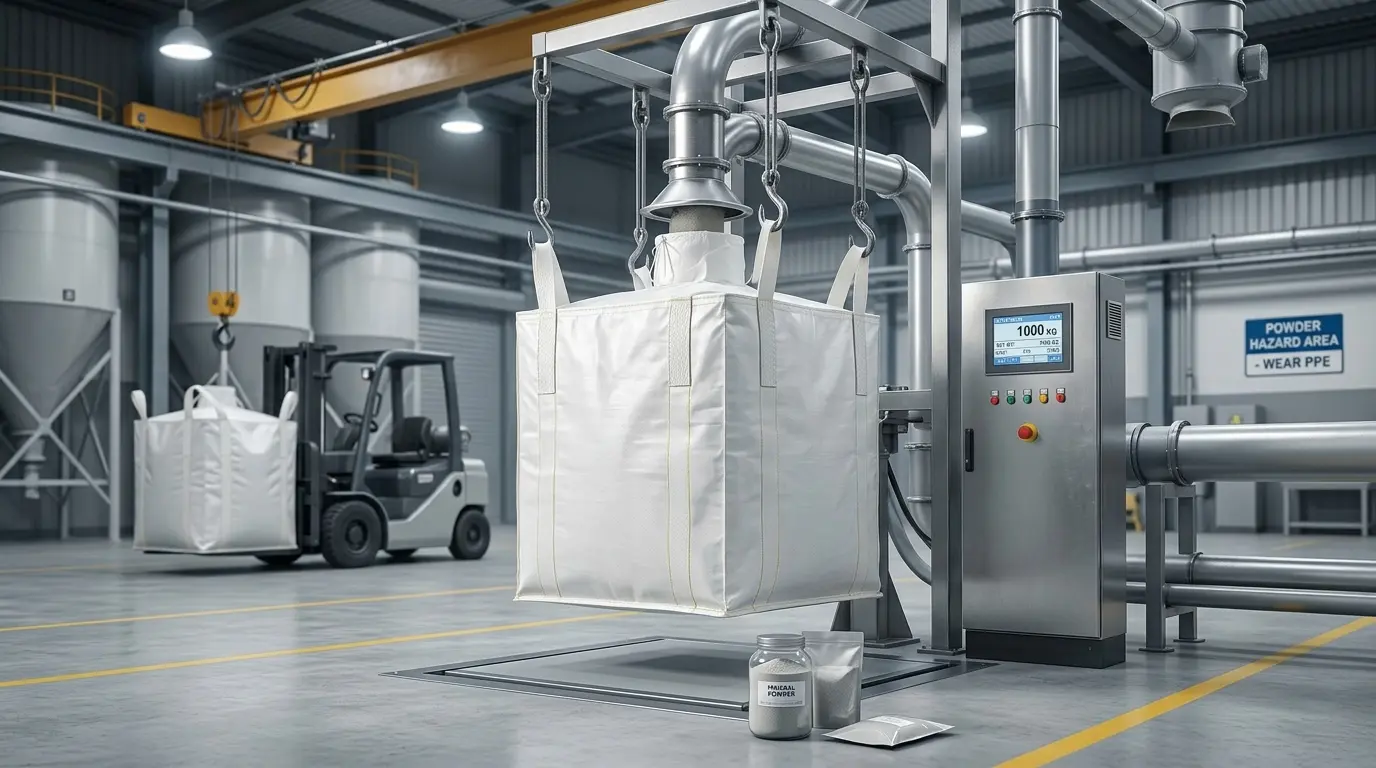
Before purchasing chemical grade bulk bags, companies should prepare at least the following information: material name, material condition, bulk density, per-bag weight, particle size, moisture content, filling method, discharge method, storage environment, and transportation conditions.
Where dust, combustibility, or static-electricity risks are involved, buyers should also specify whether Type C FIBC bags, Type D FIBC bags, or other anti-static FIBC bags solutions are required. Where moisture resistance, leakage prevention, or cleanliness is important, FIBC liners, coating, and closure structures should also be confirmed.
Quality, Customization, and Delivery Capabilities to Confirm When Selecting a Supplier
When evaluating an FIBC bag manufacturer or FIBC bag supplier, chemical companies should not compare quotations alone. They should also assess whether the supplier understands the material application, can provide structural recommendations, maintain batch consistency, and support customization of dimensions, liners, lifting loops, filling spouts, and discharge structures.
For long-term packaging programs, the more important goal is to establish repeatable specifications that keep filling, storage, transportation, and discharge stable—instead of having to resolve packaging compatibility issues with every purchase.
Conclusion: The Core of Chemical-Grade FIBC Is a Packaging Solution That Matches Material Risks and Operating Processes
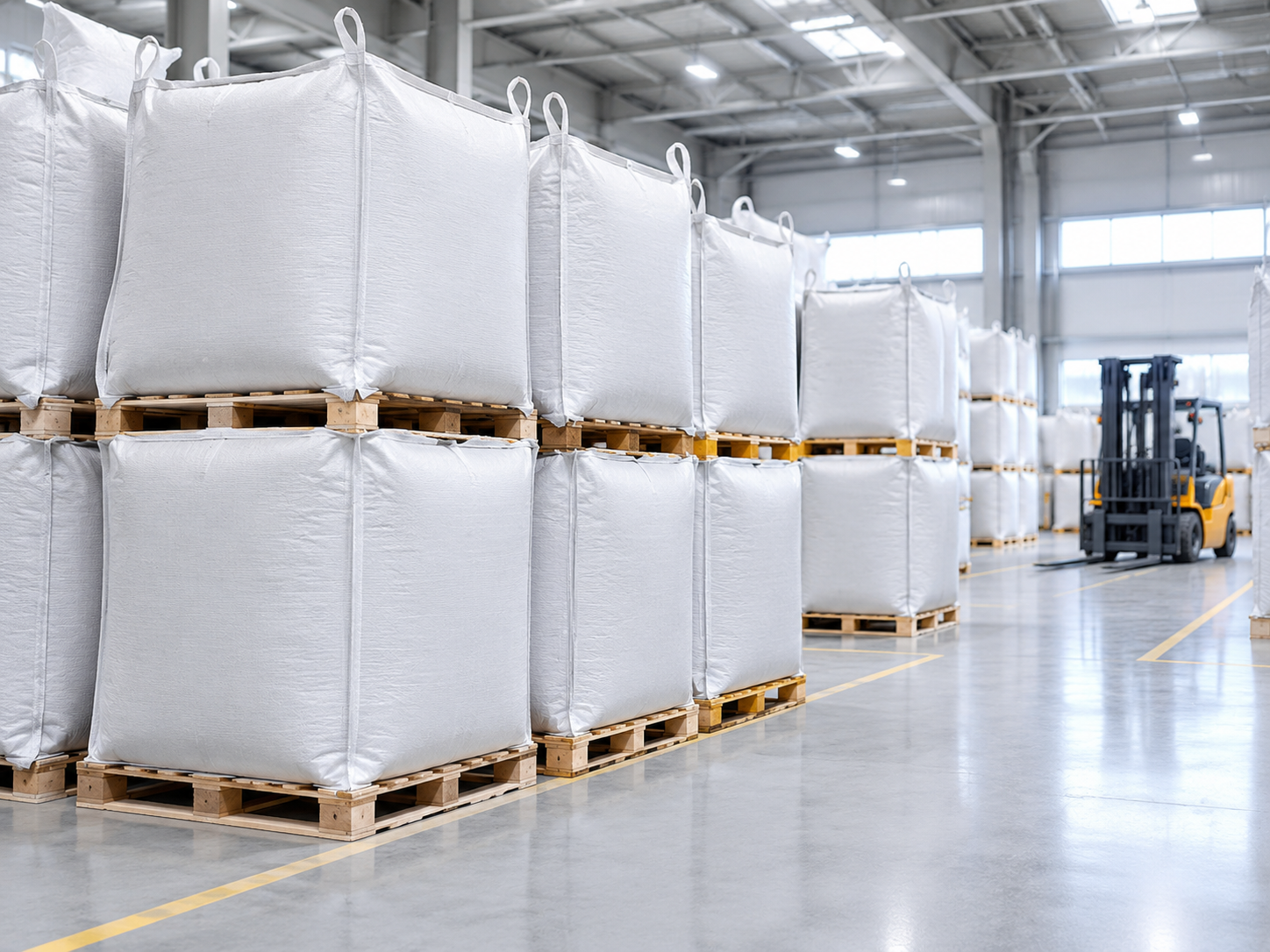
Chemical-grade FIBC is not a single packaging product. It is a packaging solution that connects material properties, production processes, storage conditions, transportation safety, and purchasing standards. Selecting appropriate FIBC bulk bags should begin with material risks and systematically account for antistatic performance, moisture protection, liners, load capacity, filling, and discharge requirements.
Only when the bag configuration truly matches the operating environment of chemicals, powder materials, or hazardous materials can chemical grade bulk bags improve chemical supply-chain efficiency and stability while supporting safe handling.
Related News
Other news you might be interested in
Woven Polypropylene FIBC Bulk Bags: How Material, Construction and Coating Affect Bulk Packaging Performance
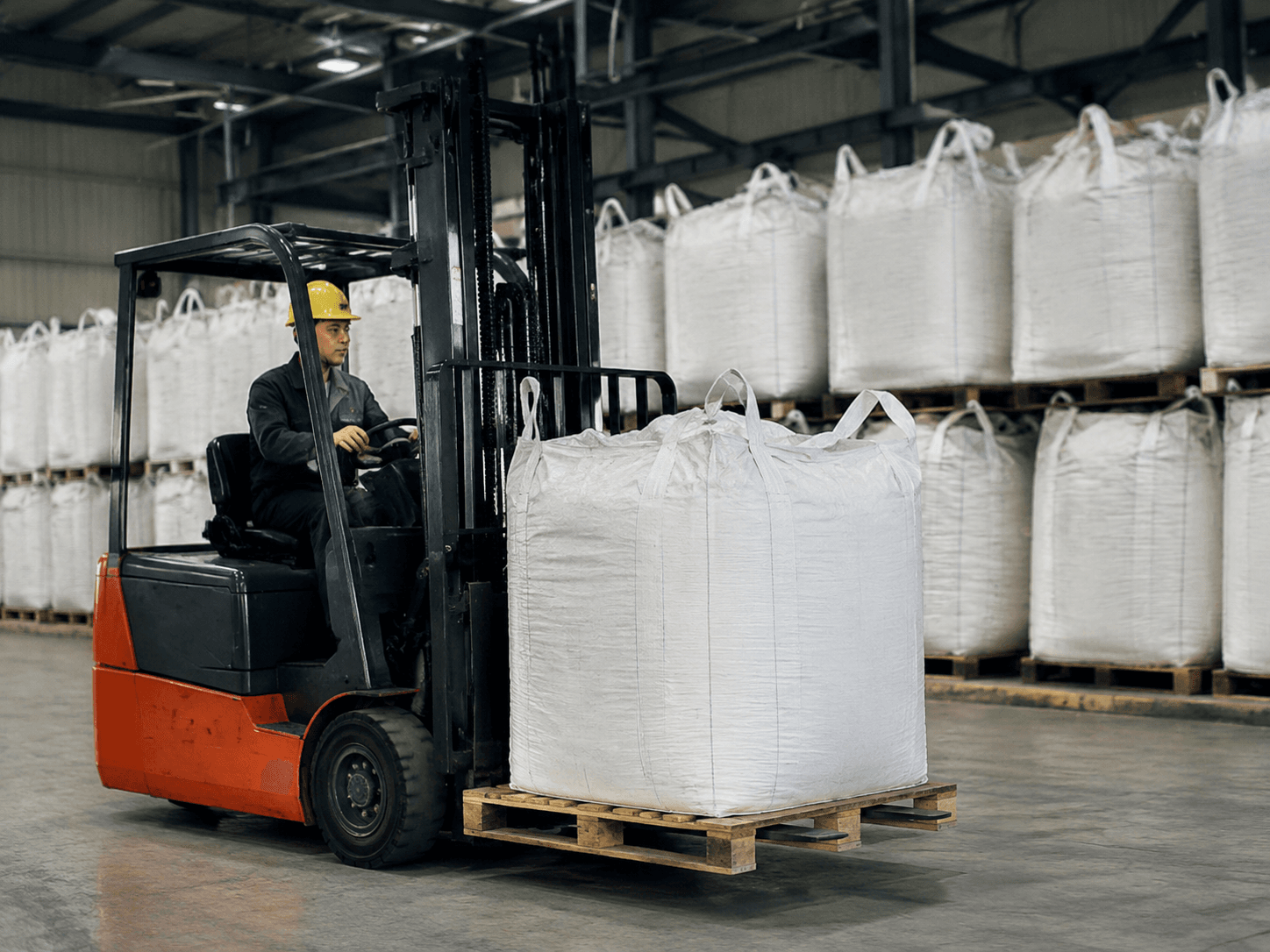
In global bulk-material supply chains, FIBC bulk bags have developed from simple transport containers into important logistics tools connecting production, warehousing, loading, unloading, and end use. Their actual performance depends not only on capacity, but also on woven polypropylene, bag construction, coating, liners, safety factors, and the application environment. For the food, chemical, agricultural, mining, and construction-material industries, selecting the right FIBC bulk bags affects load-bearing performance, material loss, transport efficiency, warehouse space, and operational safety.
Custom FIBC Bulk Bags: How to Choose a Reliable FIBC Bag Manufacturer for Your Bulk Packaging Needs
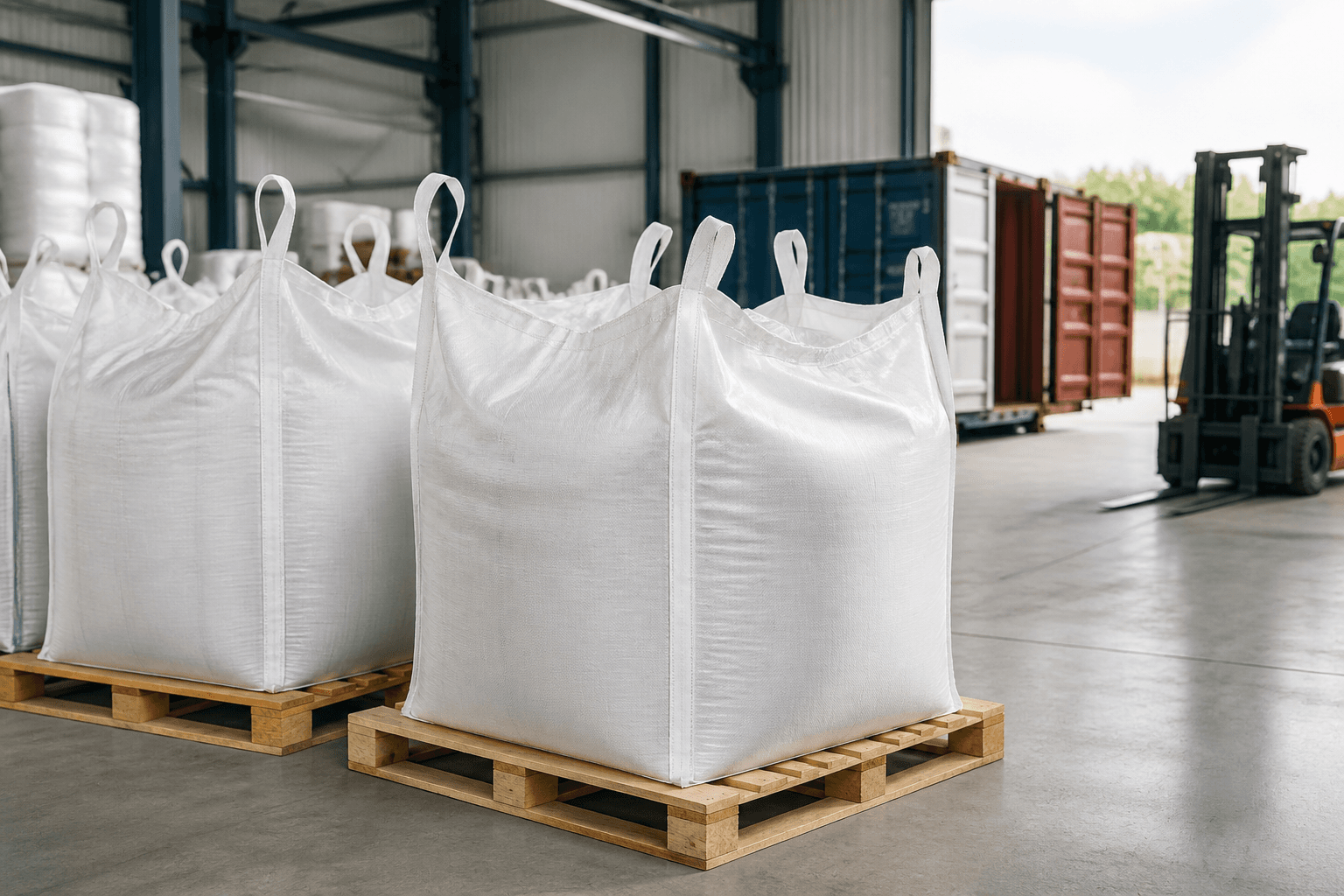
Across chemicals, minerals, agriculture, food ingredients, plastics, and construction materials, the movement of powders, granules, and other dry bulk goods continues to grow. Companies are no longer asking only whether a bag can hold the material. They need packaging that works throughout filling, lifting, warehousing, ocean transport, discharge, and, where applicable, reuse. FIBC bags, or Flexible Intermediate Bulk Containers, have become an important part of modern bulk packaging because they combine high payload efficiency with flexible handling options.
Want to know more?
Get in touch with us for more information about our services and products.