
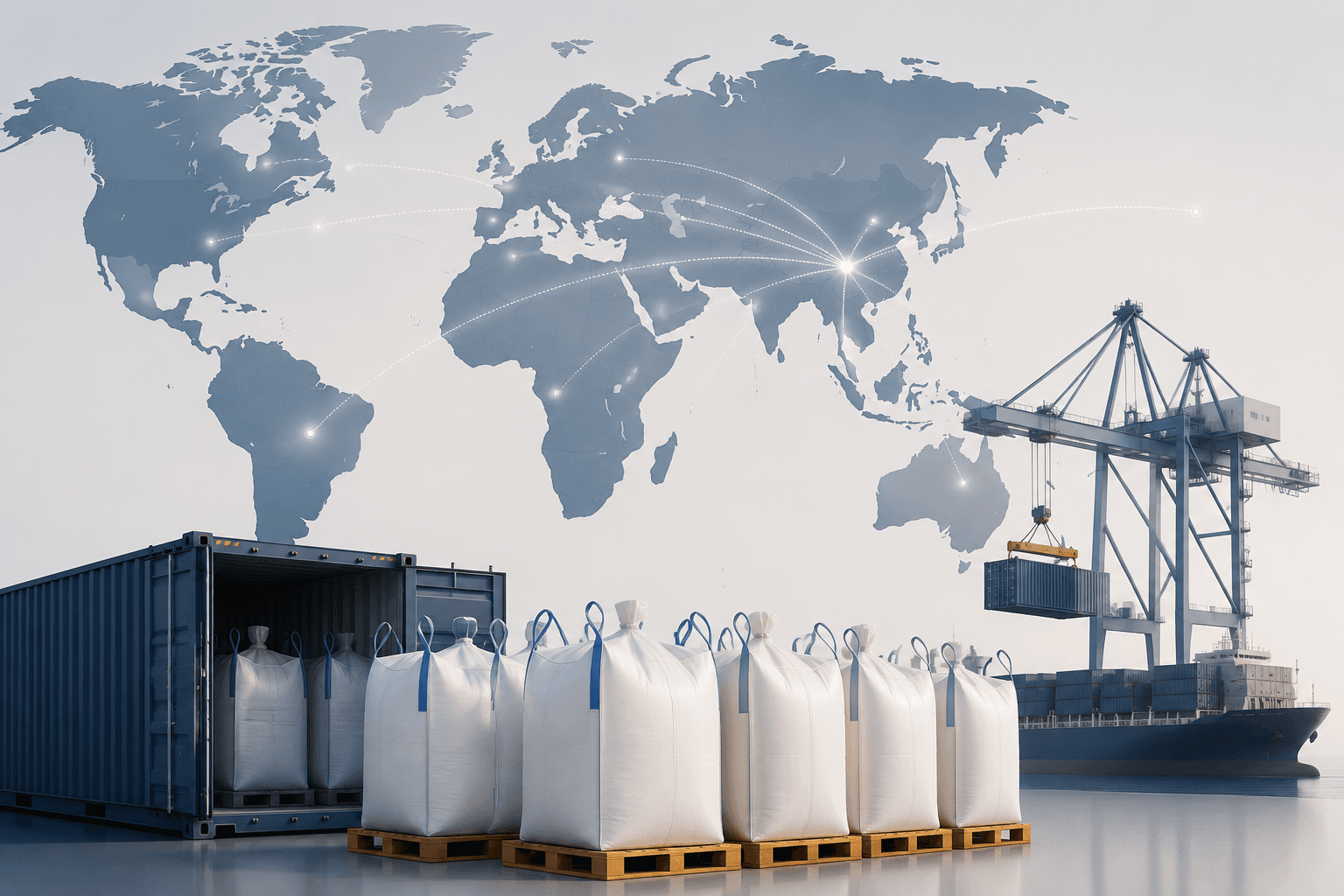
Chemical Grade Bulk Bags: How to Select the Right FIBC Packaging Bags for Powders, Resins, and Petrochemical Materials

Dayang Yang
AuthorWith experience in FIBC bulk bag manufacturing and export sales, we operate our own production facility with stable large-scale capacity. We are specialists in bulk bags, conductive FIBCs, food-grade FIBCs, UN certified bags, and customized flexible intermediate bulk containers for industrial packaging and bulk material transportation solutions.
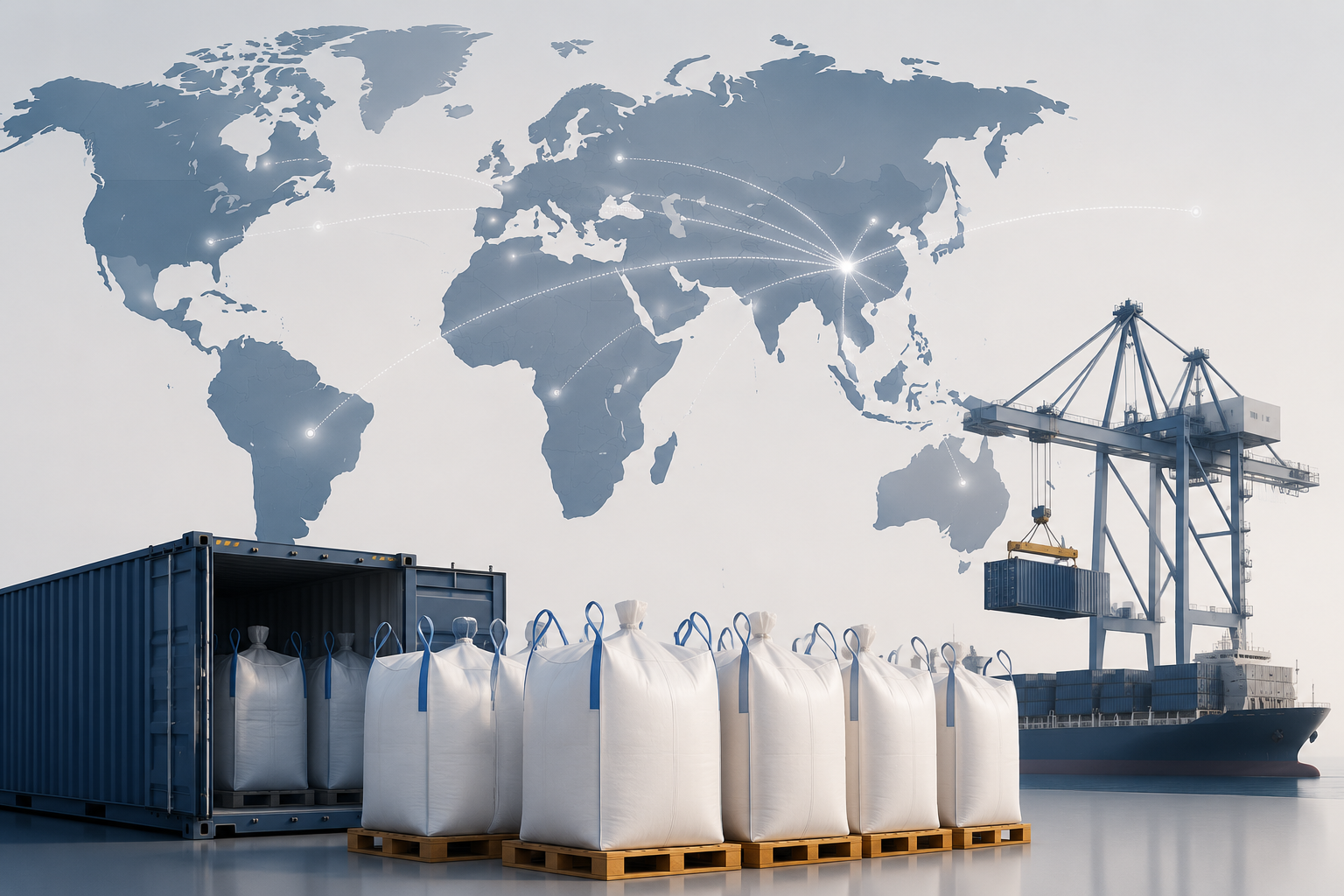
As the chemical industry becomes more large-scale, continuous, and globalized, the storage and transportation of powders, resins, granules, and petrochemical materials are shifting from simply “being able to ship” toward safe, stable, and traceable handling. Chemical materials may generate dust, absorb moisture, leak, build up static electricity, or be sensitive to contamination. A failure at any stage of packaging can affect product quality, production efficiency, and transportation safety.
In this context, FIBC bags and Flexible Intermediate Bulk Containers (FIBC) are no longer merely containers for bulk materials. They are an important link between filling, warehousing, loading, transportation, and downstream feeding. Companies are paying greater attention to material compatibility, moisture protection, static control, discharge efficiency, stacking stability, and traceability, rather than judging packaging only by load capacity or unit price.
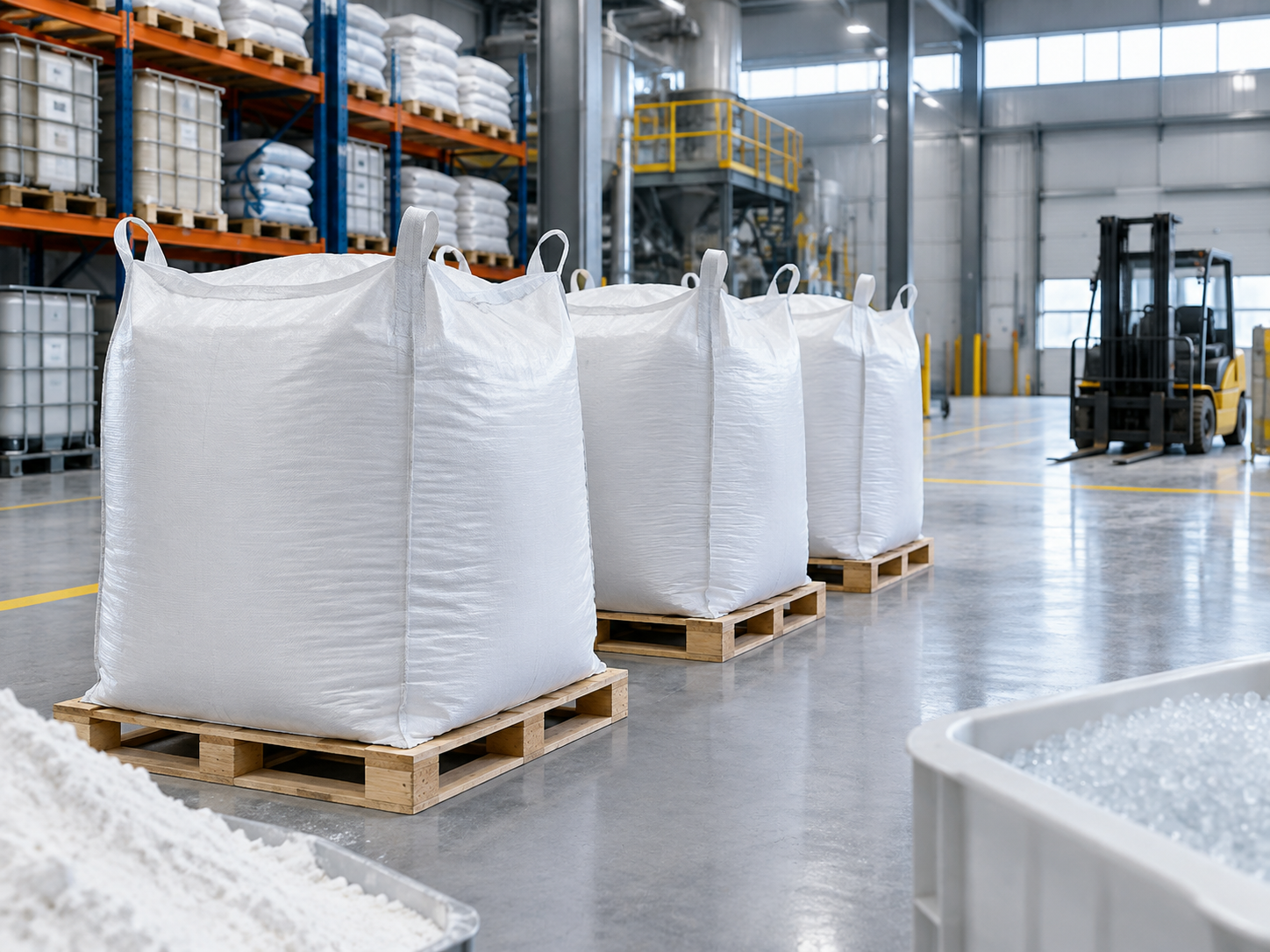
Current industry trends are also clear. On the one hand, demand is rising for safe packaging such as Type C conductive bulk bags and Type D static dissipative FIBC bags. On the other hand, FIBC liners, coated FIBC bags, and baffle bags, together with customized filling and discharge structures, are being used to address increasingly complex production and logistics conditions. At the same time, automated filling and discharge, supply chain reliability, packaging waste reduction, and sustainable materials are driving chemical bulk packaging toward more specialized and systematic solutions.
Chemical Bulk Packaging Is Moving from “Holding Material” to “Managing Risk”
Traditional procurement often starts with load capacity, dimensions, and price. However, the risks associated with chemical materials do not disappear simply because a bag can carry the required weight. For chemical grade bulk bags, the real challenge is managing dust, moisture, leakage, contamination, and static electricity throughout filling, lifting, storage, discharge, and transportation.
For this reason, selecting FIBC bags for chemicals should not begin with an existing bag style. It should begin with material properties, equipment conditions, transportation routes, and quality requirements. Whether packaging matches the operating environment determines whether it can become a stable part of the supply chain rather than a disposable item.
Different Materials Create Different Packaging Risks
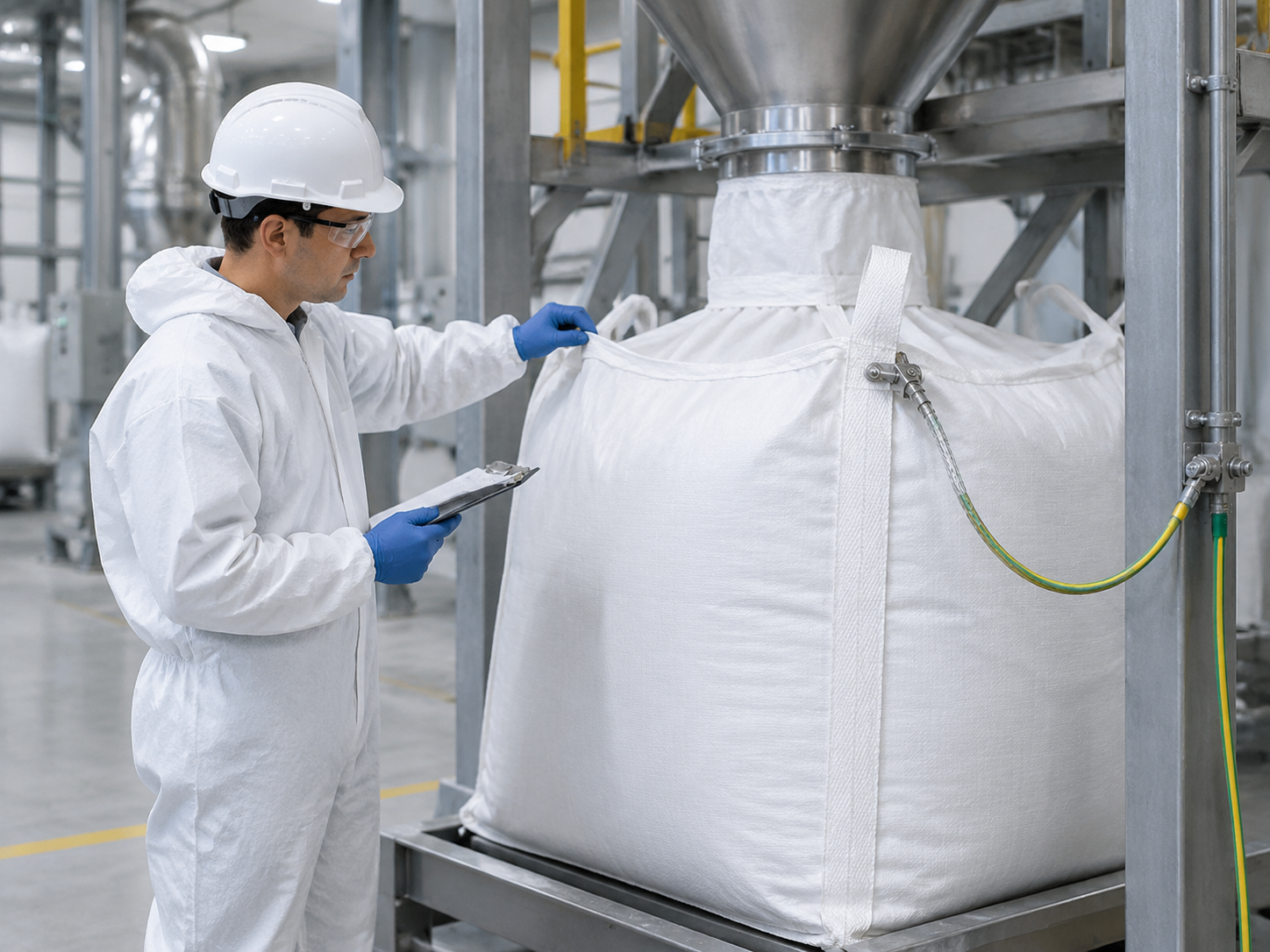
The main concerns for powder materials are dust emissions, moisture absorption, caking, discharge residue, and static accumulation. For fine or easily airborne powders, packaging must address not only sealing performance, but also whether filling and discharge may create a combustible dust environment.
The risks for plastic resins and granular materials are different. Buyers are often more concerned with particle cleanliness, foreign-material contamination, bag damage, and discharge continuity. If a material is sensitive to moisture, odor, or external contamination, bag fabric alone may not provide sufficient protection.
For petrochemical materials and chemical intermediates, material properties, transport distance, storage conditions, and operating methods must all be considered together. Chemical grade bulk bags are not a single universal bag type, but a packaging decision framework built around material risk, processing conditions, and quality requirements.
From Material Risk to Packaging Performance Requirements
Before selecting chemical FIBC bulk bags, companies should identify particle size, bulk density, flowability, moisture content, static sensitivity, and acceptable contamination levels. These factors can then be translated into requirements for bag materials, barrier systems, static protection levels, load-bearing capacity, and filling or discharge structures.
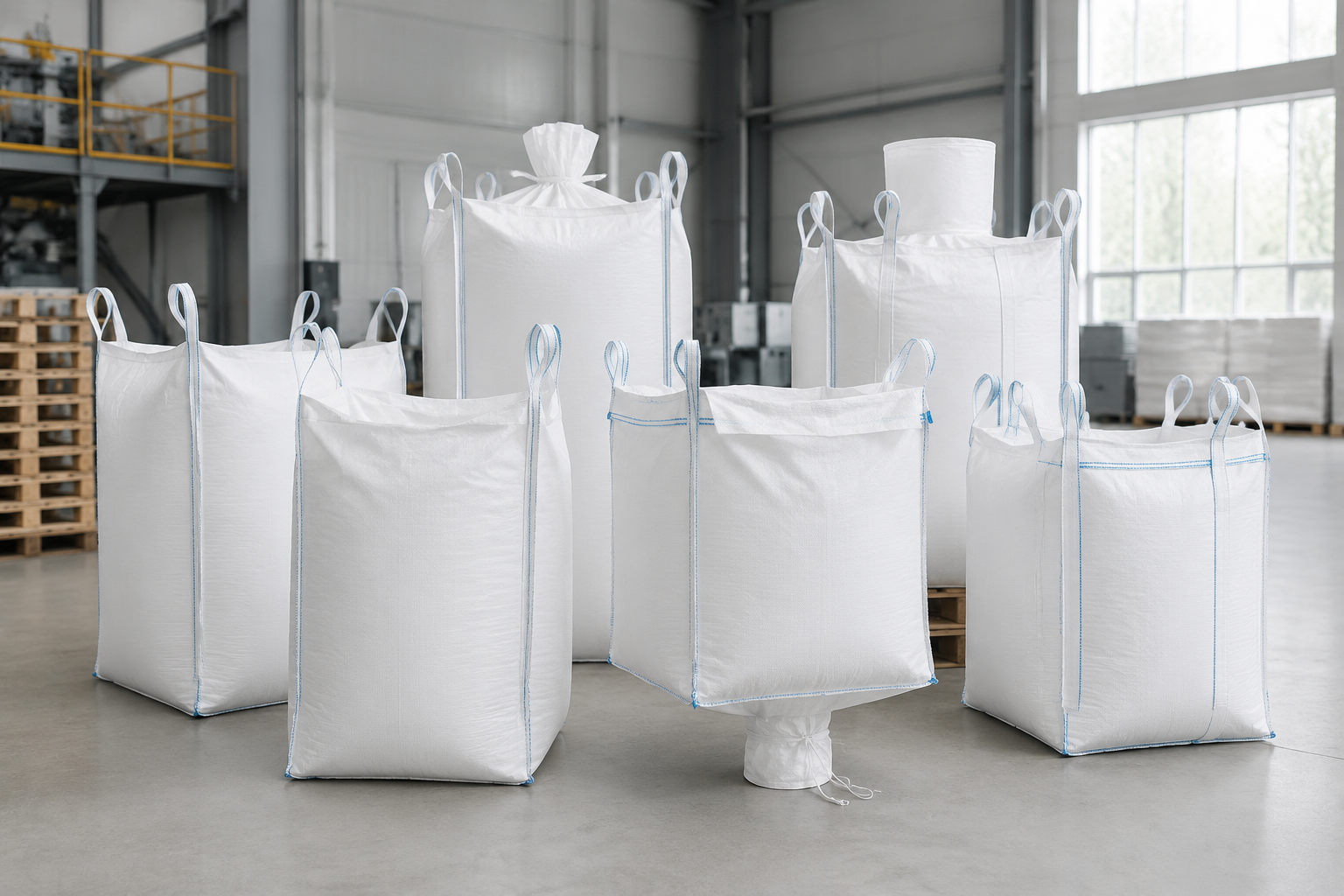
For example, woven polypropylene FIBC bags are suitable for many dry bulk materials. However, when materials require higher moisture protection, leak resistance, or cleanliness, they may need FIBC liners or coated FIBC bags. The former is better suited to strengthening internal protection and separation, while the latter can improve overall moisture and dust resistance. These two solutions should not be treated as interchangeable; the choice depends on the material and operating conditions.
Static Control Cannot Be Determined by Bag Names Alone
Static risk in chemical environments depends on material properties, dust concentration, filling speed, grounding conditions, and the surrounding environment, rather than packaging appearance alone. Type A FIBC bags, Type B FIBC bags, Type C conductive bulk bags, and Type D static dissipative FIBC bags provide different levels of static control and are intended for different conditions.
Among them, Type C conductive bulk bags generally require reliable grounding, while Type D static dissipative FIBC bags reduce risk through static-dissipative performance. For applications involving combustible dust, solvent vapor, or static-sensitive materials, packaging selection must be based on a site-specific risk assessment and operating procedures, rather than treating “anti-static” as a universal feature.
Bag Structure Directly Affects Production and Warehousing Efficiency
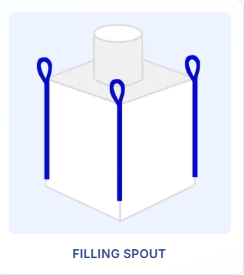
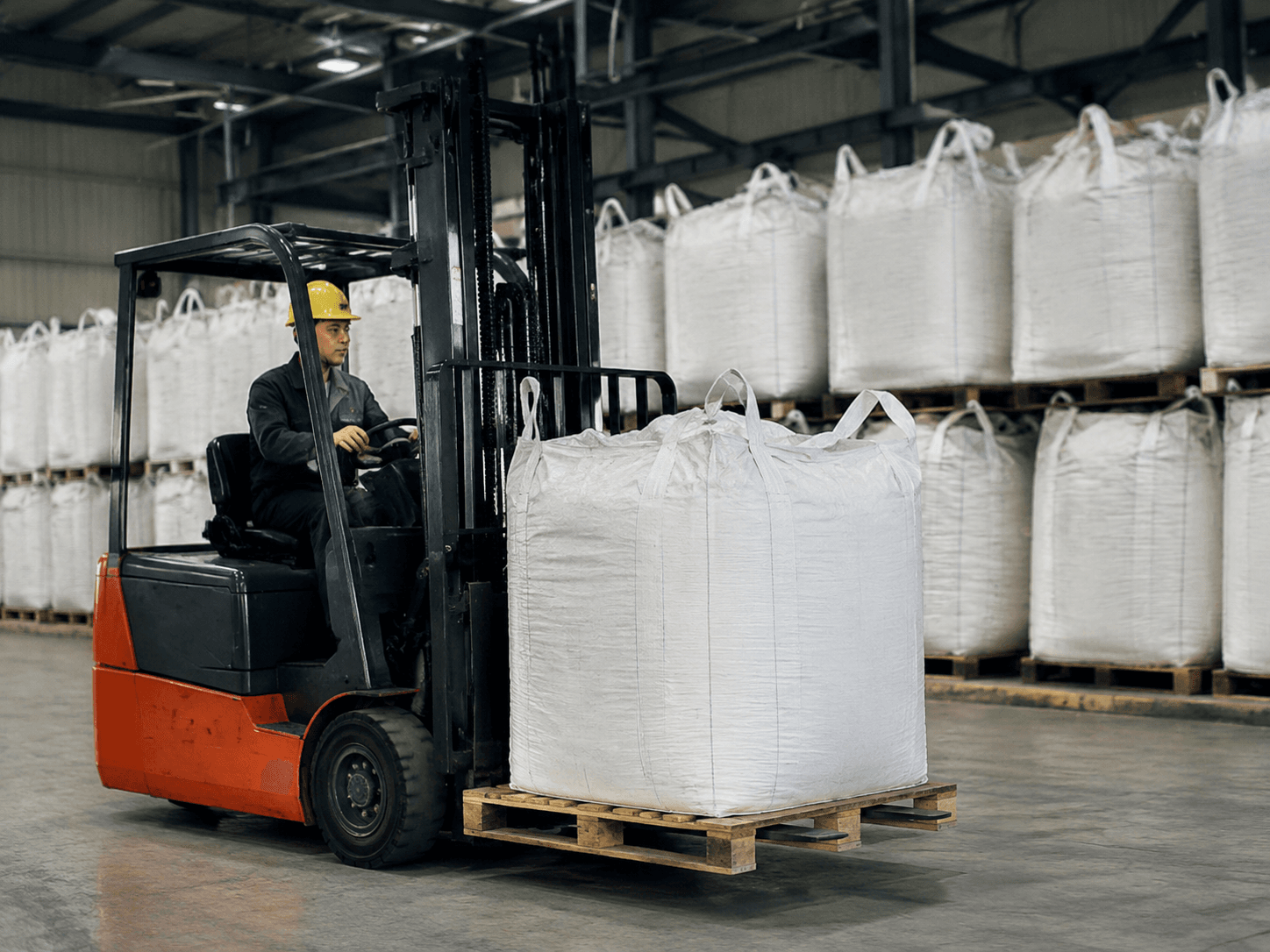
The value of chemical bulk packaging lies not only in load capacity, but also in how well it matches equipment and operating processes. Bulk bag dimensions and load capacity, lifting loop configuration, filling methods, and discharge structures all affect filling efficiency, forklift handling, storage stacking, and downstream feeding.
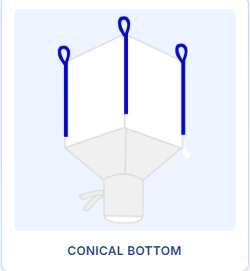
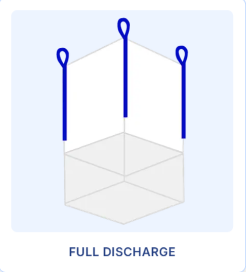

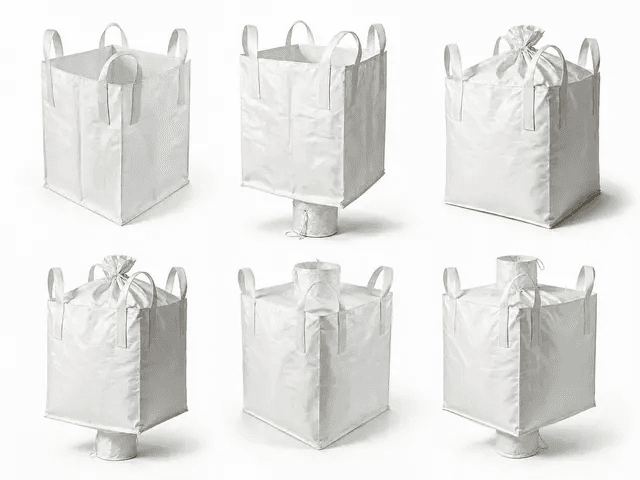
For materials that require stable stacking or improved container space utilization, baffle bags can help the bag maintain a more regular shape after filling. For automated or semi-automated filling lines, the dimensions and sealing methods of the duffle top, filling spout, and spout bottom must match on-site equipment, material flowability, and cleanliness requirements. The best structure is not necessarily the most complex one, but the one that reduces manual handling, material residue, and repeated movement.


Key Selection Considerations for Different Chemical Applications
For high-dust materials such as fine powders, pigments, and additives, the focus should be on sealing, moisture resistance, static control, and discharge residue. For plastic resins and other granular materials, the priority should be cleanliness, discharge efficiency, and compatibility with liner systems.
For FIBC bags for chemicals used in chemical production and petrochemical supply chains, transportation conditions, storage duration, and batch traceability should also be fully considered. If a material has high value, strong moisture sensitivity, or strict cleanliness requirements, packaging design should move beyond “protecting the material” toward “controlling risk throughout the process.”
Procurement and Validation Should Form a Closed Loop
When purchasing chemical grade bulk bags, technical specifications should include the target material, loading capacity, bag dimensions, fabric construction, liner or coating requirements, static classification, filling and discharge structure, and acceptance criteria. Procurement documents should not simply state “chemical grade” or “anti-static”; they should define the actual operating conditions and the required validation methods.
Sample testing, first-article approval, and batch inspection are equally important. Companies need to verify lifting, stacking, sealing, discharge, static control, and bag condition after transportation. Where regulations or customer requirements apply, relevant quality and traceability documents should also be reviewed. Laboratory data can provide a basic basis for decision-making, but cannot replace trials under actual operating conditions.
The Future of the Industry: Safety, Automation, and Sustainability
The chemical bulk packaging industry is being shaped by three major forces: stricter safety management, higher automation requirements, and clearer goals for waste reduction and recycling. In the future, FIBC bags will need to do more than carry materials; they will also need to support automated filling, stable discharge, digital traceability, and more efficient warehousing and logistics.
As a result, decision-making will gradually shift from “which bag to choose” to “how to coordinate the packaging system with materials, equipment, and the supply chain.” This is the real value of chemical FIBC bulk bags in the chemical industry.
Conclusion
Selecting the right FIBC packaging bags for powders, resins, and petrochemical materials is not a comparison of product appearance or price. It is a systematic decision involving material risk, process requirements, operational safety, and supply chain reliability. Only by understanding the material and the operating environment first, and then determining packaging performance and validation methods, can chemical grade bulk bags deliver safe, efficient, and stable handling.
Related News
Other news you might be interested in
Woven Polypropylene FIBC Bulk Bags: How Material, Construction and Coating Affect Bulk Packaging Performance
In global bulk-material supply chains, FIBC bulk bags have developed from simple transport containers into important logistics tools connecting production, warehousing, loading, unloading, and end use. Their actual performance depends not only on capacity, but also on woven polypropylene, bag construction, coating, liners, safety factors, and the application environment. For the food, chemical, agricultural, mining, and construction-material industries, selecting the right FIBC bulk bags affects load-bearing performance, material loss, transport efficiency, warehouse space, and operational safety.
Chemical Grade Bulk Bags: How to Select the Right Flexible Intermediate Bulk Containers (FIBC) for Chemicals, Powders, and Hazardous Materials
Bulk materials used in the chemical industry often have characteristics such as fine particle size, high flowability, strong moisture absorption, a tendency to cake, or a high risk of electrostatic charge buildup. For chemicals, powder materials, and certain hazardous materials, packaging does more than hold the product—it directly affects material quality, workplace safety, and transportation reliability.
Want to know more?
Get in touch with us for more information about our services and products.