
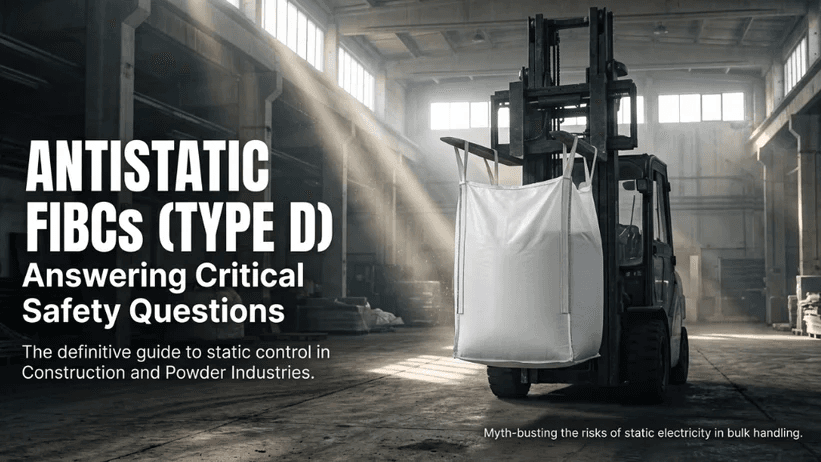
Antistatic FIBCs: When Are Type D Bags Mandatory in the Construction and Powder Industries?

Dayang Yang
AuthorWith experience in FIBC bulk bag manufacturing and export sales, we operate our own production facility with stable large-scale capacity. We are specialists in bulk bags, conductive FIBCs, food-grade FIBCs, UN certified bags, and customized flexible intermediate bulk containers for industrial packaging and bulk material transportation solutions.
Type D bags become mandatory when fine powders, airborne dust, or charged materials create static-electricity hazards during filling, emptying, transport, or storage. These risks appear often in construction and powder industries, where dry granular materials generate static through friction.
This article explains those conditions clearly, outlines industry standards, and shows how anti-static Type D designs reduce ignition hazards at the worksite. You will also learn how conductive FIBCs and anti-static FIBCs fit into modern safety systems and how FIBCWORLD supports large-volume, long-term supply needs, particularly for FIBC bag construction industry applications requiring advanced static control.
Why Static Risks Matter in Bulk Material Handling
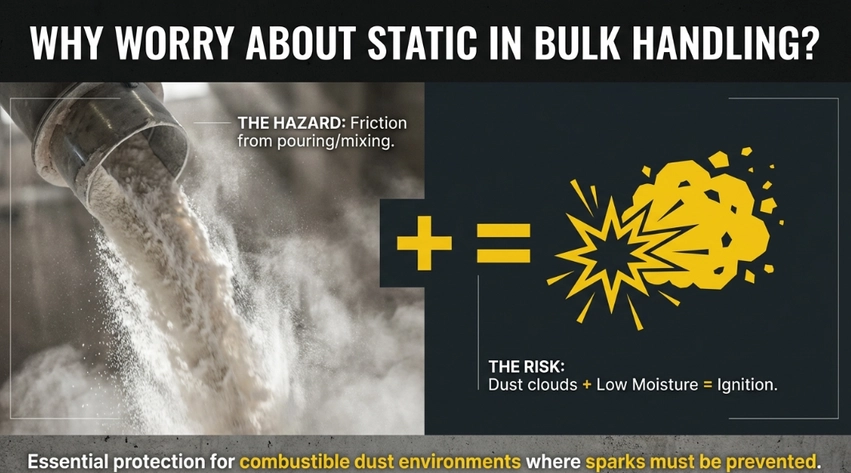
Many construction and mineral powders carry low moisture and high friction, which increases static charge. Simple activities such as pouring, mixing, or transferring material can create sparks strong enough to ignite combustible dust. Industry standards classify Type D bags as essential when:
Dust clouds can ignite under certain humidity or airflow conditions
Workers handle powders that produce an electrostatic charge during movement
Flammable vapors or explosive environments may be present
Grounding cannot be guaranteed
Type D solutions minimize hazard because they dissipate charge without relying on external grounding.
What Is a Type D FIBC?
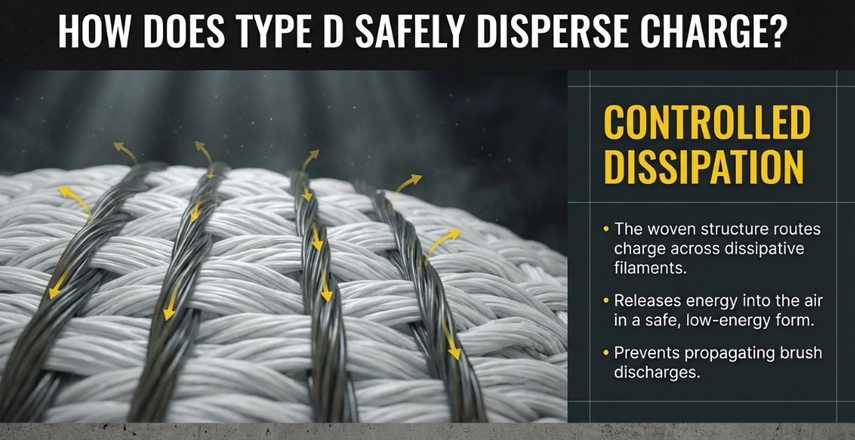
Type D designs are anti-static bulk bags that disperse charge safely while preventing brush discharges. They rely on special dissipative yarns woven into the bag’s body. They do not require earthing, which makes them practical in busy loading areas or mobile construction sites.
Key Takeaways
Type D bags reduce electrostatic energy created during filling and discharge.
They use dissipative fibers rather than grounding wires.
They are used in environments where sparks must be prevented.
How Type D Bags Work (Based on Industry Standards)
Type D bags use a controlled discharge mechanism. When friction generates static in the fibc type d bags, the woven structure routes the charge across dissipative filaments and releases it into the air in a safe, low-energy form.
Preventing propagating brush discharges
Allowing safe use even when grounding is not practical
Protecting powder handlers in construction, mining, cement, fillers, and pigments
When Construction Sites Must Use Type D Designs
Construction sites deal with materials such as cement, fly ash, silica flour, bentonite, and dry additives. These powders move rapidly during handling, and that motion creates static. Type D FIBCs become mandatory when the site presents:
1. High-Dust Environments
Cutting, pouring, or transferring powders creates charged dust clouds. When ventilation is limited, a single spark can ignite suspended dust.
2. Flammable or Mixed Materials
Some fillers, coatings, and chemical powders used in construction require anti-static containment. Type D prevents ignition even when workers cannot maintain grounding.
3. Grounding Challenges at Mobile Sites
Construction zones shift often, making consistent grounding difficult. Because Type D does not require grounding, they eliminate a major operational risk.
These factors answer the common question: Does construction need FIBC type D bags? Yes, whenever powder operations or dust levels pose ignition risks.
When Powder-Processing Industries Require Type D Solutions
Powder industries such as minerals, chemicals, food ingredients, and pigments face similar hazards. Type D is required when:
Powders fall under combustible dust classifications
Materials are handled near gas installations
Operators fill or discharge bags at high speed
The environment cannot guarantee controlled humidity
Workers wear insulating footwear or gloves
These conditions reflect common questions such as: what industries use fibc type d bags? Powder manufacturing, construction, mining, pigments, coatings, and chemical transport are among the largest users.
Understanding the Construction of Type D Bags
The fibc bag construction uses a woven base fabric with static-dissipative yarns. Some manufacturers add proprietary coating layers to improve safety. Type D construction typically includes:
Dissipative multi-filament yarns
Coating layers designed to prevent brush discharge
Optional internal liners that meet anti-static performance
fibcworld supports both standard and advanced designs, including Fibc base fabric type D manufacturer options, type D fibc base fabric customized, and low-cost type D Fibc base fabric choices for large-scale buyers.
Why Companies Choose FIBCWORLD for Anti-Static and Conductive FIBCs
FIBCWORLD’s industrial capabilities, as documented in your uploads (factory pages and capability sheets), highlight advantages for buyers seeking long-term support:
Up to 21 million bags monthly output
Independent R&D and customization support
Conductive and anti-static solutions for hazardous powder handling
Integrated production, including weaving, lamination, sewing, and quality control
FIBCWORLD also produces Conductive FIBCs (Type C) for grounding-required environments and Anti-static FIBCs for diverse applications.
Conclusion
Type D bags become essential whenever powders or construction materials create electrostatic hazards. Their no-grounding design keeps operations safer and more flexible. For companies seeking secure handling and consistent supply, FIBCWORLD offers a full collection of conductive and anti-static FIBCs supported by large-scale production strength and expert customization.
Frequently Asked Questions
Do Type D bags need grounding?
No. Type D designs dissipate charge through their fibers and do not require grounding.
Can Type D be used for all powders?
They suit most combustible powders, but buyers should match bag performance with material classifications.
Are Type D bags reusable?
Only when inspected and approved under site safety rules.
Do construction materials generate static?
Yes. Dry cement, silica, and fillers generate static during transport.
Related News
Other news you might be interested in
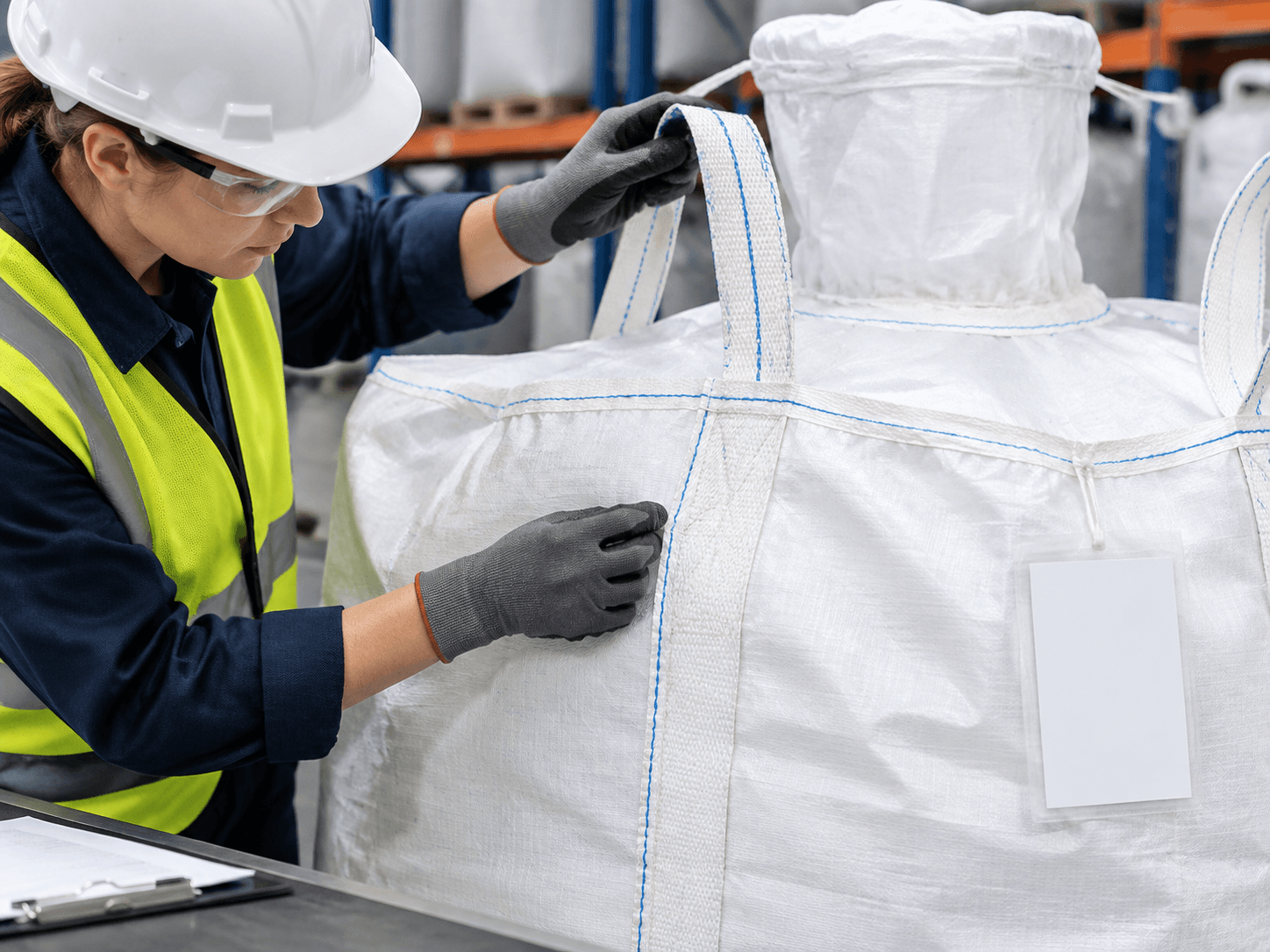
FIBC Bag Safety: Understanding Safe Working Load, Safety Factor, and Safe Handling
Bag safety cannot be judged by load weight alone. The bag’s design, construction, and rated load must match the material and operating conditions. Different FIBC bag types and load capacities may have different filling, lifting, and discharge requirements. ISO 21898:2024 covers the materials, construction, design, testing, marking, selection, and safe use of FIBCs for non-dangerous solid goods. On-site operations must also follow the manufacturer’s instructions and applicable regulations.
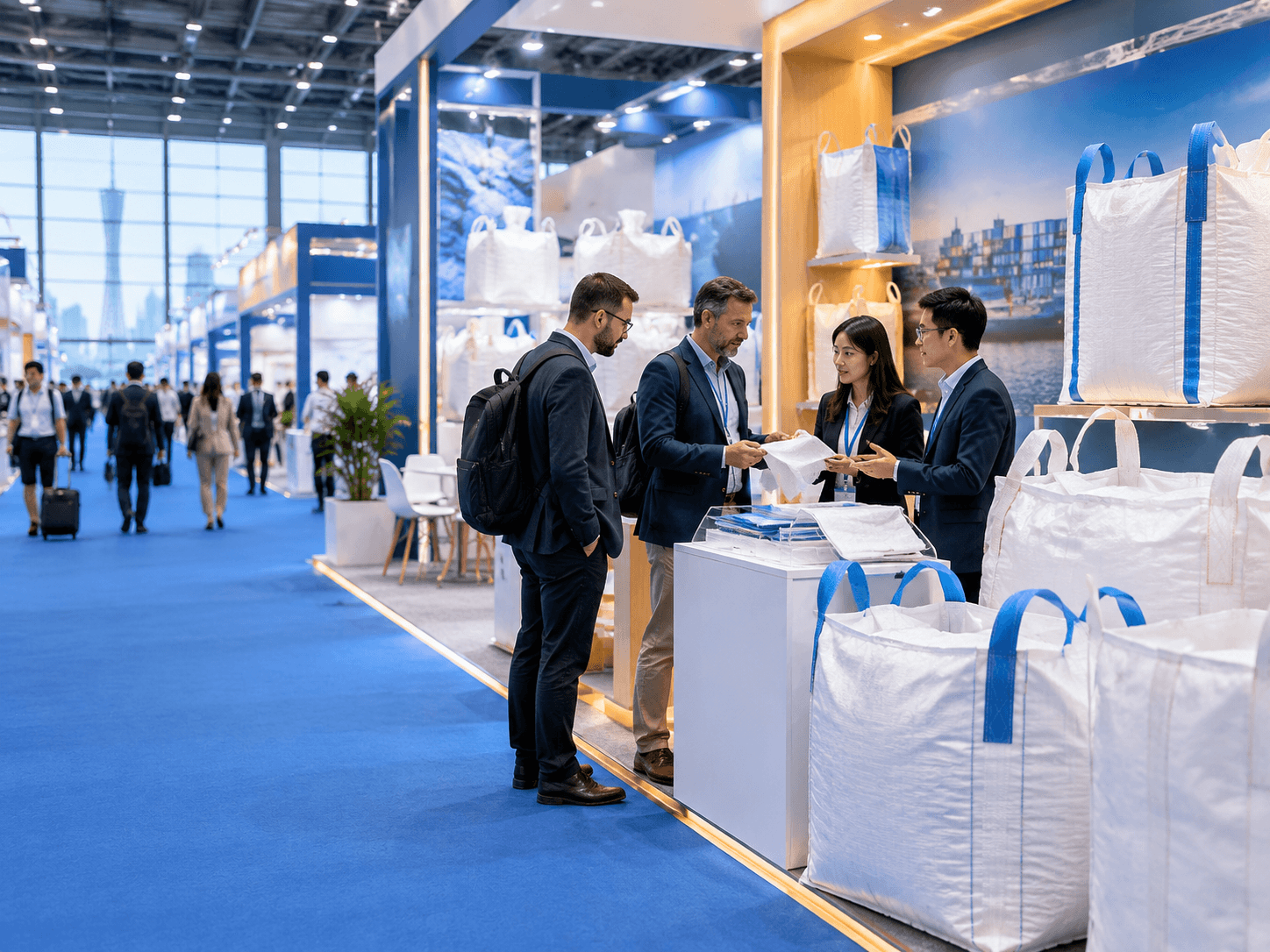
The 140th Canton Fair: New Global Sourcing Opportunities for FIBC Ton Bags and Industrial Packaging Companies
The 140th Canton Fair will be held in Guangzhou from October 15 to November 4, 2026, across three phases. The first phase will focus on advanced manufacturing, industrial manufacturing, machinery, new materials, and chemical products. For export-oriented industrial packaging companies, the 140th Canton Fair will serve not only as a product exhibition platform, but also as an important opportunity to connect with overseas buyers, suppliers, and global supply chain resources.
Want to know more?
Get in touch with us for more information about our services and products.