
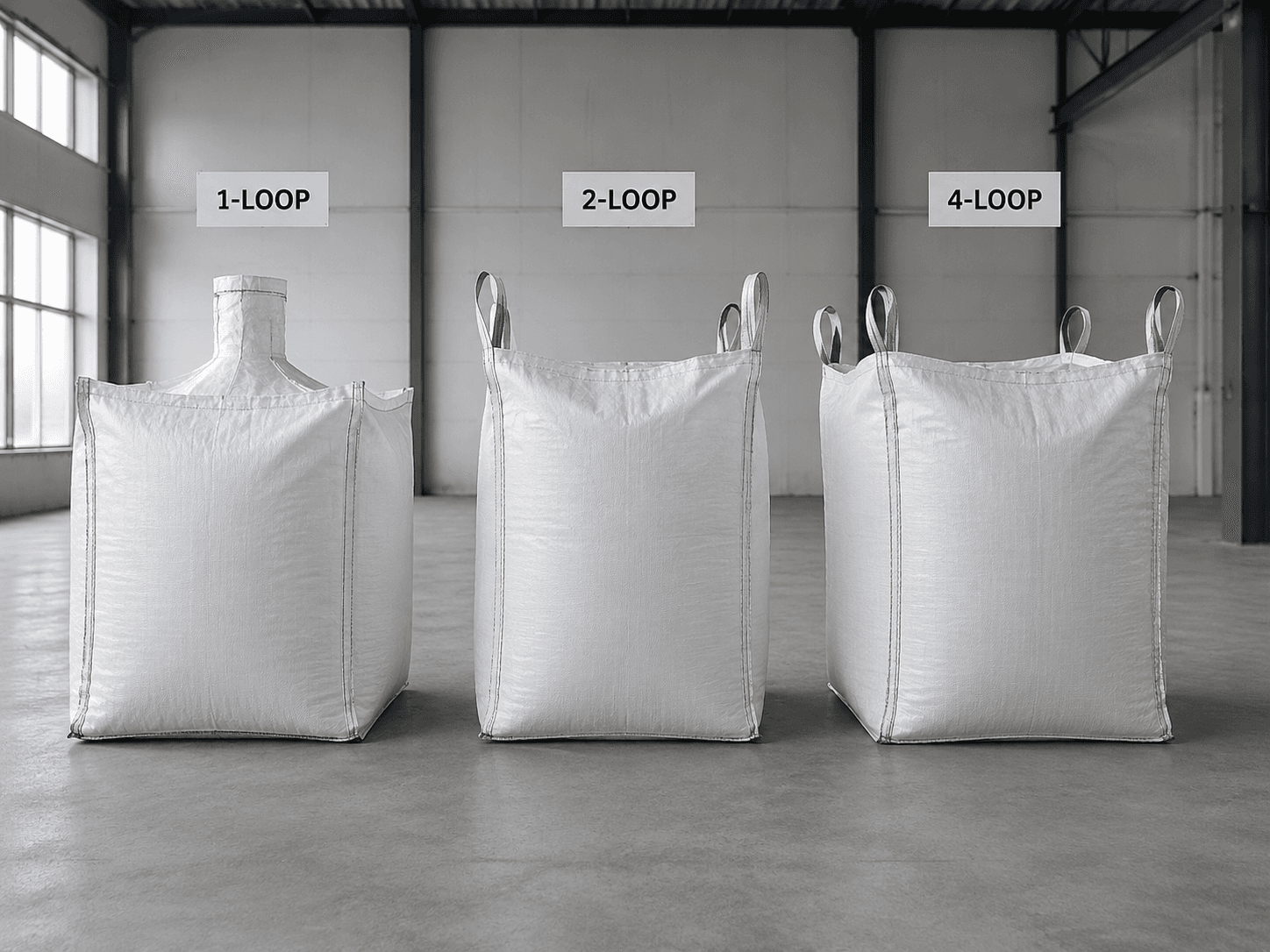
1-Loop, 2-Loop or 4-Loop FIBC: How to Choose Lifting Loops for Your Handling Equipment

Dayang Yang
AuthorWith experience in FIBC bulk bag manufacturing and export sales, we operate our own production facility with stable large-scale capacity. We are specialists in bulk bags, conductive FIBCs, food-grade FIBCs, UN certified bags, and customized flexible intermediate bulk containers for industrial packaging and bulk material transportation solutions.
The number of lifting rings on FIBC will tell you how to connect the bag to the lifting device.It itself cannot tell you the capacity or safety level of the bag. Single ring bags, double ring bags, and four ring bags are all suitable for demanding work - as long as the bag design, lifting equipment, and operating procedures match.For buyers, the actual question is not 'which cycle count is the strongest?' but 'how to lift, move, fill, and empty this bag on our site?' This guide explains common cycle configurations, equipment checks behind each option, and information to be sent before requesting a quote.
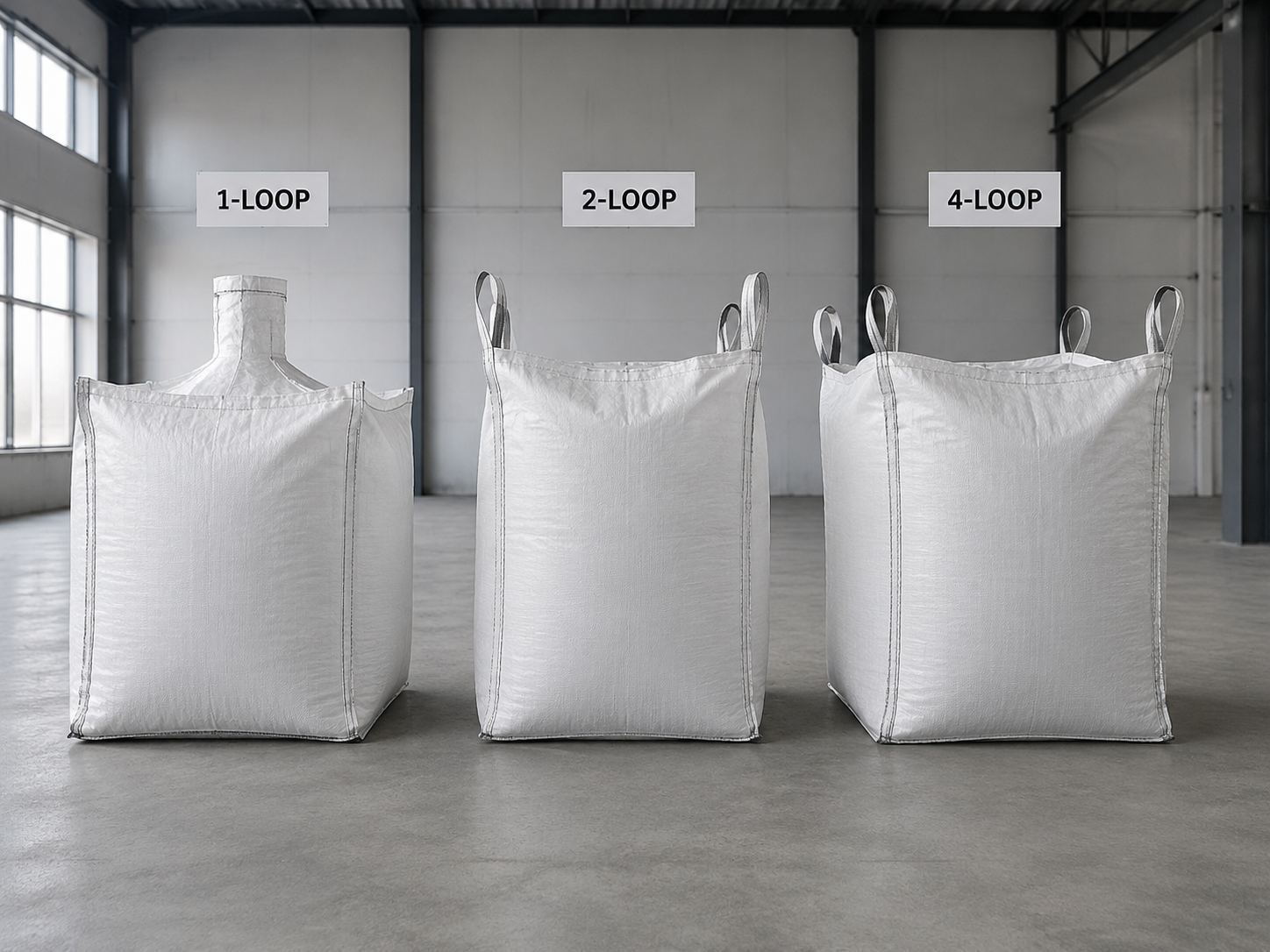
Starting from improvement, rather than cycle counting
FIBC lifting ring transfers the load from the bag body to forklifts, cranes, lifts or lifting frames. The load path includes fabric, seams, ring attachments, lifting devices, and operating procedures. Merely changing the number of loops does not prove that the entire system is appropriate.
Before comparing single loop, double loop, and four loop FIBCs, please confirm:
The type of lifting equipment used in each stage;
Size of hooks, forks or lifting devices;
Fill weight and required safe working load (SWL);
Is the bag lifted from the floor, tray, or filling rack;
Whether the bag must be kept square, rotated, stacked, or suitable for the container;
Who will tie the bag and who will approve the lifting method.
The lifting equipment must be rated for the filled FIBC. The bag markings, instructions, and supplier approved lifting methods should be followed.
Quick comparison
| Loop configuration | Typical starting point | Main advantage to evaluate | Main question to ask |
|---|---|---|---|
| One-loop FIBC | A compatible single-point hook, hoist or approved lifting device | A simple single-point interface when the bag is designed for it | Is this bag specifically designed and approved for single-point lifting? |
| Two-loop FIBC | A two-point lifting arrangement or a compatible forklift/crane setup | A narrower lifting interface that can suit certain filling and handling layouts | Do the loop spacing, hook/tine dimensions and bag opening match the equipment? |
| Four-loop FIBC | A forklift with correctly spaced tines or a four-point lifting frame | A familiar, widely used layout with four defined lift points | Are all four loops being used and kept vertical? |
| Cross-corner loops | A four-point bag where loop position and fork entry matter | Loops can be designed to sit upright for easier tine access | Is the body construction and loop attachment compatible with the handling plan? |
Cross angle rings are not individual "ring numbers". They describe the connection positions of the rings. The cross angle FIBC usually still has four improvement points.
Single circle FIBC
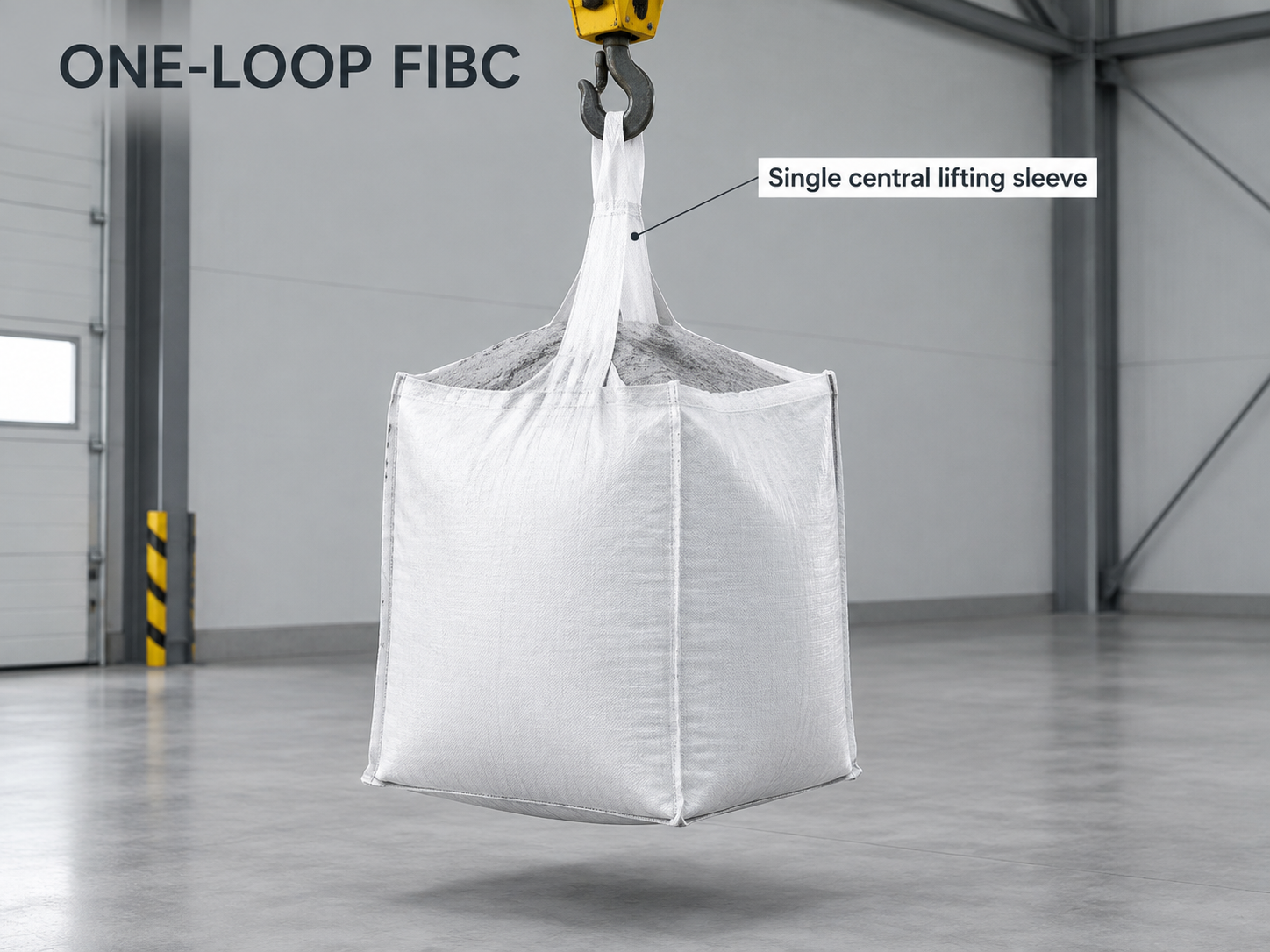
Single ring FIBC has a central lifting ring, sleeve or accessory designed specifically for single point lifting. Some designs are used together with crane hooks, cranes, or compatible lifting devices; Forklift forks can only be used with the bag design and explicit approval from the supplier.
When there is a suitable single point system on site and the bag is designed for this purpose, the single ring option can simplify the lifting interface. This is not a method of converting standard four ring bags into single point bags. The position of the suspension point, the center of gravity of the luggage, the risk of rotation, and whether guidance or anti rotation devices are needed all need to be reviewed.
Before choosing a single loop FIBC, please ask the following questions:
Is the bag specifically designed for single point lifting?
Which type of hook, sling, frame, or crane is approved for use in bags?
Can a filled bag rotate or swing during the lifting process?
Are there sufficient gaps between the bag, padding, and discharge outlet?
Does the supplier provide drawings showing lifting points and load paths?
Will the same lifting method be used after storage or transportation?
Do not gather the four rings of standard FIBC on one hook. FIBCA's safety handling guidelines stipulate that a single hook should not be used to lift lifting rings unless the manufacturer has specifically designed and approved FIBC's lifting method.
Shuanghuan FIBC
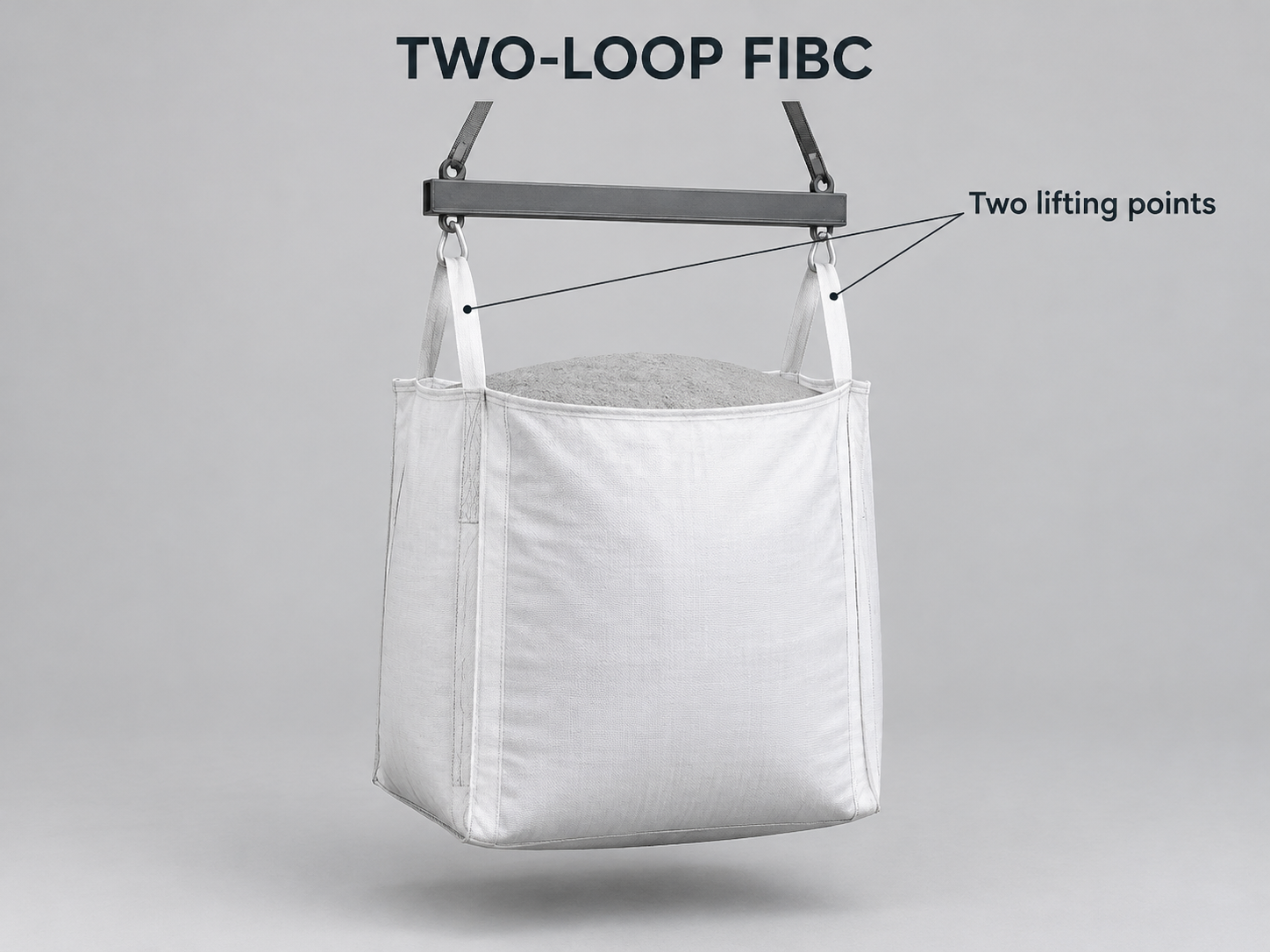
Double ring FIBC has two suspension points. Some catalogs refer to them as "semi-finished" packages. These two rings can be formed by a bag body, reinforced fabric, or webbing, depending on the design.
Double loop bags are suitable for operations where two-point lifting devices are available and the bag geometry is designed around them. They will not automatically become low-cost alternatives to four ring bags, and the number of rings is not a reliable indicator of capacity. The important checks are the distance between the lifting points, the size of the hook or fork teeth, the height of the ring, and the space required for filling.
For dual circuit FIBC, send to the supplier:
Type and rated capacity of lifting device;
Hook or tooth spacing;
Loop opening and required free height;
Fill weight and bag size;
Filling ports and discharge devices;
Pad type and connection method (if used);
Photos or drawings of the current lifting device.
If the bag will be lifted by a crane, please confirm if a brace or other device is needed to keep the ring vertical. If it will be transported by a forklift, please confirm that the spacing between the fork teeth and the ring is compatible, and that the bag cannot slide or rotate during movement.
Four ring FIBC
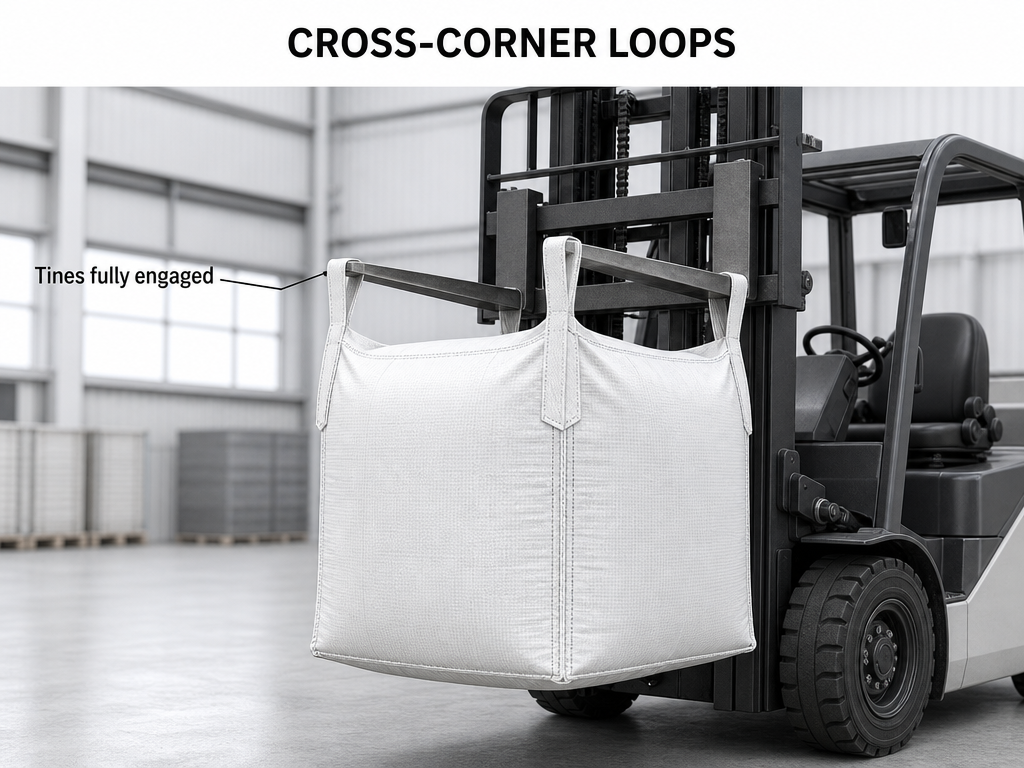
Four loop container bags are a common starting point for industrial bulk handling. The four rings are usually connected at the corners or vertical seams of the four panel or U-panel bag. Forklifts can use correctly spaced fork teeth to engage rings, while cranes or lifts can use compatible four point cranes or lifting devices.
The four ring layout provides operators with four definite lifting points, but this still depends on the complete bag design. The strength of the fabric, seam structure, ring connection, foundation reinforcement, SWL, and the condition of the lifting equipment are all important. Four ring bags will not automatically be stronger than double ring bags, and higher ring numbers do not allow overloading.
When specifying a four circuit FIBC, please confirm:
Forklift fork spacing and ring opening;
Can all four loops remain vertical during the lifting process;
Fill the loop height and gap under the framework;
The size of the filled bag and the layout of the pallet/container;
Base and joint structures for expected loads;
SWL、 Safety factor and available testing or design records;
Will the bags be lifted, stacked, or transported in the same direction.
The handling guidelines of FIBA are clear: never use fewer rings than provided to suspend FIBA. Unless the manufacturer approves a different method in writing, use all four circuits.
Cross angle lifting ring
The cross corner rings are connected at various corners of the bag, not just at the vertical corner seams. They are typically used for tubular or circular FIBCs, and can also be specified on other body structures according to design.
A useful operational difference is that the cross angle ring can be designed upright, making it easier for forklift operators to enter the ring without manually opening it. This may be important in high-throughput warehouses, container loading, and automated or semi automated processing.
However, the intersection angle is a form of ring placement and accessory selection that cannot guarantee strength, automation compatibility, or safe single point improvement. The bag body, ring attachments, tooth spacing, and operating procedures still need to be reviewed together. If the application involves heavy payloads, please request a drawing showing the position of the ring, joint structure, and any foundation reinforcement.
For heavy-duty payload bags with cross corner rings and perimeter base reinforcement, please refer to our existing guidelines: Heavy Payload Foundation Guidelines.
Loading and unloading straps, full bags, and other options
Some FIBCs use additional lifting components instead of simple single ring, double ring, or four ring layouts.
A loading and unloading belt is a belt that connects two adjacent rings or all four rings, typically used to create a single point lifting device for a crane or hook. It is different from a single loop bag. The bag still needs to be designed and approved for the final loading path.
Full belt or perimeter reinforcement design uses webbing or seat belts to carry loads around the body or base. These features may be related to heavy payloads, but should be specified in the actual bag design and verified by the supplier, rather than added as a general upgrade.
Tunnel rings, sleeves, and other customized lifting devices also exist. Their applicability depends on the structure of the bag and the equipment used to lift it.
Select by handling equipment
| Handling method | Configuration to investigate | What to confirm |
|---|---|---|
| Forklift with two tines | Four-loop corner or cross-corner FIBC | Tine spacing, loop height, all loops engaged, loop verticality |
| Crane or hoist with a four-point frame | Four-loop or cross-corner FIBC | Frame dimensions, sling angles, loop spacing and rated capacity |
| Crane or hoist with one central hook | One-loop FIBC designed for single-point lifting, or an approved stevedore/spreader arrangement | Written approval, load path, rotation control and lifting plan |
| Two-point lifting frame or spreader | Two-loop FIBC or a suitably designed four-loop bag | Hook spacing, sling angles, bag balance and loop positions |
| Automated or fixed handling station | Loop position repeatability, cross-corner or custom arrangement | Bag orientation, loop stand-up, sensor/robot clearance and sample trial |
| Heavy payload or repeated lifts | Tested heavy-duty design, possibly with perimeter reinforcement | SWL, safety factor, seam/loop attachment, base design and inspection plan |
A table is a starting point, not a selection rule. Crane equipment suppliers and FIBC suppliers should review the complete arrangements.
What to send in RFQ
A useful FIBC enhancement loop query includes:
Handling equipment: forklifts, cranes, hoists, gantries, robots or manual frames; Manufacturer/model (if any).
Lifting interface: hook type, tooth spacing, sling size, sling angle, and rated capacity.
Bag load: expected filling weight and required SWL; Don't rely solely on nominal "one ton" or "two ton" labels.
Bag size: empty and full size, plus any pallet or container restrictions.
Filling and discharging: top opening, filling nozzle, bottom nozzle, lining and sealing method.
Operation path: ground lifting, high-altitude transportation, stacking, shelving, transportation, and storage.
Environment: indoor/outdoor use, humidity, dust, static electricity risks, and any food contact or specified cargo requirements.
Approval: Who will approve the drawings, samples, and lifting procedures.
Evidence: Required circuit/accessory drawings, SWL markings, inspection records, and available test files.
If you are already using a bag, please attach photos of the ring attachments, lifting equipment, filled bag, and unloading area. The actual improvement of short videos can reveal issues that are not present in the size list.
Safety inspection before production
The following points should be included as part of the buyer's review:
Use all the provided lifting rings; Do not hang the bag on fewer rings.
Do not gather rings on a hook unless the manufacturer has specifically designed and approved this method.
Keep the lifting ring vertical to avoid lateral forces that may damage the lifting ring or joint.
Use forklifts, cranes, hoists, or frames suitable for filling bags.
Keep sharp edges on sharp teeth, hooks, and other contact surfaces.
Do not allow anyone to stand or place any part of their body under the suspended FIBC.
Check the coils, seams, fabric, and markings before each use.
Follow the instructions of the bag manufacturer and the lifting plan on site.
These are general processing points. The final program must reflect the actual luggage, cargo, equipment, and local requirements.
Approve samples using actual processing methods
Loop drawing is very useful, but it cannot replace experimentation. Before production, review the samples using the expected bags, liners, filling methods, and lifting equipment. Confirmation:
Rings can be joined without twisting or forcing;
The bag is hung in the expected direction;
Keep the filling port and discharge port accessible;
The lining will not interfere with the loop or nozzle;
The filled bag can be moved, placed, and stored without any accidental deformation;
Approved drawings and sample references will be retained for future repeat orders.
The experiment should be conducted according to the safety procedures on site and use equipment with rated load. A successful empty pack adaptation check does not prove that the elevator is safely filled.
Frequently Asked Questions
Is quadruple ring FIBC stronger than double ring FIBC?
It's not automatic. SWL depends on the complete bag design, including fabric, seams, ring connections, base structure, and testing. Merely counting cycles cannot determine capacity.
Can I use a crane hook to lift the four ring FIBC?
Only when the bag is specifically designed and approved for single point lifting, or when approved lifting devices or loading and unloading equipment are used. Do not gather four rings on one hook as a shortcut.
Is the cross angle cycle a different cycle count?
No. The intersection angle represents the connection position of the ring. The cross angle FIBC usually has four suspension points; The difference lies in the position of the ring and the ease of forklift access to the ring.
Are double loop bags and semi lift bags the same?
Half lift "is a term used for certain dual loop designs. Confirm the actual circuit structure, lifting device, and approved method with the supplier, rather than relying solely on the name.
Can I use single circle FIBC on a forklift?
Only when the bag design and supplier specifically approve this method. A single forklift fork tooth is not a universal substitute for a specially designed single point lifting device.
Request to enhance loop review
Send your handling equipment, hook or fork size, filling weight, bag size, filling and unloading arrangements, as well as any current bag photos or drawings. FIBC World can review proposed lifting configurations before production and confirm available bag structures, sample arrangements, and pricing details.
Please contact FIBC World to inform them of your lifting device and any issues that need to be addressed.
Related News
Other news you might be interested in
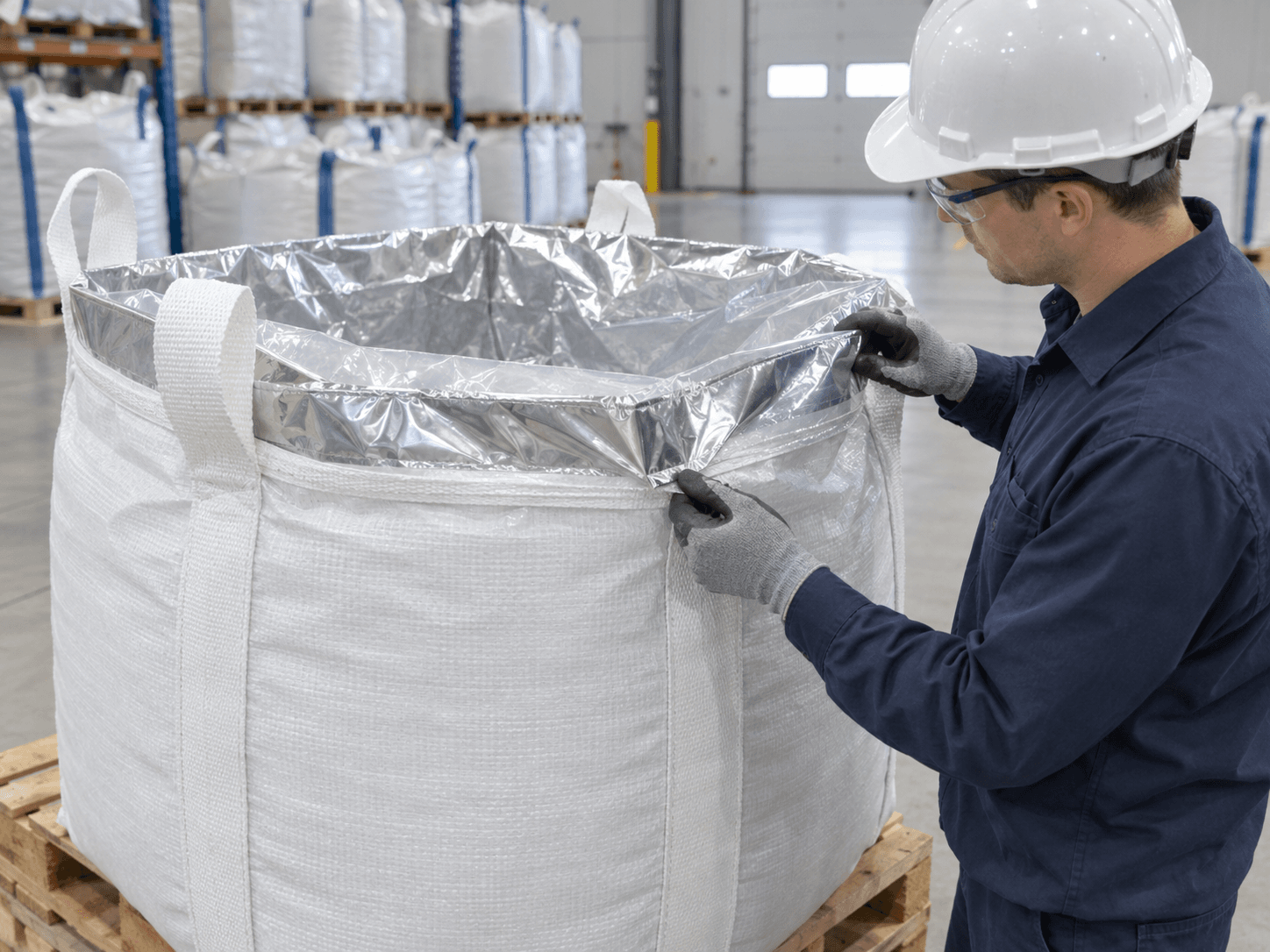
How to Evaluate Aluminum Foil FIBC Liners: Barrier Data, Sealing and Trial Checklist
An aluminum foil FIBC liner can look like a simple upgrade on a quotation. The supplier may describe it as high barrier, moisture proof or oxygen resistant. Those words do not answer the buyer’s real question: will the finished liner protect this product through filling, transport, storage and discharge?That question cannot be settled by the word “foil” or by one impressive barrier number. It requires a review of the complete laminate, the test conditions behind the data, the seams and closure, the sealing process and a representative trial. This checklist is for packaging engineers, procurement teams and quality teams evaluating aluminum foil FIBC liners for moisture-sensitive powders, granules and other dry bulk materials. It explains what to request, how to compare supplier claims and what evidence to keep for repeat orders.
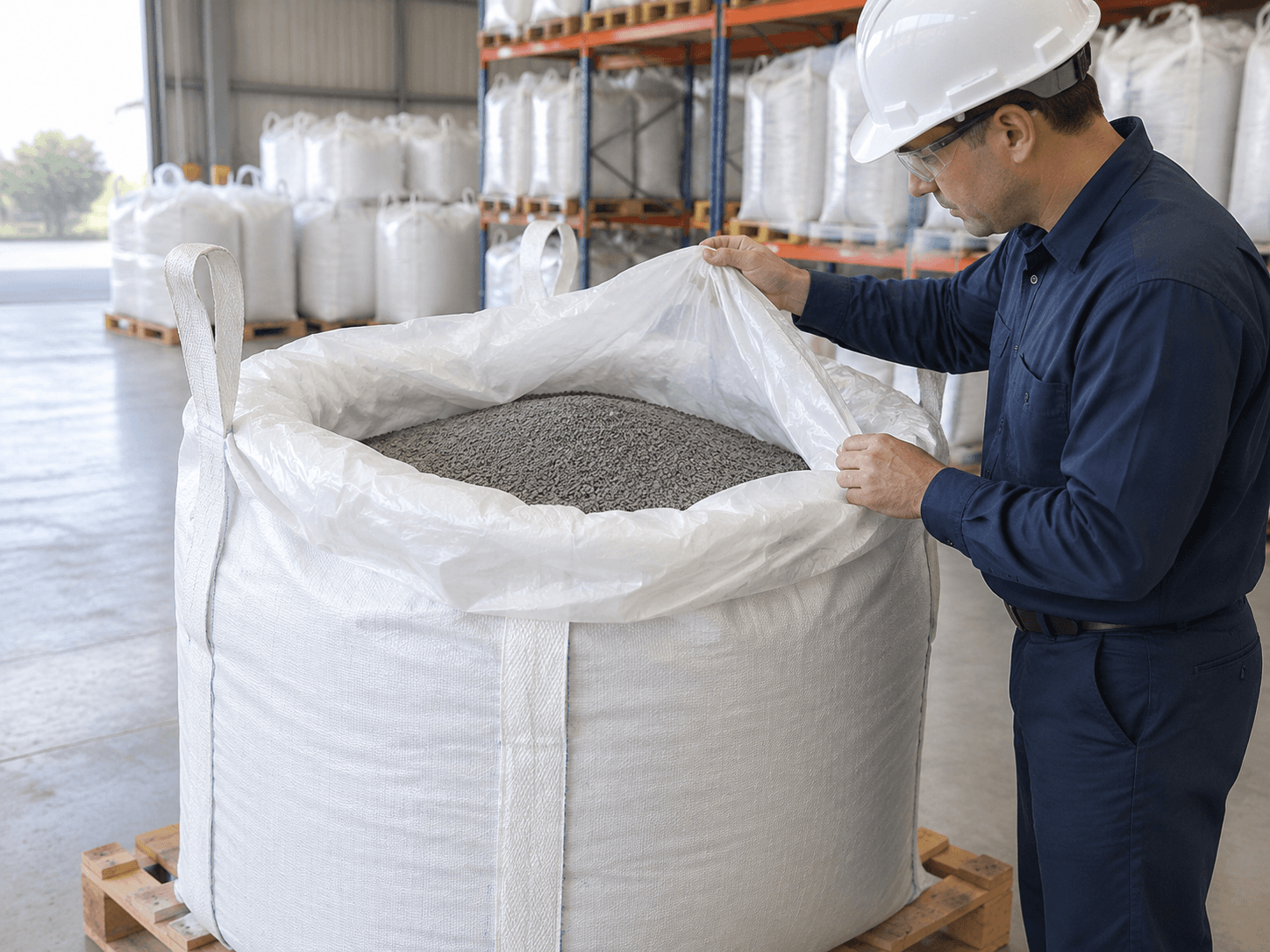
Do Fertilizer Bulk Bags Need Liners? A Buyer’s Checklist for Moisture, Caking and Discharge
Fertilizer bulk bags are often quoted with a liner as though the liner were a standard safety feature. It should not be treated that way. The useful question is not simply “Does a fertilizer bag need a liner?” It is “What protection does this fertilizer need, through this route, in this bag, with this filling and discharge system?”The answer affects more than material cost. A fertilizer bag liner changes how the bag is filled, closed, handled and emptied. It can reduce moisture ingress and dust leakage, but it can also trap air, shift during discharge or create a closure problem if the complete design is not checked.
Want to know more?
Get in touch with us for more information about our services and products.