
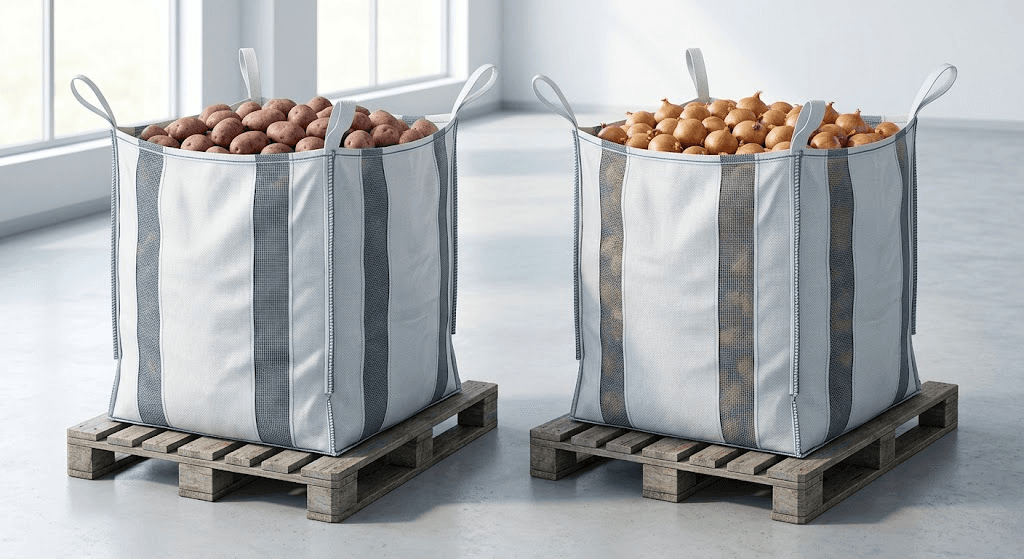
Custom Ventilated Bulk Bags for Potatoes and Onions: A Buyer’s Checklist

Dayang Yang
AuthorWith experience in FIBC bulk bag manufacturing and export sales, we operate our own production facility with stable large-scale capacity. We are specialists in bulk bags, conductive FIBCs, food-grade FIBCs, UN certified bags, and customized flexible intermediate bulk containers for industrial packaging and bulk material transportation solutions.
Purchasing ventilated bulk bags is not just about choosing the size of the bag and adding ventilation boards. The bag must match the product, filling line, lifting equipment, and unloading method, while also considering storage and transportation conditions.
A useful starting point for potato packers, onion exporters, agricultural cooperatives, and packaging distributors is to describe the work that packaging bags need to complete. Is it used for transporting agricultural products between facilities, storing a batch of products before packaging, or to support export transportation? This guide translates these requirements into a customized consultation checklist.
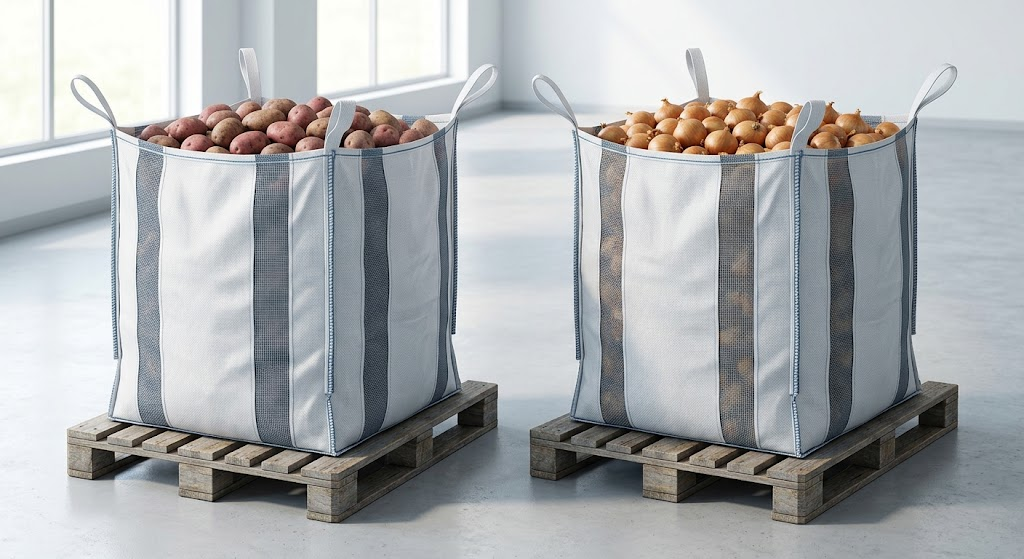
The function of breathable bulk bags - and the functions they do not have
Breathable container bags use breathable parts or open fabric structures to promote air exchange. When air permeability is included in the processing requirements, they are used for transporting agricultural products such as potatoes and onions.
However, bulk bags with good breathability cannot replace storage and transportation solutions. Choosing only breathable design does not guarantee suitable temperature, humidity, or production conditions, nor does it guarantee that the goods will not condense or deteriorate.
When comparing suppliers, ask how the proposed design supports your process flow. Avoid choosing a bag based solely on claims such as "maximum airflow" without a clear structure and evaluation method.
Starting from the product and route
Describe potatoes and onions as separate application scenarios, rather than assuming that one specification applies to both. Including product size range, packaging condition, expected loading weight, and any related handling precautions.
Then plan the route: loading, temporary storage, loading, transportation, and unloading. Pay attention to where the bags will be stored, how long each stage will last, and whether the agricultural products will be repackaged later.
If the reason for changing the packaging is a recurring issue, please describe where the problem occurred. Photos of bags filled with products, opening or unloading processes can help suppliers distinguish between bag design issues and broader handling issues.
Confirm ventilation construction
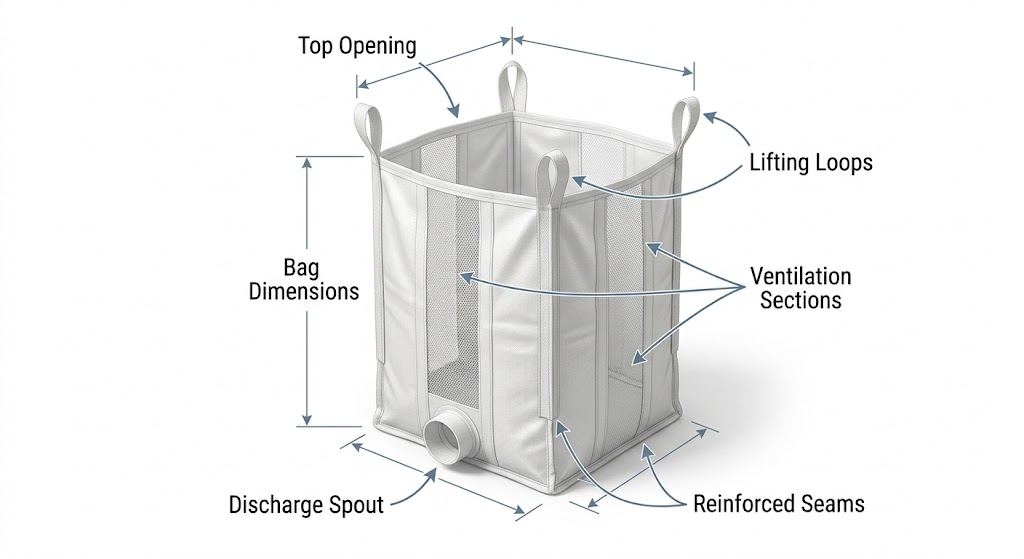
The breathable bulk bag used for storing potatoes and onions can adopt different breathable fabrics and ventilation part layouts. Please ask the supplier to clearly specify the proposed structure, including the location and scope of these parts.
Before approval, let's discuss three questions:
Has the fabric arrangement retained the smallest product in the batch?
Is it suitable for placing bags during storage and transportation?
How to evaluate the suitability of ventilation in expected operations?
A more open structure does not necessarily mean higher specifications. Production sealing, fabric durability, and ventilation must be considered simultaneously. If it is recommended to use lining or coating, inquire about its impact on ventilation requirements.
Simultaneously specify bag size and loading requirements
Please specify the required bag size and expected weight of the agricultural product. Merely describing it as a 'one ton bag' is not sufficient to determine the size, usable capacity, or allowable carrying weight of the proposed bag.
If you need to replace the existing bag, please provide its specifications and specify which parts must remain compatible: loading frame, tray arrangement, storage location, or receiving equipment. If the required size is unknown, please provide the supplier with the loading weight target and available process information for review of the proposed size.
Before placing an order, please confirm the stated safe working load, applicable design, and relevant supporting documents. Do not use the physical volume of the packaging bag as evidence that it can safely carry specific loads.
Match the opening with filling and unloading
Select the top and bottom areas around the device, as well as the method of handling the product.
| Option to discuss | Buyer’s question |
| Open top | Does the opening suit the filling line and the way the top must be managed? |
| Duffle or skirt top | What closure arrangement is needed after filling? |
| Filling spout | Does it match the equipment connection and filling procedure? |
| Closed bottom | How will the contents be removed at the receiving site? |
| Discharge spout | Does its size and position work with the receiving equipment? |
Please provide a drawing showing the opening size and closure device. Evaluate the unloading process together with the receiving team, including whether the process is controlled and acceptable for the product.
Check the compatibility between lifting and placement
Inform the supplier on how to lift and transport the bags. This includes the required equipment, relevant forklift or accessory dimensions, and any existing lifting devices that must be matched.
Follow the manufacturer's operating instructions and use appropriate equipment and procedures. Don't assume that rings with similar appearances mean that two bags can be handled in the same way.
If stacking bags is required, please seek specific guidance on the intended bags, contents, and placement conditions. Confirm the loading plan, rather than inferring its stackability based solely on photos of the product.
Your customized breathable bag inquiry list
| Information | Details to send |
| Produce | Potatoes or onions, size range, condition at packing and handling concerns |
| Use | Transfer, storage, transport, export shipment or another defined purpose |
| Fill requirement | Intended weight per bag and existing dimensions, if available |
| Ventilation | Current fabric arrangement, observed issues and proposed evaluation method |
| Filling | Equipment, opening dimensions and closure requirements |
| Unloading | Receiving equipment, bottom arrangement and emptying procedure |
| Handling | Lifting equipment, pallet use, placement and proposed stacking |
| Route | Storage and transport conditions, duration and destination |
| Identification | Printing, labels and traceability information required by the buyer |
| Order | Quantity, delivery location, required date and repeat-order expectations |
Please attach existing bag drawings or clear photos as much as possible. Separate basic requirements from preferences so that suppliers can clarify which details need to be clarified.
Confirm the sample for pre production review
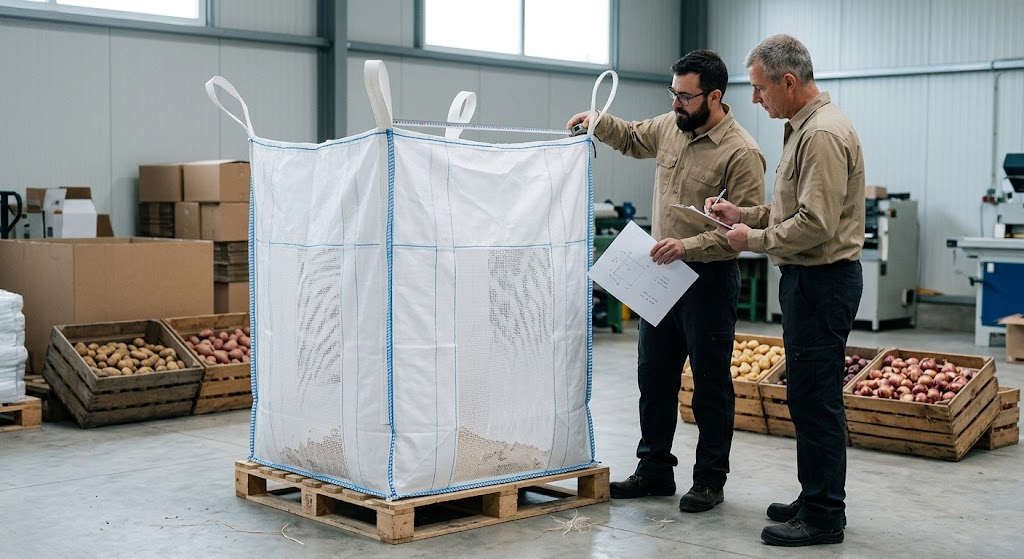
Agree on sample specifications and approved standards before ordering production batches. Check the dimensions, fabric structure, openings, closures, and lifting compatibility against the drawings.
Then, use representative products and appropriate processing procedures to review the samples during the expected process. Record the results of filling and unloading, generate retention, and any relevant observations during storage or transportation evaluation.
Merely conducting satisfactory fitting checks cannot determine the storage performance of a product. Agree with the relevant team on the evidence required for your specific use and retain approved specifications and sample references for future repeat orders.
Request customized ventilation bulk bag specifications
FIBC World offers customized bulk packaging, including ventilation bag options. Send your product details, expected filling weight, existing dimensions, filling and unloading arrangements, order quantity, and delivery destination.
Explore our breathable FIBC product line and contact FIBC World to learn about your requirements. Before placing an order, it is required to confirm the available structure, sample arrangement, minimum order quantity, and delivery cycle.
Related News
Other news you might be interested in

How to Choose FIBC Liners: Standard vs Form-Fit and a Custom Order Checklist
Choosing FIBC liners starts with two separate questions: what shape fits your bulk bag, and what film meets your material’s protection requirements? A standard liner and a form-fit liner describe different structures. PE and aluminum foil describe material options. Specifying one does not settle the other.For manufacturers, packaging distributors and bulk bag suppliers, the practical task is to match the liner to the cargo, filling equipment and discharge process. This guide explains what to compare and what information to prepare before requesting a custom quotation.
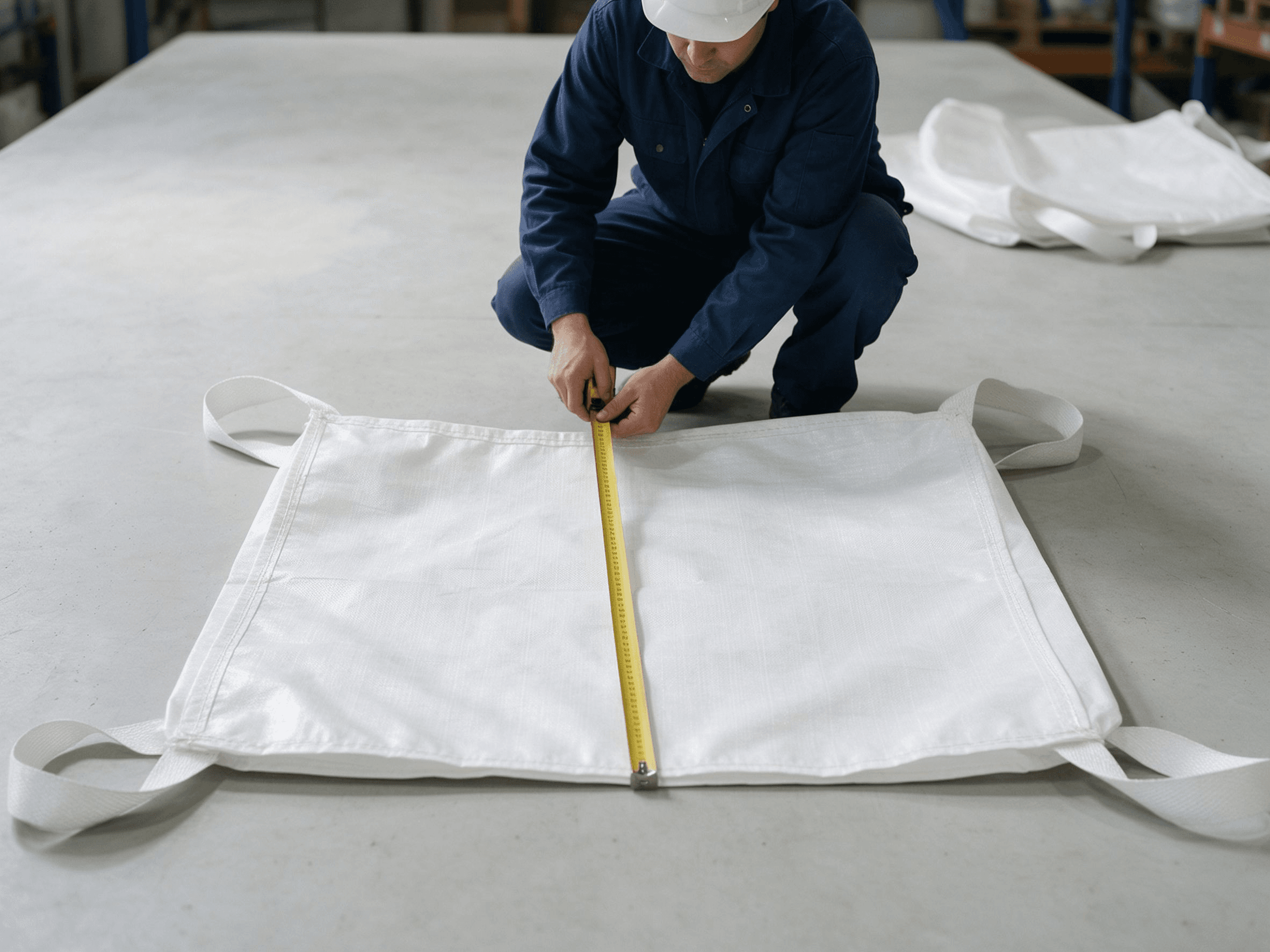
FIBC Bulk Bag Dimensions and Load Capacity: How to Choose the Right Specifications for Your Material
In bulk material packaging, storage, transportation, and handling, choosing an FIBC bulk bag involves more than specifying a load weight. The bag must also match the material and the actual operating conditions. Because materials differ in bulk density, flowability, and filling behavior, bags with the same nominal rating of “1 ton” may require different volumes and dimensions. Likewise, bag dimensions, usable volume, actual fill weight, and SWL (Safe Working Load) are not interchangeable. This article explains these distinctions, how to estimate the required volume based on the material, how to determine bag dimensions and load requirements, and how to verify the specifications against filling, handling, storage, and transportation conditions.
Want to know more?
Get in touch with us for more information about our services and products.