
FIBC Bulk Bag Dimensions and Load Capacity: How to Choose the Right Specifications for Your Material

Dayang Yang
AuthorWith experience in FIBC bulk bag manufacturing and export sales, we operate our own production facility with stable large-scale capacity. We are specialists in bulk bags, conductive FIBCs, food-grade FIBCs, UN certified bags, and customized flexible intermediate bulk containers for industrial packaging and bulk material transportation solutions.
In bulk material packaging, storage, transportation, and handling, choosing an FIBC bulk bag involves more than specifying a load weight. The bag must also match the material and the actual operating conditions. Because materials differ in bulk density, flowability, and filling behavior, bags with the same nominal rating of “1 ton” may require different volumes and dimensions. Likewise, bag dimensions, usable volume, actual fill weight, and SWL (Safe Working Load) are not interchangeable. This article explains these distinctions, how to estimate the required volume based on the material, how to determine bag dimensions and load requirements, and how to verify the specifications against filling, handling, storage, and transportation conditions.

Distinguish Dimensions, Volume, and Load Capacity
External Dimensions, Usable Volume, and Fill Weight
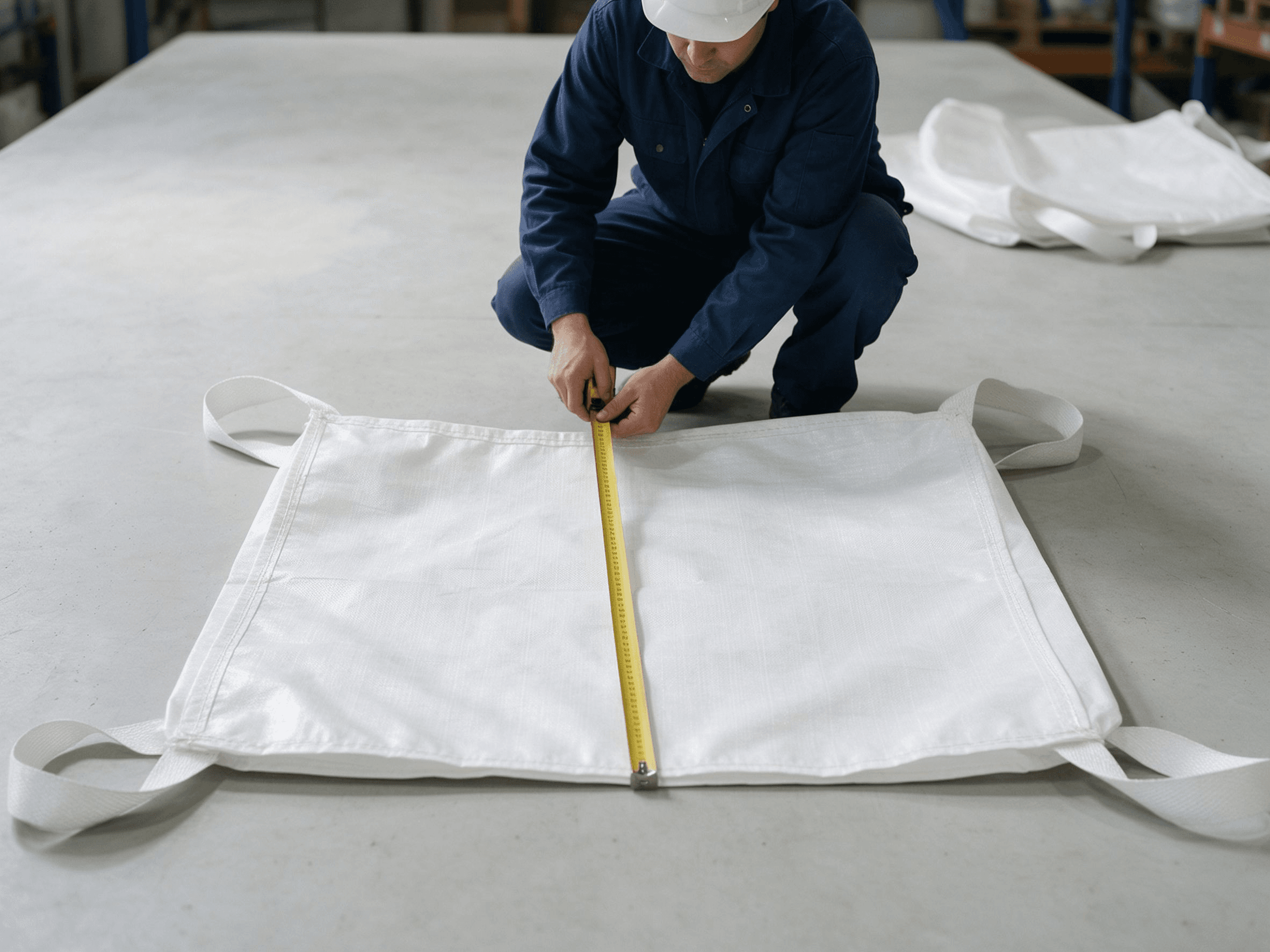
FIBC bag dimensions refer to the bag’s external length, width, and height. Usable volume is the space available under actual filling and closure conditions, while fill weight is the mass of the material inside the bag. These factors are related, but they are not interchangeable. A flexible bag changes shape when filled, and the filling height, top construction, and material settlement can all affect its usable space. Therefore, multiplying the external dimensions alone does not reliably establish the actual fill capacity.
Net Fill Weight, SWL, and Safety Factor
Net fill weight is the weight of the material in the bag. SWL (Safe Working Load) is the safe working load specified for the bag’s design and labeling. The safety factor expresses the relationship between the design or test load and the rated working load. It is not an allowance for overloading. Actual use must follow the bag’s markings, applicable standards, and specified conditions. FIBCA’s design guide also identifies product bulk density, reuse requirements, and hazardous-material status as information to confirm when specifying a bag.
Determine the Required Specifications from the Material
When determining FIBC bulk bag capacity, start with the material’s bulk density. The same weight of a high-density mineral and a low-density agricultural product may require very different volumes. The density used for an estimate should reflect the material’s actual filling condition. The volume of powders and granules may change after vibration, settling, or compaction.
Other relevant properties include particle size, the proportion of fines, flowability, moisture content, and abrasiveness. Fine powders may create dust or flow readily, affecting filling and discharge. Moisture-sensitive materials may require moisture protection, while sharp or abrasive materials may require particular attention to the bag fabric and seams. Materials that present static-electricity or hazardous-goods risks require additional professional assessment; a standard bulk bag specification alone is not enough to determine suitability.
For example, grain, seed, and fertilizer applications require checking material density, storage and transportation conditions, and moisture protection. Chemical powders and resins require consideration of dust, flow, and discharge requirements. Ore and mineral concentrates should be assessed for density, abrasiveness, and handling conditions. These are factors to verify during selection; they do not mean that one bag type is suitable for every material in a given industry.
Estimate Volume from the Target Fill Weight and Determine Bag Dimensions
A preliminary estimate of the required volume can be made by dividing the target fill weight by the material’s bulk density:
Estimated volume (m³) ≈ target fill weight (kg) ÷ bulk density (kg/m³)
For example, if the target fill weight is 1,000 kg and the estimated bulk density is 600 kg/m³, the theoretical volume is approximately 1.67 m³. This is only an initial estimate, not a guarantee of the finished bag’s specifications. The result must be checked against actual filling conditions, closure method, bag shape, and equipment.
After estimating the volume, consider the bag’s length, width, height, and filling height. U-panel bags, four-panel bags, circular FIBCs, and baffle bags (Q bags) affect the filled shape, use of space, and stacking performance. However, the construction type alone does not establish a bag’s load capacity. The bag design must be matched to the material, equipment, and intended use.
Verify the SWL and Bag Configuration Against the Load and Operating Conditions
During specification checks, confirm that the anticipated fill weight does not exceed the bag’s labeled SWL, and verify the applicable design, testing, and use conditions. FIBC load capacity cannot be inferred from bag dimensions, fabric weight, or bag type alone. The safety factor must not be treated as additional loading capacity.
Also confirm whether the bag is intended for single or multiple trips and consider the loads it may encounter during filling, lifting, handling, and discharge. Use FIBCs in accordance with their labeling and applicable requirements. ISO 21898:2024 applies to flexible intermediate bulk containers for non-dangerous solid materials, including powders, granules, and pastes, and specifies requirements related to materials, construction, design, type testing, and marking. Dangerous-goods packaging must be checked separately against the applicable transport regulations and packaging approvals; the scope of this standard should not be extended to dangerous goods.
The top, bottom, lifting loops, liner, and coating should also suit the actual operating conditions. For example, the filling and discharge spouts should match the filling and unloading equipment. Liners or coatings should be selected according to requirements for moisture protection, dust control, or product separation. These configurations affect performance, but they do not replace verification of SWL and bag testing requirements.
Include Filling, Storage, and Transportation Conditions in the Size Check
FIBC bulk bag dimensions must also work with the equipment and logistics conditions at the site. Check whether the filling outlet, discharge equipment, forklift forks, lifting equipment, and bag loops are compatible. Pallet dimensions, warehouse clearance height, stacking methods, and the available space in containers or vehicles may also affect the bag dimensions and fill height.
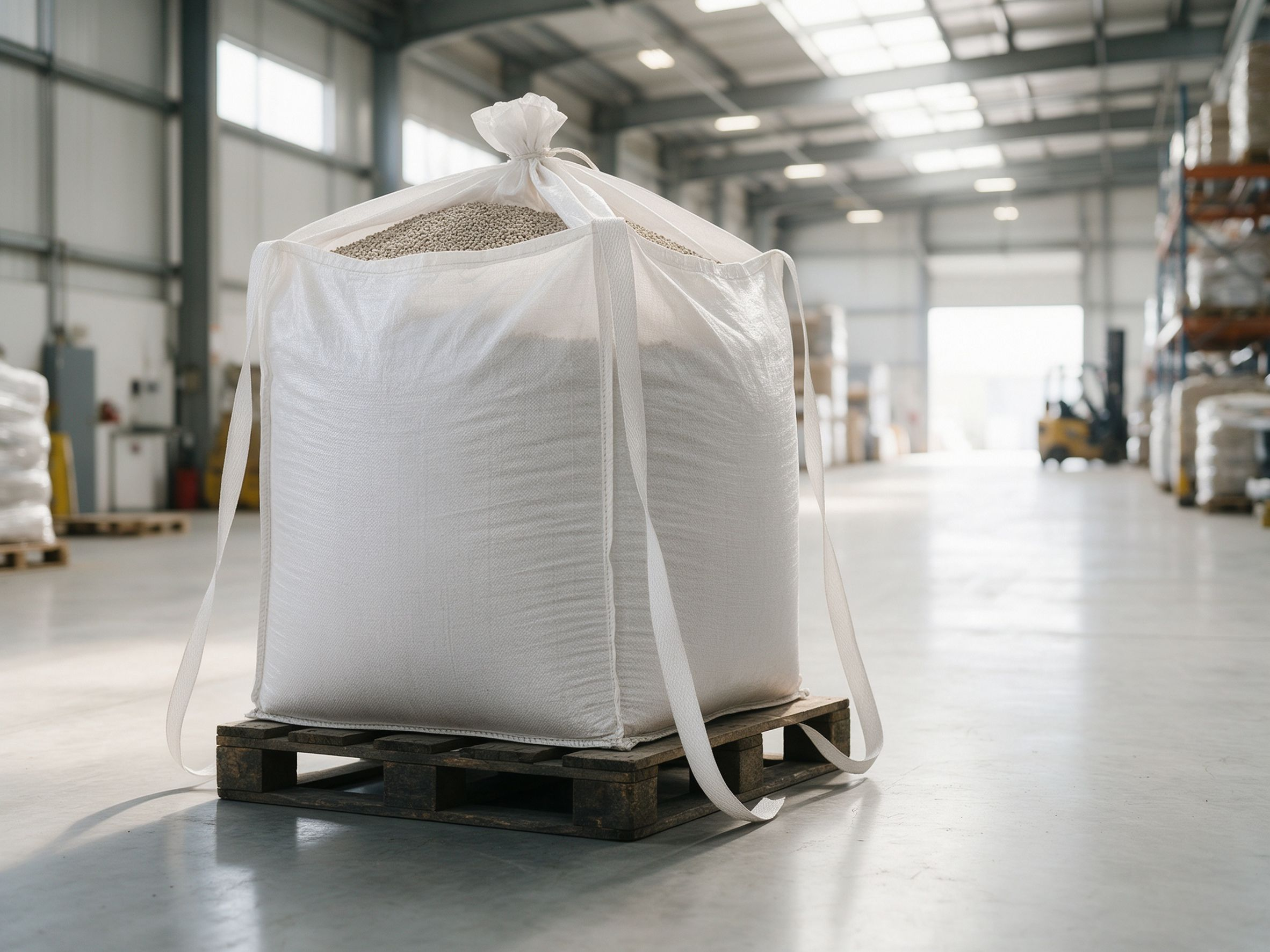
Stability after filling should be checked as well. Bag shape, fill height, material settlement, and stacking method all affect how the bag sits during storage and transportation. FIBCA’s safe-handling resources cover filling, discharging, and handling with forklifts and lifting equipment, underscoring the need to consider actual operating procedures when confirming specifications.
Common Selection Errors and Final Specification Checks
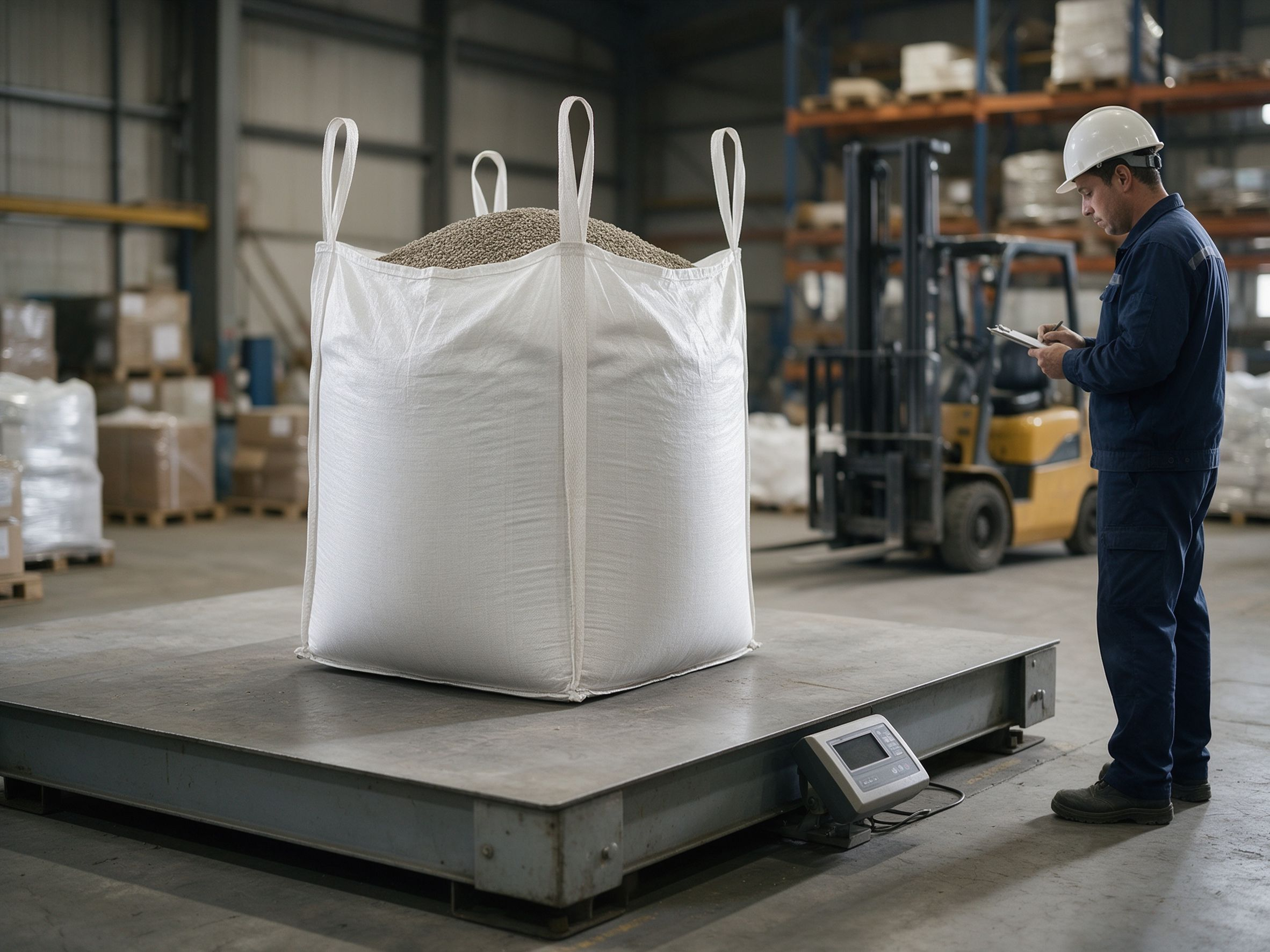
Common errors include assuming that “1-ton bag” means a fixed size; estimating actual volume from external dimensions alone; using a bulk density that does not reflect actual filling conditions; confusing net fill weight, SWL, and the safety factor; and overlooking filling equipment, handling tools, stacking, or transportation space.
Before confirming the specifications, check the material name and properties, bulk density and its measurement conditions, target fill weight, required volume and bag dimensions, bag construction, SWL, number of intended uses, filling and discharge methods, storage conditions, and transportation limits. For dangerous goods or other materials with special safety requirements, also verify the applicable regulations, packaging approvals, and technical requirements.
The core selection process is: understand the material, estimate the required volume, determine the dimensions and load requirements, and then verify them against filling, storage, and transportation conditions. This avoids relying on tonnage or the bag’s appearance alone to determine suitability.
Related News
Other news you might be interested in
U-Panel, Four-Panel, Circular and Baffle FIBCs: Which Bag Construction Fits Your Application?
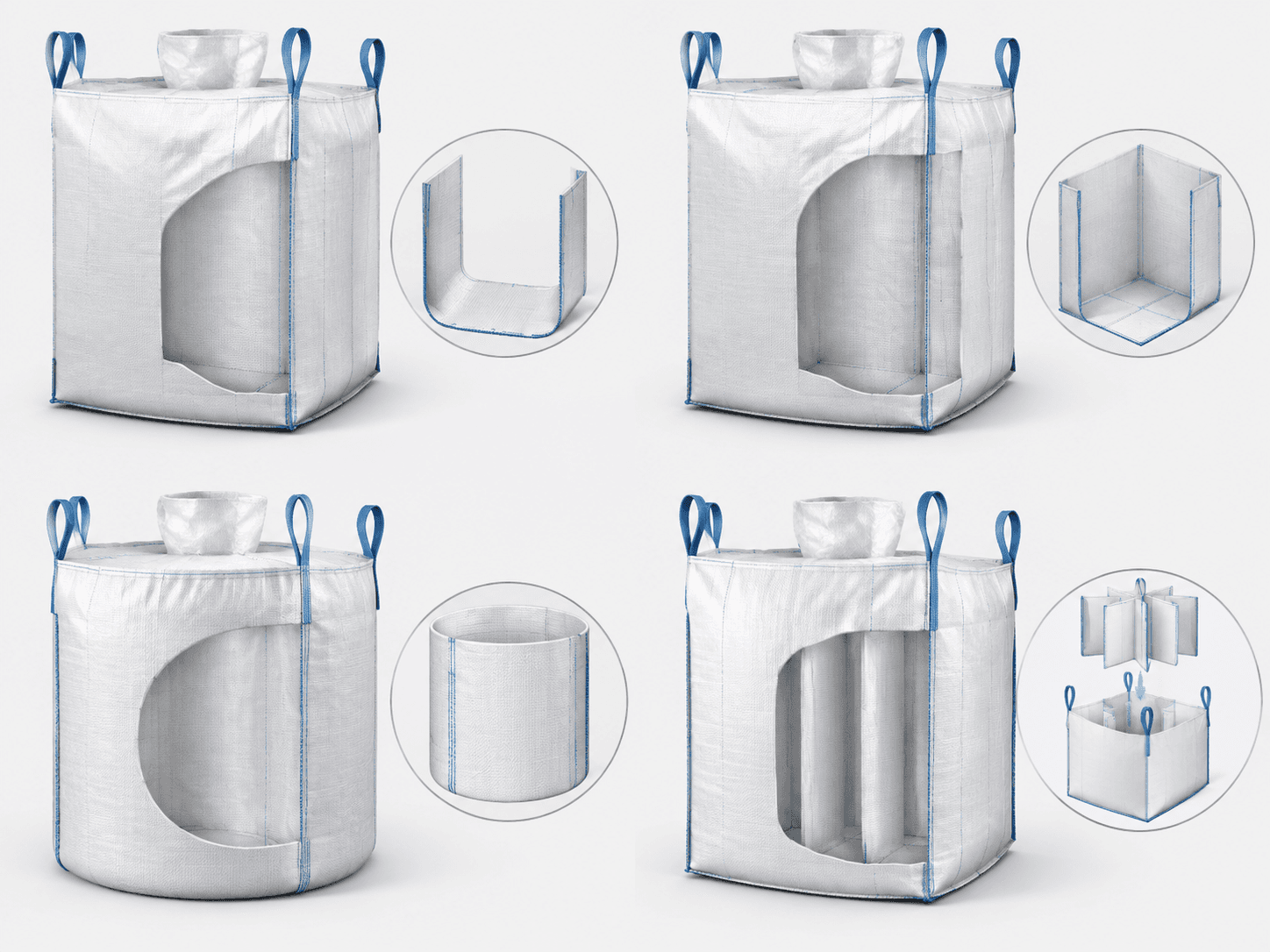
When selecting an FIBC bag, buyers often compare U-panel FIBCs, four-panel FIBCs, circular/tubular FIBCs, and baffle FIBCs (Q-bags). However, these terms do not all describe the same level of classification: the first three generally refer to the bag body’s construction, while baffles are internal shaping features that can be incorporated into a bag. The name alone does not determine a bag’s durability, load capacity, or suitability for a particular material.

FIBC Bag Safety: Understanding Safe Working Load, Safety Factor, and Safe Handling
Bag safety cannot be judged by load weight alone. The bag’s design, construction, and rated load must match the material and operating conditions. Different FIBC bag types and load capacities may have different filling, lifting, and discharge requirements. ISO 21898:2024 covers the materials, construction, design, testing, marking, selection, and safe use of FIBCs for non-dangerous solid goods. On-site operations must also follow the manufacturer’s instructions and applicable regulations.
Want to know more?
Get in touch with us for more information about our services and products.