
FIBC Bag Safety: Understanding Safe Working Load, Safety Factor, and Safe Handling

Dayang Yang
AuthorWith experience in FIBC bulk bag manufacturing and export sales, we operate our own production facility with stable large-scale capacity. We are specialists in bulk bags, conductive FIBCs, food-grade FIBCs, UN certified bags, and customized flexible intermediate bulk containers for industrial packaging and bulk material transportation solutions.
Why Is FIBC Bag Safety About More Than the “Rated Tonnage”?
Bag safety cannot be judged by load weight alone. The bag’s design, construction, and rated load must match the material and operating conditions. Different FIBC bag types and load capacities may have different filling, lifting, and discharge requirements. ISO 21898:2024 covers the materials, construction, design, testing, marking, selection, and safe use of FIBCs for non-dangerous solid goods. On-site operations must also follow the manufacturer’s instructions and applicable regulations.
The Material, Bag Construction, and Handling Method All Affect Safety
Even when the load weight is the same, operating risks may vary with the material’s particle or powder characteristics, filling stability, bag construction, and the lifting points used by forklifts or lifting equipment. FIBCs should be selected and used by assessing the material, bag, and handling process together—not by tonnage alone.
Confirm the Scope First: Requirements Differ for Non-Dangerous Solids and Dangerous Goods
ISO 21898:2024 applies to non-dangerous solid goods in powder, granular, or paste form. If the material is classified as dangerous goods, or the operating environment involves combustible dust or flammable vapors, a standard FIBC marking alone is not enough to determine suitability. Applicable regulations, electrostatic protection requirements, and supplier guidance must also be checked. Different Type A, B, C, and D FIBCs have different design and use requirements, so the selected type must match the actual risk.
What Is the Safe Working Load (SWL)?
What Does SWL Mean, and Where Should You Check It?
The Safe Working Load (SWL) is the load a bag is designed to carry. Check the bag’s markings, product documentation, and manufacturer’s instructions. FIBCA defines SWL as the weight the bag is designed to carry. When reviewing bag specifications and load requirements, confirm that the information applies to the specific bag and operating conditions.
The Difference Between SWL, Bag Dimensions, Volume, and Material Weight
Bag dimensions and volume describe its capacity, but do not indicate how much weight it can safely carry. Material volume and weight are also different: a low-density material and a high-density material can create very different loads even when both fill the same bag. When selecting a bag, check its volume, the actual material weight, and the marked SWL separately. “It fits” is not a substitute for a load calculation.
Why the Actual Load Must Not Exceed the Marked SWL
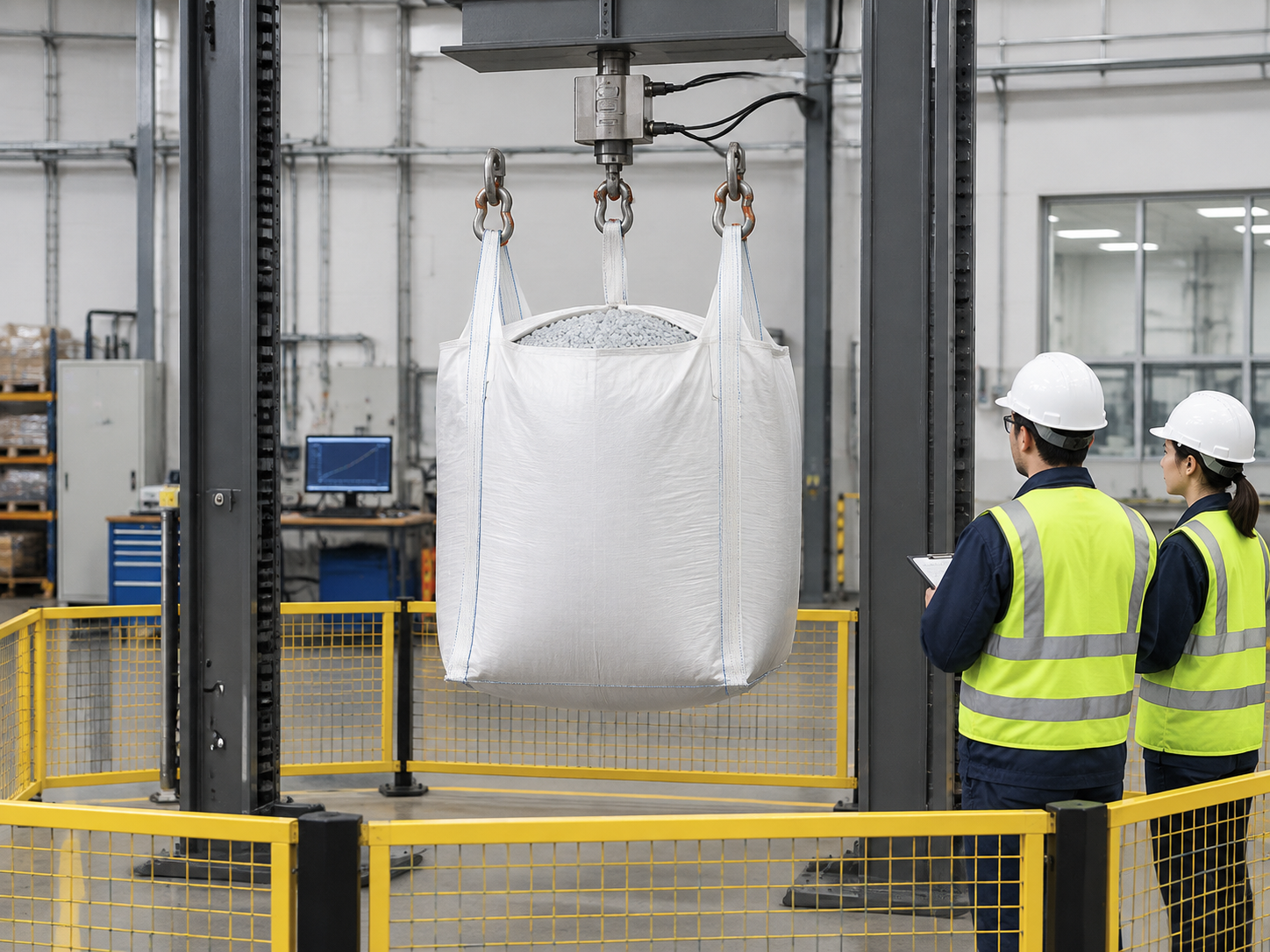
The SWL is the rated working load, not a target that can be exceeded with a safety margin. FIBCA’s safe-handling guidance says not to exceed the SWL or rated capacity marked on the FIBC. The filled bag must also remain stable, and the manufacturer’s instructions must be followed.
What Is the Safety Factor?
How to Understand Markings Such as 5:1 and 6:1
FIBCA identifies 5:1 and 6:1 as common FIBC safety factor markings. They are design ratios associated with the SWL and help describe bag design and performance requirements. Selection should still be based on the specific bag’s markings, test documentation, and manufacturer’s instructions.
The Relationship Between the Safety Factor and SWL
The SWL states the load a bag is designed to carry; the safety factor is a ratio used in industry materials to describe the bag’s load-performance margin. They are related but not interchangeable. During filling and handling, the marked SWL remains the limit—the ratio is not an operating load allowance.
The Safety Factor Does Not Permit Overloading or Prove Suitability for Every Application
A 5:1 or 6:1 marking does not mean the bag can be loaded to five or six times its SWL. Nor does the marking alone prove that the bag is suitable for a particular material, piece of equipment, or operating environment. Suitability must also be assessed using the bag markings, design and test information, material properties, and handling method.
How to Check FIBC Specifications and Condition Before Filling
Check the Bag Label, Rated Load, and Instructions
Before filling, confirm that the bag markings are legible and that its SWL, type, and manufacturer’s instructions match the planned operation. Check the FIBC product specifications and bag constructions against the material, dimensions, and intended use. Do not assume that bags with a similar appearance have the same load capacity.
Inspect the Lifting Loops, Seams, Body, and Filling and Discharge Spouts
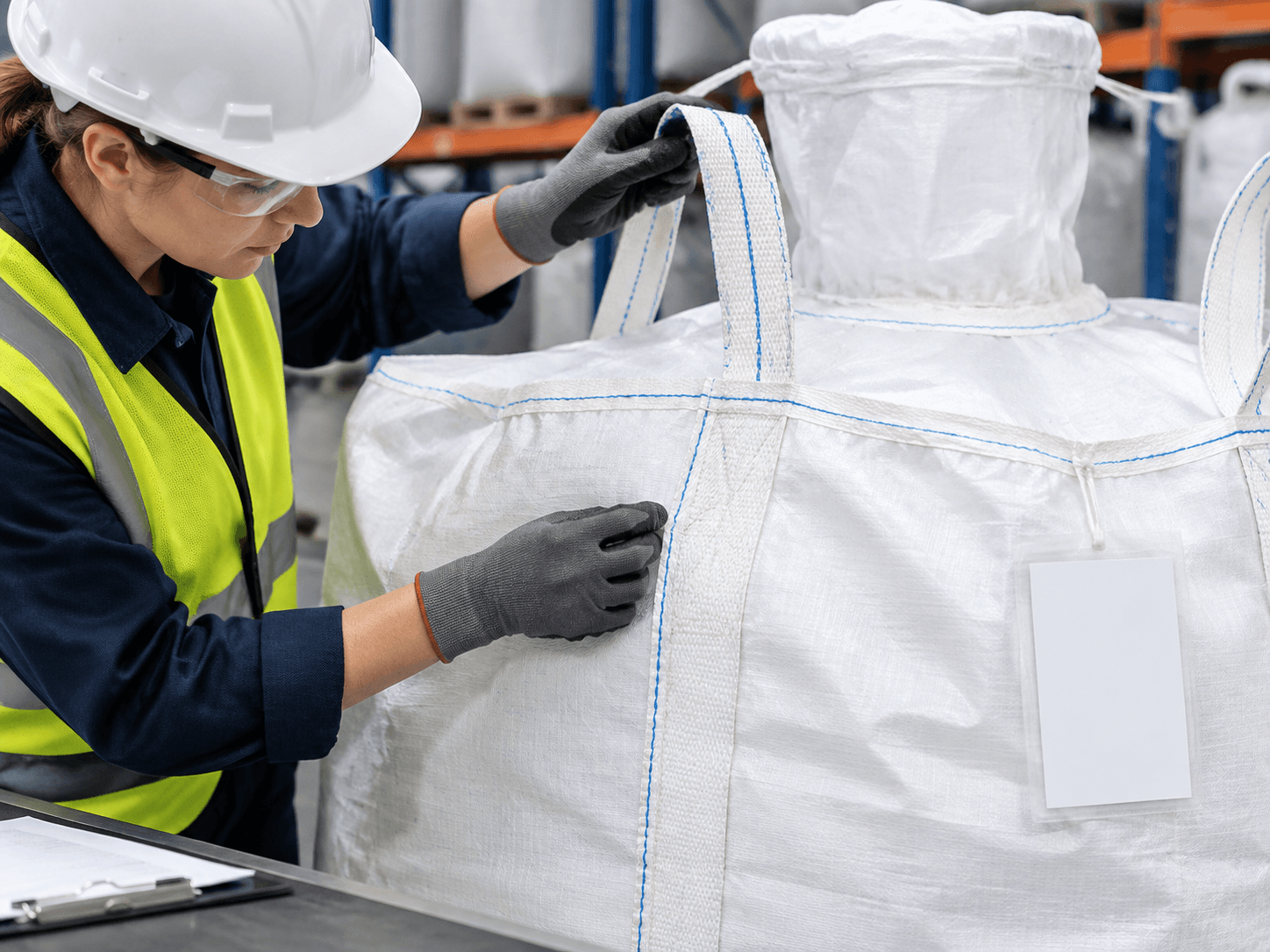
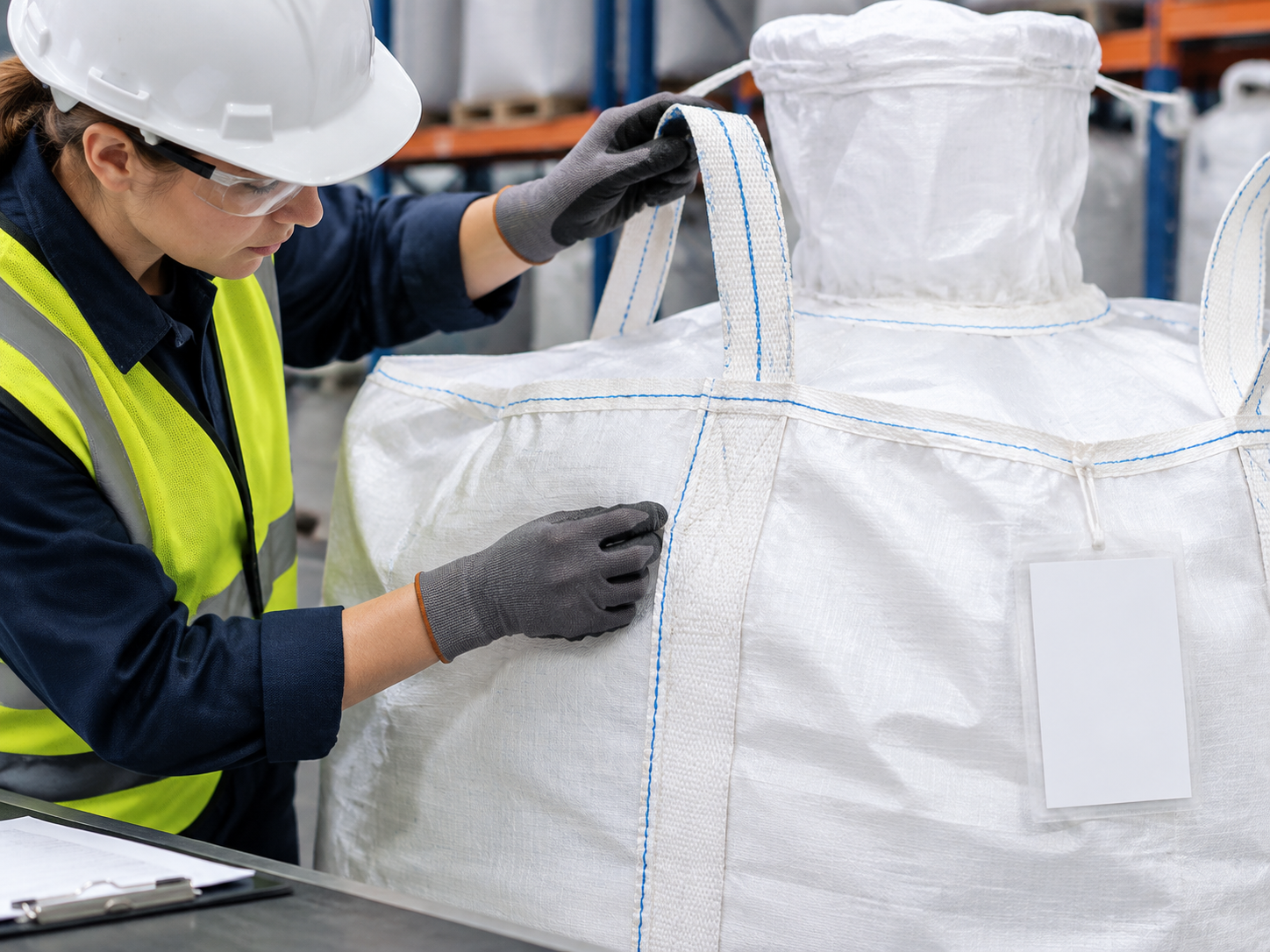
Check the lifting loops, seams, bag body, filling spout, and discharge spout for damage, wear, deformation, or contamination. FIBCA guidance says not to use a damaged FIBC if the damage could affect its strength. Inspecting the bag’s condition during warehousing and handling can help identify visible damage before use. If there is any doubt, consult the manufacturer or supplier; do not simply repair the bag yourself and continue using it to carry a load.
Match the Bag Type and Lifting Method to the Material and Equipment
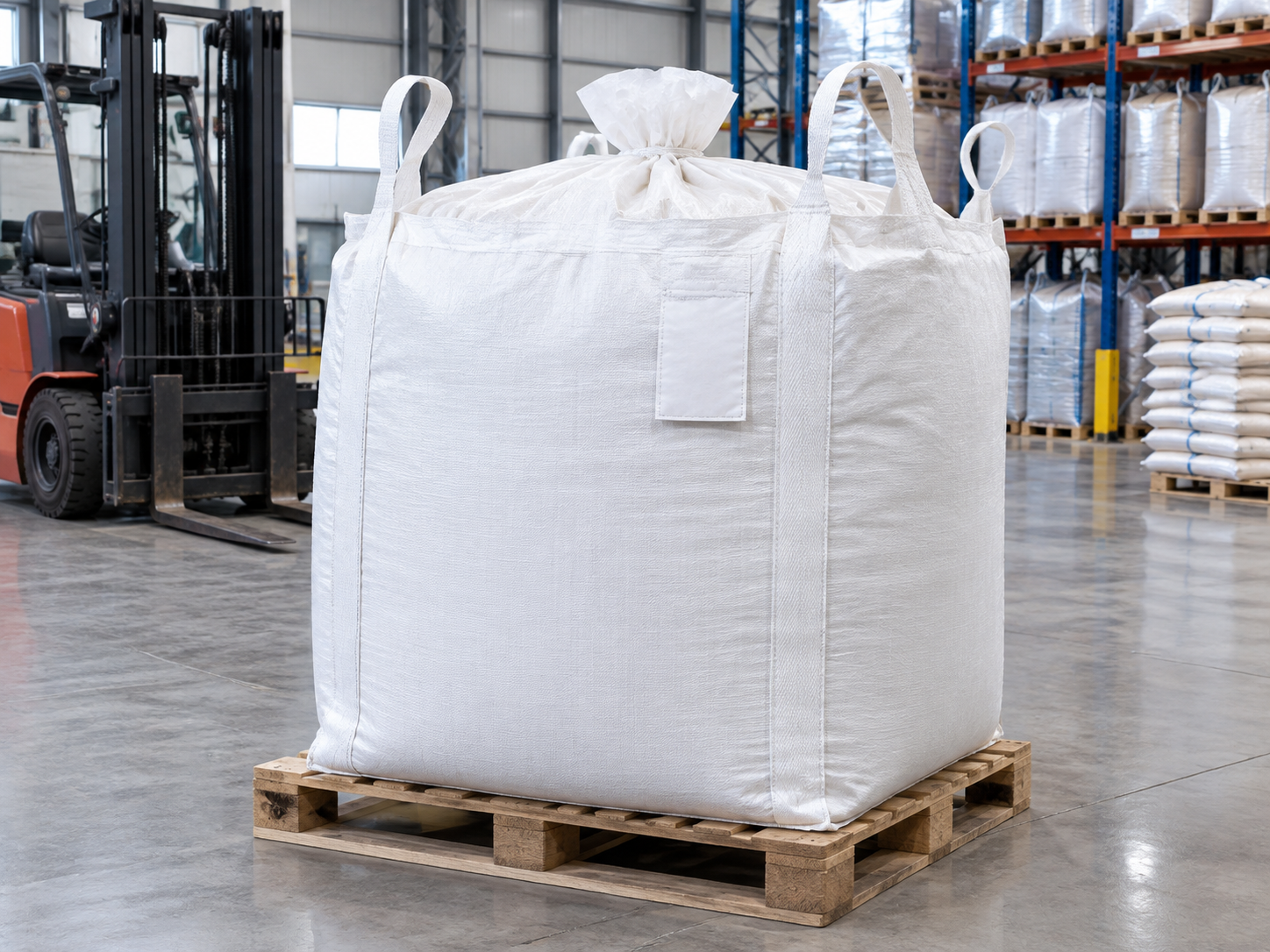
Confirm that the bag and its components are compatible with the material. Check that the rated capacity of the forklift, hook, lifting slings, or other lifting equipment is sufficient for the filled bag. The equipment must be suitable for FIBCs. Do not use fewer lifting loops than specified or gather the loops onto a single hook unless the bag is specifically designed and approved by the manufacturer for that method. When a bag must suit a specific operation, determine the required lifting-loop, sling, filling-spout, and discharge-spout configuration.
Stop Using the Bag and Contact the Supplier if It Is Damaged, Contaminated, or Incorrectly Specified
If the bag body is damaged, the lifting loops or slings are compromised, the markings do not match the task, or the material could contaminate or degrade the bag, stop filling and lifting and isolate it. If the specifications or effect of the damage cannot be confirmed, contact the supplier. Do not rely on “it worked before” or “it still looks usable” as proof of safety.
How to Fill, Lift, and Discharge FIBCs Safely
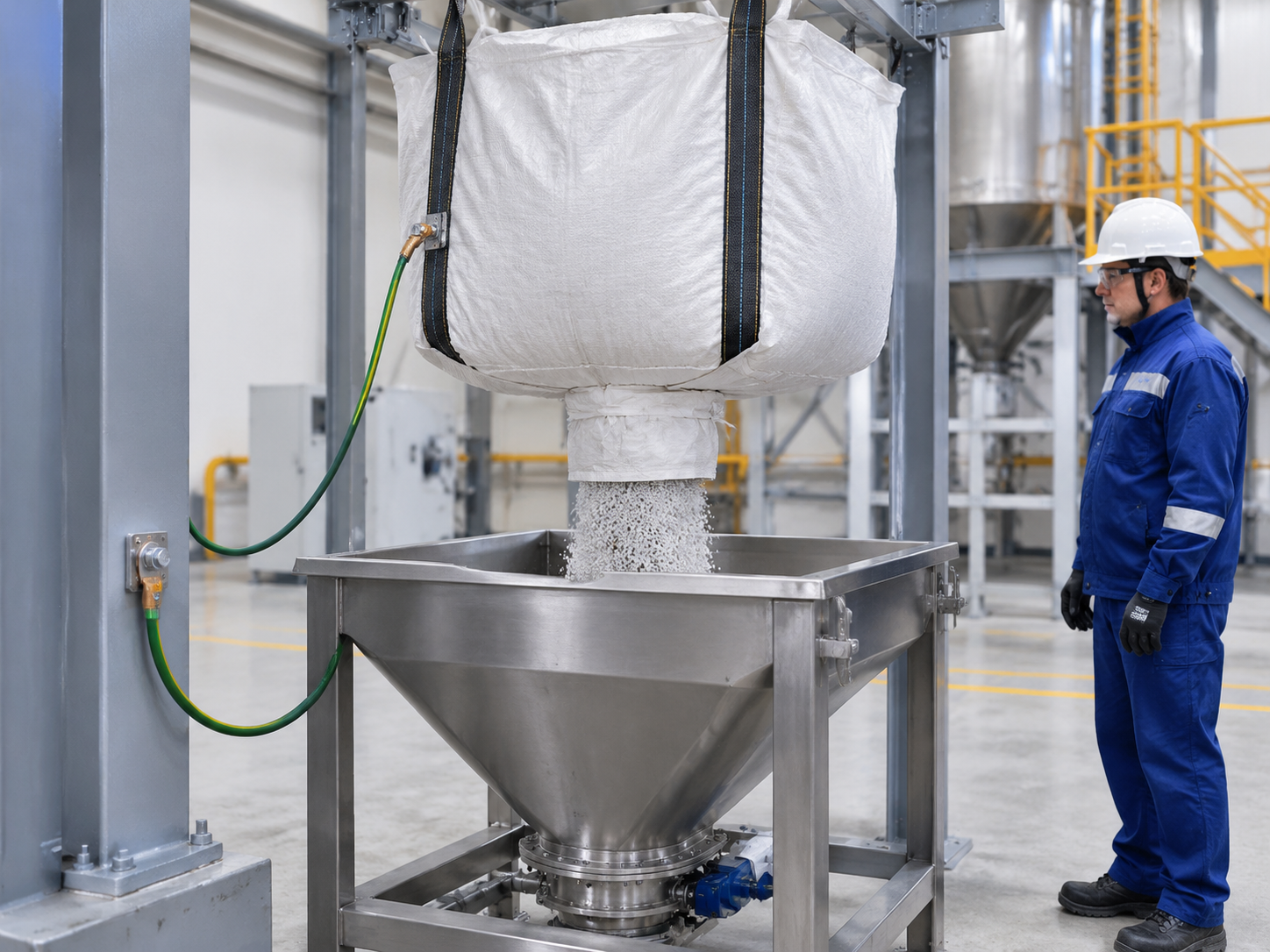
Filling: Control the Weight and Keep the Bag Stable
Control the material weight throughout filling and do not exceed the marked SWL. Close the filling spout as instructed by the manufacturer, and avoid filling in a way that makes the bag unstable. For dusty materials, implement appropriate dust-control measures based on the material’s properties.
Forklifts, Hooks, and Lifting Equipment: Use the Designated Lifting Points
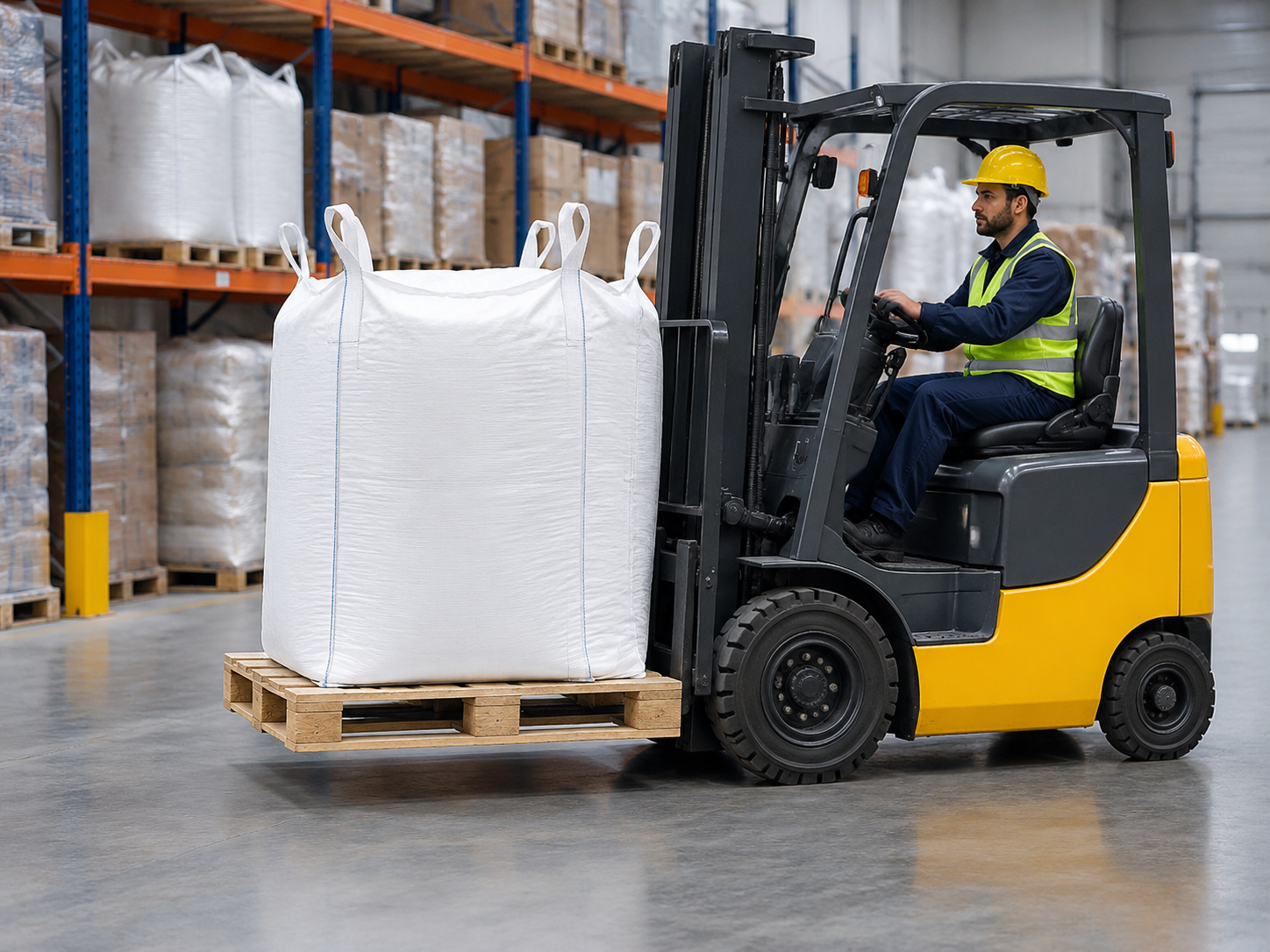
Use the lifting loops, lifting sleeves, or other load-bearing components specified in the bag’s design, and ensure they are loaded as instructed. Set the forklift fork spacing so the loops hang appropriately. Avoid sharp edges and protrusions on hooks, forks, and other contact points to reduce cutting, abrasion, and lateral loading.
Handling: Avoid Impact, Dragging, and Standing Under a Suspended Bag
Avoid sudden lifting, abrupt stops, dragging, or pushing the bag. Plan the route for the suspended load and keep people away from hazardous areas. No one should stand directly beneath a suspended bag. OSHA also prohibits employees from being directly under suspended loads during construction crane operations covered by its requirements; follow local regulations and site procedures.
Stacking and Transport: Follow Stability, Support, and Supplier Requirements
Use a pallet with no nails or protrusions and one that is appropriately sized. Do not allow the bag to overhang the pallet unless the design permits it. Stack bags only when the bag design allows it, the stack is stable, and the manufacturer’s instructions are followed. During storage and transport, protect bags from moisture and prolonged exposure to ultraviolet (UV) radiation or severe weather, which can weaken the fabric.
Discharge: Secure the Area and Keep People Clear of Hazards
Before discharge, confirm that the discharge spout is opened and closed according to the manufacturer’s instructions. Keep the discharge area clear and stable, and keep people away from areas where the bag could tip or material could spill. Where combustible dust or a flammable environment is involved, assess the electrostatic risk. When using a Type C electrostatic-protective FIBC, follow the manufacturer’s instructions for reliable grounding before and during filling and discharge.
What to Consider When Reusing FIBCs
First Confirm Whether the Bag Is Designed for Reuse
Reuse must be based on the bag’s design, markings, and manufacturer’s instructions. FIBCA terminology distinguishes between multi-trip FIBCs designed in accordance with ISO 21898 and single-trip bags. Therefore, a safety factor marking or the bag’s appearance alone does not establish that it is suitable for repeated use.
Inspect the Bag and Lifting Points Before Every Use
Before each filling operation, inspect the bag body, lifting slings, lifting loops, seams, and filling and discharge components. Also consider whether the bag has been exposed to sunlight, moisture, contamination, or impact during previous storage and handling. If its strength or cleanliness may have been affected, stop using it and consult the supplier.
Decide Whether to Continue Using or Retire the Bag Based on Inspection and Supplier Guidance
Whether a bag can continue in service depends on its condition, material requirements, operating environment, and supplier guidance. The safety factor alone cannot prove that a bag remains safe after repeated use. FIBCA also notes that environmental exposure, construction, storage, and handling can affect FIBC condition; performance testing may be necessary when appropriate.
Frequently Asked Questions (FAQ)
What Is the Difference Between SWL and the Safety Factor?
The SWL is the load the bag is designed to carry; the safety factor is a design ratio associated with that load. Do not use the safety factor to calculate an additional load allowance.
Does 5:1 Mean the Bag Can Carry Five Times Its SWL?
No. 5:1 is a safety factor marking, not an operating load multiplier. Do not load the bag beyond its marked SWL.
What Handling Conditions Should Be Checked Once the Bag Reaches Its Rated Load?
Confirm that the lifting equipment has sufficient capacity, the loops are loaded as designed, the bag is stable, and the handling route and discharge area are safe. Follow the manufacturer’s instructions and applicable regulations.
Can an FIBC Be Reused After Use?
That depends on whether the bag is designed for multiple trips, its condition after use, the material requirements, and the manufacturer’s instructions. Not all FIBCs should be considered suitable for unlimited reuse.
Can a Bag Still Be Used if Its Label or Lifting Loops Are Damaged?
If the label no longer confirms the specifications, or the lifting loops, slings, or other load-bearing parts are damaged, do not continue filling or lifting the bag. Isolate it and confirm the requirements with the manufacturer or supplier.
Related News
Other news you might be interested in

The 140th Canton Fair: New Global Sourcing Opportunities for FIBC Ton Bags and Industrial Packaging Companies
The 140th Canton Fair will be held in Guangzhou from October 15 to November 4, 2026, across three phases. The first phase will focus on advanced manufacturing, industrial manufacturing, machinery, new materials, and chemical products. For export-oriented industrial packaging companies, the 140th Canton Fair will serve not only as a product exhibition platform, but also as an important opportunity to connect with overseas buyers, suppliers, and global supply chain resources.
Woven Polypropylene FIBC Bulk Bags: How Material, Construction and Coating Affect Bulk Packaging Performance
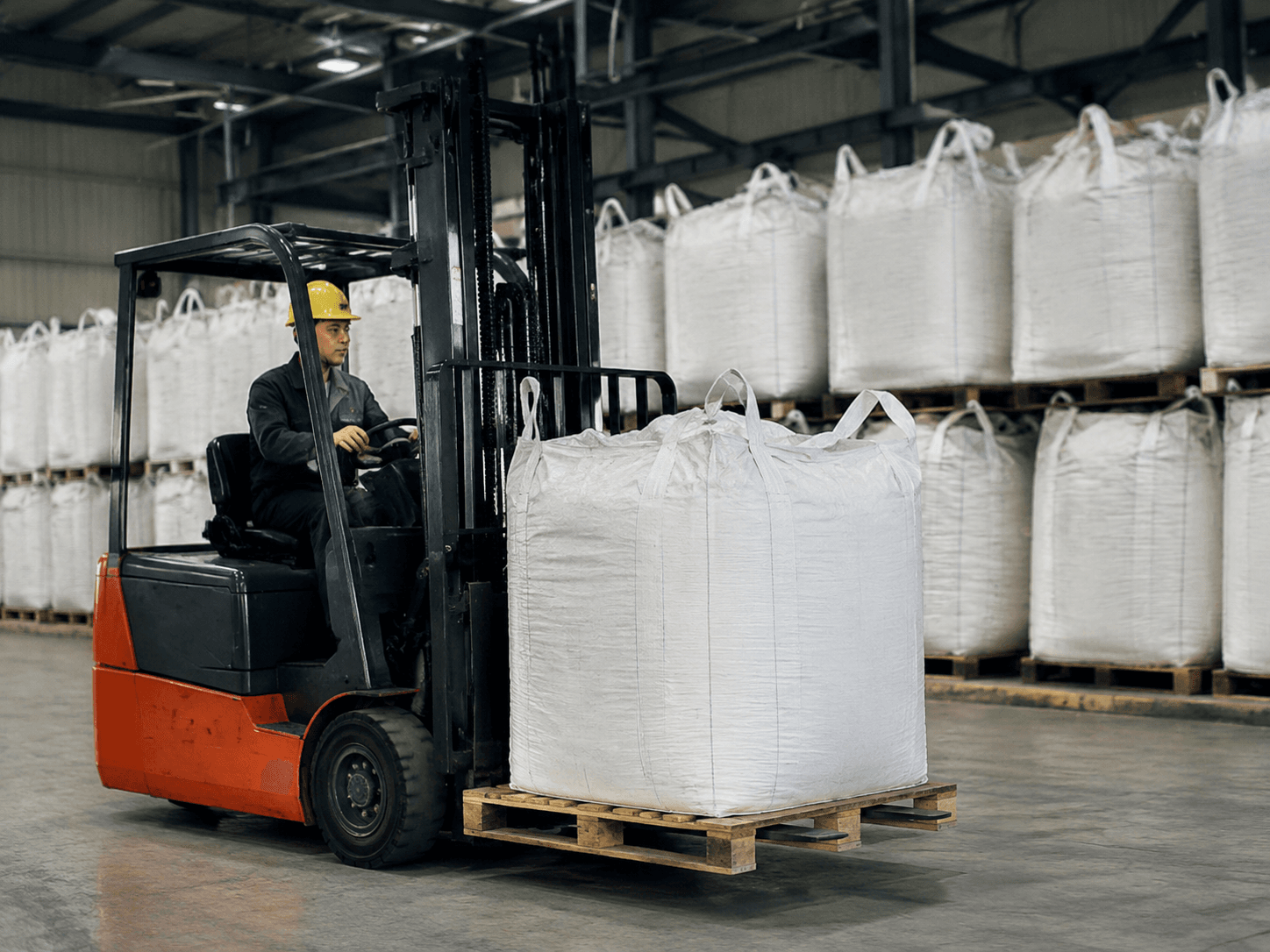
In global bulk-material supply chains, FIBC bulk bags have developed from simple transport containers into important logistics tools connecting production, warehousing, loading, unloading, and end use. Their actual performance depends not only on capacity, but also on woven polypropylene, bag construction, coating, liners, safety factors, and the application environment. For the food, chemical, agricultural, mining, and construction-material industries, selecting the right FIBC bulk bags affects load-bearing performance, material loss, transport efficiency, warehouse space, and operational safety.
Want to know more?
Get in touch with us for more information about our services and products.