

FIBC Liner Fit and Interface Guide: What to Measure Before Ordering Standard or Form-Fit Liners

Dayang Yang
AuthorWith experience in FIBC bulk bag manufacturing and export sales, we operate our own production facility with stable large-scale capacity. We are specialists in bulk bags, conductive FIBCs, food-grade FIBCs, UN certified bags, and customized flexible intermediate bulk containers for industrial packaging and bulk material transportation solutions.
An FIBC liner can meet the film specification and still perform poorly because it does not fit the outer bag or match the filling and discharge equipment. The result may be a liner that shifts during filling, folds inside the bag, traps material, interferes with the outlet or makes the closure difficult to handle.
The useful question is therefore not simply, “Should I order a standard liner or a form-fit liner?” Buyers also need to define how the liner will sit inside the bag, how product will enter and leave, and how the complete arrangement will be checked before production.
This guide explains what to measure and what to confirm in an RFQ. It is a purchasing and specification checklist, not a substitute for an approved drawing, a safe sample trial or the manufacturer’s handling instructions.
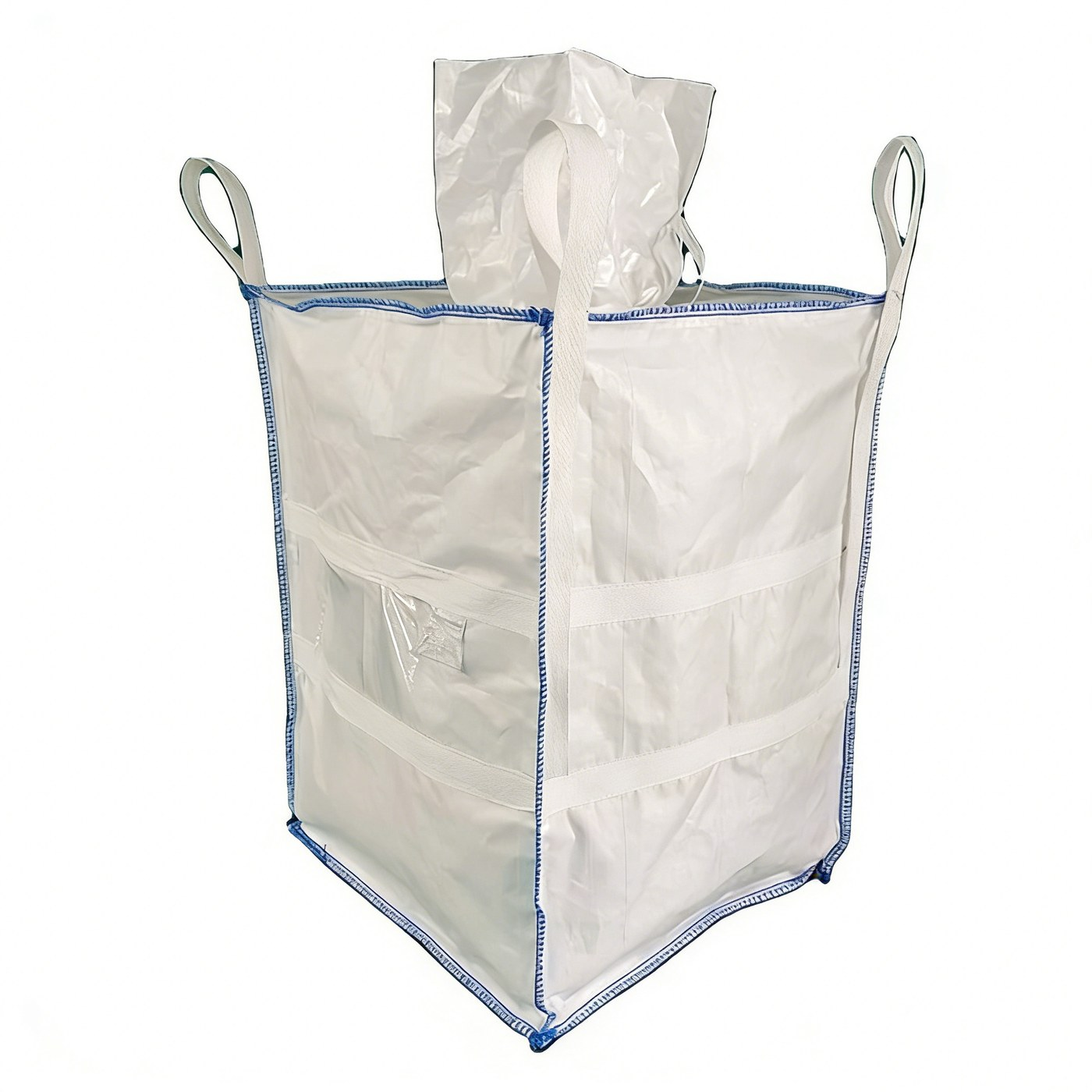
The buyer questions this guide answers
Before comparing quotations, a buyer should be able to answer six questions:
- What is the exact outer FIBC, including its construction, dimensions and internal features?
- How will the bag be filled, and what equipment will connect to the filling spout?
- How will the bag be discharged, and what will connect to the outlet?
- Does the liner need its own filling or discharge spouts, or will a simpler lay-flat structure work?
- How will the liner be held in position during filling, transport and discharge?
- What sample trial will show that the complete bag-and-liner system is acceptable?
If one of these answers is missing, the quotation may still look complete while leaving an important interface undefined.
Why liner fit is more than a bag size
Buyers often start with a short request such as “form-fit liner for a 1,000 kg bag.” That description does not define the geometry of the liner.
Fit involves several connected dimensions:
- the internal space available inside the outer bag;
- the liner body shape and finished dimensions;
- the position and size of the top filling opening;
- the position and size of the bottom discharge opening;
- the way the liner is attached or left loose;
- the space needed by the filling and discharge equipment; and
- the way the product behaves during filling, storage and unloading.
A load rating describes the bag’s intended working load. It does not define the bag’s shape, internal clearance or spout layout.
Start with the outer FIBC
The liner should be specified for a particular outer bag, not for a generic ton bag. Record the bag type, construction and dimensions before discussing whether a standard or form-fit liner is appropriate.
Bag type and body construction
Ask for the body style and the supplier’s drawing. Common FIBC constructions include U-panel, four-panel and tubular bags. Baffled or Q-bag designs add internal panels that change the usable internal space and the shape the liner must follow.
Two bags with the same nominal length, width and height can still have different internal geometry because of:
- panel construction;
- baffles or internal stays;
- seam positions;
- fabric folding and finish;
- top and bottom construction; and
- internal liner attachment points.
For a baffled bag, do not copy the liner dimensions from a standard square bag without checking the internal clearance. The baffles can restrict the liner and affect how it opens during filling.
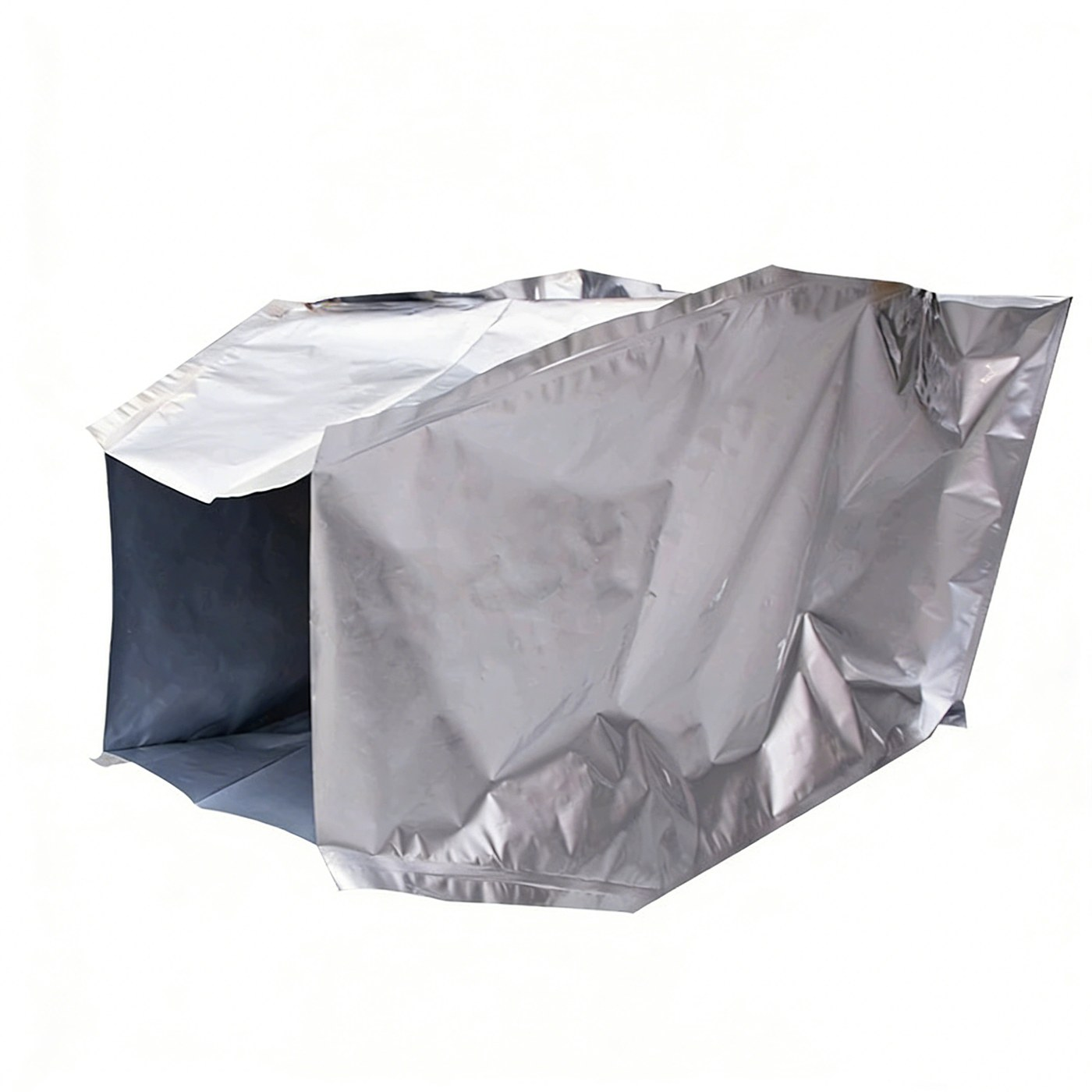
Dimensions and what they represent
Request a dimensioned drawing showing:
- bag length;
- bag width;
- bag height;
- filling spout diameter and height;
- discharge spout diameter and height, where applicable;
- relevant seam or fold positions; and
- agreed tolerances.
Ask whether each dimension is measured internally or externally, and whether it is a finished dimension or a nominal dimension. The answer matters. A dimension copied from a sales table may not describe the same point on the bag as the liner maker’s drawing.
If the bag has changed supplier, fabric, construction or finishing, compare the new drawing with the drawing used for the previous liner. A visually similar bag is not evidence that the internal dimensions and interfaces are unchanged.
Features that affect liner space
Record any feature that can interfere with the liner or its openings:
- baffles or internal panels;
- tabs, ties, loops or attachment patches;
- inner coating or laminated fabric;
- filling spouts, duffle tops or conical tops;
- flat, spout, conical or full-open bottoms;
- closures and tie cords; and
- any customer-specific internal fitting.
If these features are not on the drawing, add them as notes and ask the supplier to confirm their position.
Define the top filling interface
The top interface is where the liner, outer bag and filling equipment meet. It should be described as one arrangement rather than three separate parts.
Filling method and equipment
Identify how the bag is filled:
- manual filling;
- filling through an open top;
- filling through a spout;
- filling through a duffle;
- filling from a silo or hopper;
- filling with a lance, auger or dedicated filling head; or
- a combination of these methods.
Provide photographs or a simple sketch of the equipment that enters or clamps to the bag. Include the outside diameter of the filling tube, the insertion depth under the working position and the type of clamp or seal used.
The equipment connection can determine whether the liner needs a neck that extends beyond the bag spout, an open liner mouth or a separate filling spout. A liner that fits the bag but cannot be connected to the filler may still be impractical on the line.
Filling spout dimensions
For a spout-top FIBC, record:
- the spout diameter;
- the spout height or length;
- the closure type;
- the position and number of tie points;
- the liner spout diameter and length, if the liner has one; and
- how the liner is opened, held and closed during filling.
FIBCA terminology defines spout diameter as the measurement across the circular opening and spout height as the length from the attachment point to the free end. Some suppliers may also refer to the lay-flat width of a spout or tubular film. Lay-flat width is not the same measurement as diameter, so the drawing should state which dimension is being used.
Do not assume that a liner spout should match the outer spout by name alone. The supplier should confirm the finished dimensions, tolerances and how the two parts fit together.
Fill height and available headspace
The liner must have enough length to serve the filling method without creating uncontrolled folds or excess material. Ask the supplier to review:
- the target fill weight;
- the product’s bulk density;
- the intended fill height;
- the liner length in the filled position;
- the space needed for the filling equipment; and
- any limitation on how the bag may be supported during filling.
There is no single headspace value that applies to every product. The correct arrangement should be established from the bag design, actual material and trial results.
Define the bottom discharge interface
The discharge end is often where a liner problem becomes visible. A liner may sit acceptably when empty but move, fold or obstruct the outlet after the bag is filled.
Identify the outlet arrangement
Confirm whether the outer bag has:
- a flat bottom;
- a discharge spout;
- a conical outlet;
- a full-open discharge; or
- another customer-specific outlet.
For a discharge spout, record its diameter, height, closure type and the equipment that will receive or clamp it. Include the receiver, chute, hopper, tensioning device or liner-handling arrangement if one is used.
Match the liner outlet to the outer outlet
Ask for the liner’s bottom opening to be shown on the drawing in relation to the bag outlet. Confirm:
- the liner outlet diameter;
- the liner outlet length;
- whether the outlet is open, heat-sealed or fitted with a closure;
- how the liner passes through or connects to the outer spout; and
- how the liner is held while the outlet is opened.
FIBCA safe-handling guidance notes that liners should be properly attached or secured to prevent them from coming out during discharge. The exact method must follow the bag and liner manufacturer’s instructions and the site’s safe operating procedure.
Fit for equipment, not only fit inside the bag
A liner can be correctly sized for the bag and still be awkward to use if it has no allowance for:
- the operator’s access to the outlet;
- the receiving equipment;
- the movement of the spout during connection;
- the liner’s closed position; or
- the way the liner is retained after opening.
Photographs of the discharge station are often more useful than a description such as “standard hopper.” They show the available space, clamping arrangement and direction of product flow.
Standard lay-flat liner or form-fit liner?
A standard liner is commonly a simple tube or lay-flat structure. A form-fit liner is shaped around the outer bag and may include a flat top and bottom with filling and discharge spouts designed to complement the FIBC. These descriptions are useful, but neither structure is automatically correct for every order.
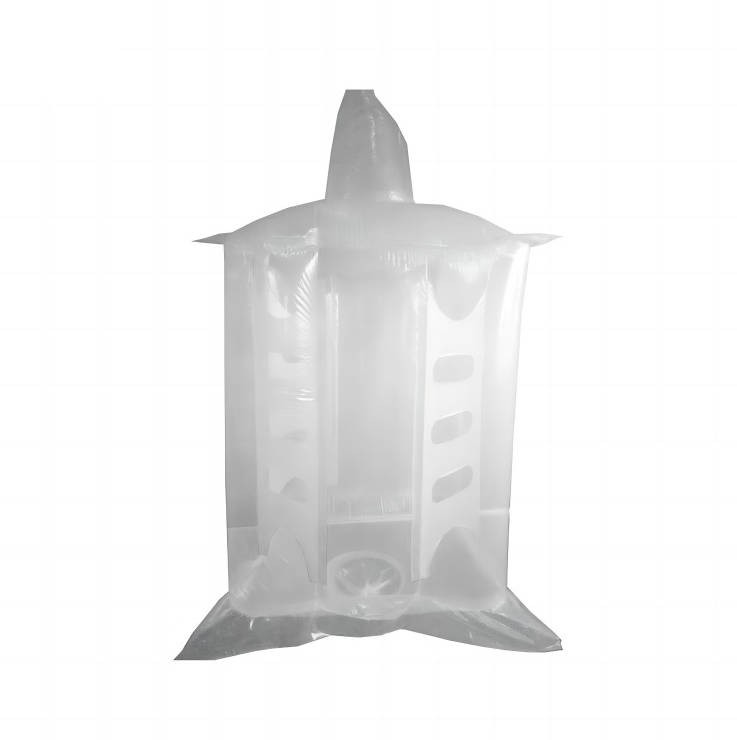
| Selection point | Standard lay-flat liner | Form-fit liner |
|---|---|---|
| Main structure | Simple tube or loose internal liner | Shaped to follow the outer bag and its openings |
| Internal folds | Excess film may form folds or collect material | Closer shaping may reduce folds and trapped material |
| Spout connection | Openings and positioning need separate confirmation | Filling and discharge spouts can be designed with the bag |
| Attachment | May be loose or secured | Can be designed with tabs, glue points or other fixing arrangements |
| Best starting point | Straightforward process and a proven existing specification | More complex bag geometry, cleaner discharge or closer interface control |
| Main risk | Assuming a simple tube will stay aligned | Assuming a shaped liner removes the need for measurement and trials |
Use the existing FIBC liner selection guide for a broader comparison of standard and form-fit structures. The rest of this guide focuses on the measurements that should support that decision.
When a standard liner may be enough
A standard liner may be worth evaluating when:
- the bag and filling process are straightforward;
- the current liner stays in place and closes reliably;
- the outlet is accessible and discharges acceptably;
- the product and operating conditions are already proven; and
- a change in geometry would not solve a defined problem.
If an existing standard liner works, a more complex liner may add cost without a measurable benefit. The buyer should first identify the failure or requirement that the new design is meant to address.
When form-fit deserves evaluation
A form-fit design may be relevant when:
- the bag has corners, baffles or an internal shape that a simple tube does not follow;
- the liner moves or folds during filling;
- product remains trapped in folds or corners;
- the liner opening must align closely with the outer filling or discharge spout;
- the line needs a more repeatable liner position; or
- the product is high value and residue or contamination is a serious concern.
The form-fit FIBC liner product page shows the bag styles and custom features that need to be discussed. Buyers should still request a drawing and sample based on their own bag, product and equipment.
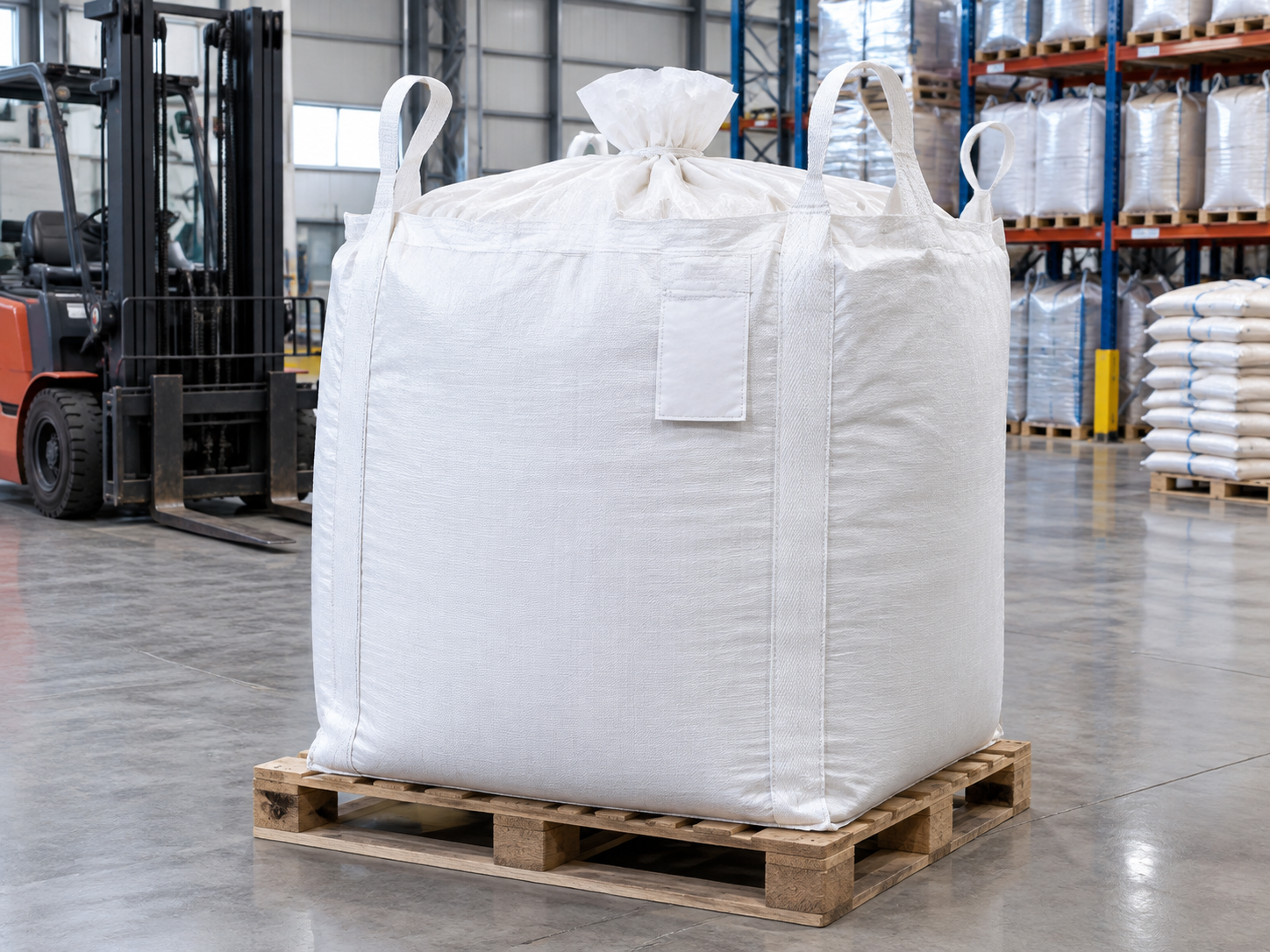
Decide how the liner will be attached
Liner attachment is not a minor accessory. It affects how the liner opens, stays in place and is released during discharge.
FIBCA distinguishes between a loose liner and a secured liner. A secured liner may use ties, tabs, glue or an equivalent method. Possible fixing arrangements can include top attachment, corner fixing, tabs or glue points. The supplier should state which arrangement is proposed and where each fixing point sits.
Ask these questions:
- Is the liner supplied loose, or is it fixed to the bag?
- How many fixing points are used, and where are they?
- Are the fixing points compatible with the filling and discharge method?
- Can the liner be inspected and positioned before filling?
- Does the attachment method affect closure, cleaning or product contact?
- What happens to the fixing points when the liner is emptied?
- If the bag or liner material changes, must the fixing method be reviewed again?
The buyer should not add an adhesive, cut a new opening or modify the fixing arrangement without the supplier’s approval. A small change can alter the liner’s position under load and invalidate the approved sample.
Match the liner to the product and process
Dimensions define where the liner sits, but they do not define whether the film is suitable. The RFQ should also record the product and operating conditions that affect liner design.
Useful information includes:
- product name and material form;
- bulk density and target fill weight;
- particle size or granule size, where relevant;
- whether the product is free-flowing, cohesive or prone to caking;
- moisture sensitivity;
- temperature during filling and storage;
- expected transport and storage duration;
- whether the liner needs a barrier film, PE, EVOH or aluminum foil composite;
- any anti-static, food-contact or other qualification requirement; and
- any known interaction between the product and the liner material.
These details do not automatically determine a film type. They help the supplier and buyer define what the liner must do and what evidence or trial is needed. A high-barrier film, for example, does not correct a liner that is too short, poorly aligned with the outlet or incompatible with the filling equipment.
Put the fit details on an approval drawing
An approval drawing turns a conversation into a reviewable specification. FIBCA defines an approval drawing as a drawing supplied before production for the customer’s review and approval. The drawing should be specific to the project, not a generic catalogue illustration.
At a minimum, the drawing should show or state:
- the outer bag type and construction;
- bag dimensions and agreed tolerances;
- baffle or internal-panel geometry where relevant;
- top opening, filling spout or duffle details;
- bottom opening or discharge spout details;
- liner body shape and finished dimensions;
- liner material and film structure;
- liner top and bottom openings;
- liner spout dimensions and closures;
- liner fixing points and attachment method;
- the relationship between liner openings and outer-bag openings;
- the units used for every dimension;
- the drawing revision; and
- the sample or product reference used for approval.
The buyer should compare the drawing with the actual bag, not only with the original enquiry. If the drawing is based on an assumed bag or an old catalogue size, ask for it to be corrected before sampling.
Check the sample under realistic conditions
An empty visual check is not enough. The sample should be checked as a complete bag-and-liner system using the intended product and equipment, under an agreed and safe procedure.
A practical trial can include:
- Empty fit check: confirm the liner can be inserted, positioned and fixed without twisting, stretching or blocking the openings.
- Filling check: confirm the liner opens as intended, remains in position and can be connected to the filling equipment.
- Closure check: confirm the liner and outer-bag closures can be operated in the available space.
- Filled inspection: check the bag shape, liner position, folds, excess film and access to the outlet.
- Handling check: observe the bag through the approved lifting and movement procedure without treating the trial as a substitute for design certification.
- Discharge check: confirm the liner outlet connects to the receiving equipment, remains secure and allows the product to leave as intended.
- Completion check: inspect residual material, liner condition and the effort required to finish discharge.
Record the material batch, bag and liner sample references, equipment used, trial date, observations and acceptance criteria. Photograph the filled bag, liner opening, outlet connection and discharge result. If the bag, liner material, spout, attachment or receiving equipment changes, decide whether the trial must be repeated.
A filling or discharge trial does not by itself prove safe working load, transport performance, barrier performance or compliance with a product-contact standard. Those claims require the appropriate design verification, test reports and qualified review.
RFQ checklist for a standard or form-fit liner
Use this checklist when requesting a quotation or technical review.
| Information to provide | What the supplier needs to know |
|---|---|
| Outer FIBC | Bag type, construction, dimensions, drawing and revision |
| Bag features | Baffles, internal panels, coating, attachments and special fittings |
| Filling interface | Open top, spout or duffle; spout diameter and length; equipment connection |
| Discharge interface | Flat, spout, conical or full-open outlet; diameter, length and closure |
| Equipment | Photos or sketch of filling and discharge stations, clamps and receiving arrangement |
| Liner structure | Standard lay-flat or form-fit; top and bottom openings; spout requirements |
| Liner material | PE, EVOH, aluminum foil composite or another required structure |
| Attachment | Loose, ties, tabs, glue points, corner fixing or top attachment |
| Product | Material, bulk density, fill weight, flow behaviour, moisture and temperature |
| Quality requirements | Barrier, food-contact, anti-static or other project-specific needs |
| Trial plan | Representative material, equipment, acceptance criteria and responsible reviewer |
| Commercial data | Quantity, destination, required date and requested documents |
The buyer should ask the supplier to identify any missing information before quoting. A quotation based on “standard 1,000 kg” or “form-fit liner” alone is not a complete technical specification.
Common specification gaps
Several recurring gaps can make two seemingly similar liner quotations difficult to compare:
- The liner is described only by bag load, not by bag drawing or internal geometry.
- The outer filling spout and liner spout are listed without confirming how they fit together.
- The discharge outlet is described as “standard” without diameter, length or closure details.
- The liner is assumed to be loose when the process requires a secured liner, or vice versa.
- The bag has baffles or internal features that are absent from the liner drawing.
- The filling or discharge equipment is not shown to the liner supplier.
- The sample is checked empty but not with representative product and equipment.
- The buyer changes bag supplier, film structure or attachment without reviewing the approved drawing.
Resolving these points before ordering is usually more effective than trying to correct a fit problem after production. The FIBC World news index includes a separate guide on FIBC liner discharge problems, which explains how to record symptoms when a liner already moves, blocks the outlet or retains powder. This guide is intended to prevent those questions from being left undefined in the first place.
What to send for a technical review
For a meaningful liner recommendation, send:
- the outer-bag drawing or photographs with dimensions;
- the current liner photograph or sample reference;
- the product name and target fill weight;
- the filling equipment connection;
- the discharge equipment connection;
- any known liner movement, folding, leakage or residue problem;
- the required protection or barrier requirement; and
- the country, quantity and target delivery date.
If a drawing is incomplete, list the missing measurements rather than estimating them. The supplier should confirm which dimensions are critical and which can be checked on a sample.
Conclusion
The right liner is not selected from a bag load rating or a single product name. It is defined by the outer bag’s internal geometry, the filling and discharge interfaces, the attachment arrangement, the product behavior and a controlled sample trial.
Standard lay-flat liners can be appropriate for straightforward applications. Form-fit liners may offer closer control when folds, corners, spouts or residual material are important. In either case, the buyer should approve a project drawing and test the complete system before production.
To review a standard or form-fit FIBC liner for your bag and equipment, send your bag drawing, liner requirements, product details and photographs of the filling and discharge stations to FIBC World. If a barrier structure is being considered, review the aluminum foil FIBC liner options separately from the fit requirements.
Related News
Other news you might be interested in

FIBC Bag Handling and Safety: Best Practices for Safe Use
Proper FIBC handling is closely connected with operator safety, bag integrity and efficient bulk-material movement. An FIBC is a system of components rather than simply a woven fabric container. Lifting loops or sleeves, seams, fabric, closures, filling arrangements, discharge components and, where applicable, liners all contribute to how the bag performs during use.

Recyclable FIBC: Mono-material PP, with liner and ventilated type
When a buyer asks, "Is this FIBC recyclable?", the answer depends on which part of the bag is being discussed, where it will be used and what recycling route is actually available. A woven PP bag with a PE liner, a paper label, a polyester thread and a foil barrier is not the same product as a predominantly mono-material PP bag. Even a mono-material bag is not automatically recycled at scale if collection, cleaning and sorting are missing.This guide separates three questions that are often mixed together: what the bag is made of, what the bag is designed to do, and what evidence supports the claim. It is a buyer checklist, not a legal opinion or a certification statement.
Want to know more?
Get in touch with us for more information about our services and products.