
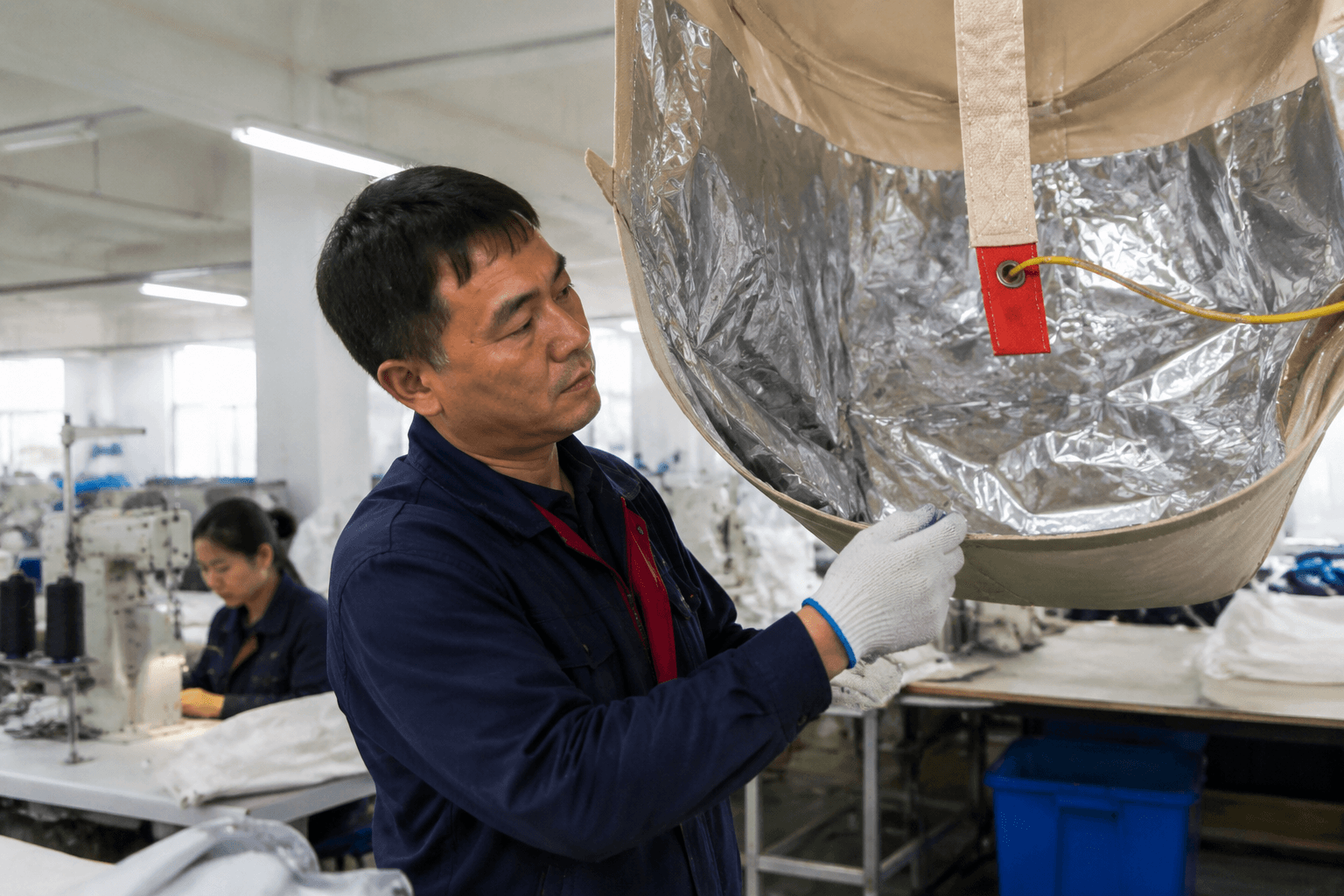
Protect Your Valuable Materials with Advanced FIBC Jumbo Bags: A Buyer's Guide for Moisture-Proof, Anti-Static, and Custom Bulk Packaging

Dayang Yang
AuthorWith experience in FIBC bulk bag manufacturing and export sales, we operate our own production facility with stable large-scale capacity. We are specialists in bulk bags, conductive FIBCs, food-grade FIBCs, UN certified bags, and customized flexible intermediate bulk containers for industrial packaging and bulk material transportation solutions.
The Hidden Costs of Inadequate Bulk Packaging
Many manufacturers in Mumbai and across India search for 'jumbo bag manufacturers near me' only after experiencing product damage or contamination. By then, sensitive powders like lithium battery cathode materials, nylon granules, and chemicals have already been exposed to moisture, oxygen, and light. The result is material spoilage, safety hazards, and reputational damage that no recall can undo. Poor packaging isn't just an inconvenience—it's a direct drain on your bottom line. That's why you need a reliable, factory-direct FIBC supplier that offers customized solutions, not off-the-shelf excuses. Learn more about how custom FIBC bags solve moisture and static challenges before you face the next costly surprise.
What Makes a FIBC Bag Truly Industrial-Grade?
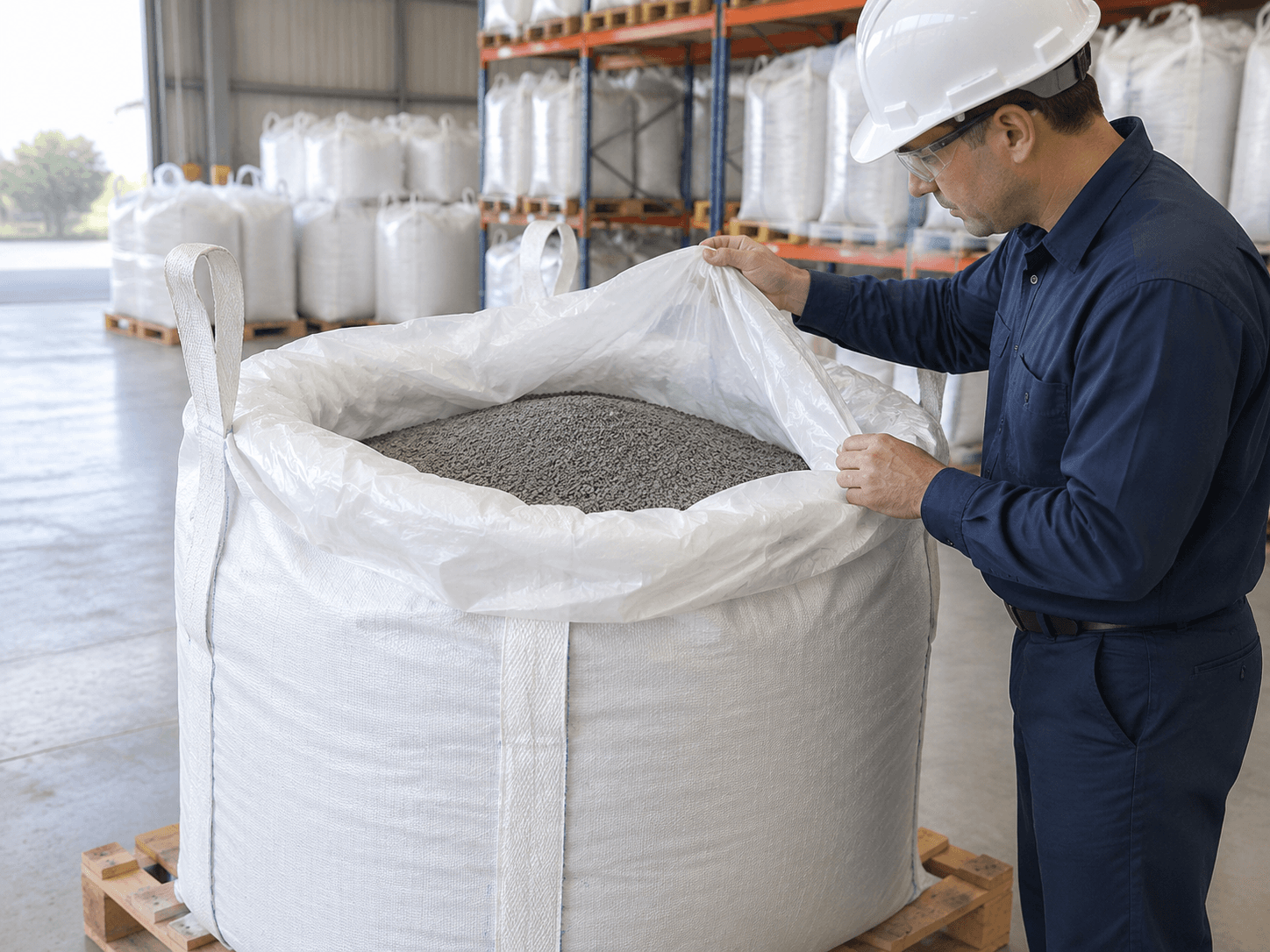
A Flexible Intermediate Bulk Container (FIBC) is more than a large woven sack. Industrial-grade jumbo bags are engineered for specific material vulnerabilities. A standard bag won't protect your lithium battery powder from oxygen degradation or your nylon granules from static discharge. The difference lies in layering: a moisture-proof bulk packaging system might combine a heavy-duty PP container bag with an aluminum foil liner, while anti-static bulk packaging uses conductive threads and grounding tabs. Equally critical are the Safe Working Load (SWL) rating and lifting loop designs. Overhead bulk bag configurations with inner lifting loops or soft pallet lifting slings ensure safe hoisting in high-throughput production lines. When you need to move 1–2 tons of mineral bulk packaging or chemical powder, every stitch and seam must be built for that demand.
Our Range of High-Performance FIBC Jumbo Bags
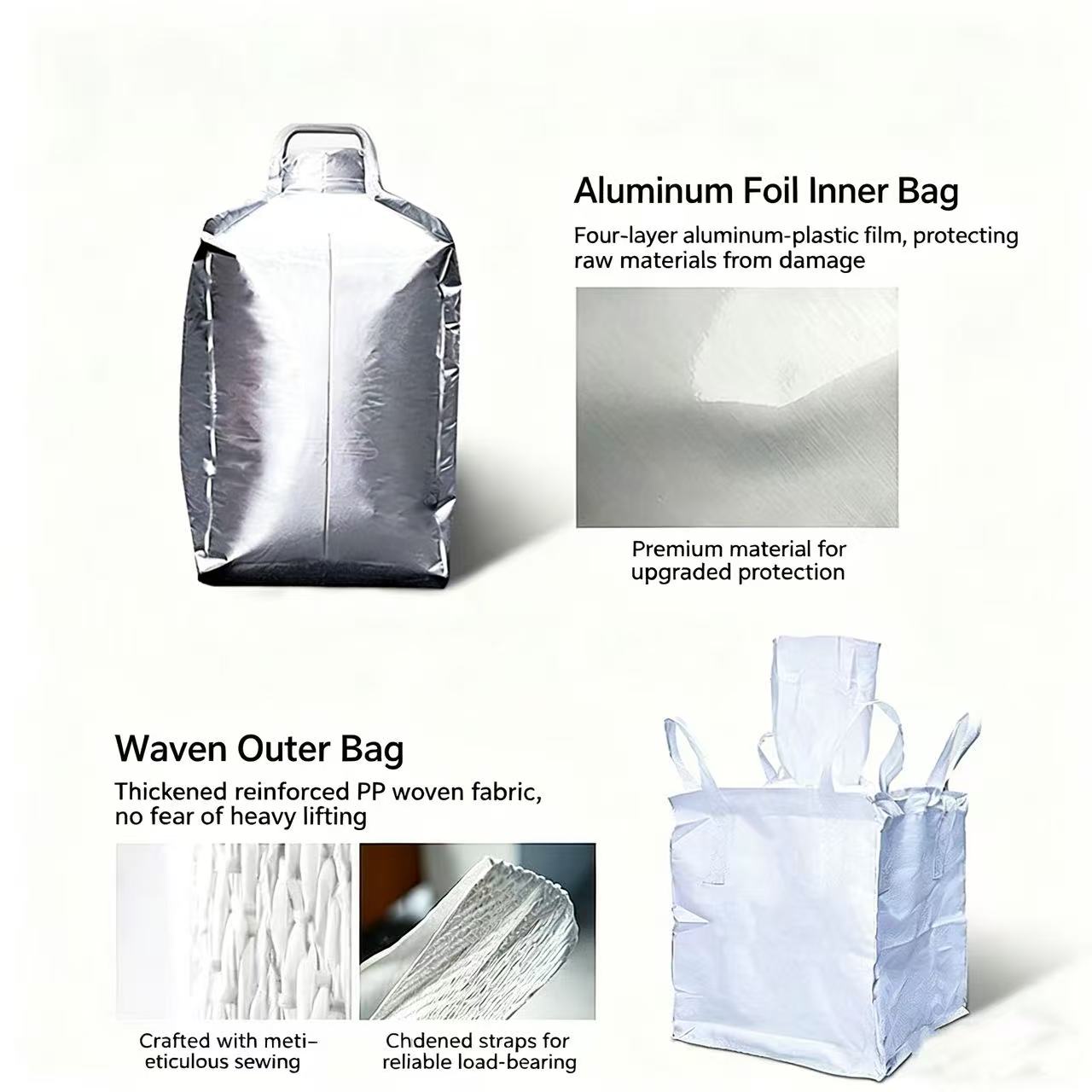
We manufacture FIBC bags that target the precise risks your materials face—moisture, oxygen, light, and mechanical stress. Here are the solutions that our industrial, chemical, and battery clients rely on:
- FIBC Jumbo Bags - Durable Bulk Packaging Solutions: Crafted from brand-new PP woven fabric, these PP FIBC Jumbo Bags handle minerals, chemicals, and industrial goods with a focus on tear resistance and longevity.
- Aluminum Lined FIBC Jumbo Bags for New Energy & Lithium Battery Materials: This design marries an aluminium foil liner with a robust PP outer, creating an oxygen barrier bulk bag that also dissipates static. Ideal for lithium battery cathode material packaging where purity is non-negotiable.
- Light-Proof FIBC for Lithium Powder - Anti-Moisture & Oxygen Barrier: Our Light-Proof FIBC for Lithium Powder uses a double-layer aluminum-plastic inner bag and a UV-resistant woven outer bag to keep high-value powders dry and photo-stable.
- Lithium Battery Aluminum Foil FIBC Jumbo Bags for Nylon Granules & Flame Retardants: High-strength PP with aluminum foil liner and flame retardant properties. These bulk bags are also used frequently for nylon granules packaging where moisture absorption causes molding defects.
- New PP FIBC Bags with Lifting Loops | Yellow Industrial Feed Bags 1-2 Ton: Made with Korean high-quality PP, a cross reinforced jumbo bag bottom, and 4 widened lifting straps, these feed bulk bags and mineral carriers are built to hoist without fail.
Technical Specifications That Matter
When you request a quote, you'll specify more than just length and width. Our team guides you through the selections that determine real-world performance:
- Fabric weight: 80–200 gsm PP woven bulk bags match your load requirements, from lightweight plastic pellet packaging to dense mineral ore.
- Lifting configurations: Choose from standard loops, overhead bulk bag designs with inner lifting loops, soft pallet lifting slings for automated handling, or a forklift bulk bag with tubular lifting sleeves.
- Bottom styles: A cross-reinforced bottom adds discharge stability; a spout bottom with optional cord-lock enables controlled emptying.
- Liners and forming: For anti-oxidation packaging, we integrate an aluminum foil liner bulk bag or a formed inner belly bag that hugs the outer walls, preventing oxygen ingress and light exposure.
Real-World Success Stories: How Our Clients Solved Their Packaging Problems
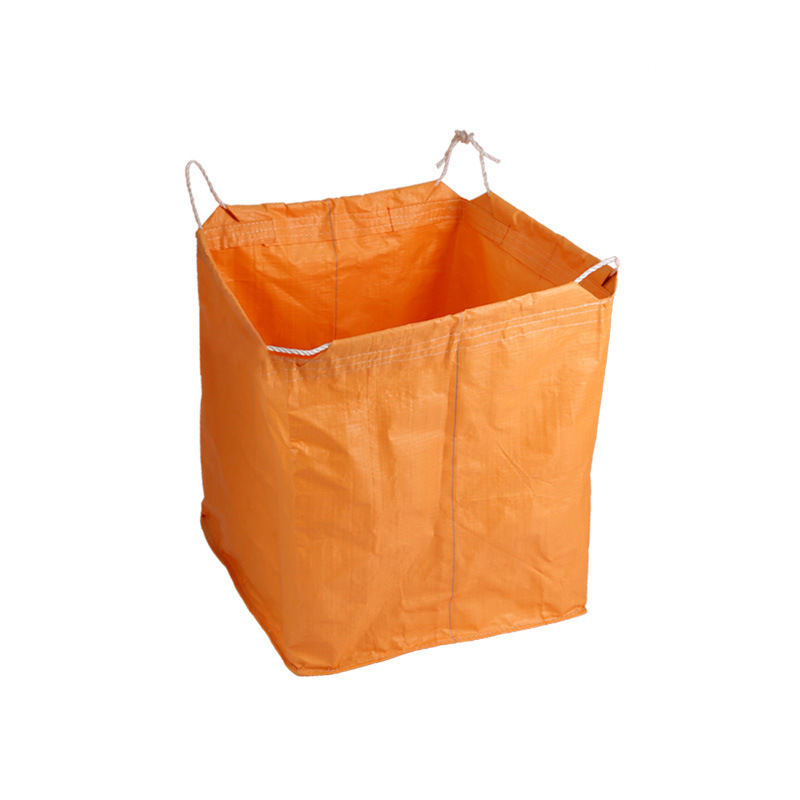
A lithium battery manufacturer switched to our aluminum lined FIBC and cut material spoilage by 30% in the first quarter, simply because the oxygen barrier and anti-static properties kept cathode powders stable. A chemical powder exporter eliminated customer complaints about clumping by upgrading to our moisture-proof bulk packaging with an integrated aluminum-plastic inner bag. Read how a senior procurement manager at an EU chemical group turned their packaging into a competitive advantage. In construction materials, a supplier moved 2-ton loads with our yellow feed bags and lifting loops, reducing unloading time by 40%. Over 300 clients now rely on our factory-direct FIBC and wholesale support.
Why Choose Our Factory-Direct FIBC Bags?
Sourcing directly from a FIBC manufacturer eliminates the layers of markup that inflate industrial bulk packaging costs. You gain access to customization—sizes, multi-layer liners, printing, and anti-static coatings—without paying a middleman. Our rigorous QC protocols ensure each flexible intermediate bulk container meets the SWL it's rated for, whether you need a heavy-duty PP container bag for abrasive minerals or a light-proof bag for sensitive powders. We keep popular models like our yellow 1–2 ton feed bulk bags in stock and deliver fast across major Indian ports and international freight terminals.
Get the Right Bulk Packaging for Your Materials Today
Don't let inadequate packaging shrink your margins. Whether you're moving lithium battery powder, nylon granules, or industrial minerals, our engineered FIBC bags provide the exact barrier you need—moisture, oxygen, static, or all three. Contact our team for a tailored recommendation and a sample ready to test in your application. Request your consultation and sample today.
Related News
Other news you might be interested in
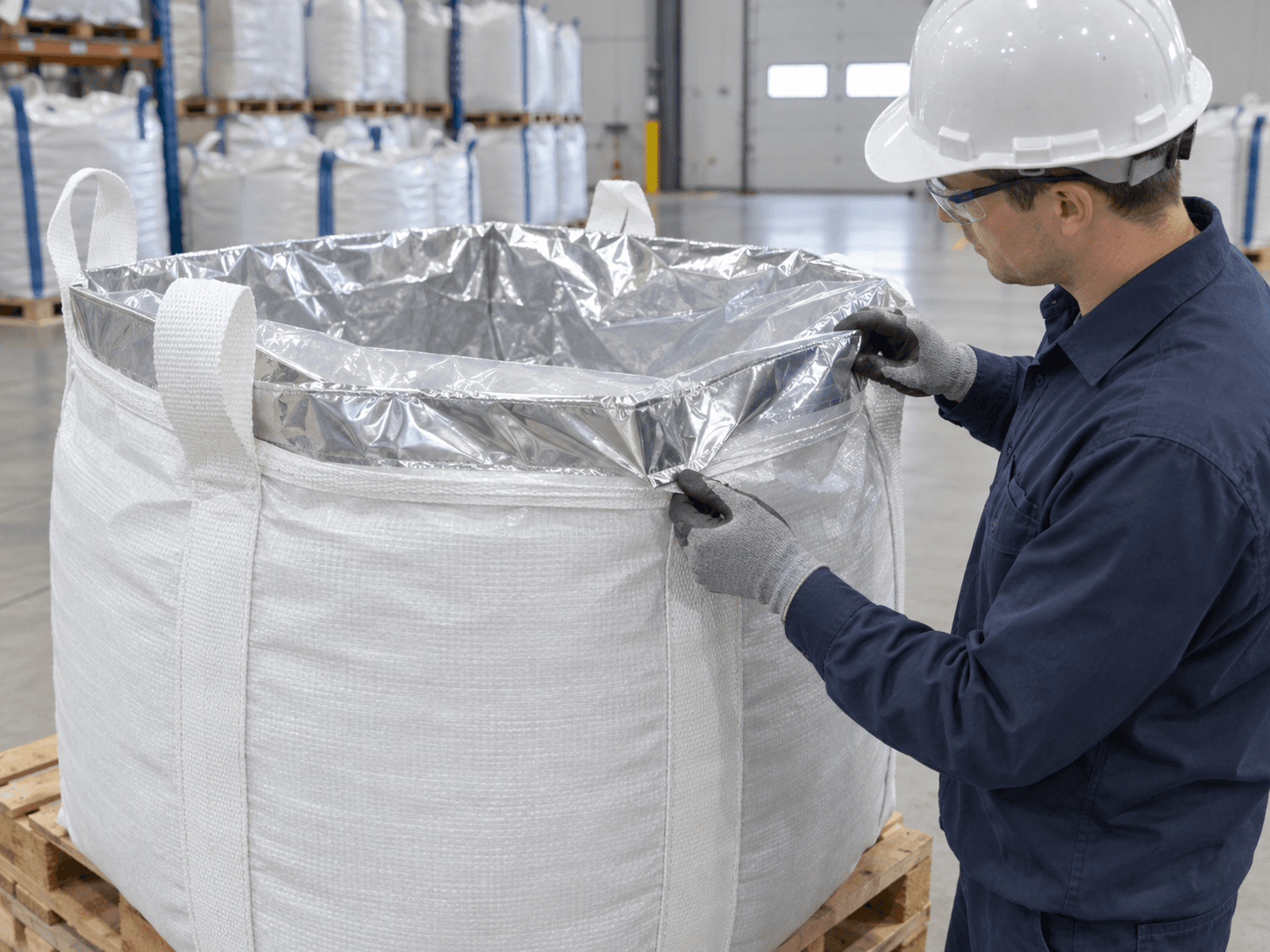
How to Evaluate Aluminum Foil FIBC Liners: Barrier Data, Sealing and Trial Checklist
An aluminum foil FIBC liner can look like a simple upgrade on a quotation. The supplier may describe it as high barrier, moisture proof or oxygen resistant. Those words do not answer the buyer’s real question: will the finished liner protect this product through filling, transport, storage and discharge?That question cannot be settled by the word “foil” or by one impressive barrier number. It requires a review of the complete laminate, the test conditions behind the data, the seams and closure, the sealing process and a representative trial. This checklist is for packaging engineers, procurement teams and quality teams evaluating aluminum foil FIBC liners for moisture-sensitive powders, granules and other dry bulk materials. It explains what to request, how to compare supplier claims and what evidence to keep for repeat orders.
Do Fertilizer Bulk Bags Need Liners? A Buyer’s Checklist for Moisture, Caking and Discharge
Fertilizer bulk bags are often quoted with a liner as though the liner were a standard safety feature. It should not be treated that way. The useful question is not simply “Does a fertilizer bag need a liner?” It is “What protection does this fertilizer need, through this route, in this bag, with this filling and discharge system?”The answer affects more than material cost. A fertilizer bag liner changes how the bag is filled, closed, handled and emptied. It can reduce moisture ingress and dust leakage, but it can also trap air, shift during discharge or create a closure problem if the complete design is not checked.
Want to know more?
Get in touch with us for more information about our services and products.