
UN-Certified FIBC vs Type C/D Anti-Static Bags: What Chemical Buyers Need to Verify

Dayang Yang
AuthorWith experience in FIBC bulk bag manufacturing and export sales, we operate our own production facility with stable large-scale capacity. We are specialists in bulk bags, conductive FIBCs, food-grade FIBCs, UN certified bags, and customized flexible intermediate bulk containers for industrial packaging and bulk material transportation solutions.
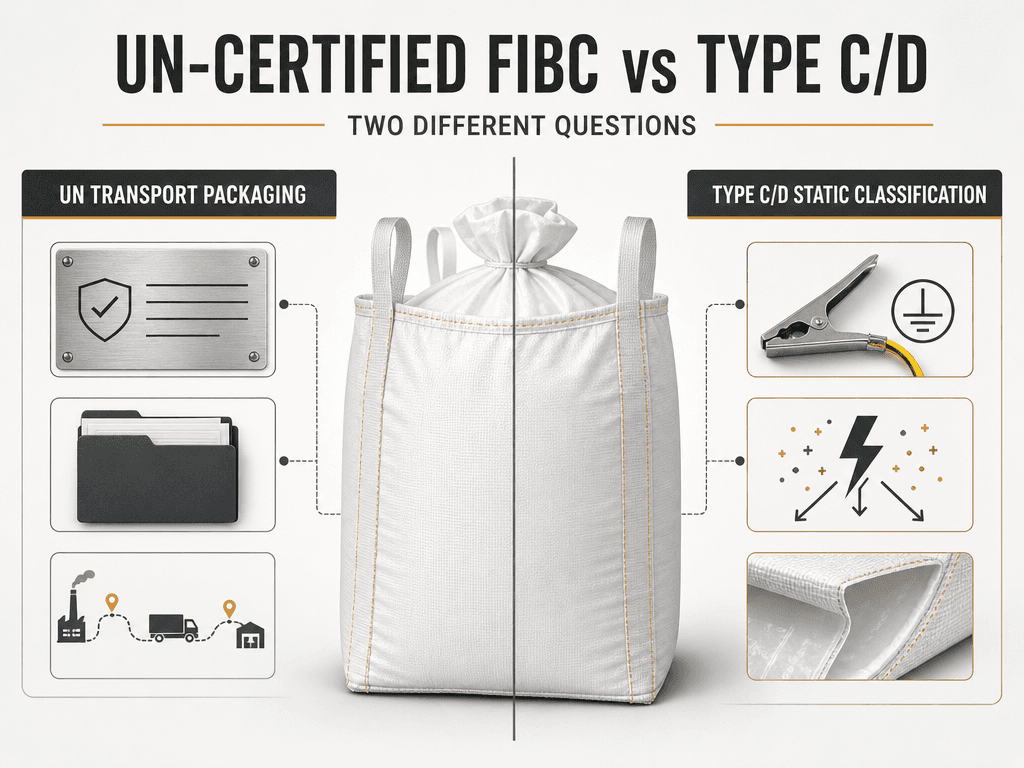
Chemical buyers often see two labels on the same FIBC quotation: "UN certified" and "Type C" or "Type D". They sound like substitute levels for the same thing. They are not.
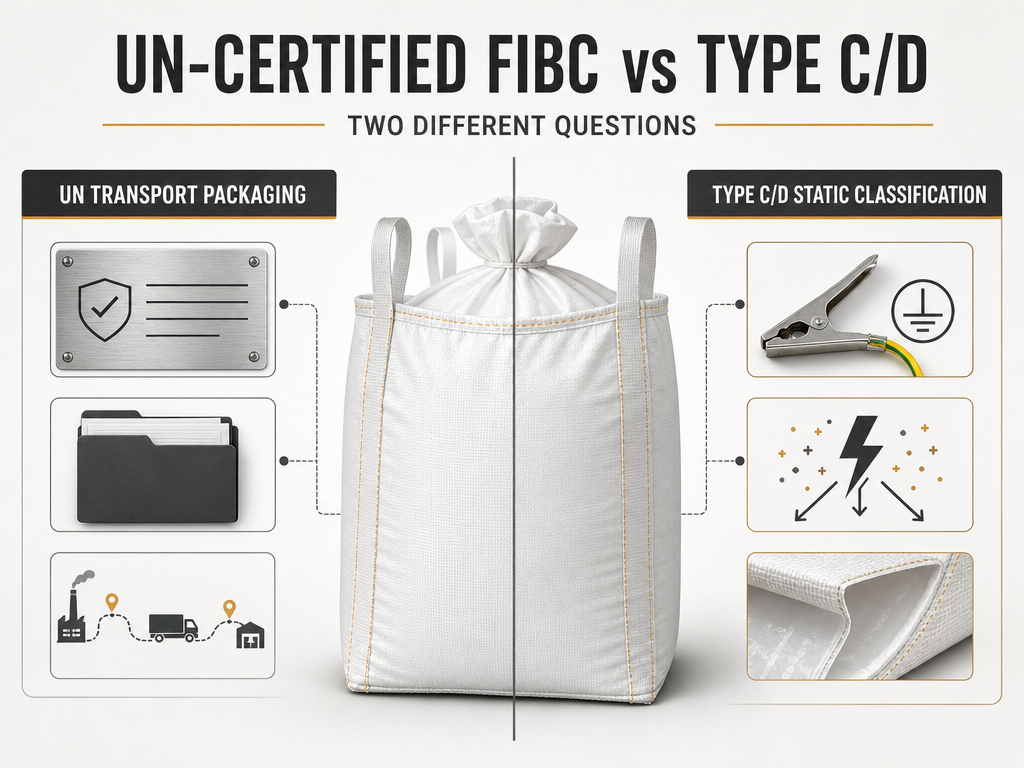
The United Nations logo answers a transportation packaging question: Has this packaging design been tested and labeled with the dangerous goods and transportation conditions it is intended to transport? C-type and D-type answer a different question: how does FIBC behave when static electricity may pose ignition risks in hazardous environments?
The bag may bear the United Nations logo, but it is not suitable for specific combustible dust environments. It can also be designed as Type C or Type D without the need for UN packaging approval. In some chemical applications, both requirements apply, but each requirement must be validated separately.
Simple difference
| Question | UN-certified / UN-marked FIBC | Type C/D anti-static FIBC |
|---|---|---|
| What does it address? | Transport of dangerous goods in the applicable packaging regulations | Electrostatic behaviour in a potentially explosive atmosphere |
| What is the evidence? | UN packaging mark, design-type test report or certificate, and the marked specification | IEC 61340-4-4 classification, test/assessment evidence and use instructions |
| What is it specific to? | The tested packaging design, packaging code, gross mass and applicable conditions | The FIBC construction, inner liner and defined operating conditions |
| What does it not prove? | That the bag is suitable for every chemical, every liner or every static hazard | That the bag has a UN packaging approval |
| Typical buyer mistake | Treating a UN mark as a “chemical safety certificate” | Treating Type C or D as a substitute for UN transport compliance |
The two systems can overlap, but they are not interchangeable.
What does the "FIBC certified by the United Nations" on the bag mean
In the market, buyers often say 'FIBC certified by the United Nations'. On the product, the actual evidence is the United Nations packaging logo and the design type documents behind it.
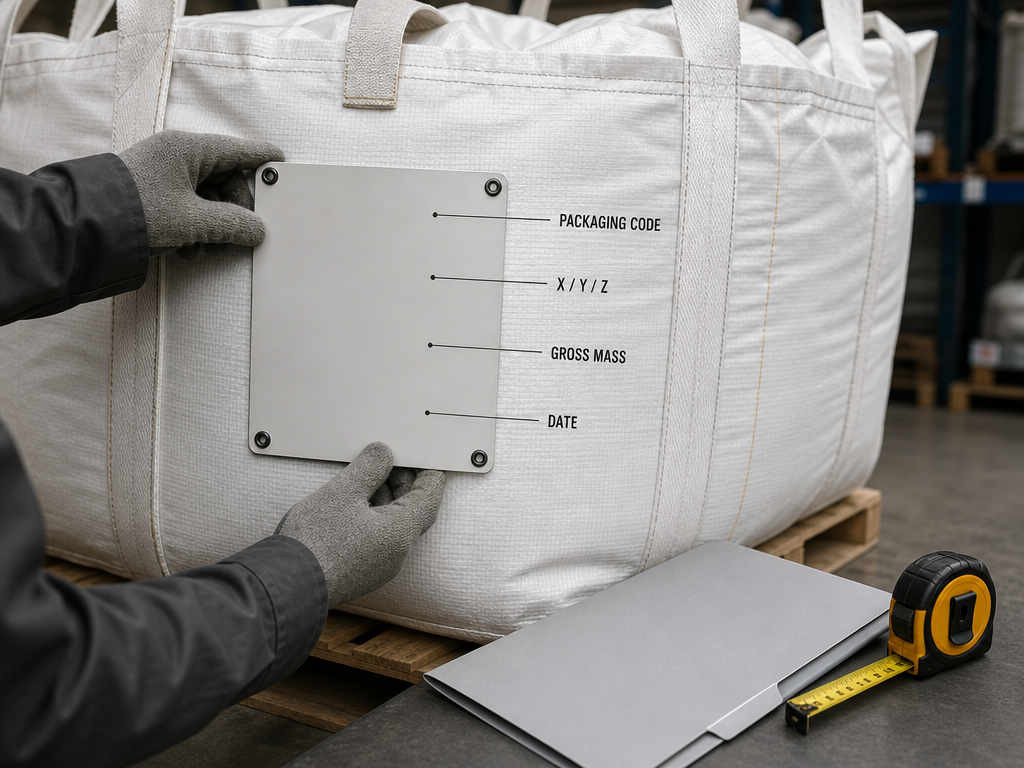
For FIBC used for dangerous goods, markings may include:
United Nations packaging logo;
Packaging code, such as 13H1, 13H2, 13H3, or 13H4;
Display uppercase letters for packaging group range: X, Y, or Z;
Month and year of manufacture;
The state that authorizes the trademark;
Manufacturer's name or symbol and other identification;
Stacking test load, or "0", if not designed for stacking;
Maximum allowable total mass.
The code describes the packaging configuration:
| Code | Meaning |
|---|---|
| 13H1 | FIBC, uncoated, no liner |
| 13H2 | FIBC, coated, no liner |
| 13H3 | FIBC, uncoated, with liner |
| 13H4 | FIBC, coated, with liner |
According to the FIBCA marking guidelines, X covers packaging categories I, II, and III for solid IBCs, while Y covers packaging categories II and III; Z only covers packaging category III. The applicable transportation regulations still apply to shipping.
The letters X/Y/Z are equally important. It represents the approved packaging category range for the design type. The markings covering narrower packaging groups will not automatically apply to more dangerous packaging groups.
The United Nations emblem is specific, not universal
This logo belongs to a tested packaging design and its intended use. Before accepting the quotation, please confirm that the certificate or test document covers the actual luggage you purchased, including:
The size and structure of the bag;
Fabric, coating, and lining configuration;
Filling and emission arrangements;
Enclosed components and any assembly parts that affect the design;
Maximum total mass;
Stacking requirements;
The packaging code and packaging group letter on the label.
If there are changes in lining, coating, size, closure, or structure, please inquire whether the changes affect the test design and whether the document is still applicable. Don't think that a bag's certificate will automatically cover different specifications.
The UN logo itself cannot approve the chemical, nor can it determine the correct UN number or packaging category, nor can it replace the shipper's dangerous goods declaration. These are separate classification and shipping decisions.
What do C and D mean
IEC 61340-4-4 is an international standard for FIBC electrostatic classification used in hazardous explosive environments. Its scope includes classification and labeling of fiber-reinforced plastics, classification of liners, testing methods, design and performance requirements, and safety usage information.
The common FIBC descriptions are as follows:
Class A: A standard FIBC that does not specify static control functions for use in hazardous explosive environments.
Class B: Structures with low breakdown voltage, only used when relevant risk assessments indicate suitability.
Type C: A conductive structure that must be properly grounded during use.
D-type: An electrostatic dissipation structure designed for use without the need for a ground connection under the conditions defined for the design.
These are brief descriptions and cannot replace standards or on-site risk assessments. The correct type depends on the material, dust or gas environment, minimum ignition energy, charging and discharging operations, grounding arrangement, and the entire process.
Class C: Grounding is a part of the system
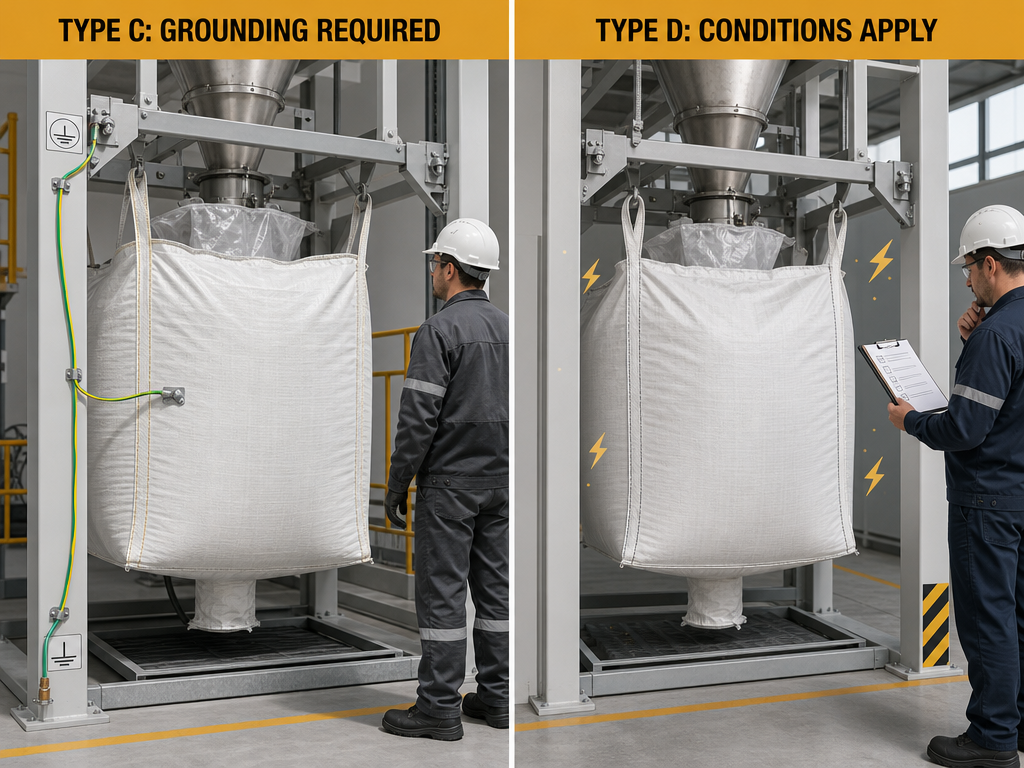
C-type FIBC relies on conductive pathways and a properly functioning grounding connection. Just because a C-type bag is labeled as C-type, it is not "safe". It must be able to connect it correctly on site, maintain the connection during filling and discharging processes, and check for continuity and condition.
Buyers should ask:
Where is the grounding point?
How is the bag connected to the grounding device?
Is the connection maintained throughout the entire filling and discharging process?
Who checks continuity and how often?
Does the pad have compatible static classification?
What happens if the grounding connection is missing, damaged, or painted?
Class D: No grounding connection does not mean there are no conditions
The design purpose of D-type FIBC is to dissipate static electricity without a grounding connection, but they still have clear usage conditions. 'No grounding required' does not mean 'applicable to every combustible dust', 'safe at every filling speed', or 'maintenance free'
Materials, dust clouds, oxygen concentration, filling methods, lining, equipment, and operating procedures remain important. Before handling the D-type bag as the correct solution, please confirm the manufacturer's instructions and on-site risk assessment.
The lining is a part of the static system
FIBC pads do not automatically become neutral in electrostatic assessments. The pad will affect the generation, retention, or dissipation of charges, and its compatibility with FIBC type must be confirmed.
IEC 61340-4-4 includes the classification of lining and addresses the safety issues of FIBC with lining. That's why buyers should not choose a C-type or D-type outer bag and add irrelevant lining without checking the complete layout.
Please confirm with the supplier:
Lining materials and structures;
Is the lining classified for use with the proposed FIBC type;
How to connect or ground the lining (if applicable);
Has the lining changed the filling, discharge, or grounding procedures;
Whether the padding is part of the UN packaging configuration requires the UN logo.
When the United Nations and C/D type may be needed
These two requirements can coexist.
Chemicals may be classified as hazardous materials for transportation, and there is also a risk of combustible dust or flammable atmosphere during filling or discharge. In this case, the buyer may require a packaging design with an appropriate United Nations logo and FIBC structure with appropriate electrostatic classification.
Don't assume that one will automatically provide the other. Individual inquiry:
Does the transportation classification require packaging design marked by the United Nations?
Does on-site risk assessment require specific static FIBC types?
Does the proposed bag, lining, and sealing configuration meet both of these requirements simultaneously?
If both answers are affirmative, the procurement specification should display two sets of requirements and expected evidence for each set of requirements.
Buyer Verification Checklist
Classification of dangerous goods
What are the UN number, correct shipping name, category, and packaging group?
Which transportation method and route are applicable?
Who classified it and what files support it?
Are there any special packaging regulations or requirements from regulatory authorities?
UN Packaging Evidence
What packaging codes and X/Y/Z packaging groups appear on the label?
Does the certificate or design type test report cover actual dimensions, structure, lining, coating, and enclosure?
Does the maximum total mass marked match the expected filling weight?
Is stacking allowed? What is the marked stacking load?
Is the manufacturing date and manufacturer identification clear and distinguishable?
Is the marking clear and durable during use?
Electrostatic requirements
Is the operating area classified as a hazardous explosive environment?
What dust, gases, or vapors are present, and what are the ignition risks?
Do risk assessments require Class C, Class D, or other solutions?
How to maintain and verify grounding for C-type?
What conditions and limitations apply to D-type?
Does the lining have a compatible classification?
Complete packaging system
Are bags, liners, coatings, nozzles, and lids considered as one configuration?
Did the United Nations and static documents reference the same configuration?
Are there any changes between samples, certificates, and production?
What is batch traceability and change control process?
Suppliers should not make decisions for buyers
FIBC suppliers can explain packaging options, labeling, and available documents. It should not be regarded as an authority in the following areas:
UN number, hazard level or packaging category;
Legal classification of chemicals;
Classification of hazardous areas on site;
The adequacy of the grounding system;
Final risk assessment for filling and unloading;
Requirements from the destination country or competent authority.
These decisions belong to the shipper, EHS/process safety team, hazardous materials experts, and, if necessary, to the competent authorities.
Common mistakes
UN certification means anti-static
No. The United Nations logo is used for transportation packaging. It does not establish C-type or D-type behavior.
Class C or D refers to United Nations certification
No. Static classification cannot replace United Nations packaging approval.
D-type is always safer because it does not require grounding
No. The D-type has its unique usage conditions. The correct choice depends on the material, atmosphere, equipment, and risk assessment.
The certificate covers all sizes and linings
Don't think like that. Confirm the exact design, packaging code, lining, sealing, and maximum total mass covered by the document.
Chemical grade bags automatically certified by the United Nations
No. 'Chemical grade' is a broad marketing or application description. It has not established a United Nations logo or electrostatic classification.
Once approved, the regulations will never change
Any changes in the bag, lining, coating, sealing, size or manufacturing process should trigger a review of whether the United Nations and static evidence are still applicable.
Sample and production inspection

Before production, compare the sample with the approved drawings and documents:
The United Nations emblem exists and is clearly recognizable;
The packaging code, X/Y/Z letters, total mass, and stacking information are consistent with the document;
The lining and coating are matched with the testing configuration;
The C-class grounding point or D-class description exists and is easy to understand;
The combination of bag and lining matches the intended use;
Batch identification and production date can be traced;
The filling and emission procedures are consistent with the design.
If the production bag is different from the sample, do not assume that the previous approval covers the changes. Request for a documented review.
Frequently Asked Questions
Is C-type FIBC automatically certified by the United Nations?
No. Class C is classified as static electricity. UN certification involves packaging design for the transportation of dangerous goods. According to the design and intended use of the product, it can have one, two, or neither.
Can FIBC certified by the United Nations be used for combustible dust?
It's not automatic. The United Nations logo does not determine whether a bag has the correct electrostatic behavior in terms of materials, environment, and operating procedures. A separate static risk assessment is required.
Is D always better than C?
No. C-type and D-type solve different operational problems. C-type depends on a reliable grounding connection; D-type design is used for ungrounded use under specified conditions. The correct choice depends on the venue and materials.
Does the lining need to be verified separately?
Yes, the padding is part of the complete packaging system. Confirm its compatibility with FIBC type and whether it is included in UN packaging configuration where applicable.
Request for UN and static review
Send product SDS, UN number, category and packaging group, shipping method and route, expected bag size, lining and closure, filling and discharge methods, on-site atmosphere and grounding arrangements, as well as the documents you have received.
FIBC World can review the requested FIBC configuration and confirm the available construction and document requirements for the project. The final classification of hazardous materials, on-site risk assessment, and approval are still the responsibility of the responsible buyer and qualified technical organization.
Please contact FIBC World for details on your chemicals, transportation, and handling.
Related News
Other news you might be interested in
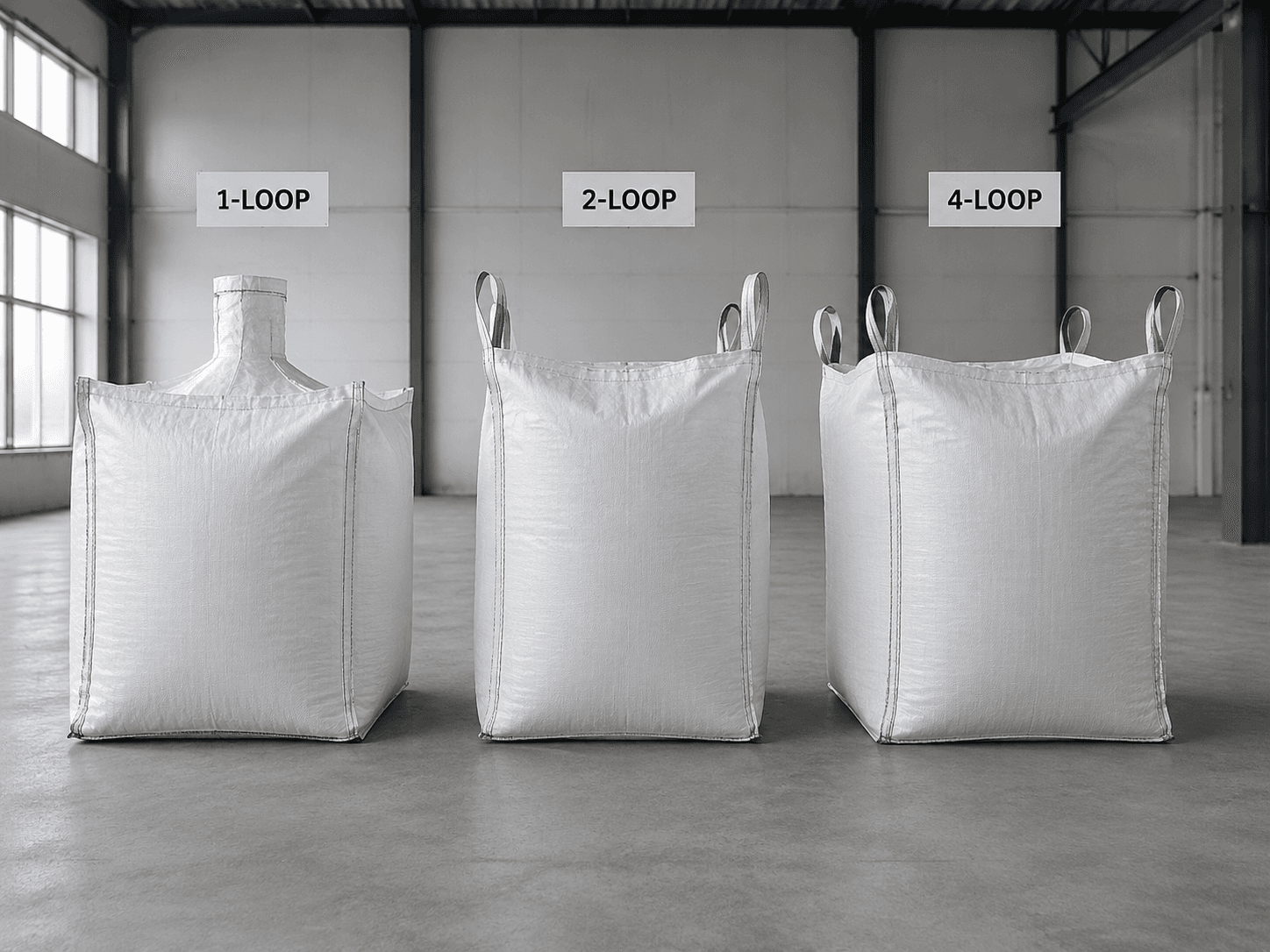
1-Loop, 2-Loop or 4-Loop FIBC: How to Choose Lifting Loops for Your Handling Equipment
The number of lifting loops on an FIBC tells you how the bag is intended to connect to lifting equipment. It does not, by itself, tell you the bag’s capacity or safety level. A one-loop bag, a two-loop bag and a four-loop bag can all be suitable for demanding work—provided the bag design, lifting equipment and operating procedure match.For buyers, the practical question is not “Which loop count is strongest?” It is “How will this bag be lifted, moved, filled and emptied at our site?” This guide explains the common loop configurations, the equipment checks behind each option, and the information to send before requesting a quotation.
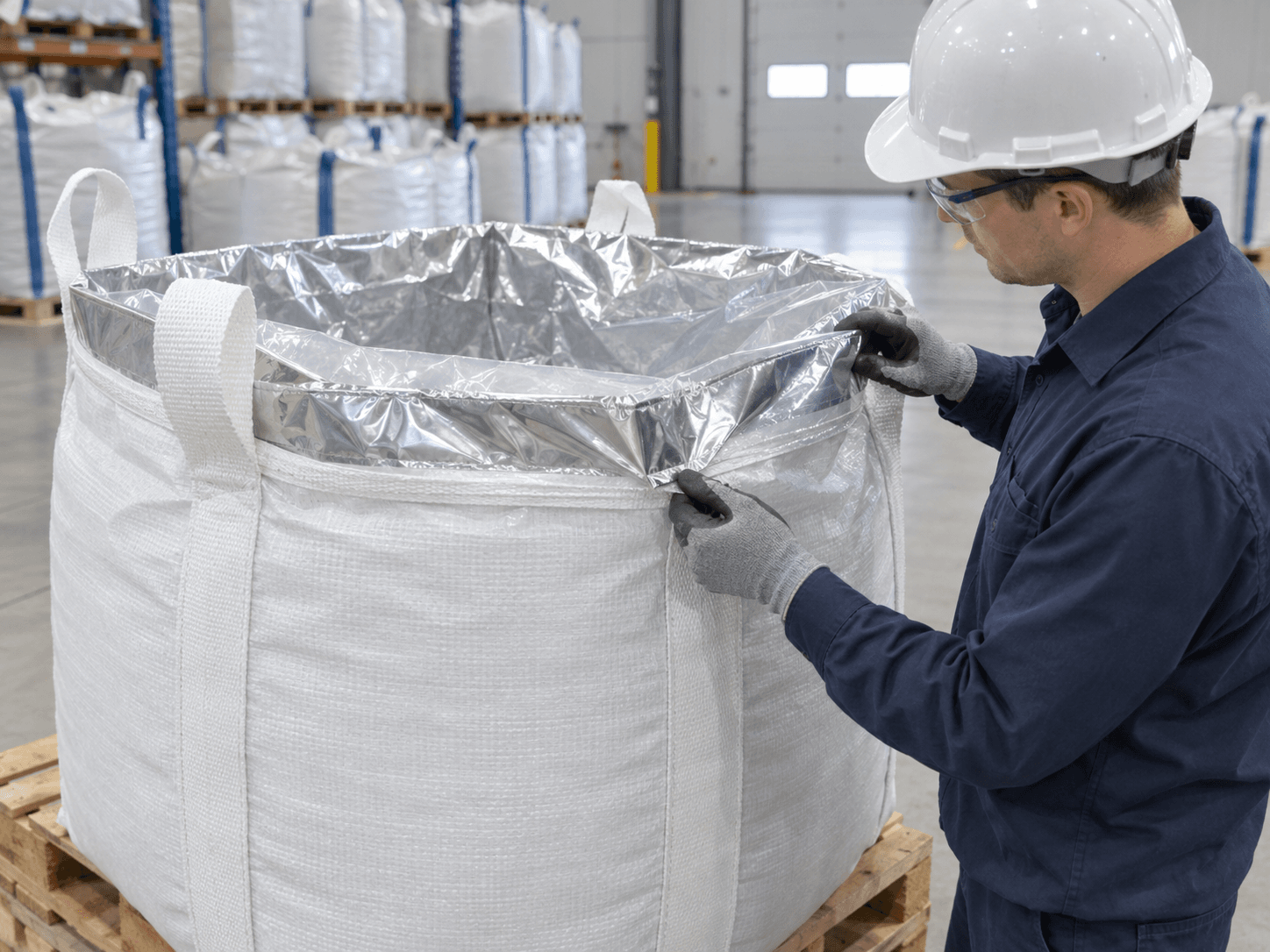
How to Evaluate Aluminum Foil FIBC Liners: Barrier Data, Sealing and Trial Checklist
An aluminum foil FIBC liner can look like a simple upgrade on a quotation. The supplier may describe it as high barrier, moisture proof or oxygen resistant. Those words do not answer the buyer’s real question: will the finished liner protect this product through filling, transport, storage and discharge?That question cannot be settled by the word “foil” or by one impressive barrier number. It requires a review of the complete laminate, the test conditions behind the data, the seams and closure, the sealing process and a representative trial. This checklist is for packaging engineers, procurement teams and quality teams evaluating aluminum foil FIBC liners for moisture-sensitive powders, granules and other dry bulk materials. It explains what to request, how to compare supplier claims and what evidence to keep for repeat orders.
Want to know more?
Get in touch with us for more information about our services and products.