
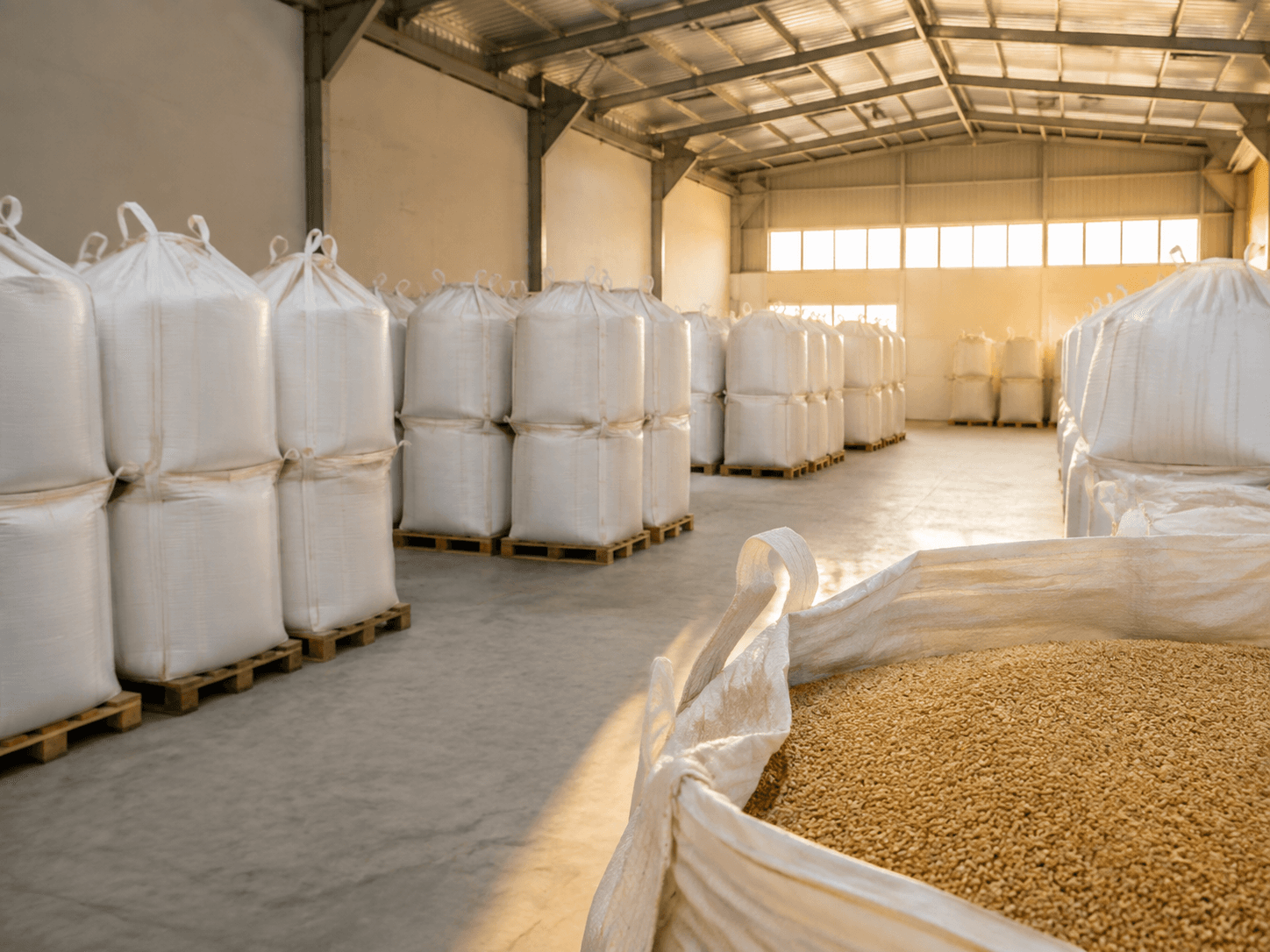
FIBC Bags for Agriculture: Storage and Transportation Solutions for Grains, Seeds, and Fertilisers

Dayang Yang
AuthorWith experience in FIBC bulk bag manufacturing and export sales, we operate our own production facility with stable large-scale capacity. We are specialists in bulk bags, conductive FIBCs, food-grade FIBCs, UN certified bags, and customized flexible intermediate bulk containers for industrial packaging and bulk material transportation solutions.
The efficiency of storage and transportation systems is critical to agriculture. From harvested grains to planting seeds and fertilisers, large volumes of materials move through the agricultural supply chain every day. Proper handling, storage, and transportation are essential for maintaining product quality, reducing losses, and ensuring reliable delivery.
Agricultural products are often exposed to moisture, dust, contamination, and changing environmental conditions. If packaging does not provide adequate protection, products may become damp, clump together, leak, become contaminated, or lose quality. This is why FIBC Bags, also known as Bulk Bags, Jumbo Bags, or Flexible Intermediate Bulk Containers (FIBC), are widely used for large-volume agricultural materials.
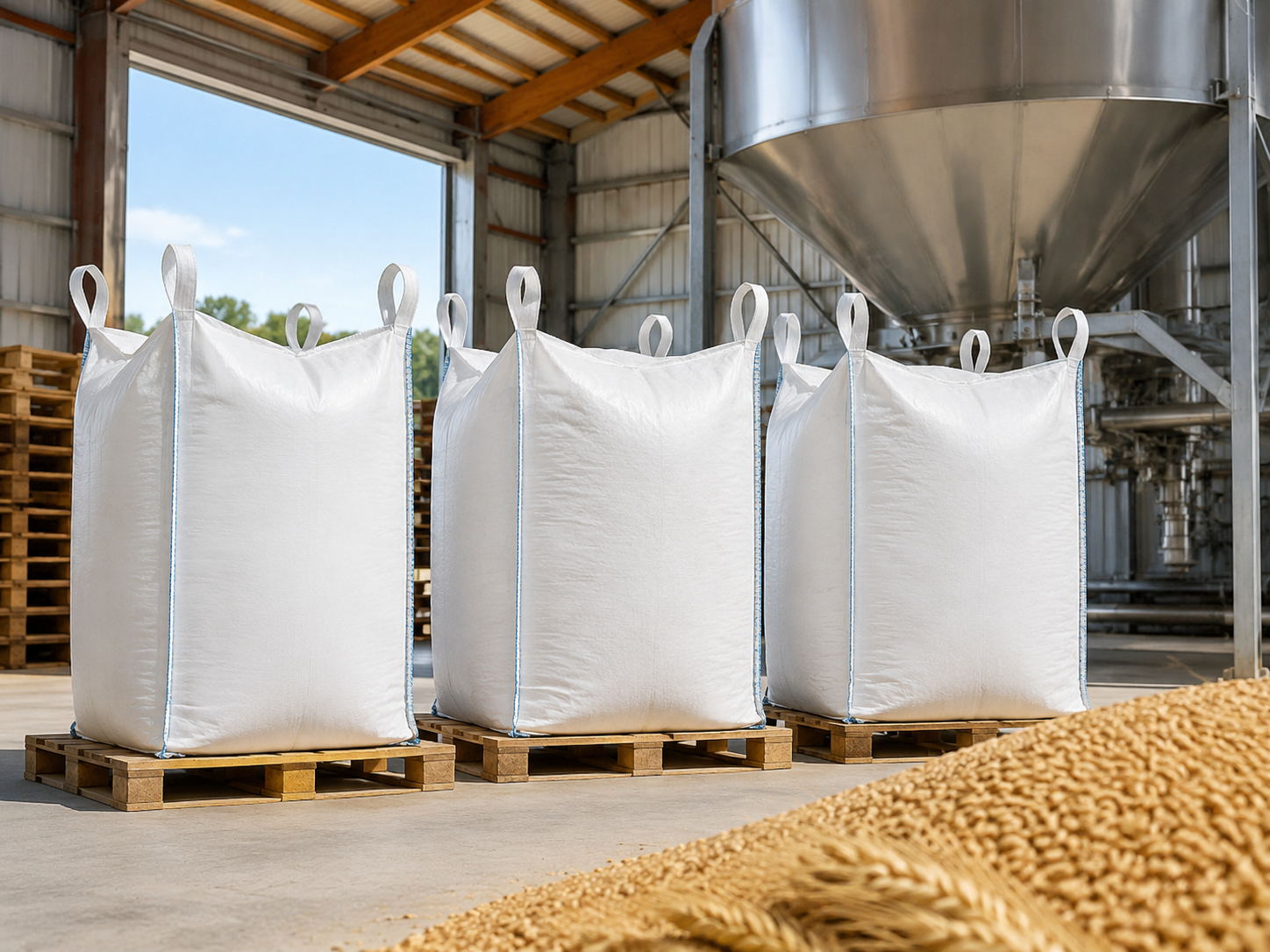
Why FIBC Bags Are Widely Used in Agriculture
Packaging in modern agriculture must be economical while meeting the demands of bulk material handling. FIBC Bags are commonly made from woven polypropylene fabric, providing a practical balance of strength, flexibility, and lightweight construction for grains, seeds, fertilisers, and other dry bulk materials.
Compared with multiple small packages, FIBC Bags can hold a larger quantity of product in a single unit. This reduces the number of individual packages and the frequency of manual handling. For businesses that regularly receive, store, load, and transport bulk products, this can simplify logistics processes and improve warehouse space utilisation.
Value FIBC Bags Bring to the Agricultural Supply Chain
Reduce the number of individual packages needed for bulk materials.
Support warehouse storage, road transportation, port transfers, and internal material handling.
Can be configured with filling spouts, discharge spouts, lifting loops, and FIBC liners.
Help keep loading and unloading areas cleaner while reducing material spillage and dust control issues.
Support seasonal procurement, long-term inventory management, and bulk shipments.
Key Challenges in Storing and Transporting Agricultural Products
Although many agricultural products appear durable, they can still be affected by environmental and handling conditions during storage and transportation. Moisture is one of the most common concerns. For grains and seeds, damp conditions may affect storage quality; for fertilisers, moisture can lead to clumping or affect later use.
Dust, dirt, and foreign particles can affect product cleanliness, especially for seeds and materials that require more controlled storage. Transportation introduces additional risks as well. If the bag structure, lifting method, or loading arrangement is unsuitable, it may result in fabric wear, product shifting, leakage, or lower handling efficiency.
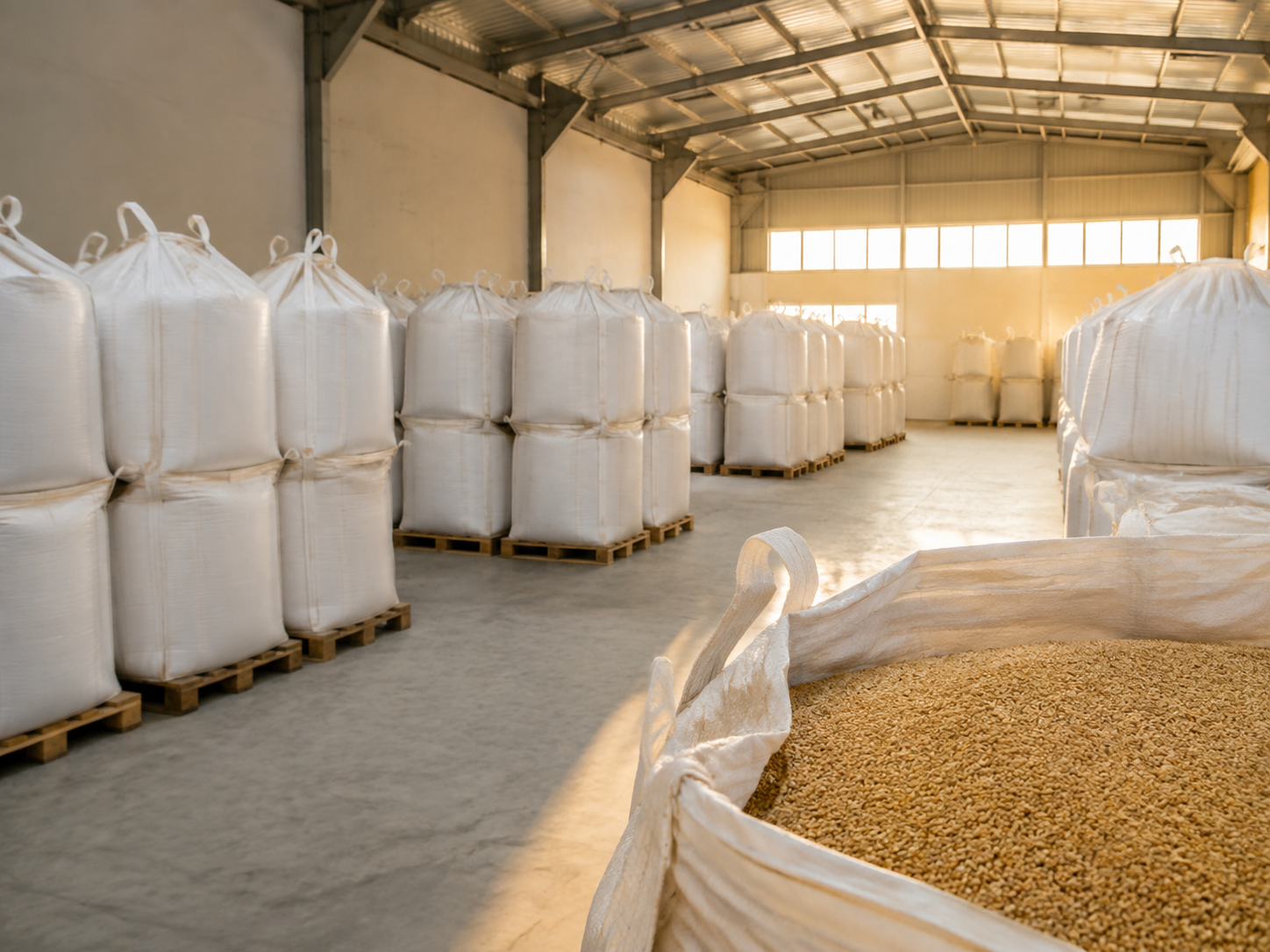
Important Features to Consider in Agricultural FIBC Bags
| Selection Factor | Key Consideration for Agricultural Applications |
|---|---|
| Bag structure | Select an appropriate FIBC Bag style for filling stability, stacking, and handling |
| Safe Working Load (SWL) | Should match the product weight and actual handling method |
| Coating option | Can be selected based on moisture resistance, leakage prevention, and dust control needs |
| FIBC Liners | Suitable for materials requiring improved moisture protection, cleanliness, or product containment |
| Filling and discharge design | Should match filling equipment, discharge method, and material flow characteristics |
| Lifting arrangement | Should suit forklifts, hooks, lifting equipment, and on-site handling practices |
| UV stabilisation | Useful when bags may be exposed to sunlight during outdoor storage or transport |
For fine or dusty materials, the sealing performance of filling spouts and discharge spouts can be particularly important. For products sensitive to moisture, coated bags, FIBC liners, or more suitable storage practices may be considered.
How FIBC Bags Support Grains, Seeds, and Fertilisers
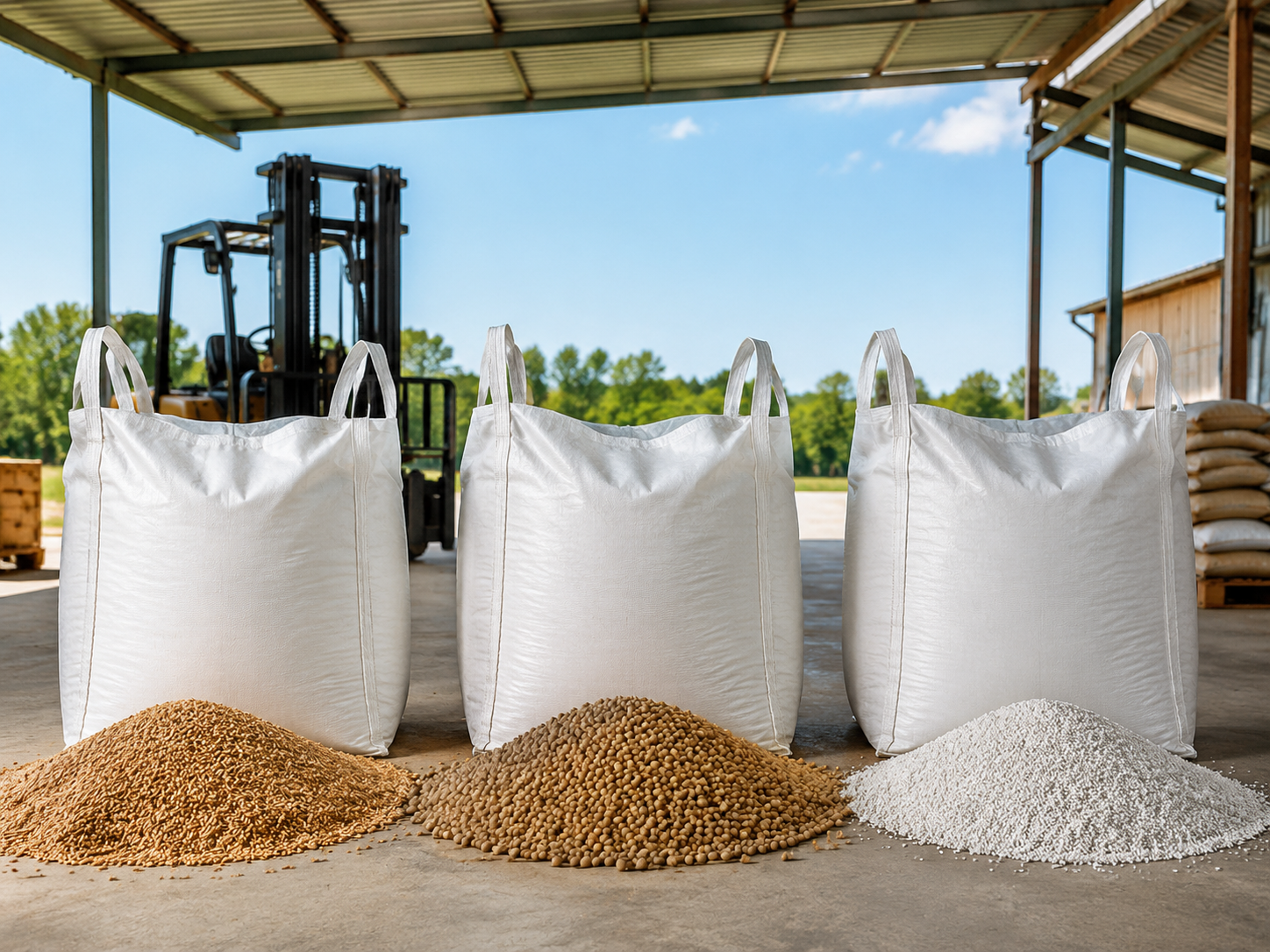
Grains are commonly stored and transported in large volumes. FIBC Bags can reduce the number of individual packages required and support centralised filling, warehouse storage, and shipment. Keeping bags clean and limiting unnecessary environmental exposure can help maintain better storage conditions throughout the supply chain.
Seeds often require a cleaner and more controlled storage environment. A well-designed FIBC Bag can help reduce contact with external contaminants and support the handling of larger seed volumes. For seed products requiring additional protection, FIBC liners, suitable bag-opening designs, and warehouse conditions can be planned as part of the overall packaging solution.
Fertilisers are often vulnerable to moisture and environmental exposure. Selecting suitable bag construction, coating, or liner options can help improve moisture resistance and product containment. The load-bearing strength and lifting flexibility of FIBC Bags also make them suitable for moving heavier fertiliser materials through production, storage, and distribution stages.
Improving Efficiency from Warehouse Storage to Shipment
The value of FIBC Bags depends not only on the bag itself but also on how it is used on site. Warehouse storage areas should remain dry, clean, and well ventilated. Bags should not be left in standing water or in contact with sharp edges and surfaces that may cause abrasion.
When forklifts or lifting equipment are used, operators should ensure that lifting loops and straps, fork spacing, and handling methods are compatible with the bag design. During dispatch and vehicle loading, securing and separation arrangements should be planned according to transport distance, vehicle type, and loading method.
For seasonal purchasing cycles, seasonal demand planning for bulk packaging in agriculture can help businesses align bag availability with harvest, storage, and shipment requirements.
The Role of FIBC Liners and Custom FIBC Solutions in Agriculture
Some agricultural applications require additional protection. FIBC Liners can be placed inside Bulk Bags to form an extra barrier between the product and the external environment. This may help reduce moisture exposure, improve product containment, and support the handling of finer materials.
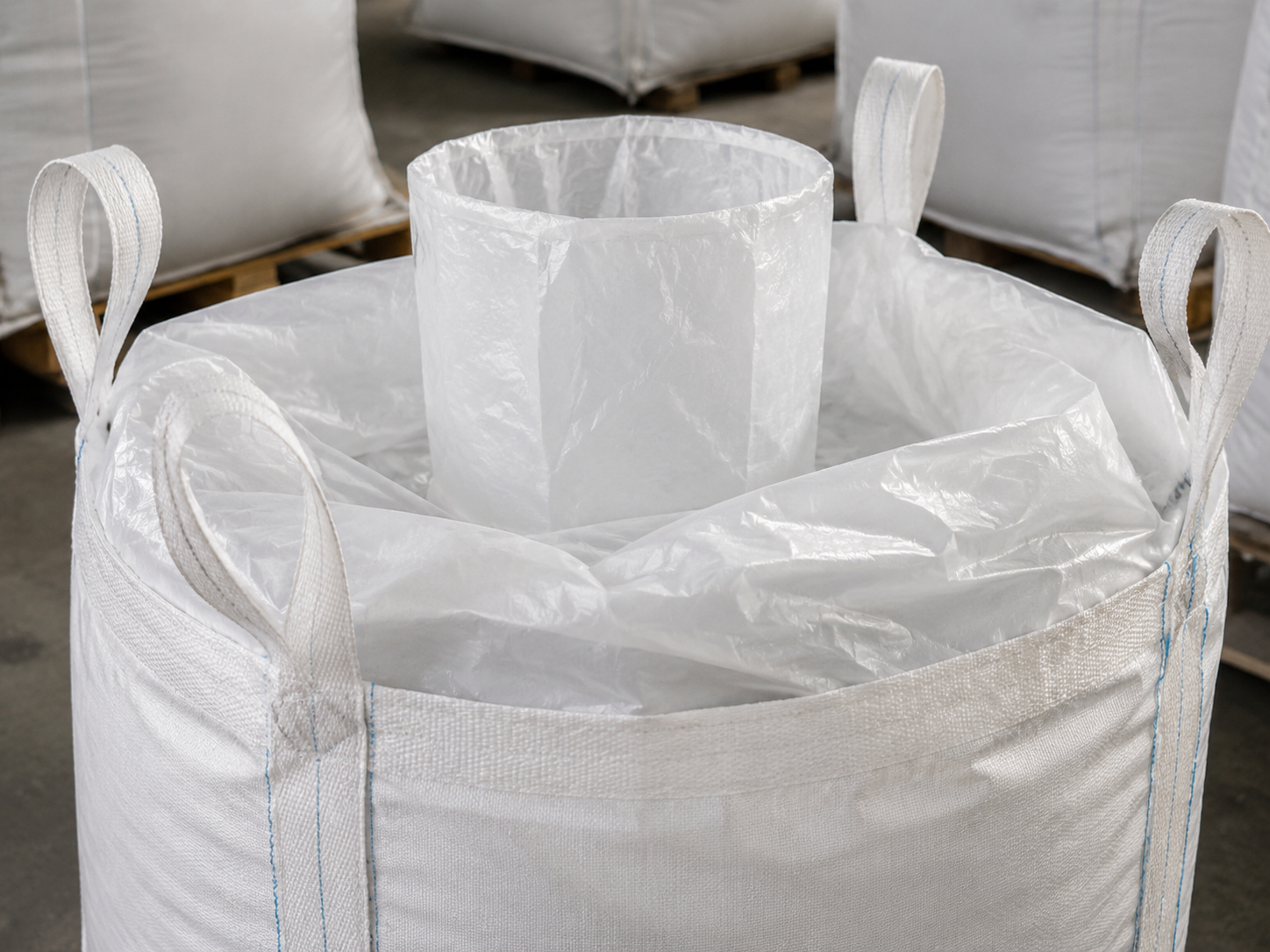
Custom FIBC Solutions are equally important in agricultural packaging. Different products may require specific bag dimensions, filling spouts, discharge spouts, lifting-loop configurations, coated fabric, or liner options. Matching the bag design with on-site equipment, material flow behaviour, and transportation methods can reduce operational obstacles and make filling, handling, and discharge more efficient.
For a more detailed comparison of protection options, see Coated FIBC Bags vs FIBC Liners.
How to Choose the Right FIBC Bag for Agricultural Applications
Before selecting an FIBC Bag, businesses should define the material type, required load per bag, storage duration, warehouse conditions, moisture sensitivity, filling method, discharge method, and available handling equipment.
For products that may be temporarily stored outdoors, UV-stabilised fabric can be evaluated. For materials that require longer storage or are more sensitive to moisture, coated bag and FIBC liner options may deserve closer attention. For powders and fine granules, bag-opening design, discharge method, and dust control requirements should also be considered.
The FIBC Bags guide covering bag types, load capacity, and applications provides additional selection context. Businesses can also request a custom FIBC quotation based on their material, equipment, and transportation requirements.
Frequently Asked Questions About Agricultural FIBC Bags
Are FIBC Bags suitable for long-term storage of agricultural products? Suitability depends on the material, storage environment, bag design, and required protection level. For longer storage periods, particular attention should be given to dry conditions, cleanliness, stacking practices, and moisture-control measures.
Can the same FIBC Bag design be used for grains, seeds, and fertilisers? All three product categories can be handled in FIBC Bags, but requirements for bag construction, coating, FIBC liners, filling and discharge systems, and protection levels may differ.
Does every agricultural FIBC Bag require a liner? No. FIBC Liners are more relevant when additional protection against moisture, contamination, or product leakage is needed.
Conclusion
Protecting agricultural product quality while maintaining efficient storage and transportation requires a reliable packaging solution. FIBC Bags combine strength, flexibility, and bulk material handling efficiency, making them suitable for a wide range of agricultural applications involving grains, seeds, and fertilisers.
By selecting the right bag structure, filling and discharge system, coating or FIBC liner option, and by aligning the packaging solution with warehouse and transportation processes, businesses can improve operational efficiency, reduce material loss, and better protect agricultural products throughout the supply chain. For tailored specifications or pricing, contact FIBC World.
Related News
Other news you might be interested in
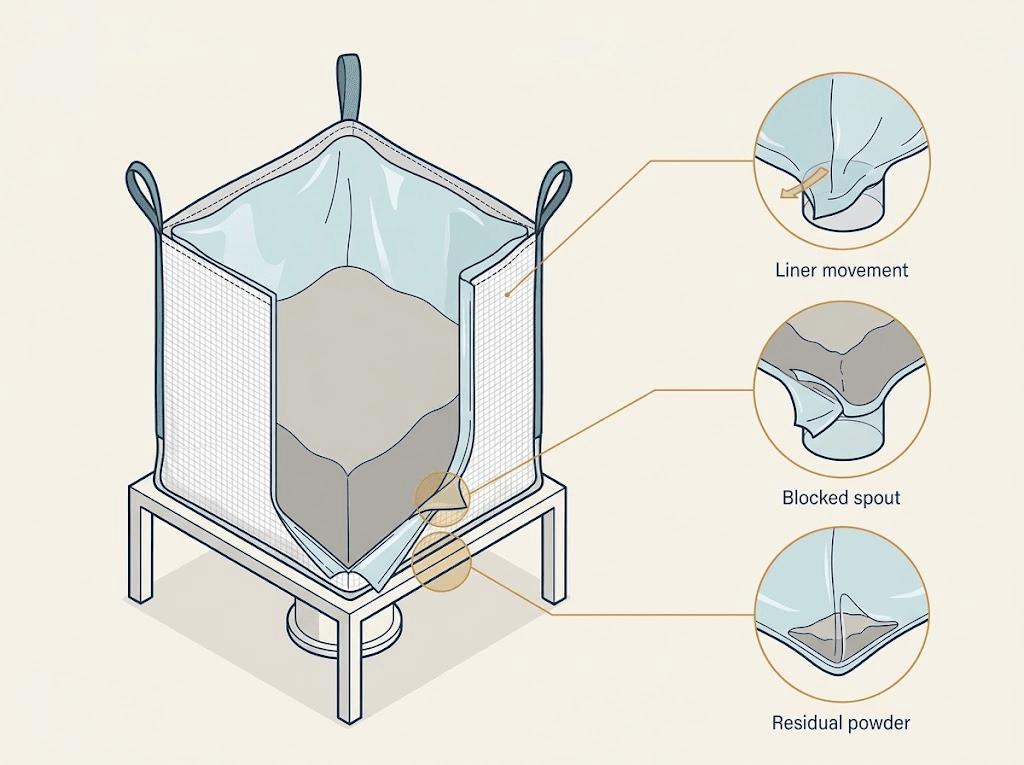
FIBC Liner Discharge Problems: A Buyer’s Checklist for Liner Movement, Blocked Spouts and Residual Powder
A lined bulk bag reaches the production line, but the powder stops flowing before the bag is empty. The liner moves towards the outlet, material remains in the bottom corners, or operators need repeated assistance to finish unloading.For buyers ordering FIBC liners, the useful question is: what information will help the packaging supplier and equipment provider identify the cause and agree on a better specification?Start by reviewing the material, liner, outer bag and discharge equipment together. Liner fit, folds, outlet configuration and product flow characteristics can all affect emptying performance.
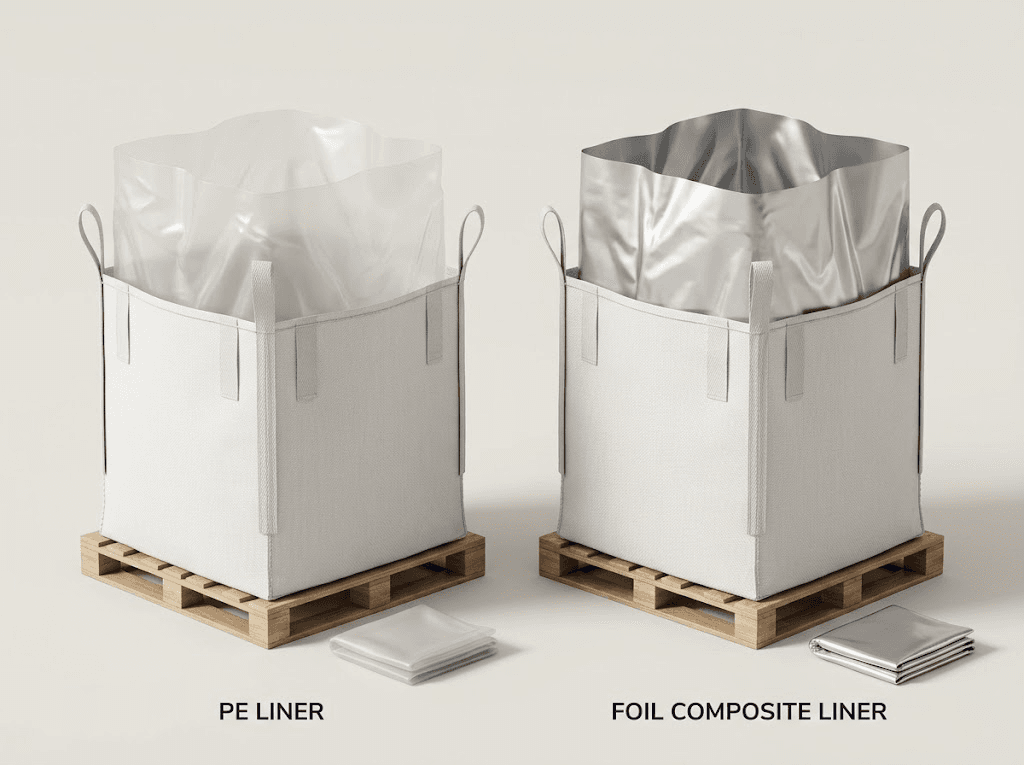
PE vs Aluminum Foil FIBC Liners for Moisture-Sensitive Powders: A Buyer’s Checklist
Choosing a liner for a moisture-sensitive powder starts with a practical question: what protection does the material need throughout filling, transport, storage and discharge?A request for “moisture proof bulk bags” gives a supplier a starting point, but it does not define an acceptable package. A PE liner may meet the requirement. An aluminum foil composite liner may be worth evaluating when the product needs a stronger moisture barrier, oxygen protection or light protection. The decision should follow the actual material specification, closure arrangement and trial results.This checklist helps buyers compare the options and prepare an enquiry for FIBC liners without relying on a material name alone.
Want to know more?
Get in touch with us for more information about our services and products.