
How to Prevent Internal Moisture Sweating When Storing Bulk Commodity Minerals Outdoors

Dayang Yang
AuthorWith experience in FIBC bulk bag manufacturing and export sales, we operate our own production facility with stable large-scale capacity. We are specialists in bulk bags, conductive FIBCs, food-grade FIBCs, UN certified bags, and customized flexible intermediate bulk containers for industrial packaging and bulk material transportation solutions.
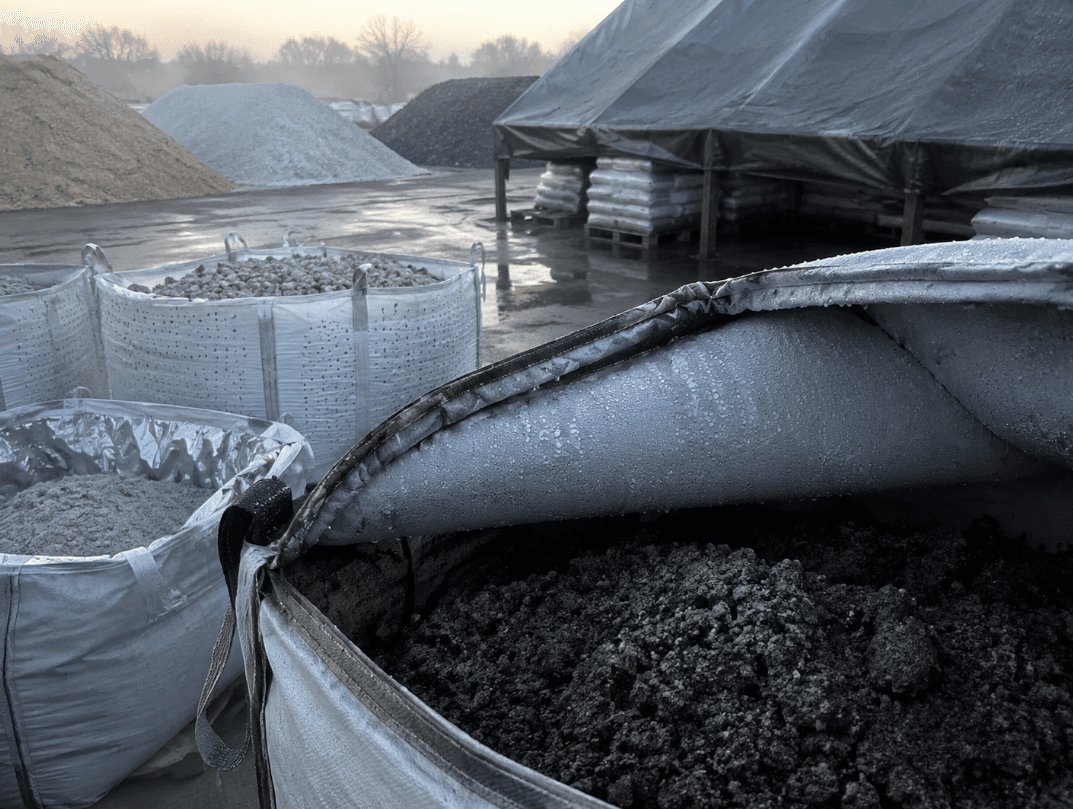
Outdoor storage of bulk commodity minerals—such as quartz sand, mineral concentrates, gypsum, and coarse industrial crudes—exposes cargo to immediate thermal fluctuations. A frequent and costly logistical issue encountered during outdoor stockpiling is internal moisture sweating, scientifically classified as container condensation or "cargo sweat."
When damp or ambient-moisture minerals are sealed within standard polymer packaging and subjected to solar tracking, the internal temperature rises, forcing moisture out of the material into a vapor state. As ambient temperatures drop at night, the relative humidity inside the container hits the dew point, causing water vapor to condense into liquid droplets on the inner walls. This condensation drips back onto the product, causing clumping, crusting, and chemical degradation.
Preventing this micro-climate sweating requires balancing physical moisture diversion with thermodynamics.
1. The Thermodynamics of Cargo Sweat
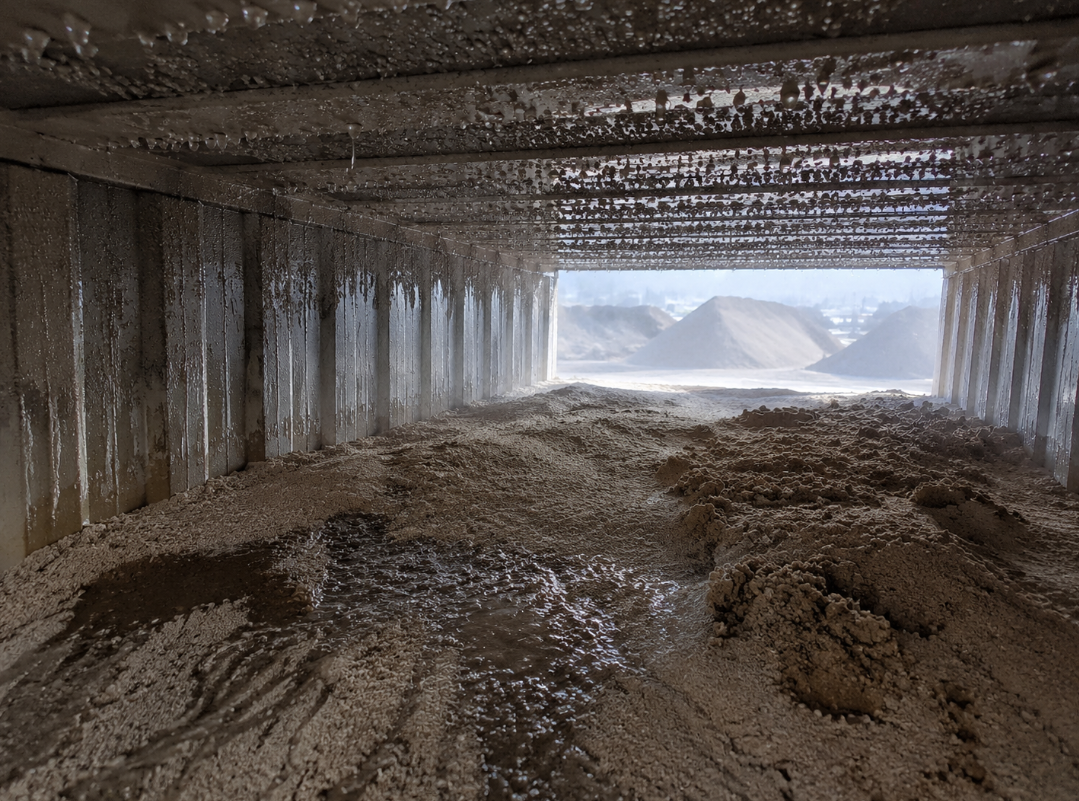
To mitigate sweating, logistics teams must address the interaction between three variables: Relative Humidity (RH) inside the container, Ambient Air Temperature, and the Surface Temperature of the packaging material. When bulk minerals are loaded, they carry an inherent moisture content. If stored in a completely sealed, non-breathable polymer container outdoors, the sun acts as a thermal incubator.
- Day Phase (Vaporization): Solar radiation heats the outer fabric. The temperature inside the container surpasses the ambient exterior temperature, causing the water molecules locked within the mineral pores to evaporate into the internal headspace.
- Night Phase (Condensation): As evening temperatures fall, the thin polymer skin of the bag or tarpaulin cools rapidly, dropping below the dew point of the highly saturated internal air. The vapor immediately liquefies against the cold membrane.
2. Choosing the Right Fabric Infrastructure: Ventilation vs. Sealing
The primary line of defense against outdoor moisture accumulation is selecting a container architecture that matches the particle size and chemical sensitivity of the mineral commodity.
Solution A: Natural Air Convection via Ventilated FIBCs
For coarse minerals, aggregates, and non-dusting commodities that enter the logistics loop with high residual moisture, trapping the vapor is a critical error. These materials require continuous atmospheric exchange.
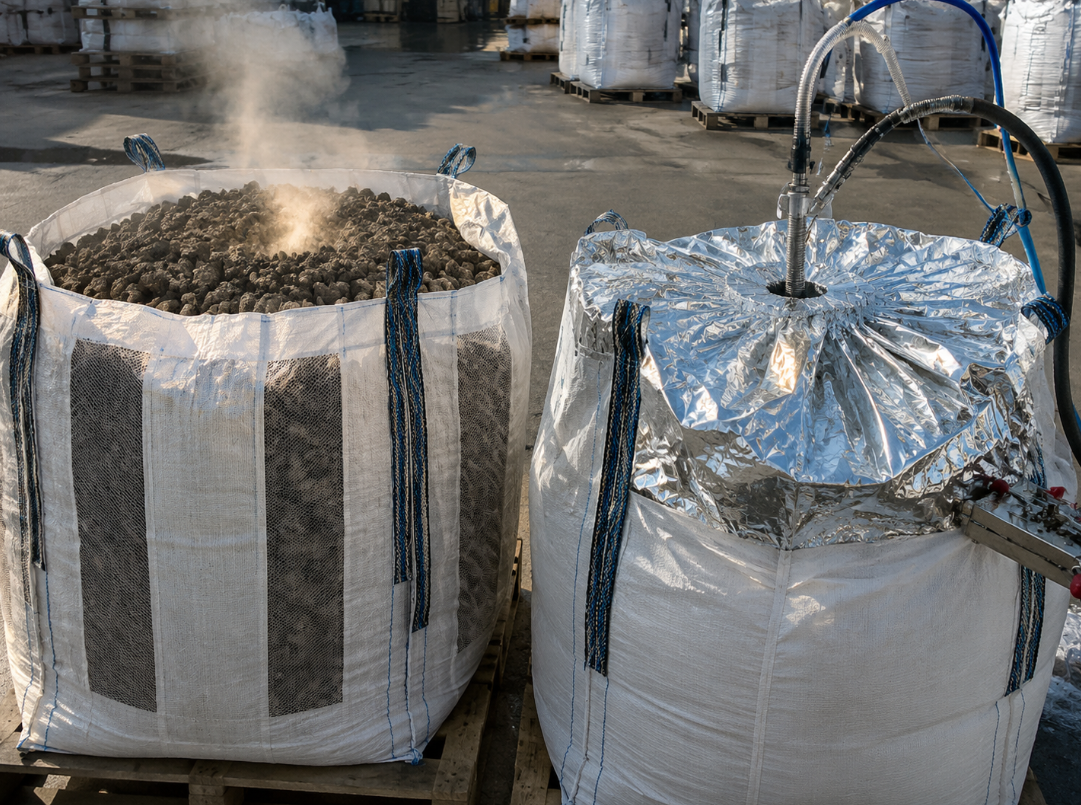
- Breathable Stripes: Utilizing a Breathable Bulk Bag incorporating parallel ventilation strips forces continuous air exchange.
- The Chimney Effect: As solar heat warms the upper cargo layer, the heated, moist air rises and escapes through the top openings, drawing cooler, drier air inward through the lower open-weave stripes. This convective loop carries moisture vapor out of the bag before it can condense.
Solution B: Absolute Barrier Sealing via Aluminum Composite Liners
For fine, high-purity chemical additives, flame retardants, or battery-grade minerals, open ventilation is impossible due to powder sifting and outdoor contamination risks. These products require absolute isolation from the atmosphere.
- Hermetic Separation: Rather than allowing air exchange, the cargo must be isolated within a multi-layer Aluminum Foil Bag.
- Vacuum and Gas Flushing: After filling, the internal air is evacuated via industrial vacuum probes, and the headspace is flushed with dry nitrogen gas before the inner liner is thermally heat-sealed. By eliminating atmospheric oxygen and residual air volume inside the bag, dew-point condensation cannot occur, regardless of external temperature swings.
3. Designing a Weatherproof Outdoor Stockpile Shelter
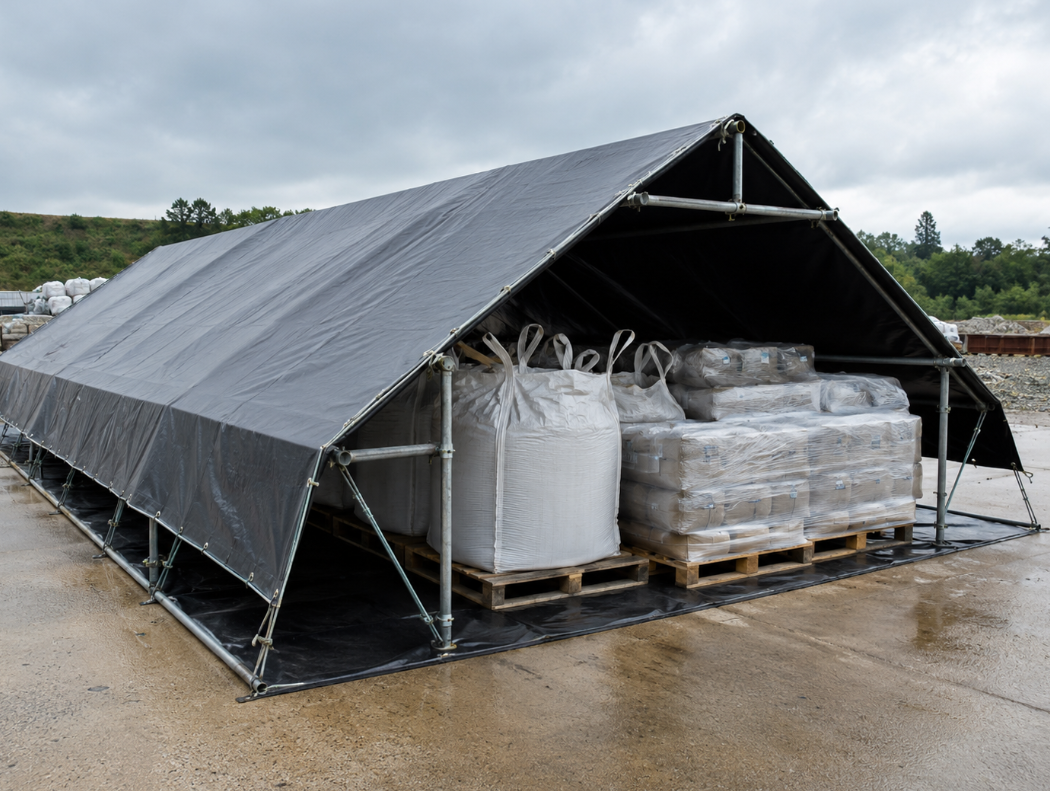
When bulk minerals are stored on open concrete pads or yard staging grounds using large protective sheets, laying a tarpaulin directly over the material creates a high-risk condensation trap. To safely deploy heavy-duty Industrial Waterproof Tarpaulins over outdoor stockpiles, implement the following structural steps:
- Establish a Ground Moisture Barrier: Never place bulk bags or raw minerals directly on bare ground or damp concrete. Lay a thick, high-gauge PE film foundation on the floor first to block capillary groundwater migration from rising into the pallets.
- Construct an Air-Gap Frame (The Canopy Clearance): Build a temporary A-frame or pipe scaffold structure over the cargo pallets before draping the tarpaulin. Leaving a minimum 30 cm air gap between the top of the cargo and the inner ceiling of the tarp creates an insulating thermal buffer.
- Enable Perimeter Ground Venting: Secure the tarpaulin utilizing its perimeter metal grommets and tension cords, but do not seal the base completely to the ground. Leave the lower 10cm open on opposite ends to permit low-level wind cross-drafts to flush out rising heat and moisture vapor.
4. Engineering Comparison: Moisture Defense Strategies
| Logistics Parameter | Open-Air Ventilated Matrix | Absolute Vacuum Barrier | External Tarpaulin Canopy |
|---|---|---|---|
| Primary Mechanism | Continuous atmospheric convection and evaporation | Zero-permeability physical gas/vapor isolation | Overhead shedding of liquid precipitation |
| Material Suitability | Coarse minerals, aggregates, damp wood pellets | Ultra-fine powders, lithium materials, [flame retardants] | Palletized units, raw mining stockpiles, equipment |
| Liner Integration | Incompatible (Liners block air-flow channels) | Mandatory (Requires multi-layer AL foil structures) | Independent secondary shelter layer |
| Risk Factor | Rain spray ingress if exposed to high winds | Puncture failure during rough forklift tracking | Structural wind-shear lifting if unsecured |
5. Summary of Best Operational Practices
- Monitor Filling Temperature: Avoid packing hot or freshly processed minerals directly into sealed containers. Let the material cool down to ambient plant temperatures to reduce the initial thermal load inside the bag.
- Assess the Angle of Repose and Settling: Dense minerals settle tightly during transit, eliminating internal air pockets but forcing moisture toward the top surface. Ensure your top enclosures Overhead Bulk Bag are tensioned correctly to avoid sagging pockets where water can pool.
- Inspect Seam Profiles: For powdery minerals stored in solid-base units Industrial Bulk Bags, verify that single or double sift-proof felt lines are applied to corner joints to block moisture tracking while holding fine particulates.
---
Preventing cargo loss from moisture sweating requires a precise calculation of your material's initial moisture percentage, handling methods, and the environmental parameters of your shipping lanes.
- Email: [email protected]
- Technical Inquiry: Contact Our Engineering Team
- Direct Line: +86 15232851009
Related News
Other news you might be interested in
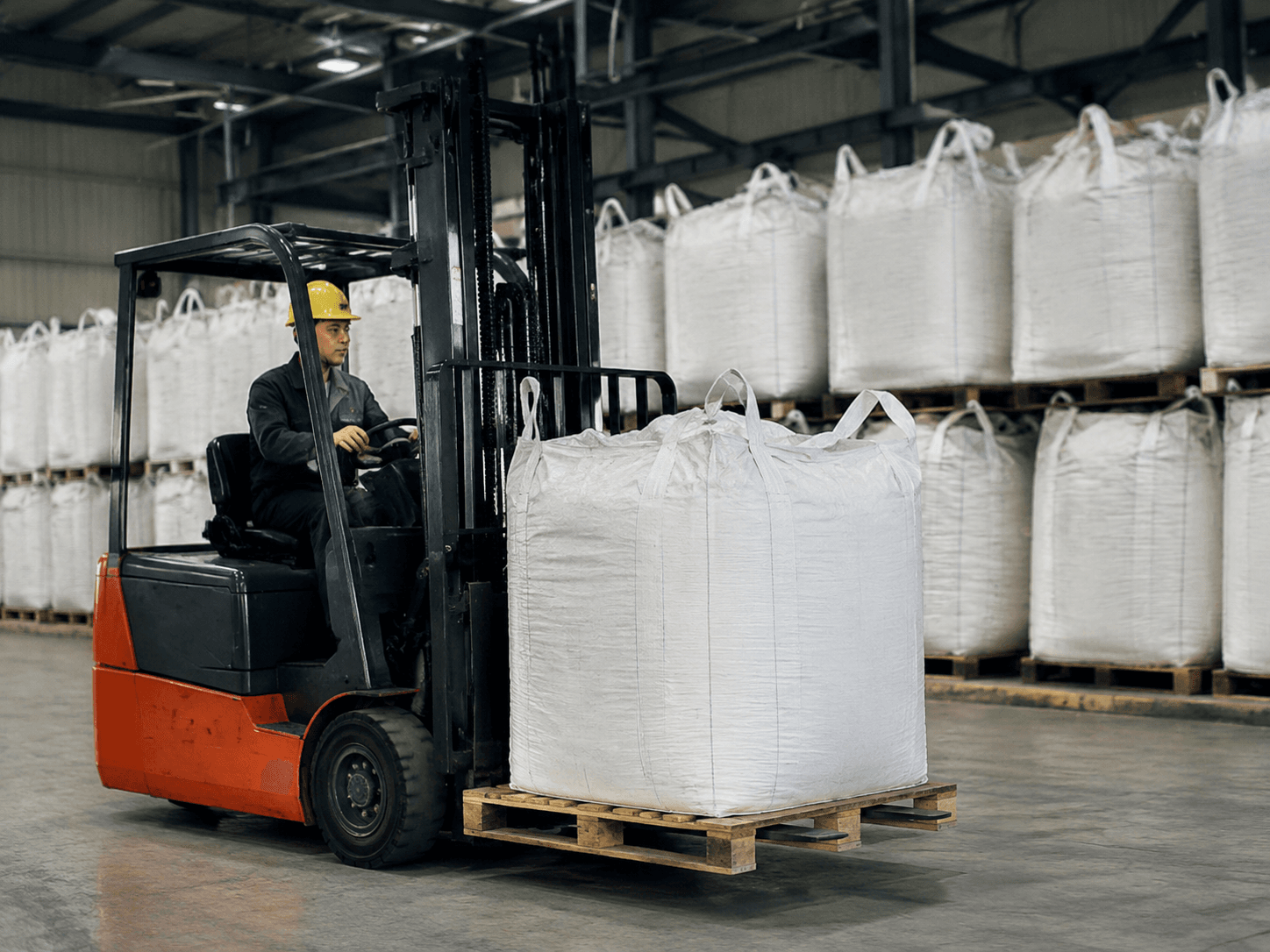
Woven Polypropylene FIBC Bulk Bags: How Material, Construction and Coating Affect Bulk Packaging Performance
In global bulk-material supply chains, FIBC bulk bags have developed from simple transport containers into important logistics tools connecting production, warehousing, loading, unloading, and end use. Their actual performance depends not only on capacity, but also on woven polypropylene, bag construction, coating, liners, safety factors, and the application environment. For the food, chemical, agricultural, mining, and construction-material industries, selecting the right FIBC bulk bags affects load-bearing performance, material loss, transport efficiency, warehouse space, and operational safety.
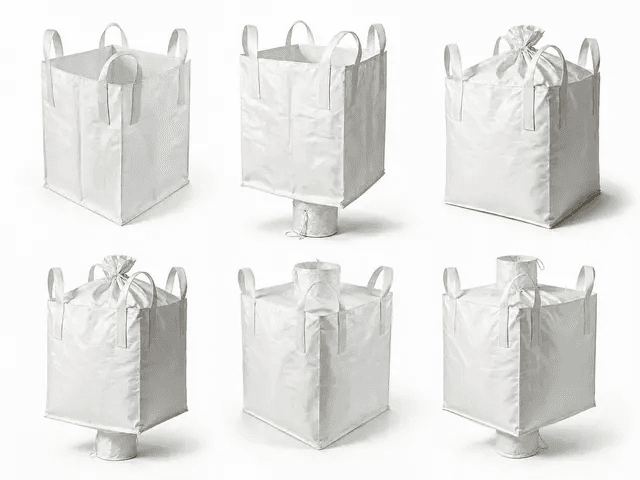
Chemical Grade Bulk Bags: How to Select the Right Flexible Intermediate Bulk Containers (FIBC) for Chemicals, Powders, and Hazardous Materials
Bulk materials used in the chemical industry often have characteristics such as fine particle size, high flowability, strong moisture absorption, a tendency to cake, or a high risk of electrostatic charge buildup. For chemicals, powder materials, and certain hazardous materials, packaging does more than hold the product—it directly affects material quality, workplace safety, and transportation reliability.
Want to know more?
Get in touch with us for more information about our services and products.