
PE vs Aluminum Foil FIBC Liners for Moisture-Sensitive Powders: A Buyer’s Checklist

Dayang Yang
AuthorWith experience in FIBC bulk bag manufacturing and export sales, we operate our own production facility with stable large-scale capacity. We are specialists in bulk bags, conductive FIBCs, food-grade FIBCs, UN certified bags, and customized flexible intermediate bulk containers for industrial packaging and bulk material transportation solutions.
The selection of lining for moisture sensitive powders begins with a practical question: what protection is required for the material during filling, transportation, storage, and discharge?
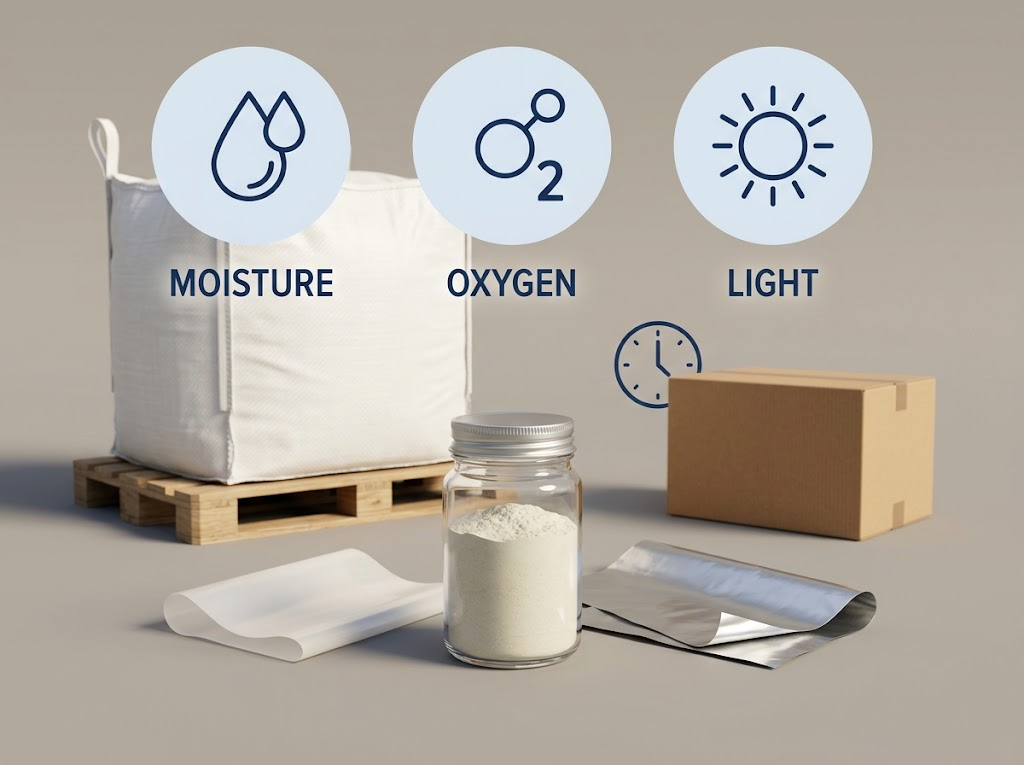
The request for 'moisture-proof bulk bags' provides a starting point for suppliers, but it does not define an acceptable packaging. PE lining may meet the requirements. When a product requires stronger moisture, oxygen, or light protection, aluminum foil composite lining may be worth evaluating. The decision should follow the actual material specifications, closure arrangements, and test results.
This list can help buyers compare options and prepare inquiries for FIBC liners without relying solely on material names.
Define the content that powder needs to protect
Before comparing shipping quotes, please describe the product and its itinerary. Determine which factors make the powder unacceptable upon arrival: excessive moisture, clumping, oxidation, contamination, or other measurable changes.
Include the following information:
Product name, powder characteristics, and any related processing restrictions.
The humidity conditions during filling and the acceptable conditions at the end of storage.
The filling temperature and the time between filling and final closure.
Expected transportation and storage time, including intermediate warehouses.
Known temperature and humidity conditions, as well as any oxygen or light sensitivity.
If the current packaging fails, please record the time and location of the problem. Provide photos, existing lining specifications, and available product test results. These details help distinguish material selection issues from closure, damage, or process issues.
If you do not have a digital acceptance limit yet, please have your product or quality team define one before approving packaging testing.
PE and aluminum foil lining: what should you compare?
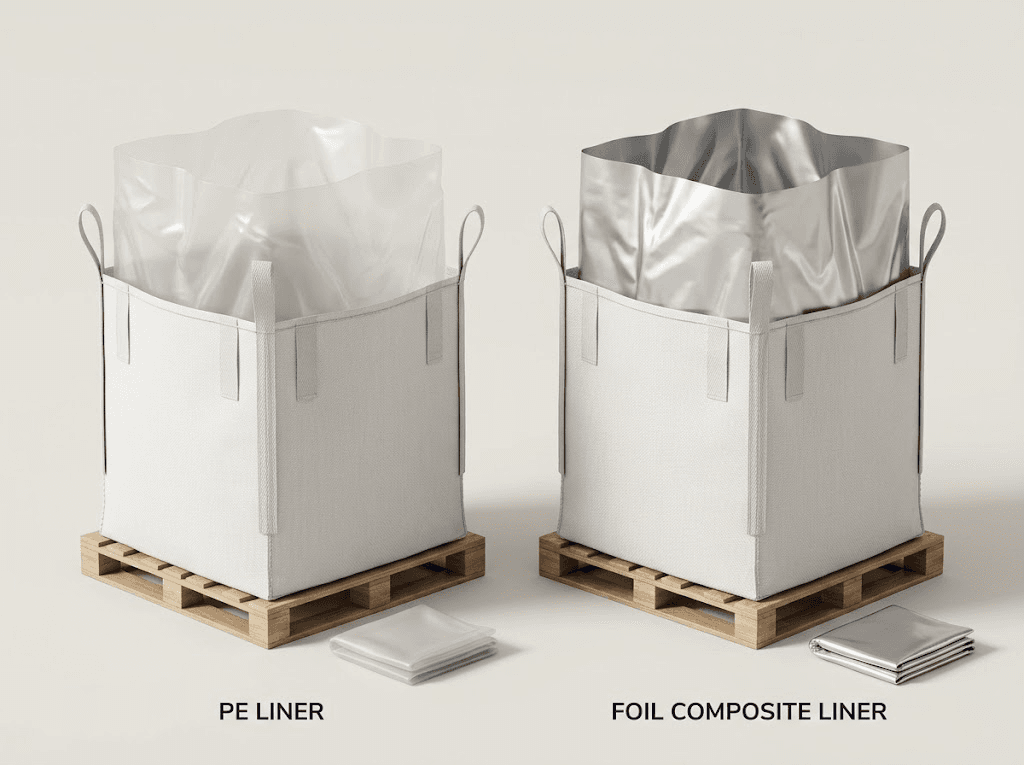
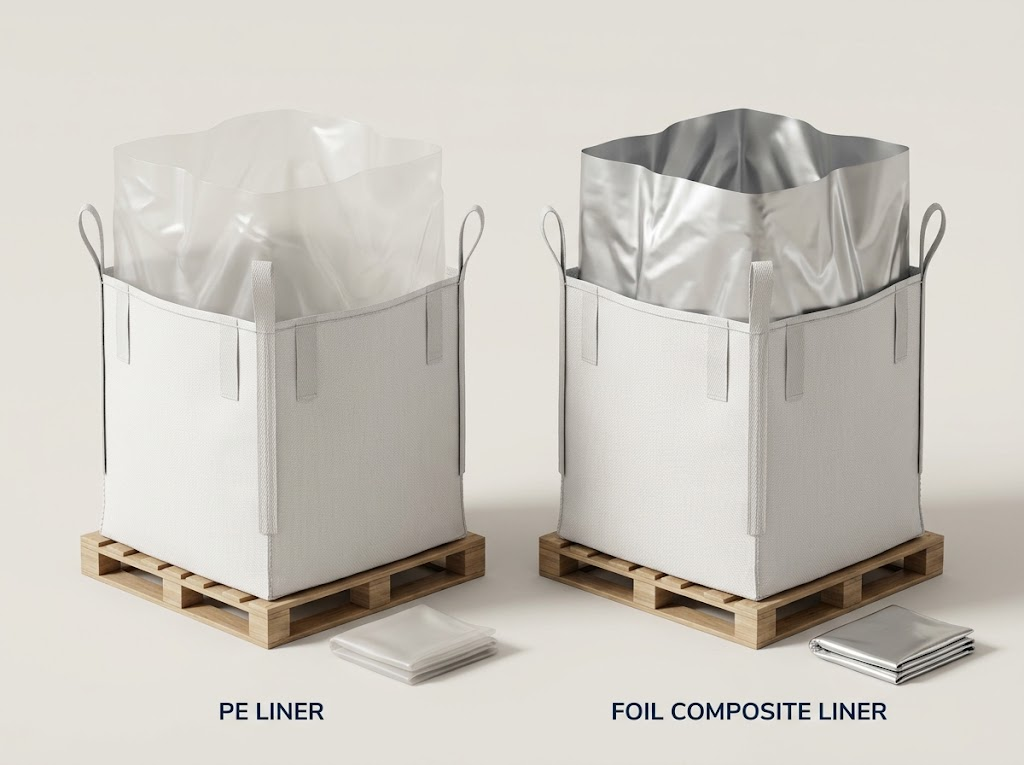
PE and aluminum foil composite lining are different material choices. Both require suitable bag shapes, closures, and handling arrangements. Industrial packaging suppliers provide a variety of lining materials, structures, and connection methods; These choices should be reviewed together.
| Selection point | PE liner | Aluminum foil composite liner |
|---|---|---|
| Starting point for evaluation | An option when the specified film and complete package can meet the product’s moisture and handling requirements | An option to evaluate when the product needs a higher barrier to moisture, oxygen or light |
| Specification to request | Polymer or film structure, thickness, dimensions and relevant performance data | Complete laminate structure, thickness, barrier data and sealing requirements |
| Filling and discharge | Confirm fit, attachment, openings and compatibility with the existing equipment | Confirm the same details, including how the composite liner will be handled and closed |
| Approval basis | Relevant material evidence and an agreed trial of the finished package | Relevant material evidence and an agreed trial of the finished package |
Here, "aluminum foil liner" refers to a liner made of laminated film containing aluminum. Require suppliers to determine the complete structure, rather than just quoting for the foil layer.
In the discussion, please separate materials from geometry. The shape matching pad describes its shape and fit within FIBC; It itself does not specify a moisture-proof layer. The existing adhesive pad page of FIBC World lists material, opening, and fixing options as separate specification options.
When is PE lining enough?
When there is evidence that the proposed packaging meets the actual requirements, retain the PE liner in the comparison. For example, you may already have an approved PE specification with acceptable storage results and a reliable closure process.
Before repeating this specification for a new order, please check for any changes in powder, delivery route, storage time, filling temperature, or equipment. The successful outcome under a set of conditions is a useful reference, but it does not automatically approve different applications.
If the problem is pad movement, poor fit, or unsuitable outlet, please check the geometry and connection method, as well as the film. Changing materials without addressing the observed faults may make it difficult for the buyer to clearly explain the improvement purpose of the new design.
Request the supplier to explain the proposed changes and tests to demonstrate their effectiveness.
When should aluminum foil composite liners be evaluated?
When product specifications require stronger moisture, oxygen, or light protection than the proposed PE packaging, aluminum foil FIBC lining is worth discussing. Industrial suppliers consider foil laminate liners as an option for sensitive dry composition and barrier applications.
The useful triggering factors for technical review include:
The existing packaging has not passed the agreed moisture or storage acceptance test.
There have been significant changes in the delivery route or storage period.
In addition to moisture control, this product also specifies oxygen or light protection requirements.
The buyer needs to record the barrier properties of sensitive or valuable powders.
Request proposals related to these conditions. Don't approve a quotation just because it says "high barrier," "heavy-duty," or "moisture resistant. Ask what effects the proposed building is expected to achieve, what evidence supports it, and how to inspect the completed packaging.
Inquire about barrier data that you can actually compare
When reviewing moisture-proof bulk bag liners, it is required to provide water vapor transmission rate or WVTR (if relevant). For oxygen sensitive products, inquire if oxygen permeability or OTR data is still required.
For each result, it is required to provide the testing method, unit, temperature, humidity conditions (if applicable), and identification of the testing material. Is the inquiry result describing a flat film sample or a finished pad. Only after checking the testing conditions and sample details can the data be considered comparable.
Evaluate the material scheme using film data, and then assess the entire lining and its closure. Ask the supplier what evidence they have to prove the seams, openings, and finished packaging. Merely relying on movie reports cannot answer all questions about FIBC filling and sealing.
If the supplier suggests a specific thickness, please inquire about its relationship with barrier requirements and processing conditions. Thickness should be considered as a part of the specification, rather than the sole reason for approval.
Confirm closure and installation before approving samples
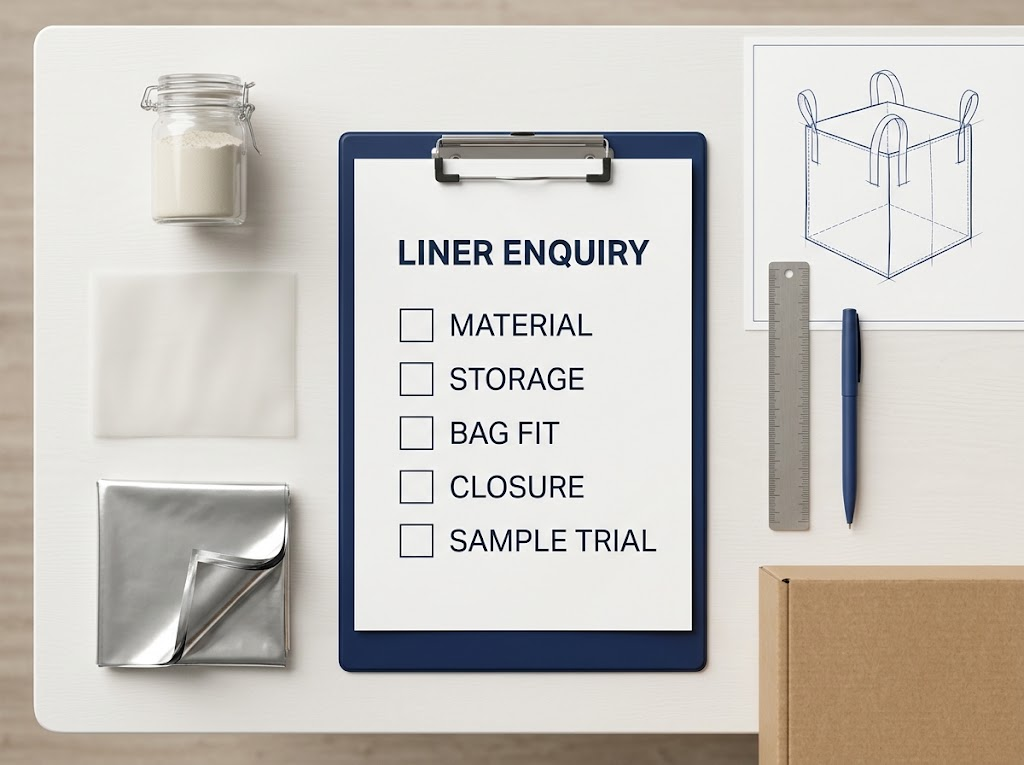
The inquiry about bulk bags with padding should explain how the padding will be filled, closed, and emptied. Including outer bag size, top and bottom layout, nozzle size, fixing method, and available sealing equipment.
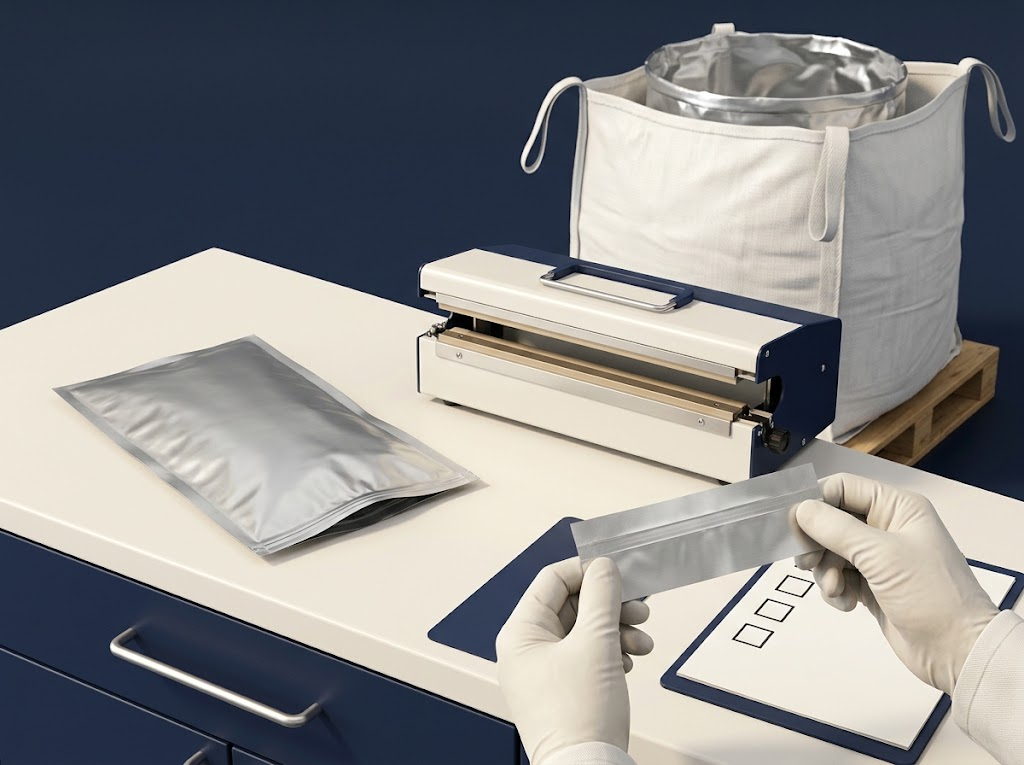
If heat sealing is recommended, please ask the supplier to specify the actual sealing surface of the laminated board and the recommended process conditions. Confirm that your device can produce the proposed seal and agree on how to check the quality of the seal. A clearly closed opening should not be your only acceptance criterion.
Agree to sample trial before production:
Check the lining inside the expected outer bag, including openings and connection points.
Conduct filling and closing tests under representative operating conditions.
Check the agreed packaging and product standards, including relevant storage or barrier verification.
Review the handling and discharge of liner movement, blockage, and unacceptable residues.
Record approved drawings, material structures, closure procedures, and sample references.
For food contact or electrostatic sensitive applications, separate review of relevant material documents and complete FIBC system is required. The choice of moisture-proof layer cannot determine whether it is suitable for all other requirements.
Prepare your FIBC liner inquiry
Send sufficient information to suppliers to propose and compare specific designs:
| Enquiry item | Information to provide |
|---|---|
| Powder | Material name, form, available bulk density and relevant sensitivities |
| Protection target | Acceptable product condition, storage period and required moisture, oxygen or light protection |
| Existing package | Current liner specification, photographs, drawings and details of any failure |
| Outer FIBC | Dimensions, construction, intended fill weight and filling/discharge arrangement |
| Operating conditions | Filling temperature, closure equipment, storage conditions and handling sequence |
| Approval requirements | Required documents, test criteria and sample-trial procedure |
| Commercial requirements | Quantity, delivery destination and required delivery date |
FIBC World provides customized bulk bags and liners for inquiry based on the goods and packaging arrangements described in its existing customer materials. Send your specifications and the issues that need to be addressed, and then request confirmation of available material structures, lining designs, sample arrangements, minimum order quantities, and delivery cycles.
Choose a PE or aluminum foil composite lining that can demonstrate the desired results under your conditions, and use the approved specifications as a reference for repeat orders.
Related News
Other news you might be interested in

Under the EU PPWR, What Packaging Documents Should FIBC Exporters Prepare?
If your bulk bags are intended for the EU market, a buyer may ask for more than a product specification sheet. They may need information about the packaging’s materials, design, intended use and conformity so that the responsible business operator can assess the applicable requirements.
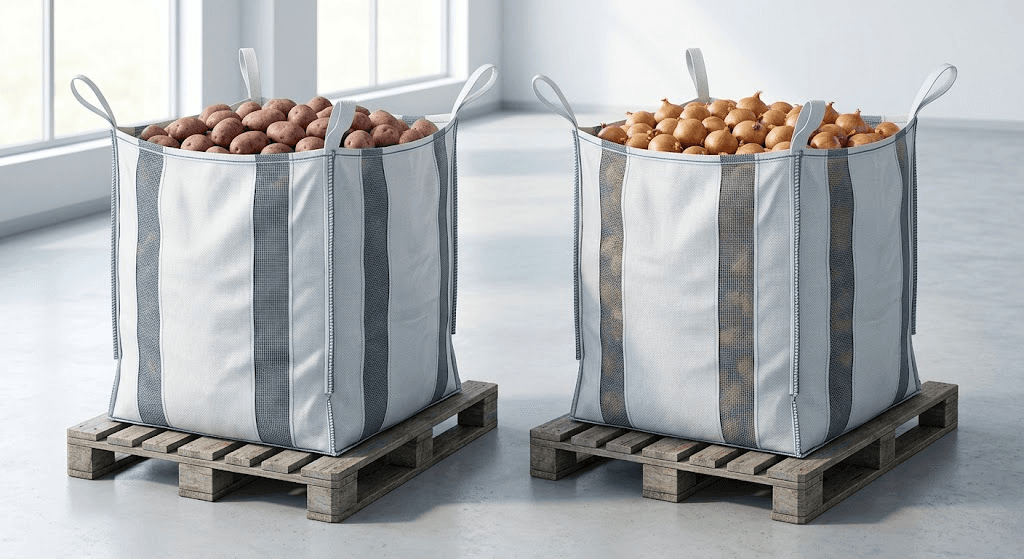
Custom Ventilated Bulk Bags for Potatoes and Onions: A Buyer’s Checklist
Buying ventilated bulk bags involves more than choosing a bag size and adding ventilation panels. The bag must suit the produce, filling line, lifting equipment and unloading method, as well as the storage and transport conditions.For potato packers, onion exporters, agricultural cooperatives and packaging distributors, a useful starting point is to describe the job the bag needs to do. Is it moving produce between facilities, holding a batch before packing, or supporting an export shipment? This guide turns those requirements into a checklist for a custom enquiry.
Want to know more?
Get in touch with us for more information about our services and products.