
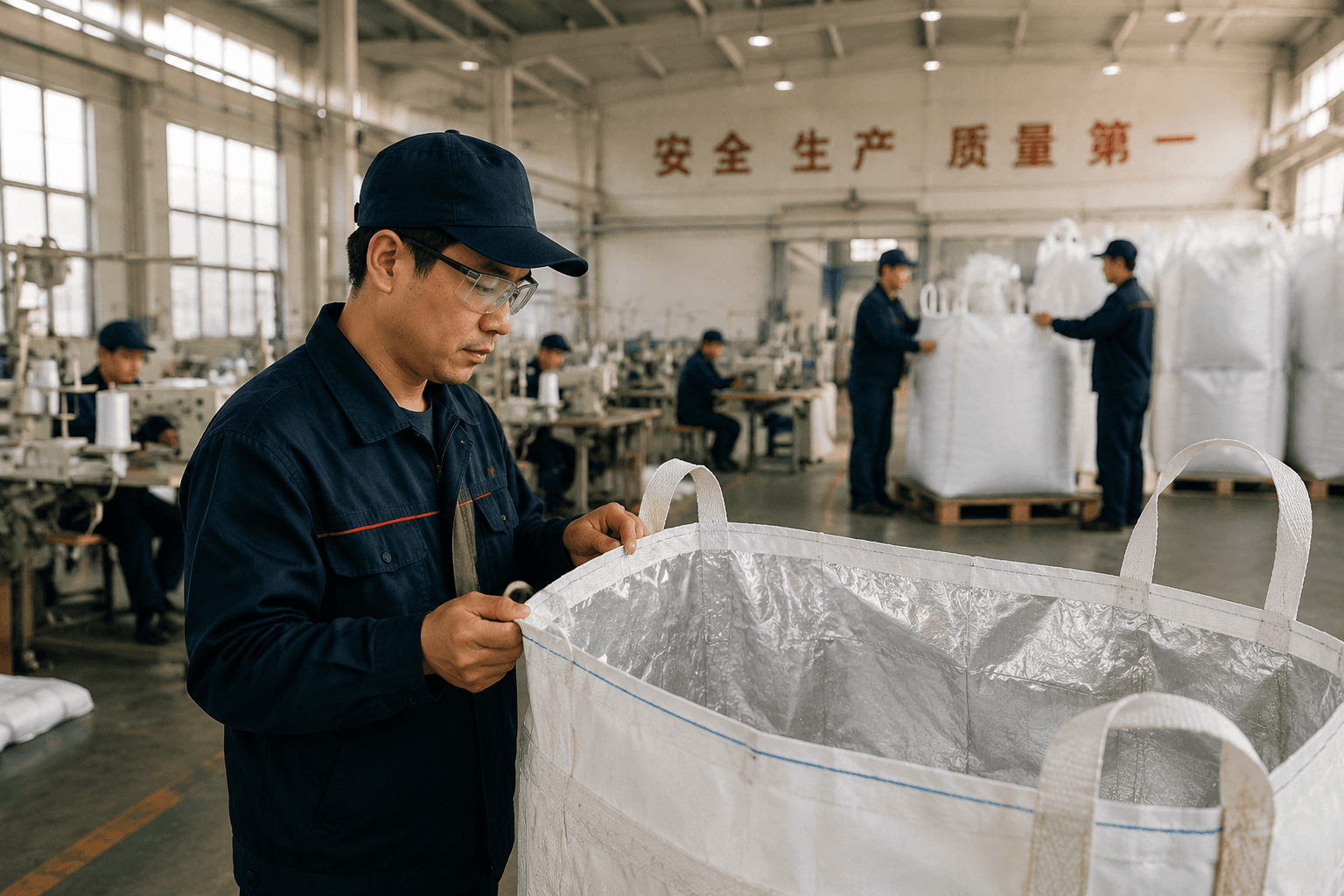
Upgrade Your Bulk Material Handling with Custom FIBC Bags: Moisture Barriers, Anti-Static, and More

Dayang Yang
AuthorWith experience in FIBC bulk bag manufacturing and export sales, we operate our own production facility with stable large-scale capacity. We are specialists in bulk bags, conductive FIBCs, food-grade FIBCs, UN certified bags, and customized flexible intermediate bulk containers for industrial packaging and bulk material transportation solutions.
The Challenge: Protecting High-Value Powders and Granules During Transport
Moisture, oxygen, and static electricity don’t just threaten product quality—they erode margins and create serious safety hazards. When you’re shipping lithium battery powders, nylon granules, or sensitive chemical powders, a single compromised industrial bulk packaging unit can lead to spoilage, contamination, or even combustion. Standard off-the-shelf bags simply fall short. They lack the oxygen barrier bulk bag properties or anti-static bulk packaging features that high-value materials demand. The result? Rejected shipments, wasted product, and avoidable risk. That’s why procurement teams are moving rapidly toward tailored FIBC bags that do more than just contain weight—they actively preserve integrity. As we explore in how custom FIBC bags solve moisture and static challenges in industrial bulk packaging, standard packaging often becomes the weakest link in the supply chain.
Key Features to Look for in Industrial Bulk Bags
Not all FIBC bags are created equal. When your operation depends on consistent material quality, these are the engineering details that separate genuine protection from superficial promises:
- Moisture Barrier & Anti-Oxidation: Integrated aluminum foil liners and aluminum lined FIBC constructions create a near-hermetic seal against humidity. For lithium battery cathode material packaging and food-grade ingredients, this anti-oxidation packaging is non-negotiable.
- Anti-Static & Flame Retardant: Type C and Type D anti-static bulk packaging safely dissipates electrostatic charges, while flame retardant packaging adds a critical safety layer for combustible powders in chemical and mining environments.
- Lifting & Handling Efficiency: The choice between a standard overhead bulk bag, a convenient forklift bulk bag, or an inner lifting loop bulk bag directly impacts loading times and site safety. Every second saved per cycle multiplies across a shift.
- Customizable Structure: Cross-Reinforced Bottom jumbo bag bases, formed spouts, and the exact Safe Working Load (SWL) you need—not the nearest “standard” rating—mean the bag fits your process, not the other way around.
Our Product Range: Engineered for Your Specific Needs
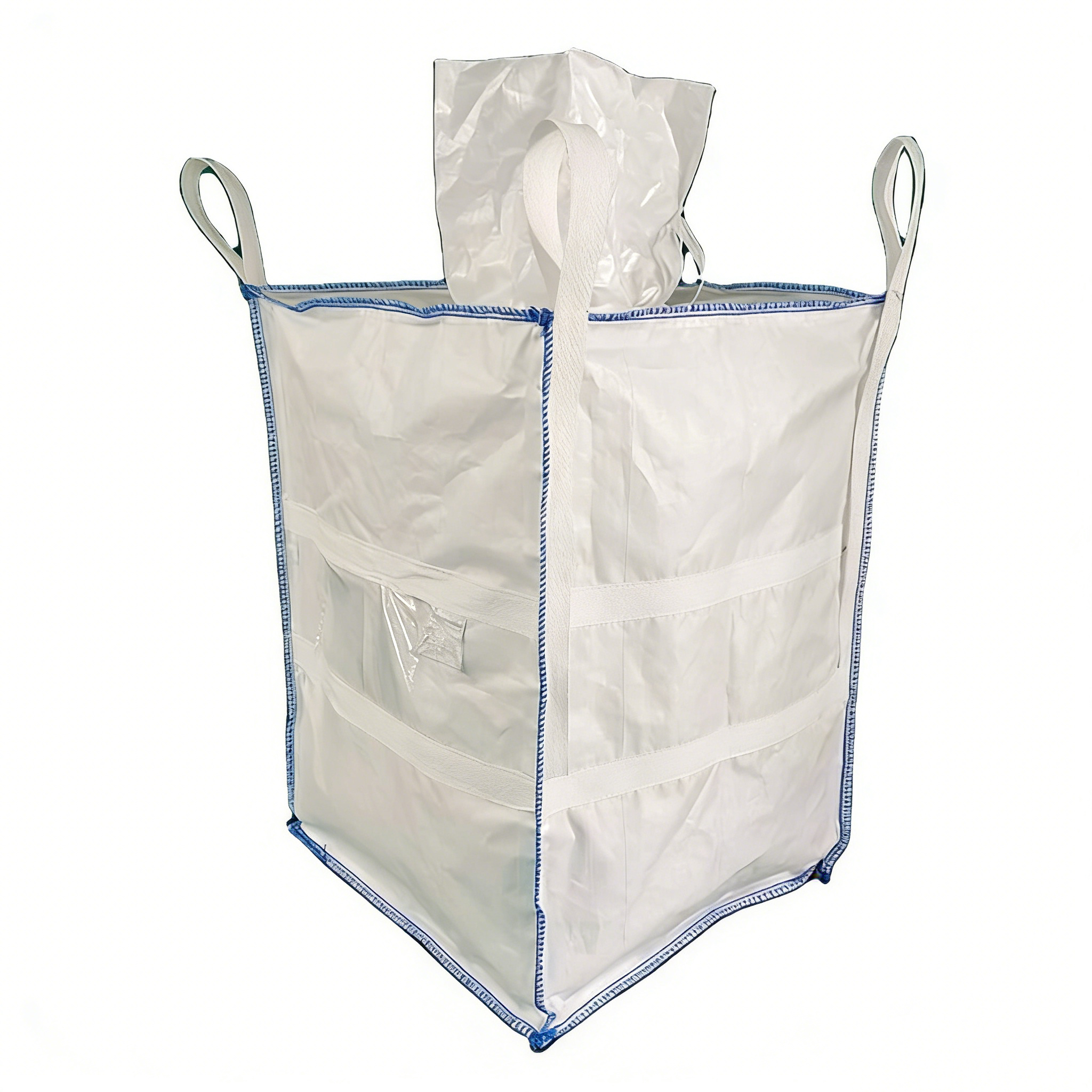
We manufacture factory-direct FIBC with a singular focus: giving you exact control over how your materials are protected and moved. Here are a few configurations that consistently deliver for our clients:
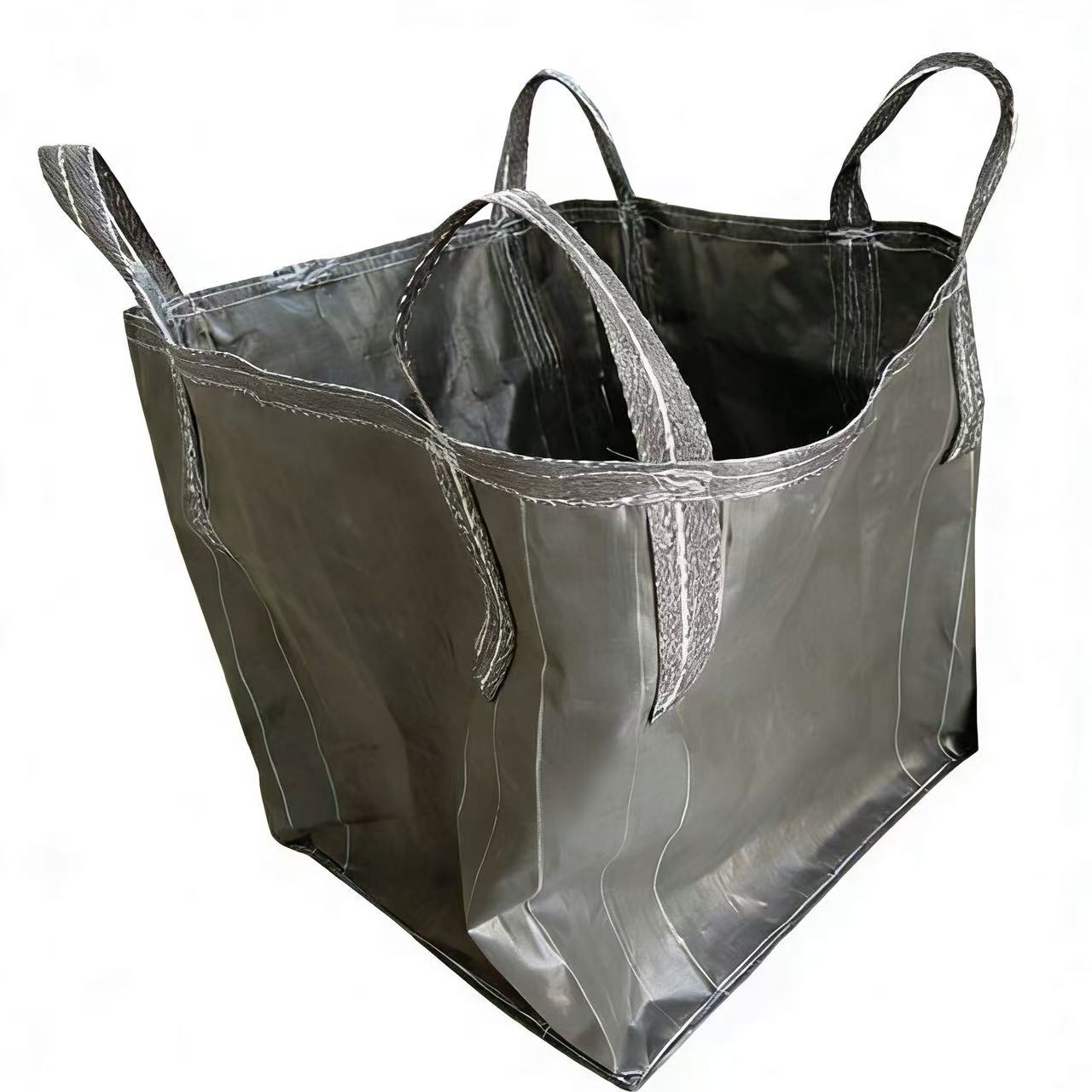
- PP FIBC Jumbo Bags - 1 Ton Black Bulk Bags: Built for harsh industrial environments, these moisture-proof bulk packaging units resist dust, UV, and radiation. A go-to for chemicals, building materials, and mineral bulk packaging.
- Custom White PP FIBC Bags – 1.5 Ton Reinforced: Double-thread overlock sewing and thickened fabric provide extreme wear resistance, making them the logical heavy-duty PP container bag for construction and demanding logistics.
- Lithium Battery Aluminum Foil FIBC Jumbo Bags: A woven PP outer shell combined with a light-proof aluminum foil inner liner blocks oxygen, moisture, and UV in one aluminum foil liner bulk bag. Purpose-designed for lithium battery powder packaging.
- Aluminum Foil Laminated 3-Side Seal Food Bags: This 3-side seal aluminum foil bag format delivers exceptional barrier performance and high-temperature tolerance, suitable for plastic pellets, chemical specialties, and food ingredients—a top choice for plastic pellet packaging and nylon granules packaging.
- New PP FIBC with Lifting Loops - 1–2 Ton Yellow Feed Bags: Made from advanced Korean PP resin, with widened lifting straps and a reinforced bottom. A cost-efficient lifting loop bulk bag that handles feed bulk bags as easily as it handles minerals.
- 1-2 Ton Battery Powder FIBC with Aluminum Foil Liner: The double-layer formed inner belly bag + PP woven outer definitively blocks oxidation triggers. For lithium battery cathode material packaging, it’s the difference between active material delivery and degraded scrap.
Real-World Applications & Success Stories
Specifications mean little without proven results. In chemical and mineral bulk packaging, our PP woven bulk bags with integrated moisture barriers and anti-static properties are the daily standard for leading processors. A notable case involves a senior procurement manager at an EU chemical group who transitioned their entire high-value powder line to our custom FIBC—eliminating a persistent humidity-caused clumping issue.
In the new energy sector, lithium battery powder packaging solutions we built for a cathode material producer reduced oxidation-related rejections by over 40% in field trials. Similarly, for plastic pellet packaging and nylon granule exporters, our flexible intermediate bulk container with a formed inner belly bag and dust-proof filling spout cut per-ton handling time significantly while virtually eliminating escape of valuable pellets.
Construction and agriculture clients have seen similar impacts: heavy-duty jumbo bags for cement, sand, and feed now ship with greater stack stability and fewer tears. A deeper look at this shift reveals how the right industrial bulk packaging can convert a recurring cost center into a competitive differentiator. Consistently, clients report a 20% reduction in packaging-related costs while safety incident frequencies drop.
Why Partner with Us for Your Bulk Bag Needs
Your bulk material handling packaging is too critical to source from generalists. We bring focused expertise and tangible advantages:
- Factory-Direct Precision: Every batch of factory-direct FIBC is made to your exact dimensions, liner spec, and SWL—no middlemen, no catalog compromises.
- Rigorous Quality Assurance: From Cross-Reinforced Bottom jumbo bag construction to soft pallet lifting sling integrations, each unit meets stated load ratings. We don’t cut corners on fabric weight or seam integrity.
- Expert Specification Support: Our team helps you navigate choices—whether you need a forklift bulk bag with a discharge spout or an aluminum lined FIBC with complete light and oxygen barrier properties.
- Reliable Turnaround: Popular models like 1 ton jumbo bags are in stock, and custom lifting loop bulk bag configurations with special liners ship on schedule. Over 300 batches delivered to repeat industrial clients prove our consistency.
Get Started: Request a Quote or Sample Today
Tell us about your material, your volume, and your handling environment. We’ll recommend the right overhead bulk bag, PP woven bulk bags, or aluminum foil liner bulk bag configuration for your specific challenge. Test a sample of our anti-oxidation packaging with your own product to see the difference before you commit. Custom sizes, lifting loop styles, and printing are all available. For a tailored recommendation or to begin your sample order, contact us today.
Related News
Other news you might be interested in
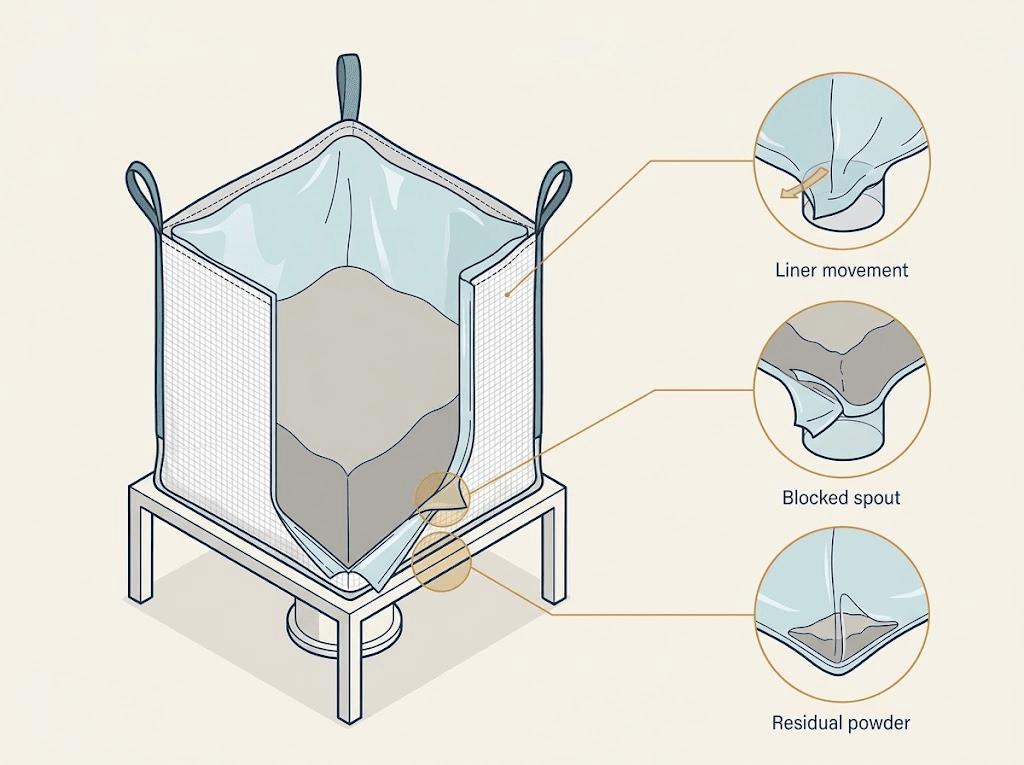
FIBC Liner Discharge Problems: A Buyer’s Checklist for Liner Movement, Blocked Spouts and Residual Powder
A lined bulk bag reaches the production line, but the powder stops flowing before the bag is empty. The liner moves towards the outlet, material remains in the bottom corners, or operators need repeated assistance to finish unloading.For buyers ordering FIBC liners, the useful question is: what information will help the packaging supplier and equipment provider identify the cause and agree on a better specification?Start by reviewing the material, liner, outer bag and discharge equipment together. Liner fit, folds, outlet configuration and product flow characteristics can all affect emptying performance.
PE vs Aluminum Foil FIBC Liners for Moisture-Sensitive Powders: A Buyer’s Checklist
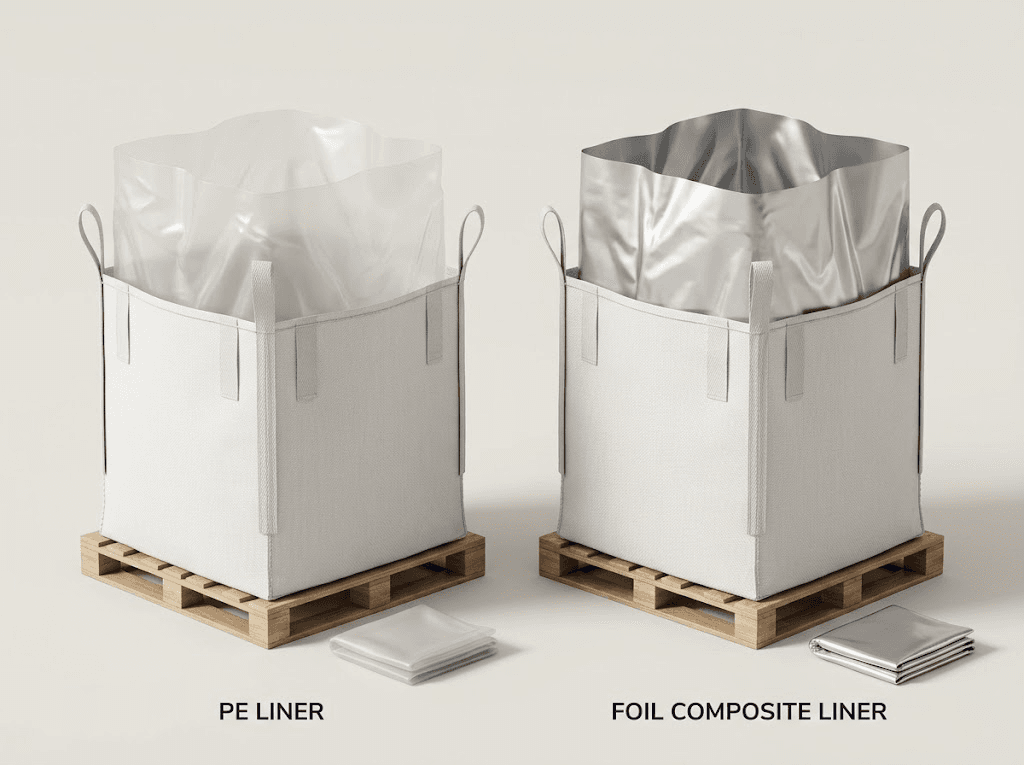
Choosing a liner for a moisture-sensitive powder starts with a practical question: what protection does the material need throughout filling, transport, storage and discharge?A request for “moisture proof bulk bags” gives a supplier a starting point, but it does not define an acceptable package. A PE liner may meet the requirement. An aluminum foil composite liner may be worth evaluating when the product needs a stronger moisture barrier, oxygen protection or light protection. The decision should follow the actual material specification, closure arrangement and trial results.This checklist helps buyers compare the options and prepare an enquiry for FIBC liners without relying on a material name alone.
Want to know more?
Get in touch with us for more information about our services and products.