

After Kazakhstan’s Local FIBC Expansion: Where Specialty Liners and Custom Structures Still Win

Dayang Yang
AuthorWith experience in FIBC bulk bag manufacturing and export sales, we operate our own production facility with stable large-scale capacity. We are specialists in bulk bags, conductive FIBCs, food-grade FIBCs, UN certified bags, and customized flexible intermediate bulk containers for industrial packaging and bulk material transportation solutions.
Kazakhstan's FIBC supply chain has become more locally integrated. In October 2026, Trend.az reported that KPI signed agreements with FIBC Kazakhstan and Taraz Plastic. The report said FIBC Kazakhstan had expanded bag capacity, installed polypropylene multifilament yarn equipment that had not previously been produced in Kazakhstan, and planned to increase its monthly polypropylene purchases from KPI.
That is a meaningful industrial signal: local PP yarn, fabric and bag production are moving closer together in one Central Asian market. It does not prove that every local bag equals every imported bag, that a price direction is established, that imports will disappear, or that access to EU and US markets has changed.
For international buyers, the better question is more specific: as standard bulk bags become more locally available, where do specialty liners and custom structures still justify a different supply strategy?
What actually changed in Kazakhstan
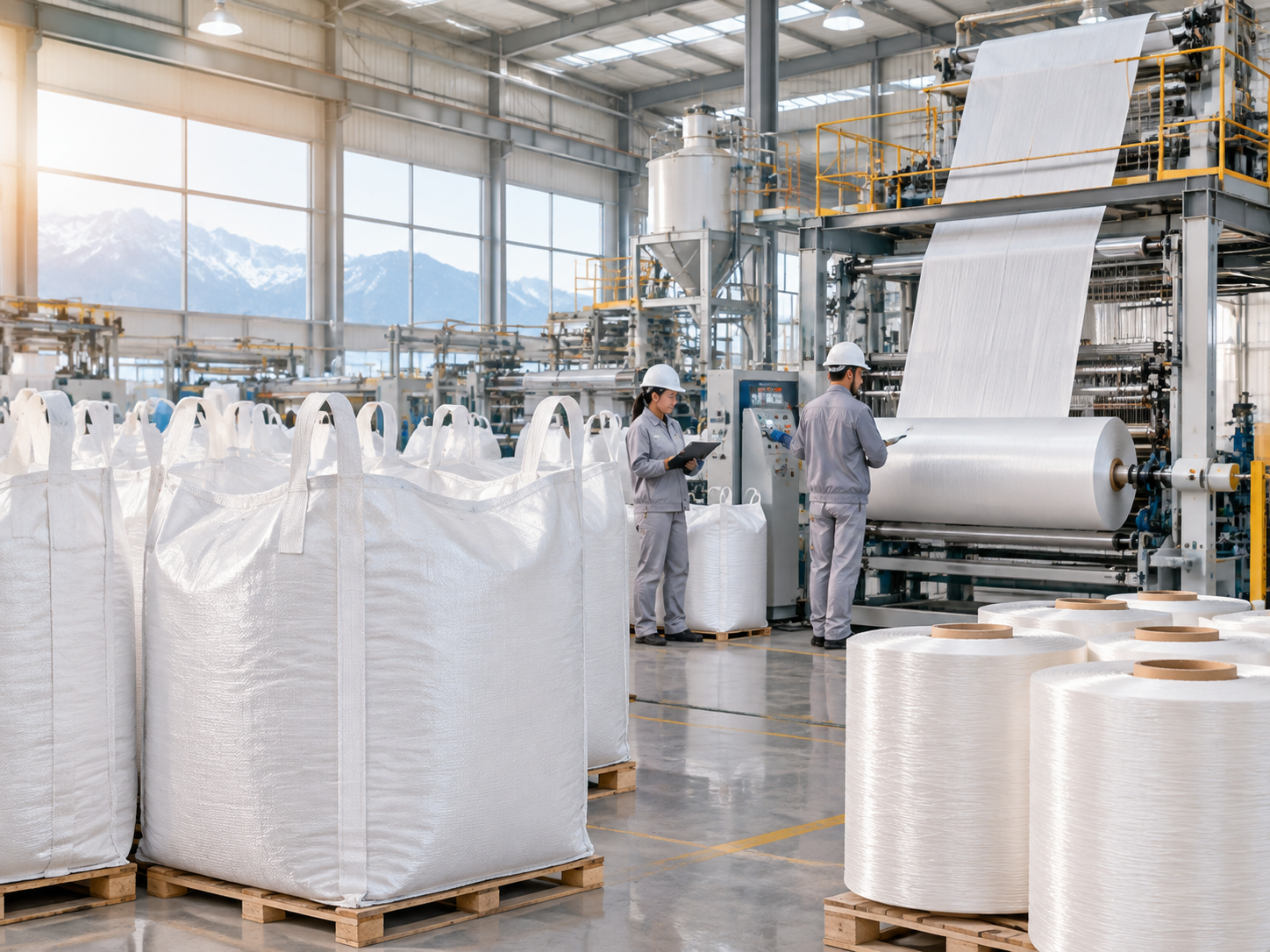
The strongest evidence is the press-reported investment and production change. KPI's cooperation points to a more coordinated local chain: polymer supply, PP multifilament yarn, woven fabric and finished FIBC capacity. This direction is consistent with the company's public description of an Aktobe plant founded in 2016, with what it calls full-cycle production from PP yarn to bags.
The company website states a capacity of more than one million bags per year, 24/7 operation and more than 200 employees. Its catalogue lists single-loop, two-loop and four-loop FIBCs, PE liners, rail and container liners, PP fabric, straps and covers. It also states 500-2,000 kg working loads, 120-220 g/m2 fabric and 5:1-6:1 safety factors, plus sewn-in and loose PE liners.
They remain company claims until supported by current certificates, test reports, an approved drawing and a project quotation.
Geography matters too. The company's public geography page lists Kazakhstan, Russia, Belarus, Kyrgyzstan, Uzbekistan and Tajikistan. It does not list the EU or the United States. That absence is not proof of no Western exports, but it does not support a claim about success in those regulated markets.
Local competition will be strongest in standard bags
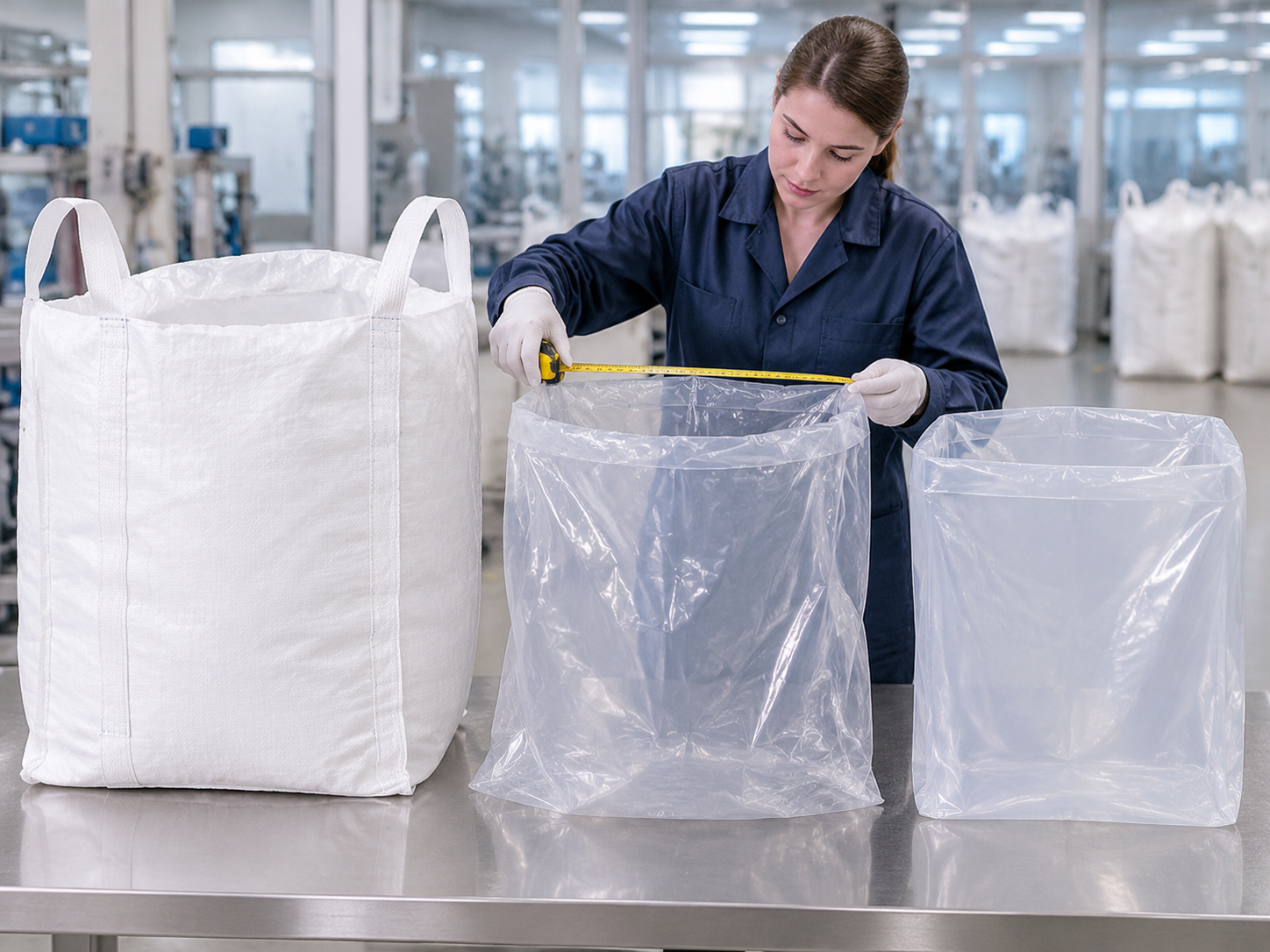
The first competitive overlap is likely to be in products that are easy to define and compare: common two-loop and four-loop bulk bags, established sizes, basic fabric specifications, simple PE liners, standard spouts, and repeat orders for nearby industrial or agricultural customers.
For a buyer in Kazakhstan or a neighbouring market, a local supplier may offer shorter communication lines, lower regional freight exposure, easier sample logistics and faster routine changes. A Chinese supplier is not automatically better because the bag crosses a border, and a local supplier is not automatically adequate because the plant is nearby.
What changes is the burden of proof. Local capacity gives buyers another source to investigate, but every source must demonstrate the same specification, repeatability, capacity, documentation and total landed cost. Evidence does not show that local standard bags are cheaper, that imported volume has fallen, or that buyers have shifted.
Standard bulk bags face more local comparison and should compete on verified specification, total cost and delivery.
Specialty liners and custom structures remain less commoditized because value lies in fit, materials, interfaces, evidence and repeatability.
Why a standard bag is not always a substitute
Two FIBCs can look alike and behave differently. Compare the finished bag, liner, seams, filling opening, closure, discharge outlet, handling method and transport route as one system.
The relevant cost is not only price per bag. It includes product loss, rejected batches, filling downtime, liner installation, container utilization, documentation, inspection, claim risk and the cost of changing an approved construction. A lower price can disappear if the liner twists, the spout does not fit the equipment, or a moisture-sensitive product needs an undocumented barrier structure.
This is where specialty work remains defensible. It is also where a buyer should link the requirement to evidence rather than a generic product name.
Five areas where specialty liners still win
1. Form-fit and interface-controlled liners
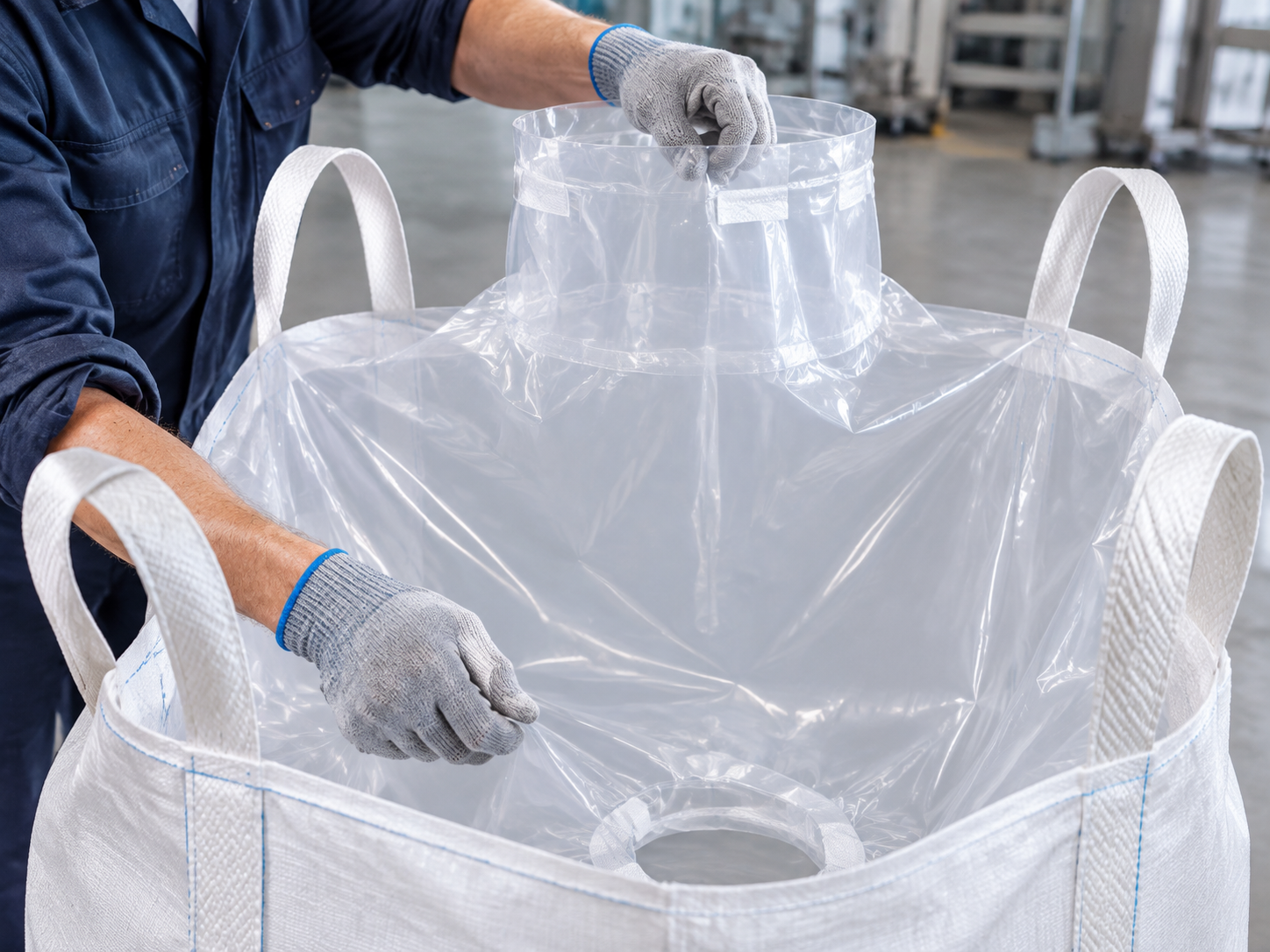
A standard PE liner can protect a dry product from dust and ordinary moisture, but loose film may not align with both openings. A form-fit liner is built around the bag geometry and customer interfaces.
The purchasing value lies in the drawing: finished dimensions, opening positions, fixing tabs or glue points, spout alignment and expected position through filling and discharge. Our guide to standard versus form-fit FIBC liners explains the choices, while the liner fit and interface guide lists the measurements to collect.
2. Barrier structures with measurable performance
Moisture-sensitive powders, hygroscopic chemicals and oxygen- or light-sensitive products may need more than PE. EVOH or aluminum foil composites can be considered, but "barrier" is not enough. Ask for the material structure, WVTR and OTR data, test method, conditioning, seal strength, seal window and handling limits.

Data must match the finished liner, not only a film sample. Pinholes, flex cracks, folds, welds and the bag-to-liner interface can change performance. Our aluminum foil FIBC liner evaluation checklist sets out the evidence and trial questions. FIBCORE's November agenda also includes barrier liners, pinholes, flex cracks and welding.
3. Food-contact, PFAS and NIAS documentation
Food ingredients, feed and some fine chemicals require a documentary chain that a basic bag quotation may omit. Materials, additives, inks, adhesives, processing aids and intended use matter. Convert a general "food grade" statement into declarations, migration or test evidence, limits of use and change control for the exact construction.
This is more visible in Europe. The EU Packaging and Packaging Waste Regulation has applied since 12 August 2026, and the European Commission states that restrictions on PFAS in food-contact packaging applied from the same date, with other measures phased in. This does not create one identical document set for every FIBC. Buyers should define the market, contact layer, material structure and evidence rather than rely on a generic certificate.
4. UN, Type C and Type D boundaries
Anti-static and dangerous-goods requirements often share one sales conversation but answer different questions. A UN-marked FIBC relates to a tested design for regulated dangerous goods. Type C or Type D addresses electrostatic behaviour under defined conditions. One claim does not automatically prove the other.
FIBCORE's November agenda includes Type D and discussion of a possible IEC 61340-4-4 revision. An agenda is not a published standard change. For a live project, verify the current certificate, test scope, marking, operational conditions, liner compatibility and transport rules. Our article on UN-certified FIBCs versus Type C/D anti-static bags provides the starting distinction.
5. Liner fixation, discharge and residual-material control
A liner can create problems if it is not fixed. It may slip into the fill stream, pull away from the discharge spout, trap material against the outer bag, or tear at an attachment point. For high-value powders, residual loss can exceed the liner price difference.
Define the fixing method, expected movement, fill height and discharge procedure, then test with representative material and the receiving hopper.
Where custom structures create value

Custom FIBC work is most valuable when the requirement appears in the interface, not only a capacity table:
a filling spout matched to the filler, lance or dust-control hood;
a discharge spout matched to the receiving hopper or conveying line;
a closure method that can be repeated by the filling operator;
baffles or a controlled shape for stability and container utilization;
vents, filter panels or pressure-relief details for a specific filling behaviour;
reinforcement at lifting, handling and abrasion points;
identification, printing and inspection areas; and
a liner fixed to the agreed positions without blocking either opening.
Each item belongs on an approval drawing with tolerances, materials and inspection points. The comparison is then between defined systems, not similar photographs. Start with the custom FIBC and liner options, then confirm scope through an RFQ and sample.
The November 2026 signals buyers should watch
November is a useful month to test assumptions, but it is not a month for premature conclusions.
FIBCORE Vienna, 5 November. The agenda covers PPWR, barrier liners, pinholes, flex cracks, permanent anti-static liners, dangerous-goods FIBCs, food contact, PFAS, NIAS and Type D. A scheduled agenda is not a conference conclusion.
India's BIS QCO, 6 November. The listed rule applies to 50 kg cement PP woven, laminated, block-bottom valve sacks under IS 16709:2017. It is not a new rule for every FIBC.
PP and PE supply. ICIS reported on 22 October that Indian polymer demand was expected to weaken after Diwali while propylene remained tight and Chinese PDH and MTO run rates were reduced. This is market commentary, not a customer quote or guaranteed November direction.
Freight. Drewry's 29 October World Container Index was USD 4,429 per 40-foot container, down 3% week on week; Shanghai-Los Angeles was USD 7,514 and Shanghai-New York USD 9,631. November FAK increases still need testing against actual bookings.
Fertilizer conversations. TFI's Market & Logistics Conference runs 9-11 November, Argus Fertilizer China 17-19 November, and The Fertilizer Show 18-19 November. Events can reveal questions; attendance is not evidence of an order.
The common lesson is to keep market signals, supplier claims and customer-specific evidence in separate boxes. That discipline is more useful than chasing a single headline.
Build an RFQ that allows a real comparison
Use one RFQ for local and international suppliers. Ask each supplier to respond to the same project.
| RFQ item | What to provide |
|---|---|
| Product | Material, grade, bulk density, particle size, fines, moisture sensitivity, temperature and hazardous properties |
| Bag | Style, dimensions, working load, safety factor, single-trip or reusable requirement, lifting method and handling route |
| Liner | PE, barrier or foil structure; thickness; finished dimensions; openings; fixing; static suitability |
| Interfaces | Filling equipment, spout dimensions, closure method, discharge spout and receiving equipment |
| Transport | Route, mode, transfer points, container or truck loading, storage, expected transit time and destination |
| Evidence | Current drawing, batch records, material declaration, relevant test reports, certificates and scope |
| Commercial | Quantity, Incoterm, packing method, sample plan, required delivery date and quote validity |
Do not accept "same as your current bag" as a specification. Ask for the material structure, drawing revision and interface dimensions. Do not compare a standard bag price with a custom liner system, or treat website capacity as available capacity for your order.
Conclusion
Kazakhstan's local expansion deepens a regional PP-to-bag supply chain. It may make standard bulk bags and basic PE-lined bags more competitive nearby. It does not erase specialty needs, because the difficult part is often not weaving a standard bag; it is defining and repeating the complete packaging system.
The defensible position is not "local versus imported." It is standardized supply versus verified fit. For a common bag, compare qualified sources on total landed cost and repeatability. Where barrier performance, food-contact documentation, dangerous-goods boundaries, liner fixation, discharge or equipment interfaces matter, make the drawing, evidence and trial central.
To review a project, send FIBC World the product data, current bag and liner drawing, fill and discharge equipment, target weight, route, destination, required documents and expected order timing. The first output should be a defined specification and a list of evidence to confirm, not an unsupported promise that one bag fits every market.
Related News
Other news you might be interested in
FIBC Bag Handling and Safety: Best Practices for Safe Use
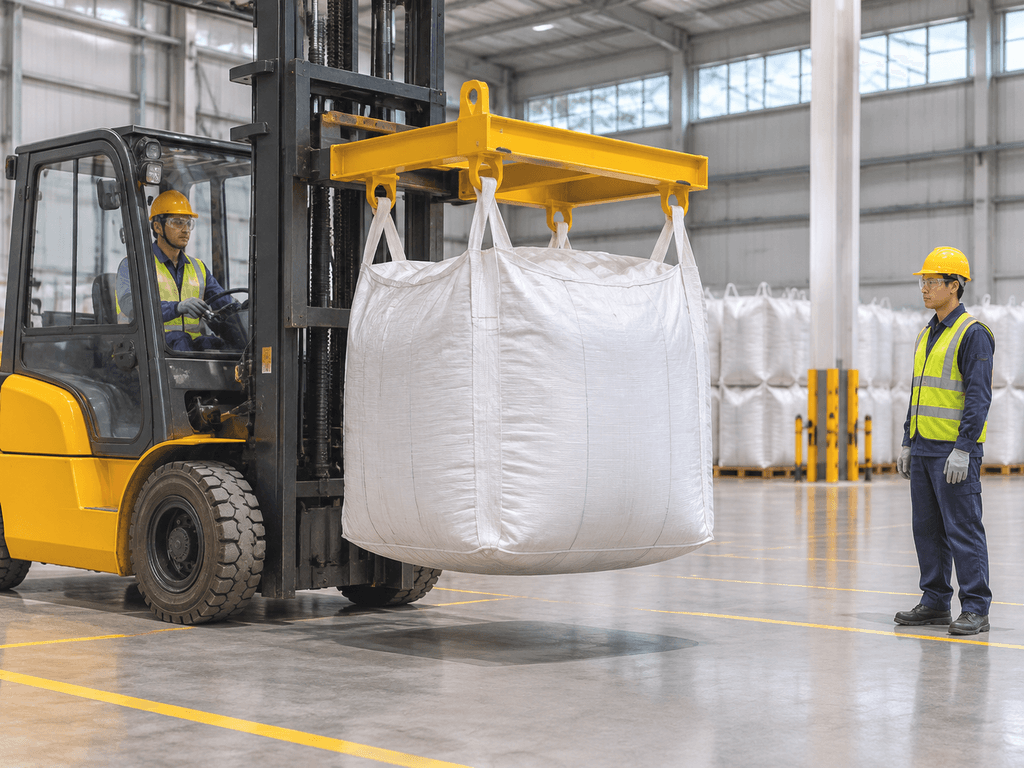
Proper FIBC handling is closely connected with operator safety, bag integrity and efficient bulk-material movement. An FIBC is a system of components rather than simply a woven fabric container. Lifting loops or sleeves, seams, fabric, closures, filling arrangements, discharge components and, where applicable, liners all contribute to how the bag performs during use.

Recyclable FIBC: Mono-material PP, with liner and ventilated type
When a buyer asks, "Is this FIBC recyclable?", the answer depends on which part of the bag is being discussed, where it will be used and what recycling route is actually available. A woven PP bag with a PE liner, a paper label, a polyester thread and a foil barrier is not the same product as a predominantly mono-material PP bag. Even a mono-material bag is not automatically recycled at scale if collection, cleaning and sorting are missing.This guide separates three questions that are often mixed together: what the bag is made of, what the bag is designed to do, and what evidence supports the claim. It is a buyer checklist, not a legal opinion or a certification statement.
Want to know more?
Get in touch with us for more information about our services and products.