
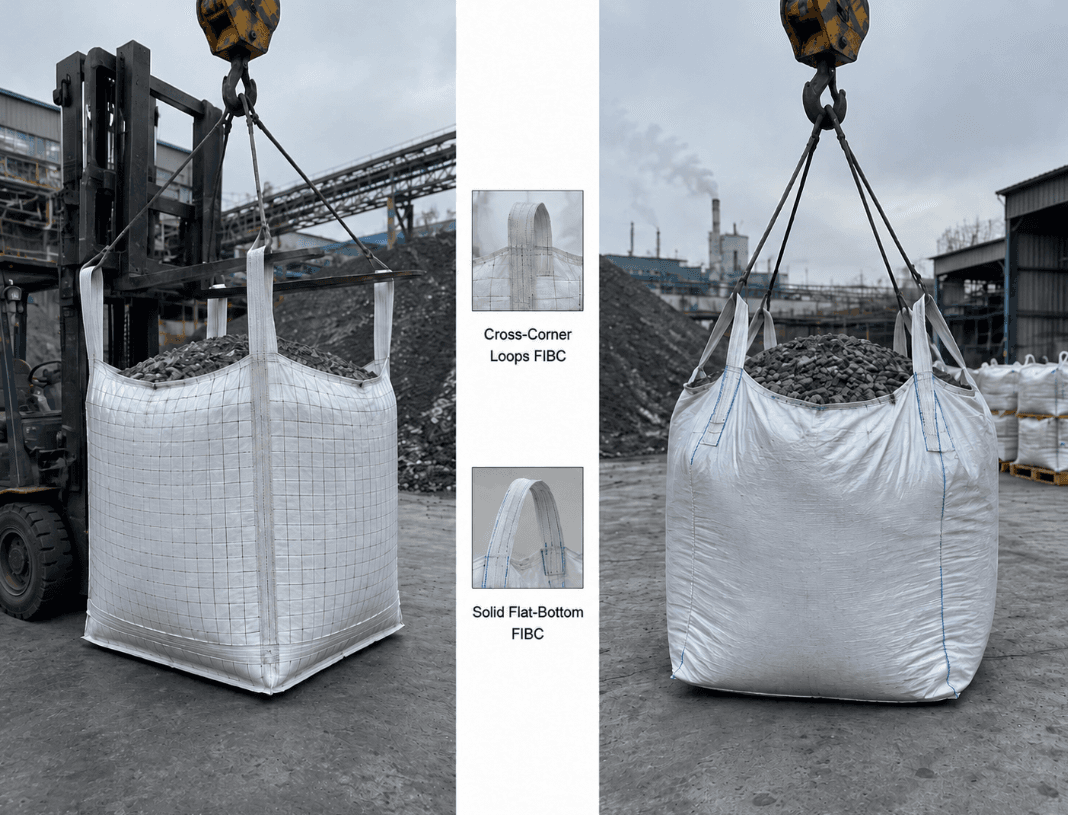
Heavy Payload Foundation Guide: Choosing Cross-Corner Loops with Perimeter Base Reinforcement vs. Solid Flat-Bottom Standard FIBCs

Dayang Yang
AuthorWith experience in FIBC bulk bag manufacturing and export sales, we operate our own production facility with stable large-scale capacity. We are specialists in bulk bags, conductive FIBCs, food-grade FIBCs, UN certified bags, and customized flexible intermediate bulk containers for industrial packaging and bulk material transportation solutions.
In heavy industrial material logistics, managing payloads between 1.5 and 2.5 tons strains the structural integrity of flexible packaging. Moving high-density mineral ores, chemical concentrates, heavy sand, or manufacturing crudes exposes bulk containers to intense gravitational pulling and violent dynamic shocks during forklift acceleration and crane hoisting.
When configuring a heavy-payload infrastructure, procurement managers and plant safety directors frequently evaluate two structural formats: Cross-Corner Loops with Perimeter Base Reinforcement and Solid Flat-Bottom Standard FIBCs. Choosing the wrong design for high-density, high-mass loads can lead to corner-seam shearing, bottom-sag distortion, or catastrophic failure during overhead transfers.
This guide evaluates the mechanical divergence, force distribution principles, and operational boundary limits of both heavy-duty structural options.
1. Defining the Structural Mechanics
The baseline difference between these two container formats lies in how lifting stress is transferred from the hoisting hooks down to the base fabric panel.
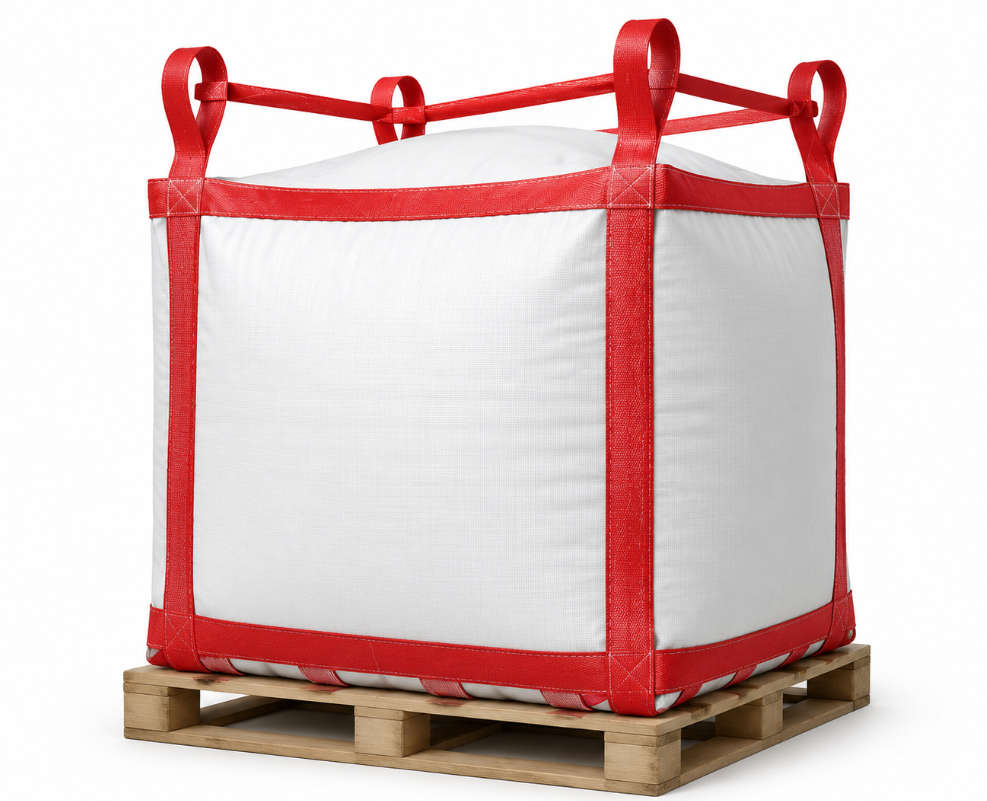
🏗️ Cross-Corner Loops with Perimeter Base Reinforcement
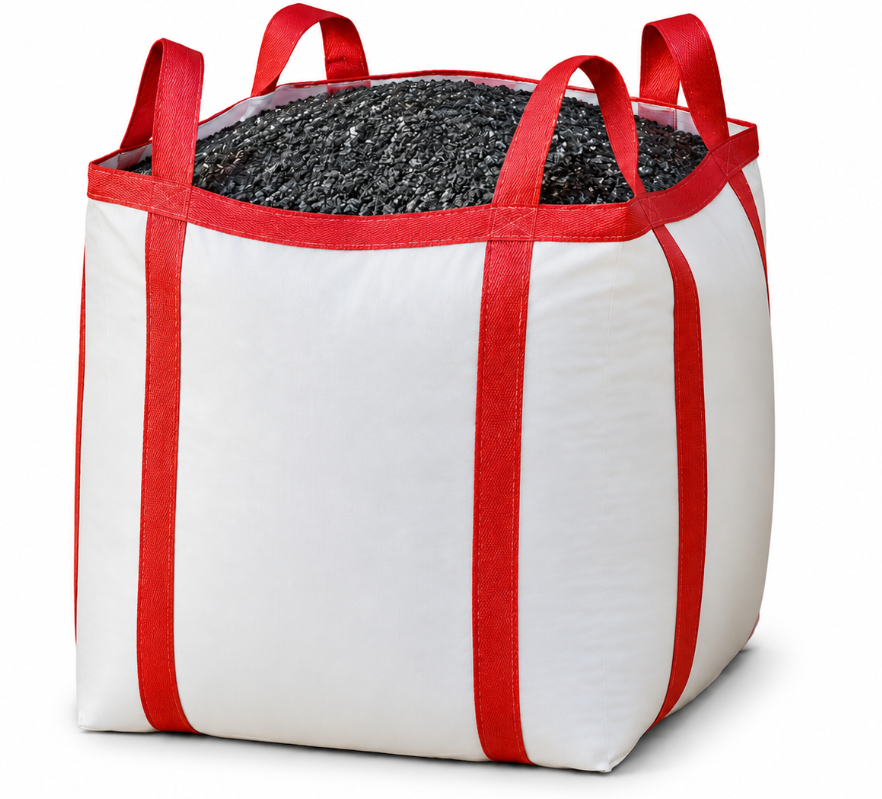
- Loop Engineering Architecture: Unlike standard loops sewn into vertical corner seams, cross-corner loops are fabricated from heavy-duty webbing sewn directly onto the flat body panels of the bag. The loop openings naturally arch upright, staying open for automated or manual forklift prong insertion without manual assistance.
- Base Reinforcement Matrix: The base features an interconnected network of cross-webbing belts and heavy perimeter reinforcement bands sewn across the bottom fabric plane.
- Stress Vector Tracking: Lifting tension travels downward through the rigid side-panel webbing and distributes across the integrated bottom belt grid, using the entire base loop network to lift the heavy mass symmetrically.
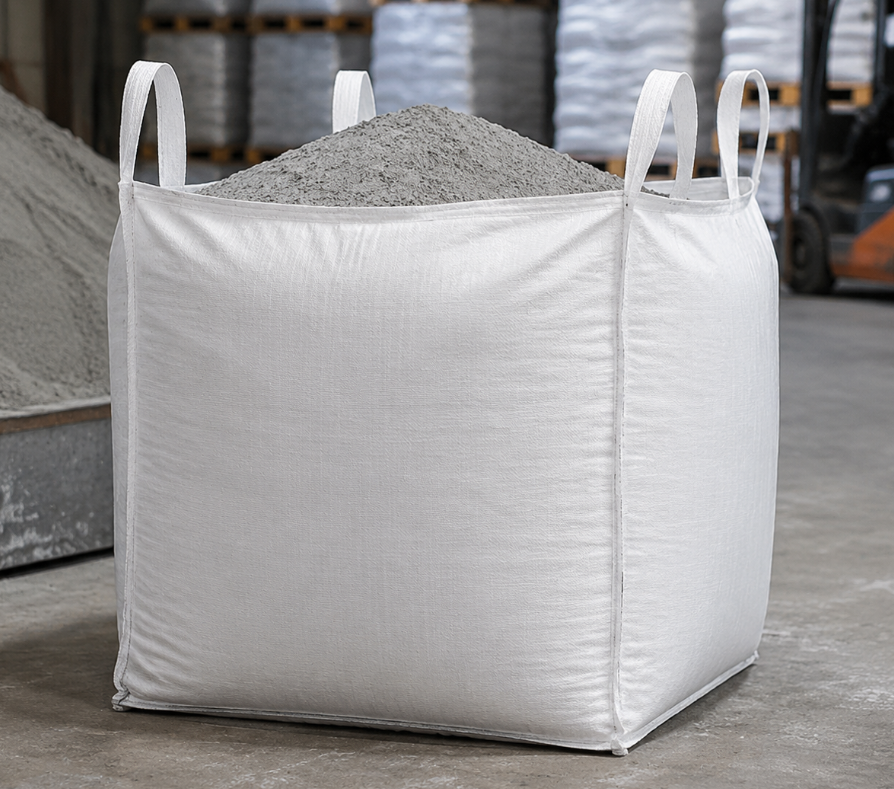
📦 Solid Flat-Bottom Standard FIBC (The Monolithic Base)
- Loop Engineering Architecture: Utilizes the universal 4-panel or U-panel standard corner-loop layout, where lifting straps are stitched directly into the vertical intersecting corner seams of the bag body.
- Base Reinforcement Matrix: Features a continuous, seamless, unpenetrated single-sheet woven fabric panel acting as a monolithic structural foundation. It contains no center cutouts, discharge apertures, or base belt stitching lines.
- Stress Vector Tracking: Structural lifting forces are concentrated along the four vertical corner seams. The payload weight rests completely flat against the solid woven base sheet, distributing mass evenly across a flat wooden or plastic pallet surface.
2. Force Distribution Under Extreme Dynamic Loads
When an overhead crane or heavy-capacity forklift lifts a 2.0-ton payload, the movement introduces dynamic kinetic acceleration. This force multiplies the effective downward weight against the fabric container.
⚠️ Standard Corner Loop Seam Dynamics
- Diagonal Pull Stress: As the central crane hook gathers the loops, it forces an inward diagonal pull angle.
- Point-Stress Concentration: This diagonal vector shifts the entire kinetic load toward the vertical corner seams. The heavy load pulls away from the stitching, concentrating high point-stress precisely at the corner-seam intersections.
- Base Sag Displacement: Lacking bottom structural belts, the center of the base panel flexes downward into a convex dome under massive density, pulling the lower seams inward.
🛡️ Cross-Corner with Perimeter Base Dynamics
- Parallel Lift Line: The loop placement ensures a direct, vertical, parallel lift line matching the hoist vector.
- Continuous Load Path: The high-denier strap webbing runs far down the flat fabric panels, bypassing vertical corners and distributing stress into the main woven sheets.
- Integrated Grid Cradle: The lower perimeter reinforcement bands and base webbing grid cross under the payload. This acts as a structural support cradle that maintains bottom flatness, keeping the payload stable and preventing lateral base bulging.
3. Engineering Comparison: Heavy-Load Operational Limits
| Engineering Parameter | Cross-Corner Loops with Perimeter Base | Solid Flat-Bottom Standard FIBC |
|---|---|---|
| Safe Working Load (SWL) Range | Optimized for 1,500 kg to 2,500 kg | Optimized for 1,000 kg to 2,000 kg |
| Lifting Stress Distribution | Shared via vertical panel webbing and base grid | Concentrated along the four vertical corner seams |
| Forklift Loop Accessibility | High (Loops stay rigidly arched for blind prong insertion) | Moderate (Loops can droop outward, requiring manual setup) |
| Base Shape Retention | Maximum (Perimeter belts hold flat cubic profile under load) | Moderate (Prone to circular bulging without pallet support) |
| Leakage & Sifting Mitigation | High (Compatible with customizable spouts or liners) | Ultimate (Seamless solid base panel blocks micro-leakage) |
| Primary Discharge Method | Custom bottom spout release or top vacuum | Base slitting (cutting open), top vacuum, or inversion tipping |
4. Material and Logistics Compatibility
Industrial commodities cannot be packaged uniformly. Their density, particle micron sizing, and handling routes dictate exact structural requirements:
Dense Minerals and Metallurgical Concentrates
Coarse sand, copper concentrates, and heavy iron ores approaching 2.5 tons exert extreme downward friction. The continuous perimeter base reinforcement prevents the heavy cargo from bursting through the lower seams when suspended by cranes over terminal staging docks.
Fine Chemical Powders & Flame Retardants
Ultra-fine chemical micro-particles are highly prone to sifting through stitch holes under heavy pressure. For these materials, the Solid Flat-Bottom Standard FIBC combined with double dust-proof felt lines provides an unpenetrated baseline barrier that prevents sifting leaks.
Engineering Resins & Nylon Granules
Uniform polymer pellets flow smoothly but cause standard bags to bulge laterally. Utilizing a reinforced base configuration or pairing a flat-bottom layout with a [Form-Fit Liner] keeps the payload aligned, preventing bag deformation within overseas containers.
5. Frequently Asked Procurement Questions
1. Why are cross-corner loops preferred for high-throughput forklift handling?
Standard corner-loop bags require a second warehouse laborer to manually hold the loops open so the forklift operator can slide the metal prongs through. Cross-corner loops are woven with structural memory components that force the loops to stand completely upright and rigid. This allows forklift drivers to execute rapid, single-operator "blind insertion" cycles, increasing warehouse material movement throughput.
2. Does a solid flat-bottom bag require specialized machinery to empty?
Yes, if you do not want to reuse the bag container. Since there is no discharge spout sleeve, the solid flat base must be opened using automated unloading hoppers equipped with hydraulic spikes, mechanical static cross-knives, or manual industrial slitting tools. If the container must be preserved for multi-trip logistics cycles under a 6:1 Safety Factor, it should be emptied using overhead pneumatic vacuum lines or a 180° inversion tipping rig.
3. Can these heavy-payload bags be combined with moisture barrier liners?
Yes, both styles fully support barrier integration. For reactive compounds or high-purity battery materials, we install custom-shaped [Multi-Layer Aluminum Foil Liners] or PE liners inside the bag body. When paired with a flat-bottom container, the liner maps seamlessly against the unyielding bottom fabric, optimizing vacuum sealing and nitrogen gas flushing operations without wrinkles.
---
Calibrating a packaging foundation for 1.5 to 2.5-ton payloads requires analyzing your material bulk density, lifting equipment tolerances, and global shipping routes.
Email: [email protected]
Technical Inquiry: Contact Our Engineering Team
Direct Line: +86 15232851009
Related News
Other news you might be interested in
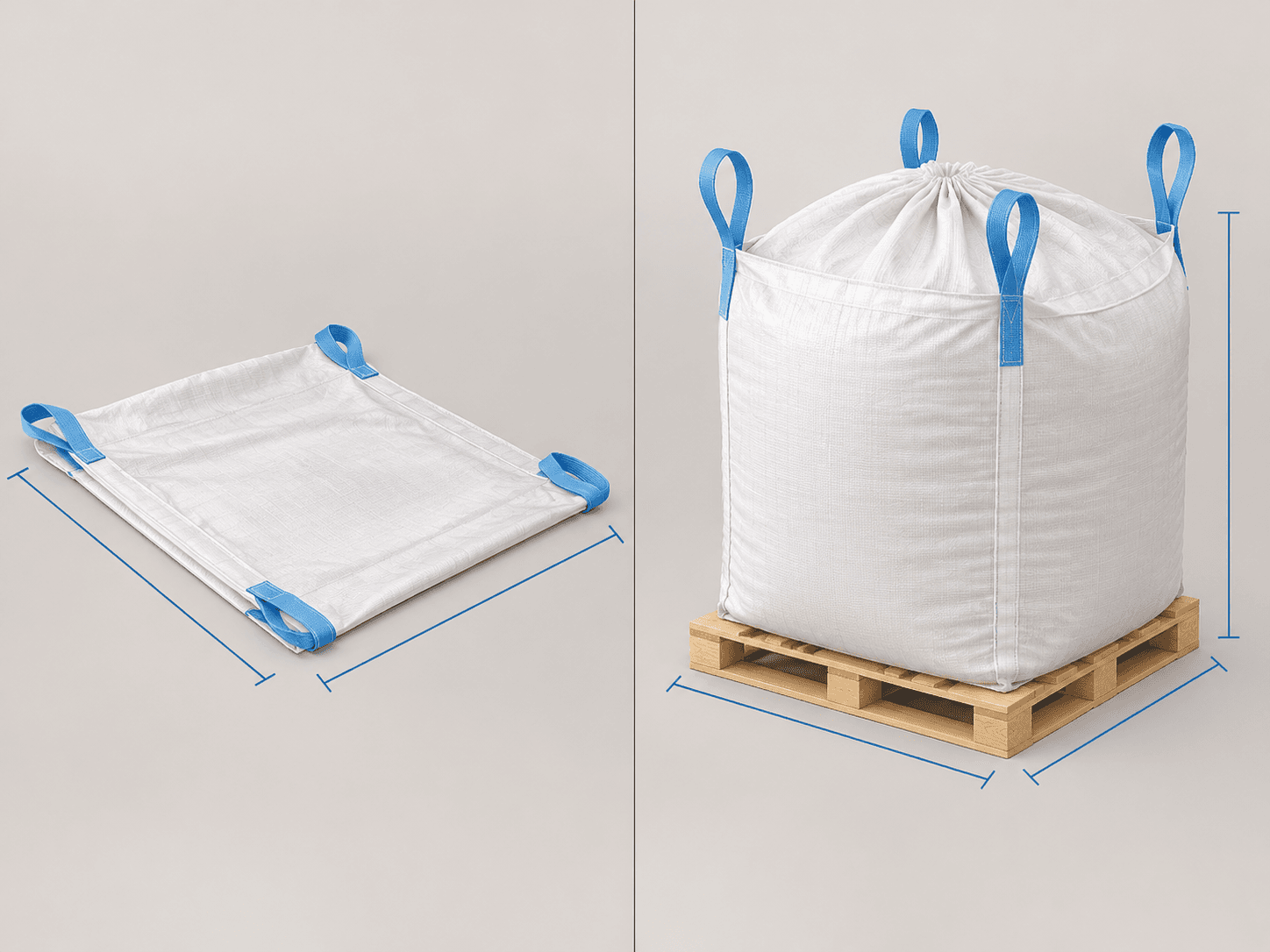
What Is a Super Sack? FIBC vs Bulk Bag vs Jumbo Bag Explained
A buyer searches for a “super sack.” The supplier replies with an FIBC quotation. The drawing is titled “jumbo bag.” The warehouse calls it a bulk bag. Four names, one object—usually.The words are not identical in status. FIBC is the technical term used by standards and industry guidance. Bulk bag, big bag, tote and jumbo bag are trade terms. Super Sack® is a registered trademark, not a generic name for every large woven bag.That distinction matters when a purchase order, a drawing or a customs document uses one term while the supplier uses another. The label helps you find the product family. It does not tell you the safe working load, the filled dimensions, the liner, the lifting arrangement or the compliance route. Those have to be specified.
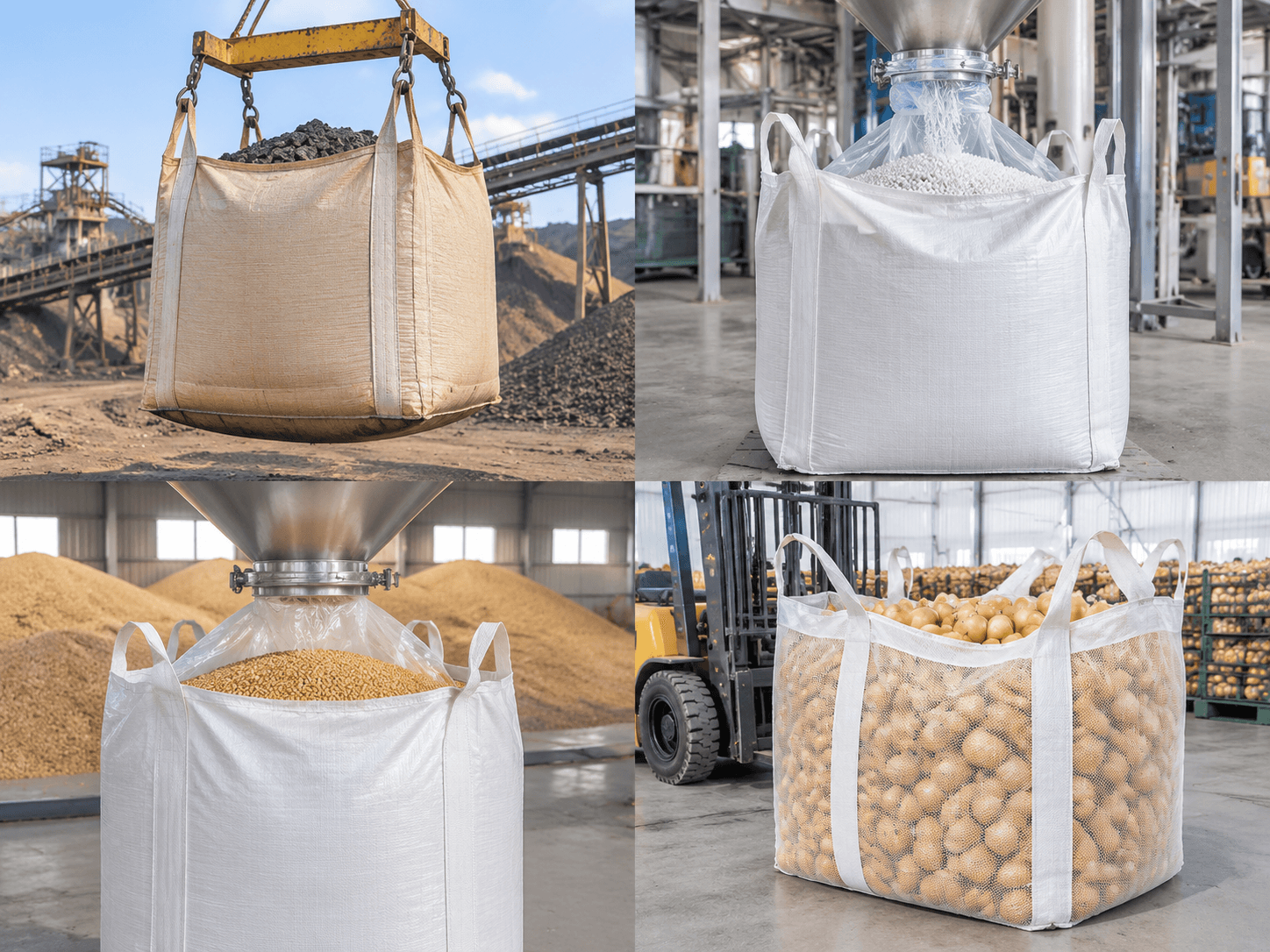
Bulk Bags by Application: Minerals, Fertilizer, Grain and Produce
A mineral concentrate, a fertilizer blend, a load of wheat and a load of onions can all be packed in a bulk bag. They should not all be specified the same way.On a quotation, each may appear as a one-tonne FIBC with a top opening and a discharge spout. In service, the loads behave differently. A dense mineral concentrate can reach its target mass at a low fill level and concentrate stress in the base and seams. A hygroscopic fertilizer can pick up moisture, cake and block the outlet. Grain can arrive dry but become unacceptable if condensation, pests or contamination are not controlled. Fresh produce can lose quality through heat, condensation and handling damage even when the bag itself remains intact.
Want to know more?
Get in touch with us for more information about our services and products.