
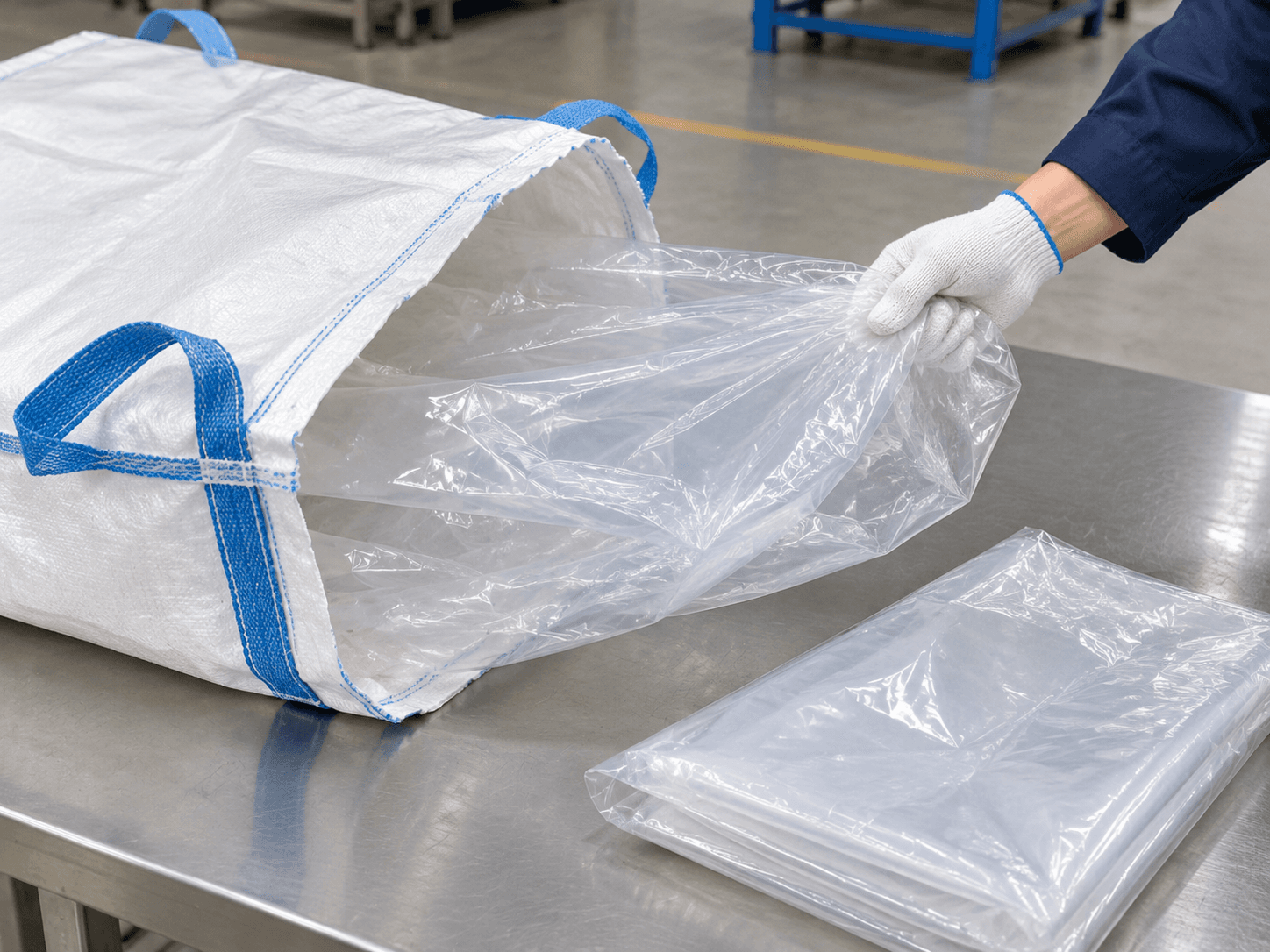
Intermediate Bulk Container Liner Market Size & Trends

Dayang Yang
AuthorWith experience in FIBC bulk bag manufacturing and export sales, we operate our own production facility with stable large-scale capacity. We are specialists in bulk bags, conductive FIBCs, food-grade FIBCs, UN certified bags, and customized flexible intermediate bulk containers for industrial packaging and bulk material transportation solutions.
A common first number in coverage of the IBC liner market is not a liner number. It is the size of the parent flexible intermediate bulk container (FIBC) market.
That distinction matters in 2026. Two commercial research houses now put the global FIBC market at about USD 6.38 billion (Fact.MR) and USD 6.90 billion (Future Market Insights) for the year. Their forecast growth rates differ by more than two percentage points. Neither headline isolates the liner segment. A buyer who treats either headline as “the liner market” will overstate the category, misread its growth drivers and benchmark the wrong suppliers.
This article uses “IBC liner” in the common trade sense: a flexible inner liner for an FIBC, bulk bag, jumbo bag or super sack. Rigid IBC bottle liners are a separate product category with a different supply chain.
The useful conclusion is not that the liner market is small or unmeasurable. It is that the liner is where several of the industry’s most important changes are being resolved: moisture and oxygen protection, food-contact evidence, static classification, automated filling, recycled content and design for recycling. The bag body still carries the load. The liner increasingly determines whether the packaging system is acceptable.
Four dates frame the 2026 shift. China’s GB/T 10454-2025 took effect on March 1 . The EU Packaging and Packaging Waste Regulation became applicable on August 12 . EFIBCA published its Design for Recycling Guidelines 2.0 in September . FIBCORE’s Vienna conference on November 4–5 put barrier liners, Type D protection and an IEC 61340-4-4 revision discussion on the same agenda as the global market outlook. Each development points to the same conclusion: the liner is moving from a low-cost accessory to a documented part of the packaging system.
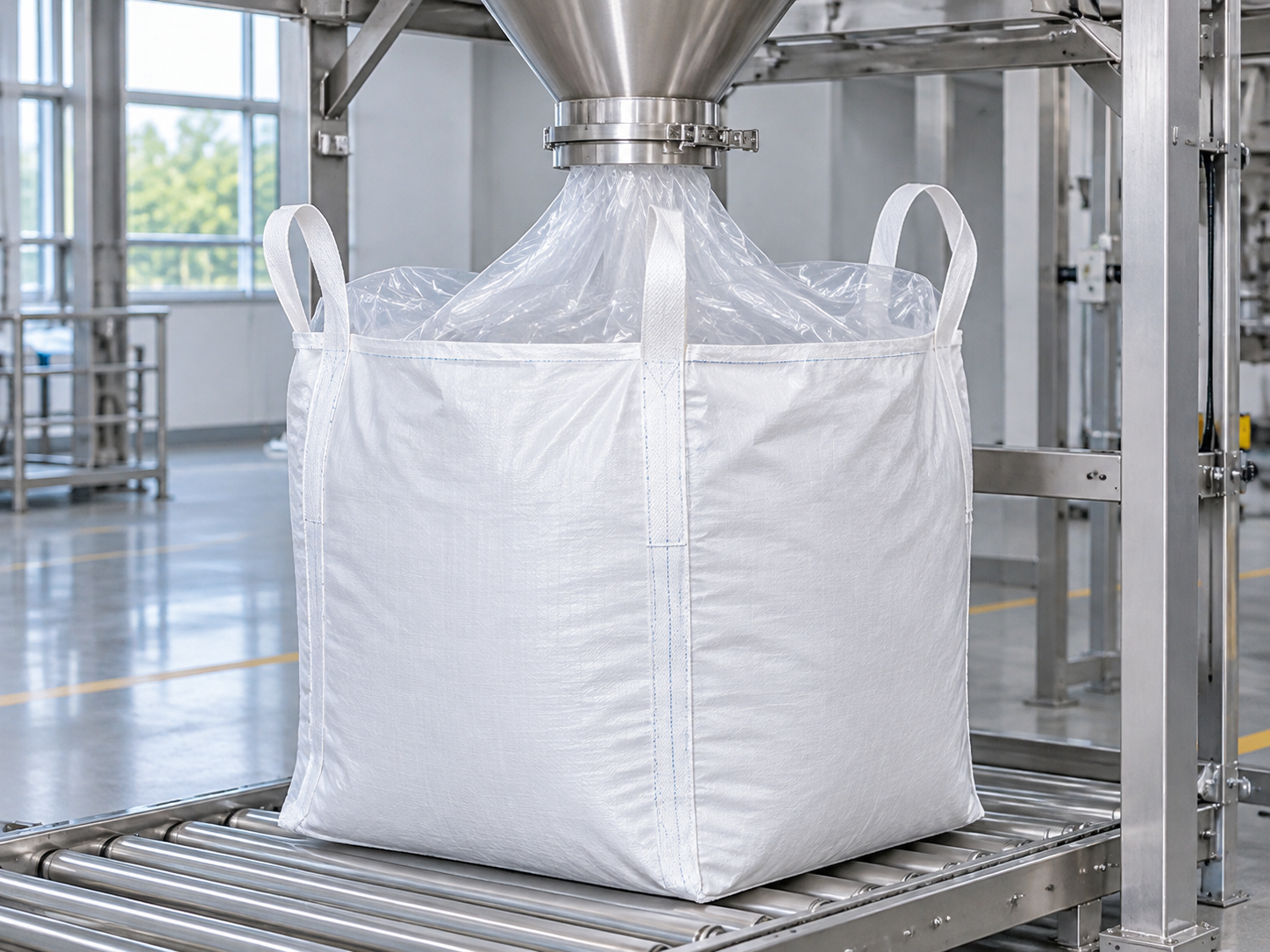
IBC Liner Market Size: What the 2026 Numbers Actually Measure
Two 2026 forecasts used in this brief agree on direction and disagree on scale.
| Indicator | Future Market Insights | Fact.MR | What it means |
|---|---|---|---|
| 2026 FIBC market | About USD 6.9 billion | About USD 6.38 billion | A base-year gap of roughly USD 520 million |
| 2026–2036 CAGR | 4.2% | 6.4% | Both imply growth; the pace differs materially |
| Largest bag type | Type A, about 44% | Type C/D growing faster | Standard bags remain the volume base |
| Dominant material | PP, about 78% | PP remains central | The material transition is gradual |
| Largest weight band | 500–1,000 kg, about 39% | Not specified in the summary | The core product is still the one-tonne class |
| Largest application | Chemicals, about 30% | Not specified in the summary | Chemical handling remains the anchor |
| Liner-specific revenue | Not disclosed in the public summary | Not disclosed in the public summary | Any liner figure is a derived estimate |
The gap between USD 6.38 billion and USD 6.90 billion is not a rounding error. It reflects different definitions of what is included, different sample sizes, different category boundaries and different assumptions about replacement demand. The CAGR gap is larger in practical terms: 4.2% compounds to roughly 51% growth over ten years, while 6.4% compounds to roughly 86%.
Neither figure is an official statistic. Both are commercial estimates. That does not make them unusable. It makes the scope note mandatory. A credible liner market number should state whether it measures:
liner film at the converter level, or finished liners sold to bag makers and end users;
liners sold with new bags, or replacement liners sold into an aftermarket;
standard polyethylene liners, or the full range of barrier, form-fit and conductive structures;
revenue, surface area, tonnage or unit count.
Without those definitions, “the IBC liner market is worth X” is not a fact. It is a number looking for a scope.
The more defensible reading is this: the parent FIBC market is a mid-single-digit growth market, with a large installed base of standard Type A bags. The liner segment is smaller, but its value is likely growing faster because more bags are moving from an unlined or basic PE configuration to a functional liner, and because each functional liner carries more engineering, testing and documentation.
Why the IBC Liner Segment Is Likely Growing Faster Than the Bag
A standard FIBC is a mature product. Its competitive logic is familiar: fabric weight, loom efficiency, sewing speed, loop construction, container loading and price per bag. Producers in India, Vietnam, China, Central Asia and other low-cost regions continue to add capacity. The result is persistent pressure on commodity bag pricing.
The liner does not follow the same curve. A liner can be changed without rebuilding the bag body, the loom or the sewing line. It can add moisture protection, oxygen protection, light protection, food-contact capability, static performance or a better fit inside a baffle bag. It can also be the difference between a bag that runs on a manual line and one that runs on an automated line.
That makes the liner one of the lowest-friction upgrade paths in bulk packaging. The buyer does not have to requalify the entire bag construction to solve a barrier problem, although the liner still has to be tested with the bag and the filling equipment. The supplier does not have to sell a new bag platform to sell a higher-value solution. The value migrates to the layer that controls the outcome.
Five demand drivers are pulling that migration:
Sensitive products. Battery materials, food ingredients, specialty chemicals and some fertilizers cannot rely on woven PP alone for moisture, oxygen, odor or light protection.
Food-contact evidence. A food-grade claim is moving from a fabric color or a brochure phrase to a specific declaration, migration test and intended-use statement for the bag, liner, closure, ink and adhesive.
Static classification. In hazardous areas, the liner can be part of the protective path or an insulating interruption. It cannot be selected independently of the bag’s Type C or Type D system.
Automation. Automatic filling heads, deaeration, sealing and liner-neck reinsertion require repeatable dimensions and predictable film behavior.
Design for recycling. As mono-material PP becomes a design target, the liner becomes the main trade-off between barrier performance and end-of-life compatibility.
Trend 1: From a PE Bag to an Engineered Barrier
Polyethylene remains the volume base of the liner business because it is familiar, flexible, weldable and cost-effective. For a dry powder that needs dust separation and moderate moisture protection, a standard lay-flat PE liner can still be the right answer.
The growth is elsewhere. The market is moving toward liners that are specified by function rather than by film name.
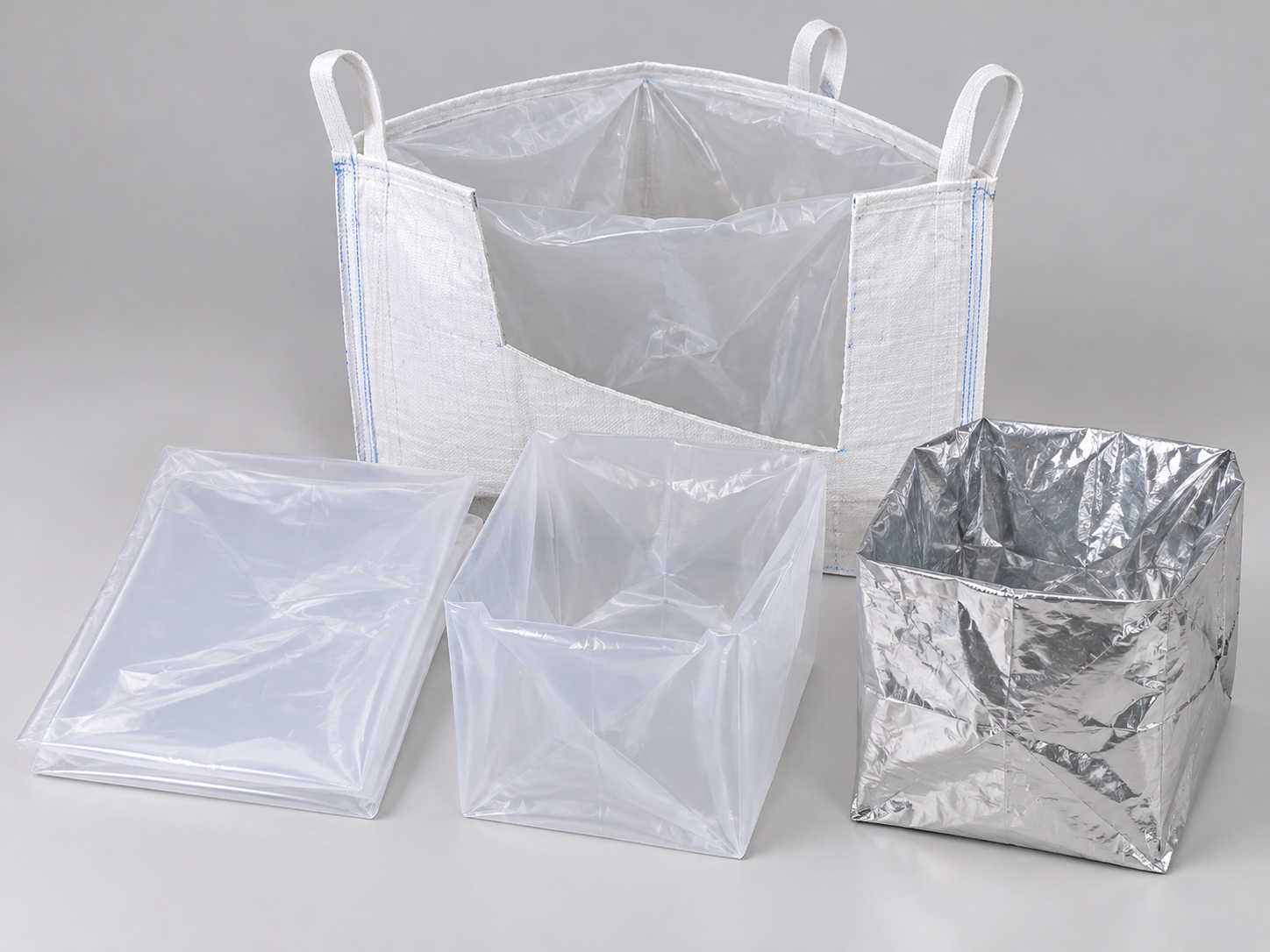
| Requirement | More relevant liner direction | What it solves | What it does not solve |
|---|---|---|---|
| Moisture pickup, caking | PE, foil laminate, sealed form-fit | Water-vapor transmission and dust ingress | Oxygen-sensitive degradation by itself |
| Oxidation, odor, shelf life | EVOH, multilayer barrier, foil laminate | Oxygen transmission and off-odor | A poor seal, pinhole or damaged neck |
| Light-sensitive product | Foil or opaque structure | Light and often moisture | Transparency or inspection needs |
| Fine powder in a baffle or Q-bag | Form-fit, shaped liner | Fit at the corners, collapse and residual heel | A bag geometry that is fundamentally wrong |
| Flammable atmosphere | Conductive or dissipative liner as part of a Type C/D system | Static control within a verified design | A standalone “anti-static” claim |
| Food contact | Food-contact liner plus controlled bag, ink and thread | The contact surface and documentary chain | Cleaning, allergens or the outer bag by default |
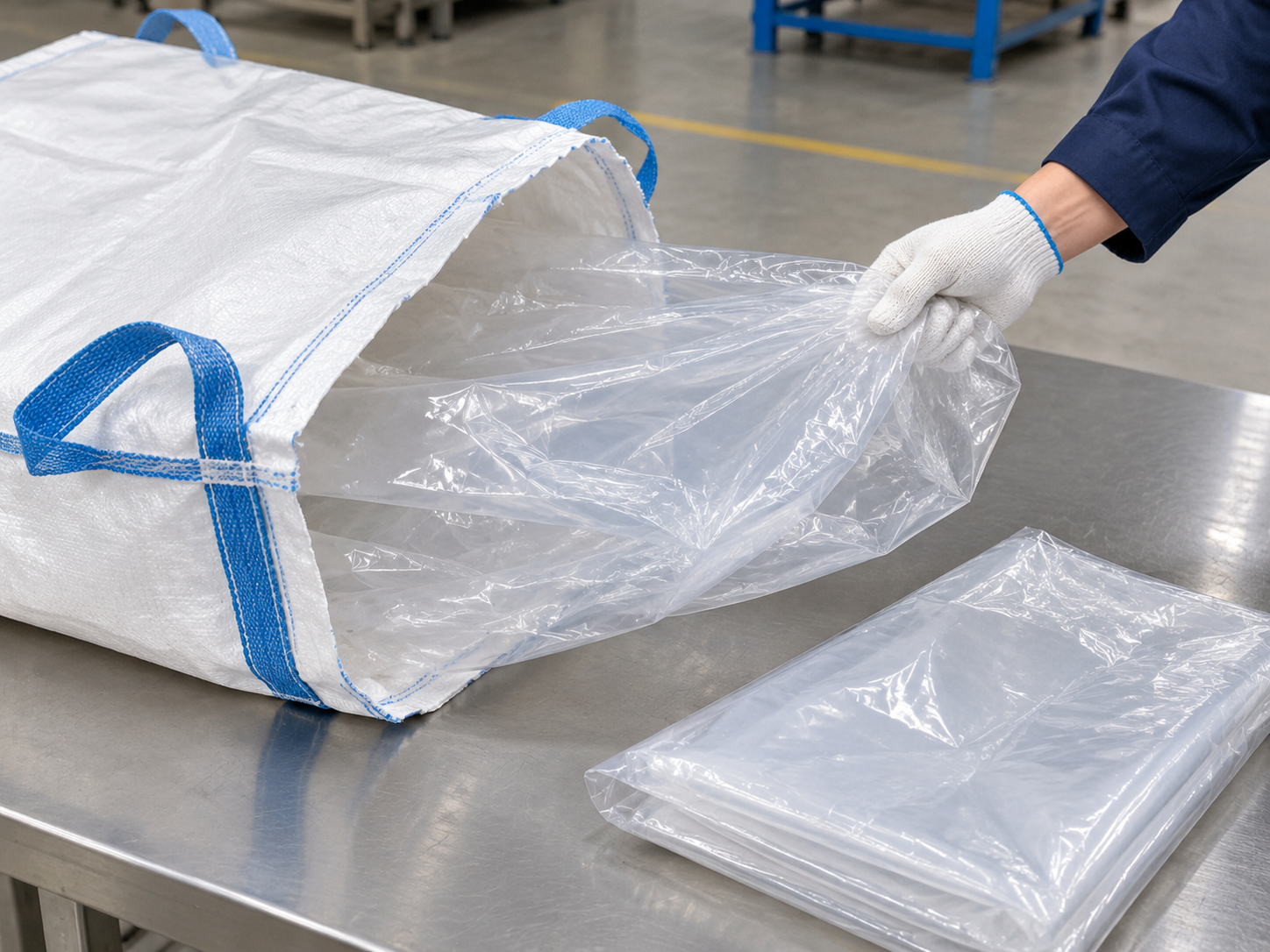
The important shift is from “Which liner is cheapest?” to “What does the liner have to do between filling and discharge?” A foil laminate can provide an excellent moisture and light barrier and still fail because the seal is weak, the liner neck is too short, the fit creates a fold at the discharge spout or the liner is damaged during installation.
Barrier performance is a system property. It is created by the film structure, the seal, the fit, the filling interface, the handling and the storage condition. The word “foil” is a material description, not a barrier value.
This is also why form-fit liners are gaining attention. A standard lay-flat liner can work well in a simple square bag. It fits poorly around the internal baffles of a Q-bag, where the corners and folds create areas for powder to collect and for the liner to pull away from the spout. A shaped liner can reduce that mismatch, but it has to be designed from the actual bag drawing, not from a nominal size.
Trend 2: The Standard Reset Is a Documentation Reset
The second change is not a new liner material. It is a new expectation of evidence.
ISO 21898:2024 replaced the 2004 edition and added or revised requirements for recycled mono-material constructions, electrostatic protection, marking, UV testing and the cross-reference to IEC 61340-4-4. In China, GB/T 10454-2025 was published on August 29, 2025 and took effect on March 1, 2026. It is a modified adoption of ISO 21898:2024 and replaces both GB/T 10454-2000 and GB/T 37425-2019 .
GB/T 10454-2025 is a recommended national standard, not a “mandatory national standard.” That distinction should be stated correctly. In practice, however, a customer specification, a tender document or a destination-market requirement can make it a contractual delivery condition.
The marking requirements are where the liner meets procurement. The standard’s identification set includes the manufacturer, unique product number, safe working load, safety factor, maximum stack count, test number, test date, laboratory, category, production month and special handling. A buyer who receives a bag with a generic label and a separate PDF report may not be able to connect the two.
For liners, the practical implications are:
the liner drawing and revision must match the bag drawing and revision;
the liner material, layer structure and weight must appear in the technical file;
the spout and neck dimensions must be controlled, not “nominal”;
the batch or lot must be traceable to the production record;
the test report must describe the tested construction, including the liner where the liner affects performance;
the declared recycled content must state the material, percentage, source and test boundary.
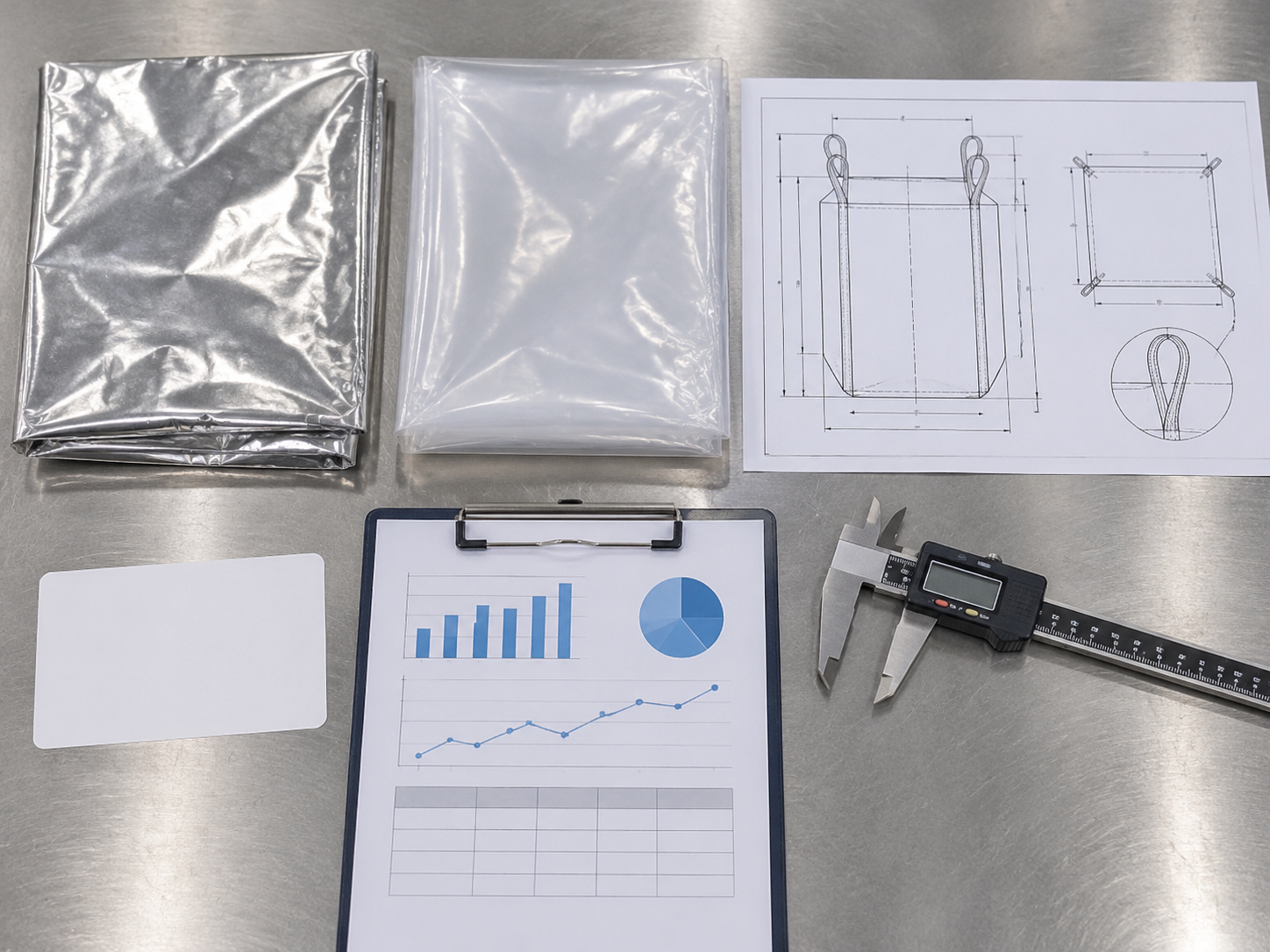
This is a quiet change with a large commercial effect. It turns the liner from an accessory into a controlled component. Suppliers that can produce the document pack will find it easier to enter regulated and multinational supply chains. Suppliers that can only quote a film thickness will increasingly be treated as film vendors, not packaging partners.
Trend 3: Design for Recycling Meets the Barrier Liner
Europe has moved the recyclability discussion from a slogan to a design checklist. EFIBCA published Design for Recycling Guidelines 2.0 in September 2026. The guidelines favor PP mono-material construction, compatible liners and components, controlled additives and colors, and a route to high-quality mechanical recycling and bag-to-bag closure.
The guidelines are voluntary. They are not an EU regulation, a product certification or an automatic recyclability claim. That caveat is especially important for liners. A PP bag body can be mono-material while the liner is PE, EVOH, foil, PET or a multilayer laminate. The liner may be necessary for the product, but it changes the end-of-life route.
The honest design question is therefore not “Is the bag recyclable?” It is:
Can the liner be removed cleanly by the user?
Does the liner contaminate the PP recycling stream?
Are the label, ink and adhesive compatible with the intended route?
Is the recycled content rPP, rPET or another material?
Is the recycled content verified by batch and source, or only by a supplier statement?
The rPP and rPET routes should not be merged. rPP is the closer fit for a PP bag-to-bag loop. Starlinger’s FIBC work includes rPP processing, a material passport and rPET bag options. Packem Umasree has built a bottle-to-bag rPET operation in India, using post-consumer PET bottles as feedstock . Both are real commercialization signals. They are not the same material stream, and “contains recycled content” does not automatically mean “designed for PP recycling.”
The EU Packaging and Packaging Waste Regulation adds a regulatory backdrop. It has applied since August 12, 2026, with a PFAS restriction for food-contact packaging from the same date and further recyclability, recycled-content and labeling measures phased in . The details and timing still depend on the packaging role, material structure and member-state implementation. For a liner buyer, the practical response is to ask for a component-level material breakdown and a separation plan, not a generic sustainability paragraph.
Trend 4: Static Control Is a System, Not a Liner Additive
Static protection is one of the clearest examples of why the liner cannot be bought in isolation.
ISO 21898:2024 incorporates IEC 61340-4-4 through its electrostatic requirements. The Type C and Type D classifications describe different protection concepts: Type C relies on a grounding path, while Type D is designed to avoid the need for a grounding connection under defined conditions. In both cases, the protection depends on the fabric, seams, accessories, liner, labeling and use conditions as a system.
The 2026 FIBCORE conference in Vienna, held on November 4–5, put Type D, ignition testing, Type C incident cases and the need to revise IEC 61340-4-4 on its agenda. That is a signal of technical attention. It is not evidence that a new IEC edition has been published. As of November 12, 2026, no published revision is confirmed in the source set used for this article.
The liner question is often misunderstood. An insulating liner can interrupt the intended static path in a Type C bag. A “dissipative” or “anti-static” liner label does not make the finished bag Type D. A Type D bag is not suitable for conductive dust, and its protection still depends on the complete design and the site’s hazardous-area assessment.
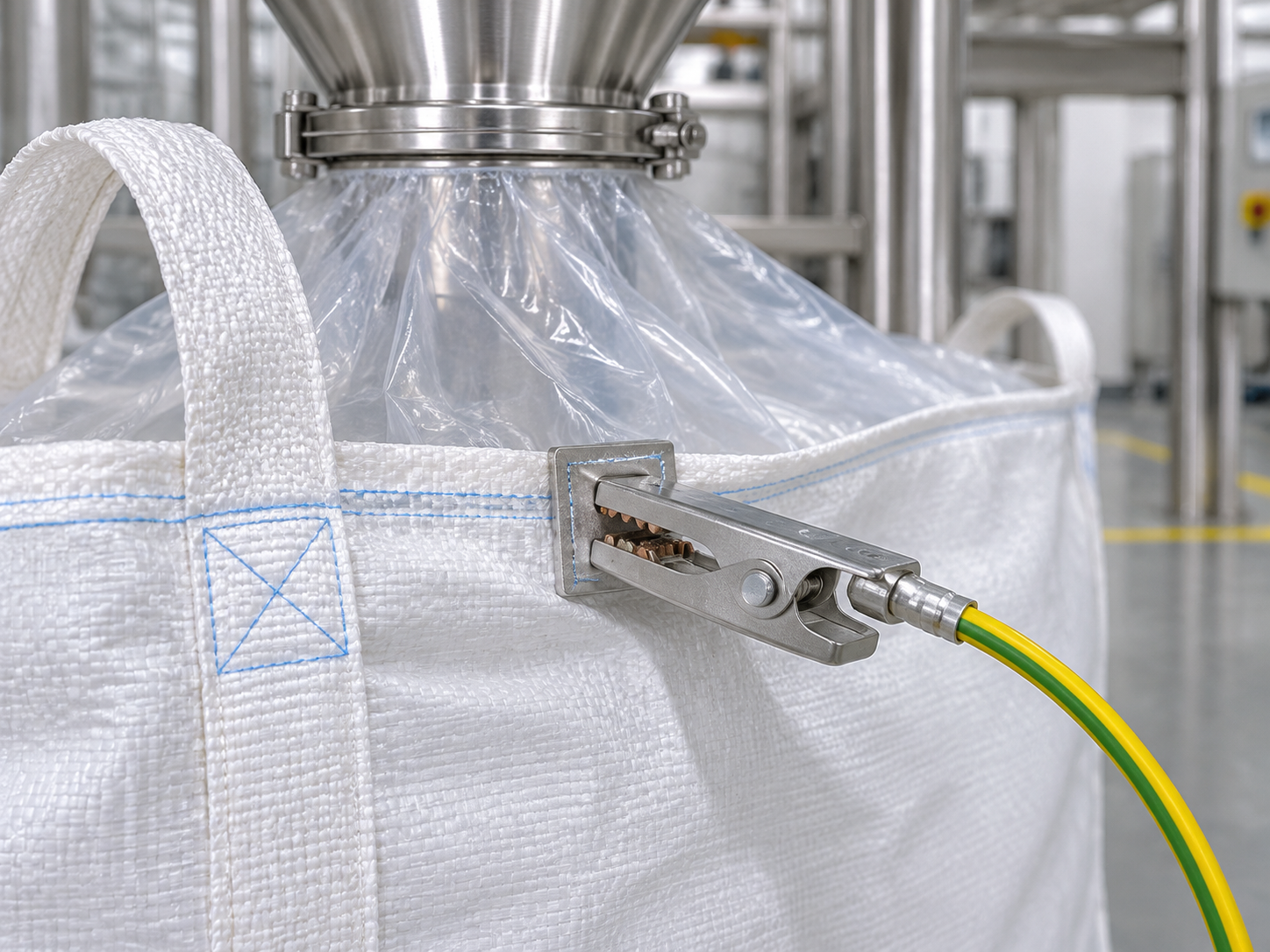
The correct RFQ language is therefore:
What is the hazardous area classification and the material’s minimum ignition energy?
Which bag type, liner and grounding method were tested together?
Does the test report cover the liner and the closure, or only the fabric?
What are the limitations on conductive dust, filling rate, humidity and maintenance?
What label and user instructions are supplied with the finished bag?
These questions are more useful than a surface-resistance number alone. They also explain why a liner supplier cannot promise “Type D performance” without the bag design and the application data.
Trend 5: Automation Turns the Liner Into an Interface
Automated filling is changing the liner from a flexible bag inside a bag into a machine interface.
Concetti’s single-loop automatic FIBC filling system is presented as capable of up to 180 bags per hour with one operator, including bag inflation, neck centering, conveying, heat sealing and liner-neck reinsertion. That is a manufacturer claim, and the actual rate will depend on the material, bag, weighing accuracy, sealing and site logistics. The direction is still clear: the line expects repeatability.
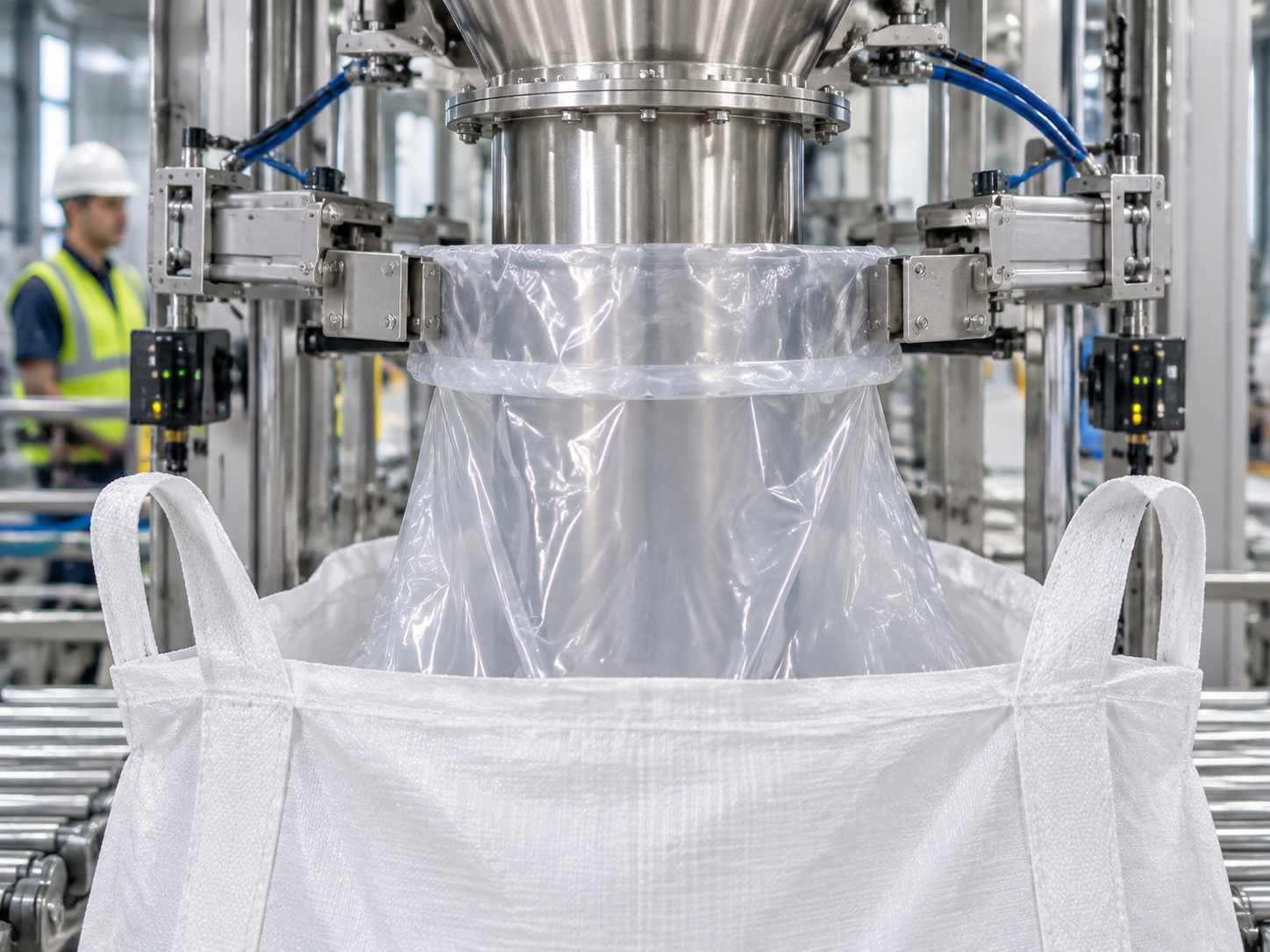
The tolerances that matter are not the headline bag dimensions. They are:
the filling-spout inside diameter, outside diameter, length and clamping area;
the liner neck diameter, length and concentricity;
the liner fixing points and the inflation path;
the film’s friction, stiffness and tendency to block or telescope;
the heat-seal window and the condition of the seal after product contact;
the fold pattern and stack consistency of the supplied liners;
the ability to reinsert the liner neck after filling without contamination.
A liner that works on a manual line can fail on an automated one because it folds into the product stream, does not inflate evenly, seals with product in the seam or pulls away from the spout during deaeration. The buyer should treat the liner drawing and the filling-head drawing as one interface package, not as two separate purchases.
This is also where the commercial premium sits. A standard PE liner is easy to compare by weight and price. A liner that has been designed for a specific filling head, bag geometry, product and discharge path is harder to replace with a lower-cost roll of film.
Trend 6: Supply Is Shifting, but the Liner Premium Is Not Disappearing
Capacity is moving. Kanpur Plastipack Limited plans to add 6,000 tonnes per year of FIBC capacity over five years; in Q3 FY26, Europe accounted for 62.1% of its FIBC exports. In Kazakhstan, KPI signed agreements with local FIBC and Taraz Plastic in October 2026 to increase domestic PP downstream processing; the local company FIBC has expanded its manufacturing capacity and installed equipment for multifilament yarn that was not previously produced in the country.
Both developments point in the same direction: standard FIBC supply is becoming more regional, more competitive and more capable. That is good for buyers of commodity bags. It does not remove the premium for a liner that has to meet a barrier target, a food-contact file, a static classification, an automation interface or a recycling requirement.
The reason is not that capacity cannot make liners. It is that the value is no longer in the film alone. It is in the combination of:
application engineering and bag-fit design;
material and barrier data;
seal and interface validation;
batch traceability and document control;
trial support at the customer’s filling and discharge line;
a credible position on recycled content and end-of-life.
Those capabilities scale more slowly than blown-film capacity. That is why the liner layer can grow in value even when the bag market grows only in the mid-single digits.
What Buyers Should Put in the RFQ
The market data is useful for context. The procurement decision still depends on the application. A liner RFQ should be specific enough to compare suppliers on the same basis.
| RFQ item | What to state | Why it changes the answer |
|---|---|---|
| Product | Material name, bulk density, particle size, temperature, moisture, oxygen and light sensitivity | Defines the barrier and discharge duty |
| Failure mode | Caking, dusting, oxidation, odor, static, liner movement, residual heel or seal failure | Defines what “pass” means |
| Bag type | Standard, baffle/Q-bag, circular, coated or uncoated; drawing revision | Defines the liner shape and fixing points |
| Liner structure | PE, EVOH, foil, multilayer, conductive; thickness and layer order | Defines performance and evidence requirements |
| Interface | Filling-spout and discharge-spout dimensions; manual or automatic filling | Defines neck, fit and machine compatibility |
| Evidence | Batch record, material declaration, food-contact file, static report, recycled-content statement | Defines what can be claimed and verified |
| Trial | Actual material, target weight, filling equipment and discharge station | Defines whether the system works outside a sample photo |
| End of life | Removal method, recycling route, contamination risk and destination market | Defines whether a recyclability claim is credible |
A liner sample that looks correct on a table is not a qualification. The useful trial uses the actual product, the actual filling head, the target weight and the receiving equipment. It records the bag drawing, liner revision, material lot, machine settings and the measured result: fill time, seal quality, liner movement, residual product and discharge behavior.
Outlook: Mid-Single-Digit Bag Growth, Faster Value Migration
The base case for the parent FIBC market is moderate growth, not a boom. Type A bags remain the largest volume category, PP remains the dominant material and the 500–1,000 kg class remains the commercial center of gravity. Chemical, fertilizer, mineral, food and agricultural applications continue to provide the underlying demand.
The liner layer is likely to outperform on value for three reasons:
More bags are being lined. Barrier, food-contact, static and automation requirements are moving from specialty projects into mainstream specifications.
Each liner carries more engineering. Form-fit geometry, multilayer barriers, conductive structures, controlled necks and batch documentation add value that a plain film does not have.
Replacement and redesign create recurring demand. A liner is replaced more often than a bag body in some applications, and a change in product, equipment or regulation can trigger a new liner specification without a new bag platform.
The watch list for the next twelve months is concrete: the secondary rules and guidance under the EU packaging framework; the direction of the IEC 61340-4-4 revision discussion; the availability and price of rPP; the adoption rate of automatic filling and liner-neck reinsertion; and the pace of new FIBC capacity in India, Central Asia and Southeast Asia.
None of those items supports a precise liner market forecast today. They do support a clear procurement conclusion: the liner is no longer a commodity add-on to a bulk bag. It is the layer where barrier performance, compliance, automation and recyclability are decided. Buyers who specify that layer as a system will get a more predictable bag. Suppliers who can document and validate it will be less exposed to the price competition in standard bags.
To evaluate a liner for a specific bag and filling line, send FIBC World the material data, target fill weight, current bag and liner drawings, filling-head and discharge dimensions, destination market and the failure mode you need to solve. The first useful output should be a fit, barrier and test-route recommendation, not a generic price per kilogram.
Related News
Other news you might be interested in
What Is a Super Sack? FIBC vs Bulk Bag vs Jumbo Bag Explained
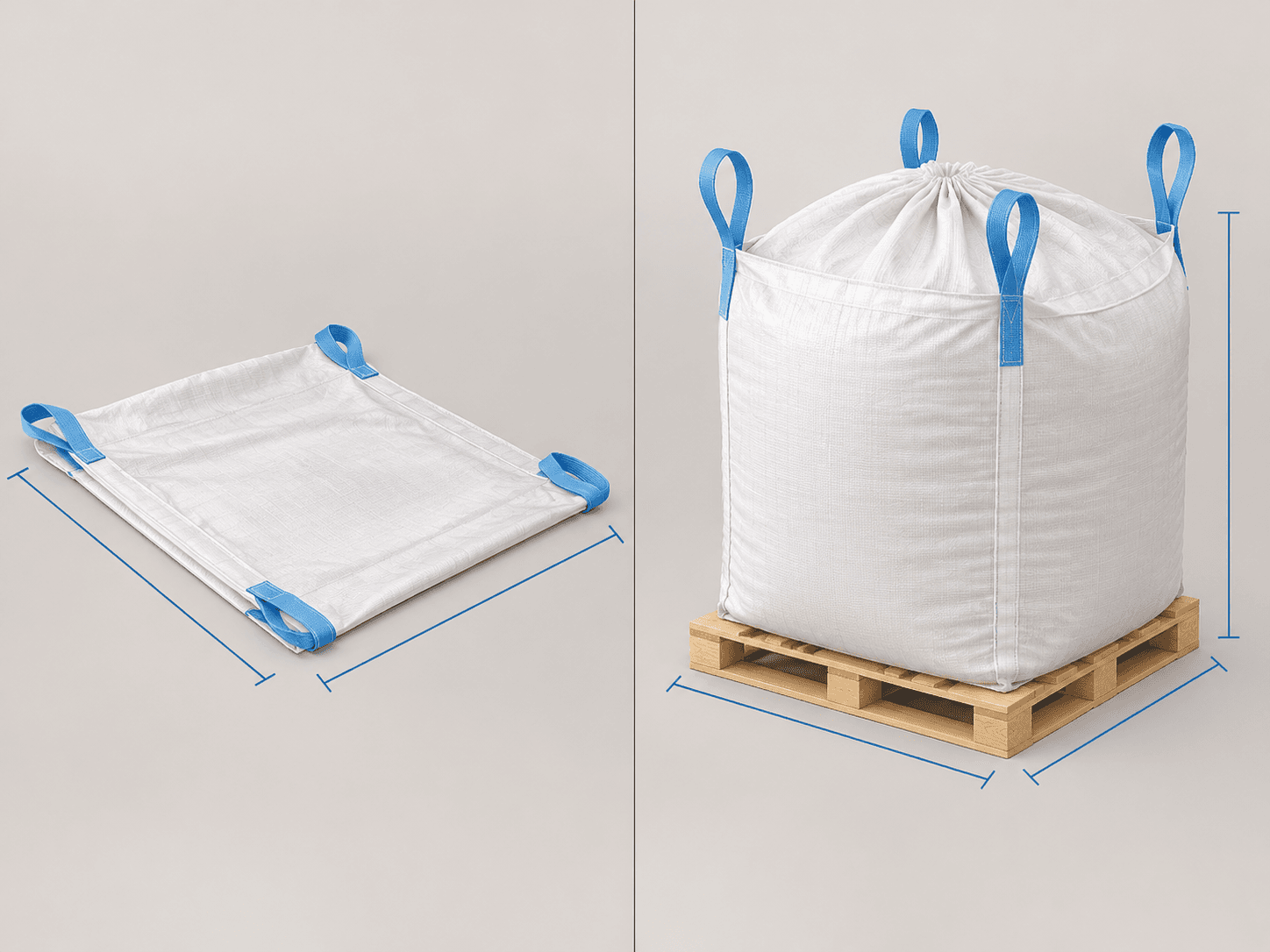
A buyer searches for a “super sack.” The supplier replies with an FIBC quotation. The drawing is titled “jumbo bag.” The warehouse calls it a bulk bag. Four names, one object—usually.The words are not identical in status. FIBC is the technical term used by standards and industry guidance. Bulk bag, big bag, tote and jumbo bag are trade terms. Super Sack® is a registered trademark, not a generic name for every large woven bag.That distinction matters when a purchase order, a drawing or a customs document uses one term while the supplier uses another. The label helps you find the product family. It does not tell you the safe working load, the filled dimensions, the liner, the lifting arrangement or the compliance route. Those have to be specified.
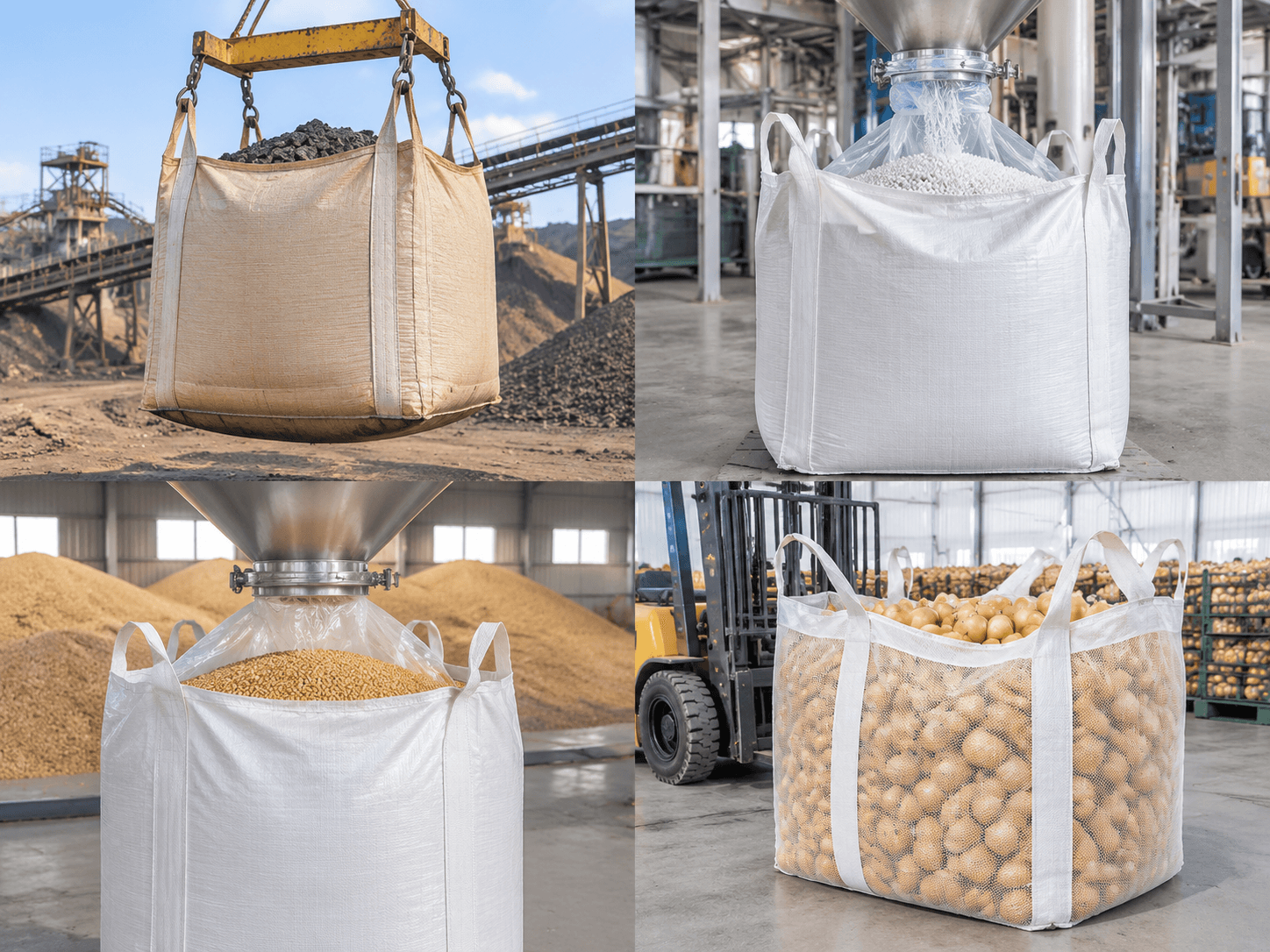
Bulk Bags by Application: Minerals, Fertilizer, Grain and Produce
A mineral concentrate, a fertilizer blend, a load of wheat and a load of onions can all be packed in a bulk bag. They should not all be specified the same way.On a quotation, each may appear as a one-tonne FIBC with a top opening and a discharge spout. In service, the loads behave differently. A dense mineral concentrate can reach its target mass at a low fill level and concentrate stress in the base and seams. A hygroscopic fertilizer can pick up moisture, cake and block the outlet. Grain can arrive dry but become unacceptable if condensation, pests or contamination are not controlled. Fresh produce can lose quality through heat, condensation and handling damage even when the bag itself remains intact.
Want to know more?
Get in touch with us for more information about our services and products.