
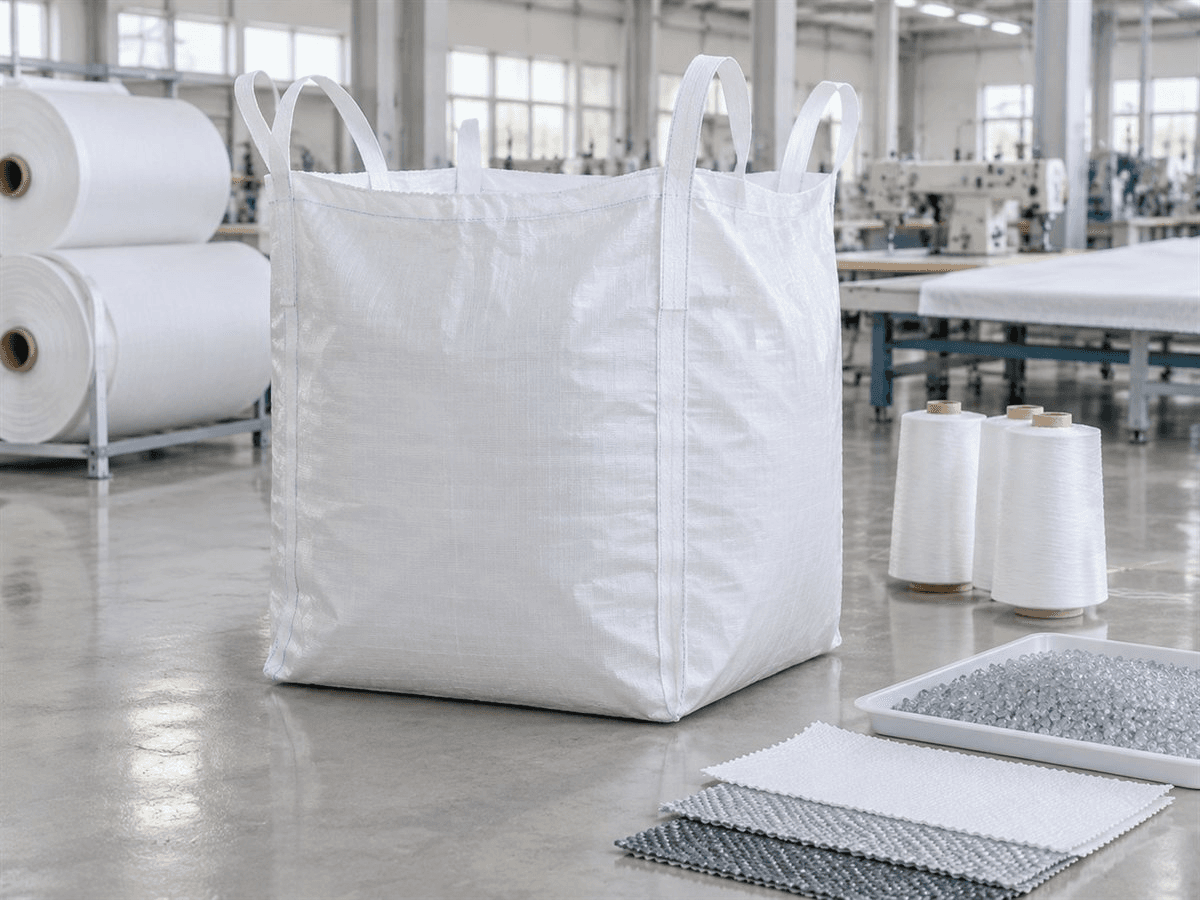
The Role of Circular Design in Modern Bulk Bag Manufacturing

Dayang Yang
AuthorWith experience in FIBC bulk bag manufacturing and export sales, we operate our own production facility with stable large-scale capacity. We are specialists in bulk bags, conductive FIBCs, food-grade FIBCs, UN certified bags, and customized flexible intermediate bulk containers for industrial packaging and bulk material transportation solutions.
A bulk bag is usually described by its headline numbers: safe working load, dimensions, liner type and lifting configuration. Those numbers matter, but they hide a more important fact. An FIBC is a system of materials joined together — woven PP fabric, coating, loops, sewing thread, spouts, liners, labels, inks and closures. The way those components are combined determines not only how the bag performs in service, but also how much material is wasted in production, whether the bag can be emptied and used again, and whether its materials can be separated and recycled.
That is the practical meaning of circular design in FIBC manufacturing and bulk bag production. It is not a single feature added at the end of the production line, and it is not the same as a recyclability claim. It is the discipline of making decisions across the product life cycle — material selection, component compatibility, clean discharge, repairability, production yield and end-of-life handling — without compromising load performance, product protection or safety.
Modern bulk bag manufacturing offers more construction options than the traditional woven bag plus liner, and that choice is exactly why circular design has become a manufacturing discipline rather than a purchasing slogan. The more options a supplier can offer, the more important it is to define which ones actually fit the product and its end-of-life route.
This article looks at circular design from the manufacturer's side of the drawing board. It covers the main design levers, the trade-offs buyers should expect, and the questions that turn a general sustainability request into a specification that can be quoted, tested and verified.
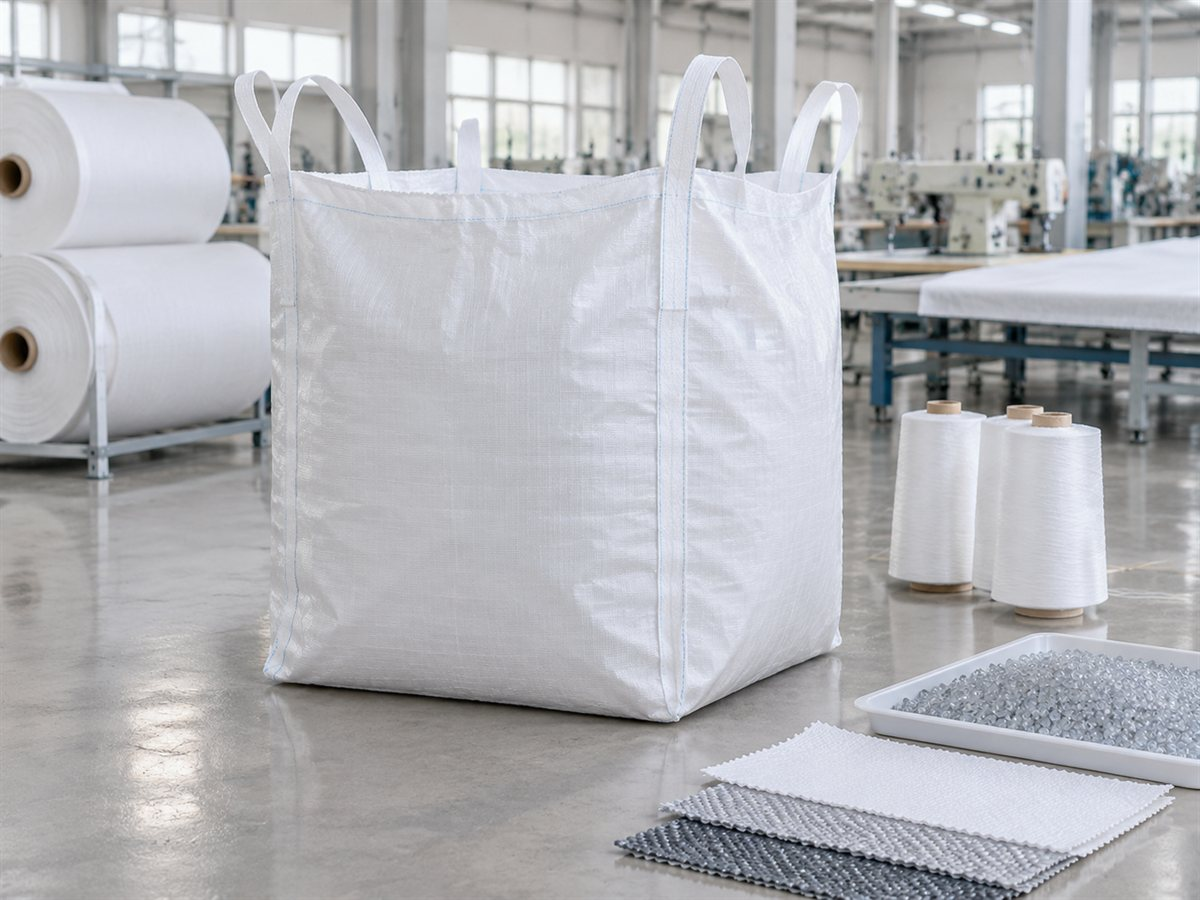
Circular Design Begins Before Production
Most of a bag's environmental profile is fixed before the first roll of fabric is cut. Once the material structure, liner construction, print coverage, seam pattern and opening configuration are approved, the room to reduce waste, improve recyclability or extend service life becomes limited.
A useful way to organize the decisions is to think in three directions:
Narrow: use less material and fewer material types, while keeping the required strength and barrier performance.
Slow: extend the useful life of the bag through clean discharge, inspection, repair and reuse where the application allows it.
Close: design the bag so that its materials can be separated, collected, sorted and returned to a recycling stream.
These directions can conflict. A lighter bag may be harder to reuse. A high-barrier liner may be essential for the product but incompatible with a PP recycling stream. A liner that is easy to remove may move during filling. Designing for circularity is the work of resolving those conflicts openly, not pretending they do not exist.
For a fossil-based product such as a PP FIBC, the practical work is to narrow, slow and close material loops. The regeneration strand of circular economy thinking is more relevant to biological materials; for a woven PP bag, the measurable levers are material efficiency, service life, separation and recovery.
Map the Bag as a Material System
Start with a component-level view. A typical FIBC may include:
woven PP fabric, with or without a coating or lamination;
lifting loops, sleeves or straps;
sewing thread and seam tape;
top and bottom spouts, skirts or open mouths;
a liner, which may be PE, PP, EVOH or a foil composite;
labels, printing inks, adhesives and closures;
UV stabilizers, antioxidants, pigments and other additives.
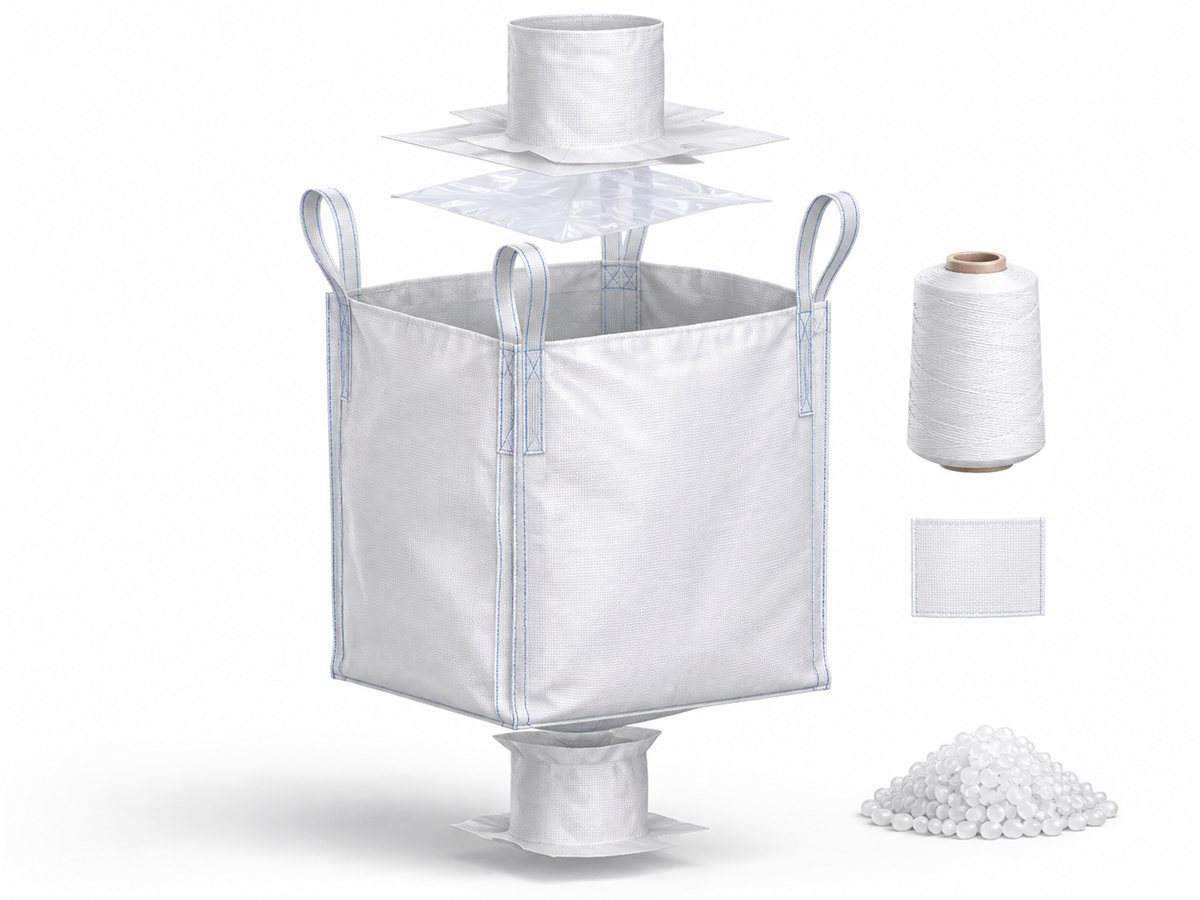
A circularity assessment asks three questions about this list. Which components are made from the same material? Which components can be separated by the user? Which components will contaminate the recycling stream if they are not separated?
A bag can be described as "PP" while containing a PE liner, a paper label, a polyester thread and a multi-material barrier film. That does not make the description false at the fabric level, but it makes the complete-bag claim incomplete. Buyers should ask for a bill of materials by component and weight, not a single material name.
Narrow: Reduce Material Complexity at the Design Stage
The strongest starting point for an FIBC designed for circularity is a predominantly mono-material PP construction. PP is already the main material of the woven bag, and keeping loops, thread, coatings and compatible components in the same material family makes the bag easier to sort and reprocess.
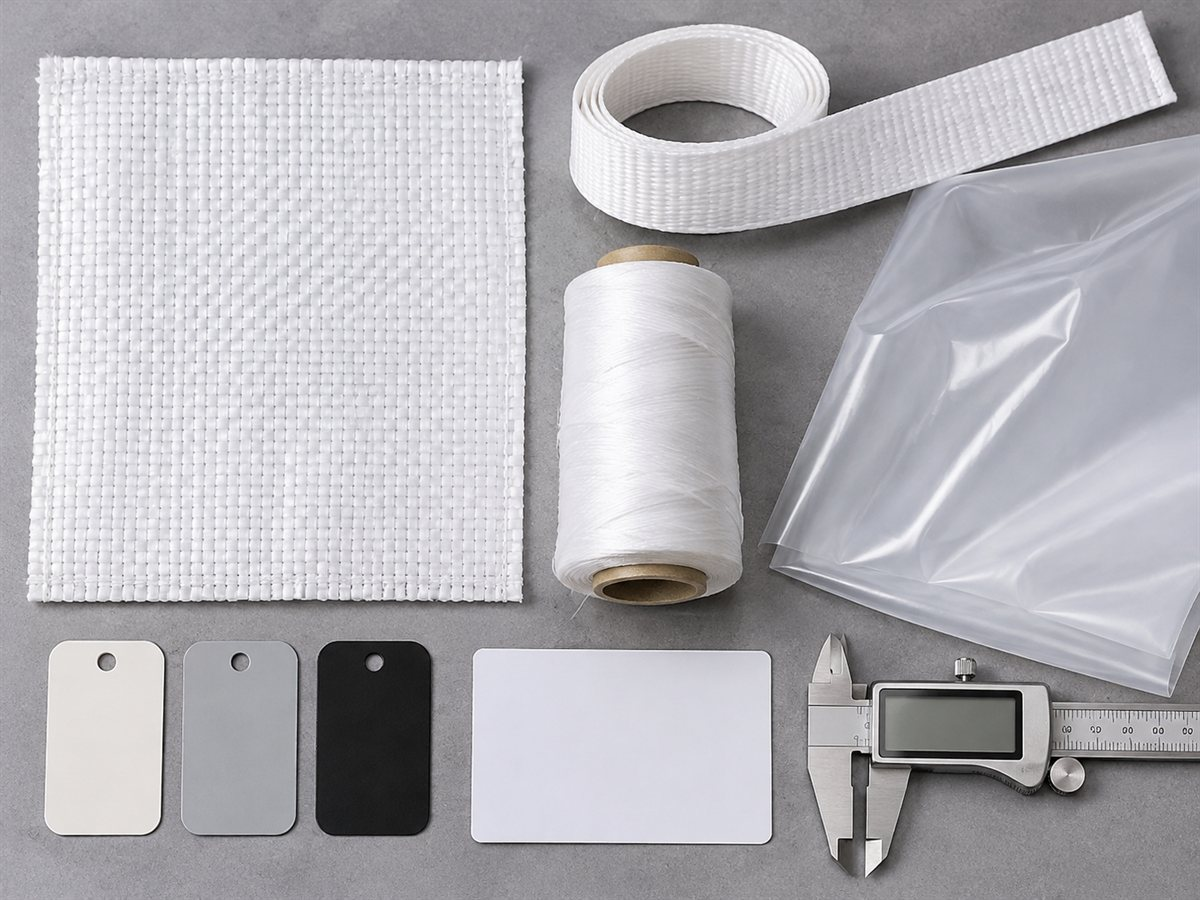
EFIBCA's Design for Recycling Guidelines 2.0, published in September 2026, describes this approach for PP FIBCs: predominantly mono-material PP construction, compatible liners and components, and controlled use of additives and colors to support high-quality mechanical recycling under current European market conditions. The guidelines are a voluntary industry framework, not an EU regulation or a product certification, but they give buyers a useful reference for the questions to ask.
Mono-material design does not mean every component must be identical. It means the designer has deliberately assessed where a different material is necessary and how it will behave at end of life. Three practical levers matter:
Component reduction. Every additional component adds a material, a supplier, a joining method and a potential separation step. A simpler bag is often easier to inspect, repair and recycle. This does not mean removing a component that performs a safety or barrier function; it means questioning components that exist only for appearance or convenience.
Compatible additives and colors. Pigments, UV stabilizers and other additives affect the value of recycled PP. Dark colors and some additive packages can limit the range of end uses for regrind. Light colors and controlled additive systems can make the recycled material more versatile. The right choice depends on the application, the UV exposure and the buyer's end-of-life route.
Recycled content, where the specification allows it. Recycled PP can reduce demand for virgin polymer, but recycled content is not the same as recyclability. The source, percentage, traceability and performance of the recycled material must be declared. Food-contact, UN, static-control and high-load applications may have restrictions that do not apply to a standard industrial bag. A supplier should be able to explain which applications can use recycled PP and which cannot.
Material reduction must be validated, not assumed. Reducing fabric weight or coating weight can lower material use, but it can also reduce seam strength, UV life, puncture resistance or safety factor. For non-dangerous goods, ISO 21898:2024 provides the performance framework for design, testing and marking; it is a performance standard, not a recyclability certificate. A lighter bag that fails the load test is not a circular improvement.
For a closer look at how mono-material PP, liners and ventilation compare, see the recyclable FIBC buyer's guide.
Slow: Design for Emptying, Inspection, Repair and Reuse
A bag that can be used twice avoids the material, energy and waste associated with making a second bag. But reuse is a design decision, not a wish. It depends on how the bag is emptied, cleaned, inspected and returned.
Clean discharge. A discharge spout or a well-designed bottom opening allows the bag to be emptied without cutting the fabric. That preserves the bag body for inspection and possible reuse, and it reduces product loss and cleaning effort. A flat-bottom bag that must be slit open has a different end-of-life path from a bag with a controlled discharge.
Liner removal. If the bag uses a liner, the liner should be removable without damaging the outer bag where reuse is intended. The fixing method matters: a loose liner, a tabbed liner, a glued liner and a liner sewn into the spout behave differently during filling, discharge and removal. A liner that cannot be separated cleanly can contaminate the PP stream; a liner that separates too easily can move during filling and damage the product or the bag. The liner fit and interface guide explains the measurements that should be agreed before production.
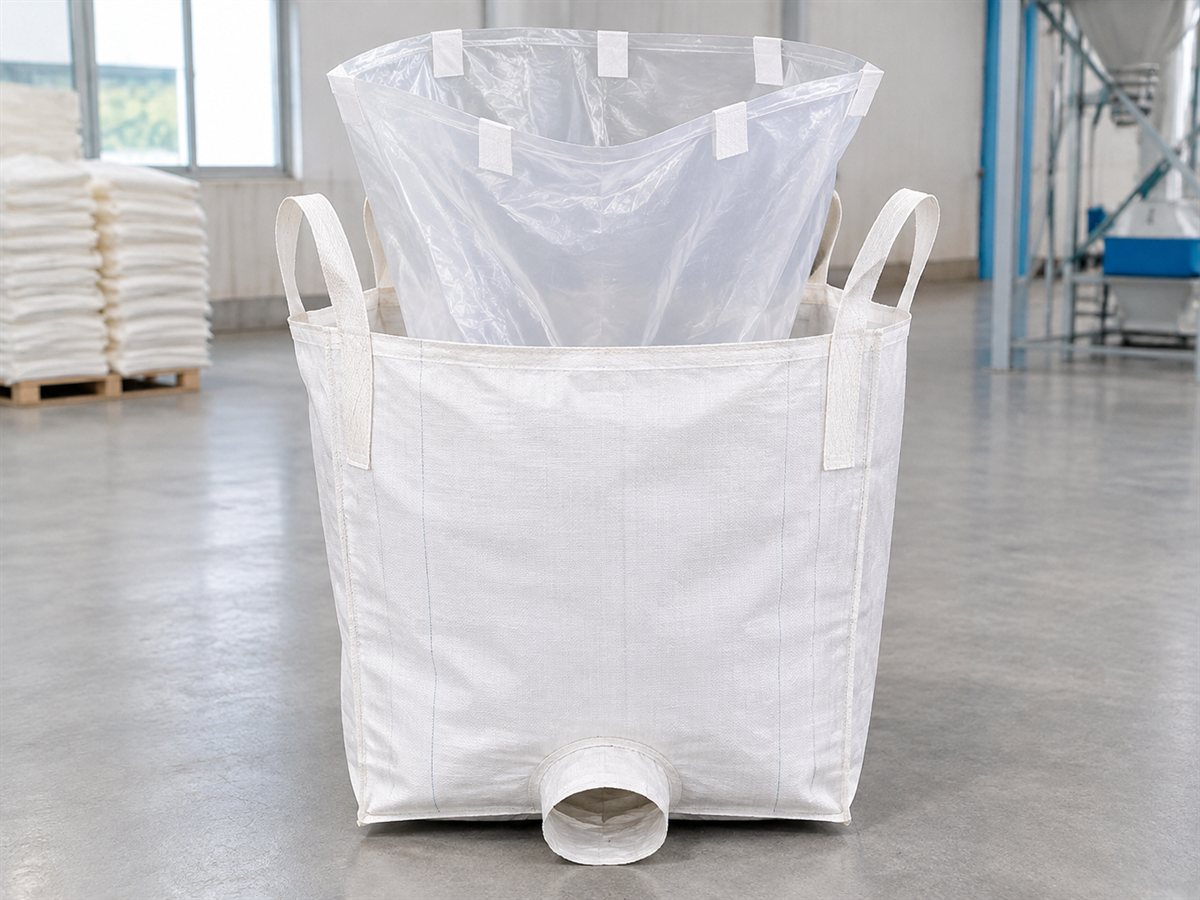
Inspection and repair. Reuse is only appropriate when the bag can be inspected against defined criteria and repaired or removed from service when necessary. Lifting loops, seams, fabric, closures and liner attachment points should be checked before each use. FIBCA's safe handling guidance treats the complete bag and its liner as the system to be inspected, not just the fabric . Structural repairs should follow the manufacturer's instructions; a repair that affects load-bearing components can change the performance of the bag.
Application fit. A reusable bag needs a reverse logistics route: collection, inspection, cleaning, storage and return. If that route does not exist, a "reusable" design may still end up as a one-way bag. Buyers should test the route, not just the bag. The difference between reuse and recycling is examined in more detail in Reusable or Recyclable?.
Reuse also has limits. A bag used for food, sensitive chemicals or dangerous goods may not be suitable for a second service even if it is physically intact. Contamination, odor, moisture and regulatory requirements can rule out reuse. Good circularity practice should make the safe option the easy option, not push every bag into a reuse program.
Close: Design for Separation, Collection and Reprocessing
Recycling starts with separation. A bag that is easy to empty, easy to separate from its liner and easy to identify by material has a better chance of entering a PP recycling stream than a bag that arrives at the recycler as a mixed, contaminated bundle.
Four design choices influence that outcome:
Liner separation. Where a liner is required, design the fixing method so the liner can be removed in a controlled way. Avoid adhesives or attachments that leave residue on the fabric if the outer bag is intended for recycling.
Label and ink selection. Paper labels, incompatible adhesives and heavy ink coverage can complicate reprocessing. Ask whether the label and ink system is compatible with the intended recycling route, or whether they must be removed.
Material identification. Clear marking of the bag's main material and components helps sorters and recyclers. A material passport or a component BOM is more useful than a generic "PP" stamp.
Contamination control. Product residue, moisture, soil and UV degradation affect the quality of regrind. For ventilated bags used with produce or firewood, soil and organic residue are a practical recycling issue. The bag may be mono-material PP and still be difficult to recycle if it cannot be cleaned economically.
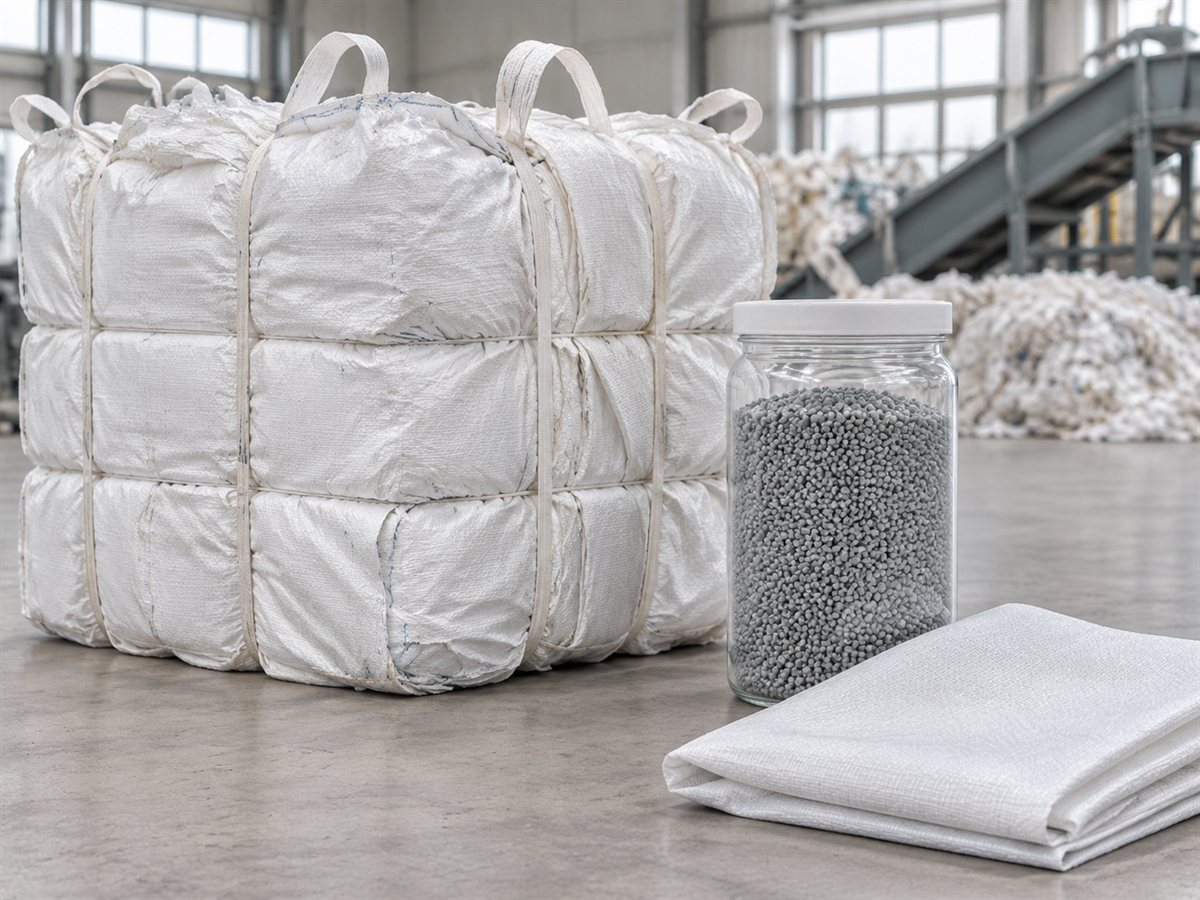
Collection is the next constraint. A technically recyclable bag is not recycled if there is no collection route, no sorter willing to accept it and no end market for the recovered material. A closed-loop or take-back program therefore depends on logistics as much as on polymer choice. Bag-to-bag recycling requires a clean, consistent PP stream and a reprocessor able to handle woven fabric, which may include printing, coating and seams. Design for disassembly — removable liners, separable components and clear material marking — makes that stream easier to create. Buyers should ask where the bag will be collected, who will sort it, how it will be cleaned and what it will be converted into. A logo on a quotation is not a route.
Design Out Production Waste
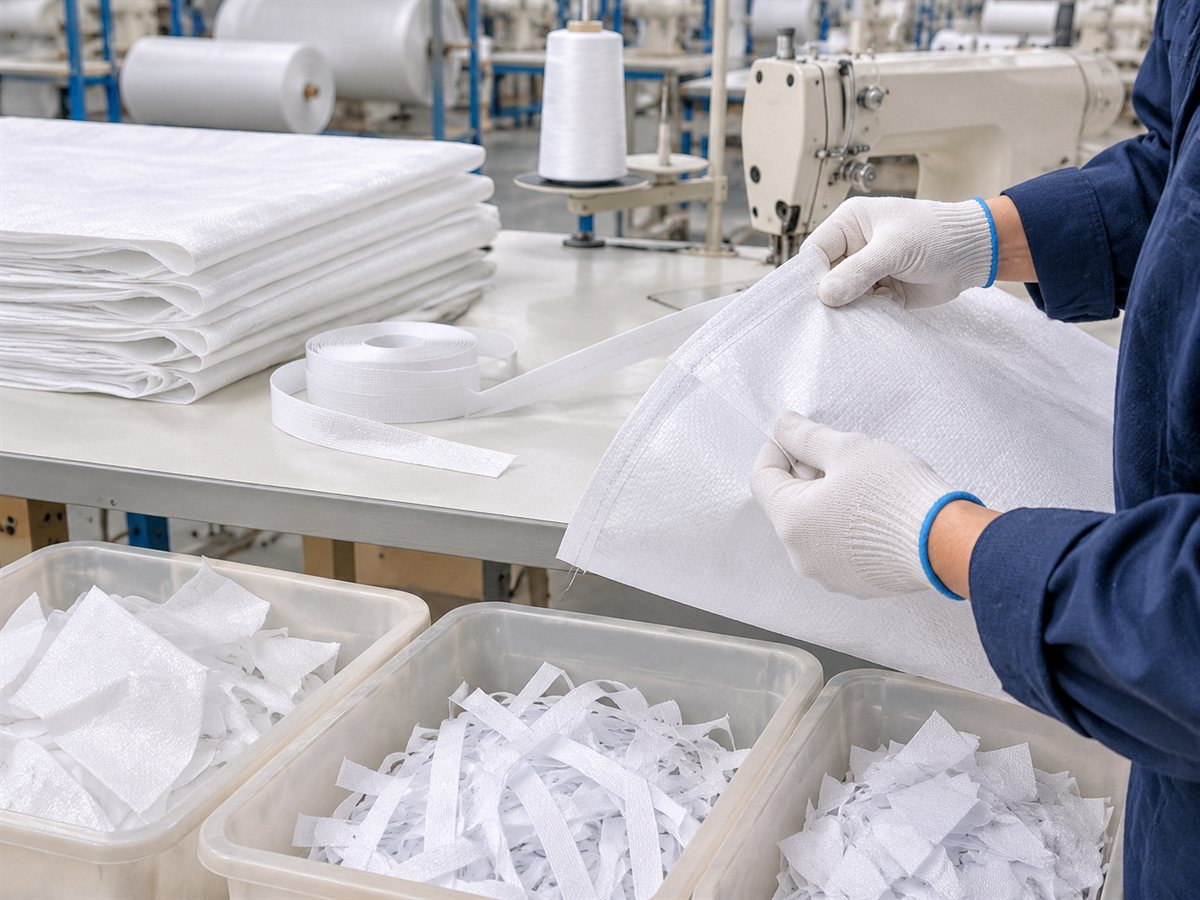
Circularity also applies inside the factory. Woven PP bag production generates trim, offcuts, start-up scrap, rejected fabric, liner film waste and printing setup waste. Some of this material can be reground and reused; some cannot, because of contamination, mixed materials or color.
The main levers are familiar manufacturing disciplines:
Pattern and cutting efficiency. Nesting patterns and optimizing panel dimensions can reduce fabric offcuts without changing the finished bag.
Width and length control. Consistent tape width, fabric width and cut length reduce rework and reject rates.
Start-up and changeover discipline. Color changes, coating changes and print changes generate purge and setup waste. Sequencing light colors before dark colors and planning changeovers can reduce it.
Scrap segregation. Clean PP trim, coated fabric, liner film and printed material should be kept separate if they are to be reprocessed or sold. Mixed scrap loses value.
Regrind limits. Regrind can be used in some layers and applications, but it must be controlled for contamination, color and performance. It should not be assumed suitable for food-contact, UN or high-load applications without evidence.
First-pass yield. The most effective waste reduction is often preventing rejects through incoming material checks, loom settings, seam inspection and in-process controls.
Buyers can ask for the numbers behind these practices: scrap rate by material, regrind usage rate, first-pass yield and the destination of production waste. A supplier that cannot provide numbers can still describe the process, but a circularity claim should not be based on a process description alone.
The Liner Question: Where Circular Design Meets Barrier Performance
The FIBC liner is often the point where a simple circular story becomes complicated. It is also where buyers need the most honest conversation.
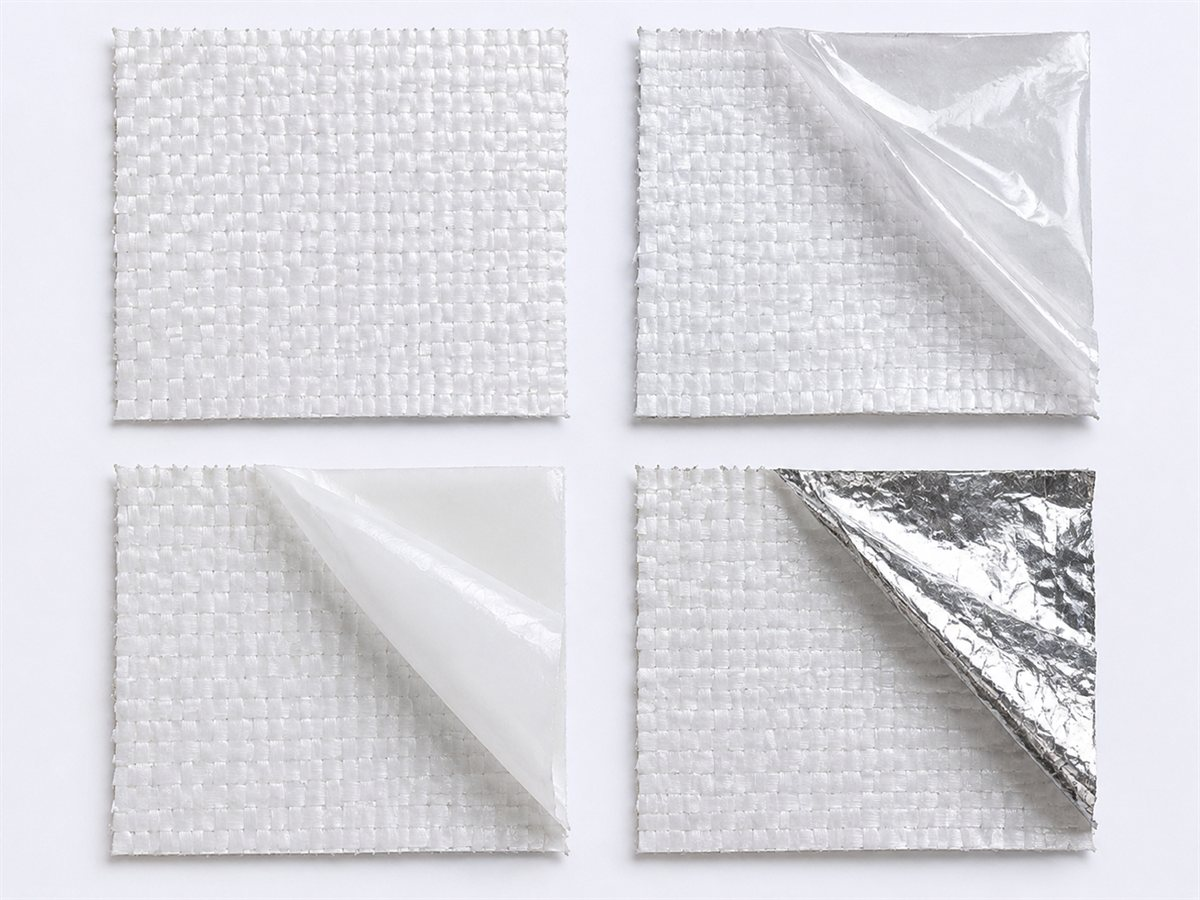
| Liner choice | What it does | Circular design consideration |
|---|---|---|
| No liner | Keeps the bag close to mono-material PP | Best chance of a simple PP recycling route; only suitable if the product does not need protection |
| PP-based liner | May add a more compatible layer for some barrier or contamination protection | Check the full structure and whether it is truly PP-based; barrier performance depends on the structure, not the label |
| PE liner | Common moisture and contamination barrier | Can be removed and handled separately, or may be accepted in some mixed-polyolefin routes; confirm acceptance with the recycler |
| EVOH or foil composite | High barrier to moisture, oxygen or light | Often multi-material; may require separation and may not fit a PP stream; do not accept a generic "recyclable" claim |
Three rules help:
Start with the product, not the material. If the product needs a high barrier, the barrier requirement comes first. Circular design then asks how to deliver that barrier with the least material complexity and the clearest end-of-life route.
Design the liner for removal or compatibility. A liner that can be cleanly removed keeps the outer bag in play. A liner that is permanently bonded may make the complete bag a mixed-material item.
Do not let a recyclability claim hide a performance requirement. A foil liner may be the right choice for a moisture-sensitive powder even if it is not the best choice for a PP recycling stream. The buyer should know which trade-off is being made.
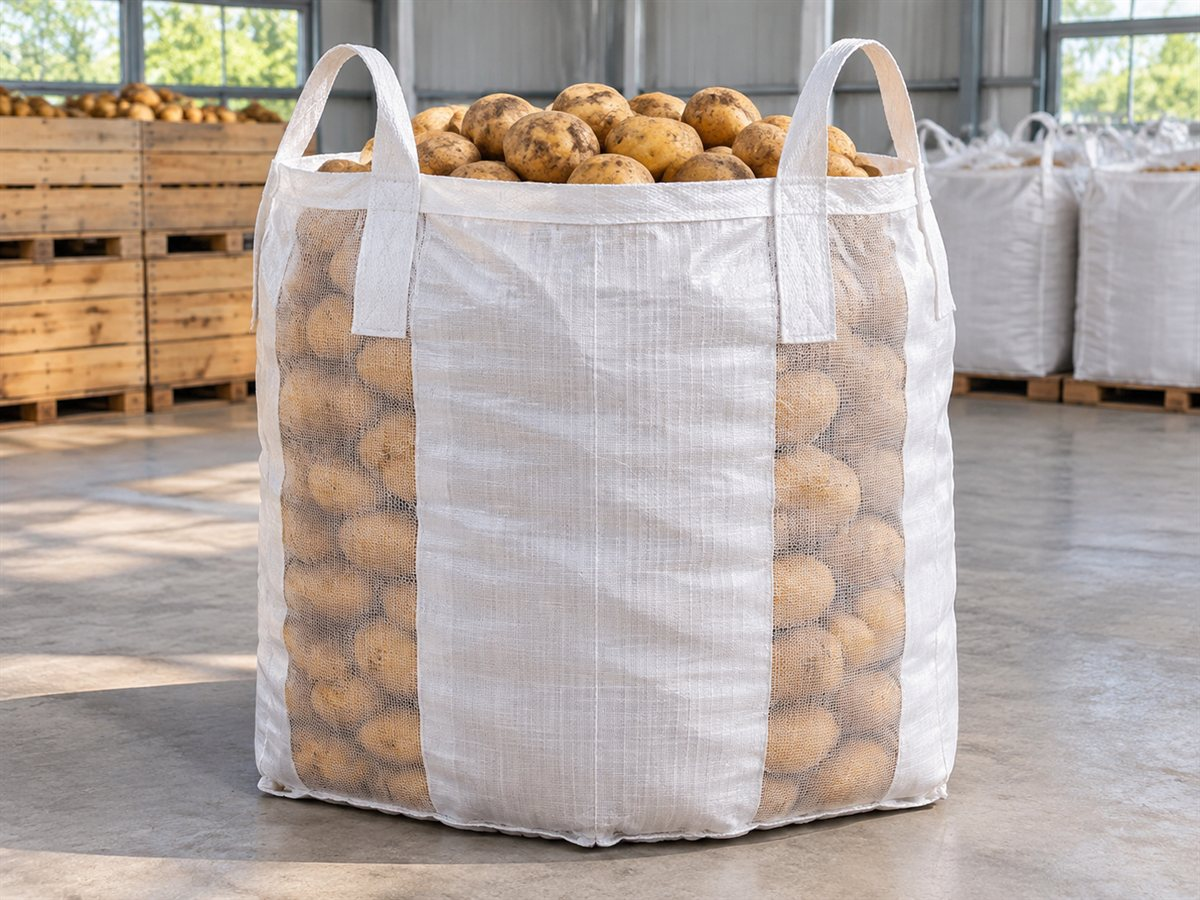
For ventilated bulk bags used for potatoes, onions, carrots or firewood, the liner question usually disappears: the bag needs airflow, and a liner would block it. A ventilated PP bag can be a strong mono-material candidate, but soil, moisture and organic residue can affect cleaning and reprocessing. The design should make emptying and cleaning as easy as the application allows. For produce-specific ventilation, see the guide to ventilated bulk bags for potatoes and onions.
For high-barrier applications, the liner decision should be based on measured barrier and sealing requirements, not on a material name. The aluminum foil liner evaluation checklist sets out the data to request before a trial.
What Buyers Should Specify
Circularity becomes useful when it is written into the inquiry. For buyers comparing sustainable bulk bags, the specification should separate design choices from claims. The following checklist turns a general request into a comparable specification.
| Design area | Question to ask | Evidence to request |
|---|---|---|
| Material architecture | Which components are PP, and which are not? | Component BOM with material and weight percentage |
| Mono-material claim | Is the bag predominantly mono-material PP, including loops, thread and coating? | Material specification and DFR assessment, if claimed |
| Liner | What is the liner structure, and how is it fixed? | Liner drawing, structure, thickness and removal procedure |
| Ventilation | Is airflow required, and how is it achieved? | Vent panel or mesh specification; confirmation that a liner is not required |
| Reuse | Is reuse intended? What inspection and repair criteria apply? | Inspection checklist, repair instructions and service-life guidance |
| Discharge | Can the bag be emptied without cutting the fabric? | Opening drawing and discharge procedure |
| Production waste | How is PP trim, liner film and printed scrap handled? | Scrap rate, regrind policy and waste destination |
| End of life | Where will the bag be collected, sorted and reprocessed? | Collection route, recycler acceptance criteria and end market |
| Performance | Does the circular design still meet the load and safety requirement? | ISO 21898:2024 test reports for non-dangerous goods, or the applicable UN test evidence |
| Change control | How will material or component changes be notified? | Change-notification procedure and approval records |
Two items are often missing from quotations: the end-of-life route and the change-control procedure. Both matter. A bag that is recyclable in one market may not be recyclable in another, and a material change after approval can invalidate the evidence the buyer relied on.
Compliance Claims Need Evidence
Circularity is not the same as regulatory compliance. In the EU, the Packaging and Packaging Waste Regulation (PPWR), Regulation (EU) 2025/40, has applied since 12 August 2026, with requirements phased in . Article 6 sets the recyclability requirement. The Commission states that the requirement for all packaging to be recyclable applies from 2030, while the detailed design-for-recycling criteria and performance grades are being set through delegated acts; recyclability at scale follows from 2035 . The responsible EU manufacturer or importer must confirm how the regulation applies to a specific FIBC and transaction.
That timeline creates a practical gap. Buyers are asking for circularity now, while the detailed criteria and market infrastructure are still developing. The answer is not to wait, and it is not to overclaim. It is to build a specification that can be evidenced today and updated when the rules and recycling routes become clearer.
EFIBCA's DFR Guidelines 2.0 can help structure that specification, but they are voluntary and do not replace a regulatory assessment. ISO 21898:2024 can support the performance side, but it does not certify recyclability. A supplier's statement that a bag is "recyclable" should be traceable to a defined scope: which bag, which market, which recycling route and which evidence.
For a document-level view of PPWR preparation, see the guide to packaging documents FIBC exporters should prepare.
Claims to treat with caution include:
"100% recyclable" without a defined bag, market and route;
"mono-material" used to imply that the liner, label and ink are also PP;
"EFIBCA compliant" used as a synonym for PPWR compliance;
"recycled PP" used to imply food-contact or UN suitability;
"reusable" used without inspection, cleaning and return logistics.
Applying Circular Design to a Real Project
FIBC World's product range includes ventilated bulk bags, lined FIBCs and aluminum foil liners, so the circular design conversation usually starts with the same question: which part of the bag is doing which job?
For a ventilated potato or onion bag, the priority is airflow and a predominantly PP construction. For a moisture-sensitive powder, the priority may be a removable PE liner or a foil barrier, with the outer bag kept as simple as possible. For a chemical or dangerous-goods application, UN or static-control requirements may override a recycling preference.
Market matters too. A construction that has a clear recycling route in one country may have no practical route in another. For buyers shipping to Europe, the PPWR timeline is the reference; for the US, Africa, Southeast Asia and South Asia, local collection, sorting and reprocessing conditions should be checked before a recyclability claim is used in a tender.
That is not a reason to abandon circular design. It is a reason to define the performance requirement first, then optimize the parts that can be optimized: component count, liner removal, print coverage, scrap segregation, repair and the end-of-life route. A supplier that can explain those trade-offs is more useful than one that promises every bag is recyclable in every market.
Conclusion
Circular design in bulk bag manufacturing is not a single material choice. It is a set of decisions that start with the product requirement and continue through the material architecture, liner system, discharge design, inspection regime, production yield and end-of-life route.
The most useful starting point is still the bag's job: what it contains, how it is filled and emptied, where it is stored and transported, and what happens after use. A mono-material PP bag may be the best answer for a dry mineral or a ventilated produce application. A lined or foil-barrier bag may be the right answer for a moisture-sensitive powder, even if its end-of-life route is more complex. The circular improvement is to make that trade-off visible, reduce the material complexity that is not necessary, and design the remaining components for separation and recovery.
For buyers, the practical next step is to put circular design into the RFQ: a component BOM, a defined liner and fixing method, a discharge and cleaning procedure, a reuse or recycling route, performance evidence and a change-control process. That is a more useful conversation than a yes-or-no question about whether a bag is "green."
To review a project, send FIBC World the product data, current bag and liner drawing, filling and discharge equipment, target market, expected volume and end-of-life route. The first output should be a defined construction and an evidence list — not a generic sustainability claim.
Related News
Other news you might be interested in
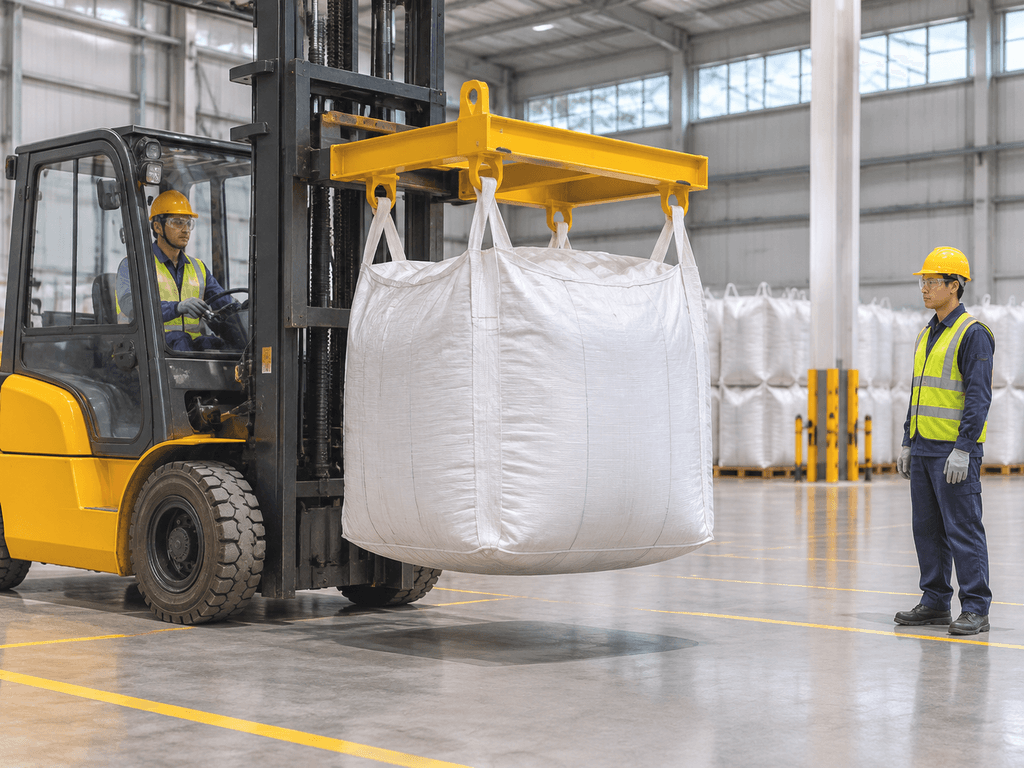
FIBC Bag Handling and Safety: Best Practices for Safe Use
Proper FIBC handling is closely connected with operator safety, bag integrity and efficient bulk-material movement. An FIBC is a system of components rather than simply a woven fabric container. Lifting loops or sleeves, seams, fabric, closures, filling arrangements, discharge components and, where applicable, liners all contribute to how the bag performs during use.
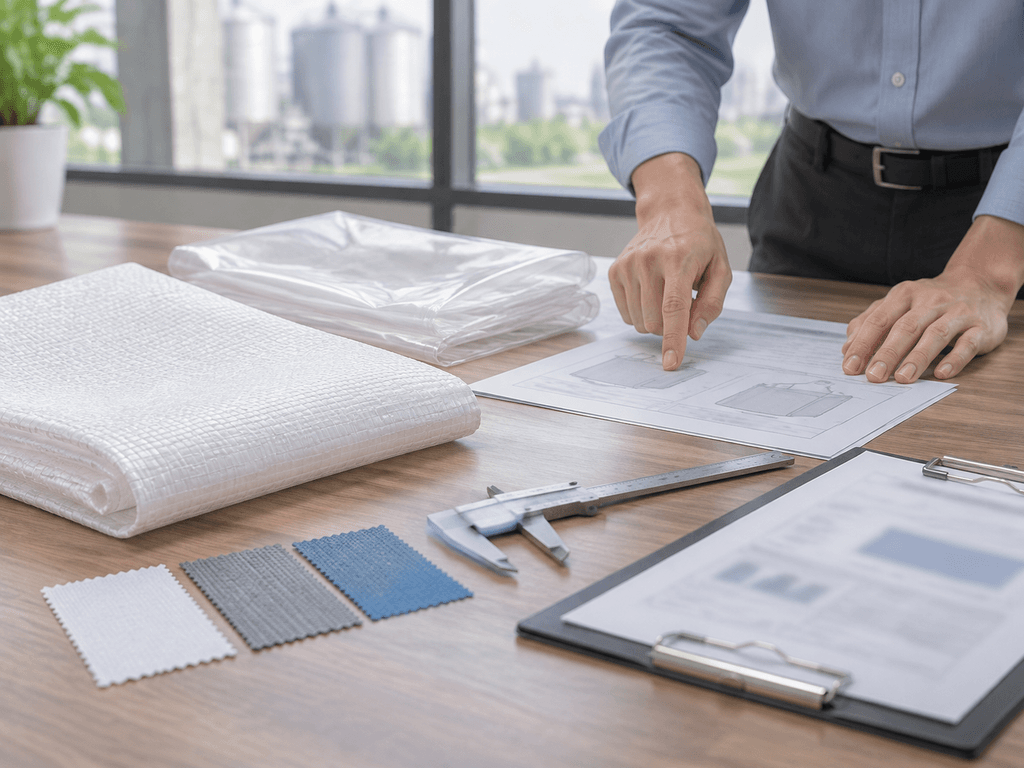
Recyclable FIBC: Mono-material PP, with liner and ventilated type
When a buyer asks, "Is this FIBC recyclable?", the answer depends on which part of the bag is being discussed, where it will be used and what recycling route is actually available. A woven PP bag with a PE liner, a paper label, a polyester thread and a foil barrier is not the same product as a predominantly mono-material PP bag. Even a mono-material bag is not automatically recycled at scale if collection, cleaning and sorting are missing.This guide separates three questions that are often mixed together: what the bag is made of, what the bag is designed to do, and what evidence supports the claim. It is a buyer checklist, not a legal opinion or a certification statement.
Want to know more?
Get in touch with us for more information about our services and products.