Bag Styles & Body Construction
Panel, tubular, baffle and loop body choices
Choose the body structure that controls bag shape, filling stability, stacking behavior and container loading efficiency.
5 styles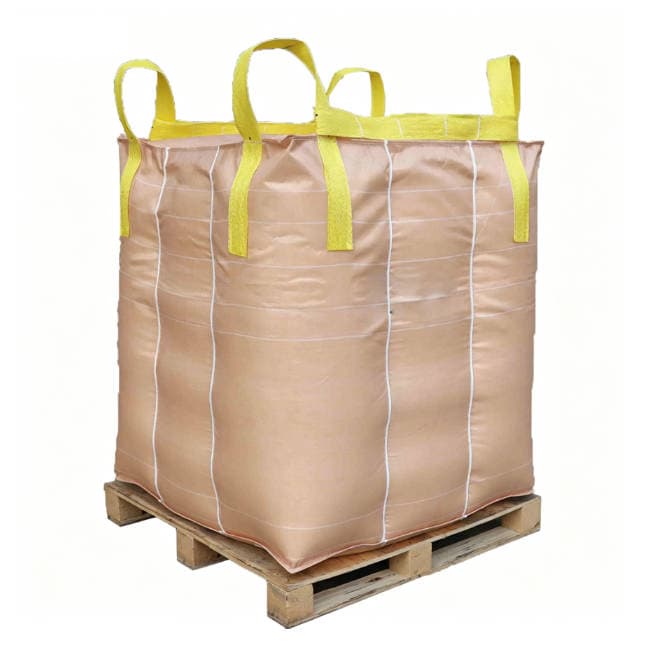
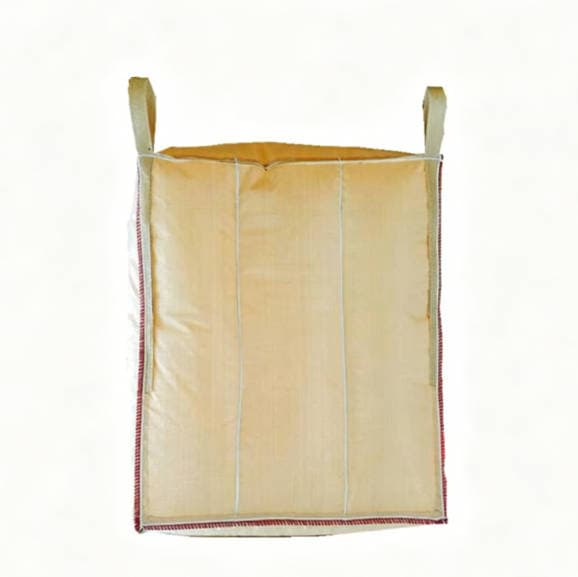
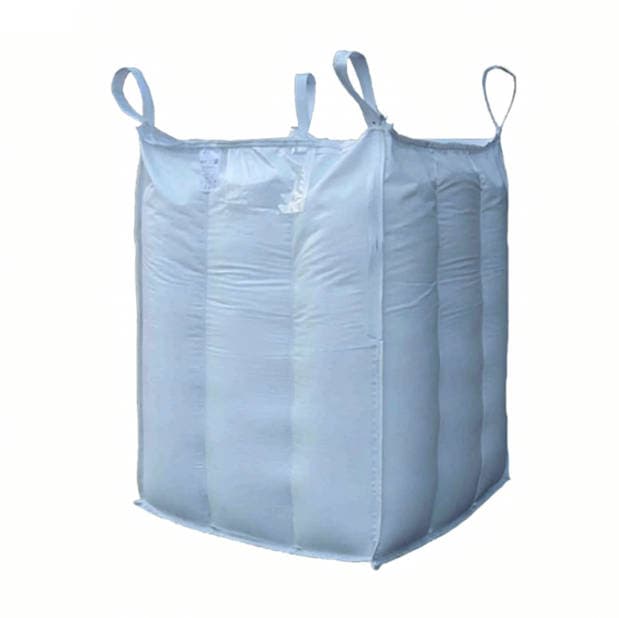
Panel, tubular, baffle and loop body choices
Choose the body structure that controls bag shape, filling stability, stacking behavior and container loading efficiency.
5 styles
Forklift, crane and port handling systems
Match loop placement and strap reinforcement to forklift pickup, crane lifting, port handling and heavy-duty transfer.
5 strap options
Open, spout, conical and duffle top choices
Select the top opening for manual loading, controlled silo discharge, automatic filling equipment or dust reduction.
4 top options
Flat, spout, conical or full discharge
Set the discharge method for closed-bottom transport, controlled unloading, fast emptying or low-residue discharge.
4 discharge options
Moisture, leakage and reinforcement details
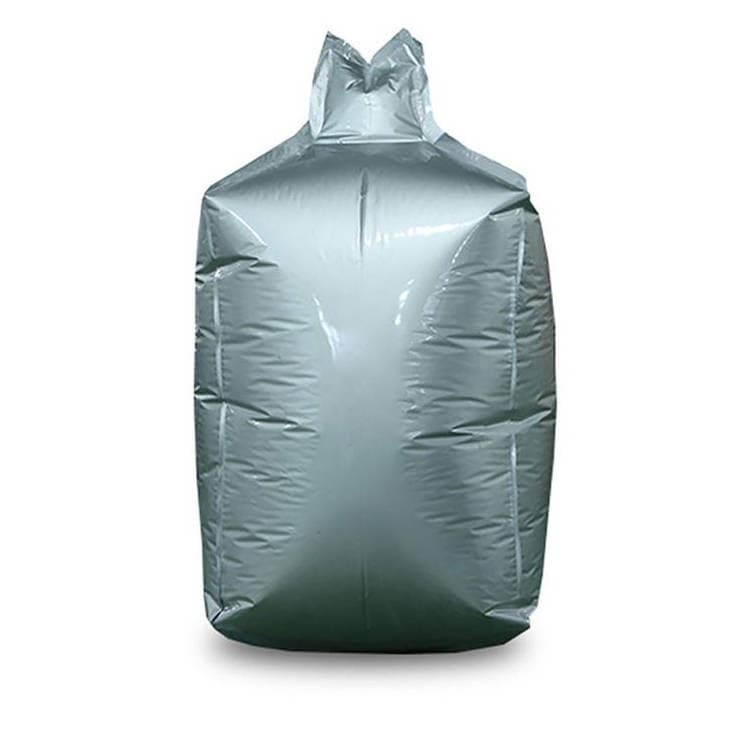
Add liner, seam and reinforcement details when the cargo needs moisture control, leak resistance or extra safety margin.
3+ protection features
Branding, warnings and certification support
Prepare buyer-facing identification, handling marks and compliance requirements for food, chemical or regulated cargo.
Branding & compliancePanel, tubular, baffle and loop body choices
Choose the body structure that controls bag shape, filling stability, stacking behavior and container loading efficiency.
5 stylesForklift, crane and port handling systems
Match loop placement and strap reinforcement to forklift pickup, crane lifting, port handling and heavy-duty transfer.
5 strap optionsOpen, spout, conical and duffle top choices
Select the top opening for manual loading, controlled silo discharge, automatic filling equipment or dust reduction.
4 top optionsFlat, spout, conical or full discharge
Set the discharge method for closed-bottom transport, controlled unloading, fast emptying or low-residue discharge.
4 discharge optionsMoisture, leakage and reinforcement details
Add liner, seam and reinforcement details when the cargo needs moisture control, leak resistance or extra safety margin.
3+ protection featuresBranding, warnings and certification support
Prepare buyer-facing identification, handling marks and compliance requirements for food, chemical or regulated cargo.
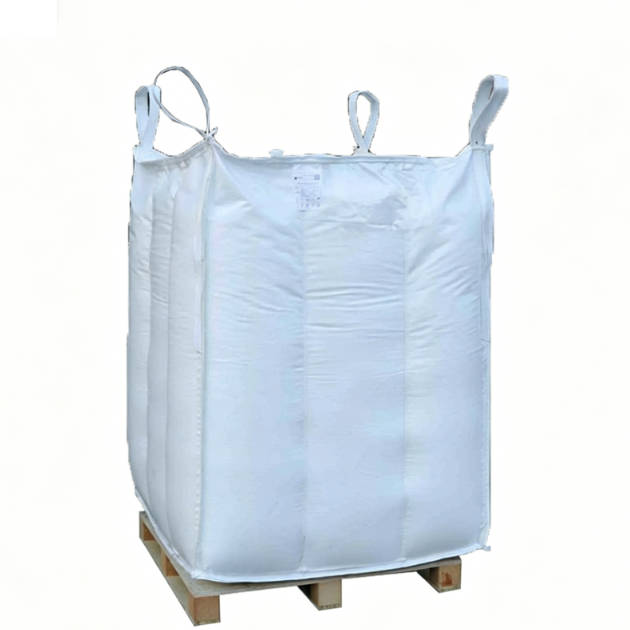
Branding & complianceBaffled FIBC bulk bags, standardly designated as Q-Bags, are advanced cubic packaging systems engineered specifically to eliminate the side-wall bulging common to standard flexible containers. When a standard bulk bag is loaded with fine powders or flowing granules, internal lateral hydraulic pressure forces the woven fabric to expand outward, changing the bag’s square footprint into a semi-cylindrical shape.
The Q-Bag architecture resolves this by integrating four internal fabric baffles (inner stays) sewn across the four corners of the bag's interior. These baffles feature flow-through apertures that allow material to distribute evenly into the corners during filling, while maintaining static counter-tension that locks the bag into a strict cubic profile. This geometry maximizes shipping container utilization and warehouse rack space.
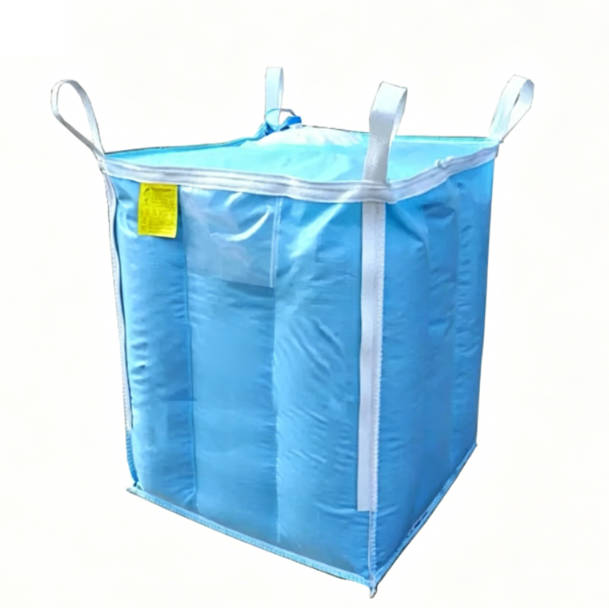
By eliminating corner dead zones and side bulging, Q-Bags pack tightly side-by-side with zero wasted space. This allows logistics teams to load more product weight into each 20ft or 40ft container compared to standard tubular bags.
The internal tie-stays ensure the top surface of the filled bag remains flat and level. In 40ft High Cube containers, this flat plane provides a stable foundation for safe two-high stacking, reducing cargo shifting and tipping risks during ocean freight.
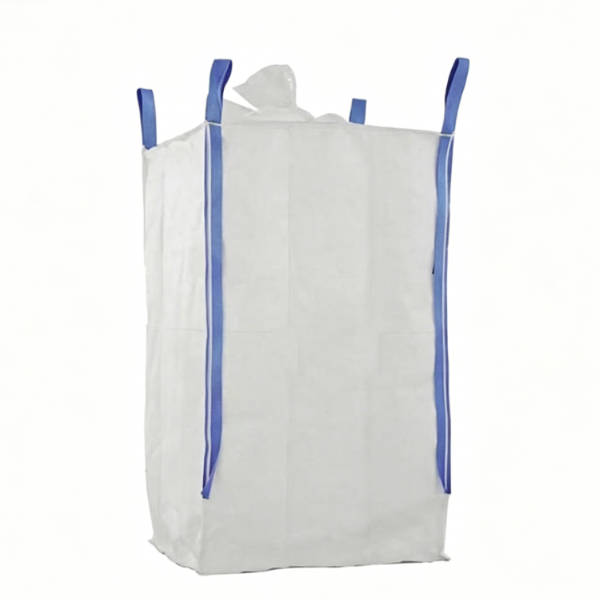
Standard bags often belly out to the point where they wedge against the corrugated walls of a shipping container, requiring manual force or causing fabric tears during forklift unloading. A filled 105 × 105 cm Q-Bag retains its precise dimensions from the filling dock to the destination.
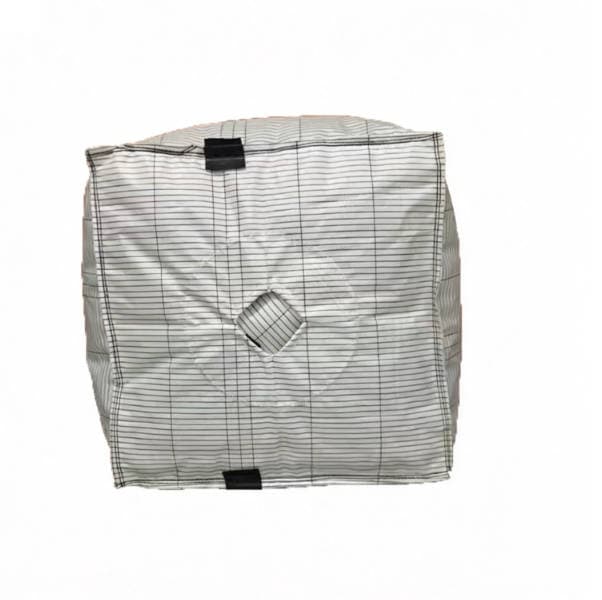
Ideal for automated filling stations packing lithium battery cathode powders, nylon granules, and flame retardants where predictable footprints and clean aesthetics are required.
| Item | Specification |
|---|---|
| Product Name | Baffled FIBC / Q-Bag / Cubic Bulk Bag |
| Material | 100% Virgin Polypropylene (PP) / UV Stabilized |
| Baffle Type | 4 Internal PP panels with die-cut flow-through holes (Standard or netted mesh) |
| Safe Working Load (SWL) | 500 kg / 1,000 kg / 1,500 kg / 2,000 kg |
| Safety Factor (SF) | 5:1 (Single-use industrial) / 6:1 (Multi-trip reusable) |
| Fabric Structure | 4-Panel Construction or U-Panel base with inner stays |
| Moisture / Gas Barrier | Optional lamination, form-fit PE liner, or integrated Aluminum Foil liner |
New Energy & Lithium-ion Battery Materials: Essential for high-purity powders like lithium carbonate, phosphate, and graphite, where maximize container payload directly impacts the bottom line of long-distance supply chains. Fine Chemicals & Polymers: Transporting premium nylon granules, hot-melt resins, and flame retardant additives through high-density automated warehouses. Food & Pharmaceutical Ingredients: Storing starch, fine additives, and organic extracts on standard automated tracking racks where bag dimensions must fit exact sensor tolerances.
| Geometric Metric | Baffled Q-Bag | Standard 4-Panel FIBC |
|---|---|---|
| Shape After Filling | Stays strictly cubic (90° side walls) | Rectangular with noticeable side bowing |
| Belly Bulge Rate | < 2-4% expansion | 6-12% expansion |
| Ocean Container Yield | Maximum capacity (No side-to-side air gaps) | Moderate capacity (Gaps remain at corner apexes) |
| Rack Storage Fit | Fits standard industrial pallets perfectly | Often overlaps edge lines, causing forklift snags |
No. The internal fabric baffles are designed with engineered flow-through cutouts (or made from heavy-duty mesh netting). During the emptying cycle through the bottom discharge spout, material flows freely through these apertures toward the center, ensuring low residue retention.
Yes. To ensure the liner matches the square architecture of the Q-Bag, we utilize Form-Fit Liners. Unlike flat tubular liners, form-fit liners are pre-shaped with corners that match the baffled geometry, ensuring the inner bag does not obstruct material flow or compromise the cubic shape.
Ocean freight rates are calculated per container unit. If a standard bag bulges to 110 cm, you can only fit 20 bags in a container. If a Q-Bag retains its 100 cm footprint, you can tightly pack 22 to 24 bags into the same floor space. Over a high-volume contract, this reduces the total number of containers required.
If you do not have exact technical drawings, please provide your raw material characteristics below. Our technical department will calculate the volumetric requirements and layout options:
Our technical team will review your application parameters and generate a dimensional spec sheet along with a preliminary quotation. Email: [email protected]
Direct Line: +86 15232851009
Get in touch for more information, pricing, or custom requirements.