Bag Styles & Body Construction
Panel, tubular, baffle and loop body choices
Choose the body structure that controls bag shape, filling stability, stacking behavior and container loading efficiency.
5 styles


Panel, tubular, baffle and loop body choices
Choose the body structure that controls bag shape, filling stability, stacking behavior and container loading efficiency.
5 styles
Forklift, crane and port handling systems
Match loop placement and strap reinforcement to forklift pickup, crane lifting, port handling and heavy-duty transfer.
5 strap options
Open, spout, conical and duffle top choices
Select the top opening for manual loading, controlled silo discharge, automatic filling equipment or dust reduction.
4 top options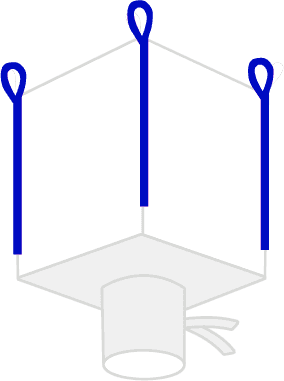
Flat, spout, conical or full discharge
Set the discharge method for closed-bottom transport, controlled unloading, fast emptying or low-residue discharge.
4 discharge options
Moisture, leakage and reinforcement details
Add liner, seam and reinforcement details when the cargo needs moisture control, leak resistance or extra safety margin.
3+ protection features
Branding, warnings and certification support
Prepare buyer-facing identification, handling marks and compliance requirements for food, chemical or regulated cargo.
Branding & compliancePanel, tubular, baffle and loop body choices
Choose the body structure that controls bag shape, filling stability, stacking behavior and container loading efficiency.
5 stylesForklift, crane and port handling systems
Match loop placement and strap reinforcement to forklift pickup, crane lifting, port handling and heavy-duty transfer.
5 strap optionsOpen, spout, conical and duffle top choices
Select the top opening for manual loading, controlled silo discharge, automatic filling equipment or dust reduction.
4 top optionsFlat, spout, conical or full discharge
Set the discharge method for closed-bottom transport, controlled unloading, fast emptying or low-residue discharge.
4 discharge optionsMoisture, leakage and reinforcement details
Add liner, seam and reinforcement details when the cargo needs moisture control, leak resistance or extra safety margin.
3+ protection featuresBranding, warnings and certification support
Prepare buyer-facing identification, handling marks and compliance requirements for food, chemical or regulated cargo.
Branding & complianceTwo-loop FIBC bulk bags, commonly known as half-lift bags, are integrated packaging solutions designed for efficient mechanical handling via cranes, forklifts, and overhead hoists. Unlike traditional four-loop bags, the two lifting loops of a half-lift FIBC are formed directly from the continuation of the bag body fabric itself or integrated as a single-point/two-point suspension system.
This architecture is optimized for bulk materials—such as high-density granules, chemical powders, agricultural feeds, and mineral ores—where automated filling lines and rapid crane hook engagement are central to logistics efficiency. The reinforced body design ensures structural integrity under continuous lifting stresses, making them ideal for high-throughput filling and transport environments.
Two-loop FIBC bags are commonly customized and utilized with:
The primary operational advantage of a two-loop bag is the simplification of the lifting process. Forklift operators or crane handlers do not need to manually position four separate loops onto blades or hooks. The two large, prominent loops automatically bridge together at a single pick-up point, reducing truck and vessel loading cycle times.
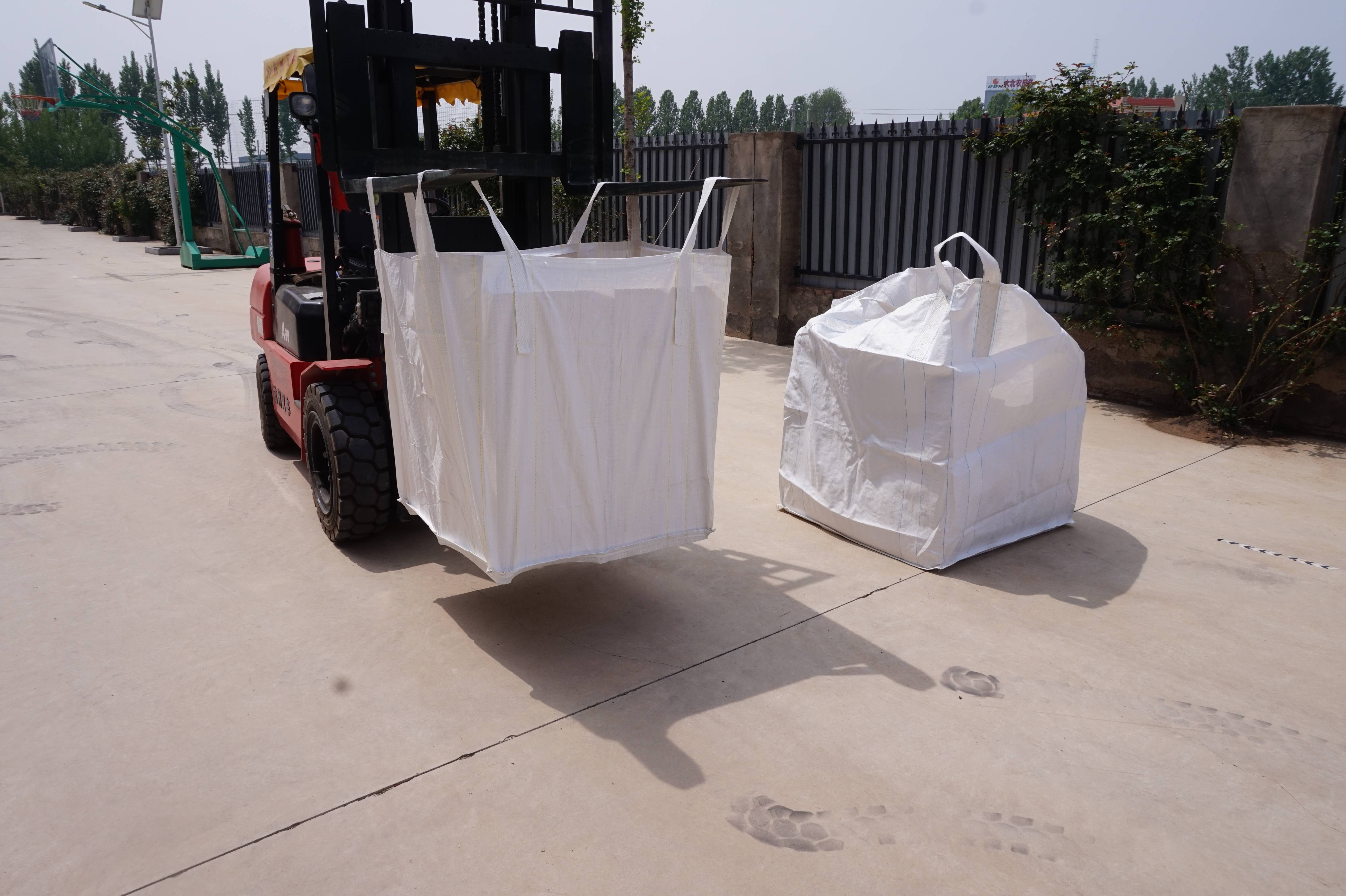
The loops are typically formed by extending the body fabric or through specialized vertical wrap reinforcement. This means the lifting stress is distributed down the entire profile of the bag walls rather than being concentrated on four small stitched corners. This minimizes the risk of fabric tearing at attachment points during sudden vertical acceleration.
Because the loops arch naturally over the top of the bag, they interface seamlessly with automated filling spouts and hook suspension systems used in large-scale manufacturing facilities. This structure allows the bag to hang perfectly vertical during the filling phase, ensuring uniform material distribution and dense packing.
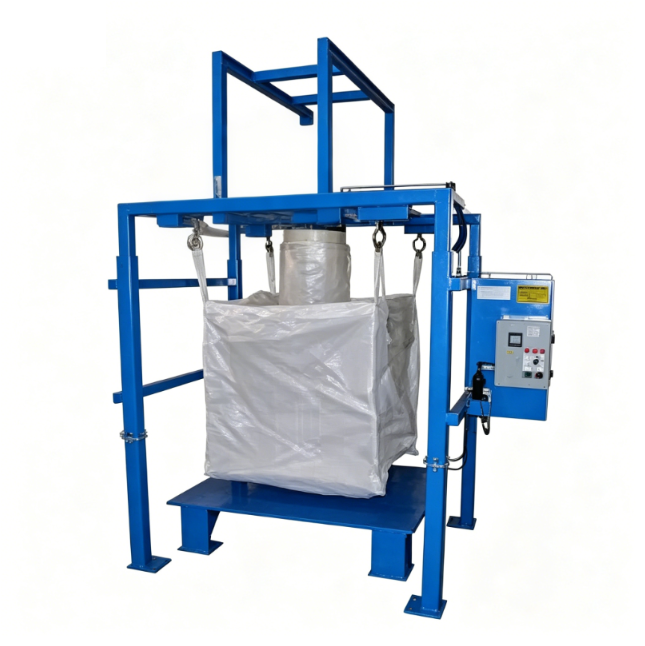
Depending on the flow characteristics and moisture sensitivity of your material, we can configure these bags with specialized filling and emptying mechanisms. For high-purity chemical powders, internal liners can be pre-installed to prevent contamination and material sifting through the seams.
| Item | Specification |
|---|---|
| Product Name | Two-Loop FIBC Bulk Bag / Half-Lift Big Bag |
| Material | 100% Virgin Polypropylene (PP) / UV Stabilized |
| Structure Type | Tubular Construction / U-Panel Base Integration |
| Lifting Loops | 2 Integrated Lifting Loops (Continuous body fabric or heavy-duty webbing) |
| Safe Working Load (SWL) | 500 kg / 1000 kg / 1500 kg / 2000 kg |
| Safety Factor (SF) | 5:1 (Single-use) / 6:1 (Multi-trip reusable) |
| Top Options | Open Top / Filling Spout / Conical Top / Skirt Top |
| Bottom Options | Flat Bottom / Discharge Spout / Conical Bottom |
| Moisture Protection | Coated Fabric (Lamination) / Uncoated with PE or Aluminum Foil Liner |
| Seam Options | Standard Stitching / Single or Double Sift-Proof felt lines |
| Customization | Available based on material density, dimensions, and operational environment |
Designed for rapid filling of low-value bulk materials like aggregates, sand, and crude minerals where moisture protection during the loading process is not a primary constraint.
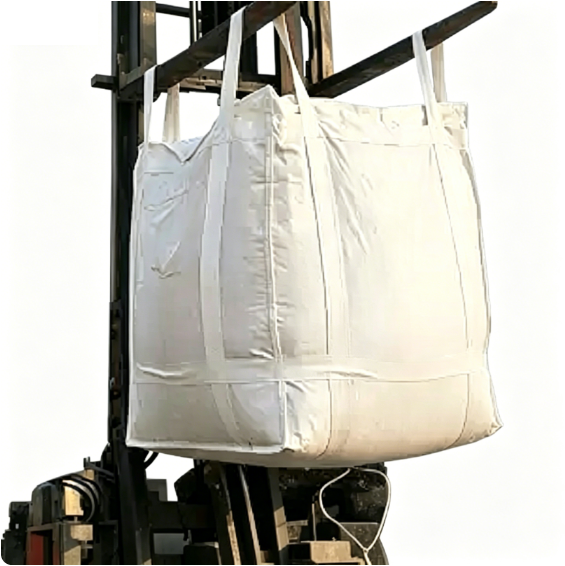
Equipped with customized top and bottom spouts to connect directly with closed industrial conveying lines. This prevents dust emission during filling and allows controlled, low-residue emptying.
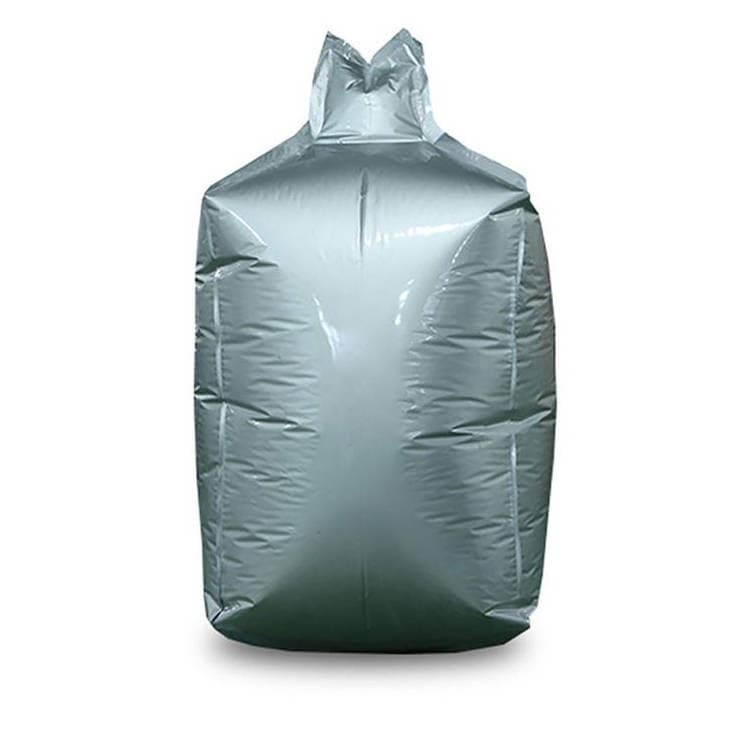
Configured specifically for sensitive, high-value materials like lithium battery cathode powders or flame retardants. The high-strength outer PP bag provides structural lifting support, while the internal aluminum liner isolates the material from moisture, oxygen, and static buildup.
The polypropylene fabric is treated with a micron-thin layer of PP film to seal the weave gaps. This provides a baseline layer of moisture resistance and prevents fine chemical granules from sifting through the fabric holes.
Used for transporting nylon granules, polymer resins, flame retardants, and chemical additives. The integrated loops allow raw material bags to be hung directly over extrusion or compounding hoppers.
When combined with advanced multi-layer barrier liners, two-loop bags protect highly reactive materials like lithium carbonate and precursor powders from degradation caused by atmospheric moisture during transit.
Suitable for heavy-duty storage of industrial sand, quartz, limestone, rare earth concentrates, and non-ferrous metal powders. The robust loop design accommodates high-density loads without structural failure.
Ideal for the automated processing, storage, and cross-docking of wholesale animal feeds, grain harvests, and bulk agricultural supplements where quick crane manipulation is required in port terminals.
| Factor | Two-Loop (Half-Lift) FIBC | Four-Loop Standard FIBC |
|---|---|---|
| Handling Mechanism | Ideal for cranes, hoists, and single-prong forklift extensions. | Designed for standard two-prong forklifts and pallet-based systems. |
| Loop Attachment | Fabric is often continuous with the body, distributing stress vertically. | Loops are sewn onto the four corners, concentrating stress at the seams. |
| Loading Speed | Faster hook-on times; loops naturally converge at a central point. | Requires manual or precise alignment of all four loops onto the prongs. |
| Space Utilization | Tends to form a rounded top profile when suspended. | Holds a more rigid square profile, suitable for standard double-stacking. |
The volumetric capacity of the bag must match the bulk density of your specific material. A bag designed for 1 ton of high-density mineral ore will be physically smaller than a bag designed for 1 ton of lightweight nylon granules. Providing accurate bulk density ensures correct bag sizing.
For ultra-fine chemical powders, standard sewing needles leave puncture holes along the seams that can lead to product leakage. In these scenarios, the integration of filler cords or felt sifting-barrier bands must be specified during the engineering stage.
If the bags are to be stored in outdoor staging areas, port docks, or open facilities, the polypropylene material must be treated with specific UV-stabilizing additives to prevent polymer degradation and loss of tensile strength from solar radiation.
To ensure the safety of ground personnel and transport machinery, our half-lift FIBC production follows rigid mechanical testing steps:
Bulk bags are highly volumetric products when empty. To optimize container space and minimize your international freight costs, we utilize industrial hydraulic baling presses:
1. How do you prevent powder leakage through the seams?
For fine materials like flame retardants, we use sift-proof felt piping along the stitched seams to block needle holes. For high-purity powders like lithium, we recommend adding an internal liner.
2. Can these bags be double-stacked in shipping containers?
Yes, for stable materials like mineral ores or pellets. However, if you are shipping fluid-like fine powders and must maximize 40ft container space, a 4-Panel or Baffled bag is a more stable option.
3. Can I get these bags with moisture barriers?
Yes. We can pre-install standard PE liners for baseline humidity protection, or multi-layer aluminum foil liners for strict oxygen and moisture isolation.
Our technical team will review your application and provide structural layout options.
Get in touch for more information, pricing, or custom requirements.