

How to Choose FIBC Liners: Standard vs Form-Fit and a Custom Order Checklist

Dayang Yang
AuthorWith experience in FIBC bulk bag manufacturing and export sales, we operate our own production facility with stable large-scale capacity. We are specialists in bulk bags, conductive FIBCs, food-grade FIBCs, UN certified bags, and customized flexible intermediate bulk containers for industrial packaging and bulk material transportation solutions.
When choosing a container bag liner, there are two independent issues to consider: which shape is suitable for your container bag, and which film can meet your material protection needs? Standard liners and fitted liners describe different structures. Polyethylene (PE) and aluminum foil describe different material choices. Specifying one does not mean the other is determined.
For manufacturers, packaging distributors, and container bag suppliers, the practical task is to match the lining with the goods, filling equipment, and unloading process. This guide explains what aspects to compare and what information to prepare before requesting a customized quotation.

Standard and fit: What are you comparing?
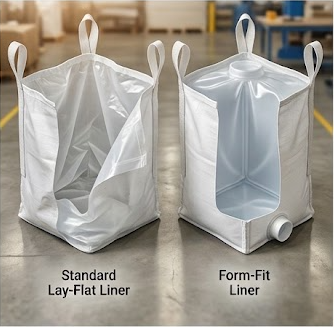
In this guide, standard lining refers to the traditional flat or loose lining placed inside a woven container bag (FIBC). Its structure is usually relatively simple, but the opening, size, and connection method still need to be adjusted according to specific applications.
The conformable lining is molded around the internal geometry of the outer bag. According to the design, it can include filling and discharge ports as well as connection points. Its purpose is to fit more closely with the bag and the processing process, rather than just using different films.
| Selection point | Standard lay-flat liner | Form-fit liner |
|---|---|---|
| Geometry | Conventional tube or loose arrangement | Shaped to match the intended bag layout |
| Filling and discharge | Openings and positioning require checking | Spouts can be designed around the outer bag |
| Folds and movement | Check how excess film behaves in use | Consider when closer internal fit is important |
| Customization | Confirm dimensions, closure and attachment | Confirm body shape, spouts and fixing arrangement |
| Approval | Test with the intended cargo and process | Test with the intended cargo and process |
No single structure can be applied to all orders. Before making a purchasing decision, please compare the sample with the same operational requirements.
When might standard liners be sufficient
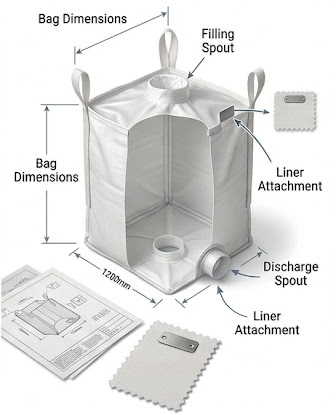
When the processing flow is simple and the existing specifications can operate reliably, standard lining is worth evaluating. Start with what you can observe:
Is the lining kept in place during the filling process?
Can it be shut down using the existing equipment?
Can it be discharged without blocking the exit?
Are the remaining materials suitable for your operation?
If these conditions are met, changing the geometric shape may have little practical value. If the current lining fails, first determine the location of the failure before requesting a replacement. Compared to requesting a "better lining", providing photos of the filling bag or outlet can make the discussion more useful
When should one consider using a conformable lining
When repeated operational issues arise due to lining movement, folding, or nozzle alignment, the fit design should be evaluated. Common issues that require investigation include whether the lining has shifted during the filling process, whether material remains in the folded corners, and whether the lining opening matches the drainage device.
For example, if the discharge port is blocked, please have the supplier check the outlet size, lining length, and connection method together. Special-shaped lining may be part of the solution, but the sample still needs to demonstrate that the entire device is effective.
For buyers dealing with valuable powders or granules, please specify the acceptable emission results. In the absence of an agreed-upon testing method and acceptance criteria, please avoid requesting "zero residue".
Selecting thin film materials individually
After understanding the geometric shapes, please refer to the material specifications. Inquire about the factors that the goods need to be protected from: moisture, oxygen, light, pollution, or a combination of these factors.
Polyethylene (PE) lining and aluminum foil composite lining are options worth discussing, but the performance specifications cannot be determined solely based on the material names. Please specify the storage period, transportation conditions, filling temperature, and required protective measures. If barrier performance is important, please request relevant test results and their testing conditions.
For food contact applications or operations involving combustible dust, please conduct a technical review of the complete packaging system and applicable documents. Do not assume that an inner lining is suitable for use merely because its shape or material matches a familiar product description.
Customized order checklist
When applying for customized bulk bags with liners or replacing liners for existing flexible container bags, please refer to the following checklist.
| Information to provide | What to include |
|---|---|
| Cargo | Material name, powder or granule form, bulk density if available, and relevant handling concerns |
| Outer bag | Dimensions, bag construction, internal baffles if present, drawing or clear photographs |
| Fill weight | Intended material weight per bag; provide the outer bag specification separately |
| Filling method | Opening or spout arrangement, equipment connection and closure method |
| Discharge method | Outlet dimensions, receiving equipment and expected emptying procedure |
| Liner arrangement | Standard or form-fit preference, existing liner dimensions and fixing method |
| Protection requirements | Moisture, oxygen, light, cleanliness or other documented requirements |
| Operating conditions | Filling temperature, storage period, transport conditions and handling sequence |
| Commercial details | Quantity, delivery destination, required delivery date and repeat-order expectations |
| Sample approval | Who approves the sample and what must be demonstrated before production |
If you do not have complete drawings, please send the information you have and indicate the missing measurement data. Before approving the quotation, please have the supplier confirm the proposed specifications.
Approve the sample before production
Agree on sample inspection that reflects actual usage conditions. Inspect the inner lining of the outer packaging bag, check the openings and accessories, and conduct filling and discharge tests using appropriate equipment and safety procedures.
Record the results based on the agreed-upon standards: fit, closure, lining position, emission behavior, and any project-specific performance tests. Keep approved drawings, material specifications, and sample references together to provide a clear basis for repeat orders.
Successful fit checking does not replace barrier testing or other necessary verifications. Please use relevant evidence to confirm each requirement.
Prepare your inquiry for the lining of flexible container bags
If you need to customize the lining of container bags, please send your outer bag size, cargo details, loading and unloading arrangements, protection requirements, and order quantity to FIBC World. If there are existing bags, please attach their drawings or photos.
You can also visit our page for conformable flexible container bag liners to get an overview of our current products.
Please contact FIBC World and inform them of your specific needs and the issues you need to address. Before placing an order, please confirm the proposed design, sample arrangement, minimum order quantity, and delivery time.
Related News
Other news you might be interested in
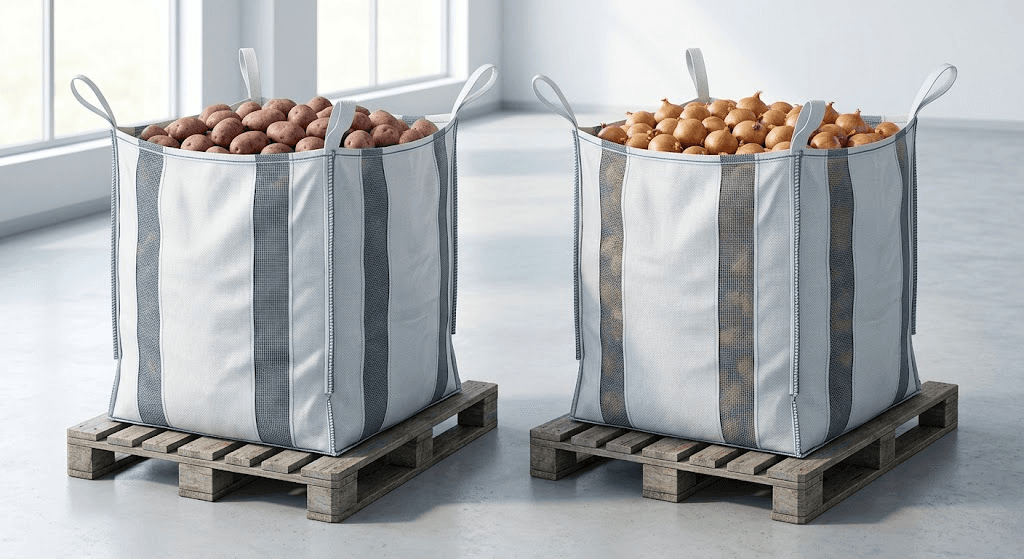
Custom Ventilated Bulk Bags for Potatoes and Onions: A Buyer’s Checklist
Buying ventilated bulk bags involves more than choosing a bag size and adding ventilation panels. The bag must suit the produce, filling line, lifting equipment and unloading method, as well as the storage and transport conditions.For potato packers, onion exporters, agricultural cooperatives and packaging distributors, a useful starting point is to describe the job the bag needs to do. Is it moving produce between facilities, holding a batch before packing, or supporting an export shipment? This guide turns those requirements into a checklist for a custom enquiry.
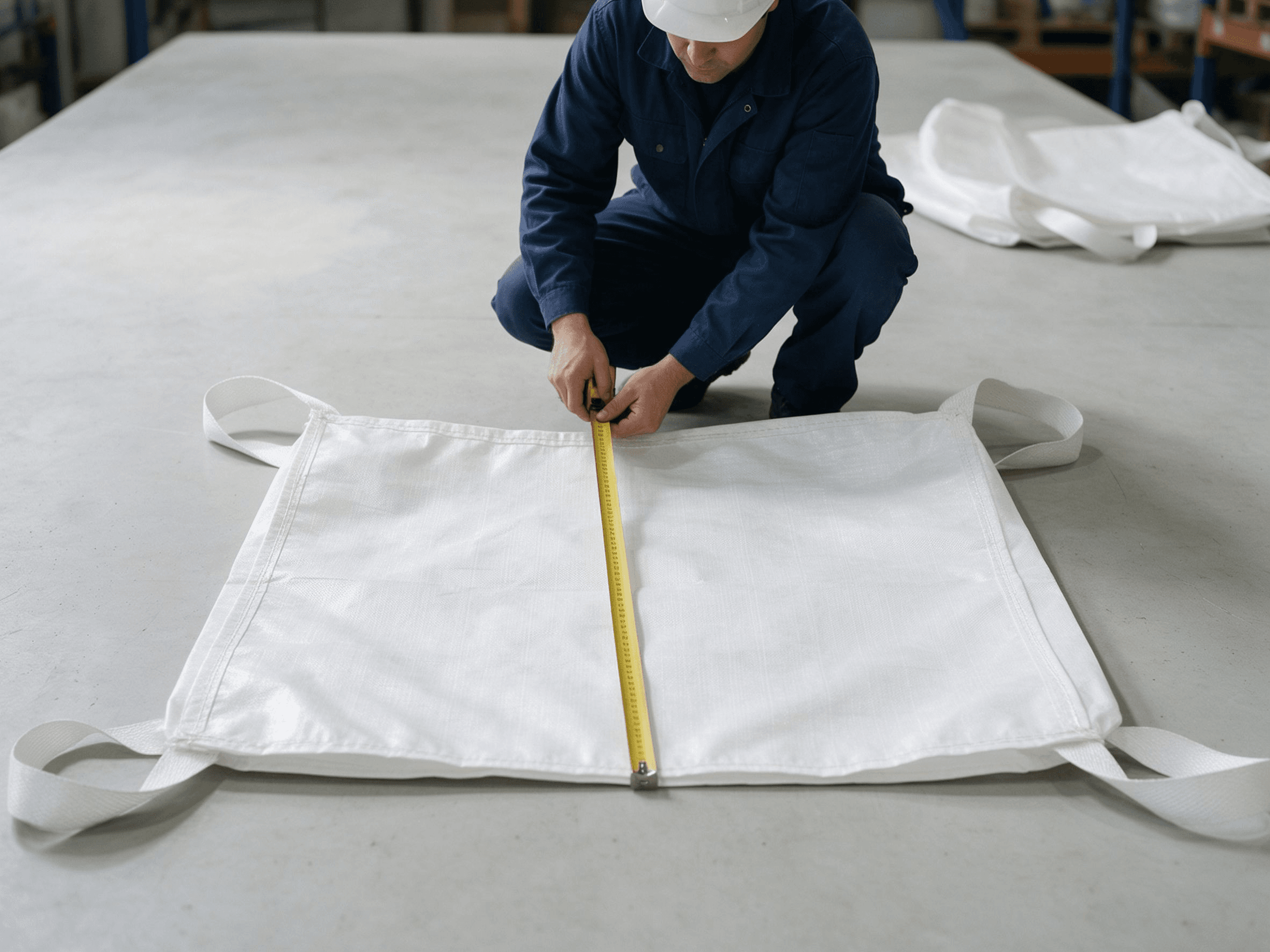
FIBC Bulk Bag Dimensions and Load Capacity: How to Choose the Right Specifications for Your Material
In bulk material packaging, storage, transportation, and handling, choosing an FIBC bulk bag involves more than specifying a load weight. The bag must also match the material and the actual operating conditions. Because materials differ in bulk density, flowability, and filling behavior, bags with the same nominal rating of “1 ton” may require different volumes and dimensions. Likewise, bag dimensions, usable volume, actual fill weight, and SWL (Safe Working Load) are not interchangeable. This article explains these distinctions, how to estimate the required volume based on the material, how to determine bag dimensions and load requirements, and how to verify the specifications against filling, handling, storage, and transportation conditions.
Want to know more?
Get in touch with us for more information about our services and products.