
Understanding Bulk Bag Sizes: A Comprehensive Guide

Dayang Yang
AuthorWith experience in FIBC bulk bag manufacturing and export sales, we operate our own production facility with stable large-scale capacity. We are specialists in bulk bags, conductive FIBCs, food-grade FIBCs, UN certified bags, and customized flexible intermediate bulk containers for industrial packaging and bulk material transportation solutions.
Bulk bags, also known as Flexible Intermediate Bulk Containers (FIBCs), are widely used for storing and transporting various materials. One of the most critical factors in selecting the right bulk bag is understanding its dimensions. This guide will provide in-depth information on bulk bag dimensions, industry standards, and how to choose the right size for your needs.
With over 25 years of experience in delivering high-quality bulk bags, FIBCWORLD has established itself as a trusted name in the industry. Our team of professionals has the expertise and knowledge to help you make informed decisions about your bulk packaging solutions.
Industry Standard Dimensions
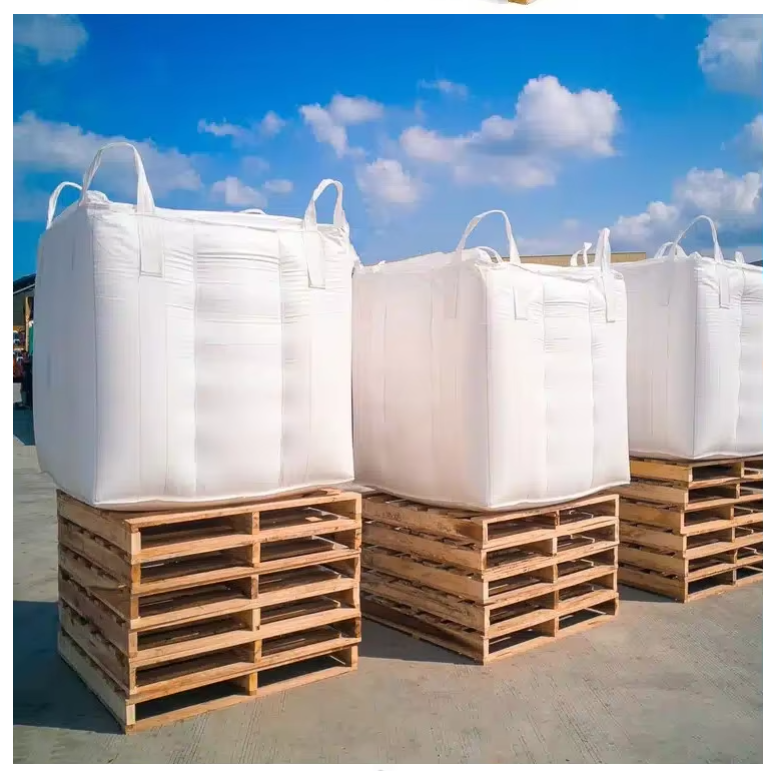
Most bulk bags supplied in North America adhere to standard sizes commonly used in the industry.
Using standardized dimensions offers several advantages:
Increased stock bag availability
Reduced risk of supply gaps associated with custom bags
Shorter lead times
More efficient operation with filling and discharging equipment due to interchangeability
Standard dimensions for FIBC components:
Footprint: 35″x35″ for U-Panel or 4-Panel Bags, 36″x36″ for Tubular bags
Spout: 14″ Diameter x 18″ Long (Fill and Discharge)
Duffle Length: 33″
Loop Height: 10″
Bag Heights: 30″ – 70″ in 5″ Increments
Inside Dimensions (ID) vs. Outside Dimensions (OD)
When reviewing bulk bag specifications, you may encounter references to inner dimensions and outer dimensions. It’s crucial to understand the difference:
Inside Dimensions (ID): Measurements taken from the inside of the hemlines
Outside Dimensions (OD): Measurements taken from the outermost edges of the bag or component
A dimension listed as ID means that the finished bag or component would measure the stated size from the inside of the hemlines. Inversely, dimensions listed as OD would be measured from the outermost edges of the bag or component.
The same-sized bag manufactured as ID vs. OD could differ by as much as 2″-2.5″, which can significantly impact the amount of product weight that can be loaded into the bag.
Tolerances in Bulk Bag Manufacturing
Since FIBCs are primarily sewn by hand with minimal automation in the assembly process, slight sizing discrepancies between bulk bags are inevitable. At FIBCWORLD, our manufacturing processes adhere to strict quality control programs to minimize these discrepancies, but some tolerances are necessary to account for human error.
Acceptable tolerances for FIBCWORLD Bulk Bags:
| Component | Tolerance |
| Fabric Weight | (+/- 5%) |
| Height | (+/- 2cm) |
| Width | (+/- 2cm) |
| Length | (+/- 2cm) |
| Spout Width | (+ 2cm/ – 1cm) |
| Spout Length | (+/- 2cm) |
| Duffle Length | (+/- 2cm) |
| Loop Height | (+ 2cm/ – 1cm) |
Choosing the Right Bulk Bag Size
Selecting the appropriate bulk bag size is crucial for efficient packaging and transportation. Consider the following factors when determining the right dimensions:
Product density: Heavier materials may require smaller bags, while lighter materials might need larger volumes.
Fill and discharge methods: Ensure the spout dimensions are compatible with your filling and discharging equipment.
Transportation constraints: Consider any size limitations imposed by your transportation methods or storage facilities.
Stacking requirements: If you plan to stack the bags, ensure the dimensions allow for stable stacking.
Handling equipment: Verify that the loop height and overall bag dimensions are suitable for your forklifts or other handling equipment.
Custom Bulk Bag Dimensions
While standard sizes are widely available, some applications may require custom dimensions. When considering custom bags, keep in mind:
Longer lead times may be necessary for production
Minimum order quantities may be higher
Custom bags may not be as readily available for reordering
Bulk Bag Capacity Calculation

To estimate the capacity of a bulk bag, use the following formula:
BBC=L/12∗W/12∗H/12∗7
Where:
BBC is the bulk bag capacity (lbs)
L is the length of the bag (in)
W is the width of the bag (in)
H is the height of the bag (in)
Note: Typically bulk bags can hold around 7 pounds per cubic foot of volume.
Note that this calculation provides the theoretical maximum capacity. Actual capacity may be lower due to factors such as product settling and bag shape when filled. FIBCWORLD’s team can assist in determining the most accurate capacity for your needs.
Conclusion
Understanding bulk bag dimensions is essential for selecting the right packaging solution for your needs. By considering industry standards, tolerances, and your specific requirements, you can ensure efficient and effective use of bulk bags in your operations. If you have any questions about bulk bag dimensions or need assistance in selecting the right size for your application, don’t hesitate to consult with a FlexSack expert.
A lot of time is spent by our FIBCWORLD experts answering questions regarding bulk bag dimensions and how bag sizes may affect product weight. Determining what size bag will work in your application is one of the most important factors in providing the correct packaging solution, and you need to trust that those dimensions are accurate.
Industry Standard Dimensions
The majority of bulk bags supplied throughout North America are sized based on the standard sizes regularly seen in the industry. Utilizing a bag that matches industry standards for footprint, spout size, loop height, etc. allows customers and end-users many advantages; most notably, more stock bag availability, lower likelihood of supply gaps associated with custom bags, reduced lead times, more efficient operation with filling and discharging equipment due to interchangeability. The industry-standard dimensions for the various components of an FIBC are:
Footprint: 35”x35” for U-Panel or 4-Panel Bags, 36”x36” for Tubular bags Spout: 14” Diameter x 18” Long (Fill and Discharge) Duffle Length: 33” Loop Height: 10” Bag Heights: 30” – 70” in 5” Increments
You may see a bulk bag specification that identifies inner dimensions versus outer dimensions. It’s important to understand the difference between ID (Inside Dimensions) vs. OD (Outside Dimensions). A dimension that is provided ID means that the finished bag or component would measure the stated size from the inside of the hemlines. Inversely, dimensions listed as OD would be measured from the outermost edges of the bag or component. The same-sized bag manufactured as ID vs OD could be as much as 2”-2.5” different, which could affect the amount of product weight able to be loaded in the bag.
Tolerances
Since FIBCs are sewn almost exclusively by hand, with very little automation in the assembly process, it’s inevitable that there will be a small sizing discrepancy between bulk bags. Our manufacturing partners follow very strict quality control programs to ensure that those discrepancies are minimal, but we do have to allow tolerances to account for human error. The following chart lists the tolerances for bag weight and the various components of a FlexSack Bulk Bag that we have deemed acceptable within the industry.
| Tolerances | |
| Fabric Weight | (+/- 5%) |
| Height | (+/- 2cm) |
| Width | (+/- 2cm) |
| Length | (+/- 2cm) |
| Spout Width | (+ 2cm/ – 1cm) |
| Spout Length | (+/- 2cm) |
| Duffle Length | (+/- 2cm) |
| Loop Height | (+ 2cm/ – 1cm) |
If you have any questions about your current bulk bag dimensions, please contact one of our FIBCWORLD experts today.
Related News
Other news you might be interested in
What Is a Super Sack? FIBC vs Bulk Bag vs Jumbo Bag Explained
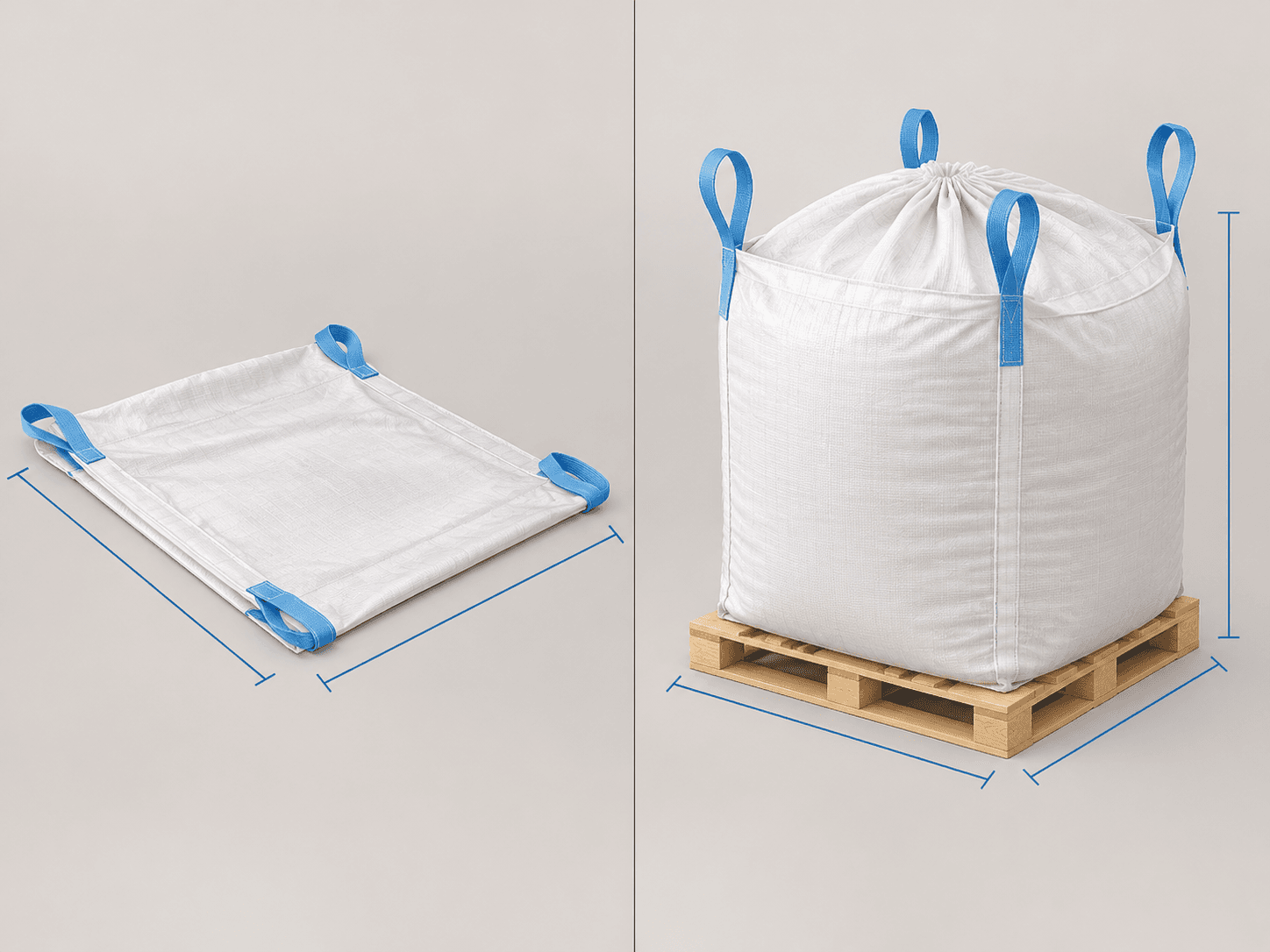
A buyer searches for a “super sack.” The supplier replies with an FIBC quotation. The drawing is titled “jumbo bag.” The warehouse calls it a bulk bag. Four names, one object—usually.The words are not identical in status. FIBC is the technical term used by standards and industry guidance. Bulk bag, big bag, tote and jumbo bag are trade terms. Super Sack® is a registered trademark, not a generic name for every large woven bag.That distinction matters when a purchase order, a drawing or a customs document uses one term while the supplier uses another. The label helps you find the product family. It does not tell you the safe working load, the filled dimensions, the liner, the lifting arrangement or the compliance route. Those have to be specified.
Bulk Bags by Application: Minerals, Fertilizer, Grain and Produce
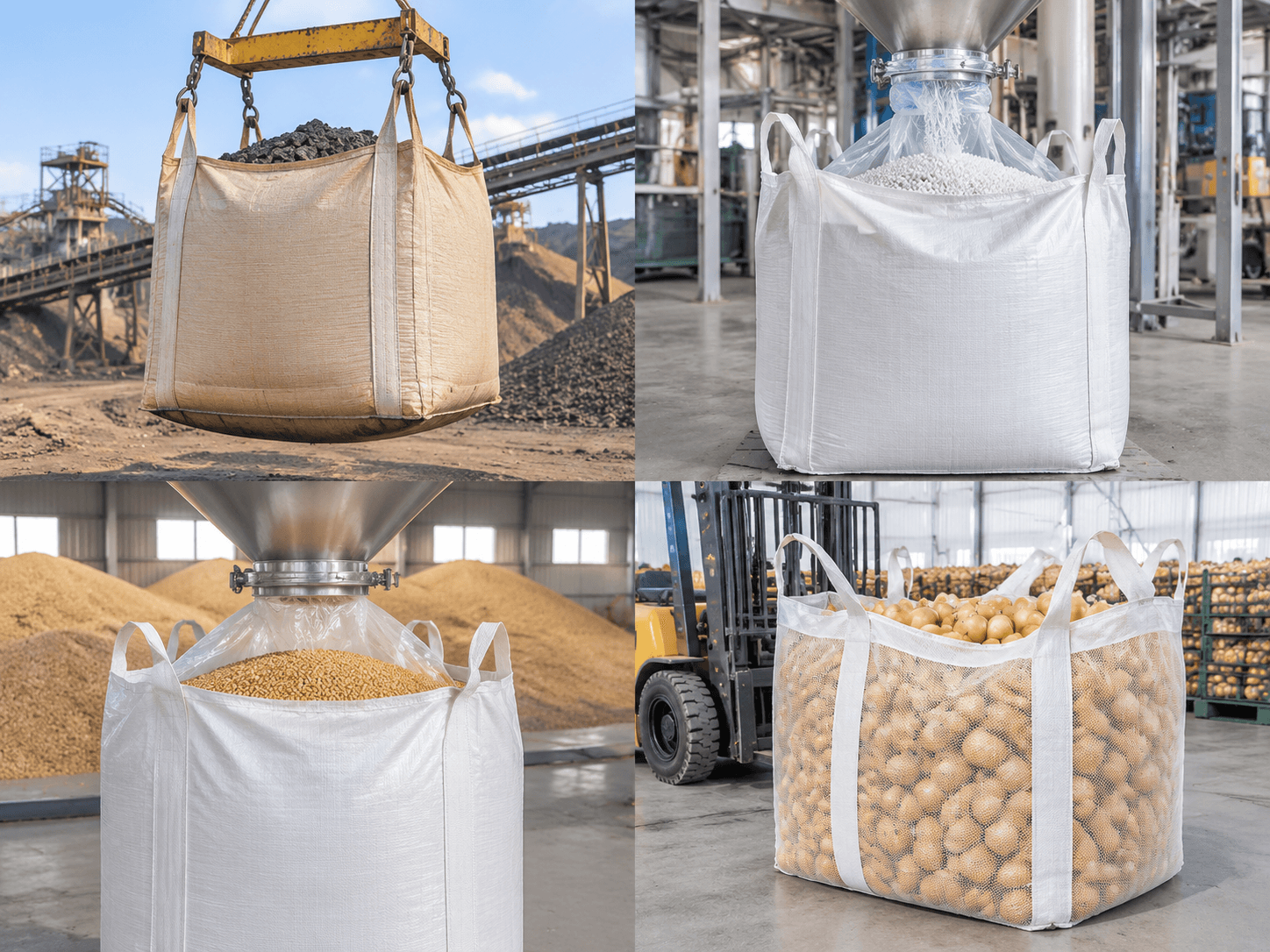
A mineral concentrate, a fertilizer blend, a load of wheat and a load of onions can all be packed in a bulk bag. They should not all be specified the same way.On a quotation, each may appear as a one-tonne FIBC with a top opening and a discharge spout. In service, the loads behave differently. A dense mineral concentrate can reach its target mass at a low fill level and concentrate stress in the base and seams. A hygroscopic fertilizer can pick up moisture, cake and block the outlet. Grain can arrive dry but become unacceptable if condensation, pests or contamination are not controlled. Fresh produce can lose quality through heat, condensation and handling damage even when the bag itself remains intact.
Want to know more?
Get in touch with us for more information about our services and products.