Bag Styles & Body Construction
Panel, tubular, baffle and loop body choices
Choose the body structure that controls bag shape, filling stability, stacking behavior and container loading efficiency.
5 styles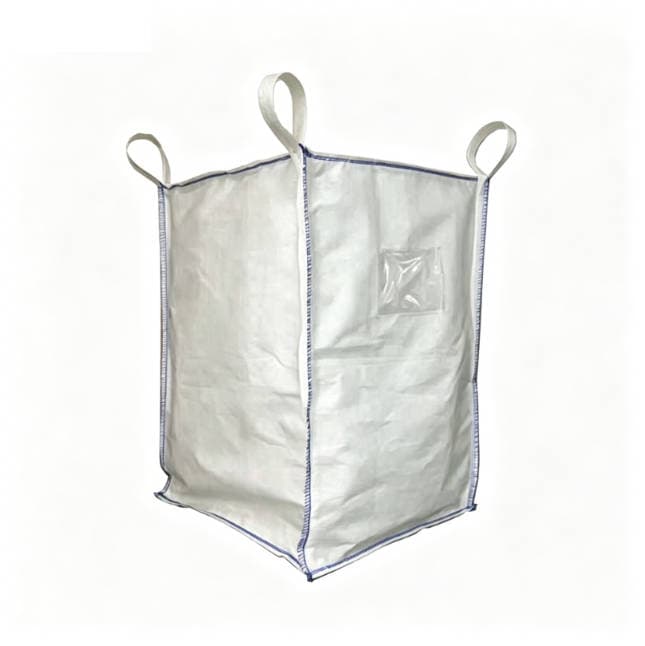
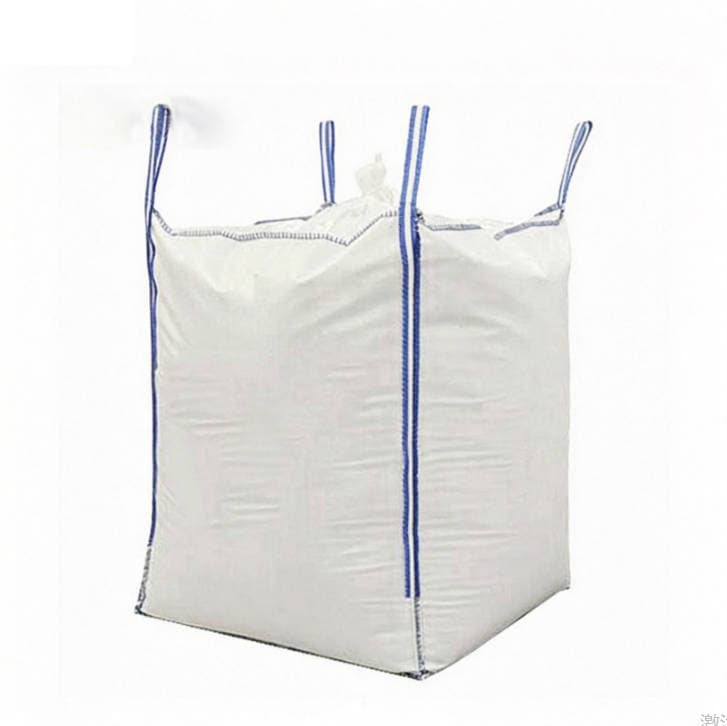
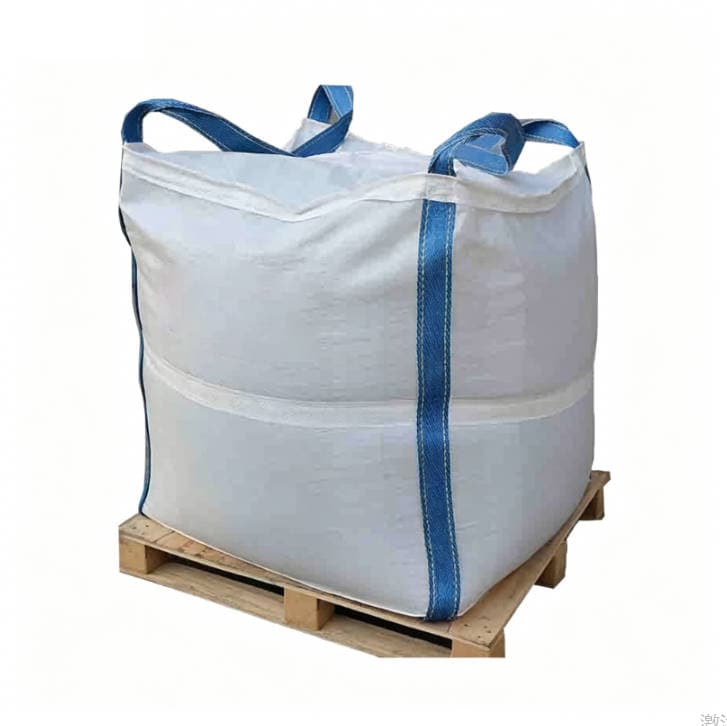
Panel, tubular, baffle and loop body choices
Choose the body structure that controls bag shape, filling stability, stacking behavior and container loading efficiency.
5 styles
Forklift, crane and port handling systems
Match loop placement and strap reinforcement to forklift pickup, crane lifting, port handling and heavy-duty transfer.
5 strap options
Open, spout, conical and duffle top choices
Select the top opening for manual loading, controlled silo discharge, automatic filling equipment or dust reduction.
4 top options
Flat, spout, conical or full discharge
Set the discharge method for closed-bottom transport, controlled unloading, fast emptying or low-residue discharge.
4 discharge options
Moisture, leakage and reinforcement details
Add liner, seam and reinforcement details when the cargo needs moisture control, leak resistance or extra safety margin.
3+ protection features
Branding, warnings and certification support
Prepare buyer-facing identification, handling marks and compliance requirements for food, chemical or regulated cargo.
Branding & compliancePanel, tubular, baffle and loop body choices
Choose the body structure that controls bag shape, filling stability, stacking behavior and container loading efficiency.
5 stylesForklift, crane and port handling systems
Match loop placement and strap reinforcement to forklift pickup, crane lifting, port handling and heavy-duty transfer.
5 strap optionsOpen, spout, conical and duffle top choices
Select the top opening for manual loading, controlled silo discharge, automatic filling equipment or dust reduction.
4 top optionsFlat, spout, conical or full discharge
Set the discharge method for closed-bottom transport, controlled unloading, fast emptying or low-residue discharge.
4 discharge optionsMoisture, leakage and reinforcement details
Add liner, seam and reinforcement details when the cargo needs moisture control, leak resistance or extra safety margin.
3+ protection featuresBranding, warnings and certification support
Prepare buyer-facing identification, handling marks and compliance requirements for food, chemical or regulated cargo.
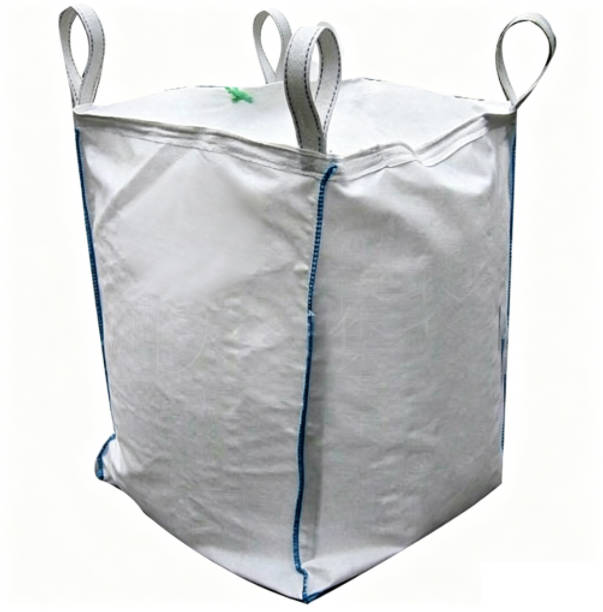
Branding & complianceCorner-loop 4-panel FIBC bulk bags are the global industrial standard for medium-to-long distance bulk commodity transport. Constructed by sewing four separate flat fabric panels together to form a rigid square box, this architecture provides exceptional vertical load stability.
The four lifting loops are stitched directly along the vertical corner seams, extending downward into the main body fabric to create maximum structural anchorage. This design ensures that when lifting payloads of 1.0 to 2.0 tons, the upward crane or forklift tension is channeled directly parallel to the four corners, minimizing lateral fabric stress and reducing container deformation during maritime transit.
Stitched securely along the vertical corner seams, the loops absorb dynamic shocks evenly during forklift tracking over uneven factory floors or during vessel crane operations.
The square cubic shape fits standard ISO pallets (1200×1000mmor1100×1100mm) without excessive edge overhang. This allows for clean grid-pattern tracking inside automated warehouses.
The intersection of vertical seams provides a dual-layer fabric overlap, making it the ideal base for applying single or double sift-proof felt piping to secure ultra-fine chemical powders.
It offers a reliable compromise between production speed and dimensional stability, serving as the standard workhorse package for global chemical, plastics, and agricultural supply chains.
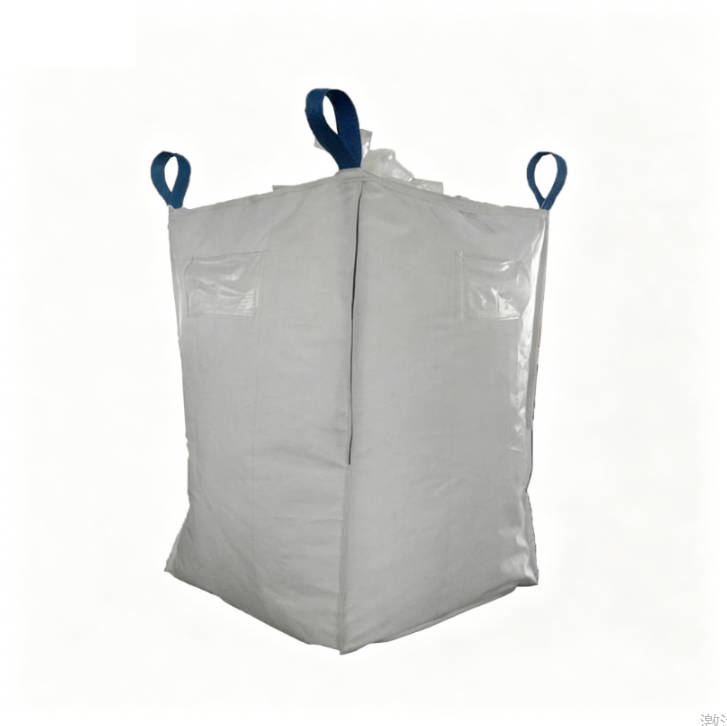
| Item | Specification |
|---|---|
| Product Name | Corner-Loop 4-Panel FIBC / Standard Four-Loop Big Bag |
| Material | 100% Virgin Polypropylene (PP) / UV Stabilized |
| Body Construction | 4 Flat Panels sewn with heavy-duty chain stitches |
| Lifting Loops | 4 Corner-seam loops (Side-seam stitched or over-corner options) |
| Safe Working Load (SWL) | 500 kg / 1,000 kg / 1,500 kg / 2,000 kg |
| Safety Factor (SF) | 5:1 (Single-trip industrial) / 6:1 (Multi-trip UN rated available) |
| Fabric Density | 160g/m² to 220g/m² based on load requirement |
| Handling Interface | Standard two-prong forklifts, overhead crane spreaders, or hoists |
Plastics & Polymers: Wholesale transport of raw nylon granules, PVC chips, and masterbatch pellets into compounding hoppers. Chemicals & Additives: Packaging for technical flame retardants, industrial salts, and chemical stabilizers prone to static or leaking. Minerals & Construction Materials: Storing high-density silica sand, cement additives, dry mortar, and crushed mineral concentrates.
| Design Metric | Corner-Loop 4-Panel FIBC | Cross-Corner Webbing FIBC |
|---|---|---|
| Loop Seaming Zone | Sewn directly into the 4 vertical panel corner seams | Sewn flat onto the face panels across the corner apex |
| Forklift Prong Interface | Loops may lay flat; requires manual adjustment or stiffeners | Loops naturally stand arched open for quick prong entry |
| Stress Distribution | Direct vertical pull aligned with the seam reinforcement | Distributed cross-panel radial tension across the base |
| Cost Profile | Standard manufacturing process; lower per-unit production cost | High sewing complexity; carries a premium manufacturing cost |
Side-seam loops are sewn along the single vertical seam where two flat panels meet. Over-corner loops span across the corner angle, with one leg stitched to panel A and the other leg stitched to panel B. Over-corner designs keep the loops slightly more accessible for forklift prongs, while side-seam styles offer direct vertical stress tracking along the seams.
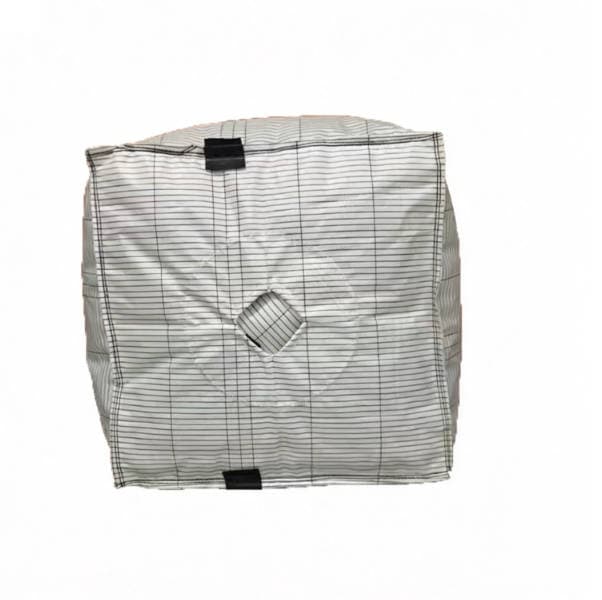
Standard woven polypropylene has micro-gaps between the warp and weft tape yarns. For fine chemical additives or flame retardants, you must specify either laminated (coated) fabric or add sift-proof felt piping along the corner seams to seal the needle puncture tracks.
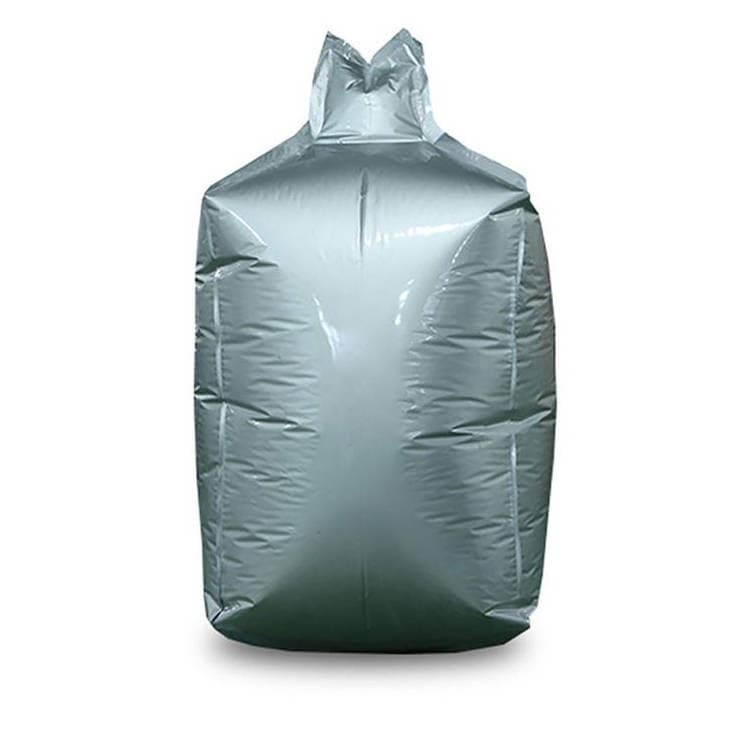
For sensitive materials like lithium battery cathode powders or moisture-sensitive chemicals, we pre-install either standard PE liners or multi-layer aluminum foil liners. These liners can be tied, glued, or tabbed to the outer 4-panel bag corners to ensure they do not collapse during filling or discharging.
If you are setting up a bulk logistics line but lack precise bag blueprints, provide your basic operational parameters below. Our engineering team will calculate the necessary fabric weights and dimensions:
Email:[email protected]
Direct Line: +86 15232851009
Technical Consultation: Coordinating with the Engineering Team
Get in touch for more information, pricing, or custom requirements.