Bag Styles & Body Construction
Panel, tubular, baffle and loop body choices
Choose the body structure that controls bag shape, filling stability, stacking behavior and container loading efficiency.
5 styles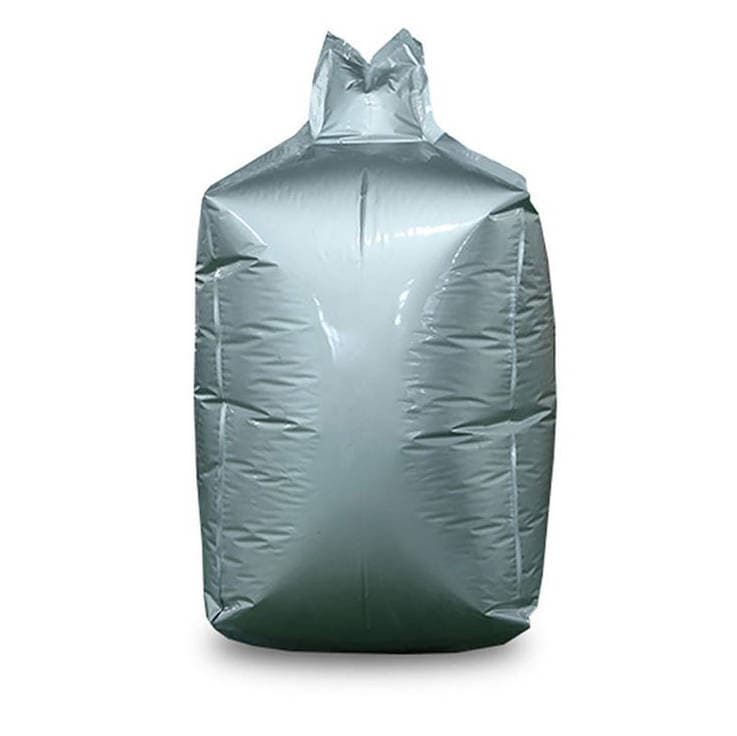
Panel, tubular, baffle and loop body choices
Choose the body structure that controls bag shape, filling stability, stacking behavior and container loading efficiency.
5 styles
Forklift, crane and port handling systems
Match loop placement and strap reinforcement to forklift pickup, crane lifting, port handling and heavy-duty transfer.
5 strap options
Open, spout, conical and duffle top choices
Select the top opening for manual loading, controlled silo discharge, automatic filling equipment or dust reduction.
4 top options
Flat, spout, conical or full discharge
Set the discharge method for closed-bottom transport, controlled unloading, fast emptying or low-residue discharge.
4 discharge options
Moisture, leakage and reinforcement details
Add liner, seam and reinforcement details when the cargo needs moisture control, leak resistance or extra safety margin.
3+ protection features
Branding, warnings and certification support
Prepare buyer-facing identification, handling marks and compliance requirements for food, chemical or regulated cargo.
Branding & compliancePanel, tubular, baffle and loop body choices
Choose the body structure that controls bag shape, filling stability, stacking behavior and container loading efficiency.
5 stylesForklift, crane and port handling systems
Match loop placement and strap reinforcement to forklift pickup, crane lifting, port handling and heavy-duty transfer.
5 strap optionsOpen, spout, conical and duffle top choices
Select the top opening for manual loading, controlled silo discharge, automatic filling equipment or dust reduction.
4 top optionsFlat, spout, conical or full discharge
Set the discharge method for closed-bottom transport, controlled unloading, fast emptying or low-residue discharge.
4 discharge optionsMoisture, leakage and reinforcement details
Add liner, seam and reinforcement details when the cargo needs moisture control, leak resistance or extra safety margin.
3+ protection featuresBranding, warnings and certification support
Prepare buyer-facing identification, handling marks and compliance requirements for food, chemical or regulated cargo.
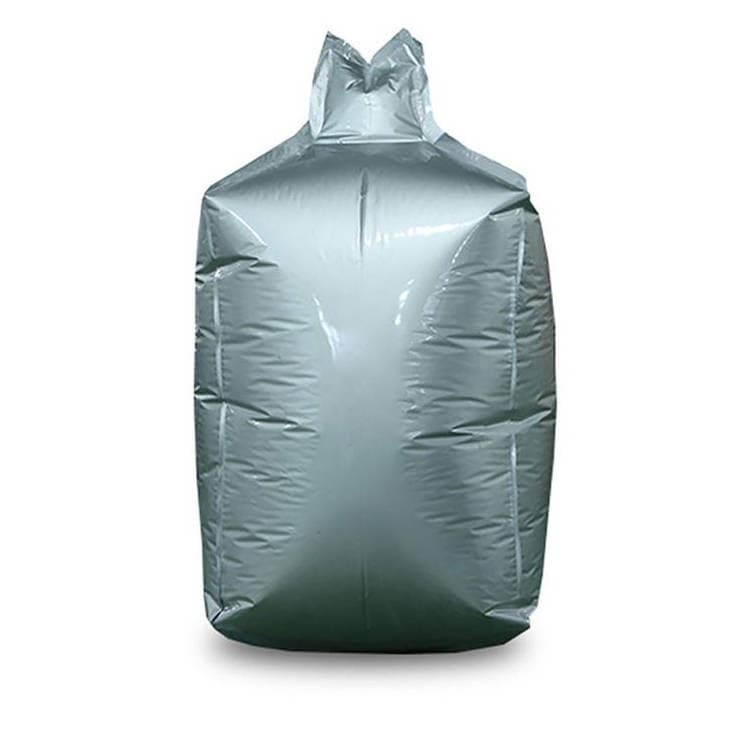
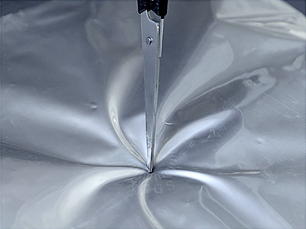
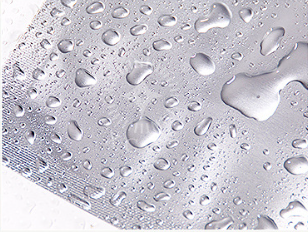
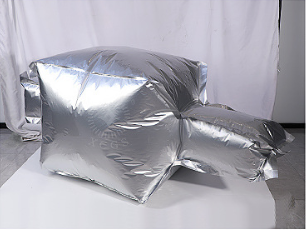
Branding & complianceMulti-Layer Aluminum Foil FIBC Liners are designed for bulk materials that require higher protection against moisture, oxygen, light, and long-distance storage risk. Made with a multi-layer composite structure such as PET / PA / Aluminum Foil / PE, the liner can be fitted inside FIBC bulk bags to improve barrier performance during ocean shipment, warehouse storage, and industrial handling. It is suitable for moisture-sensitive powders, lithium battery materials, hygroscopic chemicals, nylon granules, flame retardants, and other high-value bulk materials that need cleaner, safer, and more stable packaging.
| Item | Specification |
|---|---|
| Product Name | Multi-Layer Aluminum Foil FIBC Liner |
| Application | Moisture-sensitive powders, lithium battery materials, chemicals, nylon granules, flame retardants |
| Material Structure | PET / PA / AL / PE multi-layer composite film |
| Barrier Function | Moisture protection, oxygen reduction, light blocking |
| Thickness | 90-180 micron, customizable by cargo requirement |
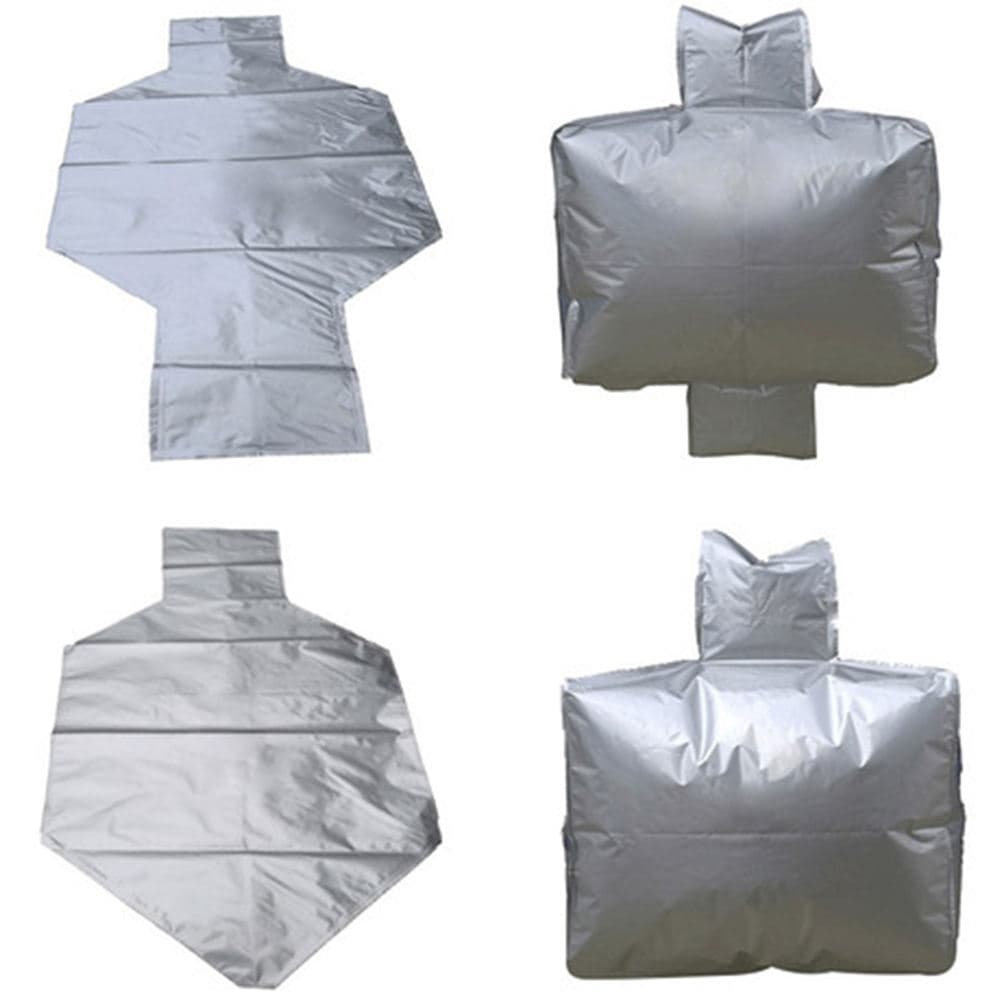
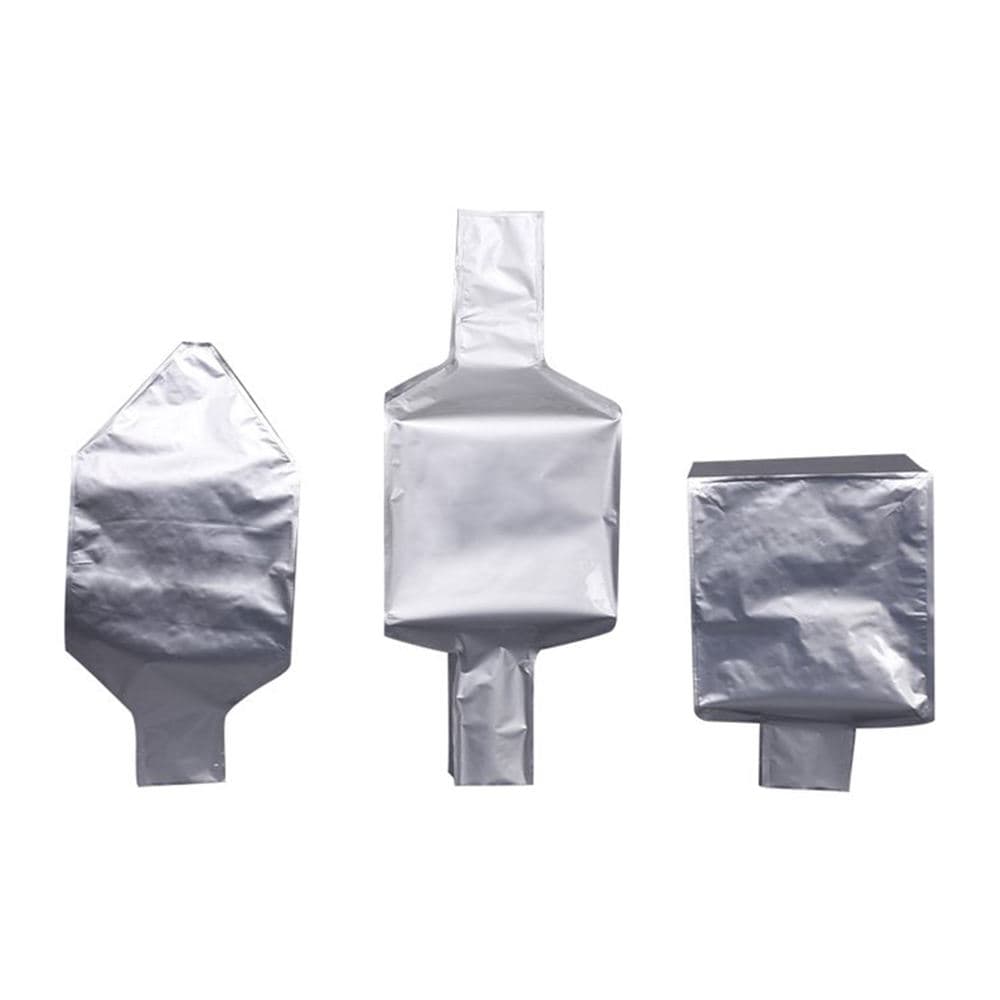
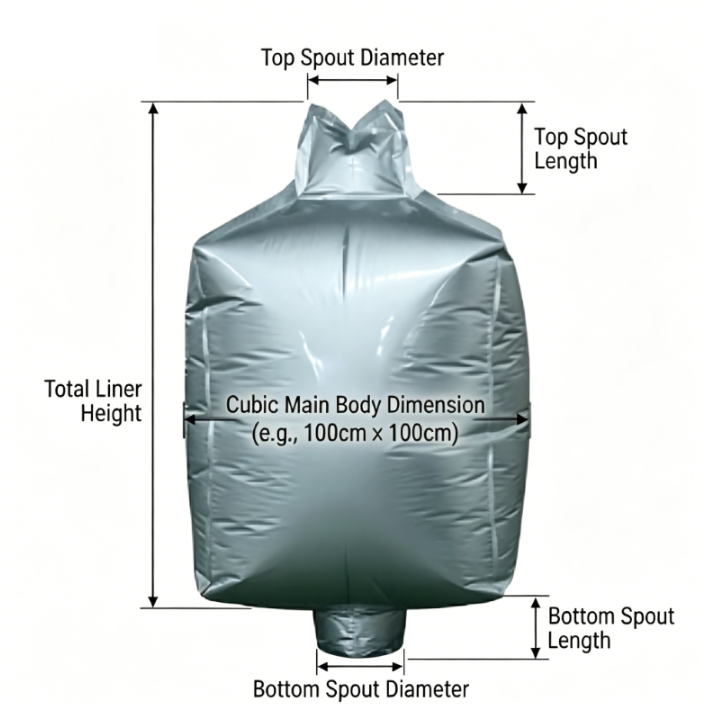
| Shape | Lay-flat liner, form-fit liner, cubic liner, spout liner |
| Top Options | Open top, filling spout, bottle-shaped inlet, customized inlet |
| Bottom Options | Flat bottom, discharge spout, sealed bottom, customized outlet |
| Compatibility | FIBC bulk bags, Q bags, aluminum-lined jumbo bags, chemical powder bags |
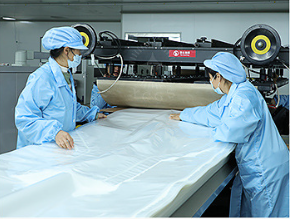
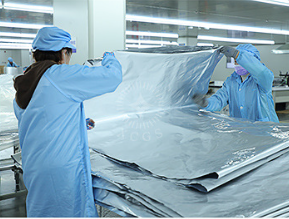
| Processing | Heat sealing, form-fit welding, tab fixing, customized cutting |
| Custom Options | Size, thickness, film structure, spout size, anti-static layer, fixing method |
| Inquiry Information Needed | Outer bag size, cargo name, filling weight, top/bottom structure, storage requirement |
This aluminum foil FIBC liner is suitable for industries where bulk materials are sensitive to humidity, oxygen, or contamination during transport and storage.
For new energy materials, it can be used for lithium battery powder, cathode material, anode material, and other powder products that need better moisture and oxidation control.
For chemical materials, it is suitable for hygroscopic powders, flame retardants, additives, specialty chemicals, and high-value raw materials that may clump, degrade, or lose performance when exposed to air and moisture.
For plastic and polymer materials, it can be used for nylon granules, engineering plastic pellets, resin particles, and other materials requiring clean packaging and long-distance shipment protection.
For export bulk packaging, it helps improve cargo stability during container loading, sea freight, warehouse storage, and repeated handling.
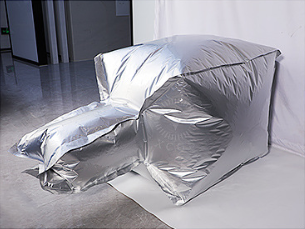
Standard PE liners can provide basic moisture resistance, but they may not be enough for cargo that needs stronger barrier protection during long storage or ocean transportation. Aluminum foil composite liners add a metallic barrier layer between polymer films, helping improve resistance to moisture vapor, oxygen, and light.
Compared with ordinary inner bags, aluminum foil FIBC liners are better suited for materials with higher unit value, stricter storage conditions, or stronger sensitivity to environmental exposure. When combined with a properly designed outer FIBC bag, the liner can support a more complete bulk packaging solution from filling to transport and discharge.
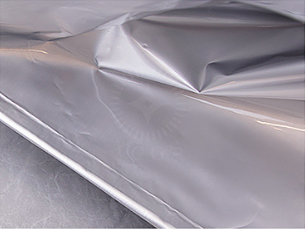
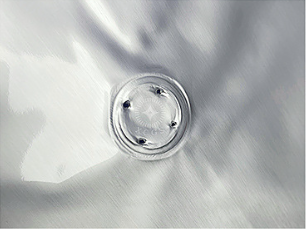
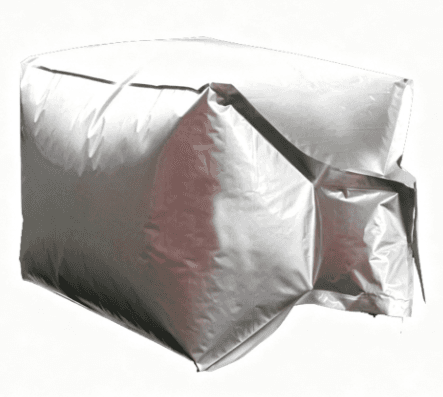
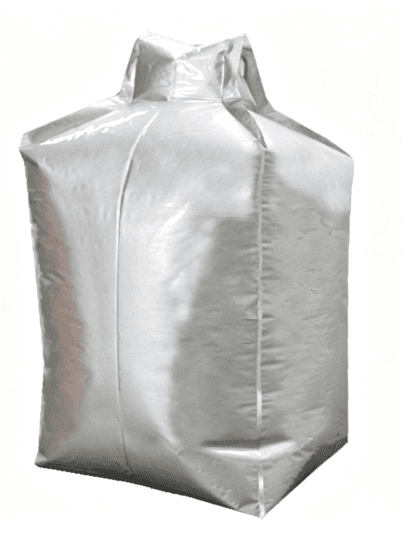
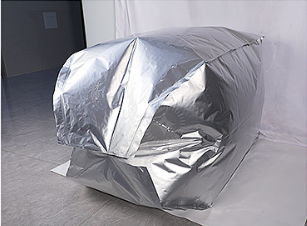
The liner can be designed according to the outer bag size and filling process. For square bulk bags, a form-fit liner can help match the internal structure and reduce wrinkles. For powder materials filled through equipment, a customized filling spout can improve operation efficiency. For materials requiring controlled discharge, the bottom outlet can be matched with the FIBC discharge spout.
Available customization includes liner size, film thickness, top and bottom openings, spout diameter, heat-sealed seams, fixed tabs, glued positioning, anti-static options, and compatibility with vacuum or nitrogen flushing systems.
| Comparison | Aluminum Foil FIBC Liner | Standard PE Liner |
|---|---|---|
| Moisture Barrier | Higher barrier performance for sensitive materials | Basic moisture resistance |
| Oxygen Protection | Helps reduce oxygen exposure | Limited oxygen barrier |
| Light Blocking | Blocks visible light and UV exposure | Usually translucent |
| Suitable Cargo | Lithium materials, chemicals, hygroscopic powders | General granules and low-sensitivity materials |
| Custom Fit | Can be made into form-fit structure | Usually lay-flat structure |
| Cost Positioning | Higher protection for higher-value cargo | Economical option for general packaging |
To select the right aluminum foil FIBC liner, buyers should provide the cargo type, target filling weight, outer FIBC dimensions, top filling method, bottom discharge method, storage time, and whether vacuum or nitrogen flushing is required. For powder cargo, particle size and dust leakage risk are also important. For chemical materials, compatibility between the cargo and liner material should be reviewed before bulk production.
If the cargo requires strict moisture, oxygen, or light protection, a multi-layer aluminum foil liner is usually more suitable than a standard PE liner. If the cargo only needs basic dust control or simple moisture protection, a PE liner may be enough.
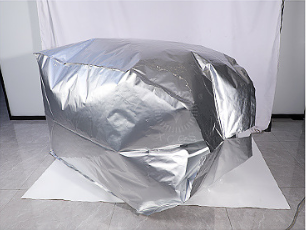
Can this liner be used inside standard FIBC bags? Yes. The liner can be customized to fit standard FIBC bulk bags, Q bags, spout-top bags, flat-bottom bags, and discharge-spout bags.
Is it suitable for lithium battery powder? It is suitable for many moisture-sensitive and oxygen-sensitive powder materials, including lithium battery-related materials. The final structure should be matched with the cargo properties, filling process, and storage requirements.
Can the liner support vacuum sealing or nitrogen flushing? Yes. The liner can be designed for packaging systems that require vacuum, nitrogen flushing, or improved atmospheric protection.
What information is needed for a quotation? Please provide the outer FIBC size, cargo name, loading weight, liner thickness requirement, top and bottom opening design, order quantity, and whether vacuum or nitrogen flushing is needed.
Send your cargo details, FIBC dimensions, loading weight, and storage requirements. Our team can help match the liner structure, thickness, spout layout, and fixing method for your moisture-sensitive powder packaging project.
Get in touch for more information, pricing, or custom requirements.