

Mining FIBC Bags: How to Choose Bulk Packaging for Ore, Minerals, and Concentrates

Dayang Yang
AuthorWith experience in FIBC bulk bag manufacturing and export sales, we operate our own production facility with stable large-scale capacity. We are specialists in bulk bags, conductive FIBCs, food-grade FIBCs, UN certified bags, and customized flexible intermediate bulk containers for industrial packaging and bulk material transportation solutions.
Introduction: Why Bulk Packaging Affects Mining Operations
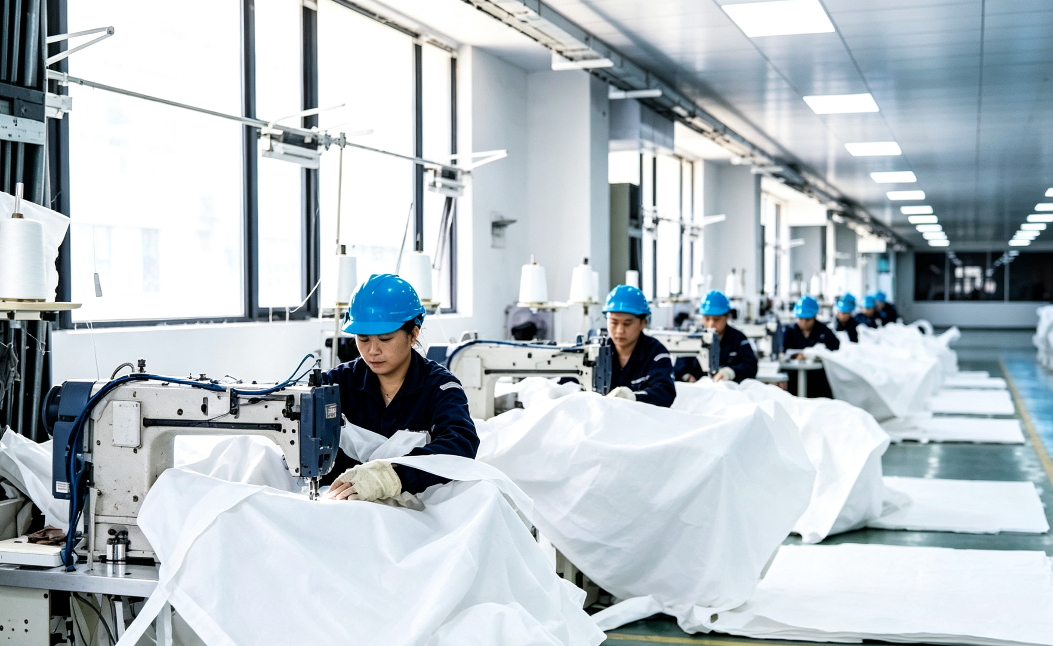
In the mining industry, ore, minerals, and mineral concentrates move through multiple stages, including extraction, crushing, screening, beneficiation, warehousing, port handling, and downstream processing. Packaging is not simply a final transport container. It affects delivery reliability, material loss, workplace safety, and inventory efficiency. Appropriate mining FIBC bags turn bulk materials into measurable, identifiable, stackable, and forklift-ready handling units.
For projects involving partial shipments, cross-region transport, container exports, or controlled downstream feeding, FIBC bags for mining, mining bulk bags, and bulk packaging for the mining industry do more than carry weight. They help reduce dust, leakage, material mixing, and handling interruptions. The correct packaging solution should begin with material behavior and operating conditions, rather than bag price alone.
Why Ore, Minerals, and Concentrates Have Different Packaging Requirements
Ore: Large Particles, Abrasion, and Demanding Handling Conditions
Ore often contains irregular particles, sharp edges, varying particle sizes, and abrasive surfaces. Filling impact, repeated lifting, forklift handling, and ground friction place continuous stress on bag bottoms, corners, and lifting loops. For this reason, ore bulk bags must be evaluated for more than their rated capacity. Their construction, load path, filling height, free-fall distance, and handling method all matter.
For frequent short-distance transfers, heavy duty FIBC bags require standardized loading weights, lifting procedures, and inspection routines. Improper dragging, excessive forklift penetration, or uneven lifting-loop loads can cause premature wear even when the bag has a high nominal capacity.
Minerals: Moisture, Dust, and Batch Consistency
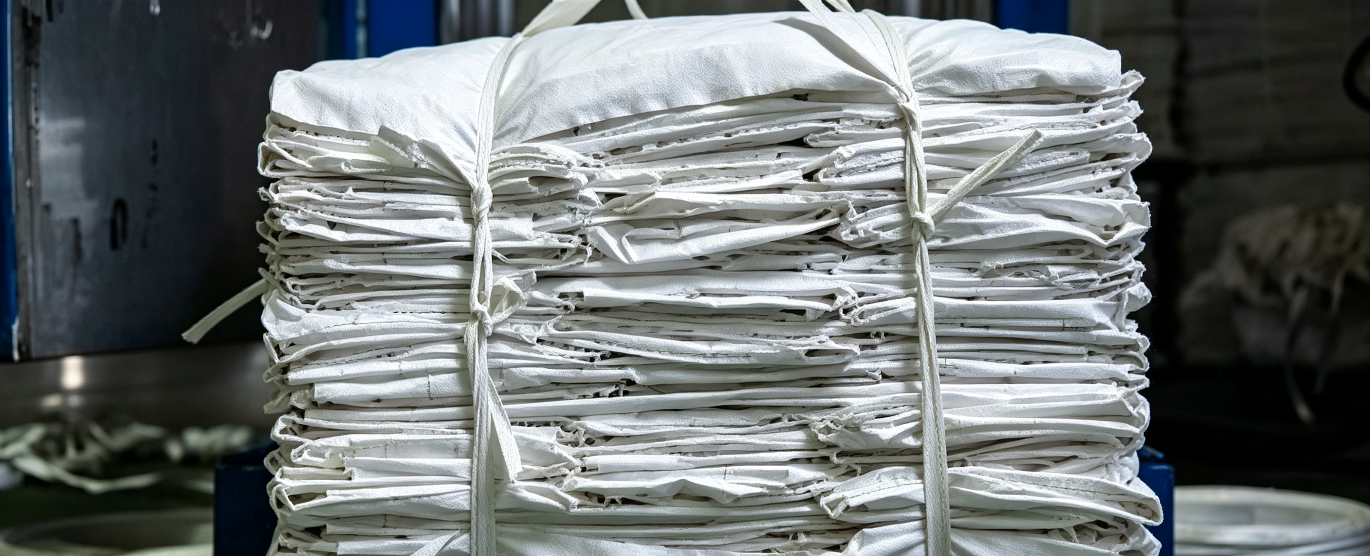
Processed or screened minerals may vary in moisture content, powder percentage, and consistency between batches. Higher moisture can reduce flowability and cause caking, while fine powders increase the risk of dust, leakage, and contamination. In these cases, mineral bulk packaging is not only a transport solution. It also supports material-condition control and batch management.
The packaging design should consider moisture protection, dust control, storage duration, and the downstream discharge process. For fine materials or long storage periods, bag closures, seams, liners, and labeling should work together as one system.
Mineral Concentrates: High Density, Fine Powders, and Material Protection
Mineral concentrates are often denser, finer, and more valuable than raw ore. Copper, zinc, nickel, and lead concentrates may face risks related to dust, moisture, leakage, cross-contamination, and weighing deviations during transport. They should not be handled in the same way as ordinary bulk bags.
For bulk bags for mineral concentrates, buyers should confirm bulk density, moisture content, target bag weight, handling frequency, storage conditions, and export requirements. The bag should also fit into weighing, sampling, inspection, labeling, and port handover procedures to protect high-value material and reduce disputes.
What Mining Companies Should Assess Before Selecting a Bag
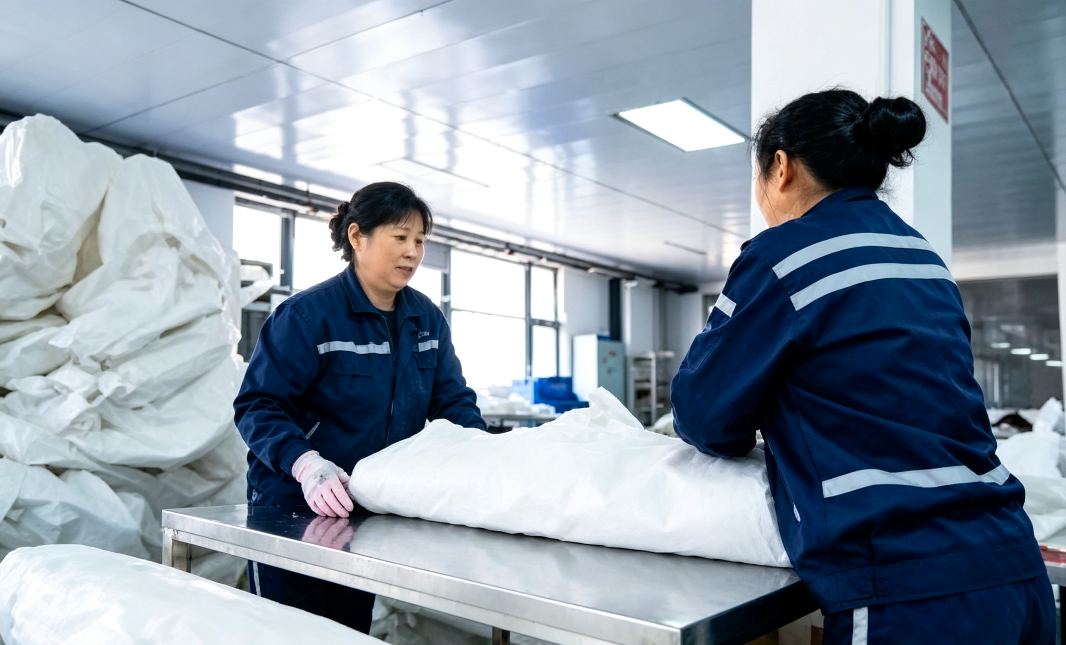
Before selecting FIBC bags for minerals, companies should define material properties, including particle size distribution, bulk density, moisture content, flowability, abrasiveness, temperature, dust characteristics, static risk, and target net weight per bag. They should then confirm filling methods, handling equipment, stacking height, storage duration, container-shipping requirements, and final discharge methods.
Only when material properties and operating conditions are evaluated together can companies determine whether ore bulk bags, FIBC liners, moisture barriers, baffle designs, or anti-static solutions are appropriate. Defining the process before selecting the bag reduces rework and on-site failures.
Core Operational Risks in Mining Bulk Packaging
Bag Failure Caused by Heavy Loads and Repeated Handling
The risks in mining bulk packaging are not limited to static load capacity. Repeated lifting, forklift movement, bag sway, stacking, and uneven roads create dynamic loads. Sharp particles also accelerate wear on the bag bottom and side walls. Lifting methods, loop angles, filling variation, handling frequency, and site procedures should all be part of the packaging specification.
Heavy duty FIBC bags must match the actual operating environment. For high-density materials, localized stress and dynamic impact are often more important than rated capacity alone.
Dust Leakage and Workplace Conditions
Fine mineral powders, dry concentrates, and powdered raw materials can generate dust during filling, handling, and discharge. Dust creates material loss and cleaning costs, while also affecting visibility, equipment maintenance, working conditions, and downstream feeding performance.
For mining bulk bags that require dust control, filling openings, discharge spouts, seams, liners, and customer-side feeding interfaces should be designed together. The objective is not to make a bag appear sealed, but to reduce uncontrolled material release at critical transfer points.
Moisture, Caking, and Changes in Material Condition
Humidity changes in mines, ports, and ocean transport can affect the flowability and stability of certain minerals and concentrates. Moisture can cause caking, make discharge difficult, or change material quality. External water, container condensation, and humid air can also create delivery risks.
Inner Lining Ton Bag solutions, coated bag fabrics, closure designs, and container moisture-control measures can all help reduce risk. However, a fully sealed design is not suitable for every material. Materials that require airflow or may generate vapor should be assessed individually; Breathable Ton Bag options may be relevant in selected applications.
Static Electricity, Combustible Dust, and Safety Management
Static risk depends on material properties, dust concentration, filling speed, equipment grounding, and the operating environment. Not every mineral needs the same level of electrostatic protection. For dry powders, fine particles, or potentially combustible dust environments, a risk assessment should be completed before choosing antistatic FIBC bags, Type C conductive bulk bags, or Type D static dissipative FIBC bags.
Type C FIBC bags generally depend on reliable grounding, while Type D FIBC bags are designed for specific static-control conditions. Packaging does not replace site grounding, equipment maintenance, dust management, or operator training. Related packaging risks involving dust, moisture, and static are also discussed in FIBC World’s Chemical Grade Bulk Bags article.
Stacking and Stability During Port, Container, and Long-Distance Transport
Export-oriented mining logistics often includes warehousing, trucking, container loading, ocean transport, and final delivery. Bag dimensions, unit weight, headspace, moisture protection, empty-space control, and container arrangement all affect transport stability and space utilization.
For materials that require a more square bag profile, stable stacking, or improved container loading, baffle bulk bags can reduce side bulging after filling. Whether to use this design should be based on material flowability, filling efficiency, storage benefits, and transport conditions rather than on the assumption that it is always a better bag type.
How the Mining Supply Chain Influences Bulk Packaging Decisions
From Mine Site to Processing Plant: Frequent Short-Distance Handling
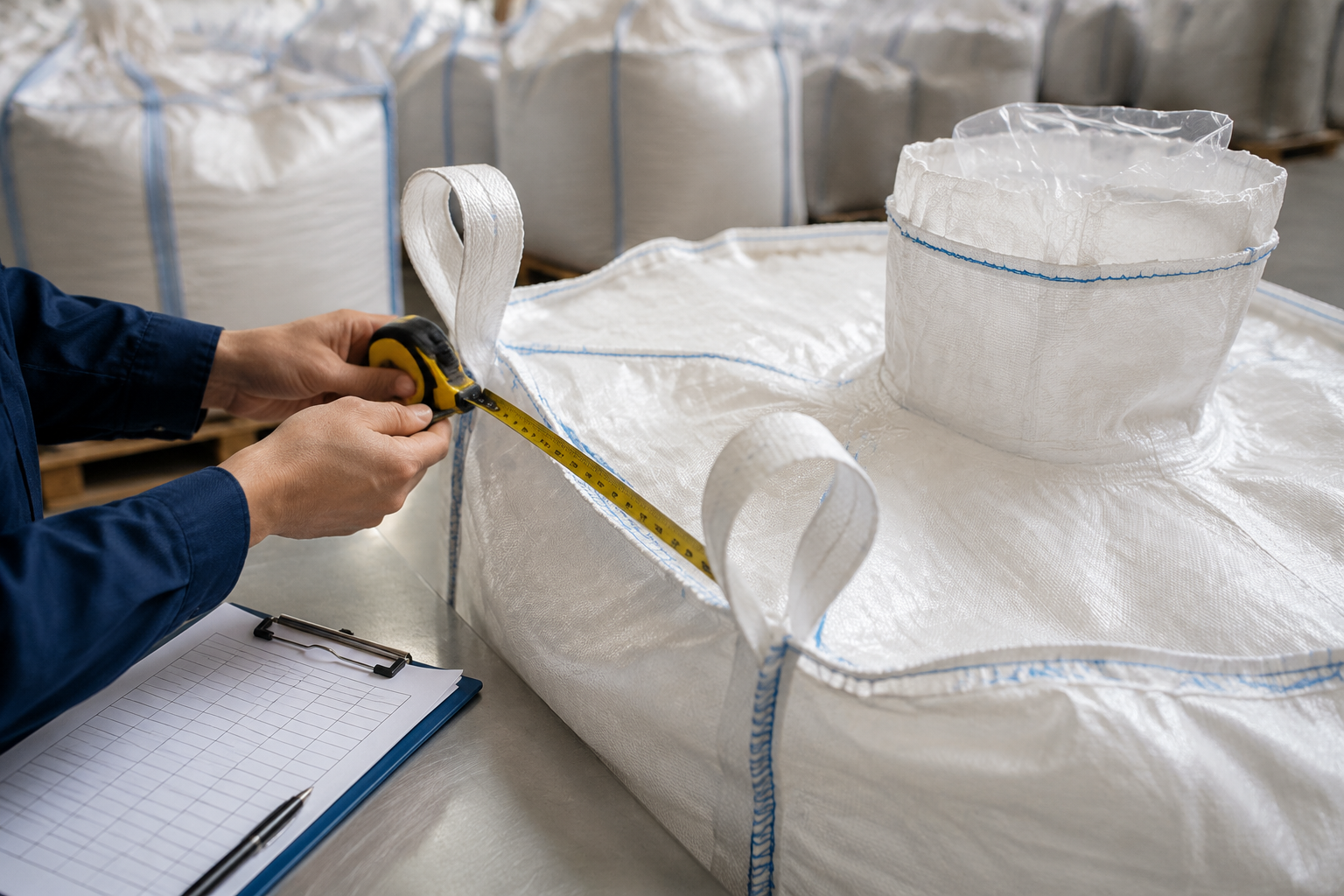
Transport from the mine site to the processing plant often involves variable road conditions, frequent handling, and demanding loading schedules. Packaging priorities include abrasion resistance, lifting-loop design, filling efficiency, and compatibility with forklifts or cranes. For coarse materials, preventing bag-bottom wear and localized stress is usually more important than using complex closures.
Short transport distances do not mean low risk. Repeated transfers magnify the impact of poor handling on ore bulk bags, so clear filling, lifting, stacking, and inspection procedures are essential.
From Processing Plant to Warehouse or Port: Loading Efficiency and Batch Control
Processed minerals and concentrates require accurate weighing, clear batch identification, and manageable inventory control. At this stage, packaging is both a shipping unit and an inventory unit. Clear labels, net weight, lot numbers, and material-status records help reduce mixing, shipping errors, and later disputes.
For mineral concentrates, connecting packaging with weighing, sampling, and inspection records is particularly important. Standardized bag specifications also improve stacking, warehouse location control, and container-loading efficiency.
Export Transport: Marine Humidity, Container Loading, and Damage Control
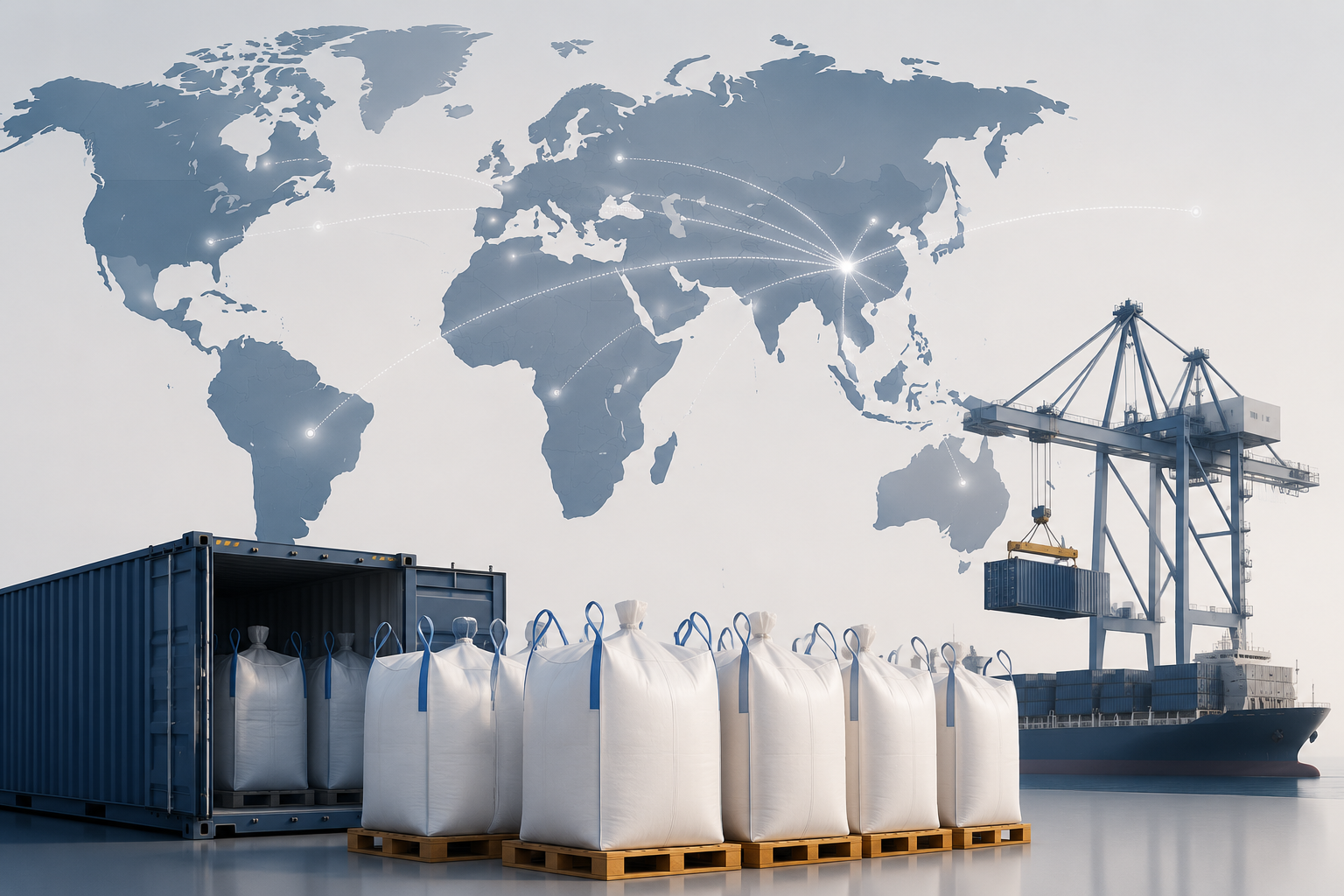
Export transport introduces longer transit times and more handover points. Marine humidity, container condensation, port handling, and uneven loading can all affect the performance of mining bulk bags. Packaging should be planned alongside the container-loading method rather than adjusted only after production is complete.
Companies should define responsibilities for bag inspection, label verification, visual-condition records, and exception handling. Traceable packaging management supports customer requirements and provides clearer evidence if damage claims arise.
Smelting or Final Processing: Linking Packaging With Discharge Control
The receiving smelter or processing plant determines the final value of the packaging system. If the customer uses bottom discharge, enclosed feeding, hoist discharge, or mechanical bag breaking, bag openings and discharge structures must be confirmed early. For dense or fine materials, discharge consistency and dust control directly affect plant efficiency.
For practical guidance on filling and discharge structures, see FIBC Bulk Bag Filling and Discharge Options. The selection of FIBC bags for mining should include the requirements of the final user, not only the convenience of the shipping site.
Key FIBC Requirements for Mining Applications
Load Capacity, Safety Factor, and Dynamic Loads
Bag weight should be calculated from bulk density, bag volume, filling method, and operational margin rather than by automatically choosing a standard 1 tonne bulk bag. High-density concentrates may occupy less volume while placing greater localized loads on the bag body and lifting loops.
Buyers should confirm actual working load, handling frequency, dynamic forces, filling variation, and testing requirements. Nominal capacity alone is not an adequate purchasing criterion.
Abrasion Resistance, Fabric Weight, and Structural Strength
Woven polypropylene FIBC bags are a common starting structure, but fabric weight is not the only indicator of durability. Seam construction, bag-bottom design, loop attachment, corner protection, and contact areas with abrasive particles all influence real performance in mining operations.
For highly abrasive materials, companies should validate the design through sample filling and actual handling trials. A bag that meets paper specifications may still be unsuitable for real operating conditions.
Moisture Protection, Coated Bags, and Liners
Coated bag fabrics and FIBC liners can improve moisture protection, dust control, and leakage prevention, but they perform different functions. Coating provides a barrier at the bag-fabric level, while liners can create more direct separation depending on the material and filling method.
For fine powders, concentrates, or industrial minerals requiring cleanliness control, buyers should assess moisture content, storage duration, discharge method, and liner attachment to avoid caking, material retention, or poor discharge.
Anti-Static Bag Types for Powders and Concentrates
Where static control is required, Type C FIBC bags, Type D FIBC bags, and other antistatic FIBC bags must be applied alongside site grounding, operating conditions, and safety procedures. Bag terminology should never replace a material-specific and site-specific risk assessment.
Material safety data, dust conditions, filling practices, and local safety requirements should all be included in the selection process. Anti-static packaging is part of a broader safety system, not a standalone solution.
Lifting, Forklift Handling, and Discharge Design
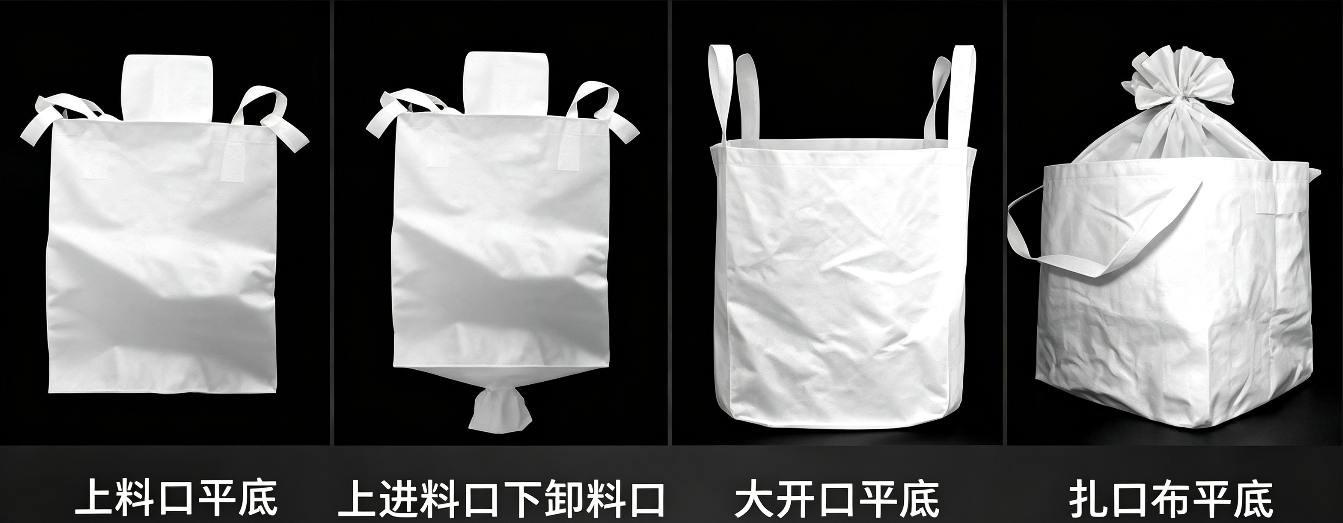
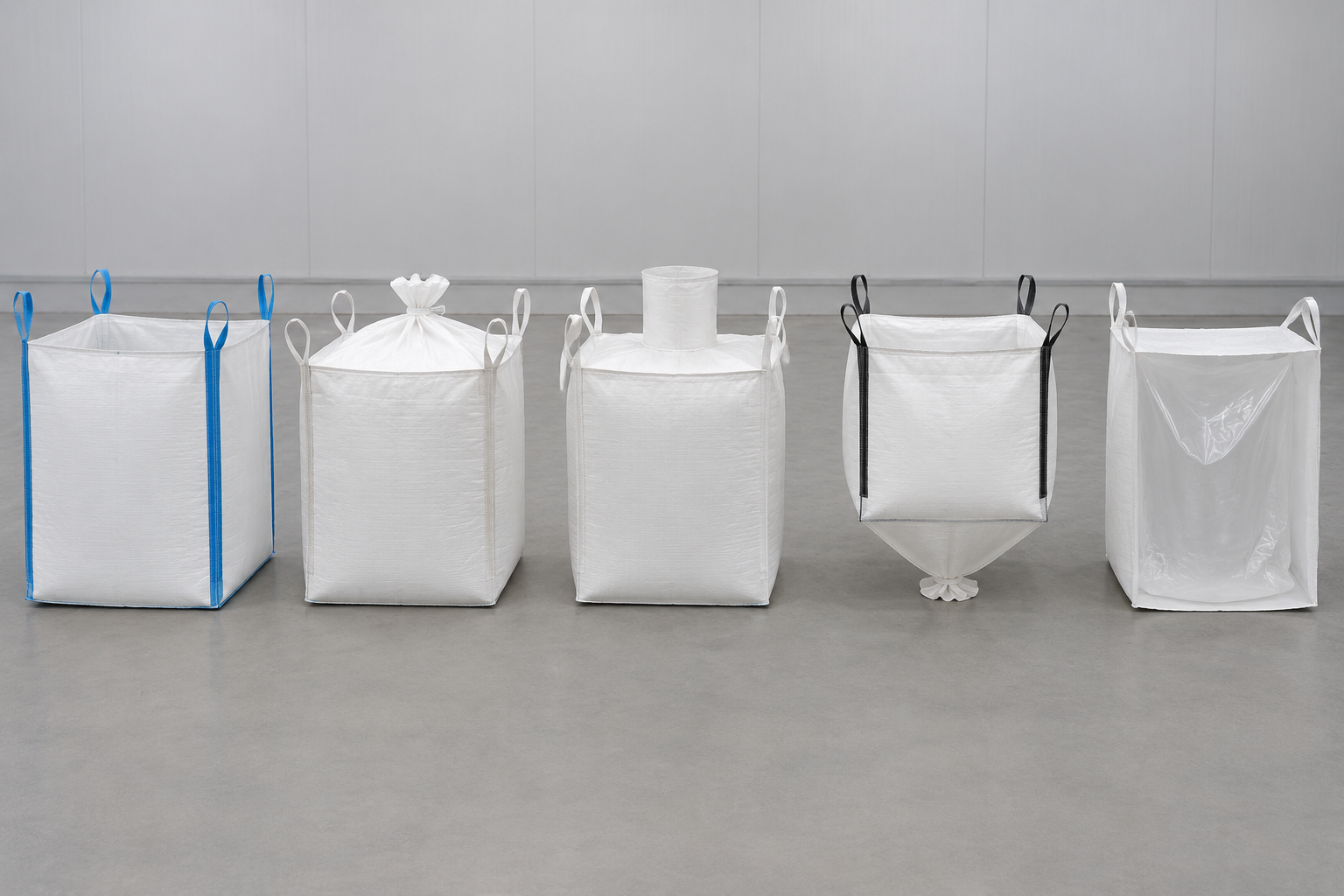
Lifting loops, forklift arms, top openings, filling spouts, and bottom discharge spouts together determine handling efficiency. For projects requiring rapid filling and controlled discharge, duffle top spout bottom FIBC bags or other customized structures may be appropriate. For simpler applications, a less complex design may be easier to manage.
Where overhead lifting is central to the operation, the Top-hanging Ton Bag product category can provide a useful structural reference. Bag design should follow the filling, transport, storage, and discharge process, not force the process to adapt to the bag.
Stable Stacking, Container Utilization, and Baffle Bag Applications
Standard bags can bulge after filling, affecting pallet stability, warehouse space, and container arrangement. In applications requiring a more square profile and better space utilization, baffle bulk bags can improve stacking stability.
However, baffle bags are not necessary for every material. The decision should be based on material flowability, filling speed, container arrangement, and logistics return rather than on appearance alone.
Packaging Selection for Different Mining Materials
Ore Packaging: Heavy Loads, Abrasion, and Fast Handling
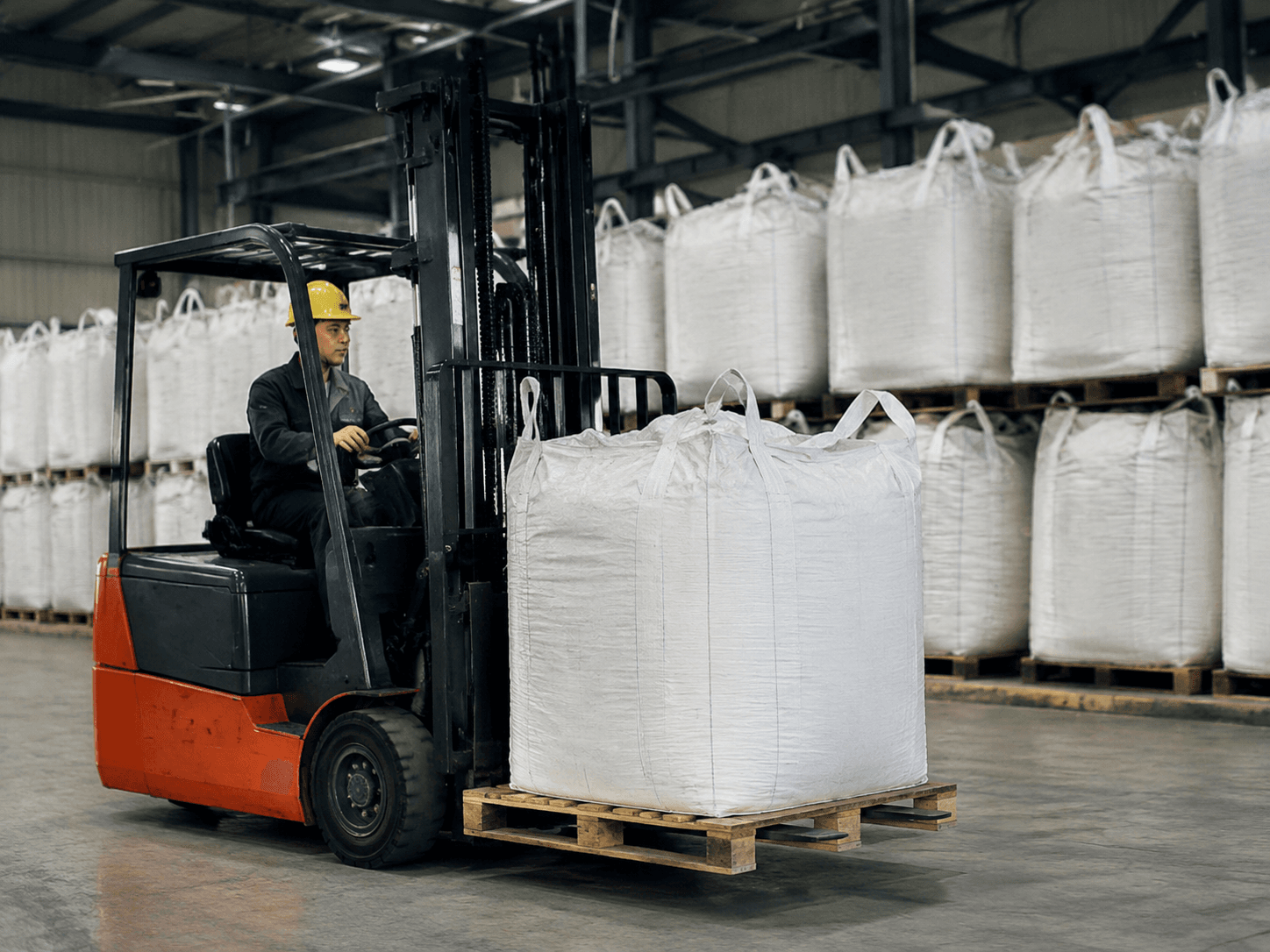
For coarse or abrasive ore, the main priorities are load capacity, abrasion resistance, bag-bottom protection, and lifting method. The size and weight of ore bulk bags should match the capacity of on-site filling equipment, lifting equipment, and forklifts. Increasing bag weight beyond stable handling limits can create more risk than benefit.
Mineral Powder Packaging: Dust, Moisture, and Controlled Discharge
For mineral powders, dust control, moisture protection, and discharge consistency are usually the primary concerns. FIBC liners, closure designs, and bottom-discharge structures should be selected according to material flowability, moisture content, and the receiving plant’s feeding equipment.
Concentrate Packaging: Sealing, Liners, Traceability, and Protection
Bulk bags for mineral concentrates should focus on preventing leakage, moisture exposure, cross-contamination, and batch confusion. Bag specifications, label rules, weighing records, inspection information, and container records should form one consistent control process.
Differences Between Copper, Zinc, Nickel, Iron Ore, and Industrial Minerals
Packaging differences between mineral types come from material behavior and supply-chain requirements rather than mineral names alone. Metal concentrates often require stronger control over density, fine powders, and lot traceability. Iron ore and many industrial minerals may place more emphasis on particle size, moisture content, handling frequency, and logistics cost. Effective mineral bulk packaging must be based on actual material data.
How to Select the Right FIBC Supply Solution for a Mining Project
Define the Material, Density, Moisture Content, and Target Bag Load
At project start, create a material data sheet covering bulk density, moisture content, particle size, temperature, dust characteristics, and target net weight. This is the foundation for selecting FIBC bags for mining and reduces later sample revisions.
Confirm Filling, Transport, Stacking, and Discharge Processes
Packaging must match filling equipment, transport routes, storage conditions, stacking methods, and final discharge requirements. Export projects should also confirm container dimensions, loading plans, and moisture-control requirements in advance to avoid bags that meet specifications but fail in practice.
Verify Safety Requirements, Testing Standards, and Quality Consistency
The supply plan should define testing requirements, quality-control points, and lot-consistency expectations. For heavy-load, dust-sensitive, or static-risk applications, companies should establish sample validation, incoming inspection, on-site trial filling, and exception-handling processes.
Assess Supplier Capability for Customization, Lead Time, Export Packing, and Lot Control
In addition to price and samples, buyers should assess whether a supplier can consistently meet requirements for dimensions, lifting loops, liners, labels, printing, and outer packaging. For ongoing mineral product exports, stable lead times, lot traceability, and documentation support are as important as bag performance. For supplier-selection guidance, see FIBC Bulk Bag Manufacturer Purchasing Guide.
Trends in Mining Bulk Packaging
More Efficient Container and Warehouse Utilization
Mining logistics is moving beyond the goal of simply loading more material. The focus is increasingly on using space efficiently without compromising safety. Standardized bag dimensions, stable stacking, and sound container-loading plans reduce wasted space and improve warehouse control.
Lower Losses, Less Dust, and Better Traceability
Future bulk packaging for the mining industry must support more than material containment. Labels, weighing data, inspection records, photos, and exception tracking are becoming part of packaging management. Packaging is increasingly integrated into quality and supply-chain control.
Higher Requirements for Safety, Environmental Control, and Supply Reliability
Dust, static, leakage, and used-packaging management will continue to drive higher standards for packaging and handling procedures. In higher-risk conditions, antistatic FIBC bags, moisture-protection measures, and clear operating procedures will become part of a broader control system.
From Buying Bags to Optimizing the Packaging System
Experienced buyers no longer compare only the unit price of a bag. They compare filling speed, material loss, cleaning costs, warehouse efficiency, labor input, and customer-side discharge convenience. Optimizing mining bulk bags as part of the total material-handling system often delivers more value than reducing packaging cost alone.
Conclusion: Start With the Material and Operating Conditions, Not Price Alone
Selecting mining FIBC bags for ore, minerals, and mineral concentrates is not about finding a universal bulk bag. It requires understanding how the material moves, where risk occurs, and how the final user receives and discharges it. A reliable FIBC bags for mining specification begins with material properties, handling conditions, storage, transport, and safety requirements.
When packaging is managed as part of the mining supply chain, it becomes more than a cost item. It supports lower loss, more reliable deliveries, and stronger operational efficiency. For a project-specific evaluation based on material type, target bag load, or export route, contact the FIBC World team.
Related News
Other news you might be interested in
Woven Polypropylene FIBC Bulk Bags: How Material, Construction and Coating Affect Bulk Packaging Performance
In global bulk-material supply chains, FIBC bulk bags have developed from simple transport containers into important logistics tools connecting production, warehousing, loading, unloading, and end use. Their actual performance depends not only on capacity, but also on woven polypropylene, bag construction, coating, liners, safety factors, and the application environment. For the food, chemical, agricultural, mining, and construction-material industries, selecting the right FIBC bulk bags affects load-bearing performance, material loss, transport efficiency, warehouse space, and operational safety.
Chemical Grade Bulk Bags: How to Select the Right Flexible Intermediate Bulk Containers (FIBC) for Chemicals, Powders, and Hazardous Materials
Bulk materials used in the chemical industry often have characteristics such as fine particle size, high flowability, strong moisture absorption, a tendency to cake, or a high risk of electrostatic charge buildup. For chemicals, powder materials, and certain hazardous materials, packaging does more than hold the product—it directly affects material quality, workplace safety, and transportation reliability.
Want to know more?
Get in touch with us for more information about our services and products.