
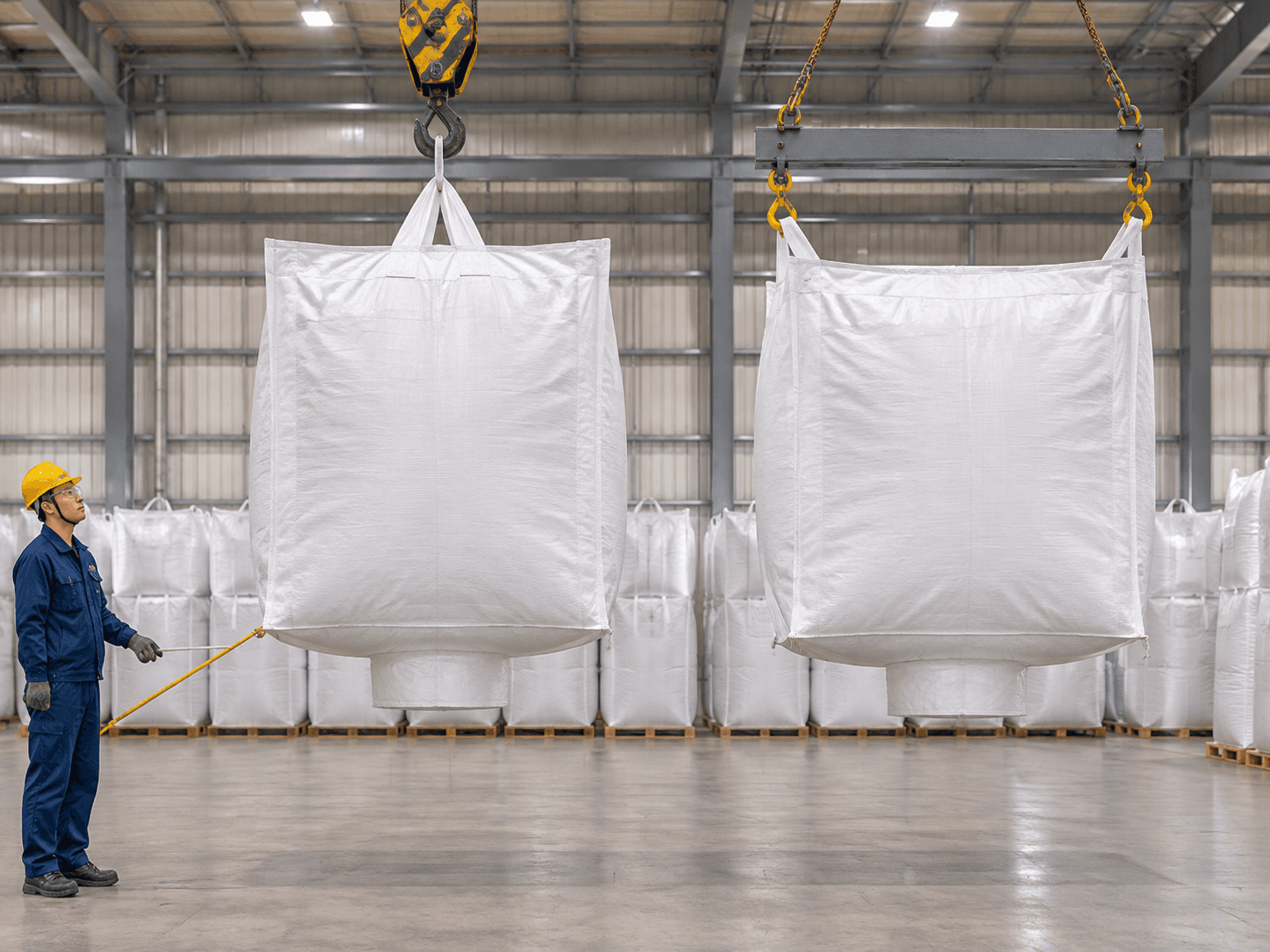
One-Loop vs Two-Loop FIBC Bags: Lifting Design and Handling Compatibility

Dayang Yang
AuthorWith experience in FIBC bulk bag manufacturing and export sales, we operate our own production facility with stable large-scale capacity. We are specialists in bulk bags, conductive FIBCs, food-grade FIBCs, UN certified bags, and customized flexible intermediate bulk containers for industrial packaging and bulk material transportation solutions.
One-loop and two-loop FIBC bags are often compared as if the number of loops were a strength rating. It is not. The loop count describes how the bag connects to the lifting equipment. A one-loop bag gives the operator a single lifting point. A two-loop bag gives two. Whether either design is safe and efficient depends on the bag body, the loop attachment, the hook or fork geometry, the load path, and the way the bag is filled and discharged.
That distinction matters at the quotation stage. Two buyers can both ask for a “1,000 kg bulk bag” and need completely different lifting interfaces: one has a central crane hook and a bottom discharge station, the other has a two-point spreader and a filling line that must keep the bag mouth square. The bag body may look similar. The lifting design should not be treated as an afterthought.
This guide compares one-loop and two-loop FIBCs as handling systems. It explains what each design does well, where it creates risk, which site equipment it matches, and what to send before a supplier can approve a drawing or a sample.
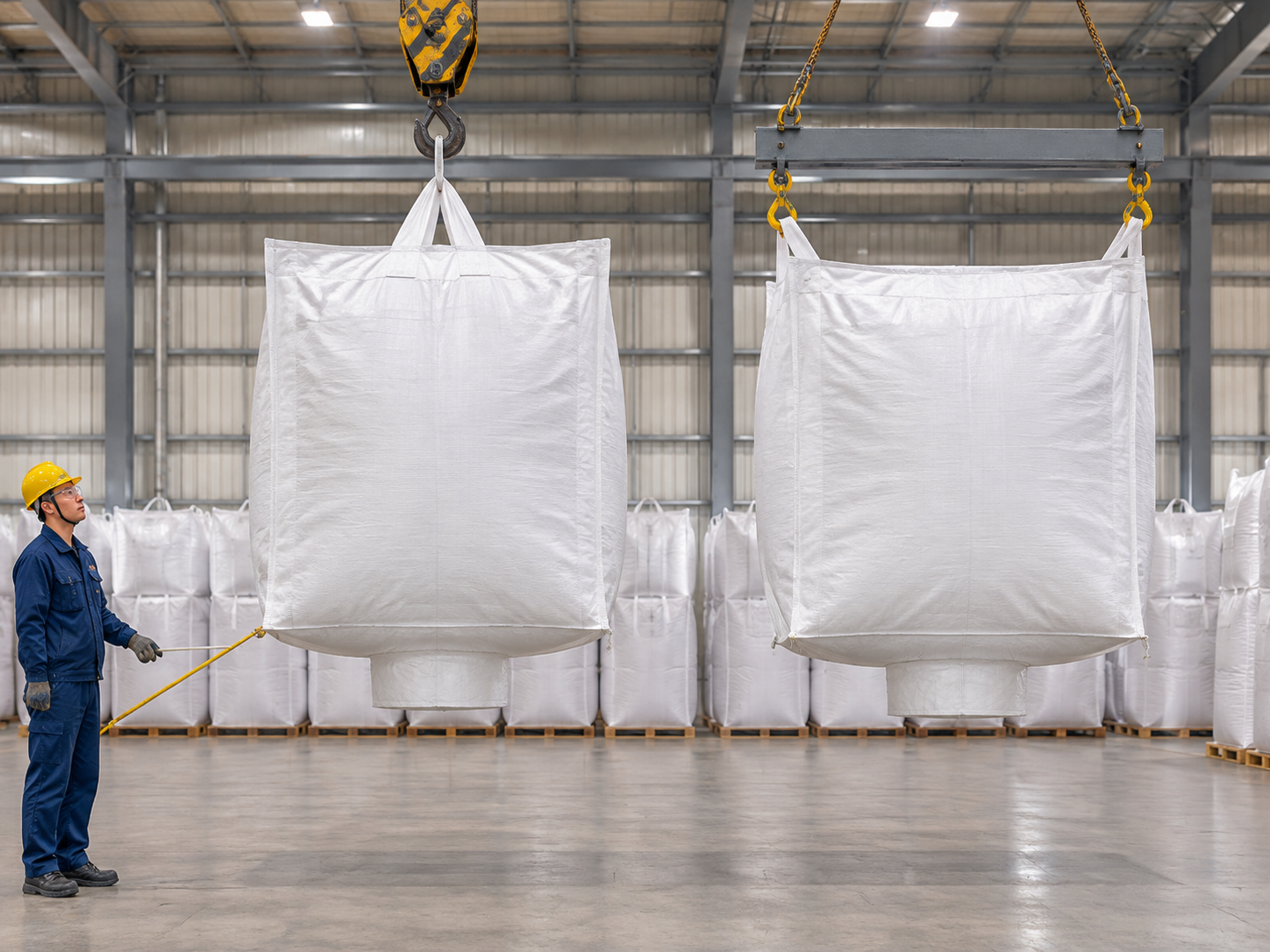
The short answer
| Question | One-loop FIBC | Two-loop FIBC |
|---|---|---|
| Lifting points | One central point | Two points |
| Typical interface | Crane hook, hoist or approved single-point device | Two-point spreader, two hooks, matched forklift tines or an approved single tine, or an approved central hook |
| Main strength | Simple, central hook interface | Better balance and bag orientation when the loop spacing matches the equipment |
| Main risk | Rotation and swing around a single point | Loop spacing, sling angle and side load if the equipment does not match |
| Forklift use | Only where the bag is specifically designed and approved for it | Possible where tine spacing, loop opening and load centre match; some designs use one approved tine |
| Best fit | Crane/hoist stations, centred filling, bottom discharge | Filling lines that need orientation, half-lift handling, two-point lifting |
| Strength ranking | Not defined by loop count | Not defined by loop count |
The table is a starting point, not a selection rule. A one-loop bag can be engineered for a heavy load. A two-loop bag can be engineered for a light load. Neither loop count proves the safe working load (SWL), the safety factor (SF), or the suitability of the lifting method.
What one-loop and two-loop actually mean
One-loop FIBC
A one-loop FIBC (also written “single-loop”) has a single lifting loop or lifting sleeve, usually positioned at the centre of the bag top and integrated into the body fabric or attached with heavy-duty webbing. It is designed for a single-point lift: a crane hook, a hoist, or another approved lifting device.
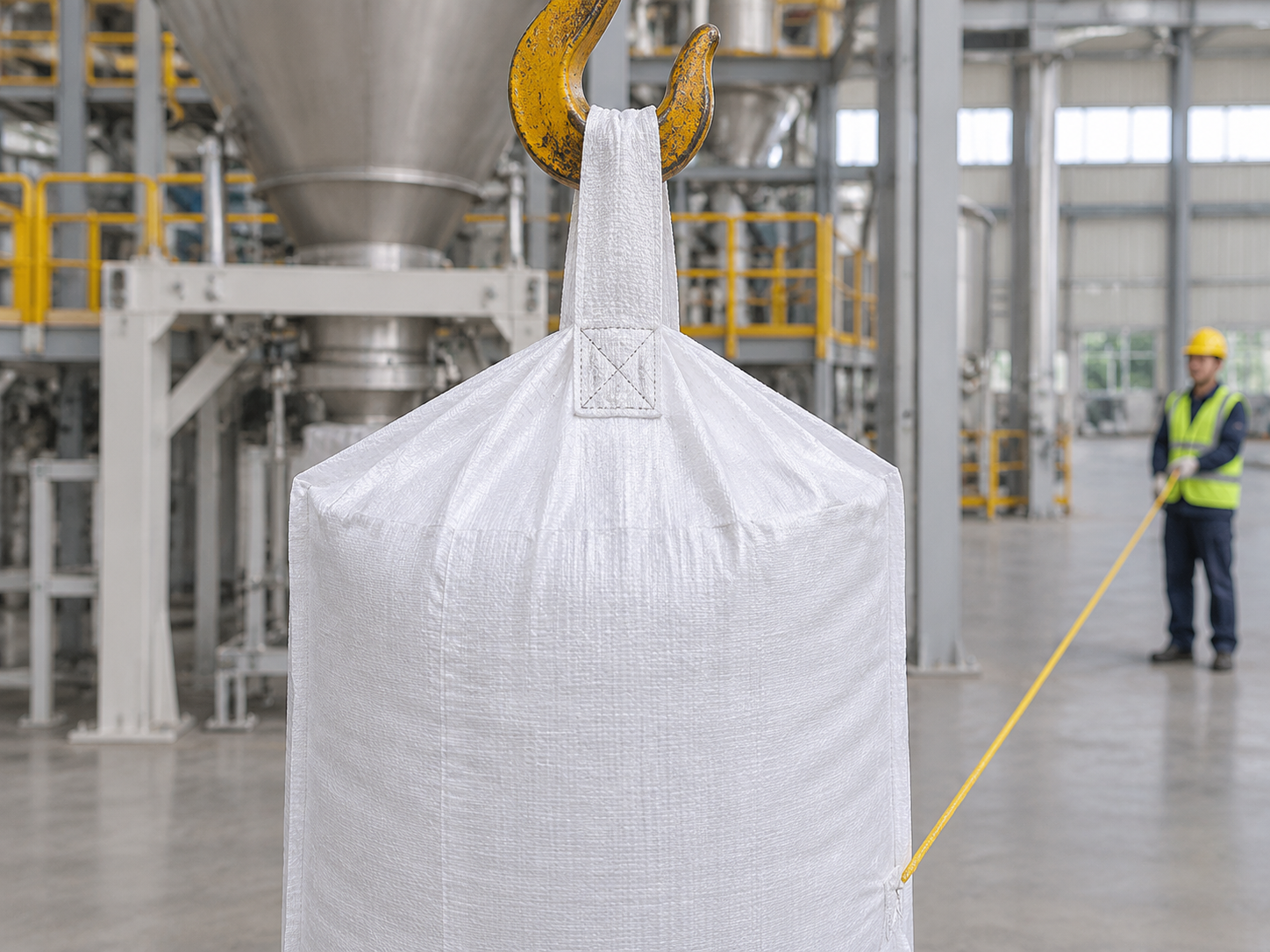
The important words are “designed for.” A one-loop bag is not a standard four-loop bag with three loops removed. The body, base, loop attachment and seam layout have to transfer the load from one central point into the bag. If the load is off-centre, or if the bag is allowed to spin, the loop and body see forces that a simple loop-count comparison will never show.
Some one-loop designs are also intended for a single forklift tine. That is a specific design and handling method, not a general rule. A standard four-loop FIBC must not be carried on one tine, and a one-loop bag should not be used on a forklift unless the bag drawing and the supplier’s instructions approve that method.
Two-loop FIBC
A two-loop FIBC (also called a “double-loop” bag) has two separate lifting loops. The loops may sit near the centre of the bag, on opposite sides, or in a layout that brings them together at a central pick point. The bag may be lifted by a two-point spreader beam, two hooks, matched forklift tines or a single approved tine, or a single central hook where the design and supplier approval allow it.
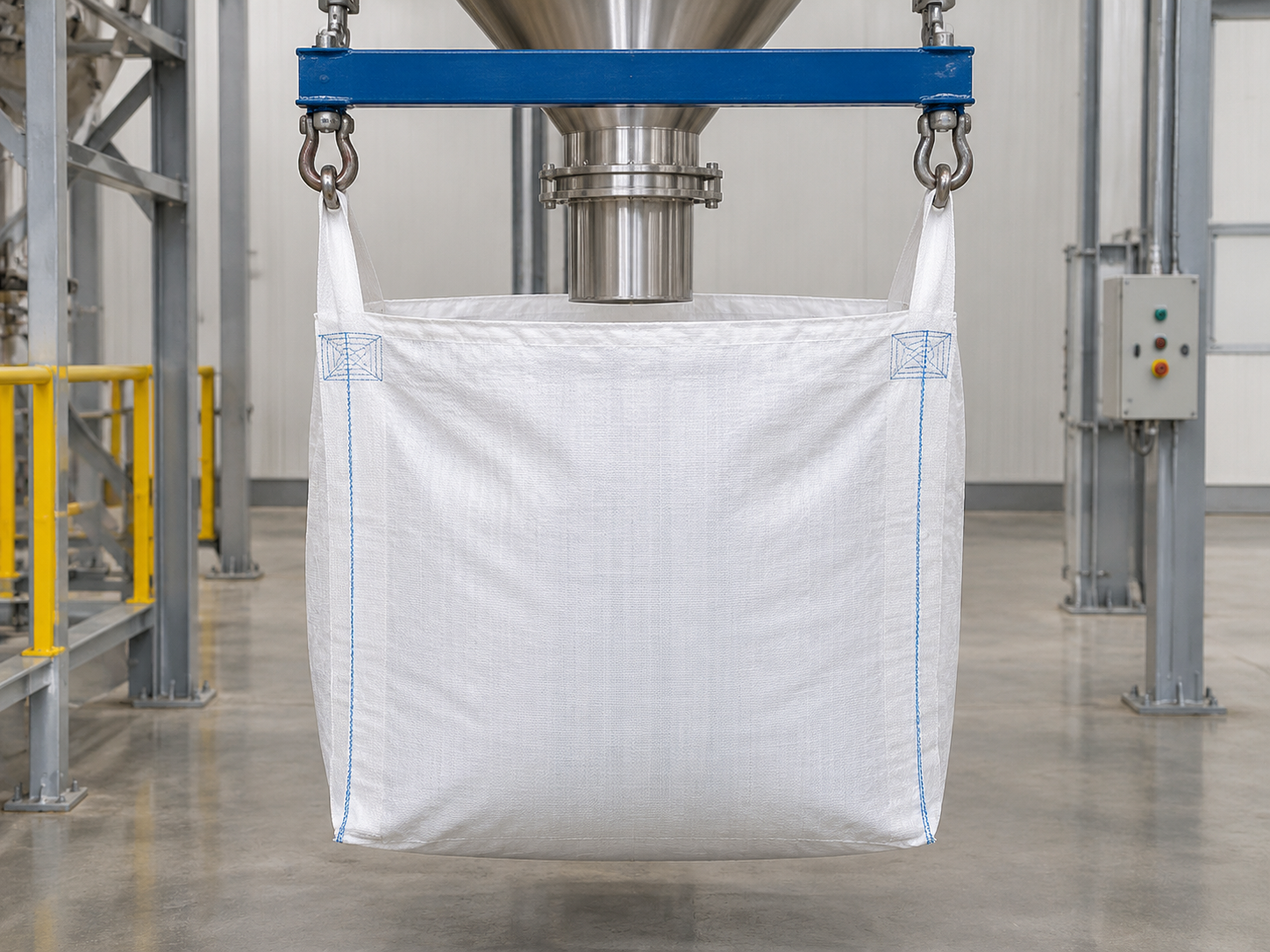
“Half-lift” is a common trade term for certain two-loop designs. It is not a standardized geometry. One half-lift bag may have two loops that stay apart for a spreader; another may have loops that converge toward one hook. The load path is different in each case. Buyers should ask for the loop spacing, loop height, loop opening and approved lifting method rather than relying on the name.
Loop count is not lifting-point count
A one-loop bag is normally a single-point lift. A two-loop bag can be a two-point lift or, if both loops are placed on one approved hook, a single-point lift. A four-loop bag can be lifted by a four-point frame or by a forklift with correctly spaced tines; it must not be treated as a two-loop bag by using only two loops.
This is why the useful question is not “How many loops does it have?” but “Which lifting points does my equipment use, and has the bag been designed and approved for that arrangement?”
The load path: one point, two points, and what changes
One-loop: a central path with a rotation question
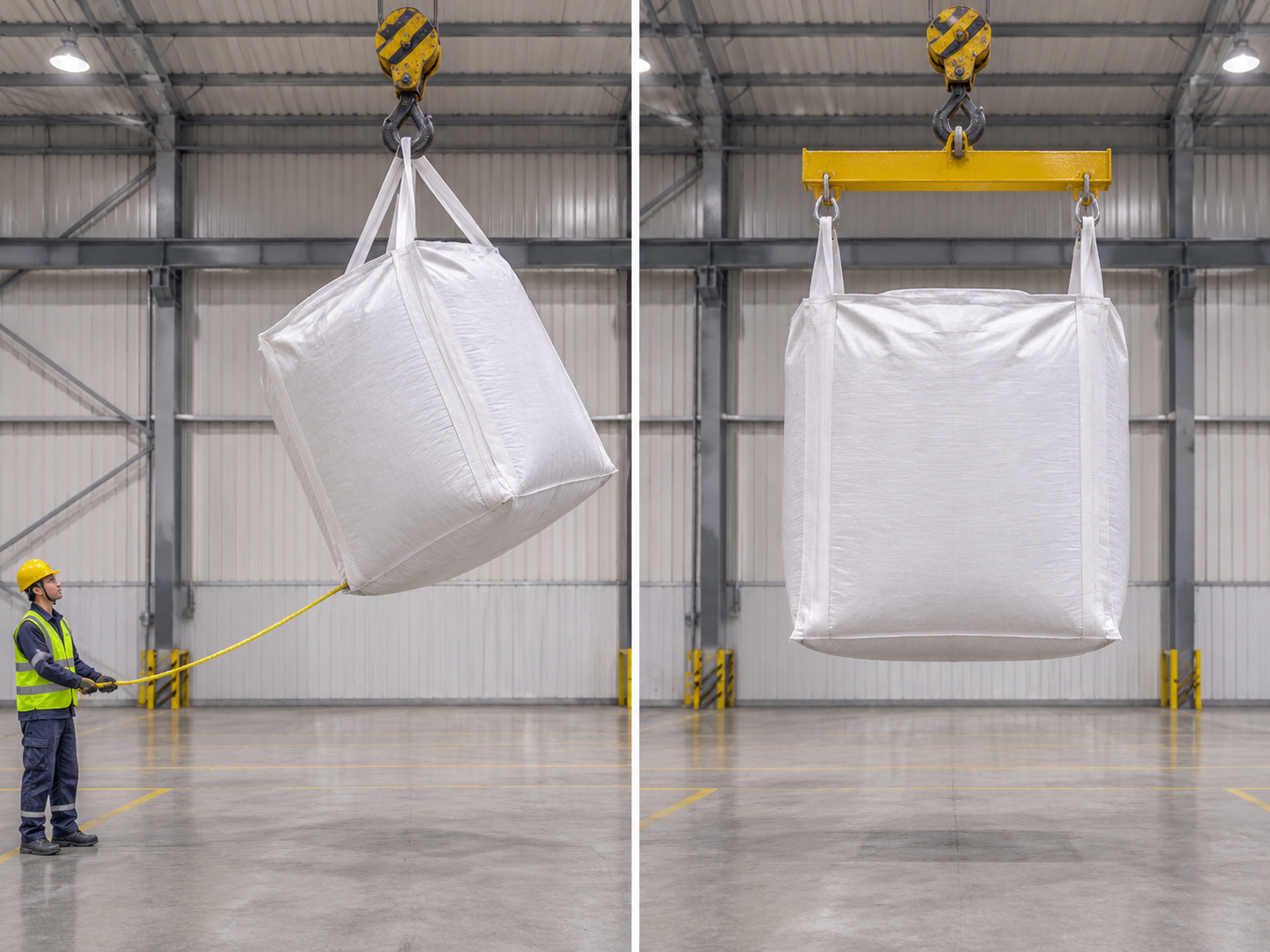
In a one-loop bag, the load enters through one attachment and spreads into the body fabric and base. The bag hangs like a pendulum. That can be an advantage at a filling station because the bag tends to centre itself under the spout. It can also be a disadvantage because the bag may rotate, swing or turn during lifting and discharge.
The practical checks are:
Is the hook or hoist rated for the filled bag?
Is the bag specifically designed for single-point lifting?
Is the load centred, or can the material shift during filling?
Is a tag line, guide rope or anti-rotation device needed?
Can the operator reach the discharge spout without standing under the bag?
The single loop is a critical joint. Its stitching, webbing, body-fabric transition and base reinforcement all need to be inspected as one load path. A neat-looking loop does not prove the bag is suitable for a dynamic lift.
Two-loop: two paths, and a spacing question
In a two-loop bag, the load enters at two attachments. The bag behaves more like a sling: the load is shared between the loops, and the balance depends on the loop spacing, the position of the load centre, and the angle of the lifting legs.
If the loops are close together, the bag behaves more like a single-point lift and may still rotate. If the loops are far apart, the lifting legs may be angled, which increases the force in each leg and can reduce the available headroom. If the loops are not symmetrical, the bag may tilt.
The practical checks are:
What is the distance between the two lifting points?
Does the spreader beam or hook spacing match that distance?
Are the lifting legs vertical, or are they angled?
Is the bag balanced when filled to the expected weight?
Does the loop height leave enough room for the filling spout, liner and discharge station?
Two loops are not automatically more stable than one. They are more stable only when the spacing and the equipment match the bag.
What four-loop bags teach us
Four-loop FIBCs are common because they give operators four defined lifting points and a familiar interface for forklifts, pallets and four-point frames. They also hold a more square shape in many warehouse and container applications. But four loops do not make a bag stronger by themselves, and they do not make a single-point lift acceptable. The same rule applies to one-loop and two-loop bags: the complete design and the approved handling method decide the safe load. For the broader comparison of one-, two- and four-loop layouts, see our lifting-loop selection guide.
Handling compatibility, equipment by equipment
Overhead crane with a single hook
A one-loop bag is the natural match when the bag is designed for a single-point lift. The hook should be rated for the filled load, and the bag should hang without twisting the loop or pulling the body off-centre. A tag line or anti-rotation device may be needed to keep the discharge spout accessible and to stop the bag spinning near people or structures.
A two-loop bag can also be used under a single hook, but only when both loops are designed to meet at that point and the supplier has approved the method. If the loops are meant for a spreader, gathering them onto one hook changes the load path. That is not a shortcut; it is a different lifting method that needs its own review.
Hoist or fixed lifting station
The same logic applies to a hoist. Check the hook opening, the loop opening, the loop height and the available headroom. A one-loop bag may hang lower than a two-loop bag on a spreader, so the filling spout and discharge area need to be checked in the actual station. A two-loop bag on a spreader may need more headroom but can hold the bag mouth in a more predictable direction.
Two-point spreader beam
This is the natural home of a two-loop bag. The spreader keeps the two lifting legs apart and can help hold the bag in a square or rectangular orientation. The key measurements are the spreader length, the hook positions, the loop spacing and the loop height. If the spreader is too narrow, the bag may rotate. If it is too wide, the legs may angle outward and the bag may be pulled out of shape.
Forklift
A two-loop bag can be designed for forklift handling when the tine spacing, tine thickness and loop opening match. Depending on the design, the operator may use two tines, one through each loop, or a single approved tine through both loops. The operator should be able to enter the tines without forcing the loops or twisting the bag. The load centre and the operator’s visibility also matter.
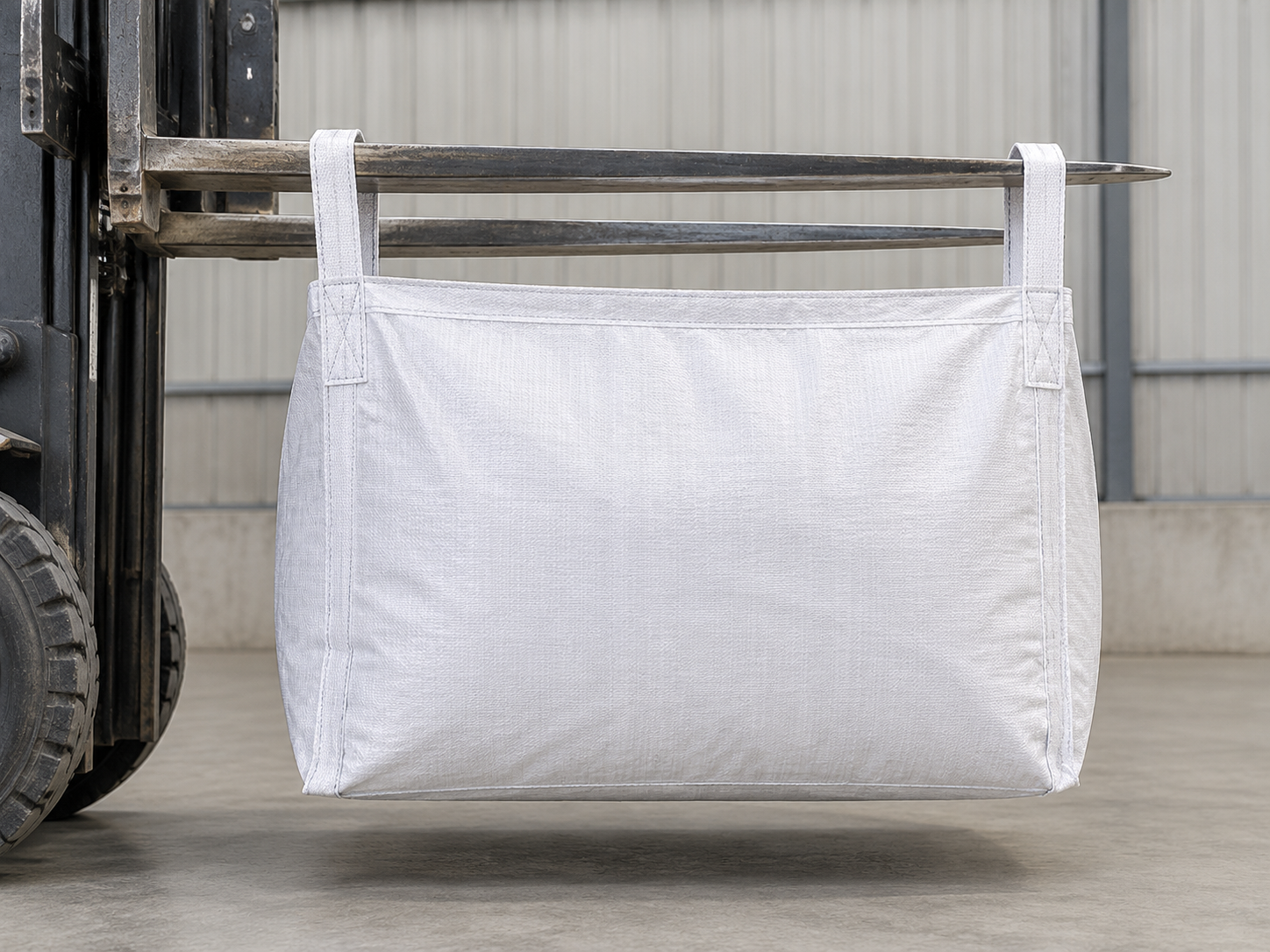
A one-loop bag is not a general-purpose forklift bag. Some one-loop designs are approved for a single tine, but that is a specific interface with its own stability and rotation risks. A standard four-loop bag should not be carried on one tine, and a two-loop bag should not be carried on one tine unless the supplier has approved that method.
Automated filling line
Automation adds a repeatability requirement. The bag must arrive at the same position, the loop or loops must be presented consistently, and the filling spout must align with the bag mouth without manual correction. A one-loop bag can self-centre under a spout, but it may rotate. A two-loop bag on a spreader can hold orientation better, but the loop spacing and stand-up behaviour must be repeatable.
Do not approve an automated interface from a drawing alone. Run a sample with the actual bag, liner, filling head and lifting device. Check whether the liner moves, whether the spout stays accessible, and whether the bag hangs straight when filled.
Container loading, warehouse and discharge
A one-loop bag may form a more rounded top profile when suspended, which can affect stacking and container planning. A two-loop bag on a spreader can keep a more regular shape, but the body construction, base reinforcement and baffles still determine how the filled bag behaves. If square stacking and container utilisation are critical, compare the two-loop design with a four-loop or baffled bag rather than assuming that two loops will hold a square shape.
At discharge, a one-loop bag may rotate as the load shifts. A two-loop bag on a spreader can hold the discharge spout in a more predictable position. In both cases, the operator needs a safe reach to the spout and a plan for the last part of the discharge, when the bag becomes light and may move.
Filling, discharge, liners and bag shape
The lifting design cannot be separated from the filling and discharge design. A bag that hangs well on an empty hook may be awkward when it is full, lined and connected to a spout.
One-loop bags
One-loop bags are often used where the bag is filled from the top and discharged from the bottom. The central lift keeps the bag under the filling point, which can simplify positioning. The trade-off is rotation. If the discharge spout must face a fixed operator position, a tag line or guide may be needed.
The liner has to be independent of the lifting loop. A liner that is tied to the loop, or pulled tight when the bag is lifted, can distort the fill path or tear at the spout. Pre-installed PE or aluminium foil liners should be checked with the bag hanging, not only with the bag flat on the floor.
Two-loop bags
Two-loop bags are often used where the bag must keep its orientation during filling. A spreader can hold the bag mouth square while the liner is connected and the spout is inserted. This is useful for form-fit liners, filling spouts and discharge stations that need repeatable alignment.
The liner attachment points should be separated from the loop load path. The loops carry the bag; the liner keeps the product isolated. If the liner is used to pull the bag into shape, or if the loop tension pulls the liner away from the spout, the sample should be reworked before production.
Fine powders and sift-proofing
Loop count does not solve leakage. Fine powders can escape through needle holes, seam gaps and spout closures. A coated fabric, sift-proof felt piping, a suitable liner and a tested closure are separate decisions. A two-loop bag with a good loop but a poor seam is still a poor powder bag.
Moisture and barrier liners
PE liners provide a baseline moisture barrier. Multi-layer aluminium foil or metallized liners may be appropriate for moisture-, oxygen- or light-sensitive materials. The correct liner is selected from the material, the barrier requirement, the filling and discharge method, and the test conditions. “Aluminium foil” is a material description, not a guaranteed barrier value.
Which FIBC World configuration fits
FIBC World’s public catalogue covers several lifting families. The right starting point depends on the handling interface, not on which bag looks strongest in a photograph.
| Configuration | Lifting interface | Catalogue options to discuss | Best fit | Confirm before quoting |
|---|---|---|---|---|
| Two-Loop / Half-Lift FIBC | Two integrated loops; two-point spreader, matched forklift tines or an approved single tine, or an approved central hook | 500 / 1,000 / 1,500 / 2,000 kg SWL options; SF 5:1 single-trip and 6:1 multi-trip options; PE or aluminium foil liner; open/spout/conical/skirt top; flat/spout/conical bottom; sift-proof seams | Crane/hoist stations, half-lift handling, filling lines that need orientation | Loop spacing, loop height, approved lifting method, liner attachment, actual equipment dimensions |
| Corner-Loop 4-Panel FIBC | Four corner-seam loops; forklift, four-point frame or pallet system | 500 / 1,000 / 1,500 / 2,000 kg SWL options; standard pallet footprint; PE or aluminium foil liner | Standard forklift and pallet handling, square stacking, general industrial shipping | Tine spacing, loop height, all four loops engaged, base reinforcement |
| Cross-Corner FIBC with perimeter base reinforcement | Four cross-corner loops; forklift or four-point lifting | 1,000 / 1,500 / 2,000 / 2,500 kg SWL options; cross and perimeter base webbing; heavy-duty body | Dense resins, minerals, heavy powders and high-load applications | Loop posture, tine access, base design, SWL for the actual load |
| One-loop FIBC | One central loop or lifting sleeve; single hook, hoist or approved single-point device | Engineered to the lifting device and bag drawing | Centred crane/hoist filling, bottom discharge, single-point stations | Bag design approval, rotation control, hook rating, discharge access |
The SWL and SF values above are catalogue configuration options, not a universal rating for every bag. The approved drawing and the actual lifting method decide the final SWL. A one-loop design is an engineered interface; it should be reviewed with the hook, hoist or approved device, not assembled by modifying a four-loop bag.
For a project that sits between these families, the practical sequence is:
Define the lifting method first.
Measure the hook, spreader or forklift interface.
Select the bag body and loop layout.
Add the liner, spout and seam details.
Approve a drawing and a loaded sample.
A decision guide for buyers
Choose a one-loop design when
The site lifts with a central crane hook or hoist, and the bag is designed for single-point lifting.
The filling point is centred and the bag can hang vertically.
The discharge is at the bottom, and the operator can reach the spout safely.
Rotation can be controlled with a tag line, guide or anti-rotation device.
The site does not need forklift handling of the filled bag.
Choose a two-loop design when
The site has a two-point spreader, two hooks or matched forklift tines.
The bag must keep its orientation during filling, lining or discharge.
The loop spacing can be measured and matched to the equipment.
The bag body and base are designed for the expected load and discharge method.
The supplier can approve the exact lifting arrangement, including whether the loops may be brought to a single hook.
Choose a four-loop or cross-corner design when
The site uses a standard forklift, pallet system or four-point frame.
Square stacking and container utilisation are important.
The load is heavy or dense and the base needs perimeter reinforcement.
The operating team is familiar with four-point lifting and inspection.
Stop and re-check when
The hook or fork capacity is unknown.
The loop spacing does not match the spreader or tines.
Someone proposes lifting a standard four-loop bag on one hook or one tine.
The bag will be rotated, dragged or side-loaded during lifting.
The liner, spout or discharge station interferes with the loop path.
The only evidence is a catalogue photo or an empty-bag trial.
RFQ and sample approval checklist
Send the supplier enough information to review the lifting interface, not just the bag size.
Lifting equipment
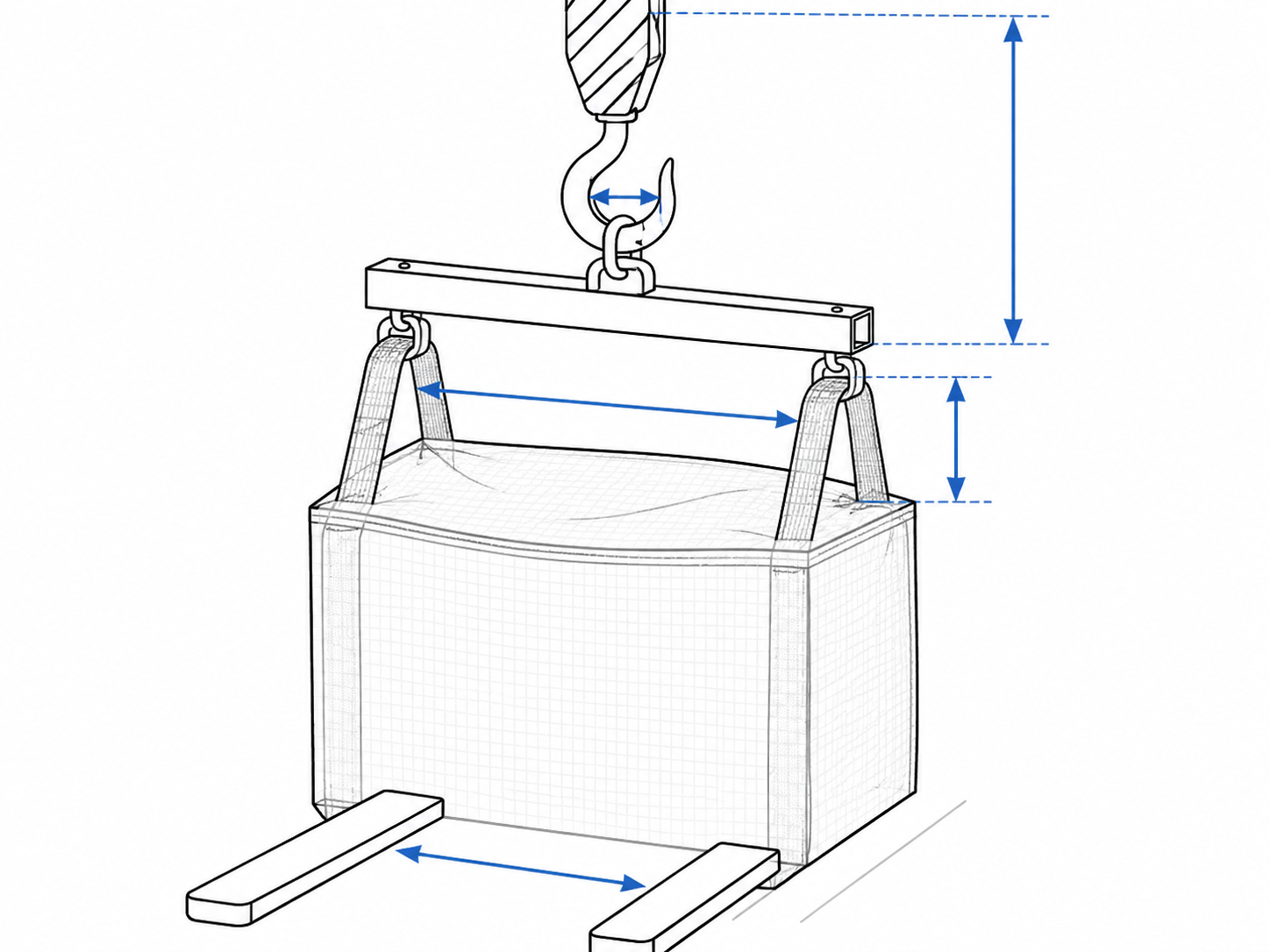
Type and rated capacity of the crane, hoist, spreader beam or forklift.
Hook opening, hook type and latch condition.
Fork tine width, thickness, spacing and usable length.
Spreader length, hook positions and sling angle.
Available headroom under the hook or beam.
Photos or a short video of the actual lifting station.
Load and bag
Material name, particle size, bulk density and flow behaviour.
Expected fill weight per bag, not just the nominal bag size.
Required SWL and SF; single-trip or multi-trip use.
Bag dimensions, body construction and base reinforcement.
Loop type, loop spacing, loop height and loop opening.
Top and bottom opening, spout size, closure and discharge method.
PE, aluminium foil or other liner; form-fit or tubular; pre-installed or separate.
Coating, sift-proof seams, UV stabilization and printing.
Operation and approval
Filling method and filling-head dimensions.
Discharge method and receiving equipment.
Stacking, storage and container-loading plan.
Who controls rotation and who signals the lift.
Who approves the drawing, the lifting method and the sample.
Required inspection records, SWL marking and batch identification.
Sample trial
Test the bag with the actual material, the actual liner and the actual lifting device. Check:
The hook or tines enter without forcing or twisting the loops.
The bag hangs in the intended direction.
The filling spout and discharge spout remain accessible.
The liner does not move, tear or pull away from the spout.
The filled bag can be moved, set down and discharged without unexpected deformation.
The approved drawing and sample reference are kept for repeat orders.
An empty-bag lift only proves that the interface fits. It does not prove that the filled bag is safe. A loaded trial under the site’s safety procedure is the relevant check.
Safety rules that do not change with loop count
The general handling rules apply to one-loop, two-loop and four-loop bags alike:
Use all lifting loops provided. Do not lift a bag on fewer loops than it was designed for.
Do not gather four loops onto one hook, or use one tine in a four-loop bag, unless the bag manufacturer has specifically designed and approved that method.
Keep the lifting loops vertical. Avoid side loads, dragging and sharp edges.
Use a crane, hoist, spreader or forklift rated for the filled bag.
Never stand or put any part of the body under a suspended FIBC.
Inspect the loops, seams, fabric, base and markings before each use.
Treat SWL as a limit, not a target fill weight. Calculate the actual fill weight from bulk density and volume.
Confirm the lifting method with the bag supplier and the site’s responsible person.
FIBCA’s FIBC Safe Handling Guidelines and ISO 21898 provide general principles for safe handling, design and testing. They do not replace the approved drawing, the site risk assessment or the local lifting regulations. UN certification, food-contact compliance and electrostatic classification are separate scopes; the number of loops does not establish any of them.
FAQ
Is a two-loop FIBC stronger than a one-loop FIBC?
No. SWL depends on the fabric, seams, loop attachment, base construction, bag design and testing. A well-designed one-loop bag can carry more than a poorly designed two-loop bag. Compare the approved SWL and the lifting method, not the loop count.
Can I lift a four-loop FIBC with one crane hook?
Only if the bag was specifically designed and approved for single-point lifting, or if an approved lifting device is used. Do not gather the four loops onto one hook as a shortcut. Use all four loops with the intended equipment.
Can a one-loop FIBC be used on a forklift?
Only when the bag is specifically designed and approved for a single forklift tine or another approved forklift interface. A one-loop bag is not a universal forklift bag, and a standard four-loop bag must not be carried on one tine.
Is “half-lift” the same as two-loop?
Not always. “Half-lift” is a trade term used for certain two-loop designs. The loops may stay apart for a two-point spreader, or they may converge at a central pick point. Confirm the actual loop geometry and the approved lifting method.
Which design is better for automated filling?
It depends on what the station needs. A one-loop bag can self-centre under a spout but may rotate. A two-loop bag on a spreader can hold the bag mouth in a more predictable orientation. The only reliable answer comes from a loaded sample trial with the actual filling head, liner and lifting device.
Can I add a PE or aluminium foil liner?
Yes, but the liner is not a lifting component. It must be attached so that it does not interfere with the loops, pull on the spout or move during filling and discharge. Confirm the liner material, thickness, shape and attachment method with the bag supplier.
Send your lifting interface before you request a price
The most useful RFQ is not “1,000 kg FIBC, please quote.” It is a short description of the lifting interface: the crane hook, hoist, spreader or forklift; the hook opening or tine spacing; the loop spacing and height; the fill weight and bulk density; the filling and discharge arrangement; and the destination.
FIBC World can review the proposed lifting configuration before production and confirm the available bag structure, loop layout, liner, spout and sample arrangement. Send photos or drawings of the current bag and lifting equipment, and mark the dimensions that matter: hook opening, tine spacing, loop spacing, loop height and available headroom.
That review is also the right time to settle the safety questions: whether the bag may be lifted from one point, whether a spreader is required, how rotation will be controlled, and who approves the drawing. A bag that matches the hook is useful. A bag that matches the complete handling system is the one that keeps the line running.
Related News
Other news you might be interested in
What Is a Super Sack? FIBC vs Bulk Bag vs Jumbo Bag Explained
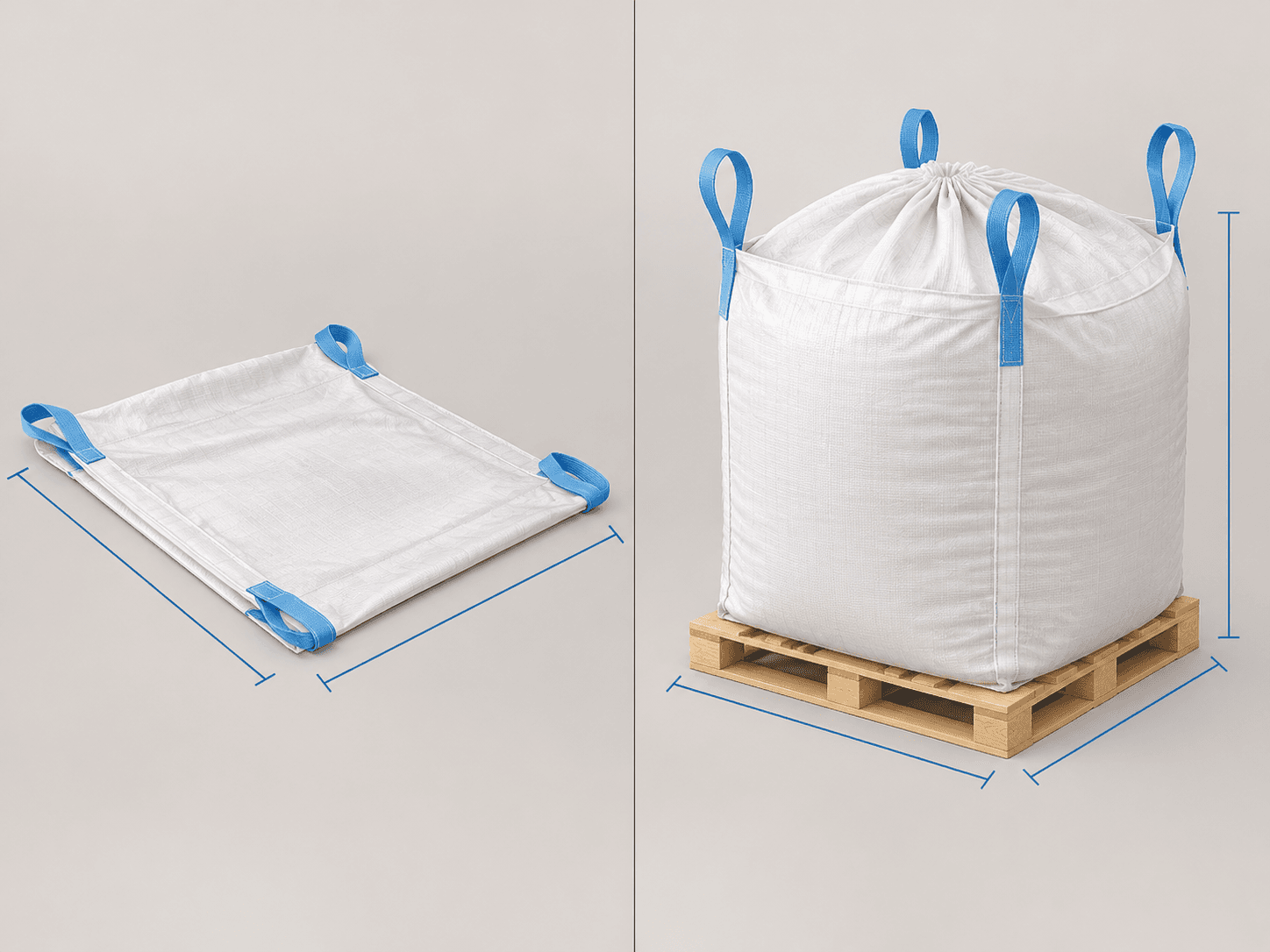
A buyer searches for a “super sack.” The supplier replies with an FIBC quotation. The drawing is titled “jumbo bag.” The warehouse calls it a bulk bag. Four names, one object—usually.The words are not identical in status. FIBC is the technical term used by standards and industry guidance. Bulk bag, big bag, tote and jumbo bag are trade terms. Super Sack® is a registered trademark, not a generic name for every large woven bag.That distinction matters when a purchase order, a drawing or a customs document uses one term while the supplier uses another. The label helps you find the product family. It does not tell you the safe working load, the filled dimensions, the liner, the lifting arrangement or the compliance route. Those have to be specified.
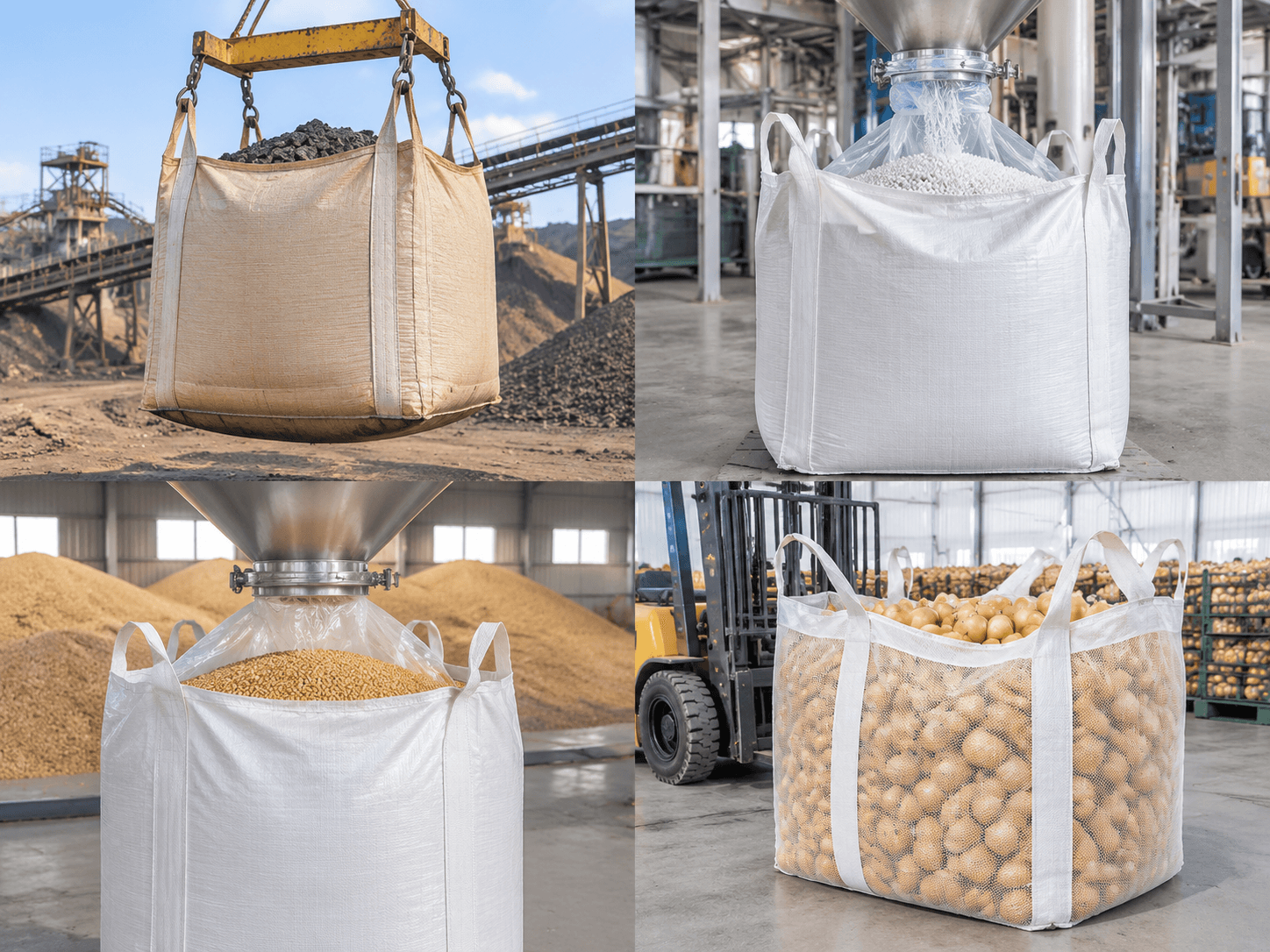
Bulk Bags by Application: Minerals, Fertilizer, Grain and Produce
A mineral concentrate, a fertilizer blend, a load of wheat and a load of onions can all be packed in a bulk bag. They should not all be specified the same way.On a quotation, each may appear as a one-tonne FIBC with a top opening and a discharge spout. In service, the loads behave differently. A dense mineral concentrate can reach its target mass at a low fill level and concentrate stress in the base and seams. A hygroscopic fertilizer can pick up moisture, cake and block the outlet. Grain can arrive dry but become unacceptable if condensation, pests or contamination are not controlled. Fresh produce can lose quality through heat, condensation and handling damage even when the bag itself remains intact.
Want to know more?
Get in touch with us for more information about our services and products.