
Recyclable FIBC: Mono-material PP, with liner and ventilated type

Dayang Yang
AuthorWith experience in FIBC bulk bag manufacturing and export sales, we operate our own production facility with stable large-scale capacity. We are specialists in bulk bags, conductive FIBCs, food-grade FIBCs, UN certified bags, and customized flexible intermediate bulk containers for industrial packaging and bulk material transportation solutions.
When a buyer asks, "Is this FIBC recyclable?", the answer depends on which part of the bag is being discussed, where it will be used and what recycling route is actually available. A woven PP bag with a PE liner, a paper label, a polyester thread and a foil barrier is not the same product as a predominantly mono-material PP bag. Even a mono-material bag is not automatically recycled at scale if collection, cleaning and sorting are missing.
This guide separates three questions that are often mixed together: what the bag is made of, what the bag is designed to do, and what evidence supports the claim. It is a buyer checklist, not a legal opinion or a certification statement.
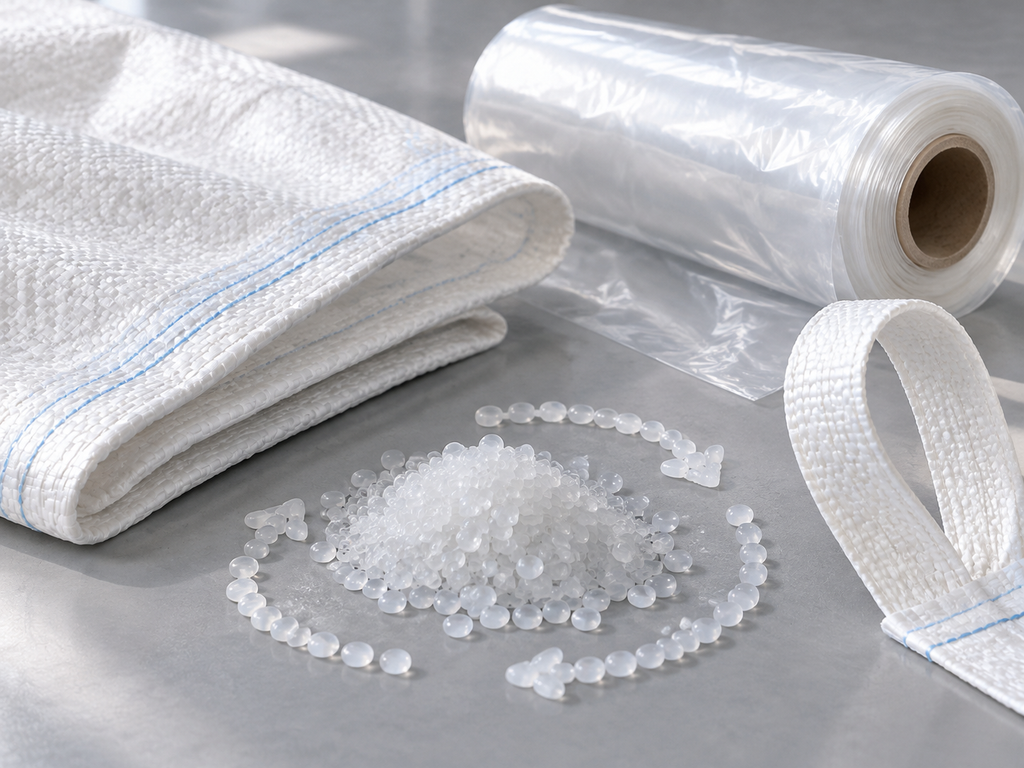
What buyers mean by "recyclable FIBC"
"Recyclable" can refer to the bag body, the complete bag, or a closed-loop system. Before comparing quotations, agree on the scope.
Bag body only: the woven PP fabric, loops and sewing thread may be suitable for mechanical recycling.
Complete bag: the liner, coating, labels, inks, closures and attachments are included in the assessment.
Closed-loop system: used bags are collected, cleaned, sorted and converted back into FIBCs or comparable products.
These are different claims. A supplier may be able to describe a mono-material PP construction without being able to offer a take-back or closed-loop programme in the buyer's market.
The EU Packaging and Packaging Waste Regulation (PPWR) adds another layer. PPWR Article 6 requires packaging placed on the EU market to be recyclable. The detailed design-for-recycling criteria and A/B/C performance grades apply from 1 January 2030, or 24 months after the relevant delegated acts, whichever is later; recyclability "at scale" follows from 2035 . The European Commission confirms that the regulation has applied since 12 August 2026, with some requirements phased in . The responsible EU manufacturer or importer must confirm how the rule applies to the specific FIBC and transaction. Do not treat a supplier's general statement as a PPWR conclusion.
EFIBCA's Design for Recycling Guidelines 2.0, published in September 2026, provides a voluntary industry framework for PP FIBCs. It describes predominantly mono-material PP construction, compatible liners and components, and controlled use of additives and colours to support high-quality mechanical recycling under current European market conditions. EFIBCA members that comply can use a protected logo . This is a useful benchmark, but it is not an EU regulation or a product certification.
The topic is also on the industry agenda. FIBCORE's November 2026 Vienna conference includes sessions on FIBCs in the context of PPWR and on CO2 footprint as a navigator for design for recycling. An agenda shows that the discussion is active; it is not a new standard or a regulatory decision.
Buyer questions to answer before selection
Before asking a supplier for a "recyclable" bag, the buyer should be able to answer these questions:
What is the product? Is it a dry granule, a fine powder, a food ingredient, a chemical or a respiring produce item?
Does the product need airflow or containment? Ventilation and containment usually pull in opposite directions.
Does the product need a liner? If yes, is the liner for moisture, oxygen, light, contamination, dust or aroma?
Which parts of the bag are PP? Ask for a component BOM, not a single material name.
Can the liner be removed or is it compatible with the PP recycling route? The answer changes the complete-bag claim.
What recycled content is required? Is it a procurement target, a customer requirement or a food-contact issue?
Which market and end-of-life route apply? EU, UK, US and other markets do not have one identical recycling infrastructure.
What performance and food-contact evidence is required? A recycling claim must not hide a load, barrier or hygiene requirement.
Standard, lined and ventilated: three different jobs
The three common starting points are not interchangeable. Each solves a different packaging problem, and each has a different recyclability story.
| Starting point | Primary job | Typical products | Recyclability consideration | Do not use for |
|---|---|---|---|---|
| Standard PP FIBC | Contain and handle dry bulk material | Minerals, granules, chemicals, agricultural inputs | Best chance of a predominantly mono-material PP construction | Moisture-sensitive or fine powders without additional protection |
| FIBC with liner | Add moisture, contamination or barrier protection | Food ingredients, hygroscopic powders, sensitive chemicals | Liner material and fixing method can complicate PP recycling | Products that need airflow |
| Ventilated FIBC | Allow air movement through the bag | Potatoes, onions, carrots, firewood and similar produce | PP mesh or vent panels may be mono-material, but dirt and moisture matter | Fine powders, moisture-sensitive goods or products requiring containment |
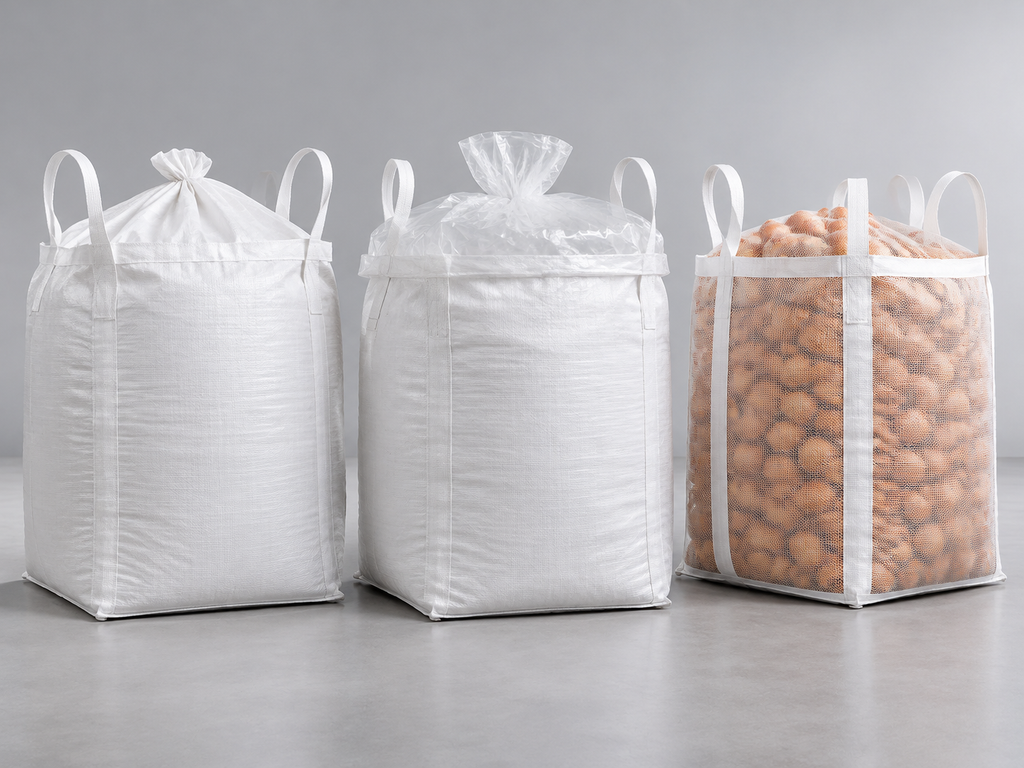
A standard PP FIBC is the simplest starting point for mono-material design. A lined FIBC adds a functional layer that may be PE, PP, EVOH or a foil composite. A ventilated FIBC changes the bag geometry and airflow path. The buyer should choose the architecture first, then ask how that architecture can be made more recyclable. For produce-specific ventilation, see our guide to ventilated bulk bags for potatoes and onions.
Mono-material PP: what it solves and what it does not
A "mono-material PP" FIBC is designed so that the main components are predominantly polypropylene. That can include the woven fabric, loops, sewing thread, coating or lamination, and some accessories. EFIBCA's DFR framework also emphasises compatible liners and components, and controlled additives and colours .
Mono-material design can make the bag easier to sort and reprocess. It does not, by itself, prove four other things:
It is not automatically 100% PP. A liner, label, ink, adhesive, closure or thread may be a different material. Ask for a component-by-component bill of materials (BOM), not a single "PP" statement.
It is not automatically recyclable at scale. Collection, sorting, cleaning and end markets still matter.
It is not automatically food-contact safe. Food-contact status depends on the actual materials, additives, inks, adhesives and intended use, not on the word "mono-material".
It is not automatically compliant with PPWR or EFIBCA DFR. The exact scheme, version, scope and evidence must be checked.
ISO 21898:2024 is the current international standard for FIBCs used for non-dangerous goods. It addresses design, testing and marking, including recycled mono-materials, but it is a performance standard, not a recyclability certificate. A bag can meet a load test and still fail a buyer's recycling requirement; a bag can be described as mono-material and still lack the evidence the buyer needs.
Liner compatibility: four practical choices
The liner is often the first place where a mono-material claim breaks down. The right choice depends on the product, the barrier requirement and the end-of-life route.
| Liner choice | What it is good for | Recycling question | Buyer check |
|---|---|---|---|
| No liner | Dry products that do not need moisture or contamination protection | Best chance of a mono-material PP bag | Is the product actually safe without a liner? |
| PP-based liner | A liner that may be more compatible with a PP stream | Is the liner truly PP-based, and does it meet the barrier and sealing requirement? | Ask for the full structure, not just "PP liner" |
| PE liner | A common moisture and contamination barrier | Can it be removed cleanly, or is it compatible with the PP recycling route? | Ask for a DFR assessment of the complete bag |
| EVOH or foil composite | Higher barrier to moisture, oxygen or light | Often multi-material; may need separation and may not fit a PP closed loop | Do not accept "recyclable" without a structure-specific assessment |
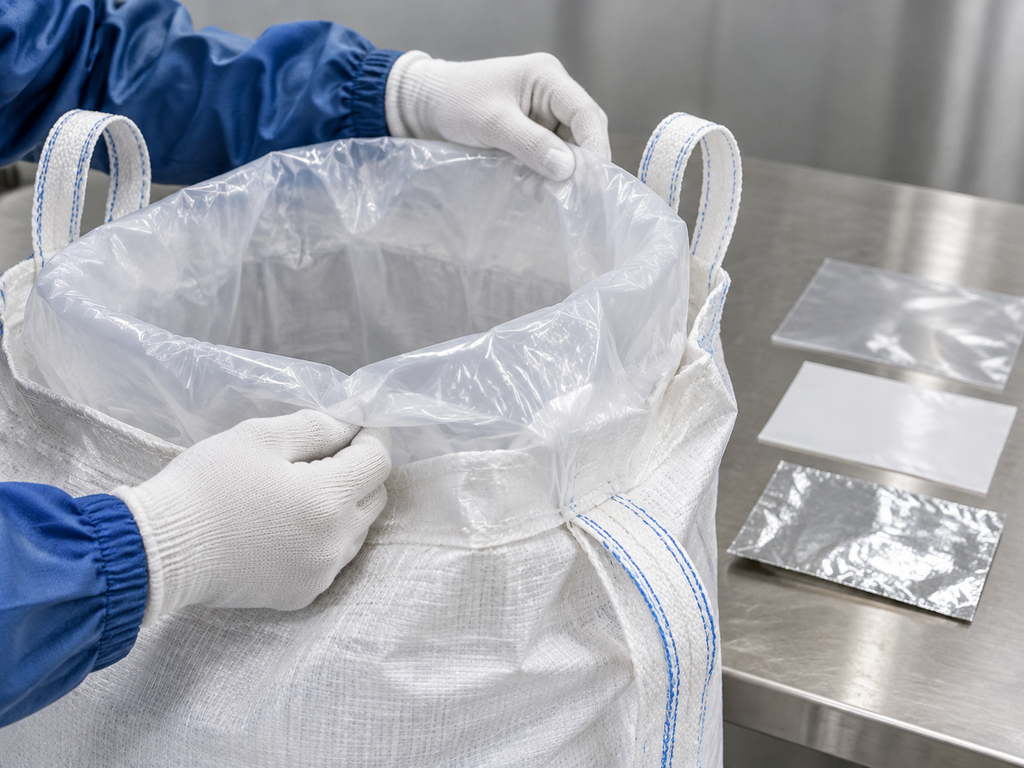
The fixing method matters too. A loose liner, a tabbed liner, a glued liner and a liner sewn into the spout have different behaviour during filling, discharge and removal. A liner that cannot be separated cleanly can contaminate the PP stream. A liner that is easy to remove but moves during filling can damage the product or the bag.
Ask the supplier to describe the complete system: liner material, thickness, shape, fixing points, spout connection, closure method and removal procedure. Then ask whether the proposed system has been assessed under the same DFR scheme the buyer is using.
For the liner geometry decision, see our guide to standard versus form-fit FIBC liners and the liner fit and interface guide. For barrier data and sealing, see the aluminum foil liner evaluation checklist.
Ventilated FIBC: airflow, containment and recycling
Ventilated FIBCs use mesh panels, ventilation strips or breathable fabric to allow air movement. They are commonly used for potatoes, onions, carrots, firewood and similar products that benefit from airflow during storage and transport.
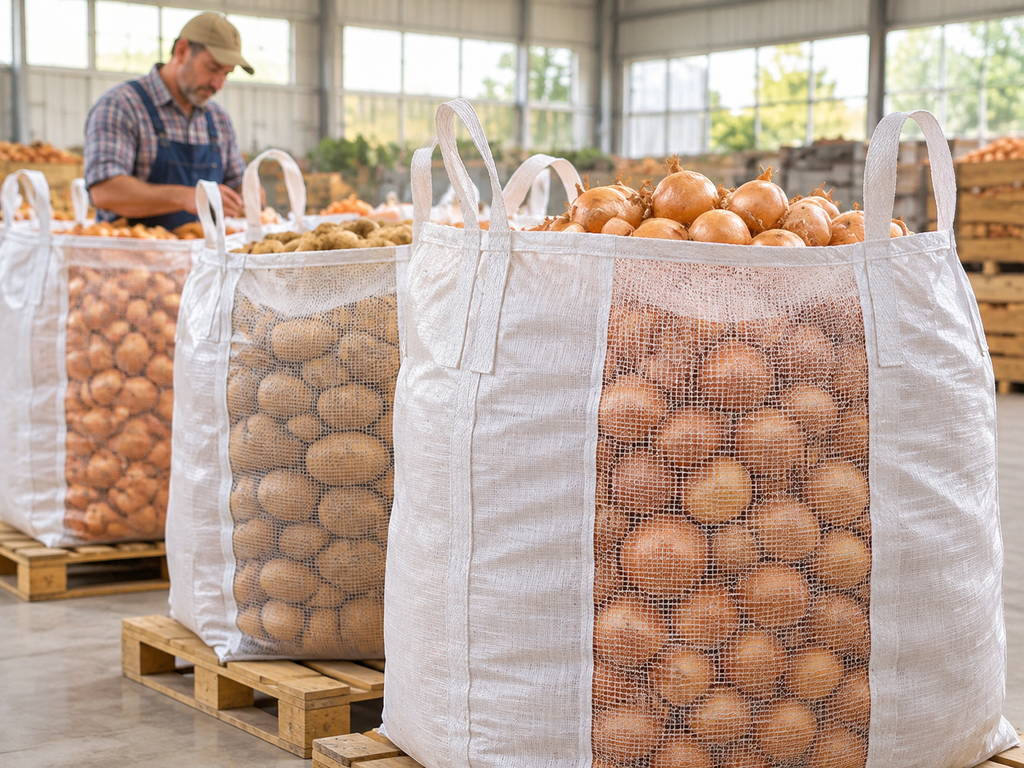
The ventilation path is part of the design. The vent area, panel construction, fabric and seams affect airflow, strength, contamination risk and protection. Adding holes to a standard bag is not a controlled ventilation design.
Three selection points matter:
Ventilation and containment can conflict. A ventilated bag is not a containment bag for fine powders. If the product is a dust-generating powder, a ventilated design may release material or admit contamination.
Ventilation and a liner usually conflict. A liner can block the airflow that the ventilated bag is designed to provide. If a buyer asks for both, clarify whether the real goal is airflow, moisture protection, dust control or temperature management.
Ventilated does not mean low-specification. The bag still needs a defined working load, safety factor, lifting arrangement, filling method and discharge method. FIBCA's safe handling guidance applies to the complete bag and its liner, not only to the fabric .
For recycling, a ventilated PP bag can be a good mono-material candidate if the mesh, panels, loops and thread are PP and the bag is not heavily contaminated. In practice, produce residue, soil, moisture and UV degradation can affect cleaning and reprocessing. The buyer should ask how the bag will be emptied, cleaned, dried and collected.
If the bag contacts food, ask for food-contact evidence for the actual construction. Produce is food, but that does not make every ventilated bag food-contact compliant.
Selection matrix
Five conditions decide the answer:
Product form and sensitivity: powder, granule, produce, food, chemical or dangerous goods.
Airflow versus containment: ventilation for respiring produce; containment for powders and moisture-sensitive goods.
Liner function and removability: no liner, PP-based liner, PE liner or barrier liner.
Market and end-of-life route: collection, sorting, cleaning and the intended recycling stream.
Performance and food-contact requirements: SWL, safety factor, seams, UV, migration, PFAS/NIAS and traceability.
Use the product and the end-of-life route to choose the starting point. Do not start with the word "recyclable".
| Product and market | Starting construction | Liner | Ventilation | Main recycling question |
|---|---|---|---|---|
| Dry mineral or chemical granule, not moisture-sensitive | Standard PP FIBC | None | No | Can the bag be predominantly mono-material PP? |
| Moisture-sensitive powder or food ingredient | Standard FIBC with liner | PP, PE or barrier liner | No | Can the liner be removed or is it compatible with the PP route? |
| Potatoes, onions, carrots | Ventilated PP FIBC | None | Yes | Are mesh, panels, loops and thread PP, and can the bag be cleaned? |
| Firewood | Ventilated PP FIBC | None | Yes | How much soil, moisture and UV degradation will the bag carry into recycling? |
| Chemical powder with UN or static requirements | Standard FIBC with required liner/construction | Application-specific | No | Does the recycling claim survive the UN/static requirement? |
| Reusable loop or take-back programme | Heavy-duty PP FIBC | Replaceable liner if needed | Usually no | Can the bag be inspected, repaired and returned? |
The matrix is a starting point. A food-contact application, a dangerous-goods application or a high-barrier requirement may override the recycling preference. In those cases, the buyer should define the performance requirement first and then ask which recycling route is realistically available.
Evidence buyers should request
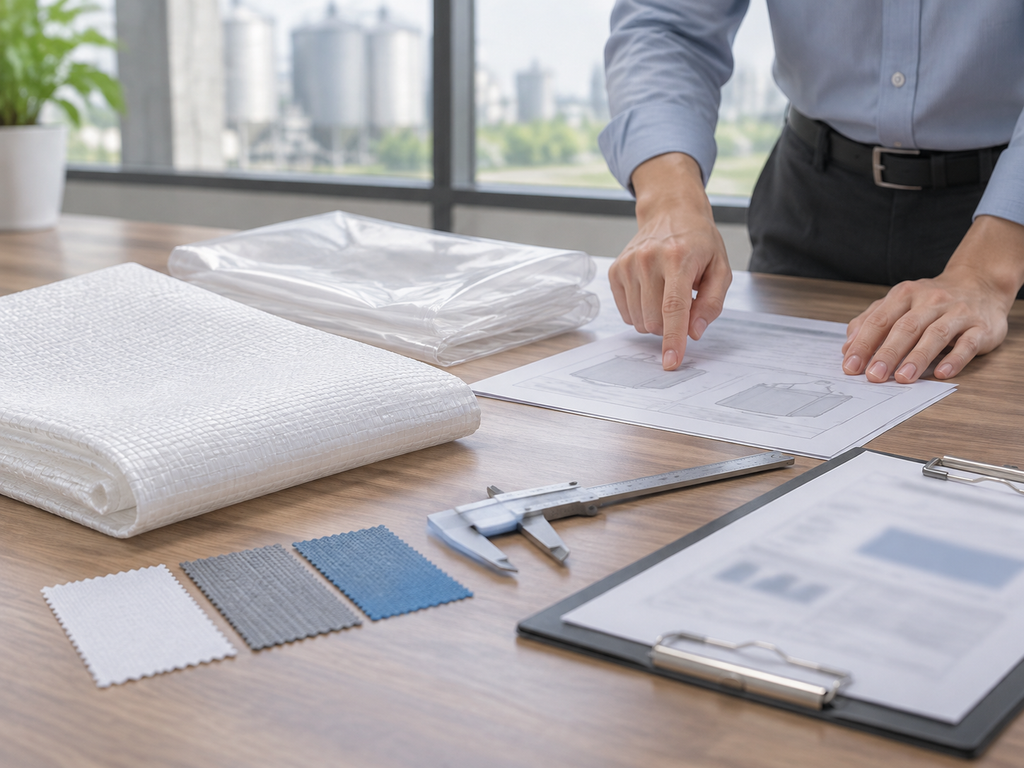
A recyclability claim is only as useful as the evidence behind it. Ask for the following, in writing:
Component BOM. Material and weight percentage for fabric, coating, liner, loops, thread, labels, inks, adhesives and closures.
DFR assessment. The exact scheme, version and date, plus the pass criteria and any exclusions.
Recycled-content declaration. Type of recycled material, percentage, source, traceability and test evidence. Recycled content is not the same as recyclability.
Performance reports. Relevant ISO 21898:2024 tests, seam tests, UV tests and the SWL/safety-factor basis for the proposed design.
Food-contact evidence. If applicable, the declaration, migration or test evidence, PFAS/NIAS information and the limits of use for the actual construction.
End-of-life route. Where the bag can be collected, how it is sorted, who cleans it and what it is converted into. A logo is not a route.
Change control. How the supplier will notify the buyer if the fabric, liner, ink, adhesive or production site changes.
Sample and trial. A sample that represents the proposed production construction, tested with the actual product and filling/discharge equipment.
Claims to avoid
Some claims are common but too broad for a technical buyer:
"100% recyclable" without saying which bag, which market and which recycling route.
"The bag is PP, so the whole bag is recyclable." The liner, label, ink and thread may change the answer.
"EFIBCA DFR means PPWR compliant." DFR is a voluntary industry standard; PPWR is a regulation with its own scope and timeline .
"Ventilated means recyclable." Ventilation is a functional design, not a recycling assessment.
"Mono-material means food-contact safe." Material composition and food-contact evidence are separate questions.
"Recycled PP means food-grade." Recycled content does not establish food-contact suitability.
"Recyclable means biodegradable." Mechanical recycling and biodegradability are different end-of-life paths.
RFQ checklist and next steps
Send the supplier a complete brief so the recyclability answer can be tied to a real construction.
| RFQ item | What to provide |
|---|---|
| Product | Material, form, bulk density, particle size, moisture sensitivity, temperature and any hazardous property |
| Market | Destination country, whether the bag will be placed on the EU market, and the responsible importer/manufacturer |
| Current bag | Drawing or photo, dimensions, SWL, safety factor, fabric, loops, openings and liner |
| Ventilation | Whether airflow is required, why, and what airflow path the current bag uses |
| Liner | Current liner material, thickness, shape, fixing method and closure |
| Recycling route | Collection method, expected cleaning, sorting and end-of-life partner, if known |
| Evidence | BOM, DFR assessment, recycled-content declaration, test reports and food-contact documents |
| Commercial | Quantity, sample plan, delivery date and change-control requirements |
The next steps should be sequential:
Define the scope. Is the claim about the bag body, the complete bag or a closed-loop system?
Choose the architecture. Standard, lined or ventilated, based on the product and handling method.
Request the BOM and DFR assessment. Match the exact scheme and version to the buyer's market.
Verify performance and food-contact status. Do not let a recycling claim hide a load, barrier or hygiene requirement.
Run a sample trial. Use the actual product, liner, filling equipment and discharge arrangement.
Pilot and control changes. Approve the drawing, material structure, test evidence and change-notification process before repeating the order.
Conclusion
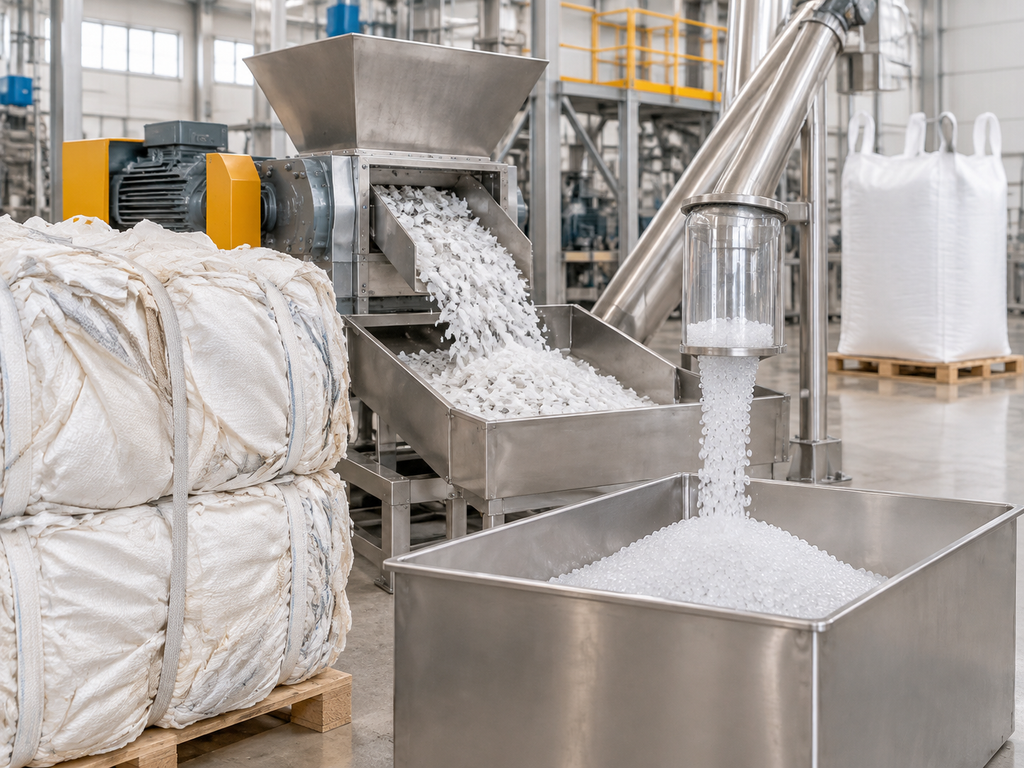
A recyclable FIBC is not defined by one word on a quotation. It is defined by the material system, the bag architecture, the liner and ventilation choices, the target market and the evidence behind the claim.
Mono-material PP is a strong starting point because it reduces material complexity and can support high-quality mechanical recycling. It becomes more useful when the liner, labels, inks and accessories are also considered, and when the buyer has a realistic collection and reprocessing route.
Ventilated FIBCs and lined FIBCs can both be part of a recyclable packaging strategy, but they are not interchangeable. Ventilated bags are for airflow and produce; lined bags are for protection; standard PP bags are for dry bulk where a liner is not required. The correct choice depends on the product, not on a generic sustainability claim.
To review a project, send FIBC World the product data, current bag and liner drawing, filling and discharge equipment, target market, expected volume, end-of-life route and required documents. The first output should be a defined construction and an evidence list, not an unsupported promise that every bag is recyclable in every market.
Related News
Other news you might be interested in
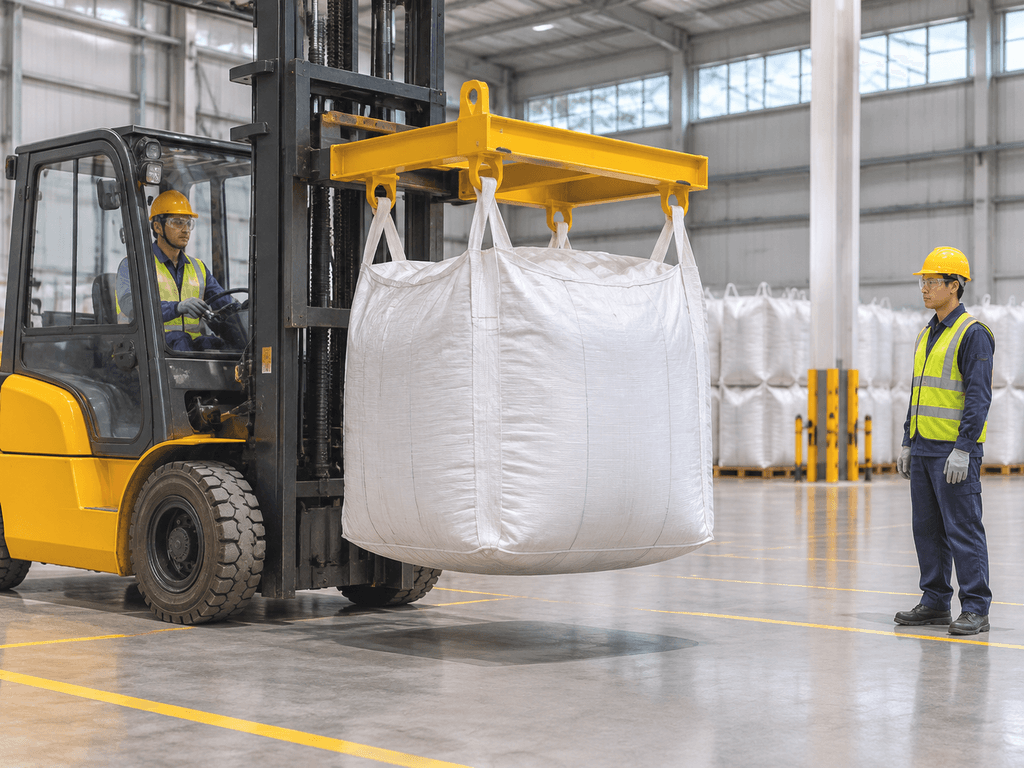
FIBC Bag Handling and Safety: Best Practices for Safe Use
Proper FIBC handling is closely connected with operator safety, bag integrity and efficient bulk-material movement. An FIBC is a system of components rather than simply a woven fabric container. Lifting loops or sleeves, seams, fabric, closures, filling arrangements, discharge components and, where applicable, liners all contribute to how the bag performs during use.
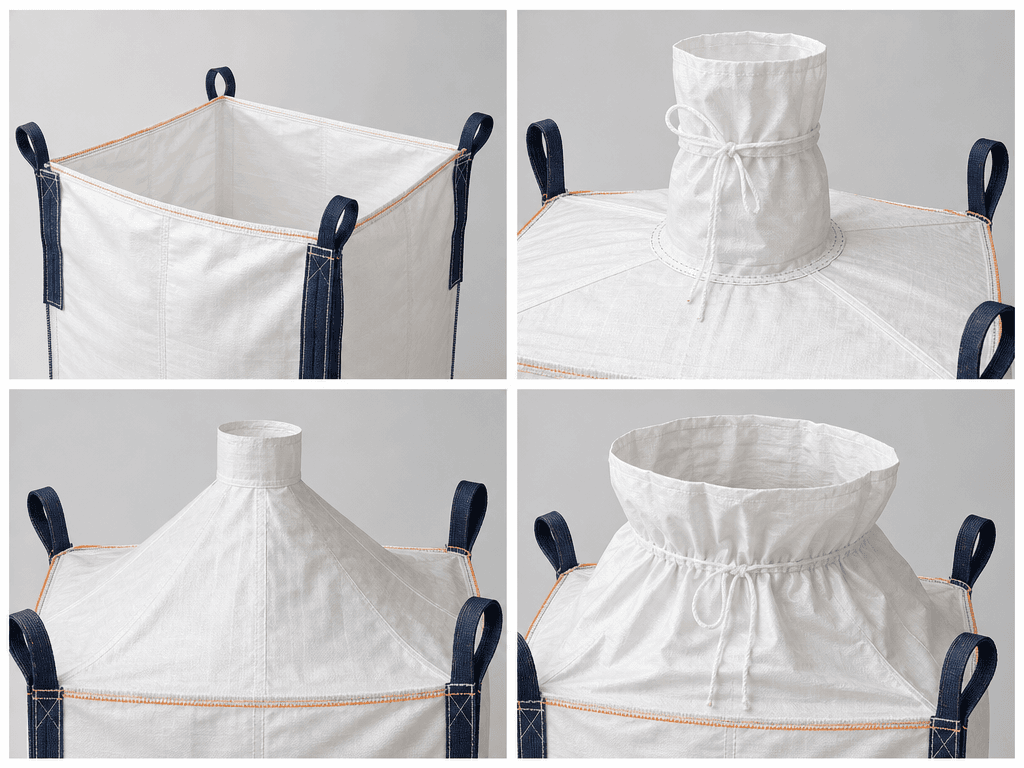
Eight Bulk Bag Openings—and the Filling or Discharge Job Each One Is Built For
Two bulk bags can carry the same load, use similar fabric and look almost identical in a quotation. Yet one may fill cleanly from a silo and discharge in a controlled stream, while the other needs manual loading and a completely different emptying method.
Want to know more?
Get in touch with us for more information about our services and products.