
How to Choose an FIBC Bulk Bag Manufacturer: A Custom Bulk Bag Purchasing Guide

Dayang Yang
AuthorWith experience in FIBC bulk bag manufacturing and export sales, we operate our own production facility with stable large-scale capacity. We are specialists in bulk bags, conductive FIBCs, food-grade FIBCs, UN certified bags, and customized flexible intermediate bulk containers for industrial packaging and bulk material transportation solutions.
As the movement of bulk materials continues to grow across agriculture, chemicals, minerals, construction, and food ingredients, buyers now expect more from packaging than simple load capacity. They also need reliable material protection, safe handling, efficient storage, and consistent supply. FIBC bulk bags, also known as Flexible Intermediate Bulk Containers (FIBCs), bulk bags, jumbo bags, or Super Sacks, have become an essential packaging solution for dry powders, granules, and other bulk materials.
Today, buyers consider more than bag size and carrying capacity. They also evaluate bag construction, filling and discharge methods, FIBC liners, coated FIBC bags, anti-static protection, and a manufacturer's ability to customize the final design. Start by reviewing the FIBC bulk bag product catalog, then match the bag configuration to the material, handling equipment, and logistics route.
Define These Six Requirements Before Buying FIBC Bulk Bags
1. Material Type and Industry Application
Material characteristics determine the basic FIBC bulk bag specification. Buyers should identify whether the cargo is powder, granules, ore, resin, fertilizer, or food ingredients, and provide details such as bulk density, flowability, moisture sensitivity, dust generation, and static risk.
For example, powder materials often require better containment and anti-static FIBC bags. Fertilizer, seed, and grain applications may prioritize moisture protection and handling efficiency. Minerals, sand, and aggregates generally require higher load performance, reinforced lifting loops, and controlled discharge options.
For agricultural materials, see FIBC Bags for Agriculture: Storage and Transportation Solutions.
2. Bag Size, Volume, and Safe Working Load
Buyers should specify the intended fill weight per bag, available storage space, stacking method, and handling equipment. Common search and specification terms include 1 tonne bulk bag, 2000 lb Super Sack, 3000 lb FIBC bags, bulk bag dimensions, and load capacity.
The same bag dimensions can produce different usable capacities when filled with materials of different densities. For powders and granules, buyers should also consider the filled bag height, center of gravity, and transport stability.
For further guidance, review the Bulk Bag Sizes Guide and FIBC Bag Types, Load Capacity, and Industry Applications.
3. Bag Construction and Style
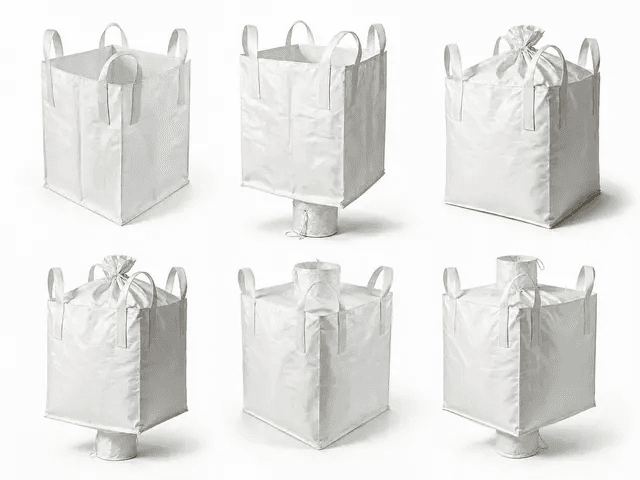
Common FIBC bulk bag styles include U-panel bags, 4-panel bags, tubular bags, and baffle bags. Each style differs in shape control, filling stability, stacking performance, and container-loading efficiency.
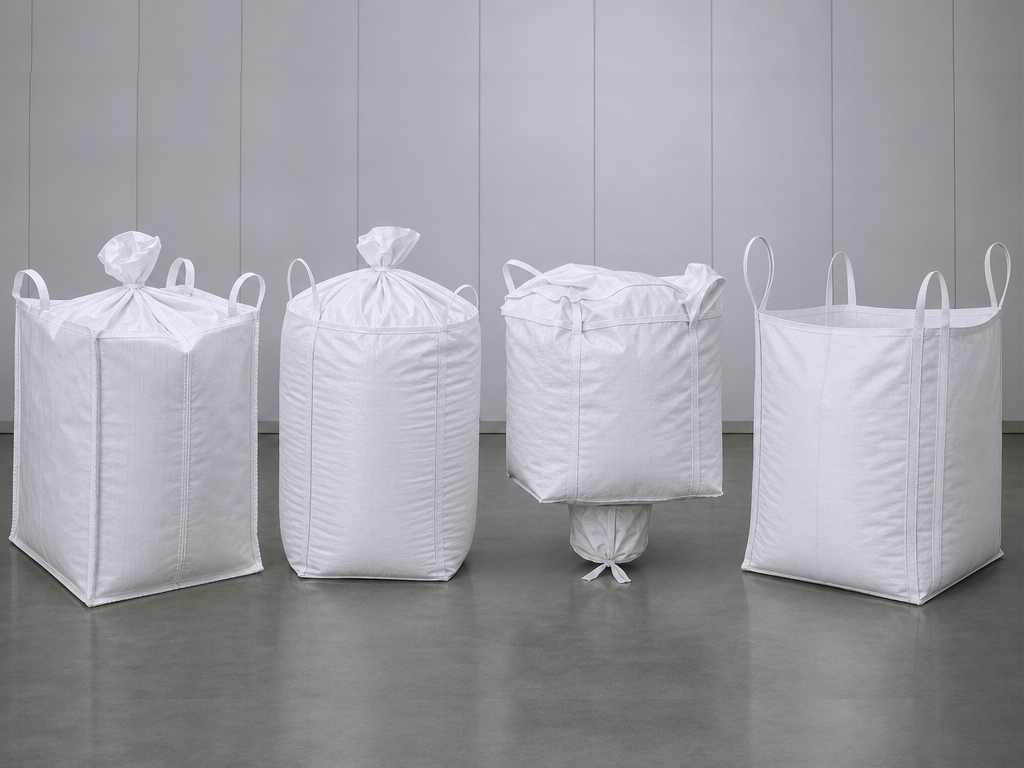
Baffle bags are especially useful when a square filled profile, stable stacking, and efficient warehouse or container use are important. Standard FIBC bulk bags may be more suitable for straightforward bulk transport where a simpler configuration is sufficient.
4. Filling, Discharge, and Lifting Options
The top and bottom construction directly affect filling and discharge efficiency. Buyers should specify whether they need an open top, filling spout, duffle top, discharge spout, or a duffle top spout bottom FIBC bag configuration.
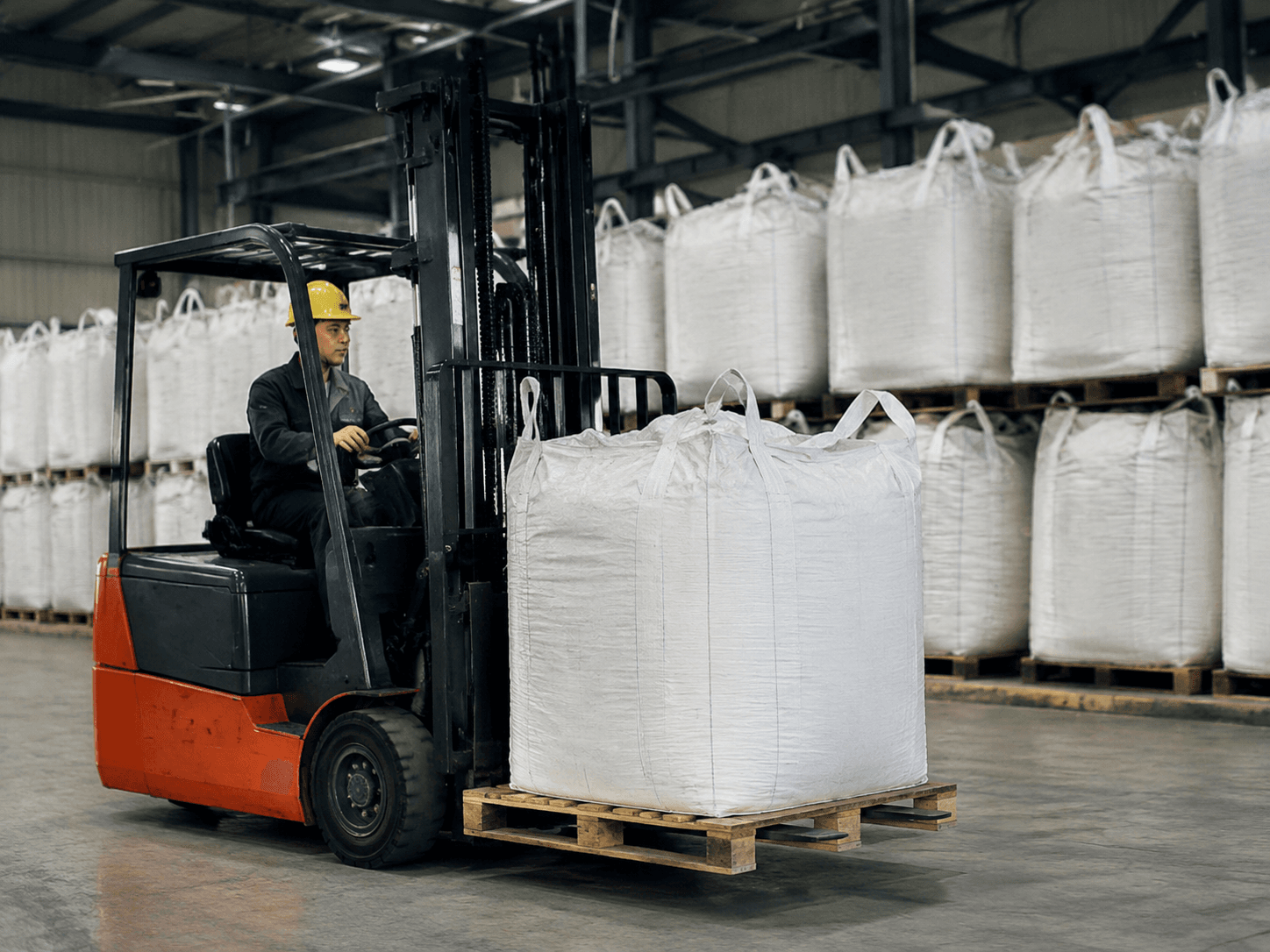
Top filling options and bottom discharge options should match the actual filling and unloading process. Lifting design also matters: lifting loops and straps should be selected according to forklift, crane, port, or heavy-duty handling conditions.
5. Liners, Coating, and Moisture Protection
For materials that are sensitive to moisture, contamination, leakage, or cleanliness, buyers may consider FIBC liners, bulk bag liners, lined bulk bags, or coated FIBC bags.
An FIBC liner is not required for every project. The right solution depends on the material, storage period, humidity exposure, and shipping conditions. Learn more from Coated FIBC Bags vs FIBC Liners.
6. Anti-Static and Special Operating Conditions
Dry powders, chemical materials, and other static-generating products can create risks during filling, transport, and discharge. Depending on the application, buyers may need to evaluate Type A, Type B, Type C, and Type D FIBC bags.
Standard FIBC bulk bags, Type C conductive bulk bags, and Type D static dissipative FIBC bags are designed for different operating conditions. For dusty or static-sensitive environments, review the Type D Anti-Static FIBC Guide before finalizing the bag type.
How to Evaluate a Custom FIBC Bulk Bag Manufacturer
1. Can the Manufacturer Recommend a Suitable Bag Design?
A professional FIBC bulk bag manufacturer should do more than offer standard sizes. The supplier should understand the material, target fill weight, transport method, storage conditions, and handling equipment before recommending a custom bulk bag design.
Mineral applications may need stronger load and lifting performance. Food ingredient applications may require food-grade bulk bags and FIBC liners. Chemical powders may require moisture protection and anti-static FIBC bags. A manufacturer that can address these differences is better positioned to support the project.
2. Does the Supplier Support Critical Custom Options?
A custom FIBC bulk bag may involve bag dimensions, fabric, lifting loops, filling and discharge openings, FIBC liners, coating, printing, and labels. The FIBC customization page outlines available directions for bag styles, lifting systems, filling and discharge options, protective features, and printed identification.
For project-based buyers, distributors, and brands, packaging configuration, handling labels, and shipment requirements can also be part of the final solution.
3. Can the Supplier Serve Different Industry Needs?
An experienced FIBC bulk bag supplier should be able to support a range of applications, including industrial bulk bags, chemical-grade bulk bags, food-grade FIBC bags, agricultural FIBC bags, and mining bulk bags.
For standard industrial material handling, see PP FIBC Jumbo Bags. For materials requiring stronger barrier protection, review Aluminum-Lined FIBC Jumbo Bags.
Quality Factors to Review When Choosing an FIBC Bulk Bag Manufacturer
1. Fabric and Sewing Quality
Woven polypropylene is a common material for FIBC bulk bags. Fabric quality, sewing construction, reinforced load areas, and loop attachment design all influence performance during filling, lifting, stacking, and transport.
Buyers should pay close attention to the connection between the bag body and lifting loops, reinforced sewing areas, filling and discharge construction, and overall consistency of the finished bag. Outdoor storage or extended transport conditions should also be communicated early.
2. Load Design and Safety Factor
For heavy-duty or frequent-use applications, buyers should clarify the safe working load (SWL), lifting method, and intended number of uses. Single-trip FIBC bags and multi-trip FIBC bags are designed for different use conditions.
The actual fill weight, lifting frequency, handling equipment, and storage environment should all be included in the purchasing discussion. A general description such as “one-ton bag” is usually not enough to define the correct bag design.
3. Specification Consistency and Sample Approval
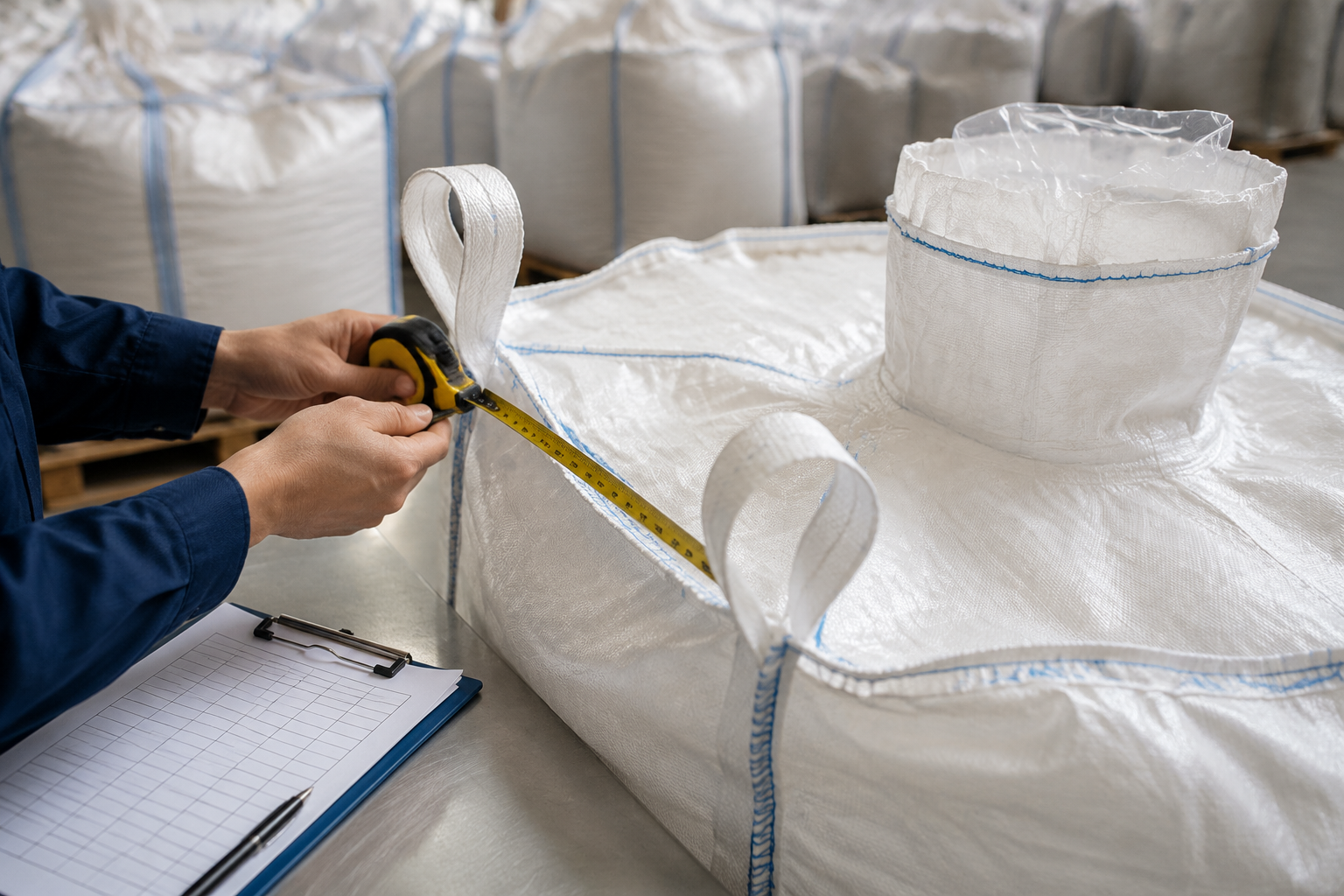
Before placing a bulk order, the sample should reflect key FIBC bag specifications, including dimensions, capacity, bag style, loops, filling and discharge openings, liners, coating, and printing.
Sample approval allows buyers to assess whether the construction fits the intended application and helps both parties establish a clear understanding of the final custom bulk bag configuration.
Selecting Custom FIBC Bulk Bags for Different Applications
1. Agriculture, Grain, Seed, and Fertilizer
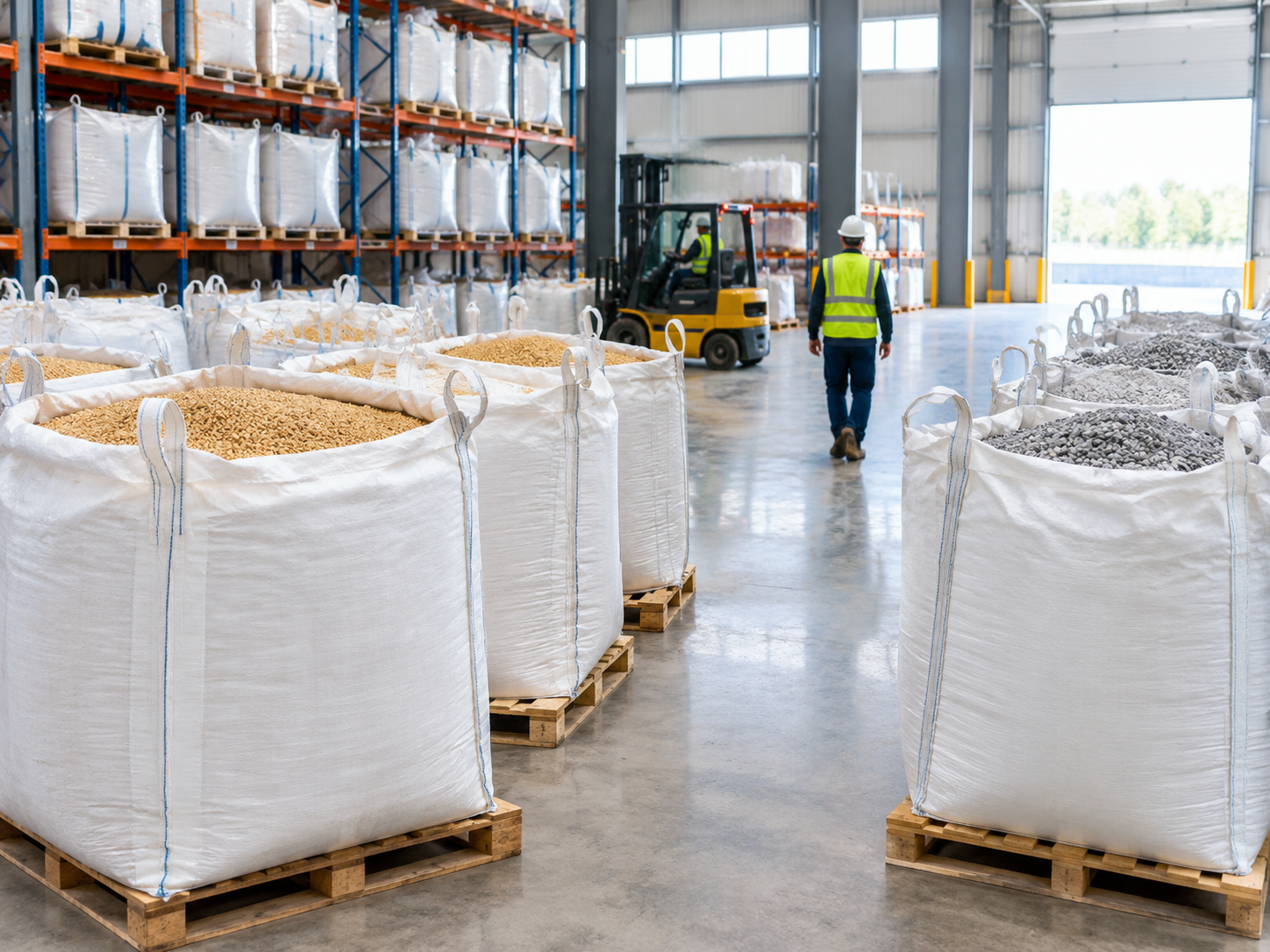
Grain, seed, and fertilizer applications often prioritize moisture control, handling efficiency, and warehouse management. Agricultural FIBC bags, breathable FIBC bags, and suitable filling and discharge designs can support these requirements. FIBC bags for fertilizer are commonly used for high-volume fertilizer storage and transport.
2. Chemical and Powder Applications
Chemical powders, granules, and dusty materials may require better containment, moisture protection, and static control. Depending on the material, buyers may consider chemical-grade bulk bags, FIBC bags for chemicals, FIBC liners, and different types of anti-static FIBC bags.
For materials requiring high moisture and oxygen barrier performance, see Light-Proof FIBC for Lithium Powder.
3. Mining, Sand, and Construction Aggregates
Ore, sand, and construction aggregates usually require stronger load performance, stable lifting, and efficient handling. Relevant product terms include FIBC bags for mining, mining bulk bags, FIBC bags for minerals, and FIBC bags for sand and aggregates.
For these projects, fill weight, forklift or crane handling, stacking height, and transport distance should all be included in the bag selection process.
4. Food Ingredients
Food ingredient projects may require food-grade bulk bags, food-grade FIBC bags, and suitable FIBC liners. Buyers should clearly communicate material type, storage time, and transport conditions to select an appropriate packaging solution.
5. Oilfield and Petrochemical Applications
Oilfield, petrochemical, and related industrial projects can involve heavy loads, powders, and complex operating conditions. FIBC bags for oilfield applications and petrochemical FIBC bags should be selected with consideration for material behavior, lifting, discharge efficiency, static control, and logistics conditions.
Common Mistakes When Buying Custom FIBC Bulk Bags
1. Choosing a Supplier Only by Price
The lowest price does not always create the lowest total purchasing cost. If the bag construction, lifting design, or protective features do not match the application, handling efficiency, material protection, and operational stability may be affected.
2. Not Providing Enough Material Information
Without information about material density, moisture, dust, handling equipment, and transport conditions, it is difficult to select the right FIBC bulk bag design. Better input leads to more accurate recommendations.
3. Ignoring Equipment Compatibility
Filling openings, discharge spouts, and lifting-loop designs need to work with filling systems, forklifts, cranes, and unloading equipment. A bag that meets a general specification may still be unsuitable for a specific operating process.
4. Confusing Standard and Anti-Static FIBC Bags
Standard FIBC bulk bags, Type C conductive bulk bags, and Type D anti-static FIBC bags have different functions and operating conditions. Static-sensitive applications require a bag type selected for the actual material and work environment.
5. Overlooking Transport and Outer Packaging
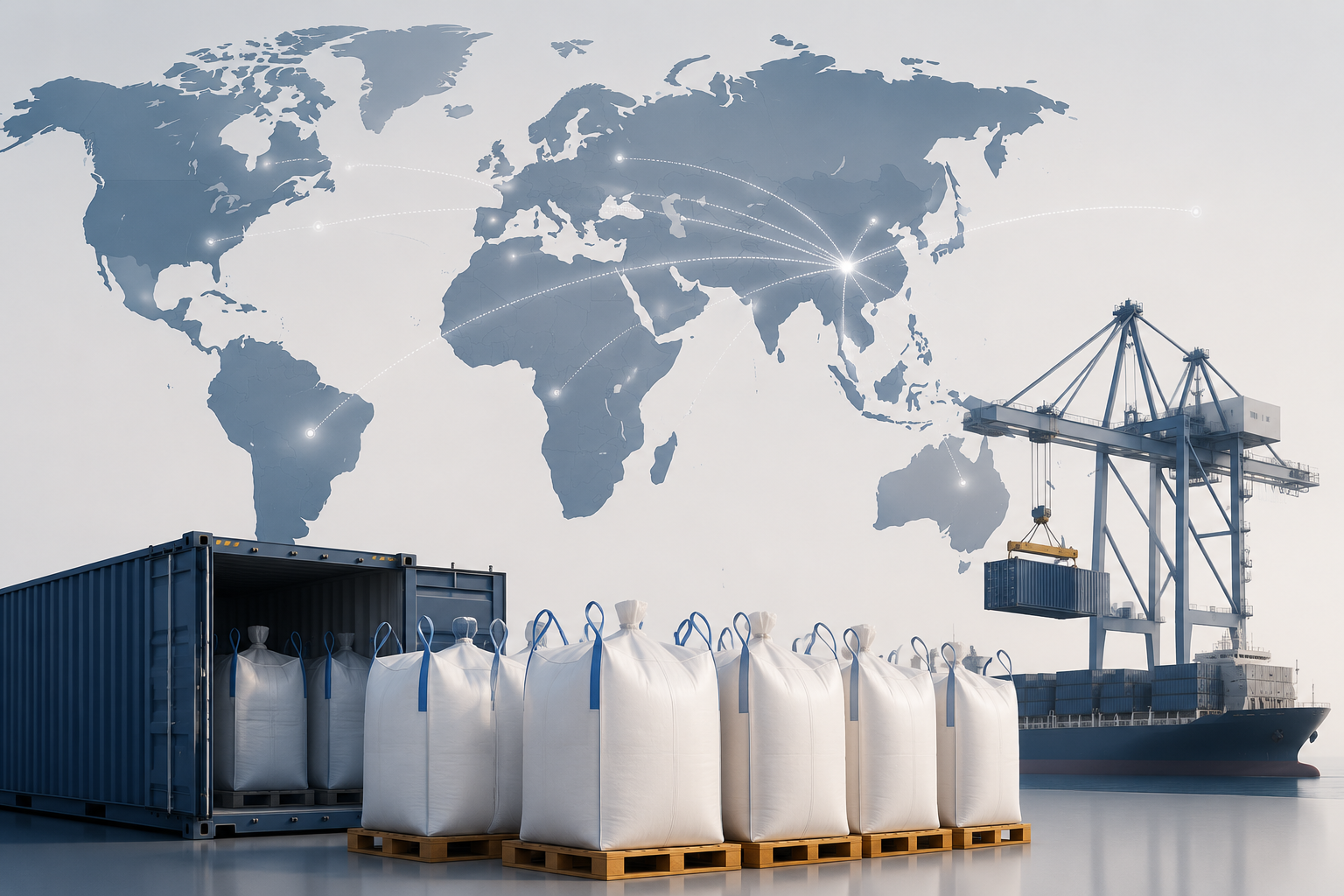
Bulk purchasing should also consider outer packaging, container loading, destination conditions, and warehouse arrangements. A suitable shipping plan helps protect custom bulk bags and improves receiving, storage, and distribution efficiency.
Information to Provide When Requesting a Quote
| Purchasing Information | Details to Provide |
|---|---|
| Material Information | Material name, density, powder or granule characteristics, moisture sensitivity, and static risk |
| Product Specification | FIBC bulk bag dimensions, target capacity, and safe working load (SWL) |
| Bag Construction | Bag style, lifting loops, filling opening, discharge opening, baffle bag or standard bag |
| Protection Requirements | FIBC liners, coating, ventilation, anti-static protection, food-grade, or chemical-grade needs |
| Operating Conditions | Storage, sea freight, road freight, crane handling, forklift handling, or automated filling |
| Purchasing Plan | Estimated quantity, outer packaging, destination, and delivery schedule |
Application photos, existing bag photos, and equipment details can also help an FIBC bulk bag manufacturer understand the handling process and prepare a more suitable quotation.
FIBC Bulk Bag Manufacturer Selection Checklist
Can the supplier recommend a suitable custom FIBC bulk bag design?
Can the supplier clearly explain the FIBC bag specifications?
Does the supplier support samples, specification approval, and bulk delivery?
Can the supplier support food-grade bulk bags and chemical-grade bulk bags?
Can the supplier recommend appropriate bag styles, openings, loops, and FIBC liners?
Does the supplier communicate clearly on quotation and delivery requirements?
Can the supplier consider transport and outer packaging needs?
FAQ About Custom FIBC Bulk Bag Purchasing
1. What is the difference between an FIBC bulk bag and a regular woven bag?
An FIBC bulk bag is designed for large-volume bulk material handling. It can be configured with lifting loops, filling and discharge openings, liners, coatings, and anti-static options for industrial handling and transport.
2. How do I determine the required bag capacity?
Consider material density, target fill weight, fill height, lifting method, and usage frequency. These factors can be assessed with FIBC capacity calculation principles to define the right specification.
3. When are FIBC liners or coatings needed?
FIBC liners, lined bulk bags, and coated FIBC bags can provide added protection when materials are sensitive to moisture, contamination, leakage, or cleanliness requirements.
4. How should I choose between Type C and Type D FIBC bags?
Type C conductive bulk bags control static through grounding, while Type D static dissipative FIBC bags use static-dissipative construction. The right choice depends on the material and operating environment.
5. How can I start a custom FIBC bulk bag project?
Prepare the material information, dimensions, fill weight, bag style, openings, lifting design, liner requirements, anti-static needs, and estimated quantity. Then submit the request through the FIBCWorld contact page for a customized solution.
Related News
Other news you might be interested in
Woven Polypropylene FIBC Bulk Bags: How Material, Construction and Coating Affect Bulk Packaging Performance
In global bulk-material supply chains, FIBC bulk bags have developed from simple transport containers into important logistics tools connecting production, warehousing, loading, unloading, and end use. Their actual performance depends not only on capacity, but also on woven polypropylene, bag construction, coating, liners, safety factors, and the application environment. For the food, chemical, agricultural, mining, and construction-material industries, selecting the right FIBC bulk bags affects load-bearing performance, material loss, transport efficiency, warehouse space, and operational safety.
Chemical Grade Bulk Bags: How to Select the Right Flexible Intermediate Bulk Containers (FIBC) for Chemicals, Powders, and Hazardous Materials
Bulk materials used in the chemical industry often have characteristics such as fine particle size, high flowability, strong moisture absorption, a tendency to cake, or a high risk of electrostatic charge buildup. For chemicals, powder materials, and certain hazardous materials, packaging does more than hold the product—it directly affects material quality, workplace safety, and transportation reliability.
Want to know more?
Get in touch with us for more information about our services and products.