
How to Choose FIBC Bulk Bag Filling and Discharge Options: A Guide to Duffle Top and Spout Bottom Designs

Dayang Yang
AuthorWith experience in FIBC bulk bag manufacturing and export sales, we operate our own production facility with stable large-scale capacity. We are specialists in bulk bags, conductive FIBCs, food-grade FIBCs, UN certified bags, and customized flexible intermediate bulk containers for industrial packaging and bulk material transportation solutions.
Across industries such as chemicals, minerals, fertilizers, food ingredients, plastic pellets, and construction aggregates, the storage and transport of dry bulk materials increasingly depend on reliable flexible bulk packaging. While FIBC bulk bags offer high capacity, forklift-friendly handling, and efficient long-distance transportation, buyers should look beyond bag dimensions, load capacity, and unit price.
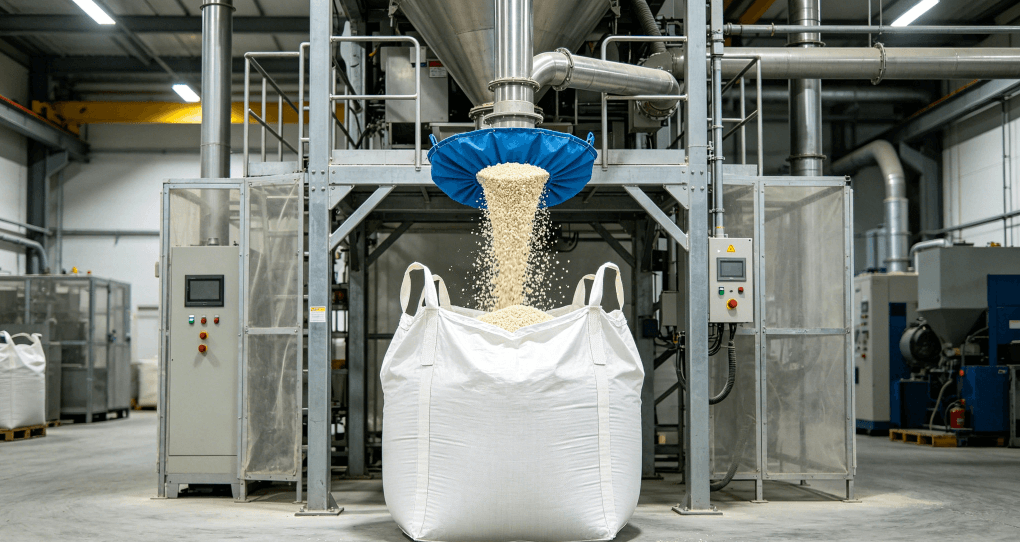
As automated filling, enclosed conveying, and controlled discharge systems become more common, the design of the filling inlet and discharge outlet has become a critical part of packaging performance. For businesses handling dry bulk materials, bag opening design is not simply a visual detail. It can affect filling efficiency, material loss, operator safety, dust control, and downstream logistics costs.
Among the available options, the combination of a Duffle Top and Spout Bottom is widely used in operations that require a more stable filling and discharge process. It is not a universal solution, but it can balance filling convenience, bag closure, and controlled material discharge in many practical applications.
Why Bag Construction Affects the Entire Packaging Process
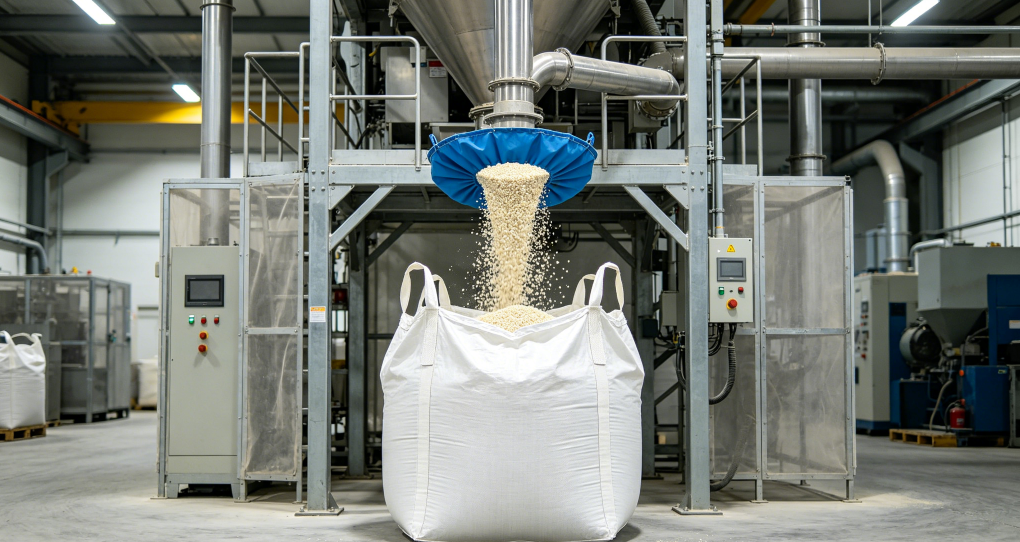
An FIBC bulk bag may pass through filling, lifting, stacking, transportation, warehousing, and discharge. A mismatch at any stage can create operational problems.
For example, filling may be fast, but if the filling inlet does not connect properly with the filling equipment, dust can escape into the work area. A bag may have sufficient load capacity, but if the discharge outlet does not match the hopper, unloading can become inconsistent, leave excessive material residue, or require repeated manual intervention.
Before selecting a bag design, businesses should also confirm the target load, external dimensions, and transport space. For more information on the relationship between capacity and size, see FIBCWorld's bulk bag dimensions and specifications guide.
Different Filling Inlets Serve Different Loading Methods
The simplest filling inlet is an open-top design. It is suitable for manual filling, forklift loading, or materials with larger particle sizes, such as some construction aggregates, mineral granules, and low-dust materials. Its main advantage is easy access and a wide opening. However, it provides limited control where dust reduction or material protection is important.
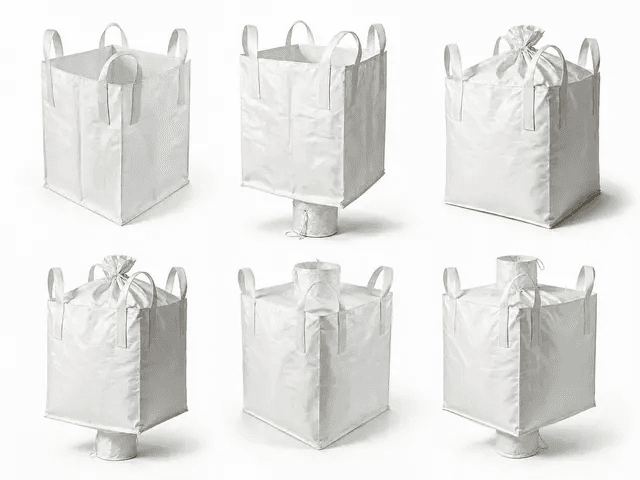
A Duffle Top is a flexible skirt-style filling inlet. During filling, the large fabric skirt can be opened wide to create more working space. Once filling is complete, the opening can be closed with tie cords to help manage the bag during storage and transport.
For fertilizers, plastic pellets, selected food ingredients, and free-flowing chemical materials, a Duffle Top FIBC bulk bag can reduce filling constraints while improving closure after loading.
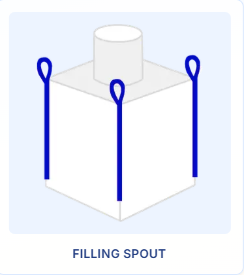
A Filling Spout is better suited to filling pipes, automatic filling stations, and relatively enclosed loading systems. For fine powders, dust-prone materials, or materials requiring a higher level of cleanliness, a filling spout can help improve process control during loading.
Discharge Design Determines Whether Material Can Be Released Consistently
Compared with filling, discharge is often where the mismatch between bag construction and site equipment becomes most visible. A bag may perform well during transport but become difficult to empty, leave excessive residue at the base, or require manual shaking and intervention during discharge.
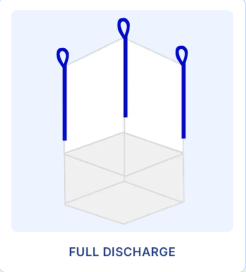
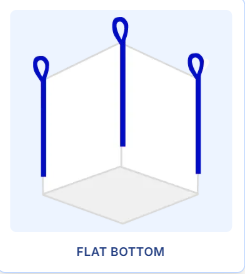
For one-time unloading where controlled flow is not required, a flat-bottom bulk bag may be sufficient. However, when the material has a higher value, generates dust, or must be discharged in stages, a dedicated discharge outlet is generally more appropriate.
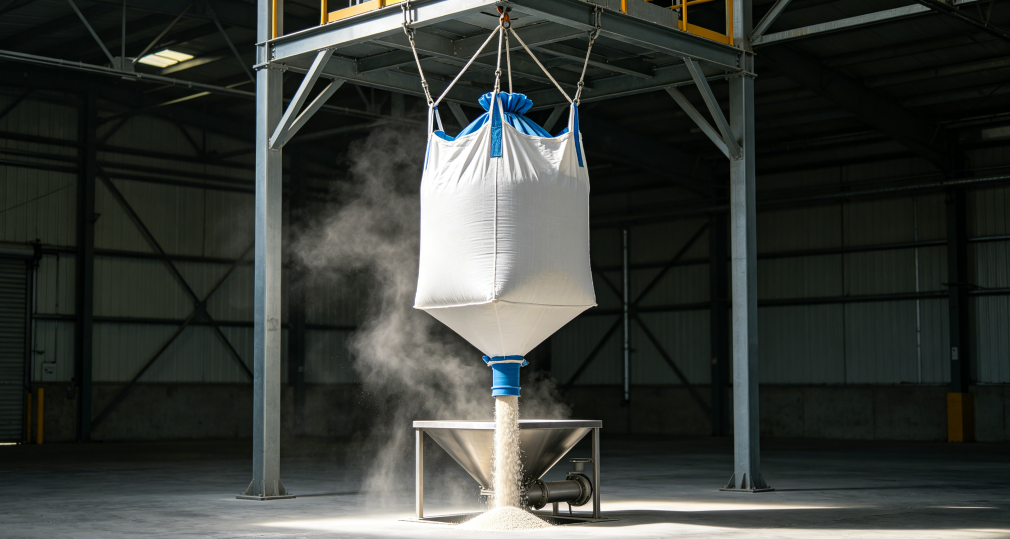
A Spout Bottom is a tied discharge spout located at the base of the bag. It can be used with hoppers, valves, or automated discharge equipment, allowing operators to control the flow of material more effectively. For plastic resins, granular fertilizers, some powders, and other free-flowing dry bulk materials, this design can reduce uncontrolled dumping, leakage, and cleaning work.
However, a Spout Bottom cannot solve every discharge issue. If a material is prone to caking, moisture absorption, bridging, or adhesion, changing the discharge outlet alone will not guarantee consistent flow. Material moisture, particle size distribution, hopper angle, vibration equipment, and ambient conditions must also be considered.
Why Duffle Top and Spout Bottom Are Often Used Together
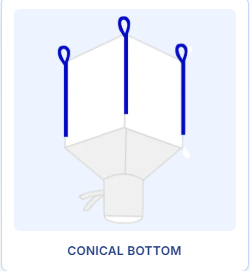
The combination of a Duffle Top and Spout Bottom reflects a more complete packaging approach. The filling side needs enough working space, the transport stage benefits from a closable opening, and the discharge side requires a more controlled material outlet.
This design is especially practical for operations where materials are filled at a packing station, stored in a warehouse, moved by forklift or container, and finally discharged into a customer hopper or production line. It allows an FIBC bulk bag to function as more than a transport container. It becomes a packaging unit that connects several operating stages.
This combination is often used for powders, granules, and other free-flowing industrial materials. It offers a larger opening during filling, improved bag closure during transport, and more controlled discharge at the final destination.


Material Characteristics Matter More Than Bag Names
When selecting a filling inlet and discharge outlet, the material itself is one of the most important considerations. Two materials with similar weights may behave very differently during filling and discharge.
Free-flowing plastic pellets, fertilizer granules, and some mineral products are generally easier to discharge through a discharge spout. Fine powders, however, may be affected by air entrainment, humidity, and static electricity. Certain food ingredients require moisture protection, hygiene control, and reduced cross-contamination risk. Some chemical materials may also require an evaluation of dust hazards and anti-static FIBC bulk bag requirements.
For food ingredients or moisture-sensitive materials, the bag's liner should also be assessed carefully. FIBCWorld provides lined bulk bag solutions and has published a comparison of coated FIBC bags and FIBC liners to help buyers evaluate moisture protection, contamination control, and sealing needs.
Filling and Discharge Equipment Determines Whether the Design Works
The same FIBC bulk bag can perform very differently when used with different equipment. Manual filling, forklift loading, filling stations, screw conveyors, and gravity hoppers all place different requirements on bag opening design.
For manual or mechanical loading, a larger Duffle Top can provide more working space. For pipe-fed filling systems, the diameter and length of the filling spout should match the equipment connection. During discharge, the length, diameter, and tie position of the Spout Bottom should also align with the hopper inlet, valve design, and available operating space.
Buyers should provide the supplier with the material name, bulk density, target load, filling method, discharge equipment, and expected frequency of use. The more complete the information, the easier it is to develop a custom FIBC bulk bag solution that matches the actual process.
Dust, Hygiene, and Static Risks Should Not Be Overlooked
For industries handling powders, fine particles, or sensitive materials, bag construction also plays a role in process control. Whether the filling inlet and discharge outlet can be secured, whether an inner liner is required, and whether enclosed filling is used can all affect dust management and material protection.
For food ingredients, the packaging solution should also consider cleanliness, moisture protection, and whether a food-grade liner is needed. For materials that may generate static electricity, the need for an anti-static FIBC bulk bag should be evaluated based on material properties and the operating environment.
Readers who need to understand static protective bag types in more detail can refer to FIBCWorld's guide to Type A, Type B, Type C, and Type D FIBC bulk bags and its article on Type D anti-static FIBCs.
How to Write Clear Technical Requirements When Buying Bulk Bags
A clear purchasing specification reduces repeated communication and helps suppliers understand the application more accurately. In addition to bag dimensions, buyers should define the following:
Target safe working load and required capacity;
Whether the bag is intended for single-trip or multi-trip use, including the required safety factor;
The preferred Duffle Top, Filling Spout, or other filling inlet design;
The preferred Spout Bottom, flat bottom, or other discharge outlet design;
Filling and discharge spout diameter, length, and tie requirements;
Whether a liner, coating, moisture barrier, or anti-static configuration is required;
Material flow characteristics, dust level, and equipment details;
Requirements for labels, document pouches, custom printing, or batch traceability.
For projects requiring stable stacking, buyers may also review FIBCWorld's comparison of baffle bags and standard FIBC bulk bags to assess the relationship between bag shape and warehouse utilization.
Conclusion: The Right Bag Opening Starts With the Right Application
The value of an FIBC bulk bag is not limited to its load capacity. Its real value lies in whether it can support the actual filling, handling, transport, and discharge process. A Duffle Top provides greater access during filling, while a Spout Bottom provides more control during discharge. Together, they can meet the efficiency, cleanliness, and operational stability requirements of many dry bulk material supply chains.
The right packaging solution should always begin with the material, equipment, and operating environment. For companies using FIBC bulk bags, understanding the loading and discharge process before selecting a bag design is often more effective than comparing bag prices alone.
For support with custom FIBC bulk bag specifications based on your material, load requirement, and equipment setup, submit the relevant technical details through the FIBCWorld contact page.
Related News
Other news you might be interested in
Woven Polypropylene FIBC Bulk Bags: How Material, Construction and Coating Affect Bulk Packaging Performance
In global bulk-material supply chains, FIBC bulk bags have developed from simple transport containers into important logistics tools connecting production, warehousing, loading, unloading, and end use. Their actual performance depends not only on capacity, but also on woven polypropylene, bag construction, coating, liners, safety factors, and the application environment. For the food, chemical, agricultural, mining, and construction-material industries, selecting the right FIBC bulk bags affects load-bearing performance, material loss, transport efficiency, warehouse space, and operational safety.
Chemical Grade Bulk Bags: How to Select the Right Flexible Intermediate Bulk Containers (FIBC) for Chemicals, Powders, and Hazardous Materials
Bulk materials used in the chemical industry often have characteristics such as fine particle size, high flowability, strong moisture absorption, a tendency to cake, or a high risk of electrostatic charge buildup. For chemicals, powder materials, and certain hazardous materials, packaging does more than hold the product—it directly affects material quality, workplace safety, and transportation reliability.
Want to know more?
Get in touch with us for more information about our services and products.