
Standard vs Baffle FIBC Bags: Which Bulk Bag Is Right for Your Application?

Dayang Yang
AuthorWith experience in FIBC bulk bag manufacturing and export sales, we operate our own production facility with stable large-scale capacity. We are specialists in bulk bags, conductive FIBCs, food-grade FIBCs, UN certified bags, and customized flexible intermediate bulk containers for industrial packaging and bulk material transportation solutions.
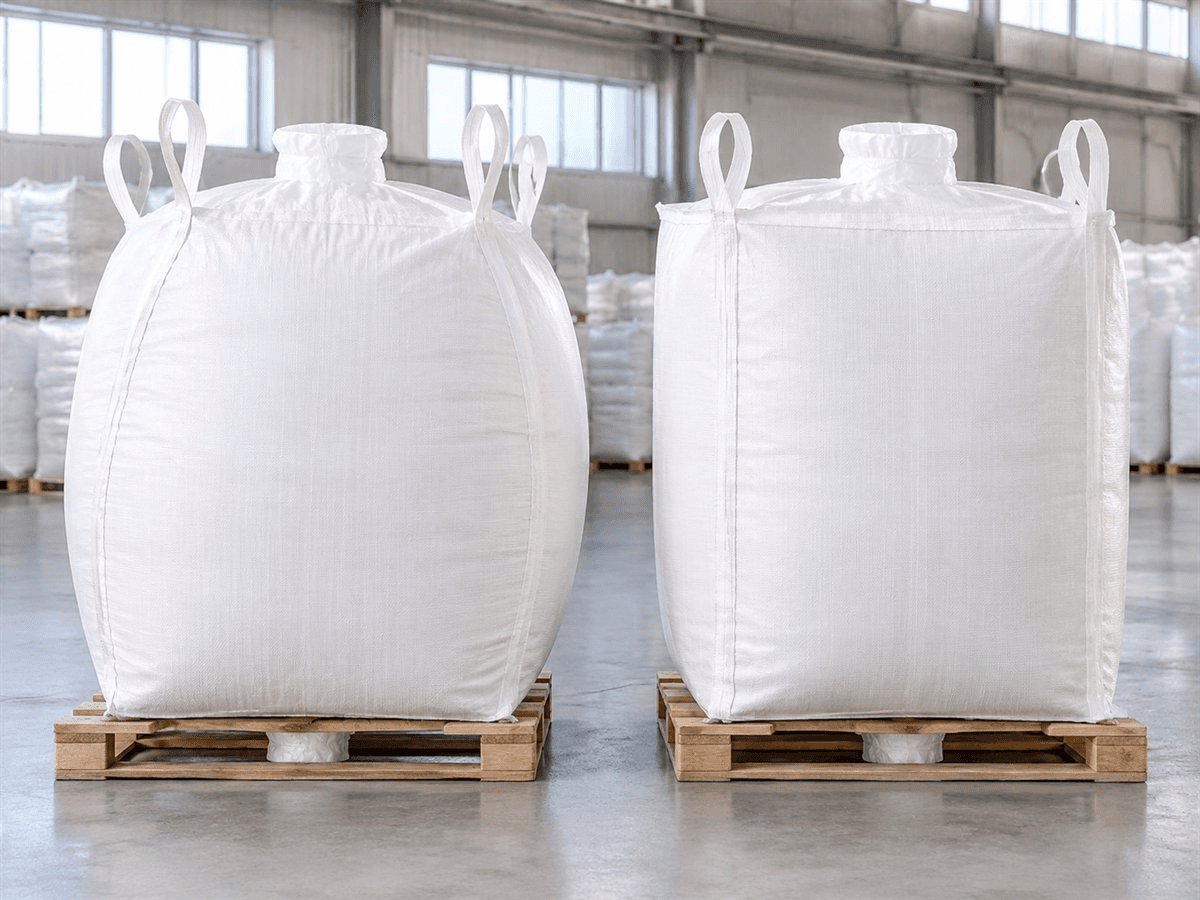
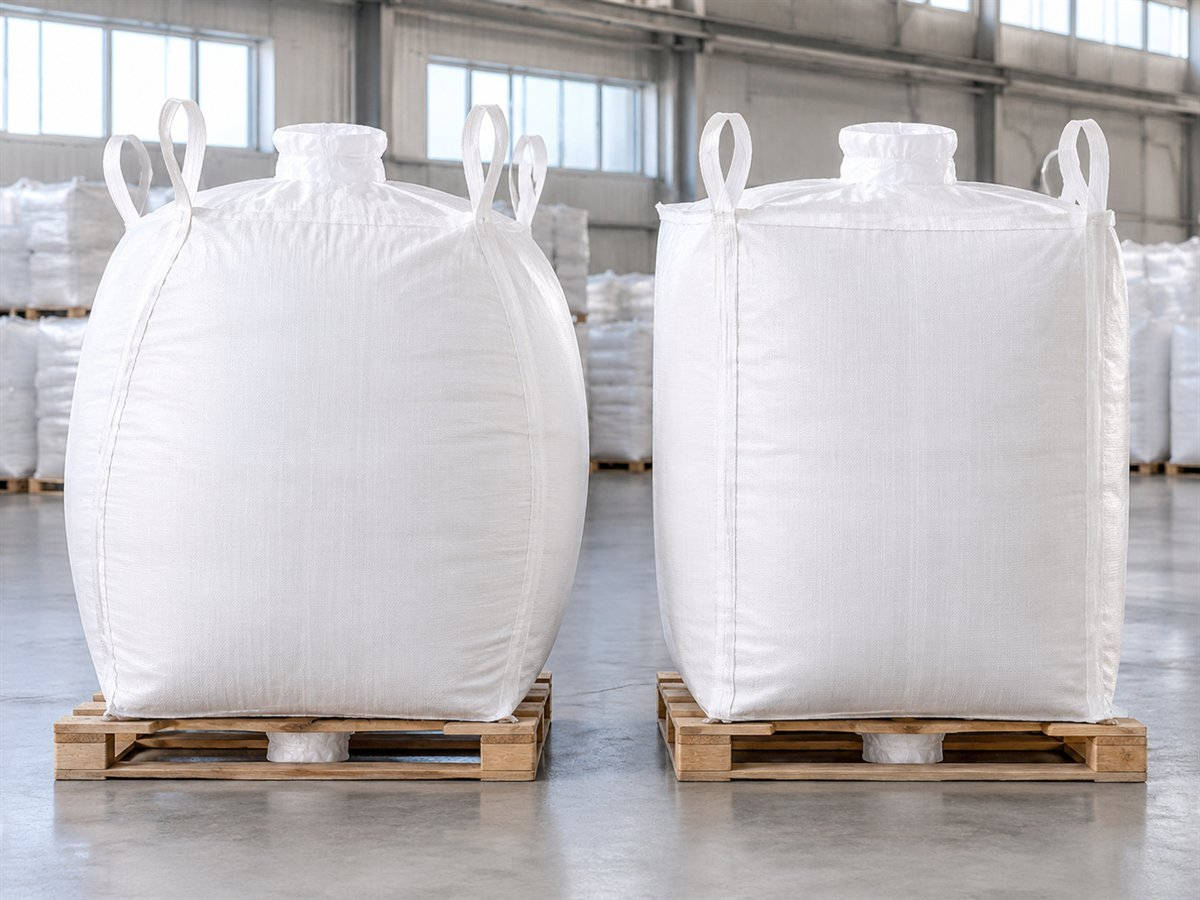
A standard FIBC and a baffle FIBC can be quoted at the same nominal size, carry the same product and still behave differently from the moment the bag is filled. One bulges into a rounded load. The other holds a more controlled, squarer footprint. Neither behaviour is automatically better. The right choice depends on what the filled bag has to do next.
An FIBC is a flexible intermediate bulk container, also called a bulk bag or jumbo bag. The practical way to compare a standard bulk bag with a baffle bag, Q-bag or form-stable FIBC is to look at what happens after filling. The question is not which bag looks stronger in a photograph, or which one has more features. It is whether the filled shape, the liner path and the filling and discharge interfaces fit the application. A standard FIBC is usually the lower-complexity choice. A baffle FIBC earns its cost when the filled shape becomes a constraint in the warehouse, in the container or at the filling line.
This guide sets out the differences that matter to buyers, the applications where each design is a sensible starting point, and the points to verify before a trial or a production order.
The Short Answer
A standard FIBC is usually the better default when the bag mainly needs to contain and protect a product, and the filled shape does not need to fit a tight pallet or stacking plan. A baffle FIBC is worth evaluating when the filled footprint, bag height or top surface affects stacking, container utilization, pallet presentation or the liner system.
| If the filled bag mainly needs to... | Start with | Why |
|---|---|---|
| Contain a free-flowing product at the lowest structural complexity | Standard FIBC | Fewer internal components, a simpler liner path and usually more usable volume for the same empty dimensions |
| Hold a stable pallet pattern or stack | Baffle FIBC | Internal restraints limit outward bulging and keep a more regular footprint |
| Fit a planned container or warehouse cube | Baffle FIBC, subject to measurement | A squarer footprint can suit a pallet grid, but the actual filled height and door clearance still have to be checked |
| Use a standard lay-flat liner | Standard FIBC | A simpler internal geometry is usually easier for a lay-flat liner to follow |
| Use a high-barrier or form-fit liner | Baffle FIBC with a matched liner | The liner has to be designed around the baffle corners, seams and fixing points |
| Minimize unit cost, lead time and inspection complexity | Standard FIBC | Fewer panels, seams and attachments |
| Meet UN, Type C/D anti-static or food-contact requirements | Either design, subject to evidence | Baffle geometry is shape control, not a compliance rating |
The table is a starting point, not a specification. The reliable way to choose is to compare the filled envelope at the target fill weight, with the intended liner and the actual filling and discharge equipment.
What "Standard" and "Baffle" Actually Mean
"Standard FIBC" is not one universal pattern. It usually refers to a bulk bag without internal shape-control panels, but the body can still be built in several ways. Common constructions include U-panel, four-panel and circular or tubular bags. They differ in seam layout, fabric orientation, base construction and how the bag behaves under load.
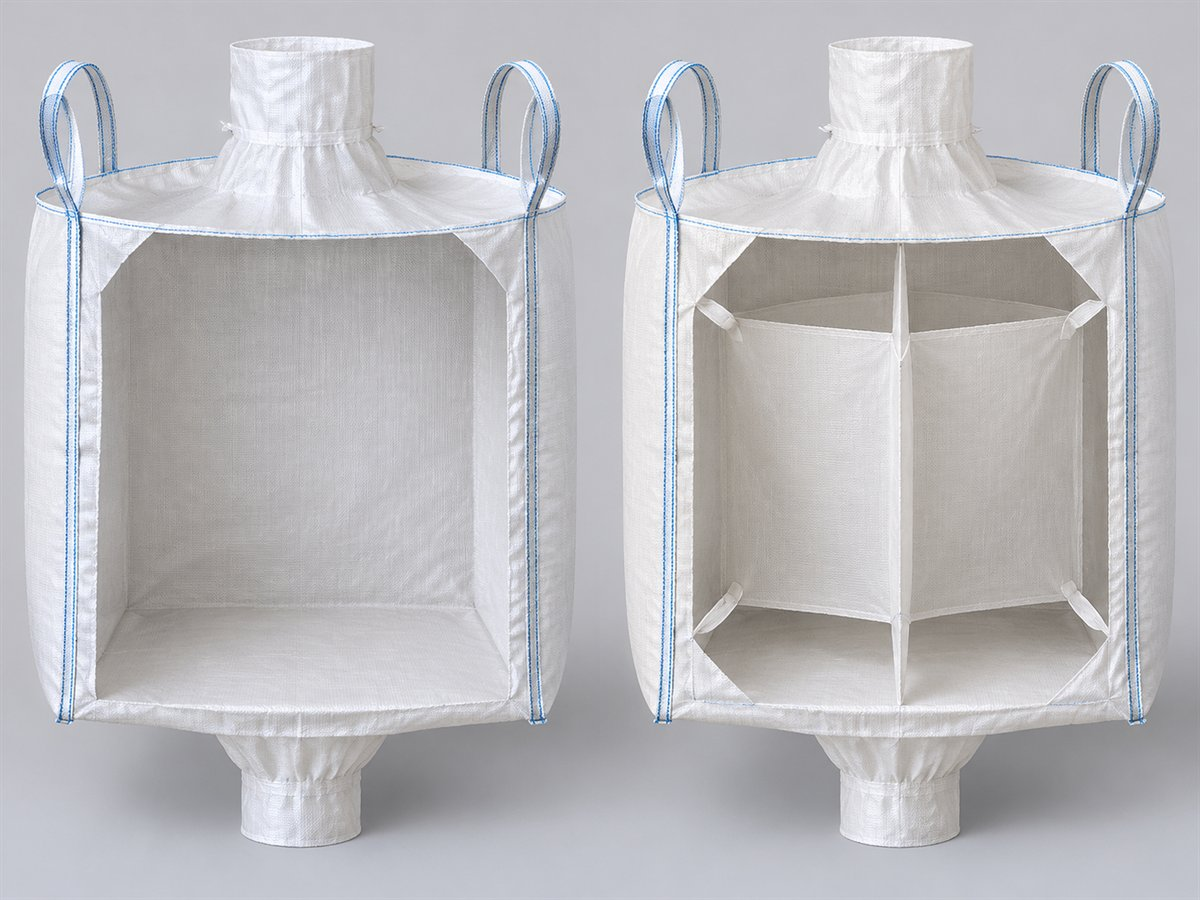
A baffle FIBC, also called a baffle bag, Q-bag or form-stable bag, adds internal fabric panels, ties or stays that connect the sides or corners and limit outward movement. The baffles can be built into different base bags, and the layout can differ between suppliers. "Baffle bag" therefore describes a family of shape-controlled designs, not a single specification.
That distinction matters at the quotation stage. Two suppliers can both offer a "1,000 kg baffle bag" with the same nominal length, width and height, yet use different baffle patterns, seam positions, internal clearances and spout arrangements. The buyer is not comparing like for like unless the drawings and the filled performance are compared.
It also matters because an empty bag does not describe the packaging system. A 90 x 90 x 110 cm standard bag and a 90 x 90 x 110 cm baffle bag may hold different usable volumes, produce different filled heights and present different top surfaces. The outside dimensions are a starting point, not the answer. For a deeper look at how body construction changes bulging and container use, see the guide to FIBC body construction.
The Real Difference Shows Up After Filling
In a standard FIBC, the product pressure pushes the side panels outward. The bag becomes rounder, the footprint moves away from its empty rectangular shape and the load can take on a pillow-like profile. The bag is not failing. It is behaving as a flexible container. The question is whether that behaviour is acceptable for the pallet, the stack, the container and the discharge method.
A baffle FIBC uses internal restraints to share that outward force. The side panels stay closer to vertical, the footprint remains closer to square with rounded corners, and the top surface is usually flatter. The bag can stand more independently and present a more consistent load for palletizing and storage.
But the restraints also change the inside of the bag. They create internal edges, attachment zones and corners that a liner must negotiate. They occupy space that would otherwise be available for product. A baffle bag may therefore need a larger empty size to hold the same fill weight as a standard bag, or it may be taller for the same nominal dimensions. Neither outcome is automatically a problem, but both need to be designed and measured.
Filled geometry is a function of bag design, product bulk density, particle size, flow behaviour, fill weight, fill rate, deaeration and settling time. A supplier cannot promise a filled height from an empty-bag drawing alone, and a buyer cannot assume that two bags with the same empty dimensions will fill to the same envelope. The specification should state the target fill weight and the expected filled length, width and height, not only the empty size.
The practical point: compare the filled bag, not the catalogue bag. The choice between standard and baffle is a choice between two filled geometries.
Where Standard FIBC Bags Are the Better Choice
A standard FIBC is often the right answer when the bag's job is straightforward: contain the product, protect it from contamination, and move it from the filling point to the customer without the filled shape becoming a handling problem.
Typical conditions include:
The product is free-flowing and does not need a shaped liner or a particularly flat top surface.
The bag is stored single-high or at low stack heights, and the pallet pattern does not depend on a square footprint.
Filling is manual or semi-automatic, and the line can accommodate some variation in the bag's filled shape.
A standard lay-flat liner is sufficient for the barrier or contamination requirement.
The buyer wants a simpler inspection, repair and training routine.
Unit cost, lead time and supply simplicity are primary purchasing criteria.
Standard bags are commonly evaluated for minerals, sand, gravel, aggregates, plastic resins, granules, agricultural commodities and other robust materials where the bag is mainly containment. That does not make every standard bag suitable for every one of those products. Bulk density, discharge behaviour, moisture sensitivity, handling equipment and transport conditions still have to be checked.
Ventilated produce bags are another case where the standard construction is usually the natural starting point. Potatoes, onions, beans, grains, nuts and firewood need airflow, and a liner or a tight internal structure may work against that requirement. The ventilation design, not the baffle, is the main engineering decision.
Standard is not a low-quality choice. It is an engineered choice with fewer variables. When the filled shape is not a constraint, adding baffles can add cost and complexity without improving the outcome.
Where Baffle FIBC Bags Earn Their Cost
A baffle FIBC becomes interesting when the filled shape is part of the handling problem. The internal restraints can make the bag easier to palletize, stack, wrap, label and load into a container, provided the design is matched to the product and the load plan.
The strongest cases include:
Stacking and warehouse cube. A more regular footprint and a flatter top surface can make a planned stack pattern more predictable. Stackability is not created by the baffle alone. The bag still has to be rated for the load, and the stack height still depends on the safe working load, safety factor, bulk density, storage time, temperature, vibration and friction between bags.
Container and pallet utilization. A squarer footprint can fit a planned pallet grid more efficiently than a bag that bulges into the space reserved for the next pallet. The benefit is real only when the filled dimensions, container door height and internal height are checked together. A bag that is square but too tall is not an improvement.
Fine powders and food ingredients. A bag that stands square and presents a cleaner pallet can help with pallet appearance, stretch wrapping, warehouse handling and label visibility. The liner still has to fit the internal geometry and remain stable during filling and discharge.
Automated or semi-automated filling. A repeatable filled footprint can help bag presentation. It does not automatically centre the liner neck, match the filling head or solve a spout alignment problem. Those are separate interface questions.
High-value or export shipments. A more controlled load shape can make the load easier to palletize and inspect. That is a handling benefit, not a barrier, safety or certification claim.
Plastic resins, mineral powders, food ingredients, chemical powders, fertilizer and battery materials are common application areas where buyers evaluate baffle bags. The right question is not "Does this industry use baffle bags?" but "Does this filled bag need a controlled footprint for the way we store, stack, ship or fill it?"
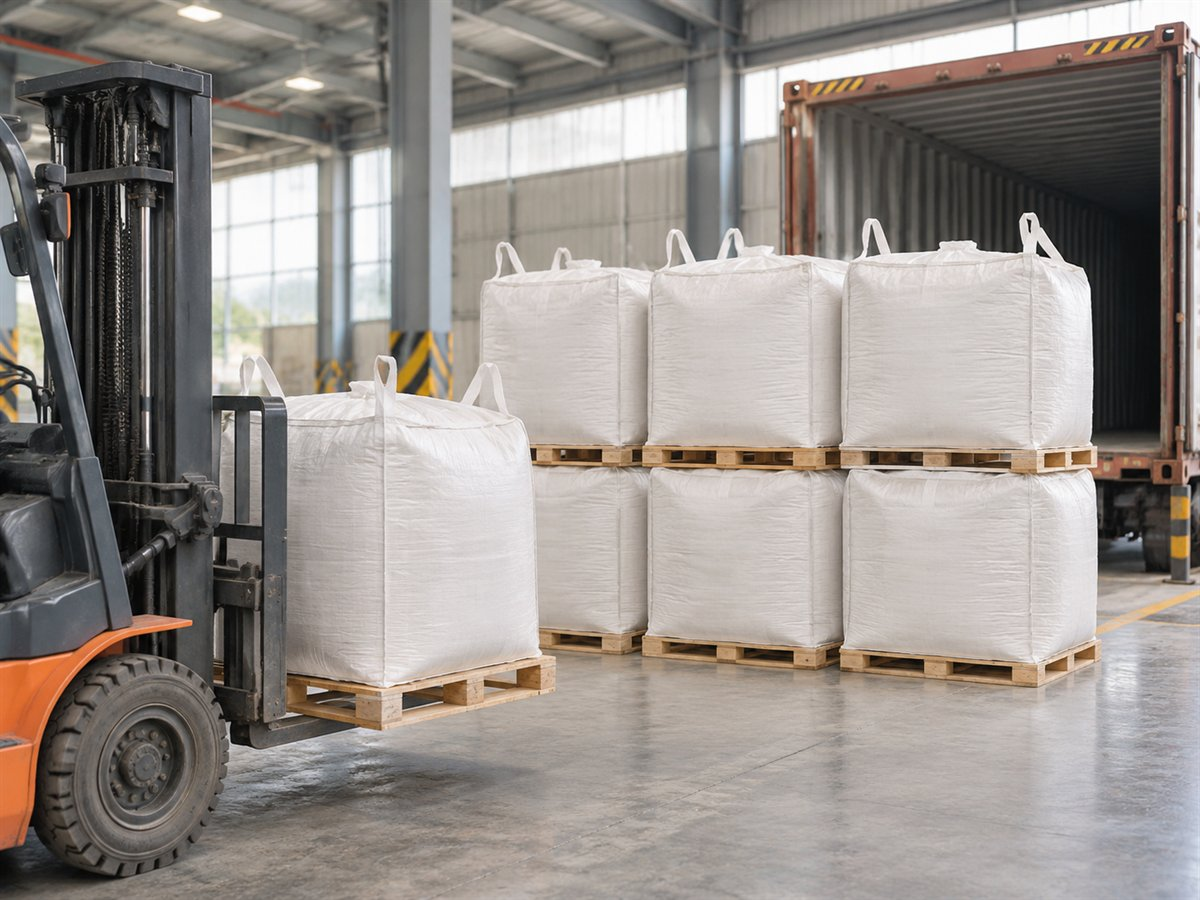
The practical point: baffles are a shape-control feature. They do not replace a stack test, a UN certificate, an anti-static design or a food-contact assessment.
The Trade-Offs Buyers Often Miss
The benefits of a baffle bag are visible after filling. The costs are often hidden inside the bag, the liner and the line. Five trade-offs deserve particular attention.
Usable volume and fill weight
Internal baffles take up space. For the same empty dimensions, a baffle bag usually has less usable volume than a standard bag. If the target fill weight is fixed, the baffle bag may need to be larger, taller or differently proportioned. If the empty size is fixed, the achievable fill weight may be lower. The quotation should state the target weight and the expected filled dimensions, not only the bag size.
Liner fit
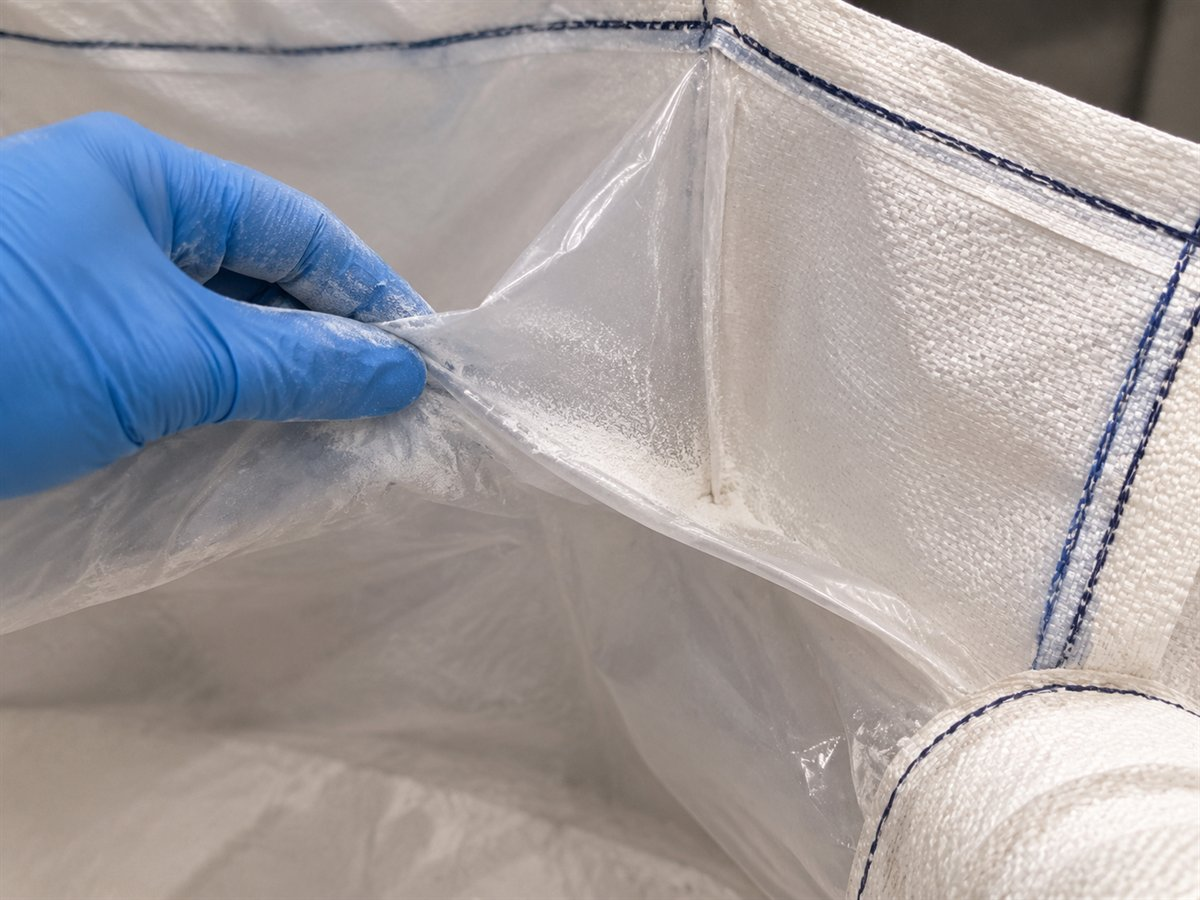
A standard lay-flat liner moves toward the path of least resistance as the bag fills. In a standard FIBC, that path is usually a relatively simple expansion. In a baffle bag, the liner meets internal edges, seams and re-entrant corners. It can gather in a corner, bridge across a baffle, be pinched between fabric layers or be pulled toward one side of the filling spout .
A form-fit liner may be needed to follow the baffle geometry, but form-fit is a manufacturing approach, not a guarantee. The liner can be a form-fit PE structure, an aluminum foil composite or another high-barrier design, depending on the protection target. The liner drawing, opening positions, fixing points and outer-bag drawing have to be reviewed as a matched set. The FIBC liner fit and interface guide sets out the measurements to agree before production, and the baffle bag liner system article explains why the liner path changes with the bag.
Filling interface
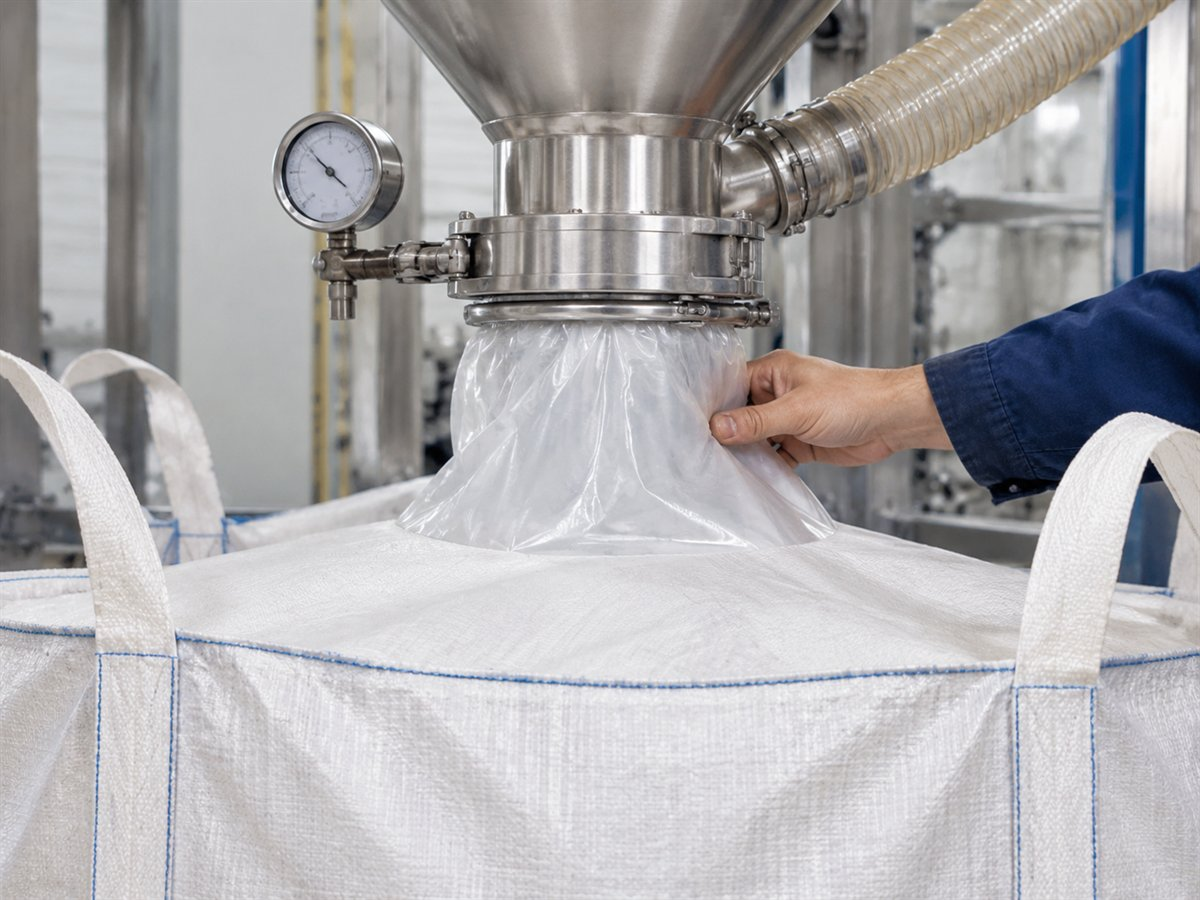
The top of a baffle bag can be less forgiving than the top of a standard bag. The baffle seams may pull the top panel, the liner neck may sit off-centre and the space available for the filling tube, clamp, pre-inflation and sealing may be tighter. On an automated line, small differences in bag presentation can become repeatable faults.
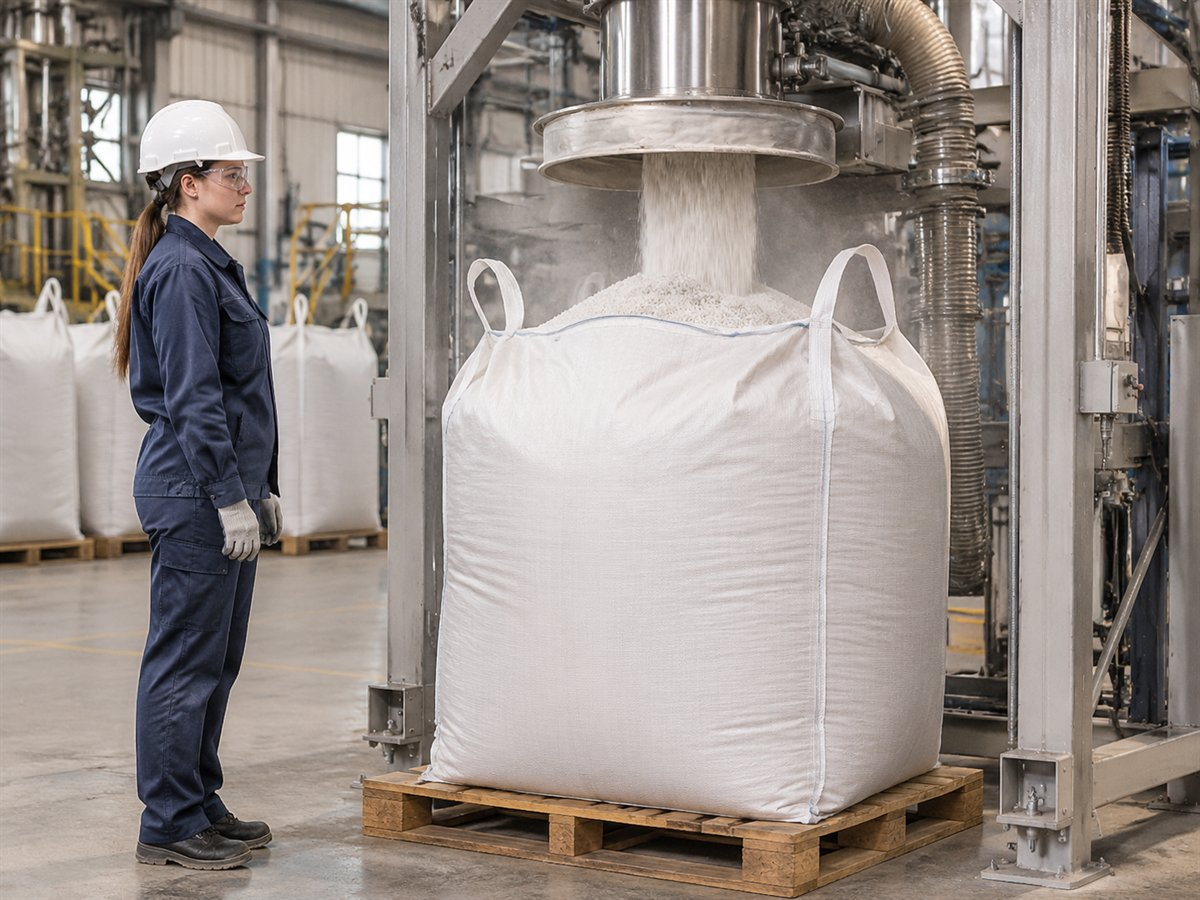
The filling head details matter: tube diameter, insertion depth, clamp or seal arrangement, pre-inflation timing, lifting-loop position and the length of the liner neck . A bag that stands square on the pallet can still be wrong at the filling head.
Discharge
The same internal geometry that keeps the bag square can affect discharge. Product can remain in the corners, the liner may collapse unevenly, and the outlet may need a different spout or bottom design. A flat bottom, a discharge spout and a conical bottom behave differently, and the receiving hopper and operator access are part of the same interface.
If the product is cohesive, hygroscopic or prone to bridging, the discharge question should be tested with the actual material. A baffle bag that looks clean after filling may still retain an unacceptable heel after discharge.
Cost, inspection and change control
A baffle bag usually contains more fabric, more seams and more attachments than a standard bag of similar size. That can mean a higher unit price, a longer production cycle and more inspection points. The total cost may still be lower if the bag improves container utilization or avoids a packaging failure, but that is a project-specific calculation.
Baffle attachment points are part of the shape-control system. Damage at a seam, tie or panel can change how the bag behaves under load. Inspection and repair criteria should come from the manufacturer and the site's safe operating procedure. FIBCA's safe handling guidance treats the bag and liner as a system to be inspected, not just the outer fabric .
Compliance is a separate layer. For non-dangerous goods, ISO 21898:2024 provides the general performance framework for FIBC design, testing and marking, but it does not certify stackability, liner barrier performance or fitness for a particular product . A UN mark, a Type C or Type D anti-static design and a food-contact declaration each rest on their own evidence and scope. A baffle is shape control, not a substitute for any of them.
Match the Bag to the Application
The following matrix is a screening tool. It shows where each design is a sensible starting point, and what has to be verified before the choice is fixed.
| Application pattern | Default starting point | What usually decides the choice | What to verify |
|---|---|---|---|
| Free-flowing minerals, sand, gravel, aggregates | Standard U-panel or four-panel | Filled shape is not a constraint; cost, discharge and robustness dominate | Safe working load, discharge opening, fabric and coating, handling method |
| Plastic resin pellets and granules | Standard or baffle | Stack height, pallet pattern and container cube | Filled footprint, stack plan, liner requirement, discharge |
| Fine chemical powders | Baffle with matched liner, or standard if cube is not constrained | Dusting, moisture, liner fit and residual product | Liner fixation, seam integrity, deaeration, discharge and cleaning |
| Food ingredients | Standard or baffle, with a matched liner | Pallet presentation, hygiene and liner fit | Food-contact documents, cleaning procedure, liner attachment, batch control |
| Fertilizer and agrochemicals | Standard or baffle | Moisture, caking, stack height and discharge | Coating or liner, chemical compatibility, storage condition, discharge |
| Battery and lithium powders | Standard or baffle, with a high-barrier liner | Moisture and oxygen protection, containment and static control | Barrier data, sealing, static/UN requirements where applicable |
| Ventilated produce and firewood | Standard ventilated FIBC | Airflow is the primary function | Vent area, airflow, produce condition, handling and storage |
| Dangerous goods | Standard or baffle as designed | UN mark and package testing, not bag shape | UN certification, packaging code, liner compatibility, applicable regulations |
The matrix does not override a trial. A bag that fits one row can still fail when the product, fill rate, equipment or climate changes.
Specify the Filled System, Not the Bag Label
The most useful purchasing change is to stop accepting a quotation that describes only the empty bag. Ask for a specification that describes the filled system.
| Information to provide | Why it changes the choice |
|---|---|
| Product name, bulk density, particle size and flow behaviour | Determines usable volume, deaeration, discharge and residual product |
| Target fill weight | The bag must be sized for weight, not only dimensions |
| Target filled length, width and height | Defines whether standard bulging is acceptable |
| Pallet pattern, stack height and storage duration | Defines whether a baffle bag is worth evaluating |
| Filling method and filling-head details | Spout, clamp, pre-inflation, liner neck and sealing space |
| Discharge method and receiving equipment | Spout, flat or conical bottom, liner collapse and operator access |
| Liner type, barrier target and fixing method | Standard lay-flat versus form-fit; seam and spout completion |
| Transport mode and container type | Door height, internal height and load pattern |
| Compliance requirements | UN, Type C/D, food contact and destination-specific rules |
| Trial acceptance criteria | What "pass" means before the first production order |
A photograph of the filling head and discharge station is often more useful than a catalogue number. A drawing of the current bag, with its revision number, is more useful than a description such as "same as last time." If the liner is part of the system, send the liner drawing as well.
Qualify the Design With a Trial That Measures the Filled Bag
The final check is not an empty-bag inspection. It is a trial of the complete system under conditions close enough to production to expose a mismatch.
Use the actual material, or a representative sample with the same flow behaviour. Use the intended bag and liner, the actual filling head, the target fill weight and the receiving equipment for discharge. Record the drawing revisions, material lot, equipment settings and the people who accepted the result.
The trial should answer questions that a catalogue cannot:
Does the bag fill to the target weight without excessive bulging, product backup or unstable handling?
What are the filled length, width and height, and how square is the footprint?
Is the top surface flat enough for the planned pallet pattern and stack?
Does the liner unfold into the baffle corners without gathering, pinching or pulling away from the spout?
Does the liner neck remain centred and accessible, and does the filling head clamp or seal reliably?
Can air escape at a rate that allows the target fill weight to be reached without excessive ballooning?
Does the bag discharge without bridging, and what residual heel remains?
Does the liner collapse in a controlled way, and do the fixing points hold?
After the planned storage or a representative transport simulation, are the seams, baffles, loops and liner still intact?

A trial that only confirms the bag looks square is not a qualification. The useful trial is designed to find the point where the filled geometry, liner path or filling interface stops working. If the bag, liner, spout, fixing method or equipment changes, the previous result may no longer describe the new system.
Conclusion
Standard versus baffle is not a premium decision. It is a geometry decision. A standard FIBC is usually the better default when the filled shape is not a constraint and the simplest reliable bag is the best commercial choice. A baffle FIBC is worth the extra complexity when the filled footprint, stack pattern, container cube or liner system changes the total handling result.
The useful question is not "Which bag is better?" It is "What does the filled bag have to do, and what does the rest of the system need it to be?" If the answer requires a stable footprint, a planned pallet pattern or a cleaner stack, evaluate a baffle bag with the liner and filling interface designed as one system. If the answer is reliable containment at the lowest complexity, start with a standard bag and verify the discharge and protection requirements.
To review a project, send FIBC World the product data, target fill weight, current bag and liner drawings, filling-head and discharge details, pallet and stack plan, transport mode, destination market and any current failure such as bulging, liner movement, unstable stacking or residual product. The first useful output should be a comparison of standard and baffle options with the liner and interface implications, not a generic quotation.
Explore the standard FIBC range and the baffled FIBC / Q-bag range, or review the form-fit liner range where a shaped liner is part of the application.
Related News
Other news you might be interested in
What Can You Customize in an FIBC Bag? A Complete Overview
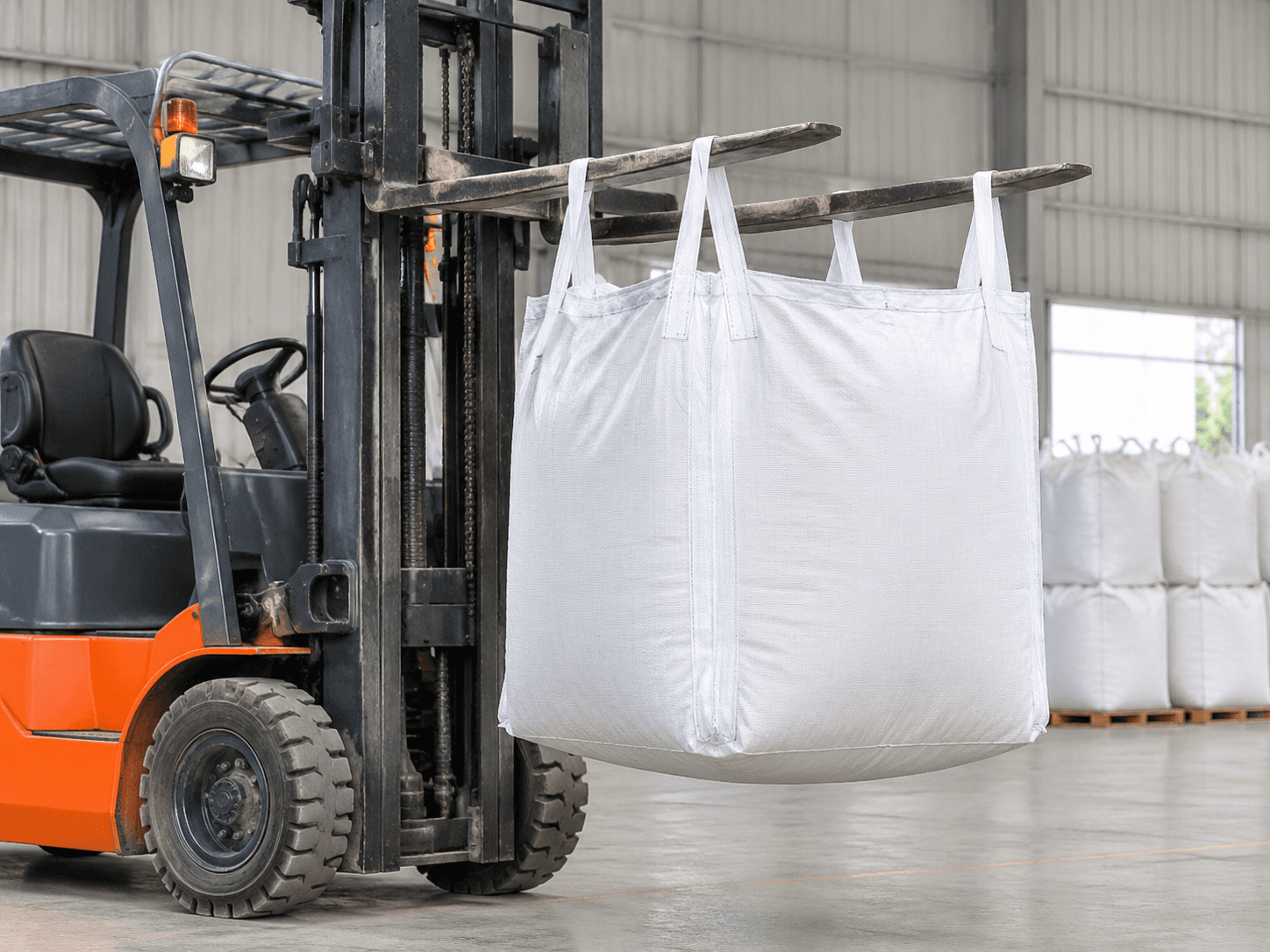
Two FIBCs can carry the same nominal load, use the same fabric weight and still behave differently at the filling line, in the warehouse and at the discharge station. One may fill cleanly and stack squarely. The other may bulge into the next pallet position, trap product in a corner or pull its liner away from the spout. The difference is rarely the headline specification. It is the combination of details that were specified, or left unspecified.

The Role of Circular Design in Modern Bulk Bag Manufacturing
A bulk bag is usually described by its headline numbers: safe working load, dimensions, liner type and lifting configuration. Those numbers matter, but they hide a more important fact. An FIBC is a system of materials joined together — woven PP fabric, coating, loops, sewing thread, spouts, liners, labels, inks and closures. The way those components are combined determines not only how the bag performs in service, but also how much material is wasted in production, whether the bag can be emptied and used again, and whether its materials can be separated and recycled.
Want to know more?
Get in touch with us for more information about our services and products.