
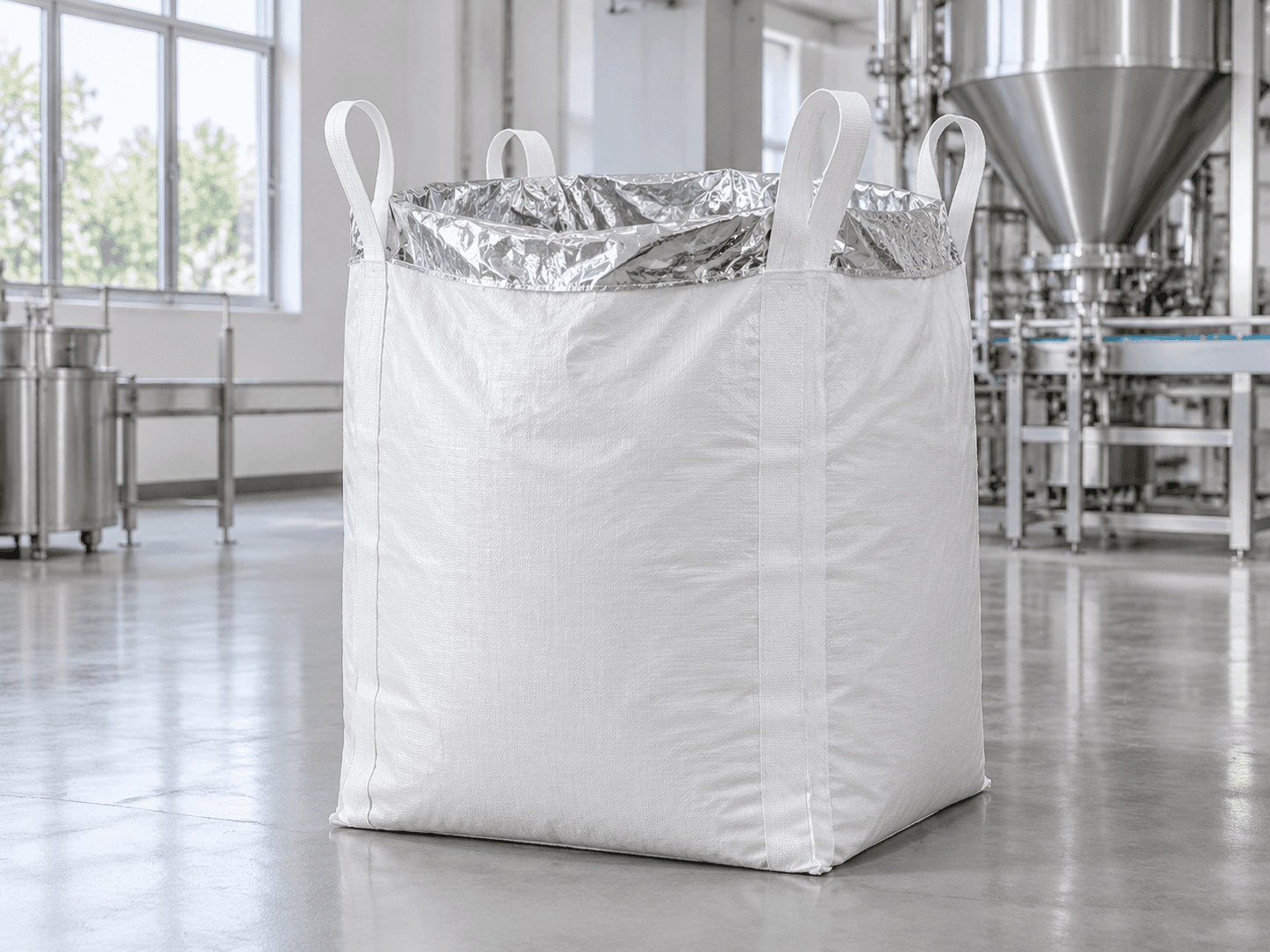
The Advantages of FIBC Aluminum Foil Liners

Dayang Yang
AuthorWith experience in FIBC bulk bag manufacturing and export sales, we operate our own production facility with stable large-scale capacity. We are specialists in bulk bags, conductive FIBCs, food-grade FIBCs, UN certified bags, and customized flexible intermediate bulk containers for industrial packaging and bulk material transportation solutions.
Bulk bags are often judged by their outer shell: the woven fabric, the lifting loops, the dimensions and the safe working load. For many dry materials, that is enough. But when a powder is hygroscopic, oxidation-sensitive, light-sensitive or simply high in value, the outer bag is only half of the packaging system. The liner is the part that touches the product, and it is often the part that determines whether the material arrives in the same condition in which it was filled.
Aluminum foil FIBC liners are not simply thicker PE bags. They are multi-layer barrier liners designed to reduce moisture vapor transmission, oxygen exposure and light ingress while providing a clean, contained contact layer inside a woven FIBC. Used well, they can support longer storage, ocean freight, repeated handling and more demanding quality specifications. Used without the right structure or sealing method, they can create new problems at the filling line or during discharge.
This article explains the practical advantages of aluminum foil FIBC liners, the applications where they make the biggest difference, how they compare with standard PE liners, and what buyers should verify before approving a specification.
What Is an FIBC Aluminum Foil Liner?
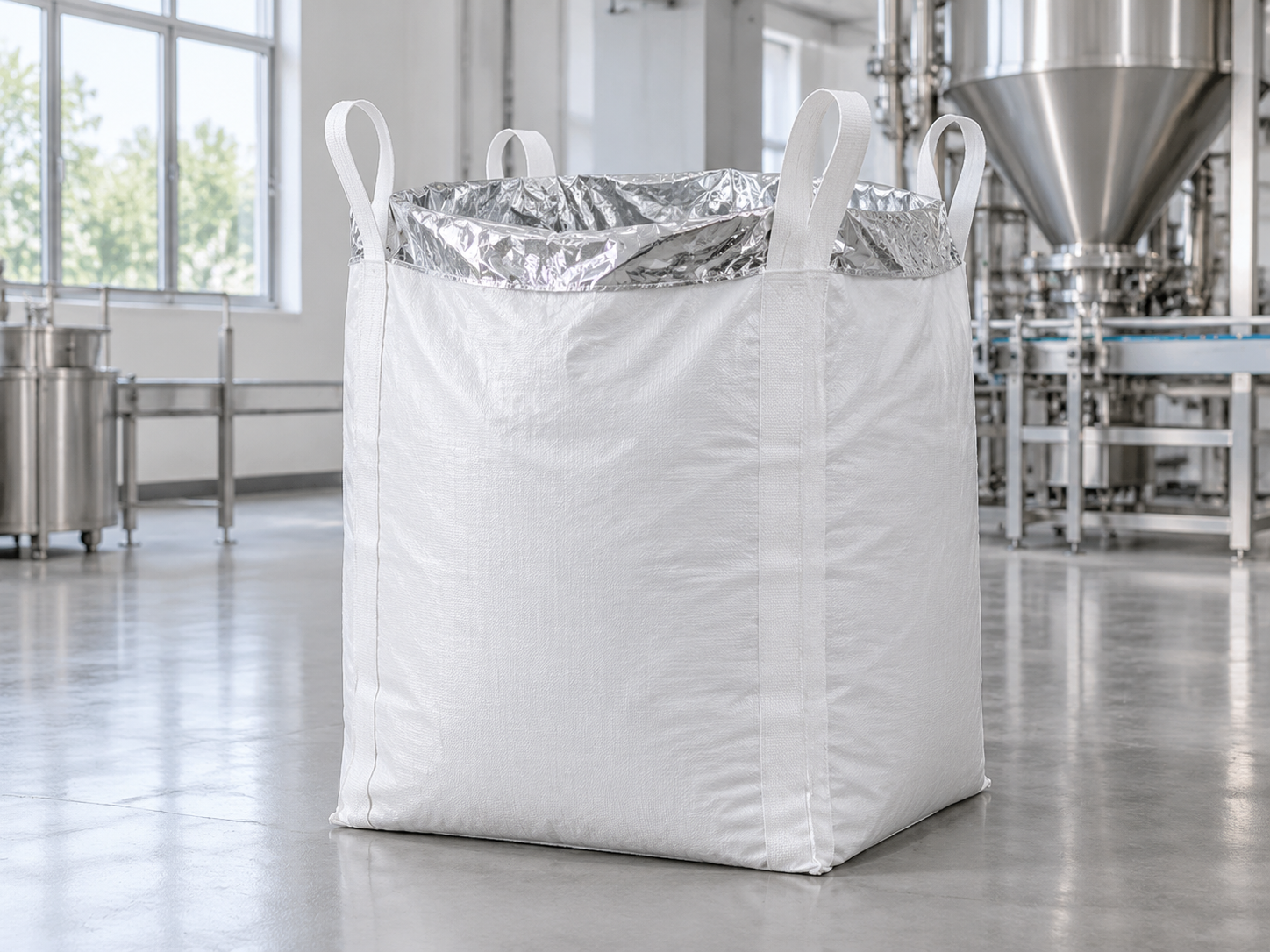
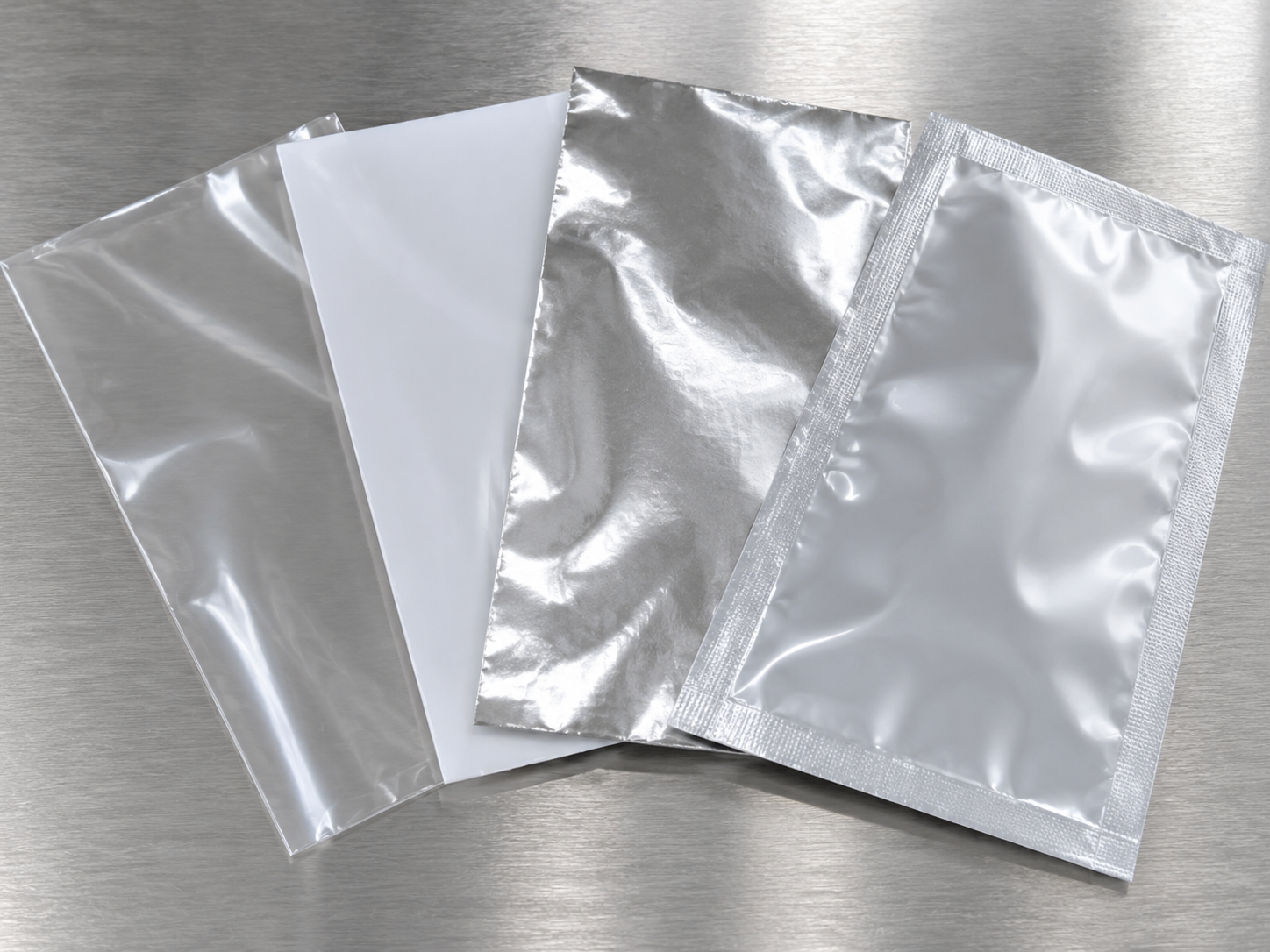
An FIBC aluminum foil liner is an inner liner made from a multi-layer laminated film that includes an aluminum foil layer. A common structure is PET / PA / AL / PE: polyester for strength and printability, polyamide for toughness, aluminum foil for barrier performance, and polyethylene for heat sealing and product contact. Other structures can be developed for specific projects, but the principle is the same: the foil layer is protected between polymer layers, and the complete laminate provides the barrier.
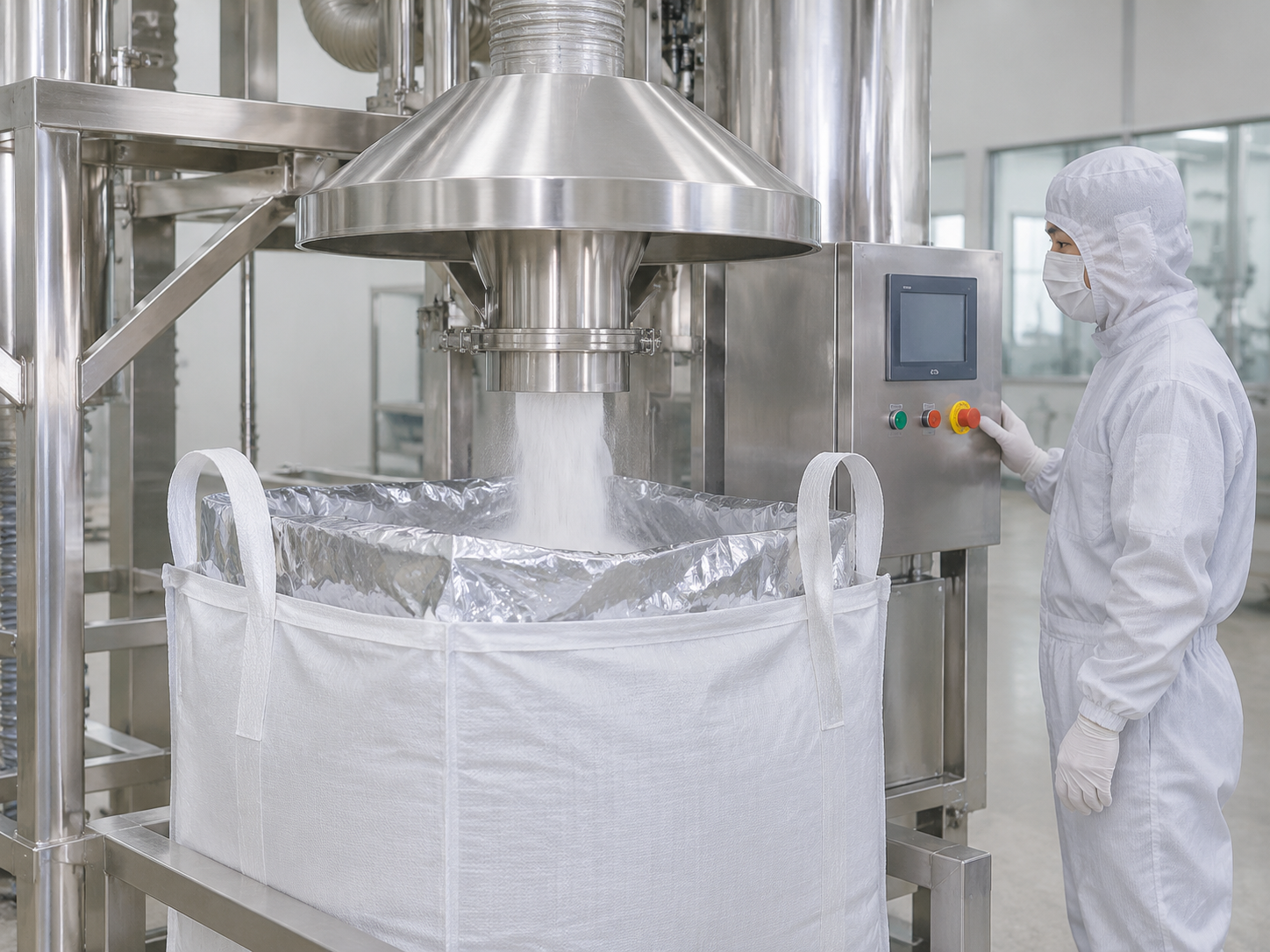
The liner is fitted inside a PP woven FIBC. The outer bag provides mechanical strength and handling performance; the liner provides the barrier and containment layer. The two parts should be specified together. A high-barrier liner in a poorly matched outer bag can still fold, move, trap material or fail at the spout.
On the FIBC World multi-layer aluminum foil liner page, the available specification includes:
Material structure: PET / PA / AL / PE multi-layer composite film.
Barrier function: moisture protection, oxygen reduction and light blocking.
Thickness: 90–180 micron, customizable by cargo requirement.
Shapes: lay-flat, form-fit, cubic and spout liner.
Top options: open top, filling spout, bottle-shaped inlet and customized inlet.
Bottom options: flat bottom, discharge spout, sealed bottom and customized outlet.
Processing: heat sealing, form-fit welding, tab fixing and customized cutting.
Custom options: size, thickness, film structure, spout size, anti-static layer and fixing method.
These options matter because “aluminum foil liner” is a family of structures, not one universal product. The right liner for a fine hygroscopic powder is not necessarily the right liner for nylon pellets, and a form-fit liner for a square Q-bag is not the same as a lay-flat liner for a standard FIBC.
The Main Advantages of Aluminum Foil FIBC Liners
1. Moisture protection that goes beyond a standard PE liner
Standard PE liners can provide basic moisture resistance and dust containment. They are a practical choice for many granules and low-sensitivity powders. But PE is not a high-barrier material, and a thin PE film may not provide enough protection for a hygroscopic powder that will spend weeks in a container, port warehouse or humid storage shed.
An aluminum foil composite liner adds a metallic barrier layer between polymer films. This helps reduce moisture vapor transmission and supports a more stable internal environment for materials that pick up moisture, cake, harden or change flow behavior. For a chemical additive, that may mean less caking and easier discharge. For a battery material, it may mean less risk of moisture-related quality loss. For a food ingredient, it may mean better protection of texture, flow and shelf life.
The advantage is real, but it should not be oversold. A foil liner is not a guarantee of zero moisture transmission. Performance depends on the complete laminate, the seam quality, the spout closure, the filling and handling process, and the storage conditions. Buyers who need a measurable moisture target should ask for WVTR data for the proposed structure and test conditions, not just a “high barrier” label. For a broader comparison of how moisture affects food, chemicals and battery materials, see why aluminum foil liners matter for moisture-sensitive bulk materials.
2. Reduced oxygen exposure
Oxygen can change the color, odor, taste or performance of sensitive materials. It can oxidize fine metal powders, degrade certain chemicals, and shorten the shelf life of food ingredients. Aluminum foil helps reduce oxygen ingress, especially when it is part of a properly sealed multi-layer structure.
This is particularly relevant for lithium battery materials, specialty chemicals and other high-value powders where oxidation is a quality issue rather than a cosmetic one. It is also relevant for food powders where aroma, color or shelf life is sensitive to oxygen.
The key word is “reduce,” not “eliminate.” Oxygen barrier depends on the full structure, the foil layer, the polymer layers, the seams and the closure. If oxygen is a critical specification, ask for OTR data and confirm whether the data refers to a flat film sample or a finished liner. A flat film result does not automatically describe the performance of a sewn or sealed bag with spouts.
3. Light blocking for light-sensitive materials
Aluminum foil is opaque. It blocks visible light and helps reduce UV exposure, which can be important for materials that degrade, discolor or change performance when exposed to light. This is one reason aluminum foil liners are often used for battery powders, specialty chemicals and certain food or agricultural ingredients.
Light blocking is a genuine advantage, but it is not a substitute for moisture or oxygen protection. A liner can block light and still allow moisture vapor through if the structure or seals are inadequate. The best specification considers all three risks together: moisture, oxygen and light.
4. Cleaner containment of fine powders
Fine powders are difficult to contain. They can escape through seams, spouts and folds, and they can leave residue inside the outer bag after discharge. A properly fitted aluminum foil liner creates a continuous contact layer that helps contain the product and reduce contamination risk.
This advantage depends heavily on fit. A loose liner can fold during filling, trap powder in creases, move toward the spout or block the discharge opening. A form-fit or cubic liner can follow the internal shape of the bag more closely, reducing folds and improving discharge. The liner should be designed with the bag, not selected as an afterthought.
For fine powders, the spout and seam design are as important as the film. A high-barrier film with a poor spout seal can still leak. Buyers should confirm the liner-to-spout connection, the sealing method and the discharge path during a trial with representative material.
5. Mechanical protection for the barrier layer
A thin barrier film alone can be fragile. The multi-layer construction of an aluminum foil liner helps protect the foil layer and adds polymer material around it to resist routine puncture, abrasion and flexing. This matters during filling, handling, transport and discharge, when the liner may be pressed against the bag body, spouts or equipment.
However, “puncture-resistant” does not mean “puncture-proof.” Sharp particles, rough handling, overpressure and poor liner fit can still damage the film. The liner should be matched to the particle shape and handling conditions, and the trial should include the actual material rather than a generic powder.
6. Better support for long-distance export and storage
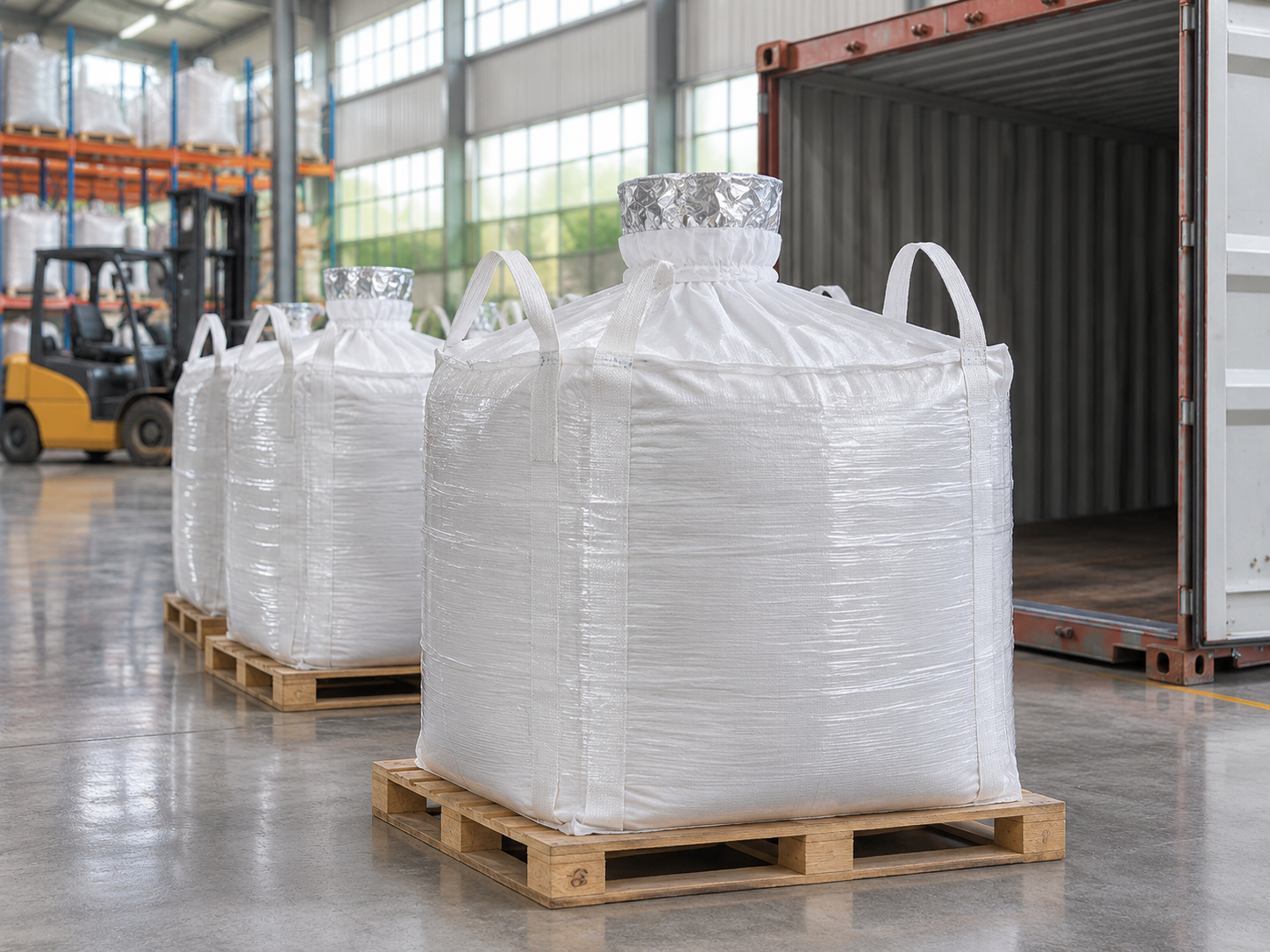
An export shipment may involve filling, palletizing, container loading, ocean transit, port storage, customs inspection, trucking and warehouse storage. Each step exposes the package to humidity, temperature changes and handling. For a moisture-sensitive or oxygen-sensitive material, the liner is part of the quality-control system across that journey.
Aluminum foil liners help reduce moisture and oxygen exposure during long transit and storage, and the multi-layer structure adds a degree of mechanical protection. When combined with a properly designed outer FIBC, sealed spouts and suitable handling, the liner can support a more stable packaging condition from filling to discharge.
This is why the advantage should be evaluated as a total packaging cost, not only a liner price. If a lower-cost liner leads to caking, rejects, rework or a failed customer batch, the saving is not real. Conversely, an aluminum foil liner may be unnecessary for a low-sensitivity material with a short, dry supply chain.
7. Customization to the bag and the filling line
The most practical advantage of an aluminum foil liner is that it can be designed around the bag and the process. The liner can be made in different shapes, with different top and bottom openings, spout sizes, sealing methods and fixing tabs. It can be configured for standard FIBCs, Q-bags, spout-top bags, flat-bottom bags and discharge-spout bags.
This matters because the liner interface is where many projects fail. A liner that does not match the filling spout can leak or slow the fill. A liner that is not fixed securely can move during filling. A liner that does not match the discharge outlet can trap material or block flow. A form-fit liner can reduce folds in a square bag, while a lay-flat liner may be sufficient for a simple standard bag.
The available customization includes size, thickness, film structure, spout size, anti-static layer and fixing method. For projects that use vacuum or nitrogen flushing, the liner can be designed for the corresponding packaging system, subject to equipment compatibility and a trial. The important point is that the liner should be specified as part of the filling and discharge system, not as a standalone film.
Where Aluminum Foil Liners Are Used
Battery and new-energy materials
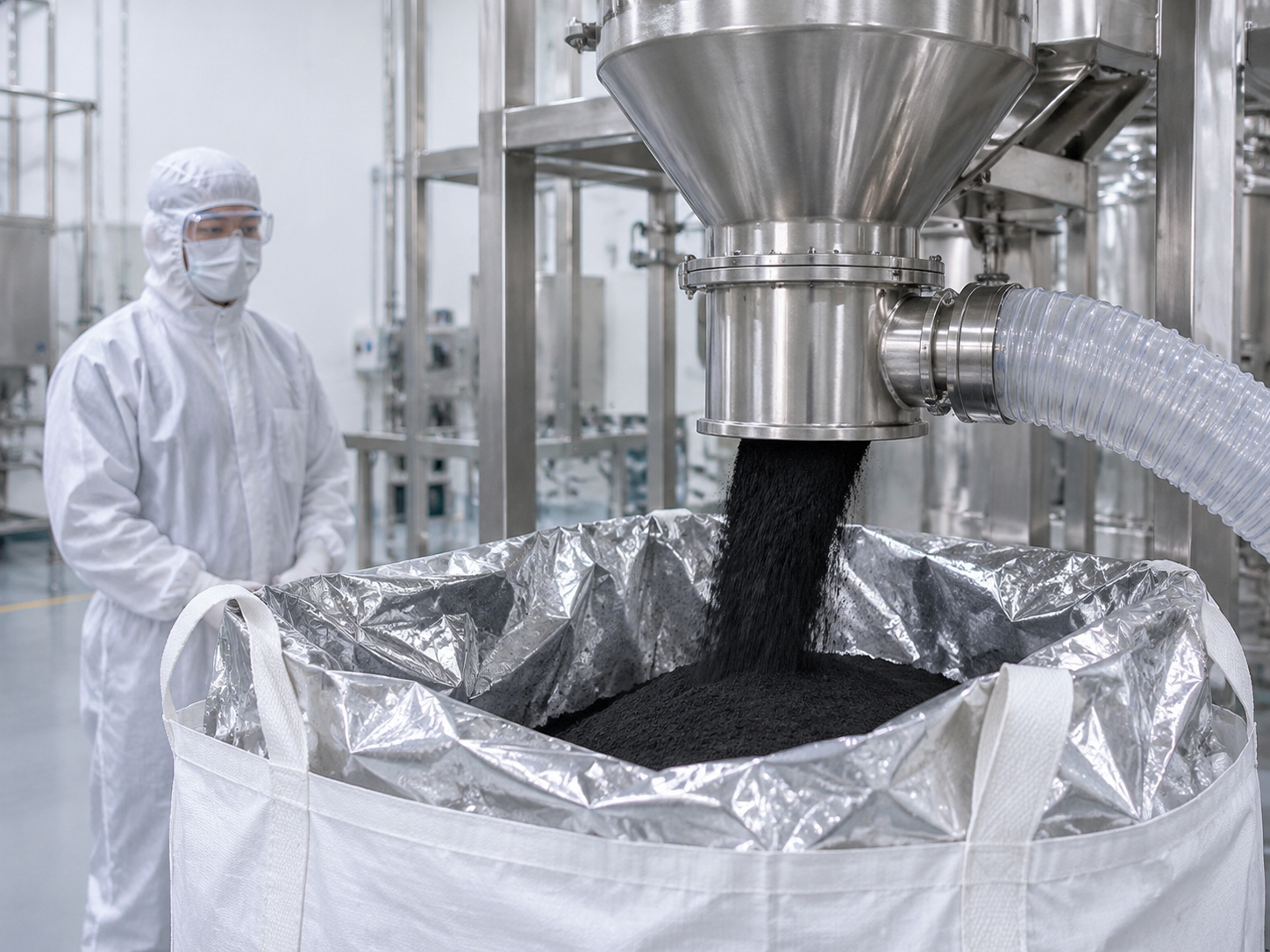
Aluminum foil liners are an option for lithium battery powders, cathode materials, anode materials and other new-energy powders that need protection from moisture, oxygen and light. These materials often have a high unit value and a low tolerance for quality changes. A 1–2 ton battery powder FIBC with an aluminum foil liner combines a PP woven outer bag with a barrier inner liner for this type of bulk packaging.
For this application, the liner structure, spout design and sealing method should be matched to the powder characteristics and the filling equipment. The outer bag also matters: a stable bag body and a well-supported discharge outlet help the liner perform as intended. FIBC World also lists aluminum-lined jumbo bags for new-energy and lithium battery materials among its application-specific options.
Hygroscopic chemical powders and additives
Many chemical powders absorb moisture from the air. When they do, they can cake, harden, change flow rate or lose reactivity. Flame retardants, additives, specialty chemicals and other high-value raw materials are common examples. Aluminum foil liners help reduce moisture pickup and provide a cleaner contact layer, which can support more consistent discharge and fewer rejects.
For these materials, buyers should confirm chemical compatibility with the liner structure, not only the barrier performance. A liner that performs well with one powder may not be suitable for an aggressive or corrosive chemical. The product page lists chemicals and flame retardants as applications, but the final structure still needs project review.
Nylon, engineering plastics and resin pellets
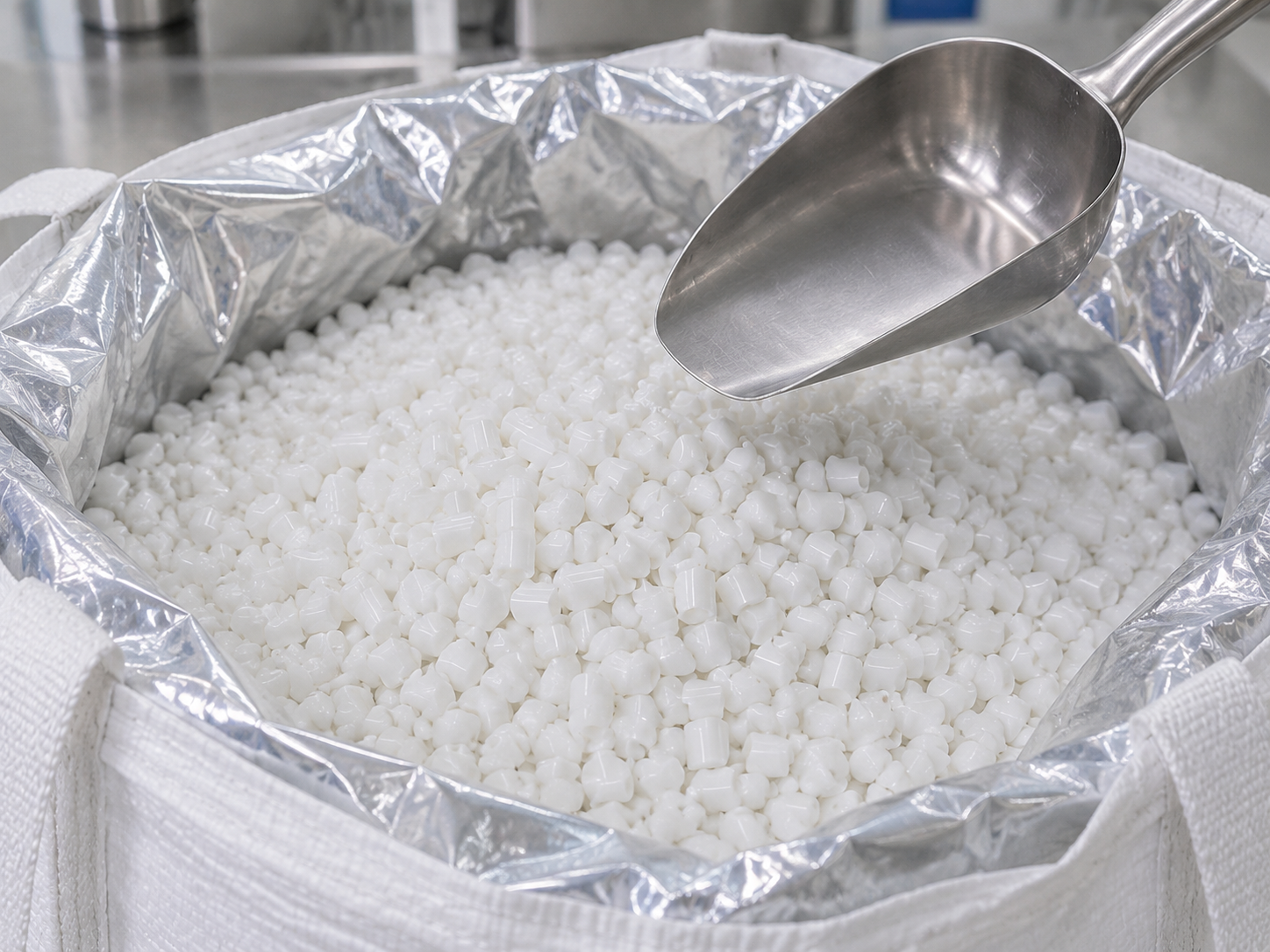
Nylon granules, engineering plastic pellets and resin particles are less dusty than fine powders, but they still need clean packaging and protection during long-distance shipment. Moisture can affect processing behavior, and contamination can create defects in the finished part. An aluminum foil liner can provide a clean, protected inner layer and help reduce moisture exposure during storage and transport.
For pellets, the liner fit and discharge design may be more important than the highest possible barrier. A liner that blocks the discharge or retains pellets in folds can slow the line. The specification should match the pellet size, bulk density and unloading method.
Food and ingredient powders — with food-contact review
Some food powders and ingredients can benefit from moisture, oxygen and light protection. However, food contact is a separate requirement from barrier performance. A liner used for food must be assessed for the specific contact layer, adhesives, printing, seams and cleaning conditions, and it must meet the applicable market requirements.
Do not assume that an aluminum foil liner is automatically food-contact compliant because it is used for food powders. If food contact is part of the project, confirm the full structure and documentation with the supplier and the quality team before approving production.
High-value export bulk materials
For high-value materials that move through multiple hands and spend weeks in transit, the cost of a failed batch can be much higher than the cost of the liner. Aluminum foil liners are a practical option when the material is sensitive to moisture, oxygen or light, or when the buyer needs a cleaner and more controlled inner environment.
The advantage is not only the foil layer. It is the combination of barrier, mechanical protection, fit and sealing. That combination is what makes the liner useful in real export packaging, not just in a material data sheet.
Aluminum Foil vs Standard PE Liner
| Selection point | Aluminum foil FIBC liner | Standard PE liner |
|---|---|---|
| Moisture protection | Higher barrier for sensitive materials | Basic moisture resistance |
| Oxygen exposure | Helps reduce oxygen ingress | Limited oxygen barrier |
| Light blocking | Opaque foil layer helps block light | Usually translucent |
| Fine powder containment | Good when seams, spouts and fit are correct | Suitable for many general powders |
| Puncture and abrasion | Multi-layer structure adds protection | Thin film can be more vulnerable |
| Fit options | Lay-flat, form-fit, cubic and spout designs | Often lay-flat; fewer barrier options |
| Best use | High-value, long-storage, moisture/oxygen/light-sensitive materials | General granules and low-sensitivity powders |
| Cost position | Higher protection for higher-value cargo | Economical option for general packaging |
This table is a starting point, not a specification. Not all PE liners are the same, and not all aluminum foil liners are the same. A thick PE liner may be adequate for one powder, while a poorly sealed foil liner may underperform in another. Compare the complete structure, the barrier data and the finished-liner trial. For a more detailed buyer’s checklist, see PE vs aluminum foil FIBC liners for moisture-sensitive powders.
How to Choose the Right Aluminum Foil Liner
Start with the material and the failure mode, not the material name.
Define the risk. Is the main problem moisture, oxygen, light, odor, contamination or fine-powder leakage? More than one risk may apply.
Describe the material. Include the product name, particle size, bulk density, flow behavior, moisture sensitivity, oxygen sensitivity and any chemical compatibility issues.
Confirm the outer bag. Provide the FIBC size, bag type, body construction and whether it is a standard bag, Q-bag, spout-top bag, flat-bottom bag or discharge-spout bag.
Define filling. Confirm manual or automatic filling, filling spout dimensions, clamp or sealing method and target fill weight.
Define discharge. Confirm flat bottom, discharge spout, conical outlet or full discharge, and the receiving equipment.
Define storage and transport. Include storage time, humidity, temperature, container transit and any intermediate warehouse.
Set a barrier target if needed. Ask for WVTR or OTR data, including the test method, conditions and whether the data refers to flat film or a finished liner.
Confirm sealing. Specify heat sealing, spout closure, vacuum or nitrogen flushing, and the equipment that will make the seal.
Confirm fixing. Decide whether the liner will be loose, tabbed, glued or otherwise fixed, and how it will be positioned during filling.
Check separate requirements. Food contact, anti-static performance, UN certification and recyclability are separate from barrier performance and must be confirmed separately.
What to Verify Before Approving a Sample
A sample is not just a piece of film. It should represent the complete liner system: the laminate, the seams, the spouts, the fixing points and the closure.
Before approving production, verify:
The complete laminate structure and thickness, not only the foil layer.
Barrier data for the proposed structure, with test method and conditions.
Seal strength and sealing window for the actual equipment.
Spout dimensions and fit with the filling head or clamp.
Liner movement, folding and powder retention during filling.
Discharge behavior and residual material after emptying.
Puncture, flex and handling performance with the real material.
Batch consistency and change-control procedures.
Food-contact, anti-static, UN or other regulatory evidence where applicable.
Run the trial with representative material and representative equipment. A successful empty-bag fit does not prove that the liner will fill, seal and discharge well. Record the approved structure, drawing, sealing parameters and sample identity so that repeat orders can be compared. For the supporting questions on barrier data, sealing and sample approval, see how to evaluate aluminum foil FIBC liners. If liner fit or spout alignment is the main concern, use the FIBC liner fit and interface guide.
Limitations and Responsible Claims
Aluminum foil liners offer real advantages, but they are not a universal solution. The following limits should be stated clearly in any quotation or product discussion:
Not a zero-transmission barrier. Foil laminates reduce moisture, oxygen and light exposure; they do not guarantee absolute impermeability.
Performance depends on the complete system. Seams, spouts, seals, fit and handling can matter as much as the film structure.
Foil can be damaged. Flexing, sharp particles and rough handling can create pinholes or cracks; the multi-layer structure helps, but it is not indestructible.
Food contact is separate. A barrier liner is not automatically food-contact compliant. Confirm the full structure and documentation.
Anti-static performance is separate. An anti-static layer option does not automatically make the bag Type C or Type D; classification and testing must be confirmed.
UN certification is separate. Aluminum foil barrier performance does not replace UN testing or certification for dangerous goods.
Recyclability depends on the structure. A foil composite may not fit a PP recycling stream. Ask for a material breakdown and confirm the end-of-life route before making a recyclability claim.
These limits do not reduce the value of aluminum foil liners. They make the specification more reliable. A buyer who understands the limits can choose the right structure and avoid overpaying for protection that is not needed, or under-specifying a material that is genuinely sensitive.
Conclusion
The advantages of FIBC aluminum foil liners come from combining several functions in one liner system: moisture protection, reduced oxygen exposure, light blocking, cleaner containment, mechanical protection and customization to the bag and filling line. For battery materials, hygroscopic chemicals, nylon and engineering plastics, food ingredients and other high-value export powders, that combination can support better product stability and fewer quality surprises.
The advantage is not automatic. It depends on the full laminate, the seams, the spouts, the closure, the fit and the trial. The most useful next step is to define the material, the bag, the filling and discharge method, the storage conditions and the barrier target, then ask for a structure recommendation and a sample that represents the complete liner.
To discuss an aluminum foil liner for your FIBC project, send the material name, outer bag size, fill weight, top and bottom opening requirements, storage conditions and any vacuum, nitrogen, food-contact or anti-static requirements. A practical liner specification starts with the product and the process, not with a generic “high barrier” claim.
Related News
Other news you might be interested in
What Is a Super Sack? FIBC vs Bulk Bag vs Jumbo Bag Explained
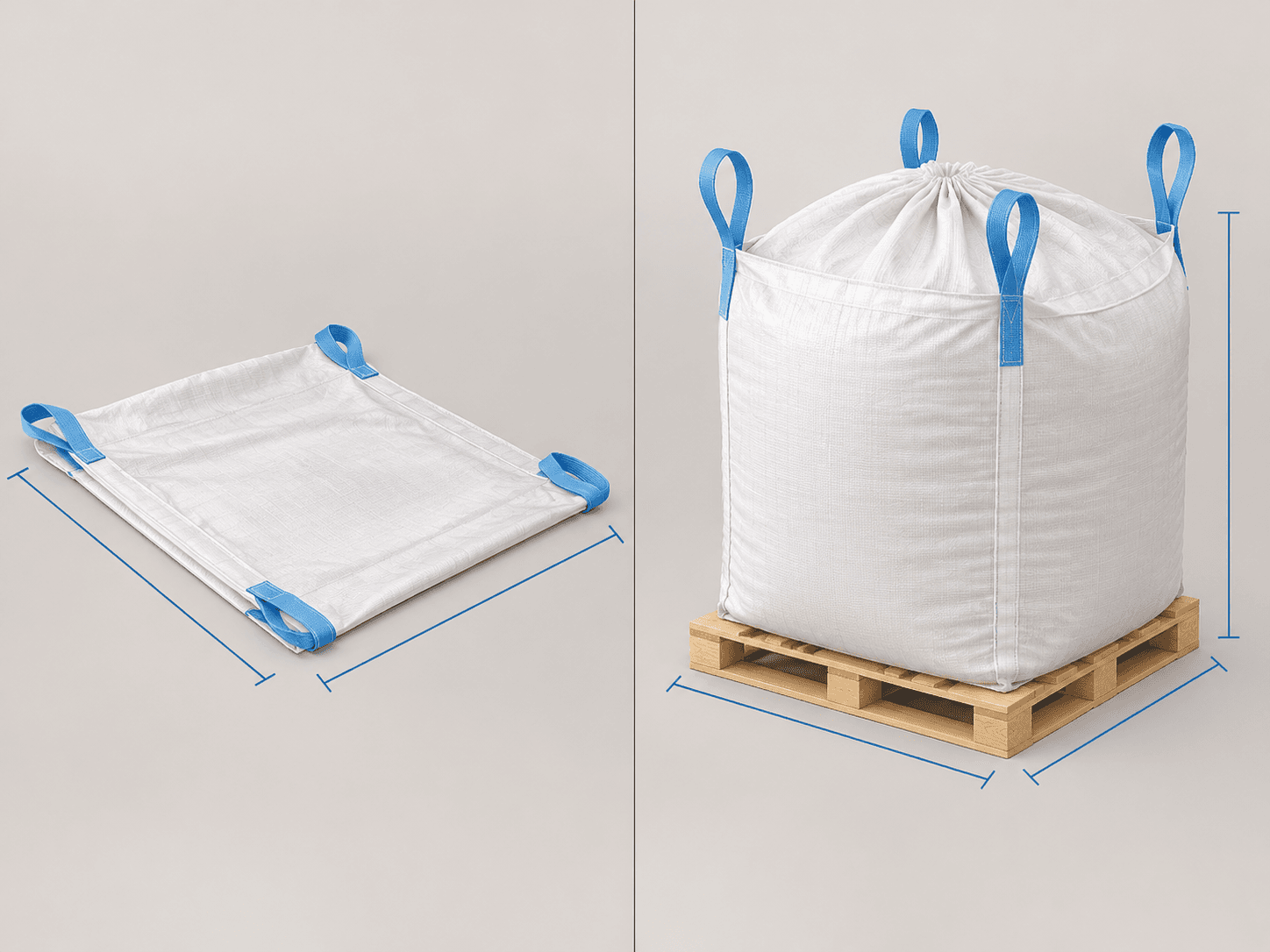
A buyer searches for a “super sack.” The supplier replies with an FIBC quotation. The drawing is titled “jumbo bag.” The warehouse calls it a bulk bag. Four names, one object—usually.The words are not identical in status. FIBC is the technical term used by standards and industry guidance. Bulk bag, big bag, tote and jumbo bag are trade terms. Super Sack® is a registered trademark, not a generic name for every large woven bag.That distinction matters when a purchase order, a drawing or a customs document uses one term while the supplier uses another. The label helps you find the product family. It does not tell you the safe working load, the filled dimensions, the liner, the lifting arrangement or the compliance route. Those have to be specified.
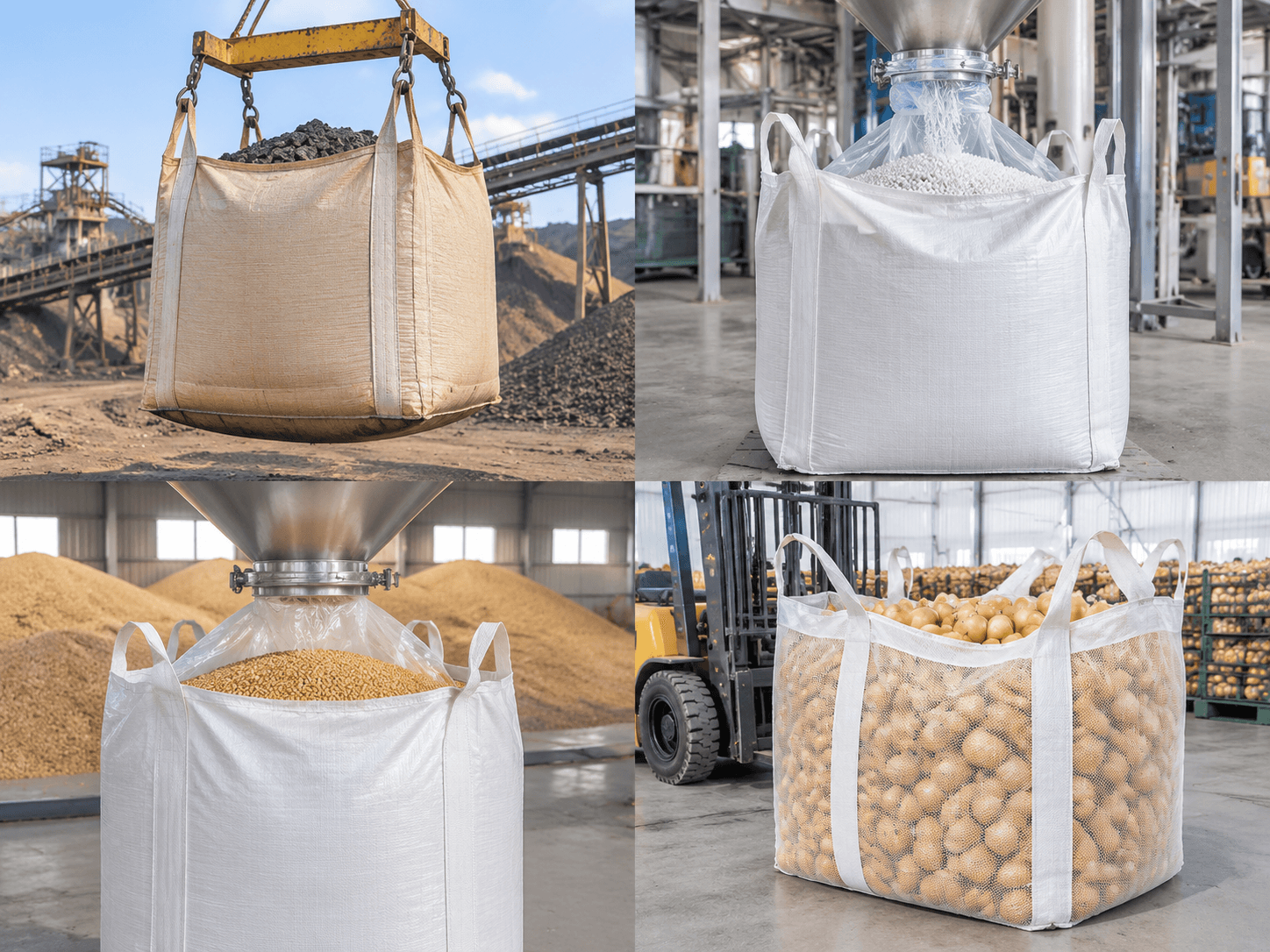
Bulk Bags by Application: Minerals, Fertilizer, Grain and Produce
A mineral concentrate, a fertilizer blend, a load of wheat and a load of onions can all be packed in a bulk bag. They should not all be specified the same way.On a quotation, each may appear as a one-tonne FIBC with a top opening and a discharge spout. In service, the loads behave differently. A dense mineral concentrate can reach its target mass at a low fill level and concentrate stress in the base and seams. A hygroscopic fertilizer can pick up moisture, cake and block the outlet. Grain can arrive dry but become unacceptable if condensation, pests or contamination are not controlled. Fresh produce can lose quality through heat, condensation and handling damage even when the bag itself remains intact.
Want to know more?
Get in touch with us for more information about our services and products.