
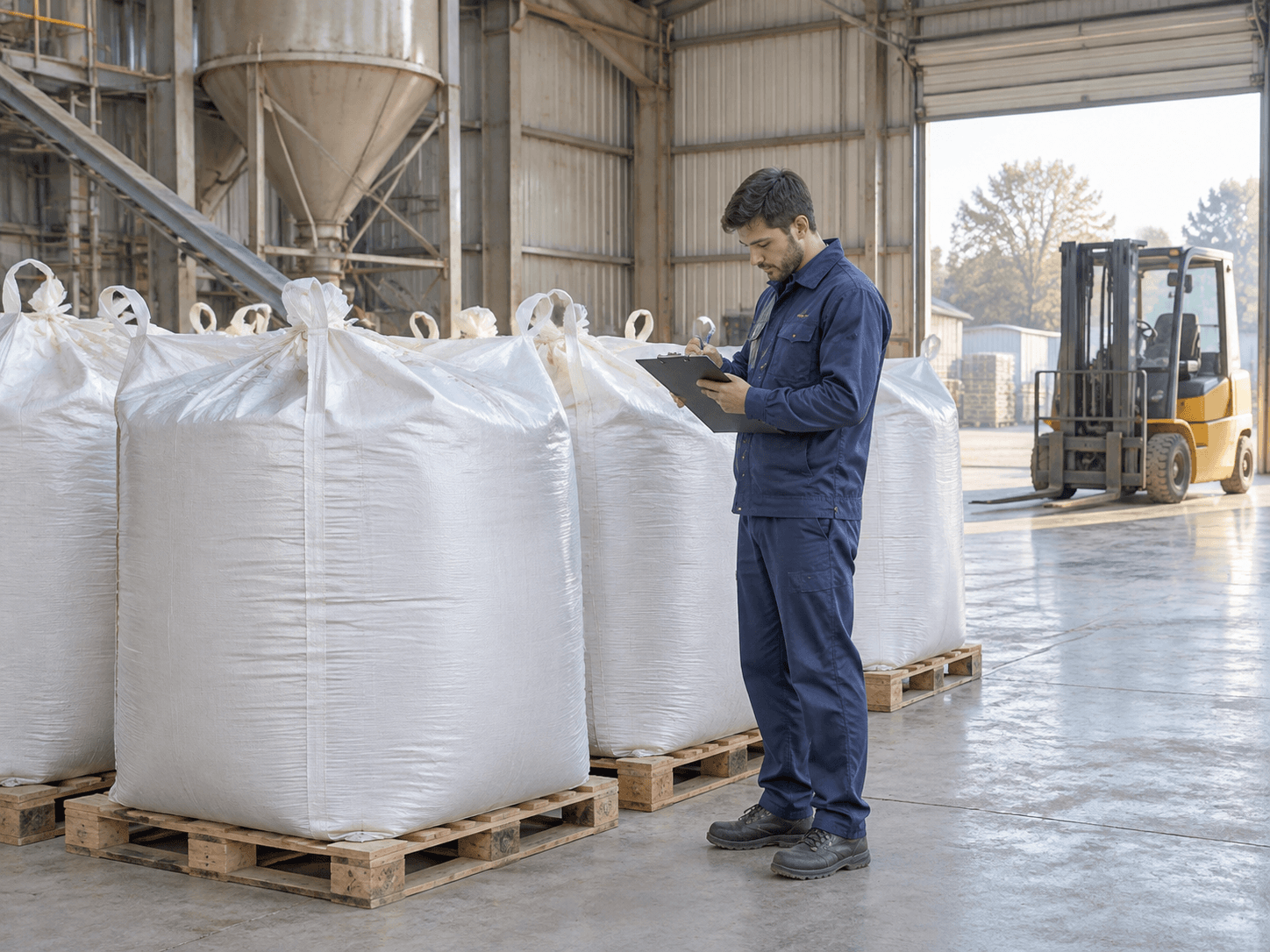
Affordable FIBC Solutions for Small Businesses

Dayang Yang
AuthorWith experience in FIBC bulk bag manufacturing and export sales, we operate our own production facility with stable large-scale capacity. We are specialists in bulk bags, conductive FIBCs, food-grade FIBCs, UN certified bags, and customized flexible intermediate bulk containers for industrial packaging and bulk material transportation solutions.
A small business can need bulk bags for reasons that have nothing to do with its size. A family farm may pack a few hundred ventilated bags during harvest. A feed mill may use one pallet of standard bags a month. A food-ingredient repacker may need a moisture barrier for a sensitive powder but cannot justify a full container of custom-printed bags. A landscaping supplier may ship aggregates in the same bag size all year. In each case, the search for an affordable FIBC runs into the same obstacles: minimum order quantities, custom setup costs, freight charges and quotations that are difficult to compare.
The good news is that FIBCs are not inherently a large-company product. The most affordable solution is usually not the lowest price per bag. It is the least complex bag and liner system that safely fits the product, the filling and discharge equipment, the storage plan and the delivery route. That is a different target, and it is a more useful one for a business that cannot absorb a failed load.
This guide is written for farms, food processors, feed mills, small chemical and fertilizer blenders, building-material suppliers, recyclers, landscapers and regional distributors. The terms FIBC, bulk bag, jumbo bag and ton bag are used interchangeably here. "Small business" is used in the practical sense—an operation without a dedicated packaging engineering team—not as a legal size classification.
For a small business, the fastest route to a comparable quote is usually to ask for a proven standard size, choose an unprinted bag or a simple label, check whether a local distributor has stock for a trial quantity, and price the liner only after the protection requirement is defined.
Why Affordable Is Not the Same as Cheapest
Price per bag is easy to compare and easy to misread. A quote for a lighter bag, a thinner liner or a simpler closure can look attractive until the bag reaches the filling line. If the liner pulls away from the spout, the seams sift powder, the loops do not fit the forklift, or the filled bag bulges into the next pallet position, the saving is consumed by product loss, cleanup, rework, a rejected load or a replacement shipment. For a small business, one failed order can cost more than the difference between two quotes.
A more useful measure is the cost per filled ton of product delivered safely. One ton means 1,000 kg in this calculation:
Cost per filled ton = (bag price + liner + printing + packing + freight + insurance + duty + port charges + handling + expected failure cost) ÷ net tons per bag
This is not an accounting standard. It is a comparison tool. All items in the numerator should be allocated to one bag, and any item already included in the quoted bag price should not be added a second time. Compare quotes at the same quantity and delivery basis. For example, a bag quoted at USD 3.00 with the liner included is not more expensive than a bag quoted at USD 2.80 plus a USD 0.40 liner; the comparable costs are USD 3.00 and USD 3.20. The numbers are illustrative; the point is to compare the same scope.
The formula forces every quote onto the same basis and makes the cost of a wrong specification visible. A bag that costs a little more but fills, lifts, stores and discharges without a problem can be the cheaper choice. A bag that costs less but creates a stoppage is not affordable, even if the invoice looks good.
That distinction matters more for small businesses than for large ones. A large plant may have a packaging engineer, a buffer stock and a quality team that can absorb a bad batch. A small operation often has one person managing purchasing, production and shipping. The bag has to work the first time.
Start with the Job, Not the Price per Bag
Before asking for a price, write a one-page description of the job. The answers determine which bag, liner, opening, loop and documentation are needed. They also tell a supplier whether a standard product can be quoted or a custom design is genuinely necessary.
| Question | What to record | Why it changes the quote |
|---|---|---|
| What is the product? | Material name and grade, bulk density, particle size, moisture content, temperature and any hazard information | Sets the required volume, fabric, liner, discharge behavior and documentation |
| How much goes in each bag? | Net product weight per bag, normal and maximum | Determines the design load and the required SWL, not just the nominal bag size |
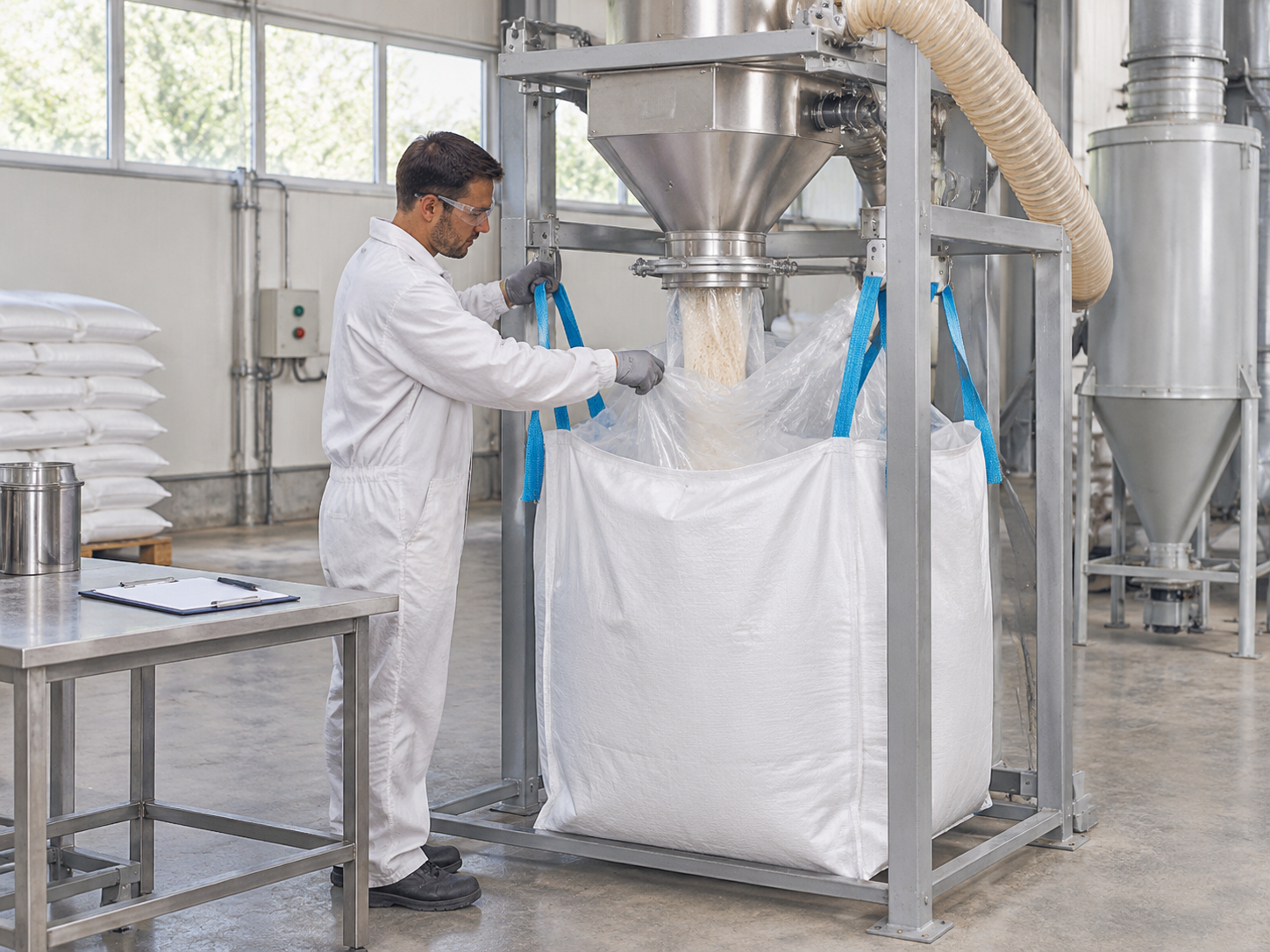
| How is the bag filled? | Open top, duffle top or filling spout; equipment, connection dimensions, fill rate and dust control | Determines the top design, spout size and liner neck |
| How is the bag discharged? | Flat bottom, discharge spout, conical bottom or full-open outlet; receiving hopper, conveyor or discharge aid | Determines the bottom design and how much product remains in the bag |
| How is the bag lifted? | Forklift, crane, hoist or spreader; attachment dimensions; preferred loop arrangement | Determines loop type, loop count, reinforcement and the safe handling procedure |
| How is it stored and shipped? | Indoor or outdoor storage, stack height, humidity, UV exposure, truck or container | Determines coating, UV stabilization, stacking guidance and packing method |
| What compliance applies? | Food contact, dangerous goods, anti-static protection, destination-market requirements | Determines which design and documents are acceptable |
If you do not know an answer, write "unknown" and ask. A supplier who quotes without asking is guessing. A buyer who orders without answering is also guessing. The goal is not to fill every field with a perfect number. It is to identify the few constraints that actually change the design.
For example, a dry aggregate that will be stored indoors and lifted by forklift may be a straightforward standard bag. A hygroscopic food powder that will spend six weeks in a container may need a liner, a sealed spout and a moisture target agreed in writing. Both are valid FIBC applications, but they are not the same purchase.
The Three Affordable FIBC Tiers
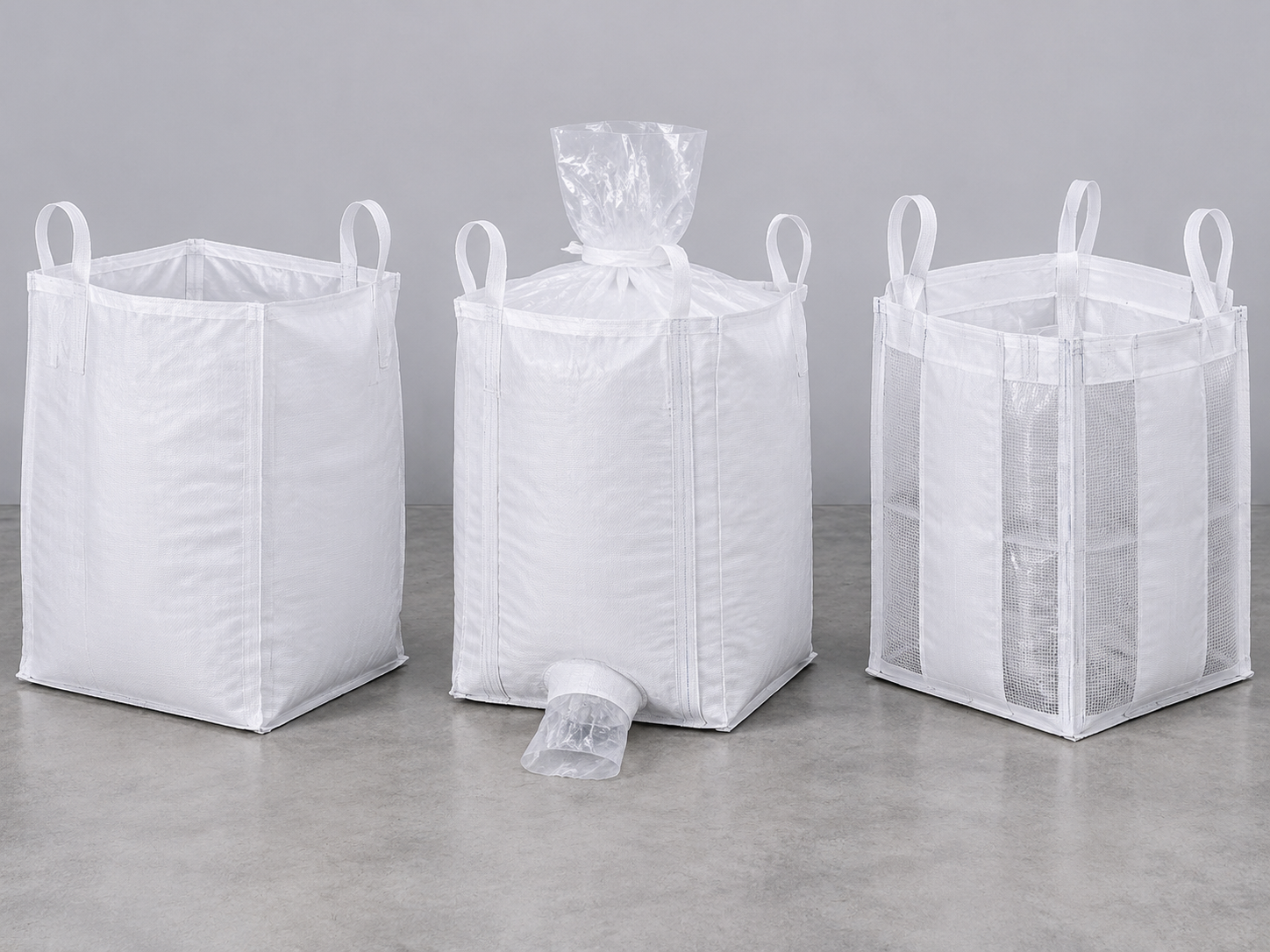
Most small-business requirements fall into three broad tiers. The tiers describe specification complexity, not brand or quality. A Lean bag can be perfectly suitable. A Specialized bag can be a waste of money if the constraint it solves does not exist.
| Tier | Typical specification | Best fit | Typical budget position | What to watch |
|---|---|---|---|---|
| Lean standard | Standard PP woven FIBC in a proven footprint; open or duffle top; flat or simple spout bottom; four lifting loops; uncoated or basic coated fabric; no liner or a standard PE liner; one-color print or a label | Sand, gravel, aggregates, resin pellets, feed, non-sensitive dry goods and short indoor storage | Lower | SWL and seam quality; dust; UV if stored outdoors; do not add a liner without a reason |
| Protected standard | Standard FIBC plus a PE liner or coated fabric; spout top and discharge spout where the equipment allows; simple print | Food ingredients, fertilizer, fine powders, humid routes and products that need basic moisture or dust protection | Moderate | Liner fit and closure; food-contact declaration; moisture target; discharge trial |
| Specialized | Baffle or Q-bag; ventilated body; form-fit liner; aluminum foil or high-barrier liner; UN or Type C/D design; multi-color print | Tight pallet or stack plans, produce or firewood, high-value moisture-, oxygen- or light-sensitive powders, and regulated dangerous goods | Higher | Design-specific evidence; bag-and-liner compatibility; sample trial; never add a feature without a defined problem |
The budget column is a planning guide for the same order quantity and delivery basis, not a price ranking. A ventilated standard bag may cost less than a heavily lined standard bag. The tiers are a way to discuss which features are justified, not a fixed product hierarchy.
Start at the lowest tier that meets the job. Move up only when a specific constraint—not a preference—requires it.
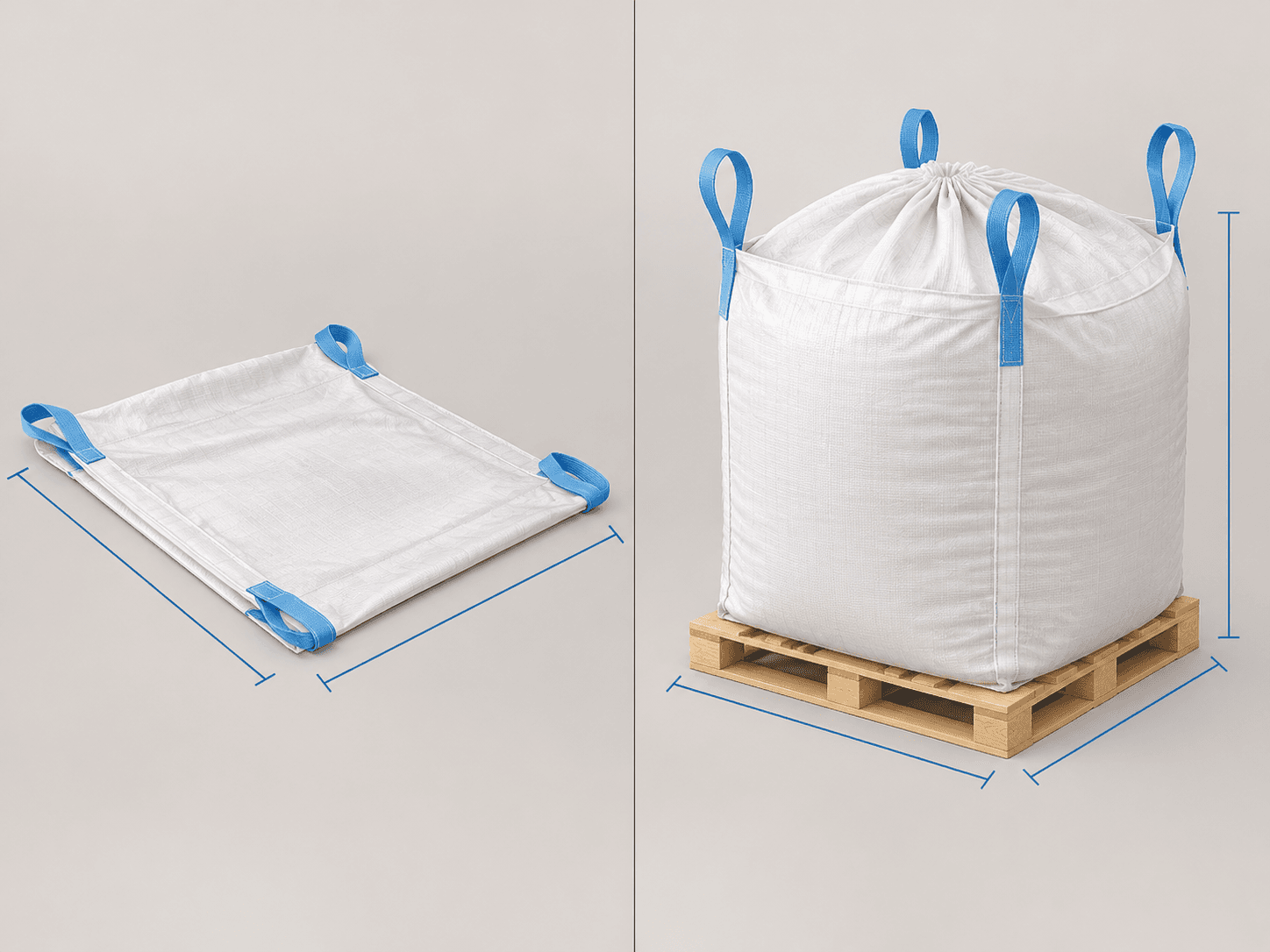
A baffle bag, for example, earns its cost when the filled footprint must fit a pallet grid, a stack plan or a container loading pattern. It is not automatically a better bag for a farm that stores bags single-high. A foil liner earns its cost when moisture, oxygen or light can damage the product. It is not a default upgrade for dry gravel. A ventilated bag is the right choice when airflow is part of the storage requirement, not when a standard bag would keep the product cleaner and drier. The guide to standard versus baffle FIBC bags explains how the filled shape changes the decision. The liner fit guide covers the measurements to agree before a liner is quoted.
Where the Money Goes
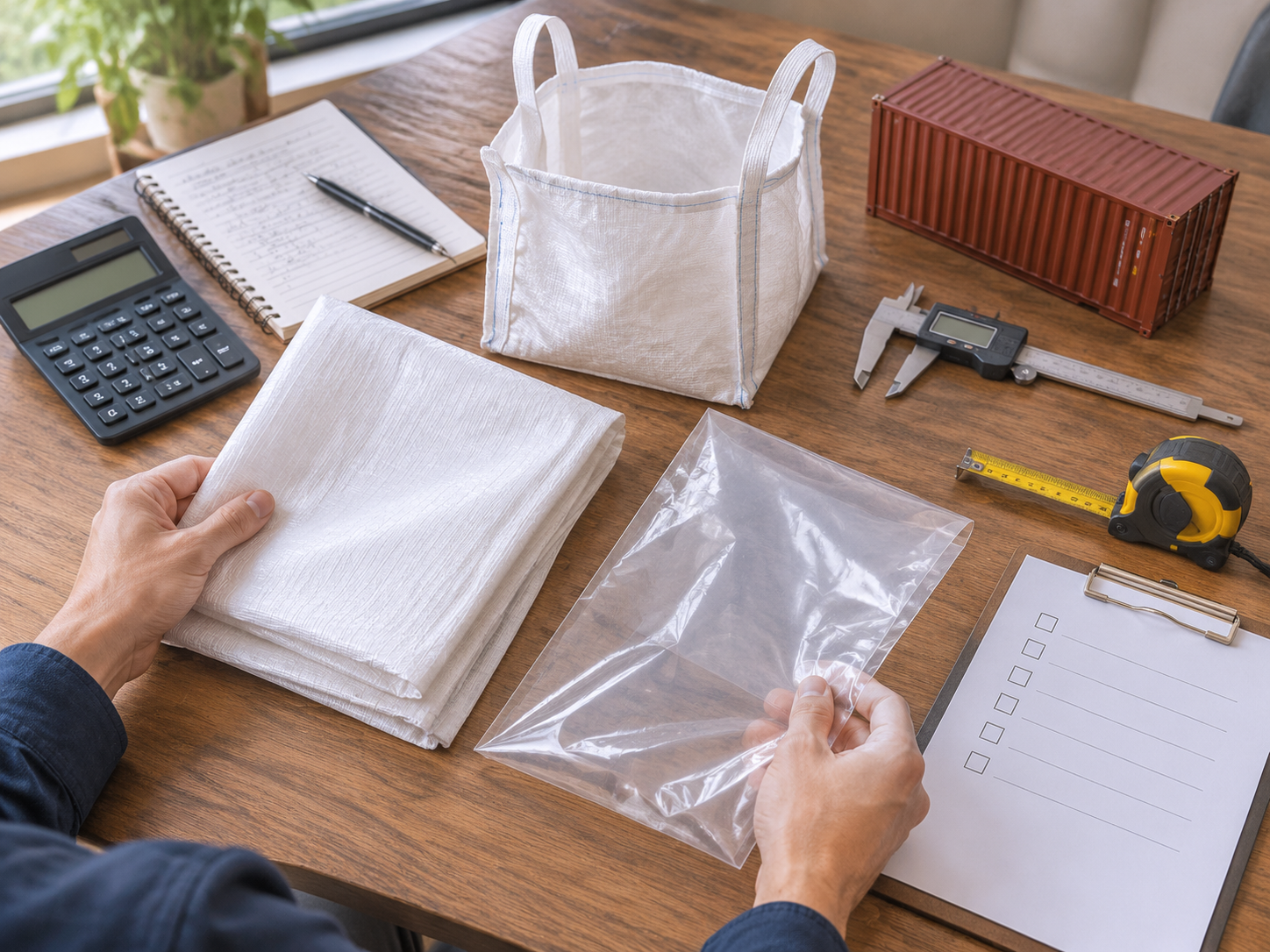
FIBC quotations move for predictable reasons. If you know which levers you are pulling, you can decide which ones are worth paying for.
| Cost driver | What changes | How to control it | Do not cut |
|---|---|---|---|
| Size and dimensions | Fabric consumption, packing volume, pallet fit and container utilization | Use a proven standard footprint if it fits; go custom only for a real constraint | Fill weight, SWL, filled height and stability |
| Fabric and construction | Fabric weight, weave, coating, seam pattern and UV stabilization | Match the fabric to the load, abrasion, sifting and exposure | SWL and seam integrity |
| Bag style | Baffles add fabric, seams and internal attachments | Standard construction unless the filled shape is a constraint | Shape control where the stack or container requires it |
| Liner | Material, thickness, barrier layer, form-fit geometry and attachment method | Choose the simplest liner that meets the barrier or contamination requirement | Food-contact evidence, barrier data and liner fit |
| Filling and discharge | Special spouts, conical or full-open bottoms, closures and dust-control features | Standard interfaces if the equipment allows | Safe filling, dust control and complete discharge |
| Lifting | Loop type and count, cross-corner construction, reinforcement and sleeves | Match the existing forklift, crane or hoist; use standard four-loop construction if it fits | Loop rating and the requirement to use all designed lifting points |
| Printing | Number of colors, print area, artwork complexity and label content | One-color print or a label for small orders; keep variable data on the label | Required markings, lot information and legibility |
| Order and packing | MOQ, setup, bales, cartons, pallets and units per container | Consolidate demand, standardize sizes and ask for efficient packing | Protection of liners, spouts and print during shipment |
| Compliance and testing | UN design, food-contact declaration, anti-static design, test reports and batch records | Confirm what actually applies, then budget for it | Never skip or substitute a generic certificate |
| Freight and terms | FOB, CIF or DDP; LCL or FCL; duty, port charges and inland delivery | Compare the landed cost at your door | Delivery risk, insurance and import responsibility |
The cheapest quote is often the one with the most assumptions left out. A supplier that does not state the fabric, liner, packing method, Incoterms and quotation validity is not offering a comparable price. It is offering a number that may change later.
Seven Ways to Lower Cost Without Lowering Safety
Start from a proven platform
Ask for a standard size and construction that is already in production. Custom dimensions, a new baffle pattern or a new liner shape add drawing, sampling and setup work. Customization is justified when a standard bag fails a real constraint—pallet footprint, filling-head height, container door height or discharge performance. It is not justified by the idea that a custom bag must be better. The FIBC applications guide explains how product and handling conditions point to different bag designs before you ask for a custom quote.
Match the SWL to the real fill weight
State the net product weight per bag and the handling method. A bag described as a "1-ton bag" is not a specification. The safe working load (SWL), safety factor and design must be confirmed for the actual bag. Over-specifying a heavier bag than the job needs adds cost. Under-specifying is a safety issue, not a saving. The right answer is the least expensive design that safely covers the actual load and handling conditions, supported by the correct marking and documents.
Buy only the barrier you can justify
Dry, robust materials may need no liner at all. A standard PE liner can provide basic moisture and dust protection. A coated bag can reduce sifting. A form-fit liner may be needed in a baffle bag. An aluminum foil or high-barrier liner is for products where moisture, oxygen or light can change the material. Each step adds cost, weight and handling complexity. Define the risk first, then ask for the simplest structure that addresses it. The guide to PE versus aluminum foil liners compares the practical trade-offs.
Keep the filling and discharge interface simple—but compatible
An open top, duffle top, flat bottom or simple discharge spout is usually less expensive than a special spout, conical bottom or full-open outlet. The saving is real only if the simple interface works with your filling head, dust controls and receiving equipment. A cheap bag that slows the line or leaves product in the corner is not cheap. Share photographs and dimensions of the actual equipment, not a description from a catalog.
Simplify printing and labeling
More colors, larger print areas and complex artwork usually add approval, plate or setup work, and inspection time. For a small order, a one-color logo or a printed label may be the practical choice. Required markings, lot information, handling symbols and warnings still have to be legible and durable. Put variable data on a label if that reduces print complexity, and confirm the label material and placement with the supplier.
Buy in the most efficient quantity and packing—without overstocking
Ask for the MOQ for the exact specification, not the generic product family. Standard sizes, unprinted bags and a combined order can reduce the number of setups and improve freight efficiency. Baled or compressed packing can improve container utilization, but it must protect liners, spouts and print. A larger order can lower the unit price while increasing cash, storage and obsolescence risk. Compare the unit-price saving with the cost of carrying the stock and the risk of UV or handling damage.
Compare landed cost, not just the bag price
Ask for the same Incoterms, the same packing and the same quantity from each supplier. Include freight, insurance, duty, port charges, inland delivery and any inspection cost. A local distributor may be cheaper for a small, urgent order. A direct factory order may win at a higher volume. Both can be valid. The mistake is comparing a local stock price with an FOB price and treating them as the same offer. The FIBC landed-cost guide sets out a full comparison method.
Where Small Businesses Should Never Cut Corners
Some costs are not optional. They are the difference between a bag that is affordable and a bag that is a liability.
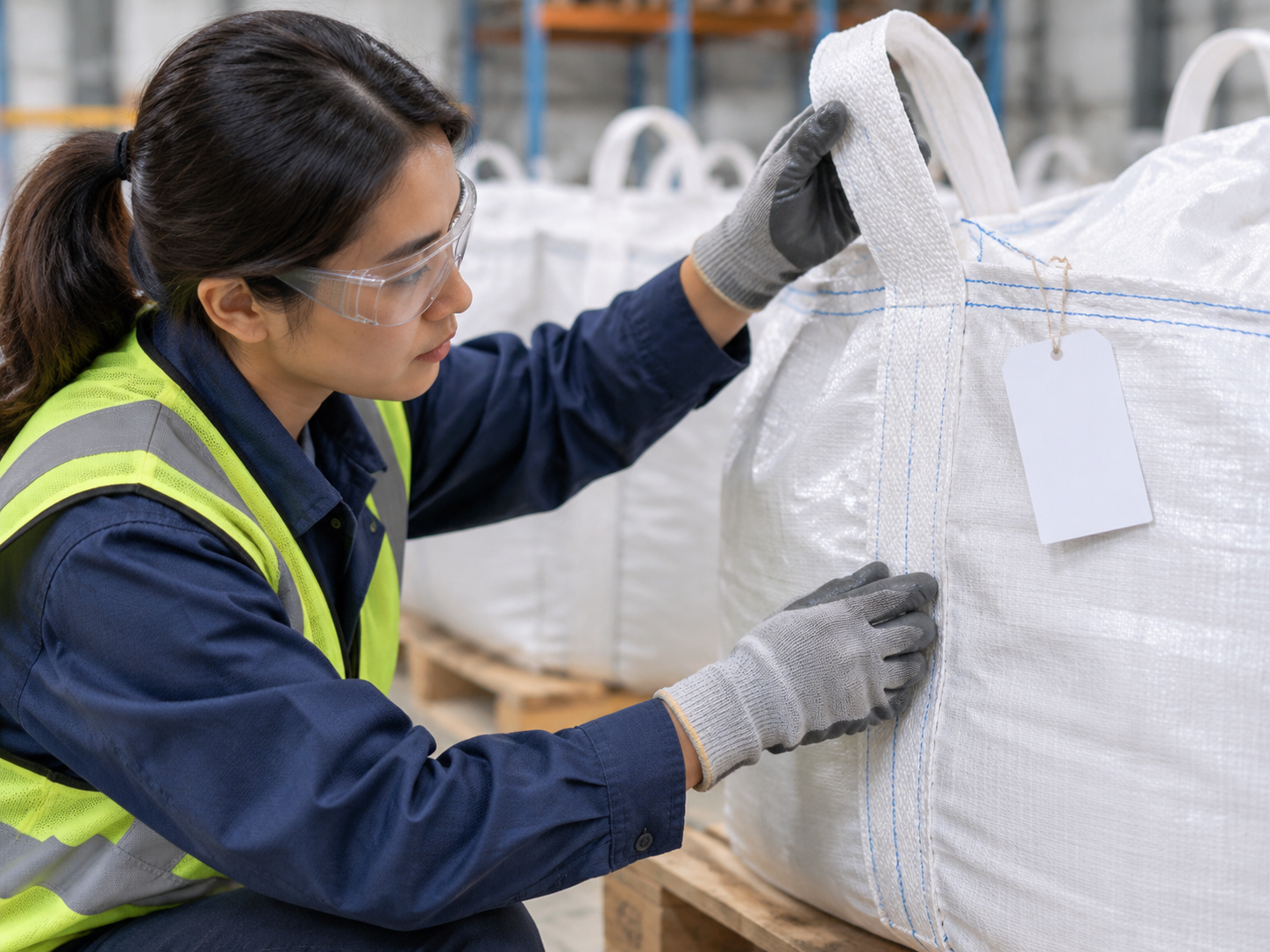
SWL and safety factor. Use the stated SWL for the actual design. Do not exceed it, and do not treat a nominal "1-ton" description as a rating. The bag label, drawing and supplier documentation should agree.
Lifting loops and seams. Use all designed lifting points. Do not lift by fewer loops, gather loops onto one hook or use a forklift in a way the design does not allow unless the manufacturer has confirmed it. Inspect loops, seams and fabric before use.
Design verification. ISO 21898:2024 provides a framework for the design, testing and marking of FIBCs for non-dangerous goods. It is not a product certificate in itself. Ask for the test report and marking that apply to the exact design, not a generic brochure.
Compliance that applies to your product. UN marks, Type C or Type D anti-static designs and food-contact declarations are separate requirements. Each is tied to a specific design, liner and closure. Type C requires a reliable grounding path before and during filling and discharge. Type D is designed so that the bag itself does not require grounding, but water, oil, grease or other conductive contamination can make it unsuitable. A generic certificate or a "food-grade" statement is not enough. If you export dangerous goods or food, confirm the scope with the supplier and, where needed, a qualified adviser.
Liner fit and closure. A liner that migrates, blocks the spout or fails at the closure can cost more than the liner. Trial the complete bag-and-liner system with the real product and the actual filling and discharge equipment.
UV and weather protection. Polypropylene is weakened by sunlight, and FIBCA advises protecting bags from sunlight and inclement weather. If bags will be stored outdoors, ask for the intended UV stabilization and exposure period; do not assume a universal outdoor life. Indoor storage is usually the cheaper and safer choice.
Stacking and reuse. Do not infer stackability from a photograph or from another bag. Ask for a stack recommendation for the exact bag, product and storage plan. A bag intended for a single trip should not be reused. A multi-trip bag should be reused only within the manufacturer's stated conditions, with inspection and traceability.
These points are not premium features. They are the conditions that make the low price real.
Local Stock vs Direct Factory: Which Is Cheaper for Your Volume?
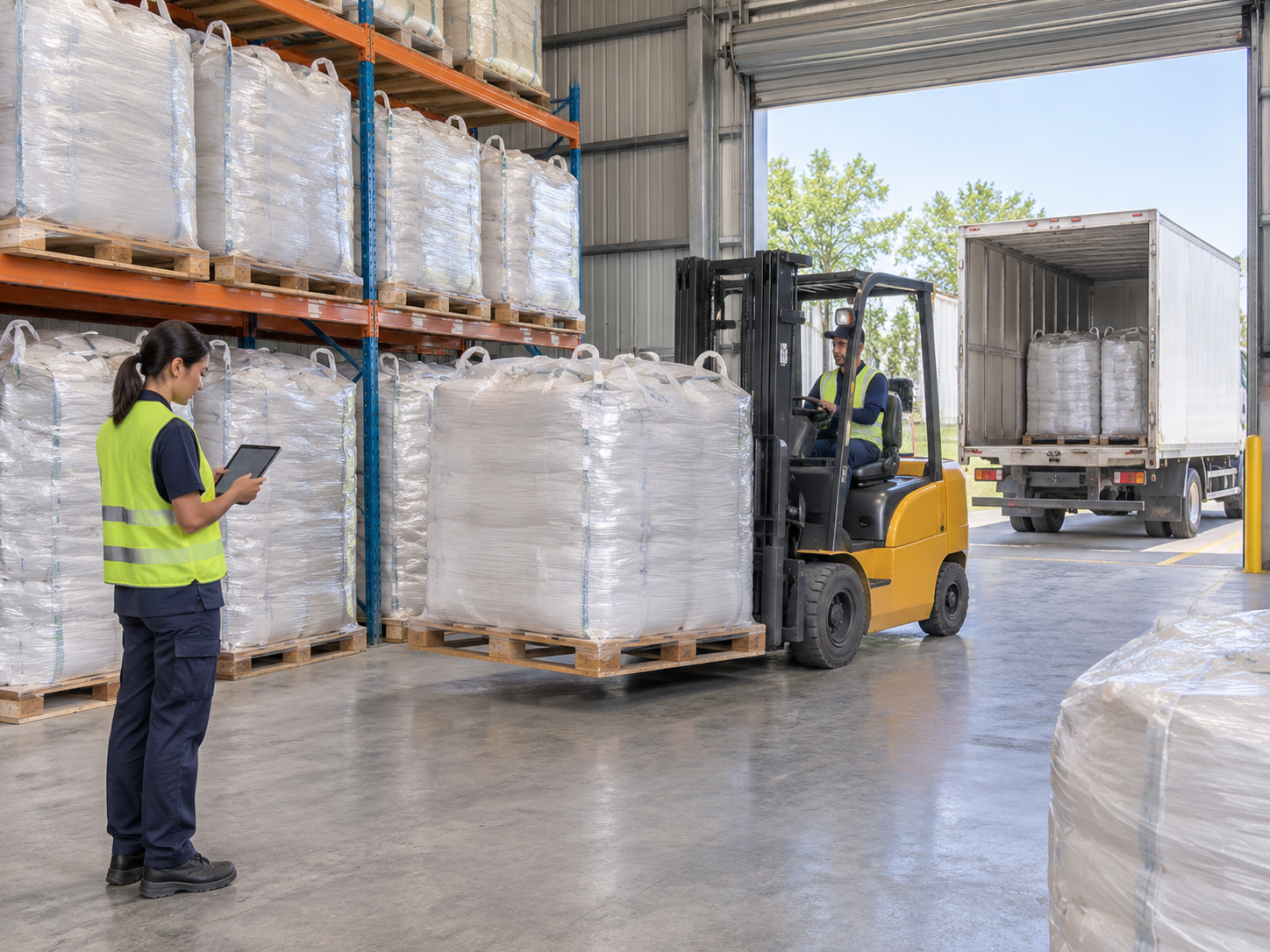
Small businesses often assume that buying direct from a factory is always cheaper. It can be, but only when the order size, specification and freight fit the factory's model. A local distributor may be the better financial choice for a small, urgent or standard order.
| Buying route | Advantages for a small business | Costs to include | Best used when |
|---|---|---|---|
| Local distributor with stock | May offer smaller quantities, a shorter lead time, local support, easier returns and no customs process | Higher unit price, limited custom range and stock availability | You need standard bags urgently, are testing the market or want to limit cash tied up in stock |
| Direct factory | May offer a lower unit price at volume, a wider custom range and direct technical discussion | MOQ, sample or setup cost, freight, duty, port and inland charges, longer lead time and quality verification | You have a planned annual demand, a custom specification or a repeat-order program |
| Hybrid | May combine standard bags from local stock with custom liners or printed bags direct, using local stock as a bridge | Two suppliers to manage and a need to keep specifications consistent | You have mixed demand, a first custom project or a seasonal peak |
Ask both routes for a delivered cost at your door, using the same specification and quantity. Do not compare a local price for 100 bags with a factory FOB price for 1,000 bags. If the factory quote requires a container, include the cost of carrying the extra stock. If the local quote uses a different bag or liner, treat it as a different product.
Used or reconditioned FIBCs are another route some small businesses consider. They are not an automatic bargain. Do not use a used bag for food, regulated dangerous goods or a high-value sensitive product. For any used bag, require provenance, prior contents, inspection records and written confirmation that the design and condition are suitable for the intended load.
A Small-Business RFQ Checklist
An RFQ (request for quotation) that contains the right information gets a faster, more comparable quote. It also reduces the chance that a supplier quotes a bag you cannot use.
| Item | What to send |
|---|---|
| Product | Name, grade, safety data sheet, physical form, bulk density, moisture content and any hazard information |
| Fill weight | Net kg per bag, including the normal and maximum load |
| Bag size | Preferred dimensions, or a drawing or photographs of the bag you use today |
| Filling | Method, equipment, spout or connection dimensions, fill rate and dust control |
| Discharge | Method, receiving hopper or conveyor, outlet preference and any discharge aid |
| Lifting | Forklift, crane or hoist, attachment dimensions, loop preference and required SWL |
| Storage | Indoor or outdoor, expected duration, stack height, humidity and UV exposure |
| Transport | Truck or container, route, destination and loading or unloading constraints |
| Liner | Barrier or contamination requirement, food-contact status and liner preference |
| Printing | Logo or artwork, number of colors, label data and required markings |
| Compliance | UN, anti-static, food contact and any destination-specific requirement |
| Order | Trial quantity, annual forecast, required delivery date, Incoterms and quotation validity |
Attach photographs of the filling head, discharge station, pallet pattern, storage area and the label of the bag you use today. A photograph often explains a constraint faster than a paragraph. If a detail is unknown, say so and ask the supplier to confirm it in the quotation.
How to Test Samples Before a Larger Order
A sample that looks right when empty is not a qualification. The purpose of a trial is to find out how the bag behaves with your product, your equipment and your handling routine.
- Define the acceptance criteria first. Decide what the trial must demonstrate: fill weight, filled dimensions, liner position, discharge time and residual product, loop fit, seam condition and stack stability.
- Use representative product and the actual equipment. A trial with a substitute powder or a different filling head can miss the problem you are trying to solve.
- Record the result. Keep the bag drawing revision, sample identity, fill weight, filled length, width and height, liner position, discharge result and any damage.
- Approve the drawing and keep a reference sample. The approved drawing and sample become the basis for the first production order and later repeats.
- Scale up in stages. Move from trial quantity to first production lot to repeat order. Do not jump from one sample to a container unless the risk is well understood.
For a small business, a trial quantity may be more expensive per bag than a full container. That premium is often the cheapest insurance against a wrong specification. Ask for the sample cost, trial quantity, MOQ and lead time in writing, and confirm whether the sample will be made with the same materials and construction as production. Keep the trial focused. If you change the bag, liner, spout and print all at once, a failure tells you very little.
Six Mistakes That Make a Cheap Bag Expensive
- Buying by the "1-ton bag" label. Without the SWL, fill weight, bulk density and handling method, you are guessing.
- Copying another company's specification. Their product, filling head, discharge station, pallet and compliance route may be different.
- Adding baffles, foil or multi-color print "just in case." Every feature has a cost and can change the liner path, usable volume or handling. Add it for a defined reason.
- Comparing quotes with different assumptions. A price without packing, Incoterms, quantity and validity is not comparable.
- Skipping the trial or over-ordering before it. A small trial is cheaper than a failed container.
- Reusing a single-trip bag or storing it outdoors without protection. The bag may look intact while the fabric or loops have degraded.
A Practical Path for Small Businesses
Affordable FIBC solutions are not built on the lowest quote. They are built on a specification that is safe, fits the product and equipment, and avoids paying for features that do not solve a problem. For most small businesses, the practical path is:
- start with a proven standard platform;
- add a liner or coating only for a defined protection need;
- keep openings, loops and print as simple as the job allows;
- compare landed cost at the same specification and quantity;
- trial with the real product before a larger order.
FIBC World's public range covers standard and custom FIBC bags, baffle bags, bulk bags with liners, ventilated bags, form-fit inner liners, top-suspension bags and aluminum foil liners. The custom page organizes the choices by bag style, lifting, top filling, bottom discharge, liners, seams and protection, and printing, labels and compliance. If you are a small business, ask for a standard-platform quote first, then price only the changes that solve a real problem.
Send your product, net fill weight, filling and discharge arrangement, lifting method, storage and transport conditions, destination and order quantity. Ask for confirmation of the current MOQ, sample arrangements, lead time, packing method, Incoterms and quotation validity. You can review the FIBC product range, the standard FIBC options and the custom page, then contact FIBC World with your requirement.
This article is a buying guide, not a certification, legal or engineering approval. The final bag design, rating and documentation must be confirmed for the actual product, equipment and destination.
Related News
Other news you might be interested in
What Is a Super Sack? FIBC vs Bulk Bag vs Jumbo Bag Explained
A buyer searches for a “super sack.” The supplier replies with an FIBC quotation. The drawing is titled “jumbo bag.” The warehouse calls it a bulk bag. Four names, one object—usually.The words are not identical in status. FIBC is the technical term used by standards and industry guidance. Bulk bag, big bag, tote and jumbo bag are trade terms. Super Sack® is a registered trademark, not a generic name for every large woven bag.That distinction matters when a purchase order, a drawing or a customs document uses one term while the supplier uses another. The label helps you find the product family. It does not tell you the safe working load, the filled dimensions, the liner, the lifting arrangement or the compliance route. Those have to be specified.
Bulk Bags by Application: Minerals, Fertilizer, Grain and Produce
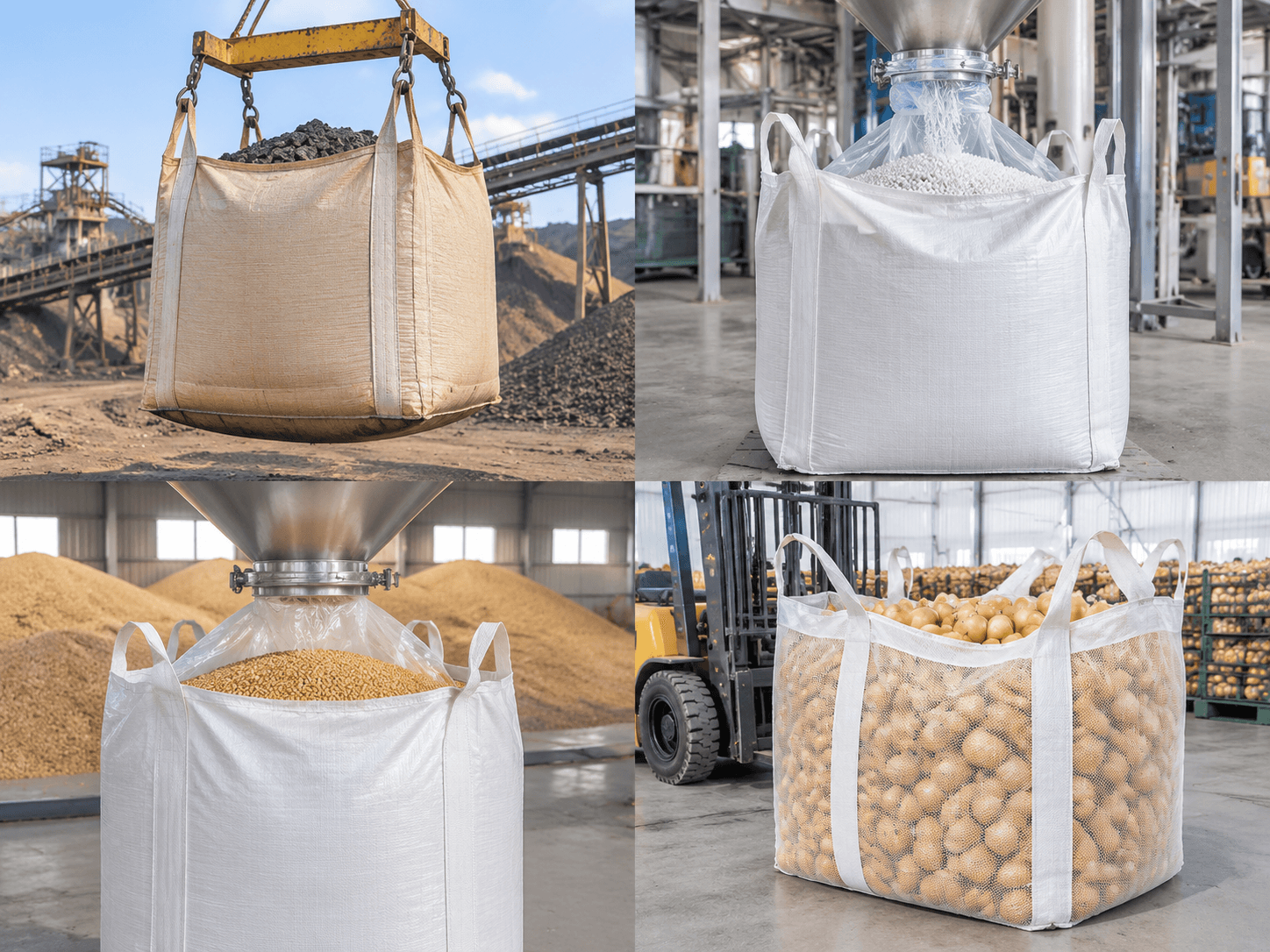
A mineral concentrate, a fertilizer blend, a load of wheat and a load of onions can all be packed in a bulk bag. They should not all be specified the same way.On a quotation, each may appear as a one-tonne FIBC with a top opening and a discharge spout. In service, the loads behave differently. A dense mineral concentrate can reach its target mass at a low fill level and concentrate stress in the base and seams. A hygroscopic fertilizer can pick up moisture, cake and block the outlet. Grain can arrive dry but become unacceptable if condensation, pests or contamination are not controlled. Fresh produce can lose quality through heat, condensation and handling damage even when the bag itself remains intact.
Want to know more?
Get in touch with us for more information about our services and products.