
What Are FIBC Bags Used For? A Complete Guide to Bulk Bag Applications

Dayang Yang
AuthorWith experience in FIBC bulk bag manufacturing and export sales, we operate our own production facility with stable large-scale capacity. We are specialists in bulk bags, conductive FIBCs, food-grade FIBCs, UN certified bags, and customized flexible intermediate bulk containers for industrial packaging and bulk material transportation solutions.
An FIBC, or flexible intermediate bulk container, is used to move a dry bulk material as one liftable, storable and dischargeable unit. That definition sounds narrow, but it covers an unusually wide range of products: potatoes and onions, fertilizer, sand and cement, plastic pellets, flour, carbon black, battery powders and firewood. The material changes. The job does not.
Most articles answer "What are FIBC bags used for?" with a list of industries. A list is a useful starting point, but it is a poor specification tool. Two companies in the same industry can need different bags because their bulk density, filling equipment, storage plan, discharge method or compliance requirement is different. A potato packer and a potato processor both use bulk bags, but they may not use the same bulk bag. A chemical plant and a food plant may both handle a fine white powder, but only one of them needs a food-contact declaration.
The more reliable way to answer the question is to look at what an FIBC actually does. It contains a product, protects it, accepts it at a filling point, carries it through a lift and a transport leg, holds it in storage, and releases it at a discharge point. The industry tells you what the material is. The material and the handling chain tell you what the bag must be.
This guide maps the main applications, explains why the same industry can need different designs, and sets out the points to verify before a quotation or a trial.
What an FIBC Is
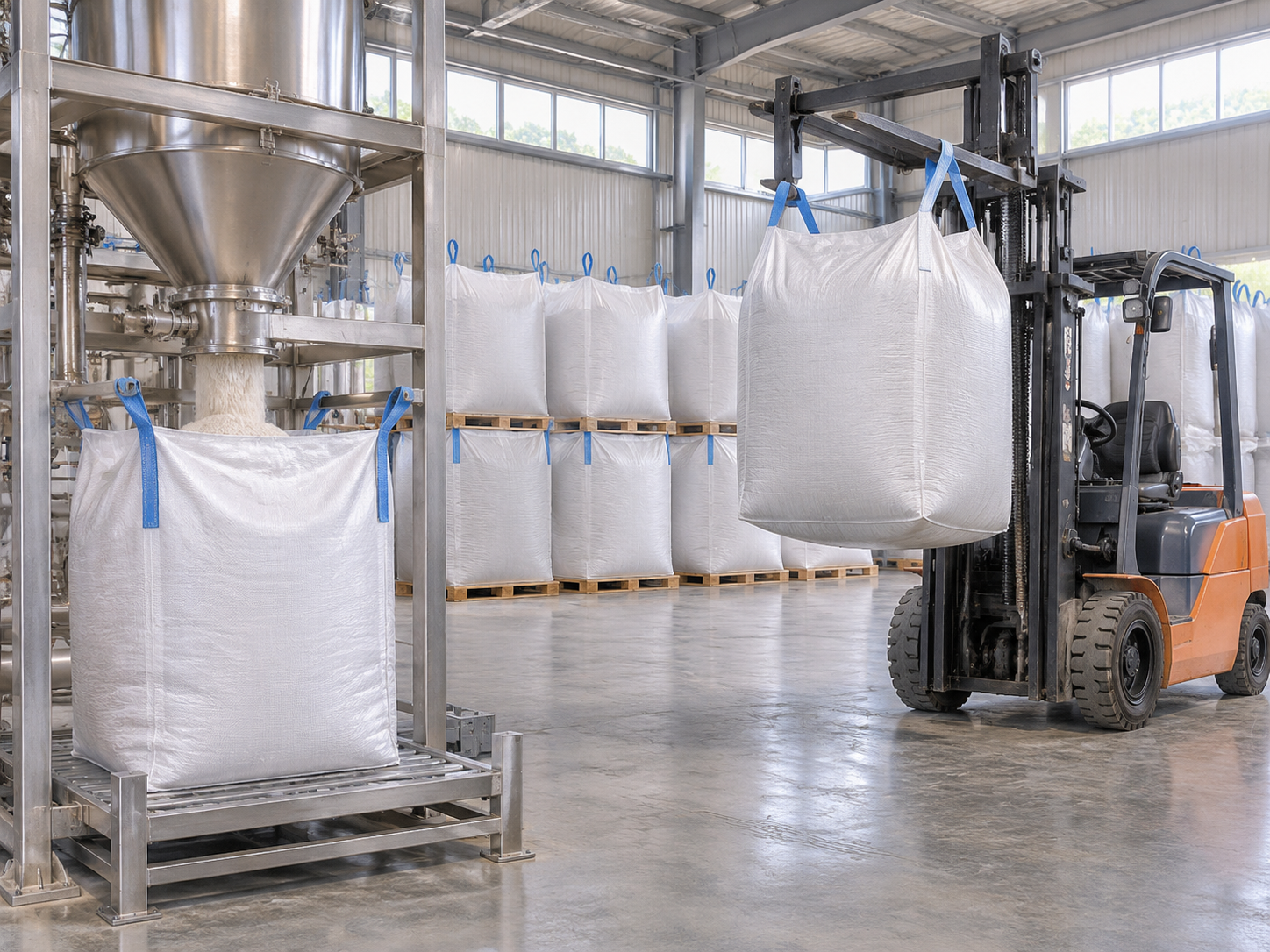
An FIBC is a flexible intermediate bulk container, also called a bulk bag, jumbo bag, ton bag or super sack. It is normally made from woven polypropylene and is designed for dry, flowable products rather than liquids. A typical bag has a body, a top filling opening, a base, lifting loops and often a discharge spout. A liner may be added inside the body. The fabric may be coated to reduce dusting or uncoated to allow airflow. The bag may carry a UN mark for dangerous goods, a Type C or Type D static classification, or a food-contact declaration.
Those features are not interchangeable. A bag can look similar to another bag in a photograph and still differ in fabric weight, seam construction, liner, spout dimensions, loop arrangement, UV stabilization and test status. That is why an FIBC should be specified as a system, not as a shape with a price.
Capacity is usually expressed as a safe working load (SWL), not as a volume. A bag rated for 1,000 kg at a 5:1 safety factor has been designed and tested against a load five times its working load. A bag rated for the same weight at a different safety factor, or for a different bulk density, may have a different construction. The same empty dimensions can also hold very different weights: the filled volume for 1,000 kg of sand is much smaller than the filled volume for 1,000 kg of a light powder. Buyers should compare bags by target fill weight and filled dimensions, not by the empty bag alone.
The Short Answer: Five Jobs in One Handling Unit
Every FIBC application can be broken down into five jobs. The bag has to do all five, and a weakness in any one of them can make the packaging fail even if the other four are well designed.
| Job | What it means in practice | What commonly goes wrong |
|---|---|---|
| Contain | Hold the product inside the bag without loss | Product sifting through seams, spout leakage, fabric damage |
| Protect | Limit moisture, oxygen, light, contamination, odor or static risk | Caking, oxidation, off-odor, dust escape, static discharge |
| Fill | Accept the product at the target rate and weight | Dusting, bridging, poor deaeration, liner movement |
| Lift and move | Transfer the load safely by crane, hoist or forklift | Loop or seam damage, off-center load, SWL exceeded |
| Store and discharge | Survive the storage period and empty predictably | Bulging, unstable stacking, bridging, residual heel |
Compliance sits outside these five jobs. A bag can contain, protect, fill, lift and discharge well and still be unsuitable for a dangerous good, a food-contact application or a market with specific packaging rules. Compliance is a constraint on the design, not a feature that can be assumed from the fabric.
Why Buyers Use FIBCs Instead of Small Bags
The basic commercial case for an FIBC is handling efficiency. A 1,000 kg bulk bag replaces forty 25 kg sacks for the same tonnage. That reduces the number of filling, weighing, palletizing, loading and unloading operations, and it usually reduces the labor, dust and packaging waste associated with small bags. It can also improve cube utilization because the product is handled as one unit rather than as a pallet of small sacks.
But the saving is not automatic. An FIBC only delivers the benefit when the site has a way to fill it, lift it and discharge it. A bag that arrives without a suitable hoist, forklift, filling head or receiving hopper can be slower and more hazardous than a small-bag line. The business case is a system case: bag, product, equipment, labor, storage and transport have to be considered together.
| Format | Typical unit | Strongest fit | Main limitation |
|---|---|---|---|
| Small sack | 10–50 kg | Small volumes, manual handling, low capital equipment | Many handling touches, more dust and packaging waste |
| FIBC | Several hundred kilograms to about two tonnes | Dry bulk materials, repeated filling and discharge, efficient transport | Needs lifting, filling and discharge equipment; design must match the product |
| Rigid IBC | Often around 1,000 liters | Liquids, fragile products, applications needing a rigid container | Cleaning, return logistics and empty-container cost |
FIBCs are not automatically cheaper than small bags. For a low-volume operation with an existing small-bag line, the capital cost of new handling equipment can outweigh the labor saving. The right comparison includes the whole chain, not only the unit price of the bag.
The Application Map: Where FIBCs Are Used
The categories below cover the main commercial applications. They are not a complete taxonomy of every material, but they show the pattern: the industry tells you what the material is, and the material tells you what the bag must do.
Agriculture and Fresh Produce
Potatoes, onions, garlic, beans, grains, nuts and seeds are among the most common agricultural FIBC applications. The defining requirement is usually airflow rather than barrier protection. A ventilated FIBC uses mesh panels or open-weave sections to allow air movement through the load. The aim is to reduce condensation and heat buildup around the produce, not to create a controlled atmosphere.
The bag is often open-top or duffle-top for filling, with a flat base or a discharge spout depending on how the crop is unloaded. UV stabilization matters when the bag will stand in a field, at a packhouse or under a shed for an extended period. Ventilation area, panel placement, fabric strength and loop arrangement all affect how the bag performs in the field.
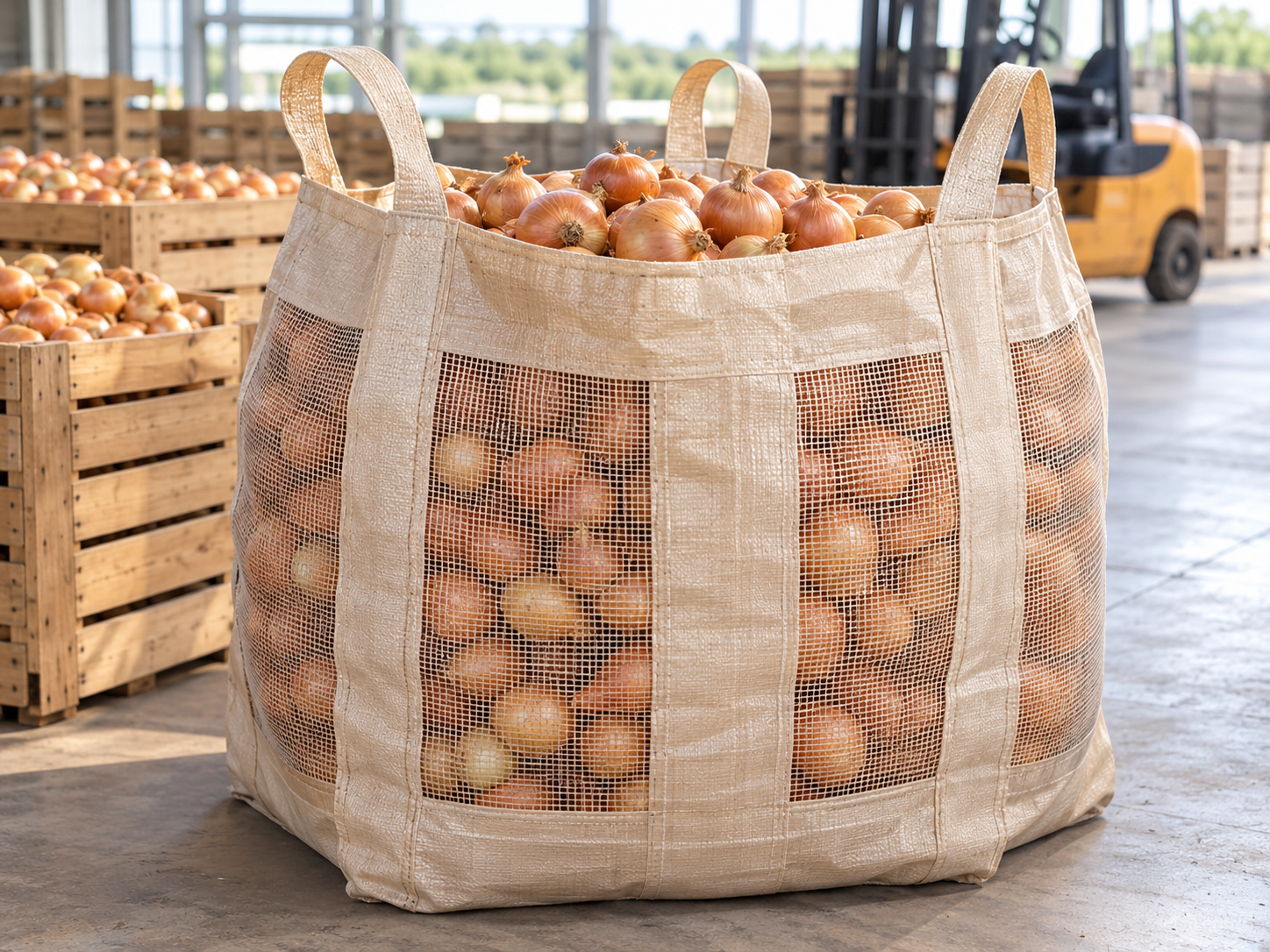
Airflow is not a guarantee of shelf life. Produce quality depends on pre-harvest condition, temperature, humidity, breathing rate, injury and storage time. A ventilated bag can help manage condensation when the storage and handling conditions are right, but it cannot compensate for a warm load, a wet crop or a poor storage plan. Nor is ventilation always the right answer: grains and seeds that need moisture protection may be better served by a coated bag or a lined bag, especially in humid or rainy conditions.
For direct food contact, the bag and liner should be supported by the appropriate food-contact documentation. "Ventilated" describes airflow, not food safety. FIBC World's ventilated FIBC range is built around this application, and the potato and onion buyer's checklist covers the ventilation and handling details in more depth.
Fertilizers and Agrochemicals
Fertilizer is one of the largest FIBC applications. Urea, NPK blends, MAP, DAP, potash and ammonium nitrate are all handled in bulk bags, but they do not behave the same way. Many fertilizer grades are hygroscopic: they pick up moisture from the air, become sticky or caked, and discharge poorly. Some are corrosive or dusty. Some, including certain ammonium nitrate grades, are regulated as dangerous goods and require a UN-marked package.
The bag therefore has to address moisture, caking, dust and discharge as a system. A coated fabric can reduce dusting and limit direct moisture contact. A polyethylene liner can add a barrier, but the liner has to be fixed, fit the filling and discharge openings, and survive the filling operation without being pulled into the product stream. Sealed or closable spouts, correct liner neck dimensions and a clean discharge path matter as much as the liner film itself.
A liner is not a guarantee against caking. Fertilizer can cake because of temperature cycling, pressure, storage time or moisture that entered before filling. The bag can reduce the risk; it cannot reverse a product condition that is already present. The storage plan, the filling procedure and the receiving conditions are part of the application.
Where the fertilizer grade is a dangerous good, the UN mark, packaging code and test scope have to be confirmed before shipment. A standard agricultural bag is not a substitute for a UN-marked package. FIBC World's form-fit liner range and the fertilizer liner checklist address the liner side of this application.
Minerals, Construction and Heavy Industry
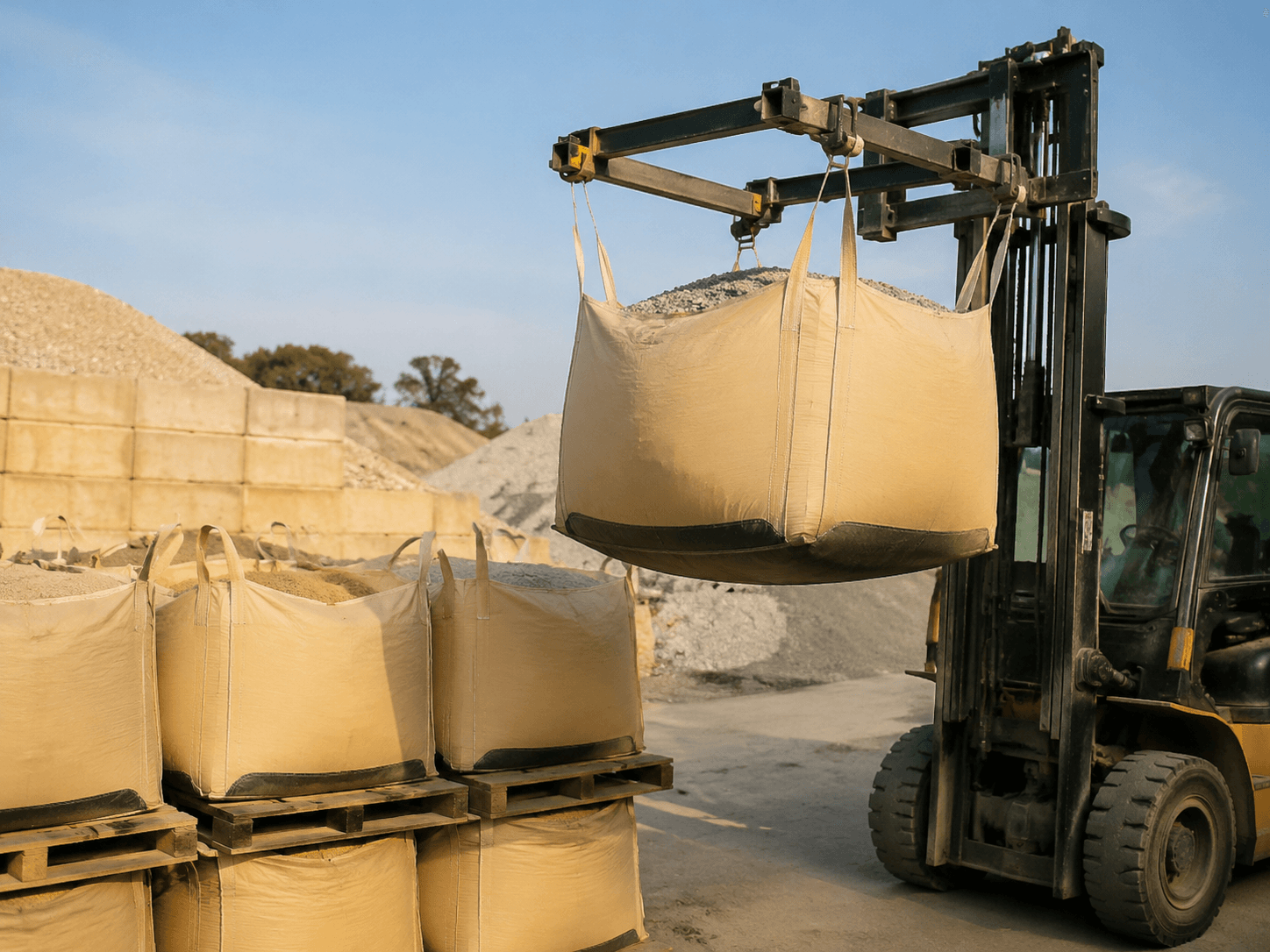
Sand, gravel, crushed stone, cement, lime, gypsum, fly ash, barite, bentonite, iron ore and mineral concentrates are typical of the heavy side of the FIBC market. These materials are often abrasive, dense and dusty. Some are hot when filled. Some concentrates are classified as dangerous goods because of toxicity, self-heating or other hazards.
The central design issue is weight for volume. Barite and iron ore are much denser than sand, and sand is much denser than a light powder. A bag that reaches its target weight at a low fill level may behave very differently from a bag that is filled to the top with a light material. The bag must be specified by bulk density and target weight, not only by nominal volume.
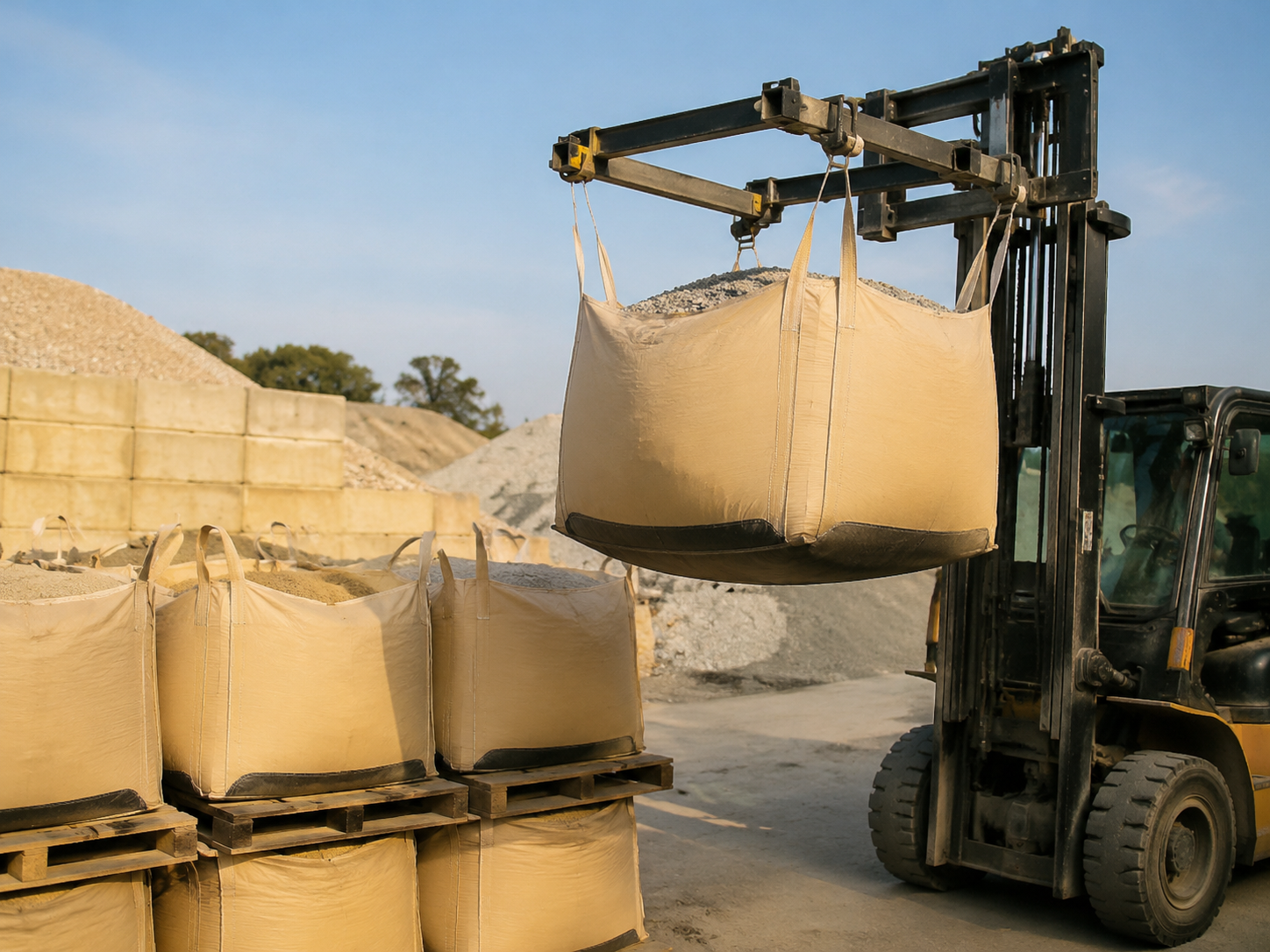
Abrasion affects the base, the seams and the discharge spout. A reinforced base, a heavier fabric, a protected spout and a suitable loop arrangement may be needed. Cross-corner loops or stevedore straps can change how the load is carried, but they do not increase the SWL by themselves. The lifting equipment, the load angle and the site's operating procedure still govern safe use.
For cement, lime and fly ash, dust control and moisture protection may both matter. For ore and concentrates, the classification and the destination rules may matter more than the fabric. A heavy-duty bag is not automatically a UN bag, and a UN bag is not automatically suitable for every mineral. FIBC World's standard FIBC range and cross-corner loop bags are relevant starting points, and the mining FIBC guide covers ore and concentrate selection.
Chemicals, Petrochemicals and Fine Powders
Carbon black, titanium dioxide, pigments, silica, alumina and fine organic powders are common chemical-sector FIBC products. The application is usually defined by dust, static, moisture, contamination and sifting rather than by weight alone. A fine powder can escape through seams that would be acceptable for a coarse granule. It can also bridge in the bag, cling to the liner and leave a significant heel after discharge.
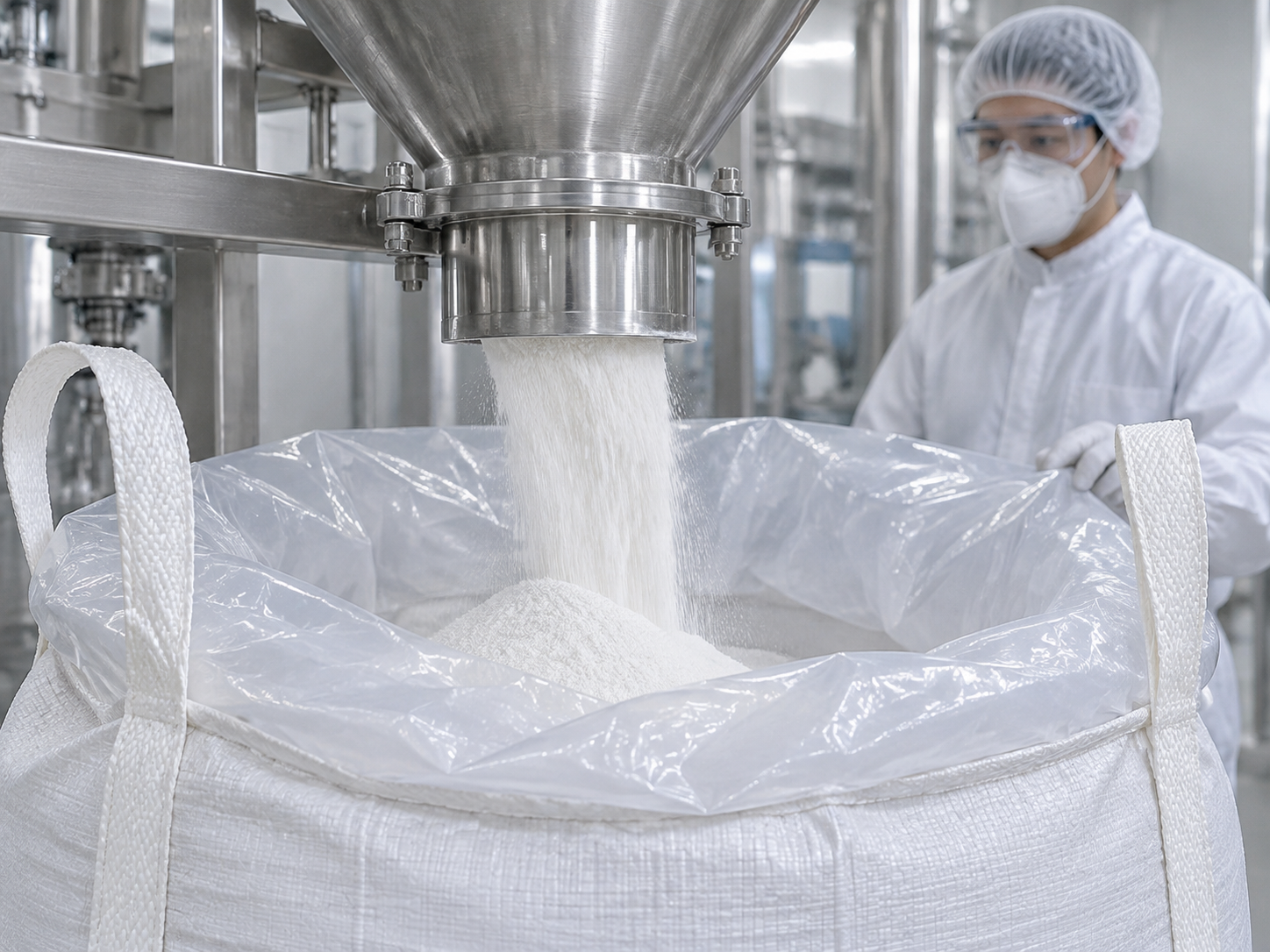
Sift-proof seams, a suitable liner, a dust-tight filling connection and a discharge outlet that matches the receiving equipment are often more important than the nominal bag size. If the material is flammable or the site has a hazardous atmosphere, the static classification becomes part of the design. Type C bags rely on a grounding path; Type D bags are designed to avoid the need for a grounding connection under defined conditions. The liner is part of that assessment, not an afterthought: an insulating liner can interfere with the intended static path, so the bag and liner have to be evaluated together.
Where the chemical is a dangerous good, the UN mark and packaging code apply in addition to the static classification. A Type C or Type D bag is not automatically UN-marked, and a UN mark does not by itself prove that the bag is suitable for a flammable atmosphere. The two frameworks answer different questions. FIBC World's Type C anti-static range and the UN versus Type C/D guide set out the distinction.
Food Ingredients
Flour, starch, sugar, salt, cocoa powder, milk powder, casein and food additives are handled in FIBCs where the volume justifies a bulk bag. The application adds a layer that general industrial bags do not have: food-contact suitability, hygiene, odor control, allergen control and foreign-body prevention.
A food-grade application is not defined by the color of the fabric or by a phrase in a brochure. It is defined by the materials in contact with the food, the documentary evidence for those materials, the manufacturing conditions, the cleaning and changeover procedure, and the ability to prevent contamination during filling, storage and discharge. A liner may be the primary food-contact layer, in which case the liner's declaration and migration test evidence matter. The outer bag still has to be clean, intact and suitable for the environment.
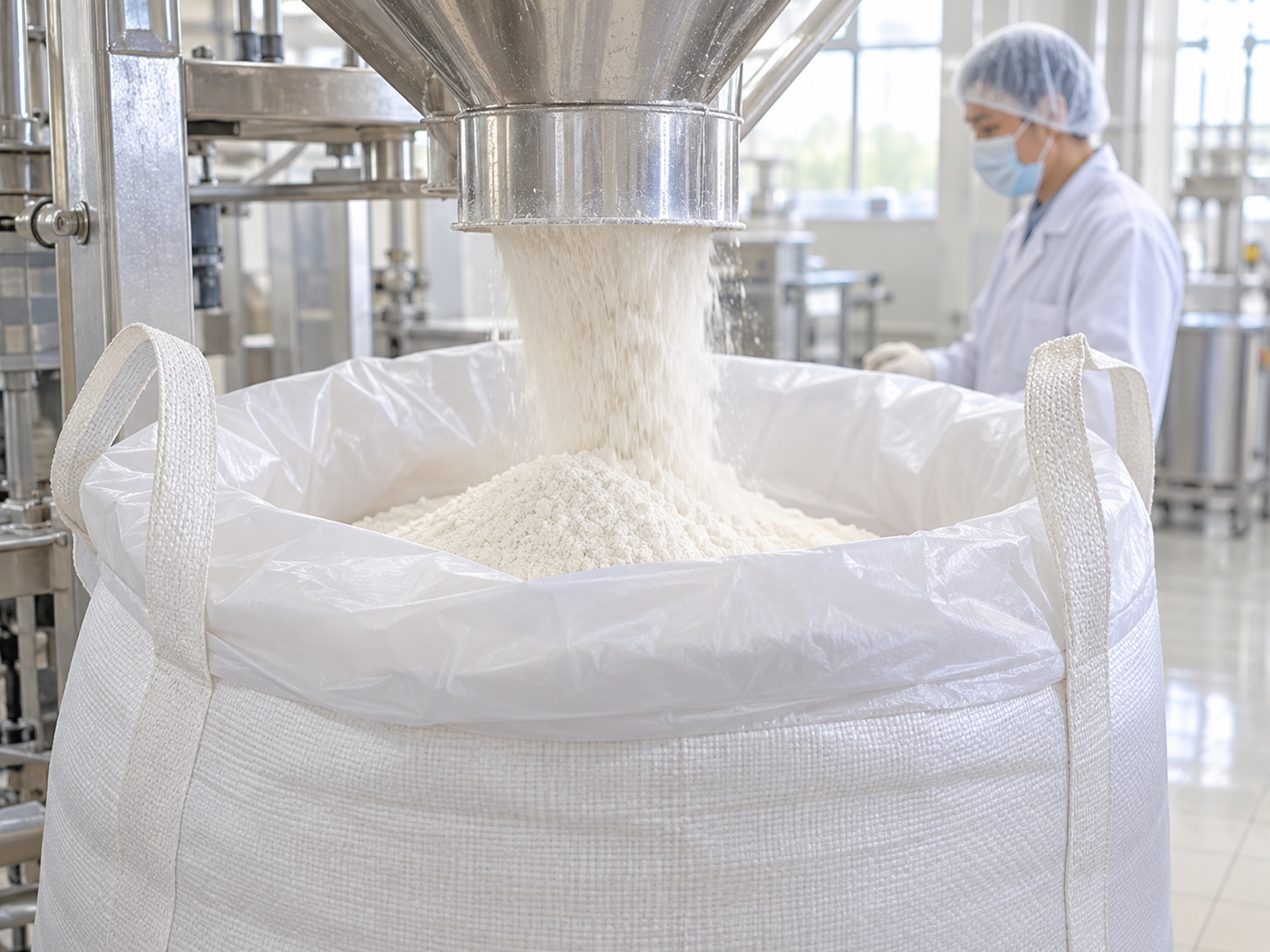
Moisture and odor are common failure points. Sugar and milk powder are hygroscopic; cocoa and some spices can pick up or transfer odor; flour and starch can support pests if the bag is stored poorly. A coated bag or a liner can help, but the closure, the storage condition and the pest-control program are part of the system. Allergen changeover is a separate control: a bag that previously carried a milk powder or a soy-based ingredient may need a validated cleaning or dedicated-liner procedure before it is used for another product.
FIBC World's food-grade bulk bag guide covers the documentary and hygiene questions in more detail. Food-contact claims should always be tied to the specific bag, liner and destination market, not to a general product category.
Plastics and Polymer Resins
Polypropylene, polyethylene, ABS, PVC and PET are shipped as pellets, granules, flakes or powder. The materials are usually free-flowing, which makes filling and discharge relatively predictable, but the application still has its own risks: fines and dust, contamination, moisture pick-up, and the need for a stable pallet or stack.
A standard FIBC is often sufficient when the bag is stored single-high or at low stack heights and the filled shape is not a constraint. A baffle FIBC becomes worth evaluating when the filled footprint, stack pattern, container cube or pallet presentation matters. The baffle limits outward bulging and keeps a more regular shape, but it does not create stackability by itself. The stack height still depends on the SWL, safety factor, bulk density, storage time, temperature and the site's stacking rules.
Contamination is a particular concern for virgin resin and for compounds that will be processed into a visible or food-contact product. A liner, a clean filling point and a covered storage area may be more important than a heavier fabric. For recycled flakes, dust and moisture can be more variable, and the bag may need a different liner or discharge arrangement. FIBC World's baffled FIBC range and the standard versus baffle guide explain the trade-offs.
Battery and New-Energy Materials
Cathode active materials, anode graphite, lithium salts and nickel or cobalt compounds are among the most demanding FIBC applications. These materials are often high in value, sensitive to moisture or oxygen, and vulnerable to contamination. Some are also classified as dangerous goods, depending on the chemistry and the jurisdiction.
The bag is usually part of a broader containment strategy: an aluminum foil composite liner, sealed filling and discharge openings, controlled headspace, and handling in a dry or controlled environment. A foil liner can provide a strong barrier to moisture, oxygen and light, but "foil" is a material description, not a performance value. The actual barrier depends on the film structure, the number and quality of the layers, the seal integrity, the liner fit and the handling before and after filling. A pinhole, a weak seal or a damaged liner neck can defeat the intended protection.
The specification should state the barrier target and the test method, not just the word "high barrier." It should also state whether vacuum or nitrogen flushing is required, how the liner will be sealed, and how the bag will be opened at the destination without contaminating the product. FIBC World's multi-layer aluminum foil liner range and the aluminum foil liner evaluation guide set out the data and trial questions.
Biomass, Firewood and Solid Fuels
Biomass is a good example of why an industry label is not a specification. Firewood needs airflow to avoid trapping moisture and promoting mold. Wood pellets need the opposite: they should stay dry, because moisture degrades the fuel and can cause the pellets to swell or crumble. Wood chips sit somewhere between the two, depending on size, moisture content and storage time.
A ventilated FIBC is a natural fit for firewood and some wood chips. The open or mesh structure allows air movement and helps reduce condensation around the load. A lined or coated bag is more appropriate for pellets or for any biomass that must be protected from rain and humidity. Using a ventilated bag for pellets can defeat the purpose of the packaging; using a sealed bag for wet firewood can trap moisture and create a different problem.
Outdoor storage adds UV, rain and temperature cycling. UV stabilization helps the fabric survive sunlight, but it does not make the bag waterproof or indefinitely weatherproof. The storage period, the ground condition, the pallet or dunnage and the handling method all affect the result. FIBC World's ventilated FIBC range is the starting point for firewood and airflow-driven applications.
Recycling and Secondary Materials
Recycled flakes, regrind, scrap, film, paper and some metal swarf are also handled in FIBCs. The application is usually cost-driven, but the bag still has to survive abrasion, puncture, dust and weight. Sharp or heavy scrap may be outside the scope of a standard FIBC and may need a reinforced design or a different container.
Contamination is less of a food-safety issue in this category and more of a process issue: the receiving line may not want bag fibers, dust or moisture in the material. A liner can help, but it also adds cost and waste. The recyclability of the bag itself is a separate question from the recyclability of the material inside it. A bag made from mono-material PP may be easier to recycle than a multi-material laminate, but that does not make every recycling stream accept it. The destination facility and the local rules still govern.
Same Industry, Different Bag: The Five Interfaces
An application is not "agriculture" or "chemicals." It is a material, a filling point, a lift, a storage plan and a discharge point. Change one of those interfaces and the bag may change, even if the material name stays the same.
| Interface | Questions to answer | What may change |
|---|---|---|
| Material | What is the bulk density, particle size, flow behavior, moisture, temperature, static risk and hazard class? | Fabric, liner, seam, spout and coating |
| Filling | Open top, duffle top or spout? Manual or automated? What is the fill rate and dust level? | Top design, spout diameter, deaeration, liner fixation |
| Lifting | Crane, hoist or forklift? One, two or four loops? What is the load angle? | Loop type, loop attachment, SWL, base reinforcement |
| Storage and transport | Stack height, pallet pattern, container, climate, storage duration? | Baffles, UV stabilization, fabric weight, liner barrier |
| Discharge | Flat bottom, spout or conical bottom? What receiving equipment? | Outlet size, liner collapse, discharge aid, residual heel |
Three examples show how much the chain matters.
A potato packer may fill 1,000 kg ventilated bags from a hopper for seasonal storage under a shed, then lift them with a forklift and empty them into a grading line. A potato processor may fill smaller bags on a calibrated line for daily production, stack them on pallets and discharge them into a washing line. The crop is the same. The filling rate, bag size, storage duration and discharge equipment are not.
A carbon black plant may fill a 500 kg lined bag through a 300 mm spout under local extraction, then ship it to a formulator who discharges it into a mixer through a 250 mm butterfly valve. The bag has to satisfy the filling point and the discharge point, not just the material specification. A liner that works at the filling spout but collapses over the discharge outlet is still a failure.
A resin distributor may stack four high in a racked warehouse, while a compounder stores the same pellets single-high. The distributor may have a real reason to evaluate a baffle bag; the compounder may not. The material is identical, but the storage interface is different.
This is why a quotation that lists only "1,000 kg, 90 x 90 x 110 cm, white bag" is not a specification. It describes an empty shape. It does not describe the filled system.
Match the Bag to the Material, Not the Label
The following table is a screening tool. It shows where a configuration is a sensible starting point and what has to be verified before the choice is fixed.
| Material behavior | Primary risk | Starting configuration | What to verify |
|---|---|---|---|
| Fine powder, dusting or sifting | Seam and spout leakage, bridging, residual product | Sift-proof seams, liner, dust-tight filling connection, suitable discharge | Particle size, fill rate, deaeration, discharge and heel |
| Free-flowing pellets or granules | Fines, segregation, moisture, contamination | Standard or baffle bag, smooth liner where needed, discharge spout | Bulk density, flow pattern, discharge, stacking |
| Hygroscopic powder | Moisture pick-up, caking, poor discharge | Coated fabric or polyethylene liner, sealed or closable spouts | Barrier target, storage humidity, closure, liner fit |
| Oxygen- or light-sensitive material | Oxidation, color or odor change | Aluminum foil composite liner, opaque structure, sealed openings | Barrier data, seal integrity, headspace, handling |
| Abrasive or high-density material | Fabric wear, base failure, loop overload | Heavy fabric, reinforced base, suitable loops, protected spout | Bulk density, target weight, SWL, impact and discharge |
| Static-sensitive or flammable material | Ignition risk | Type C or Type D design, grounding point where required, liner assessment | Hazardous area, ignition energy, grounding, liner classification |
| Fresh produce | Condensation, heat buildup | Ventilated panels or open-weave sections, open top, no liner | Airflow, produce condition, storage temperature and duration |
| Firewood or biomass | Mold, condensation, or the opposite: moisture ingress | Ventilated bag for firewood; lined or coated bag for pellets | Moisture target, storage exposure, UV and ground condition |
The table does not replace a trial. A bag that fits one row can still fail when the product, fill rate, equipment or climate changes.
What FIBCs Are Not Used For
An FIBC is a versatile package, but it is not a universal one. The following limits are practical, not marketing caveats.
Liquids, slurries and pastes. A standard FIBC is designed for dry, flowable solids. Liquid packaging is a different product category with different handling and certification requirements.
Aseptic or sterile products. An FIBC is not an aseptic filling system. A liner can provide a barrier, but it does not create a sterile environment.
Sharp, hot or reactive materials without a specific design. Standard PP fabric and standard liners have limits. Sharp scrap, hot material or a chemically aggressive product may require a different construction or a different container.
Dangerous goods without a UN-marked package. The UN mark, packaging code and test scope have to match the product and the regulatory regime. A general-purpose bag is not a substitute.
Long-term outdoor storage without UV and weather protection. UV stabilization helps, but it does not make the bag waterproof or indefinitely weather-resistant. Water can enter through seams, openings and fabric.
Stacking without a rated plan. A filled bag is not automatically stackable. Stack height depends on the SWL, safety factor, bulk density, storage time, temperature and the site's rules.
Small quantities. Below a certain volume, the equipment and handling cost of an FIBC can outweigh the labor saving of small bags.
Hermetic storage by default. A standard FIBC is not hermetic. If the product needs a sealed atmosphere, the liner, closure and handling procedure have to be designed for it.
"Custom" without limits. Customization can change dimensions, openings, loops, liners and printing. It does not remove the need for a valid design, a suitable material and the required test evidence.
Compliance Is a Separate Layer
Compliance questions are often mixed together in buyer conversations. They are separate frameworks, and one does not imply another.
| Requirement | Applies when | Evidence to ask for |
|---|---|---|
| ISO 21898:2024 | Non-dangerous-goods FIBCs | Design, testing and marking information for the specific bag; not a product certificate |
| UN mark | Dangerous goods | UN mark, packaging code (13H1–13H4), X/Y/Z packing-group scope and test report |
| IEC 61340-4-4 | Flammable or explosive atmospheres | Type C or Type D test report, grounding instructions and liner classification |
| Food-contact rules | Direct food contact | Declaration of compliance, migration test evidence and GMP statement |
| EU Packaging and Packaging Waste Regulation | EU market | Recyclability assessment and supporting documentation |
ISO 21898:2024 provides the general performance framework for FIBCs used for non-dangerous goods, including design, testing and marking. It is not a liner barrier standard, a stackability certificate or a food-contact approval. The UN mark belongs to the dangerous-goods packaging framework. The FIBCA guidance explains that hazardous-material FIBCs carry a UN packaging symbol and a code such as 13H1, 13H2, 13H3 or 13H4, where the code distinguishes coated or uncoated fabric and the presence or absence of a liner. The mark also carries the packing-group letter, manufacture date, authorizing state, manufacturer, stacking test load and maximum gross mass.
Static classification is a third layer. IEC 61340-4-4 covers the electrostatic classification and labeling of FIBCs, including the classification of inner liners, test methods, design and performance requirements, and safe use in hazardous explosive atmospheres. Type C relies on a grounding path. Type D is designed to avoid the need for a grounding connection under defined conditions. Neither classification is a substitute for a UN mark, and a UN mark does not prove that the bag is suitable for a flammable atmosphere.
Food contact is a fourth layer. In the EU, Regulation (EC) No 1935/2004 sets the general framework for materials intended to come into contact with food, and the GMP Regulation (EC) No 2023/2006 sets manufacturing requirements. In the United States, food-contact materials are addressed through FDA requirements. A supplier should be able to provide a declaration of compliance for the specific bag and liner, with the intended use, migration test evidence where applicable, and the conditions of use. A "food-grade" fabric color or a general website claim is not enough.
Packaging waste rules are a fifth layer. The EU Packaging and Packaging Waste Regulation (EU) 2025/40 applies from August 2026 and sets a recyclability trajectory, with the general recyclability requirement applying from 2030. A mono-material PP bag may be easier to recycle than a multi-material laminate, but recyclability depends on the actual components, the liner, the printing and the local collection and sorting system. A recyclability claim should be supported by an assessment, not inferred from the word "PP."
These layers can coexist in one bag, but each has its own scope and evidence. A UN mark does not make a bag food-safe. A food-contact declaration does not make it anti-static. A Type D bag is not automatically UN-marked. A recyclable bag is not automatically suitable for food contact. The buyer should ask for the specific document that matches the specific application.
How to Specify an FIBC for Your Application
The most useful change a buyer can make is to stop accepting a quotation that describes only the empty bag. The following information turns an application into a specification; it follows the general fields used in FIBC design questionnaires.
| Information to provide | Why it changes the design |
|---|---|
| Material name and bulk density | Determines usable volume, target weight and fabric strength |
| Particle size and flow behavior | Affects dusting, bridging, discharge and residual product |
| Moisture, oxygen, light and odor sensitivity | Defines whether a liner is needed and which barrier is appropriate |
| Temperature at filling and storage | Affects fabric, liner and handling limits |
| Hazard classification and destination | Determines UN, static, food-contact and local requirements |
| Target fill weight, SWL and safety factor | The bag is sized by weight, not only by dimensions |
| Target filled length, width and height | Defines the storage, pallet and container envelope |
| Filling method and filling-head details | Sets the top design, spout diameter, deaeration and liner neck |
| Lifting equipment and loop preference | Sets the loop type, attachment and load angle |
| Discharge method and receiving equipment | Sets the outlet, liner collapse and discharge aid |
| Liner type, barrier target and fixing method | Defines the liner fit, seal and attachment points |
| Transport mode, route, climate and storage duration | Affects UV, moisture, stacking and container planning |
| Required documents and trial acceptance criteria | Defines what "pass" means before the first production order |
A photograph of the filling head and the discharge station is often more useful than a catalogue number. A drawing of the current bag, with its revision number, is more useful than "same as last time." If the liner is part of the system, send the liner drawing as well. If the bag will be stacked, send the pallet pattern and the planned stack height. If the product is a dangerous good, send the classification and the destination, not only the product name.
Qualify the Application With a Trial
The final check is not an empty-bag inspection. It is a trial of the complete system under conditions close enough to production to expose a mismatch. Use the actual material, or a representative sample with the same flow behavior. Use the intended bag and liner, the actual filling head, the target fill weight and the receiving equipment for discharge.
Record the bag drawing revision, liner revision, material lot, equipment settings and the people who accepted the result. Then measure what matters:
Does the bag reach the target weight without excessive bulging, product backup or unstable handling?
What are the filled length, width and height, and how regular is the footprint?
Is the top surface flat enough for the planned pallet pattern and stack?
Does the liner unfold without gathering, pinching or pulling away from the spout?
Does the liner neck stay centered and accessible, and does the filling connection seal reliably?
Can air escape at a rate that allows the target fill weight to be reached?
Does the product discharge without bridging, and what residual heel remains?
Does the liner collapse in a controlled way, and do the fixing points hold?
After the planned storage or a representative transport simulation, are the seams, loops, fabric and liner still intact?
A trial that only confirms the bag looks square is not a qualification. The useful trial is designed to find the point where the material, the filled geometry, the liner path or the filling interface stops working. If the bag, liner, spout, fixing method or equipment changes, the previous result may no longer describe the new system.
Conclusion
FIBC bags are used for dry bulk materials that need to be handled as one unit: agricultural produce, fertilizers, minerals, chemicals, food ingredients, plastics, battery materials, biomass and recycled materials. The industry list is useful for orientation, but it is not a specification. The same industry can use different bags, and the same material can need a different bag at a different site.
The reliable starting point is the material and the handling chain. What is the bulk density and particle size? Is it hygroscopic, oxygen-sensitive, flammable or abrasive? How is it filled, lifted, stored, transported and discharged? Which compliance framework applies? The answers to those questions determine the fabric, liner, seams, openings, loops, coating and test evidence.
An FIBC is not a commodity that can be bought by dimension alone. It is a packaging system that has to fit a product and a plant. The earlier that system is described, the fewer surprises there are at the filling line, in the warehouse and at the customer's discharge point.
To review an application, send FIBC World the material data, bulk density, target fill weight, current bag and liner drawings, filling-head and discharge details, pallet and stack plan, transport mode, destination market and any current failure such as dusting, caking, liner movement or residual product. The first useful output should be a bag-and-liner recommendation with the interface questions resolved, not a generic quotation.
Explore the standard FIBC range, the ventilated FIBC range, the form-fit liner range and the multi-layer aluminum foil liner range for the main application families.
Related News
Other news you might be interested in
What Is a Super Sack? FIBC vs Bulk Bag vs Jumbo Bag Explained
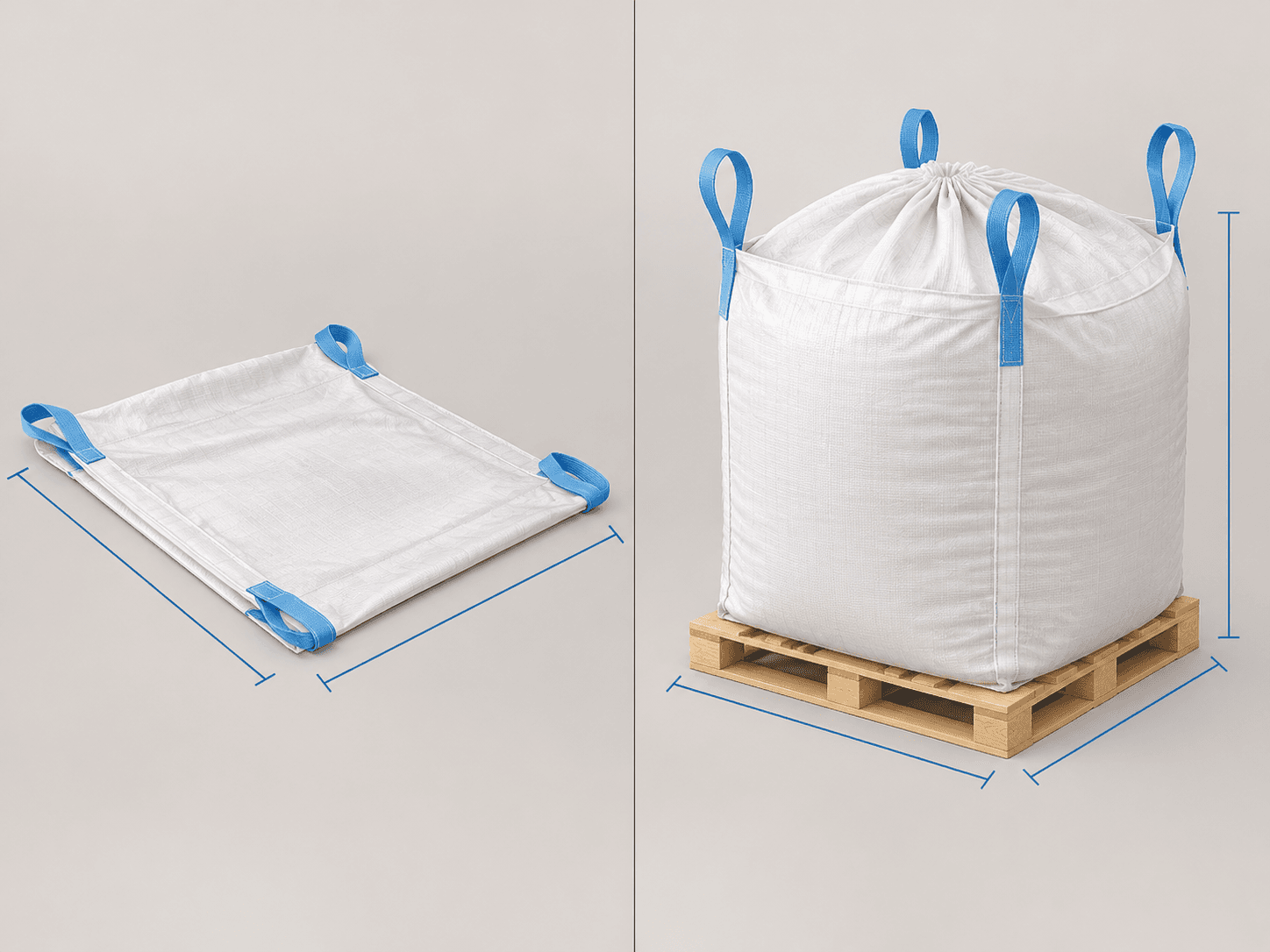
A buyer searches for a “super sack.” The supplier replies with an FIBC quotation. The drawing is titled “jumbo bag.” The warehouse calls it a bulk bag. Four names, one object—usually.The words are not identical in status. FIBC is the technical term used by standards and industry guidance. Bulk bag, big bag, tote and jumbo bag are trade terms. Super Sack® is a registered trademark, not a generic name for every large woven bag.That distinction matters when a purchase order, a drawing or a customs document uses one term while the supplier uses another. The label helps you find the product family. It does not tell you the safe working load, the filled dimensions, the liner, the lifting arrangement or the compliance route. Those have to be specified.
Bulk Bags by Application: Minerals, Fertilizer, Grain and Produce
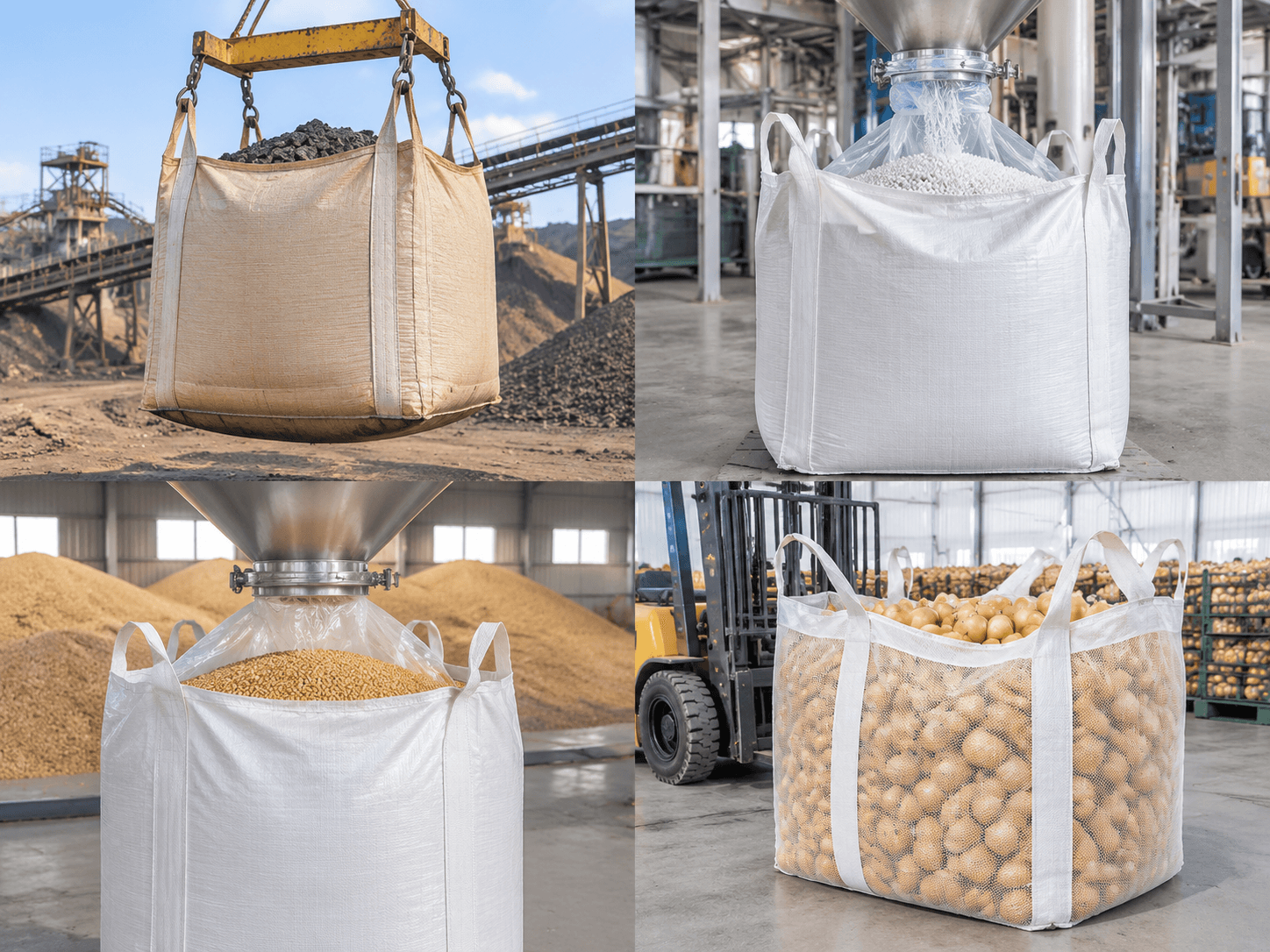
A mineral concentrate, a fertilizer blend, a load of wheat and a load of onions can all be packed in a bulk bag. They should not all be specified the same way.On a quotation, each may appear as a one-tonne FIBC with a top opening and a discharge spout. In service, the loads behave differently. A dense mineral concentrate can reach its target mass at a low fill level and concentrate stress in the base and seams. A hygroscopic fertilizer can pick up moisture, cake and block the outlet. Grain can arrive dry but become unacceptable if condensation, pests or contamination are not controlled. Fresh produce can lose quality through heat, condensation and handling damage even when the bag itself remains intact.
Want to know more?
Get in touch with us for more information about our services and products.