
Why the Future of Bulk Packaging Is Moving Toward Customized FIBC Solutions?

Dayang Yang
AuthorWith experience in FIBC bulk bag manufacturing and export sales, we operate our own production facility with stable large-scale capacity. We are specialists in bulk bags, conductive FIBCs, food-grade FIBCs, UN certified bags, and customized flexible intermediate bulk containers for industrial packaging and bulk material transportation solutions.
For most of the last three decades, the economics of bulk packaging pointed in one direction: standardize. A small set of FIBC sizes, one or two loop patterns, an open top or a discharge spout, and a price per bag that could be compared across suppliers. Standardization made sense because the variables around the bag were relatively stable. The product was known, the filling line was manual, and the destination market asked for strength rather than a technical file.
Those assumptions no longer hold for a growing share of bulk buyers. A single plant may fill twenty grades through the same line. A single shipment may need to satisfy a customer specification, a dangerous-goods rule and a destination market’s packaging rule. A single filling head may run at a rate that leaves no room for a spout that is slightly too short or a liner that folds into the product stream.
The standard FIBC has not become a bad product. It has become a compromise that is harder to justify when the cost of the compromise is measured. This article explains why the center of gravity is moving toward customized FIBC solutions, what “customized” means in engineering terms, and where a standard bag remains the better answer.
The Standard Bag Solved a Scale Problem
Standardization delivered real benefits. It allowed manufacturers to amortize tooling across long runs, keep predictable dimensions, hold interchangeable inventory and quote quickly. Buyers could compare suppliers on a like-for-like size, reorder without a new approval cycle and substitute one bag for another when a shipment was late.
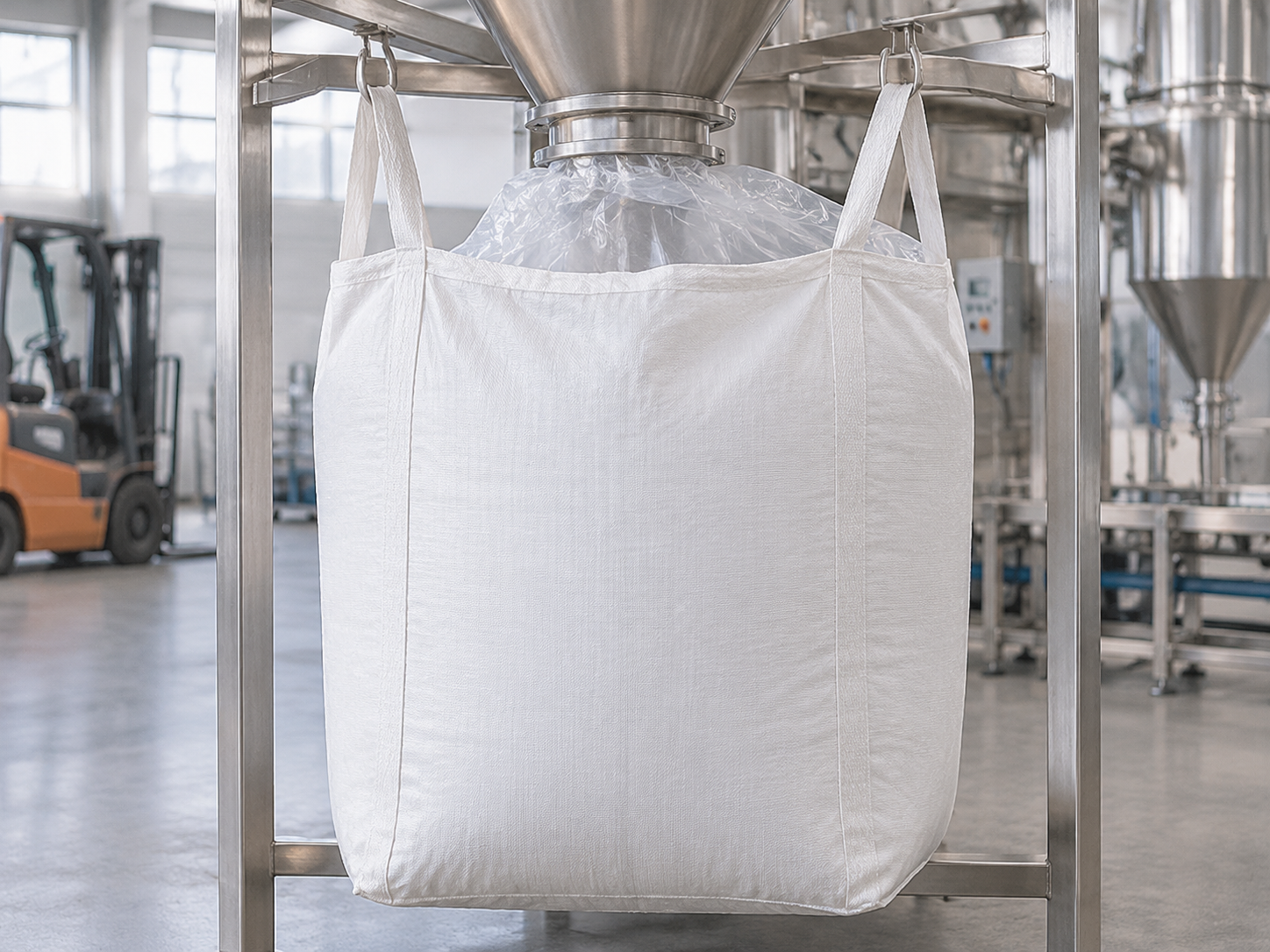
That model rests on four assumptions: the product behaves consistently, the filling and discharge equipment tolerates variation, the transport route is unconstrained, and the compliance requirement is generic. When all four are true, customization adds cost without adding value. A standard four-loop bag with an open top and a flat bottom is often the correct answer for sand, gravel or a stable mineral filler.
The shift is not that standard bags stopped working. It is that more buyers no longer live inside those four assumptions. Their products changed, their lines changed, their destination rules changed, or all three changed at once.
In practice, the shift is rarely a clean break. Most projects start from a standard construction and change the few features that cause the failure: a longer spout, a restrained liner, a different loop pattern, a lower filled height or a marking that matches the destination rule. The result is still an FIBC. It is simply a bag that has been specified rather than assumed.
Driver 1: Product Portfolios Have Outgrown the Average Bag
Bulk materials are not interchangeable, even when they share a nominal weight. Bulk density, particle size and shape, flow behavior, moisture sensitivity, static propensity, filling temperature and chemical compatibility all change how a bag behaves between the filling head and the discharge station. A bag sized for plastic pellets can be dangerously overweight with a dense mineral powder. A bag sized for a dense product can run out of volume with a light, fluffy ingredient.
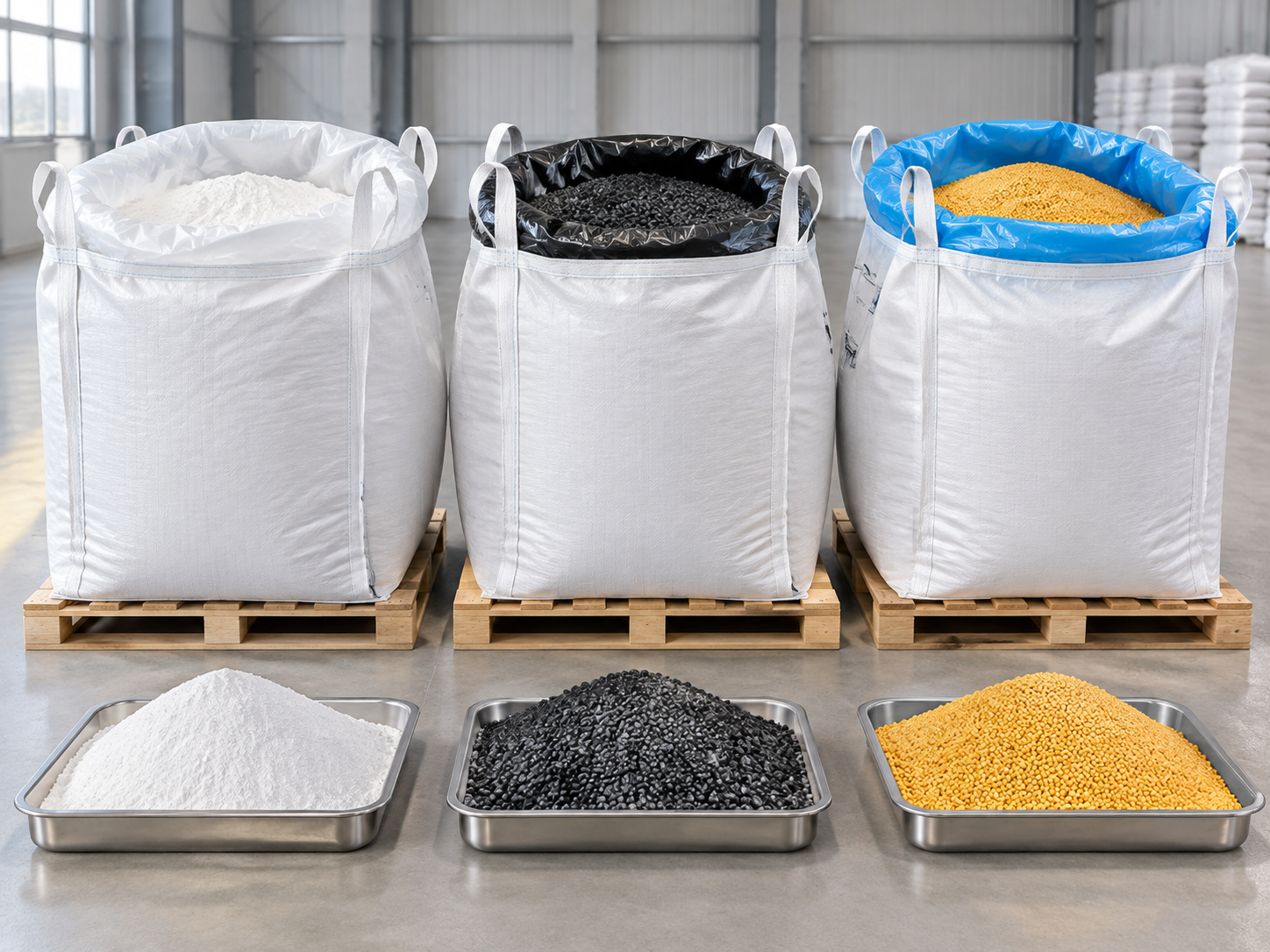
Product portfolios have also become more specialized. A chemical plant may run standard resins alongside specialty grades. A food ingredient supplier may handle hygroscopic powders, heat-sensitive blends and products with strict batch traceability. A battery-materials line may need moisture and oxygen protection that a woven bag alone cannot provide. An agricultural processor may pack the same crop at different moisture levels across the season.
In each case, the bag stops being a generic container and becomes part of the process. The useful question is no longer “What is the cheapest bag for this weight?” but “What does the bag have to do to the product between filling and discharge?” That question leads to a different answer for a free-flowing pellet, a cohesive powder, a hygroscopic ingredient and a product that generates static.
Customization enters here as a matching exercise, not a decoration exercise. The bag has to match the material’s behavior, the filling rate, the discharge method and the storage condition. A standard bag can still be the starting point, but the specification has to be checked against the duty rather than assumed from the weight.
Driver 2: Compliance Has Become Design-Specific
The second driver is regulatory, and it is the one most likely to turn a commodity purchase into an engineering purchase. FIBC compliance is no longer a single strength claim. It is a set of routes, each attached to a design, a test and a document.
| Route | What it governs | Why a generic bag is not enough |
|---|---|---|
| ISO 21898:2024 | Design, type testing and marking for FIBCs carrying non-dangerous goods | The marking set includes SWL, safety factor, maximum stack count, test number, test date and laboratory reference |
| UN dangerous-goods rules | Packaging performance for regulated dangerous goods | Certification is tied to the tested design, packaging code and applicable liner and closure |
| IEC 61340-4-4 | Electrostatic classification in hazardous areas | FIBCs are classified as Type A, B, C or D, and inner liners are classified separately |
| Food-contact rules | Materials and articles intended to contact food | The finished bag, liner, closure, ink and adhesive need evidence for the intended use |
| EU PPWR | Packaging recyclability, minimization and documentation | It has applied since 12 August 2026, with a PFAS restriction for food-contact packaging from the same date |
The important word in that table is “design.” A certificate or declaration describes a specific construction, not a brand’s general capability. A UN certificate for a bag with one liner and one closure is not a certificate for the same bag with a different liner . A Type C classification applies to a bag design, and the liner is classified separately; the bag alone is not the system . A food-contact declaration for the fabric does not automatically cover the liner, the print or the adhesive .
This changes what a buyer has to hold. Instead of a supplier name and a price, the buyer needs a controlled drawing, a revision number, a bill of materials and the evidence that applies to that revision. That is customization in its most practical form: a documented design that can be quoted, sampled, tested and repeated. The commercial question and the compliance question have become the same question.

Driver 3: Filling and Discharge Lines Are Less Forgiving
Manual filling tolerates variation. An operator can shake a bag, reposition a spout, free a folded liner or slow the fill when the product bridges. Automated equipment does not improvise. A filling head clamps on the spout it is given. A deaeration system expects a defined vent path. A robot palletizer expects a filled envelope within a known tolerance. An automatic discharge station expects the liner to open, collapse and release the product in a predictable way.
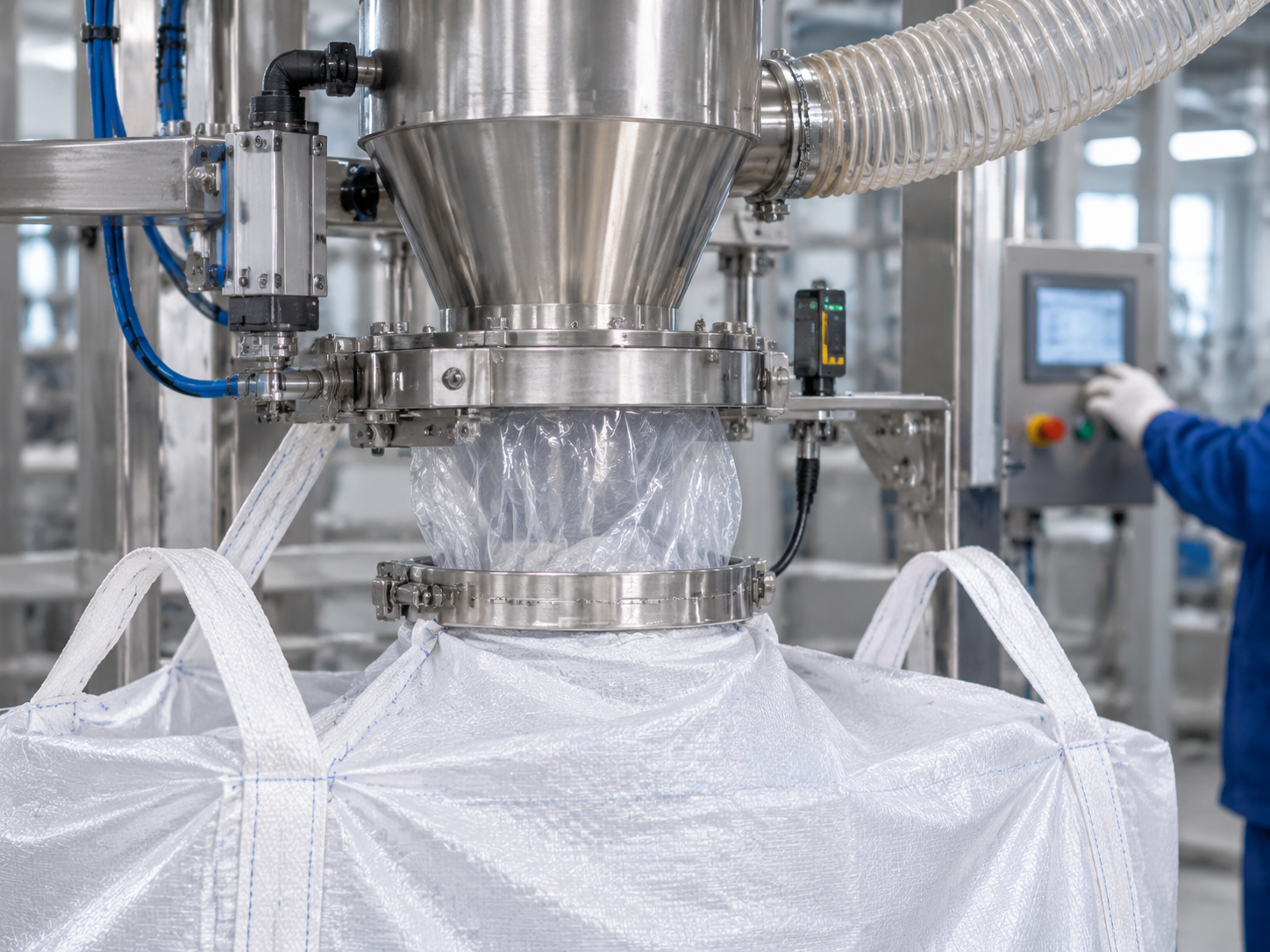
The tolerances that matter are rarely the headline dimensions. They are the spout diameter and length, the liner neck, the loop position, the squareness of the panels, the height of the filled bag and the way the base sits on a pallet. A spout that is a little short can be a nuisance on a manual line and a stoppage on an automated one. A liner that is not restrained can pull away from the spout during filling and block the discharge later; the measurements that prevent that are set out in the liner fit and interface guide. A bag that bulges can trip a light curtain or miss a pallet position.
The eight bulk bag openings guide compares the common top and bottom configurations and the job each one is designed for. This is why filling and discharge details belong in the bag specification, not in a separate conversation after the order. The bag is the interface between the product and the plant. Customization is how that interface is made explicit.
Driver 4: Freight, Storage and Labor Costs Reward a Better Fit
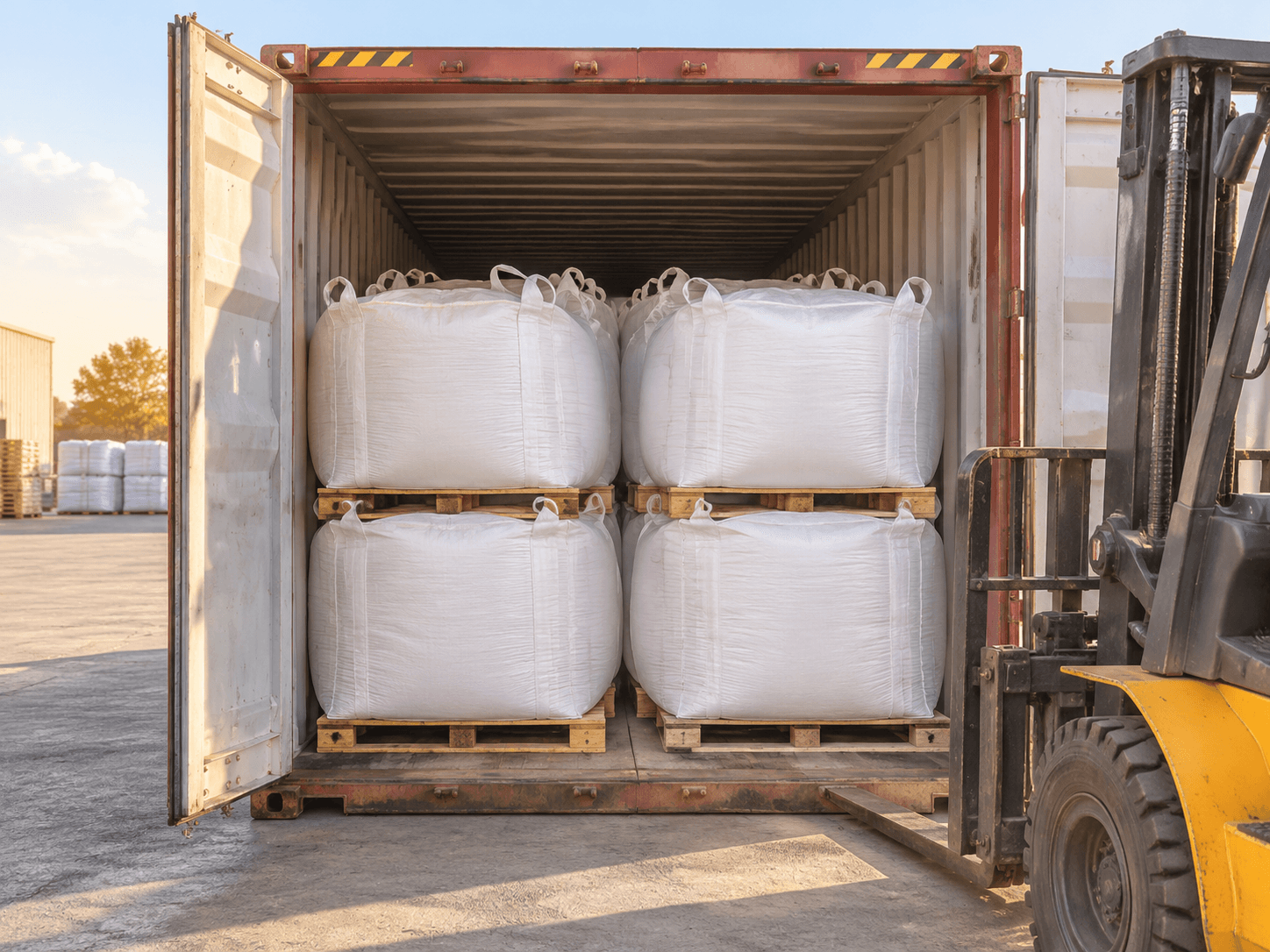
A bulk bag is also a unit of logistics. Its filled dimensions determine how many bags fit on a pallet, how many pallets fit in a container and how high a warehouse can stack. A bag that is a few centimeters too tall for a container door, or that bulges into the next pallet position, pays that penalty on every shipment.
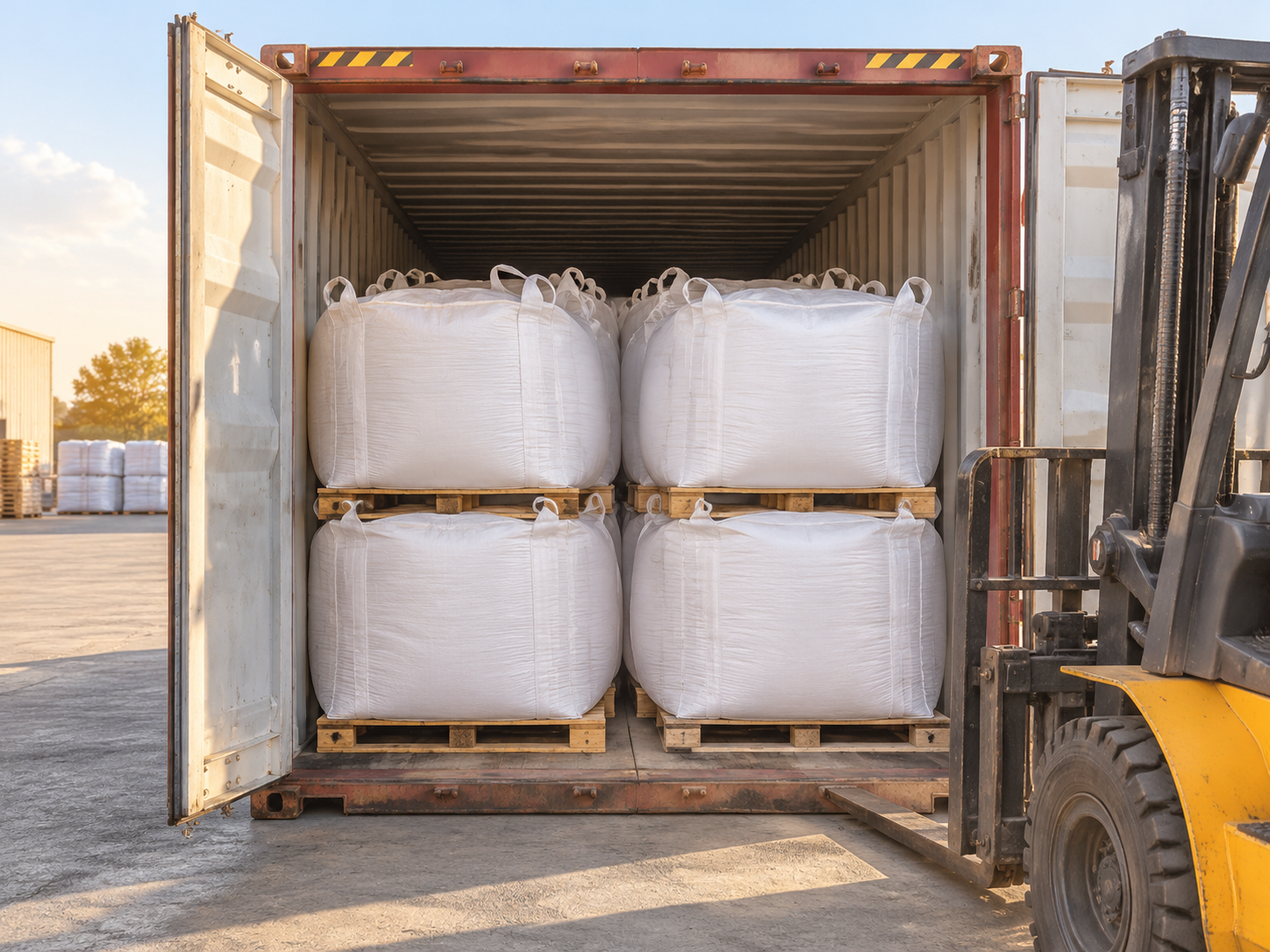
Freight rates move. Drewry’s World Container Index stood at USD 4,429 per 40ft on 29 October 2026, down 3% week on week . A rate can fall next month. A bag that does not fit the container loses cube every month. That is why right-sizing the filled envelope is usually more valuable than negotiating the last few percent off the bag price.
Storage and labor add to the same calculation. Higher stacks require a bag designed and rated for stacking, not just a strong bag . A baffle can improve the filled shape, but it does not create a stack rating; the standard versus baffle comparison explains the difference. Narrow aisles and rack clearances also limit the filled footprint. Where experienced operators are harder to retain, mistake-proofing becomes more valuable: clear loop identification, unambiguous markings, a liner that can only be installed one way, and a closure that does not depend on operator memory.
Safety belongs in the same group. The safe working load is the maximum load the bag is rated to carry in service, and it must not be exceeded . FIBCA cites a typical maximum filled height-to-width ratio of 2:1 and advises users to check the applicable standard or code . It also states that an FIBC should never be suspended on fewer loops than it was provided with, and that loops should not be gathered onto one hook unless the design is specifically approved for that method. The FIBC handling and safety guide covers the operating rules in more detail. A custom design can make the correct method easier to follow, but it cannot replace training and procedure.
Driver 5: Sustainability Targets Are Design Decisions
Packaging regulation is moving from disposal to design. The EU Packaging and Packaging Waste Regulation — Regulation (EU) 2025/40 — has applied since 12 August 2026, with a PFAS restriction for food-contact packaging from the same date and other measures phased in . The direction is clear even where the detailed rules are still being implemented: less material, more recyclability, more recycled content, better documentation and a clearer separation of components.
For FIBCs, those goals are won or lost in the design. A mono-material polypropylene bag is easier to recycle than a multi-material composite, but it may not provide the barrier a moisture-sensitive product needs. A liner that separates cleanly from the bag supports recycling; a liner bonded or contaminated by product may not. A bag that is oversized for its load uses more material and more cube than necessary. A reusable bag only delivers a benefit if the loop life, inspection regime and return logistics support the intended number of trips.
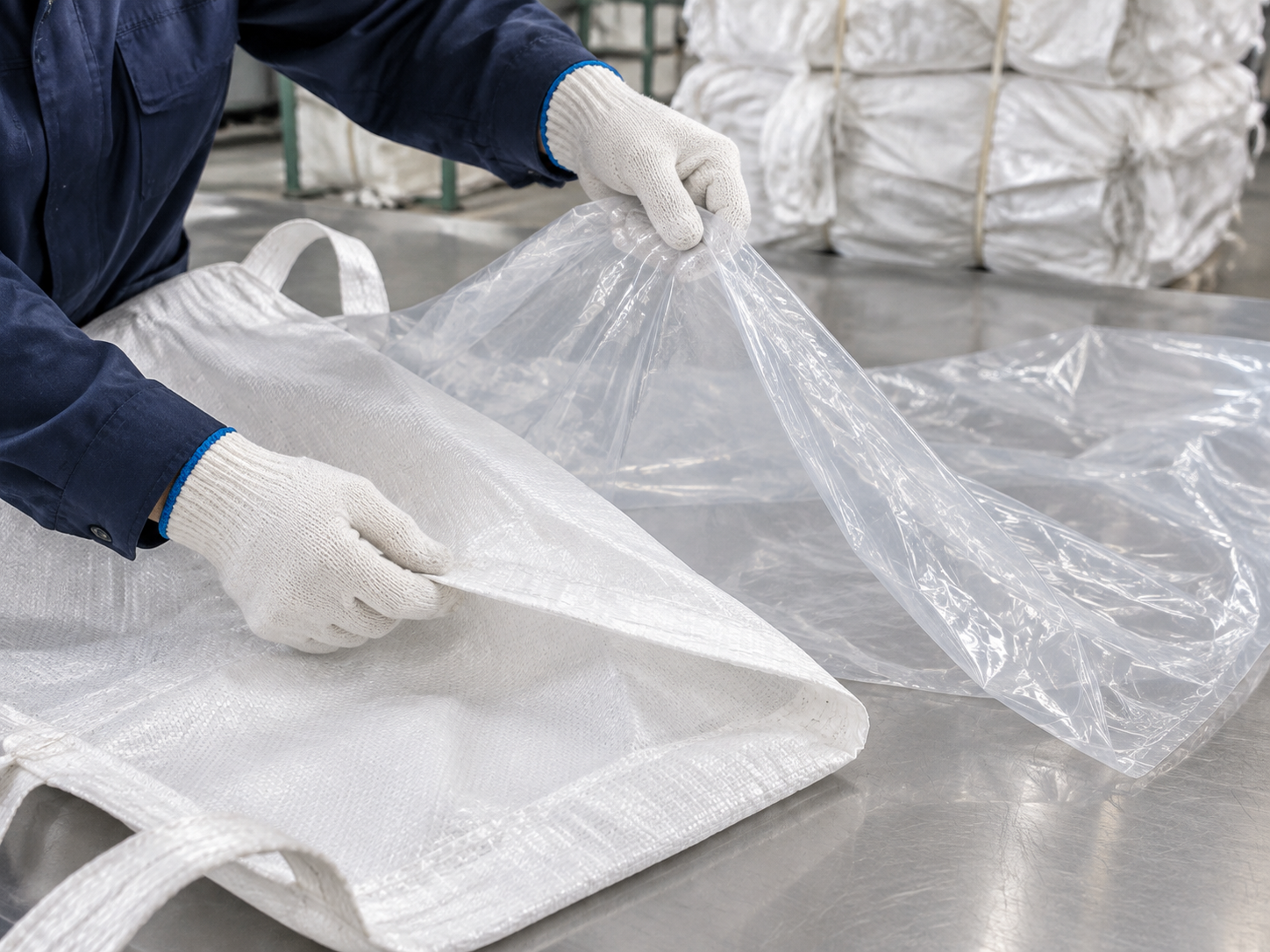
Customization is how these choices become real, but it is not automatically green. A heavier bag is not necessarily stronger, and a “recyclable” label is not a recycling pathway. Recyclability is a system property: the material has to be collected, sorted and reprocessed in the market where the bag is used. The honest specification states the material, the structure, the separation method and the evidence, rather than relying on an adjective.
Customization Is Now More Practical at Normal Order Sizes
Customization used to mean a long development cycle and a large minimum order. That has changed at the engineering end. CAD drawings, sample cutting, short production runs and digital printing have shortened the distance between a requirement and a trial bag. A buyer can now test a revised spout, a different liner attachment or a new print layout without committing to a full production program.
The economics have not disappeared. Tooling, minimum quantities, sampling time and approval still exist, and they still matter for small or one-off projects. The point is not that customization is free. The point is that it is now accessible enough to be evaluated on total cost rather than dismissed on unit price. For a buyer with a recurring packaging problem, the cost of one trial is often smaller than the cost of repeating the failure for another year.
What Changes on the Buyer’s Side
The shift changes the questions a buyer should ask. Price per bag remains relevant, but it is no longer the whole calculation. The more useful metric is cost per ton delivered: bag price, product retained in the bag, line stops, rejected loads, damaged bags, lost cube and disposal. A cheaper bag that leaves product behind or stops a line is not cheaper.
| The old question | The better question |
|---|---|
| What is your price for a 90 × 90 × 110 cm bag? | What filled envelope and interface does the duty require? |
| Is it 5:1? | Which standard, marking and test report apply to this design? |
| Can you add a liner? | Which liner, fixed how, and with what evidence for this product? |
| How fast can you ship? | Which changes are frozen, and how are revisions controlled? |
| Can you match this sample? | Can you provide the drawing, the sample and the trial result? |
The specification also becomes an asset. A drawing with a revision number, an approved sample, a bill of materials and a change-control record let a buyer reorder with confidence and compare suppliers on the same basis. Without that record, every reorder is a new negotiation and every substitution is a risk.
The supplier relationship changes too. A manufacturer that quotes a custom bag without asking about the product, the filling head, the discharge station, the lifting equipment, the pallet pattern and the destination market is quoting a guess. A useful supplier treats the bag, the liner and the interfaces as one system and says which changes are necessary and which are not.
Where Customization Is Not the Answer
Customization is not a universal upgrade. A standard bag remains the right choice when the product is stable, the line is manual or tolerant, the route is unconstrained and the compliance requirement is generic. In that case, paying for a custom design adds cost without removing a failure mode.
It is also a poor fit for very low volumes, where tooling and sampling dominate the total cost, and for products that change faster than the design can be frozen. Frequent changes should be handled through a controlled revision process, not by customizing every order.
Finally, customization cannot fix a process problem that is not a bag problem. A filling head that damages every spout, a warehouse that stores bags in sunlight, or a discharge station without dust extraction will not be solved by a new drawing. The goal is the shortest list of changes that removes a real failure, not the longest list of options.
How to Start a Custom FIBC Program
A custom program does not need to begin with a full redesign. It can begin with one duty and one drawing.
Write the duty statement. Record the product, bulk density, target fill weight, particle size and shape, flow behavior, moisture sensitivity, static propensity, filling temperature and any food-contact or dangerous-goods status. Use the SDS or TDS where available.
Measure the filled envelope and the route. Record the target filled length, width and height, pallet footprint, stack height, rack clearance, container door height, filling-head height and discharge-station geometry. A photograph of the actual equipment is more useful than a description.
Set the compliance route before the drawing. Decide whether the product is dangerous goods, whether the area is hazardous, whether food contact is involved and which destination rules apply. List the evidence required for each route.
Ask for a drawing and a pre-production sample. The drawing should show dimensions, tolerances, fabric and coating, body construction, seams, loops, openings, liner attachment, print placement and markings, with a revision number.
Trial the sample with the real product and equipment. Measure the filled envelope, check the liner position, record the discharge time and residual product, and inspect the bag after handling. A sample that looks correct when empty is not a qualification.
Freeze the design and control change. Record the approved revision and the lot. Treat a new fabric, liner film, spout, print layout or seam as a change that needs review, not as an equivalent substitution.

A useful RFQ includes the product data, target fill weight, current bag and liner drawings, filling and discharge details, lifting equipment, pallet and container plan, destination market and the failure that needs to be solved. That package lets a manufacturer quote a design instead of a guess.
Conclusion
The future of bulk packaging is not that every bag becomes bespoke. It is that the specification becomes deliberate. Standard FIBCs will remain the right answer for standard duties. Customized FIBC solutions are growing because the cost of the average bag is now paid in places that do not appear on the bag invoice: product left in the bag, a stopped filling line, a rejected load, a failed audit, a lost pallet position or a liner that moves at the wrong moment.
The buyers who make the shift are not buying more features. They are defining the duty, measuring the interface, setting the compliance route and freezing a design that can be repeated. That is a quieter advantage than a new bag design, but it is the one that compounds.
To review a custom FIBC or liner requirement, send FIBC World the product data, target fill weight, current drawings, filling and discharge details, lifting equipment, pallet and container plan, destination market and the current failure. The complete customization overview explains the individual specification choices. The product pages cover standard FIBCs, baffled FIBCs, ventilated FIBCs, form-fit liners and multi-layer aluminum foil liners.
Related News
Other news you might be interested in
What Can You Customize in an FIBC Bag? A Complete Overview
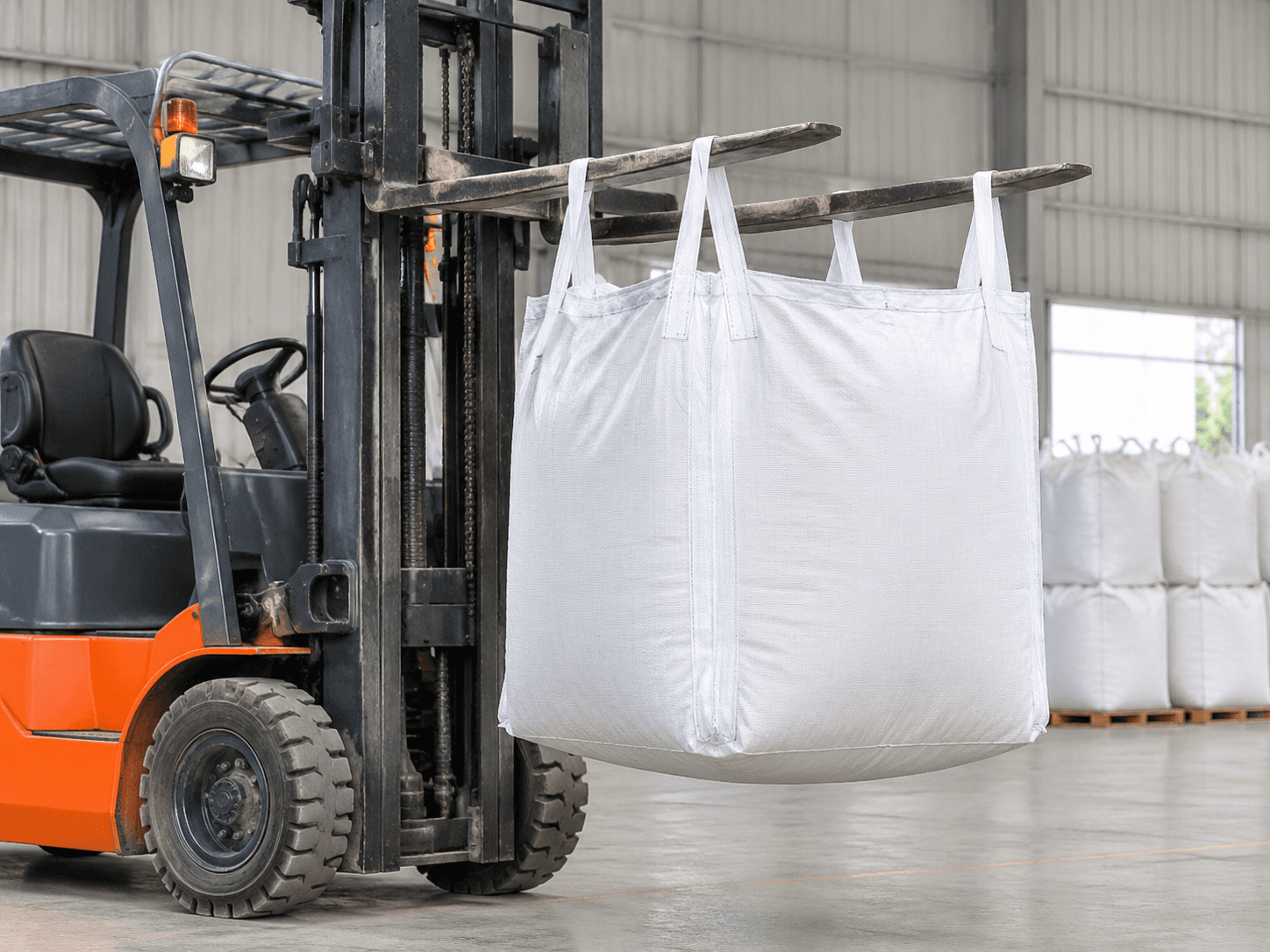
Two FIBCs can carry the same nominal load, use the same fabric weight and still behave differently at the filling line, in the warehouse and at the discharge station. One may fill cleanly and stack squarely. The other may bulge into the next pallet position, trap product in a corner or pull its liner away from the spout. The difference is rarely the headline specification. It is the combination of details that were specified, or left unspecified.
Standard vs Baffle FIBC Bags: Which Bulk Bag Is Right for Your Application?
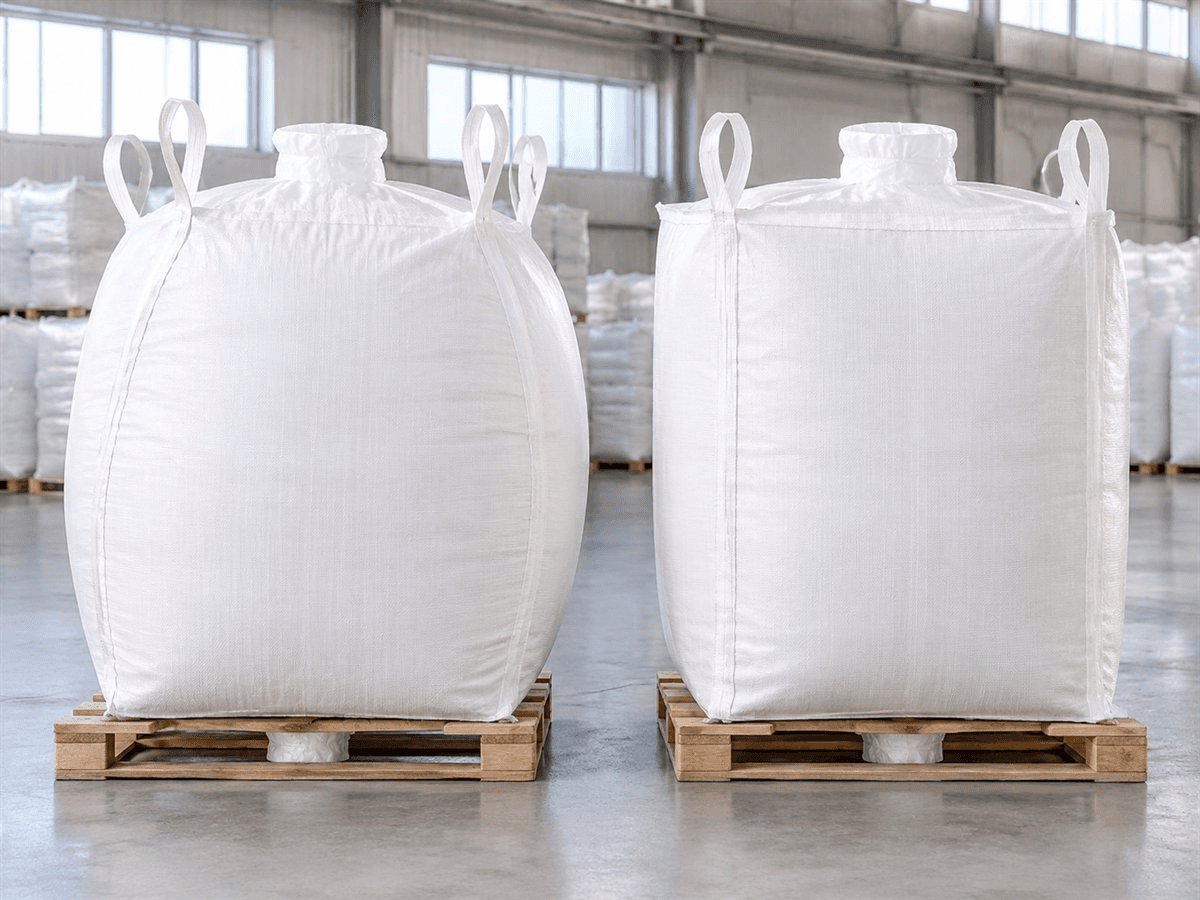
An FIBC is a flexible intermediate bulk container, also called a bulk bag or jumbo bag. The practical way to compare a standard bulk bag with a baffle bag, Q-bag or form-stable FIBC is to look at what happens after filling. The question is not which bag looks stronger in a photograph, or which one has more features. It is whether the filled shape, the liner path and the filling and discharge interfaces fit the application. A standard FIBC is usually the lower-complexity choice. A baffle FIBC earns its cost when the filled shape becomes a constraint in the warehouse, in the container or at the filling line.
Want to know more?
Get in touch with us for more information about our services and products.